 Talmud Bavli
Bava Batra 84b : Youtube
Daf TubeYoutube
2 video classes :
Bava Batra Page 84b
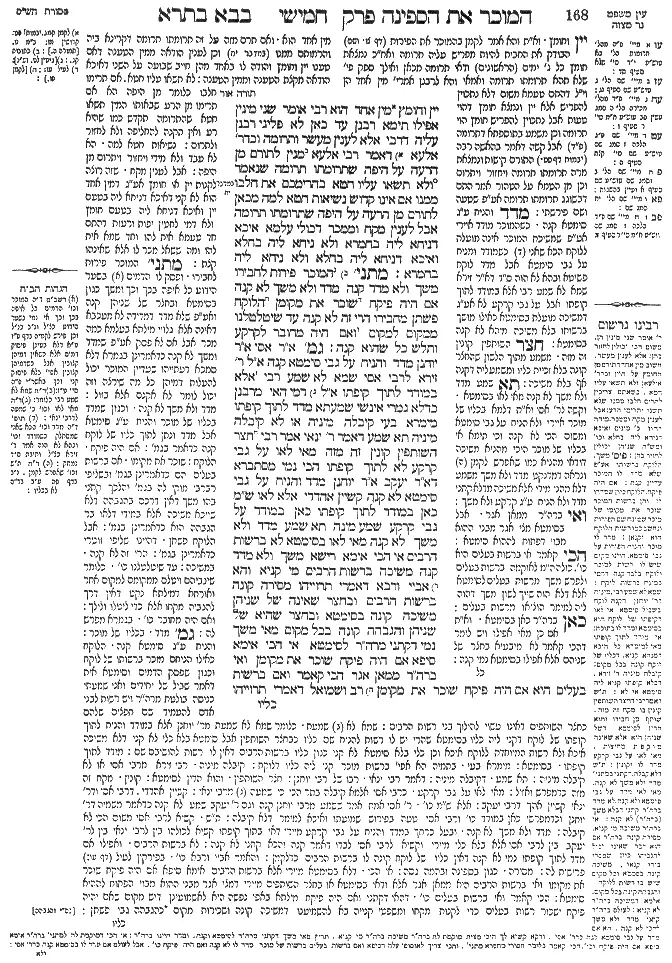
Bava Batra 84b - Guemara
יין וחומץ מין אחד הוא רבי אומר שני מינין אפילו תימא רבנן עד כאן לא פליגי רבנן עליה דרבי אלא לענין מעשר ותרומה וכדר' אלעא דאמר רבי אלעא מנין לתורם מן הרעה על היפה שתרומתו תרומה שנאמר (במדבר יח, לב) ולא תשאו עליו חטא בהרימכם את חלבו ממנו אם אינו קדוש נשיאות חטא למה מכאן לתורם מן הרעה על היפה שתרומתו תרומה אבל לענין מקח וממכר דכולי עלמא איכא דניחא ליה בחמרא ולא ניחא ליה בחלא ואיכא דניחא ליה בחלא ולא ניחא ליה בחמרא:
מתני' המוכר פירות לחבירו משך ולא מדד קנה מדד ולא משך לא קנה אם היה פיקח שוכר את מקומן הלוקח פשתן מחבירו הרי זה לא קנה עד שיטלטלנו ממקום למקום ואם היה מחובר לקרקע ותלש כל שהוא קנה:
גמ׳ א"ר אסי א"ר יוחנן מדד והניח על גבי סימטא קנה א"ל ר' זירא לרבי אסי שמא לא שמע רבי אלא במודד לתוך קופתו א"ל דמי האי מרבנן כדלא גמרי אינשי שמעתא מדד לתוך קופתו מימרא בעי קיבלה מיניה או לא קיבלה מיניה תא שמע דאמר ר' ינאי אמר רבי חצר השותפין קונין זה מזה מאי לאו על גבי קרקע לא לתוך קופתו הכי נמי מסתברא דא"ר יעקב א"ר יוחנן מדד והניח על גבי סימטא לא קנה קשיין אהדדי אלא לאו ש"מ כאן במודד לתוך קופתו כאן במודד על גבי קרקע שמע מינה תא שמע מדד ולא משך לא קנה מאי לאו בסימטא לא ברשות הרבים אי הכי אימא רישא משך ולא מדד קנה משיכה ברשות הרבים מי קניא והא אביי ורבא דאמרי תרוייהו מסירה קונה ברשות הרבים ובחצר שאינה של שניהן משיכה קונה בסימטא ובחצר שהיא של שניהן והגבהה קונה בכל מקום מאי משך נמי דקתני מרה"ר לסימטא אי הכי אימא סיפא אם היה פיקח שוכר את מקומן ואי ברה"ר ממאן אגר הכי קאמר ואם ברשות בעלים היא אם היה פיקח שוכר את מקומן רב ושמואל דאמרי תרוייהו
Comments from Rashbam - Bava Batra 84b
מין אחד הוא . ואם תרם מזה על זה תרומתו תרומה דקרינא ביה והרמותם ממנו (במדבר יח) וכן לענין הודאה ממין הטענה דאם טענו יין וחומץ והודה לו באחד מהן חייב שבועה על השני דאיכא הודאה מקצת הטענה וממין הטענה: לא תשאו עליו חטא . אם תרימו חלבו כלומר מן היפה הא אם תרימו מן הרע שבאותו המין תשאו חטא שהתרומה תקדש כמו שהיא רע ואין תקנה להחליפה ולא לחזור ולתרום: נשיאות חטא למה . הא לא עבד ולא מידי ויחזור ויתרום מן היפה: אבל לענין מקח . שזה רוצה לקנות יין או חומץ אע"ג דמין אחד הוא לא קני דאיכא דניחא ליה בטעם יין ואיכא דניחא ליה בטעם חומץ ולא דמי לחטין יפות ורעות דהתם חד טעמא אית להו וחד שמא אית להו ומה ששאל מכר לו אלא שאינהו קצת: מתני' המוכר פירות לחבירו . ופסק לו הדמים בשער הידוע כל איפה בכך וכך ומשך כגון בסימטא ובחצר של שניהן קנה ואע"פ שלא מדד דמדידה לא מעכבא דאינה אלא גלויי מילתא בעלמא כמה מכר אבל אם לא פסק אע"פ שמדד ומשך לא קנה כדאמרינן בגמרא דלא סמכא דעתייהו שעדיין המוכר יכול להעלות דמיהן כל מה שירצה וזה יכול לומר לא אקנם אלא בזול: מדד ולא משך לא קנה . וכגון שמדד בכליו של מוכר והניח ע"ג סימטא אבל מדד ונתן לתוך כליו של לוקח קנה כדאמר בגמ': אם היה פיקח . הלוקח: שוכר את מקומו . אם ברשות בעלים הם כדאמרינן בגמ' ובשליפי רברבי מוקי לה בגמ' והלכך קתני בהו משך דאין דרכם בהגבהה דלא שייכא משיכה אלא במידי דלאו בר הגבהה הוא כדאמרינן בגמ': אבל הלוקח פשתן . דהיינו שליפי זוטרי כדאמרינן בגמ': הרי זה לא קנה . במשיכה: עד שיטלטלנו כו' . כלומר שיגביהם ויטלם ממקומם למקום אחר ואורחא דמילתא נקט דאין דרך להגביה מקחו אלא כדי ליטלו ולילך: ואם היה מחובר כו' . בגמרא מפרש לה: גמ' מדד . בכליו של מוכר: והניח ע"ג סימטא קנה . הלוקח כאילו הניחם מוכר ברשותו של לוקח וכגון שפסק הדמים וסימטא אית דאמר שביל של יחידים ואני שמעתי כניסה בולטת מרה"ר ויש רשות לבני אדם להעמיד שם חפצים שלהם כחצר השותפים דאינו עשוי להילוך בני רשות הרבים: שמא לא שמעת . כלומר שמא לא שמעת מר' יוחנן אלא במודד והניח לתוך קופתו של לוקח דקני ליה כליו בסימטא שהרי יש לו רשות להניח שם כליו כבחצר השותפין אבל סימטא בלא כלי לא קני דלא משיכה איכא ולא רשות המיוחדת ללוקח איכא וכן כלי בלא סימטא לא קני כגון כליו ברשות הרבים דאין לו רשות להושיבם שם: מודד לתוך קופתו . בסימטא: מימרא בעי . בתמיה הא אפי' ברשות מוכר קני ליה כליו דלוקח: קיבלה מיניה . רבי זירא מרבי אסי או לא קיבלה מיניה: תא שמע . דקיבלה מיניה: דאמר רבי ינאי . רבו של רבי יוחנן: חצר השותפין . והוא הדין לסימטא: קונין . מקח זה מזה כדמפרש ואזיל: מאי לאו על גבי קרקע . כרבי אסי אלמא קיבלה בתר הכי כי שמעה מרבי ינאי: קשיין אהדדי . דרבי אסי ודר' ינאי קשיין אהך דרבי יעקב: אלא ש"מ כו' . ר' אסי אמת אמר ששמע מרבי יוחנן קנה וגם ר' יעקב שמע לא קנה כדאמר משמיה דר' יוחנן וכדמפרשי כאן במודד כו' ורבי אסי טעה בפירוש שמועתו ואיכא למימר דלא קיבלה: ת"ש . קשיא לרבי אסי משום הכי לא קיבלה: מדד ולא משך לא קנה . ובעל כרחך במדד והניח על גבי קרקע מיירי דאי בתוך קופתו קשיא לכולהו בין לרבי ינאי בין לר' יעקב בין לרבי אסי אלא בלא כלי מיירי וקשיא לרבי אסי לבדו דאמר קנה והכא קתני לא קנה: לא ברשות הרבים . ואפילו אם מדד לתוך קופתו נמי לא קנה דאין כליו של לוקח קונה לו ברשות הרבים כדלקמן: והאמר אביי ורבא כו' . בפירקין לעיל (בבא בתרא דף עו:) פרישית לה: מסירה . כגון בספינה ובהמה גסה: אי הכי . דלא בסימטא מיירי אלא ברשות הרבים אימא סיפא אם היה פיקח שוכר את מקומו ואי ברשות הרבים היא ממאן אגר אלא ודאי בסימטא או בחצר השותפים מיירי דמצי אגר מבני ההוא מבוי הפתוח לההיא סימטא: הכי קאמר ואי ברשות בעלים כו' . דהאי דקתני ואם היה פיקח מילתא באפי נפשה היא לאשמועינן דיש מקום שאם יהיה פיקח ישכור רשות בעלים כדי לקנות מקחו ומשפטי קנייה בא להשמיענו דמשיכה קונה ושכירות מקום כהגבהה גבי פשתן:
Comments from Tosafot - Bava Batra 84b
יין וחומץ. וא"ת והא אמר לקמן בהמוכר את הפירות (בבא בתרא דף צו. ושם) הבודק את החבית להיות מפריש עליה תרומה ואח"כ נמצאת חומץ כל ג' ימים (הראשונים) ודאי תרומה מכאן ואילך ספק פי' שלא תהא תרומתו תרומה ואמאי והא לרבנן אמרי' מין אחד הן וי"ל דהתם טעמא משום דלא נתכוין להפריש אלא יין ונמצא חומץ דהוי טעות אבל נתכוין להפריש חומץ הוי תרומה וכן משמע בתוספתא דתרומה (פ"ד) אבל קשה דאמר בהאשה רבה (יבמות דף פט.) התורם קישות ונמצאת מרה תרומתו תרומה ויחזור ויתרום וכן מן הטמא על הטהור אמר התם דבשוגג תרומתו תרומה אע"פ שטעה ושם פירשתי: מדד והניח ע"ג סימטא קנה. כשהמוכר מודד איירי אע"פ שמשיכת המוכר אינה מועלת ללוקח הכא שאני כשמודד ומניח על גבי סימטא אבל מדד לוקח פשיטא ובהא לא הוה ס"ד דא"ר זירא שמא לא שמע רבי אלא במודד לתוך קופתו אבל על גבי קרקע לא אע"ג דמשיכה מועלת בסימטא כאילו מושך ברשותו בלא משיכה מיהא לא קנה בסימטא: חצר השותפין קונין זה מזה. משמע מתוך הלשון שהחצר קונה בלא זכיית כליו ומשמע ליה דקנה אף בלא משיכה: תא שמע מדד ולא משך לא קנה מאי לאו בסימטא. וקשה לר' אסי וא"ת דלמא בכליו של מוכר איירי ולא הניח על גבי סימטא ומשום הכי לא קנה וכי תימא אי בכליו של מוכר היכי מהניא משיכה דודאי מהניא כמו שאפרש לקמן ונראה דמדנקט מדד ולא משך משמע דלא מהני מידי אלא משיכה מדלא קתני מדד ולא הניח ע"ג קרקע ולא משך: ואי ברה"ר ממאן אגר. אבל בסימטא מצי אגר מבני ההוא מבוי דפתוח לההוא סימטא: הכי קאמר אי ברשות בעלים היא כו'. כולה ה"מ לאוקמה ברשות בעלים ולפרש משך מרשות בעלים לסימטא אלא דלא הוה שייך לשון משך דהוה ליה למימר הוציאו מרשות בעלים:
Bava Batra 84b - Mishnah translated into english
Wine and vinegar are one type of food, which means that if, for example, one separated teruma from one of these with the intention that it should exempt the other, his action is effective. Rabbi Yehuda HaNasi says: They are two types of food. Apparently, the mishna is not in accordance with the opinion of the Rabbis in the baraita. The Gemara rejects this claim: You may even say that the mishna is in accordance with the opinion of the Rabbis, as the Rabbis disagree with Rabbi Yehuda HaNasi only with regard to the issue of whether one can separate tithe and teruma from wine to redeem vinegar and vice versa. And the Rabbis hold in accordance with the opinion of Rabbi Ela.
As Rabbi Ela says: From where is it derived with regard to one who separates teruma from poor-quality produce for superior-quality produce, i.e., in order to fulfill the obligation of separating teruma from the high-quality produce, that his teruma is valid teruma? As it is stated: “And you shall bear no sin by reason of it, seeing as you have set apart from it its best” (Numbers 18:32).
The verse is understood as indicating that one who sets aside inferior produce has sinned. It also demonstrates that if one did, in fact, set aside teruma from poor-quality produce in order to render permitted superior-quality produce, his action is effective and the inferior produce is sanctified as teruma. The reason is that if the inferior produce is not consecrated, why would one bear a sin? It should be considered as though he did nothing. From here it is derived with regard to one who separates teruma from poor-quality produce for superior-quality produce that his teruma is valid teruma. The Rabbis agree and hold that in the case of one who separates vinegar in order to redeem wine, his teruma is valid despite the difference in quality, as wine and vinegar are considered a single type of food.
But with regard to buying and selling, everyone, including the Rabbis, agrees that wine and vinegar are two types of food, as they have different uses. There are those for whom wine is preferable and vinegar is not preferable, and there are those for whom vinegar is preferable and wine is not preferable.
MISHNA: This mishna discusses several methods of acquiring movable property. With regard to one who sells produce to another, if the buyer pulled the produce but did not measure it, he has acquired the produce through the act of acquisition of pulling. If he measured the produce but did not pull it, he has not acquired it, and either the seller or the buyer can decide to rescind the sale. If the buyer is perspicacious and wants to acquire the produce without having to pull it, and he wishes to do so before the seller could change his mind and decide not to sell, he rents its place, where the produce is located, and his property immediately effects acquisition of the produce on his behalf.
With regard to one who buys flax from another, because flax is usually carried around this purchaser has not acquired it until he carries it from place to place and acquires it by means of the act of acquisition of lifting. Pulling the flax is ineffective. And if it was attached to the ground, and he detached any amount, he has acquired it, as the Gemara will explain.
GEMARA: The mishna mentions several modes of acquisition without elaboration. It does not explain in which domain the act takes place, whether on the property of the seller or in the public domain. Likewise, it does not specify who performs these actions. The Gemara clarifies these details. Rabbi Asi says that Rabbi Yoḥanan says: If the seller measured the produce and placed it in an alleyway, which is not the public domain but a location where people can keep their belongings, then even if the buyer did not pull the produce, he acquires it.
Rabbi Zeira said to Rabbi Asi: Perhaps my teacher heard this halakha from Rabbi Yoḥanan only with regard to one who measures into his basket, i.e., that of the buyer, in which case his possessions effect acquisition of the produce for him. But if the produce is placed on the floor of the alleyway, the buyer does not acquire the produce. Rabbi Asi said to him: This one of the Sages, i.e., Rabbi Zeira, seems like one who has not studied halakha. If he measured it into the basket of the buyer, is it necessary to say that he acquires it? If an item is placed in the buyer’s basket it is clearly acquired by him, regardless of the location of the basket. Rather, Rabbi Yoḥanan’s statement with regard to an alleyway must be referring to items placed on the floor of the alleyway.
The Gemara asks: Did Rabbi Zeira accept this claim from Rabbi Asi, or did he not accept it from him? The Gemara suggests: Come and hear a proof, as Rabbi Yannai says that Rabbi Yehuda HaNasi says: With regard to a courtyard belonging to partners, which is similar in status to an alleyway, the partners acquire from one another. What, is it not correct to say that there is no difference between placing items on the ground and in their basket, as a partner acquires an item even when it is placed upon the ground, in accordance with the statement of Rabbi Asi? The Gemara rejects this suggestion: No, this is referring to a case where the item is measured into the basket of the buyer.
The Gemara points out: So, too, Rabbi Zeira’s statement is reasonable, as Rabbi Ya’akov says that Rabbi Yoḥanan says: If one measured and placed an item in an alleyway, the buyer has not acquired it. Apparently, these two halakhot cited in the name of Rabbi Yoḥanan are difficult, as they contradict each other, since earlier it was stated that according to Rabbi Yoḥanan the buyer can acquire an item in this manner. Rather, isn’t it correct to conclude from this apparent contradiction that here, i.e., in the statement cited by Rabbi Asi, he is referring to one who measures into the basket of the buyer, which effects acquisition; and there, i.e., in the statement of Rabbi Yaakov, he is referring to one who measures onto the ground, which does not effect acquisition. The Gemara affirms: Learn from it that this is the case.
The Gemara suggests: Come and hear a proof from the mishna: If he measured the produce but did not pull it, he does not acquire it. What, is it not referring to one who did so in an alleyway, which indicates that placing produce on the ground of an alleyway does not effect acquisition, in accordance with the statement of Rabbi Zeira? The Gemara rejects this proof: No, the mishna is referring to one who did so in the public domain. The Gemara asks: If that is so, say the first clause: If the buyer pulled the produce but did not measure it, he has acquired the produce. But does pulling in the public domain effect acquisition?
But don’t Abaye and Rava both say that passing effects acquisition in the public domain and in a courtyard that does not belong to either of them; pulling effects acquisition only in an alleyway or in a courtyard that belongs to both of them, but not in the public domain; and lifting effects acquisition in every place, even in the seller’s domain? This demonstrates that pulling in the public domain does not effect acquisition.
The Gemara answers: What is the meaning of the phrase: If he pulled it, that is taught in the mishna? It means that he pulled it from the public domain into an alleyway. The Gemara asks: If that is so, say the latter clause: If the buyer is perspicacious he rents its place, i.e., where the produce is located. The Gemara explains the difficulty: But if the mishna is referring to a spot in the public domain, from whom can he rent the place where the produce is located? The Gemara answers: The latter clause is referring to a separate halakha, and this is what the mishna is saying: And if the produce is in a domain that has an owner, if he is perspicacious he rents the place where the produce is located from the owner.
§ The Gemara continues to discuss the manner in which an acquisition takes place. Rav and Shmuel both say:
Traduction : The William Davidson digital edition of the Koren Noé Talmud, with commentary by Rabbi Adin Even-Israel Steinsaltz.