 Talmud Bavli
Bava Batra 120a : Youtube
Daf TubeYoutube
2 video classes :
Bava Batra Page 120a
Bava Batra 120a - Guemara
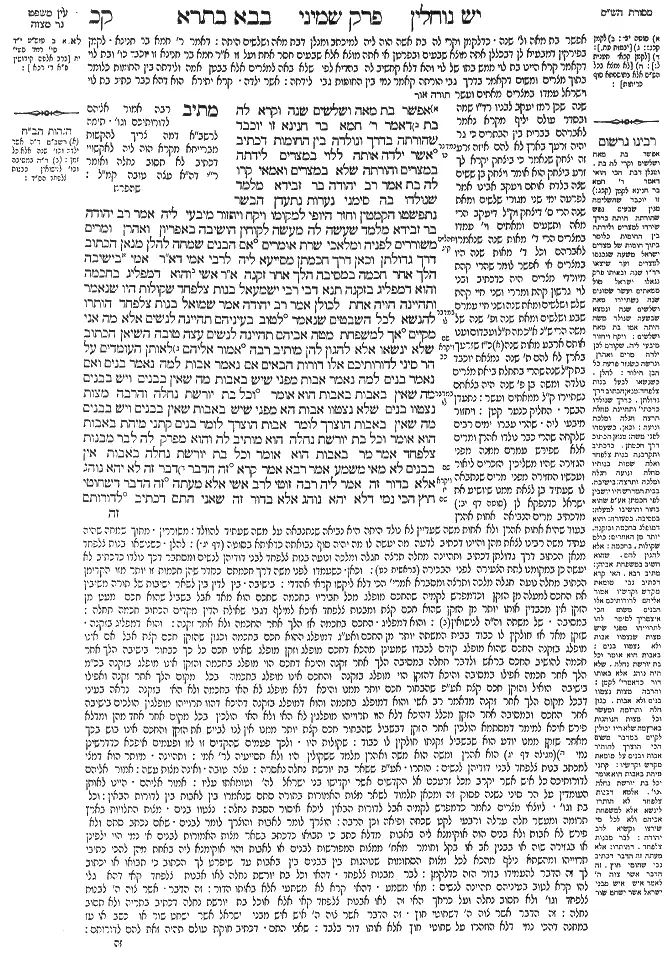
אפשר בת מאה ושלשים שנה וקרא לה בת דאמר ר' חמא בר חנינא זו יוכבד שהורתה בדרך ונולדה בין החומות דכתיב (במדבר כו, נט) אשר ילדה אותה ללוי במצרים לידתה במצרים והורתה שלא במצרים ואמאי קרו לה בת אמר רב יהודה בר זבידא מלמד שנולדו בה סימני נערות נתעדן הבשר נתפשטו הקמטין וחזר היופי למקומו ויקח ויחזור מיבעי ליה אמר רב יהודה בר זבידא מלמד שעשה לה מעשה לקוחין הושיבה באפריון ואהרן ומרים משוררים לפניה ומלאכי שרת אומרים (תהלים קיג, ט) אם הבנים שמחה להלן מנאן הכתוב דרך גדולתן וכאן דרך חכמתן מסייעא ליה לרבי אמי דא"ר אמי בישיבה הלך אחר חכמה במסיבה הלך אחר זקנה א"ר אשי והוא דמפליג בחכמה והוא דמפליג בזקנה תנא דבי רבי ישמעאל בנות צלפחד שקולות היו שנאמר ותהיינה הויה אחת לכולן אמר רב יהודה אמר שמואל בנות צלפחד הותרו להנשא לכל השבטים שנאמר (במדבר לו, ו) לטוב בעיניהם תהיינה לנשים אלא מה אני מקיים (במדבר לו, ו) אך למשפחת מטה אביהם תהיינה לנשים עצה טובה השיאן הכתוב שלא ינשאו אלא להגון להן מותיב רבה (ויקרא כב, ג) אמור אליהם לאותן העומדים על הר סיני לדורותיכם אלו דורות הבאים אם נאמר אבות למה נאמר בנים ואם נאמר בנים למה נאמר אבות מפני שיש באבות מה שאין בבנים ויש בבנים מה שאין באבות באבות הוא אומר (במדבר לו, ח) וכל בת יורשת נחלה והרבה מצות נצטוו בנים שלא נצטוו אבות הא מפני שיש באבות שאין בבנים ויש בבנים מה שאין באבות הוצרך לומר אבות הוצרך לומר בנים קתני מיהת באבות הוא אומר וכל בת יורשת נחלה הוא מותיב לה והוא מפרק לה לבר מבנות צלפחד אמר מר באבות הוא אומר וכל בת יורשת נחלה באבות אין בבנים לא מאי משמע אמר רבא אמר קרא (במדבר לו, ו) זה הדבר דבר זה לא יהא נוהג אלא בדור זה אמר ליה רבה זוטי לרב אשי אלא מעתה (ויקרא יז, ב) זה הדבר דשחוטי חוץ הכי נמי דלא יהא נוהג אלא בדור זה שאני התם דכתיב (ויקרא יז, ז) לדורותם
Comments from Rashbam - Bava Batra 120a
אפשר בת מאה ול' שנה . כדלקמן וקרי לה בת אשה הוה ליה למיכתב ומנלן דבת מאה ושלשים היתה: דאמר ר' חמא בר חנינא . לקמן בפירקין דמבעיא לן דבכללן אתה מוצא שבעים ובפרטן אי אתה מוצא אלא שבעים חסר אחת ועל זו א"ר חמא בר חנינא זו יוכבד כו' ובת לוי דקאמר קרא היינו בת לוי ממש בתו של לוי והא דלא קחשיב לה בהדיא לפי שלא באה למצרים אלא בבטן אמה ולידתה בין החומות כלומר בתוך מצרים ומשום דקאמר בדרך גבי הורתה קאמר נמי בין החומות גבי לידתה: אשר ילדה . קרא יתירא הוא דהא כבר כתיב בת לוי וישראל עמדו במצרים מאתים ועשר שנה שכן רמז יעקב לבניו רד"ו שמה ובסדר עולם יליף מקרא נאמר לאברהם בברית בין הבתרים כי גר יהיה זרעך בארץ לא להם איזה זרע זה יצחק שנאמר כי ביצחק יקרא לך זרע ביצחק הוא אומר ויצחק בן ששים שנה בלדת אותם ויעקב אבינו אמר לפרעה ימי שני מגורי שלשים ומאת שנה הרי ס' דיצחק וק"ל דיעקב הרי מאה ותשעים ומאתים וי' עמדו במצרים הרי ד' מאות שנה שנאמרו לאברהם וכל ד' מאות שנה היו במצרים אי אפשר לומר שהרי קהת מיורדי מצרים היה כדכתיב ובני לוי גרשון קהת ומררי ושני חיי קהת שלש ושלשים ומאת שנה ושני חיי עמרם שבע ושלשים ומאת שנה ופ' שנה של משה הרי ש"נ א"כ מה ת"ל ועבדום וענו אותם ארבע מאות שנה כ"ז שזרעך בארץ לא להם ת' שנה נמצאת יוכבד בת ק"ל שנה שהרי בתחלת ביאת מצרים נולדה ומשה בן פ' שנה היה בצאתם נשתיירו ק"ל ממאתים ועשר: נתעדן הבשר . החליק כנער קטן: ויחזור מיבעי ליה . שהרי עברו ימים רבים שלקחה שהרי כבר נולדו אהרן ומרים אלא שפירש עמרם ממנה מפני הגזירה שהיו משליכין הזכרים ליאור ועכשיו החזירה מפני מרים שנתבאה לו שעתיד בן לצאת ממנו שיושיע את ישראל כדנפקא לן (סוטה דף יב:) מדכתיב מרים הנביאה אחות אהרן בעוד שהיא אחות אהרן ולא אחות משה שעדיין לא נולד היתה היא נביאה שנתנבאה על משה שעתיד להוולד: משוררין . מתוך שמחה שהיה עתיד משה רבינו לצאת מהן והיינו דכתיב לדעה מה יעשה לו מה יהיה סוף נבואתה כדאיתא בסוטה (דף יג.): להלן . כשנישאו בנות צלפחד מנאן הכתוב דרך גדולתן דכתיב ותהיינה מחלה תרצה חגלה ומלכה ונועה בנות צלפחד לבני דודיהן לנשים ומסתבר דכך נולדו כדכתיב לא יעשה כן במקומנו לתת הצעירה לפני הבכירה (בראשית כט): וכאן . כשעמדו לפני משה דרך חכמתם כסדר שהן חכמות זו יותר מזו הקדימן הכתוב מחלה נועה חגלה מלכה ותרצה ומסברא אמרי' הכי דלא ליקשו קראי אהדדי: בישיבה . בין לדין בין לשאר ישיבות של תורה משיבין את החכם למעלה מן הזקן וכדמפרש לקמיה שהחכם מופלג מכל חביריו בחכמה שחכם הוא מאד אבל בשביל שהוא חכם מעט מן הזקן אין מכבדין אותו יותר מן הזקן שהוא חכם קצת ומבנות צלפחד איכא למילף דגבי שאילת הדין מקדים הכתוב חכמה תחלה: במסיבה . של משתה וה"ה לנישואין: והוא דמפליג . החכם בחכמה אז הלך אחר החכמה ולא אחר זקנה: והוא דמפליג בזקנה . שזקן מאד אז חולקין לו כבוד בבית המשתה יותר מן החכם ואע"ג דמופלג ההוא חכם בחכמה וכגון שהזקן חכם קצת אבל אם אינו מופלג בזקנה החכם שהוא מופלג קודם לכבדו שמעינן מהכא דחכם מופלג וזקן מופלג שאינו חכם כל כך כבחור בישיבה הלך אחר חכמה להושיב החכם בראש ולדבר תחלה במסיבה הלך אחר זקנה והיכא דחכם הוי מופלג בחכמה והזקן אינו מופלג בזקנה בכ"מ הלך אחר חכמה אפילו במסיבה והיכא דהזקן הוי מופלג בזקנה והחכם אינו מופלג בחכמה בכל מקום הלך אחר זקנה ואפילו בישיבה הואיל והזקן חכם קצת אע"פ שהבחור חכם יותר ממנו והיכא דלא מופלג לא האי בחכמה ולא האי בזקנה נראה בעיני דבכל מקום הלך אחר זקנה מדאמר רב אשי והוא דמופלג בחכמה והוא דמופלג בזקנה דהיכא דהוו תרוייהו מופלגין הולכים בישיבה אחר החכם ובמסיבה אחר הזקן מכלל דהיכא דלא הוו תרוייהו מופלגין לא האי ולא האי הולכין בכל מקום אחר אחד מהן ומדלא פירש איכא למימר דמסתמא הולכין אחר הזקן דבשביל שהבחור חכם קצת יותר ממנו אין לנו לבייש את הזקן והחכם אינו בוש בכך מאחר שזקן ממנו יודע הוא שבשביל זקנתו חולקין לו כבוד: שקולות היו . ולכך פעמים שהקדים זו לזו ופעמים איפכא כדדרשינן נמי (מגילה דף יג) הוא אהרן ומשה הוא משה ואהרן מלמד ששקולין היו ולא תסייעיה לר' אמי: ותהיינה . מיותר הוא דמצי למכתב בנות צלפחד לגבי דודיהן לנשים: הותרו . אע"פ ששאר בת יורשת נחלה נאסרה: עצה טובה . ואינה מצות עשה: אמור אליהם לדורותיכם כל איש אשר יקרב מכל זרעכם אל הקדשים אשר יקדישו בני ישראל לה' וטומאתו עליו: אמור אליהם . היינו לאותן העומדין על הר סיני נשנה פסוק זה ומכאן תלמוד לשאר מצות האמורות בתורה סתם שנאמרו בין לאבות בין לדורות הבאין: וכל בת וגו' . ליוצאי מצרים נאמר כדמפרש לקמיה אבל לדורות הבאין ליכא איסור הסבת נחלה: נצטוו בנים . מצות התלויות בארץ תרומה ומעשר חלה ערלה ורבעי לקט שכחה ופיאה וכן הרבה: הוצרך לומר לאבות והוצרך לומר לבנים . שאם נכתב סתם ולא פירש לא אבות ולא בנים הוה אוקימנא ליה באבות מדלא כתב כי תבואו כדכתב בשאר מצות האמורות לבנים אי נמי הוי ילפינן או בגזירה שוה או בבנין אב או בקל וחומר מאח' ממצות המפורשות לבנים או לאבות והוי אוקימנא ליה באחת מהן להכי כתיבי תרוייהו ומהשתא נילף מהכא לכל מצות הסתומות שנוהגות בין בבנים בין באבות עד שיפרט לך הכתוב כי תבואו או יכתוב לך זה הדבר להעמידו בדור הזה כדלקמן: לבר מבנות צלפחד . דהאי וכל בת יורשת נחלה לאו אבנות צלפחד קאי דהא גלי להו קרא לטוב בעיניהם תהיינה לנשים: מאי משמע . דהאי קרא לא משתעי אלא באותו הדור: זה הדבר . אשר צוה ה' לבנות צלפחד וגו' ולא תסוב נחלה ועל כרחך האי זה לאו אבנות צלפחד קאי אלא אוכל בת יורשת נחלה דכתיב בתריה ולא תסוב נחלה: זה הדבר אשר צוה ה' דשחוטי חוץ . זה הדבר אשר צוה ה' איש איש מבני ישראל אשר ישחט שור או כשב או עז במחנה דהכי נמי דלא הוזהרו על שחוטי חוץ אלא אותו דור בלבד: שאני התם . דכתיב חוקת עולם תהיה זאת להם לדורותם:
Comments from Tosafot - Bava Batra 120a
מתיב רבה אמור אליהם לדורותיכם וגו'. תימה לרשב"א דמה צריך להקשות מברייתא מקרא הוה ליה לאקשויי דכתיב לא תסוב נחלה ואומר ר"י דה"א עצה טובה קמ"ל:
Bava Batra 120a - Mishnah translated into english
The Gemara asks: Is it possible that this is Jochebed? Jochebed was then 130 years old and the verse called her a daughter, indicating one who is very young. Jochebed’s age is established based on a tradition concerning the number of Jacob’s descendants who came to Egypt, as follows: While the verse states that Leah had thirty-three descendants (Genesis 46:15), only thirty-two were enumerated. This was explained as Rabbi Ḥama bar Ḥanina says: This “daughter of Levi” is Jochebed, whose conception occurred on the journey as the family of Jacob descended to Egypt, and she was born within the walls, i.e., having entered Egypt, as it is written: “And the name of Amram’s wife was Jochebed, the daughter of Levi, who was born to Levi in Egypt” (Numbers 26:59).
One can infer from the verse: Her birth was in Egypt, but her conception was not in Egypt. Since the Jewish people were in Egypt for 210 years and Moses was eighty years old at the time of the Exodus, Jochebed must have been 130 years old when Moses was born. The Gemara therefore asks: And why does the verse call her “a daughter”? Rav Yehuda bar Zevida says: This teaches that her signs of youth miraculously came into being again. The flesh became smooth, the wrinkles were straightened out, and the youthful beauty returned to its place.
The verse concerning Amram’s marriage to Jochebed states: “And a man of the house of Levi went, and took as a wife a daughter of Levi” (Exodus 2:1). The Gemara asks: Since Jochebed had already been married to Amram for some years, as Miriam and Aaron were already born, the verse should have stated: And he took back as a wife. Rav Yehuda bar Zevida says: The wording of the verse teaches that Amram performed for her a formal act of marriage as though he were marrying her for the first time. He seated her in a bridal palanquin [be’appiryon], and Aaron and Miriam were singing before her, and the ministering angels were saying: “A joyful mother of children” (Psalms 113:9).
§ The Gemara returns to discuss Zelophehad’s daughters: Later on, the verse lists them according to their age, stating: “For Mahlah, Tirzah, and Hoglah, and Milcah, and Noah, the daughters of Zelophehad, were married” (Numbers 36:11), and here the verse lists them in a different order, according to their wisdom: “And these are the names of his daughters: Mahlah, Noah, and Hoglah, and Milcah, and Tirzah” (Numbers 27:1). This supports the ruling of Rabbi Ami, as Rabbi Ami says: In the context of sitting in judgment or learning Torah, follow the participants’ wisdom in determining the seating, so that the wisest is granted the highest honor, and in the context of reclining for a meal, follow the participants’ age. Rav Ashi says: And this is so only when one is outstanding in wisdom, then wisdom trumps age; and this is so only when one of the participants is outstanding in age, i.e., particularly old, then age trumps wisdom.
The Gemara cites an alternative opinion: The school of Rabbi Yishmael taught: The daughters of Zelophehad were equal in stature, as it is stated: “For Mahlah, Tirzah, and Hoglah, and Milcah, and Noah, the daughters of Zelophehad, were [vatihyena] married.” The word “vatihyena” demonstrates: There was one uniform existence [havaya], i.e., spiritual level, for all of them.
§ Rav Yehuda says that Shmuel says: The daughters of Zelophehad were permitted to marry members of any of the tribes, as it is stated: “Let them be married to whom they think best” (Numbers 36:6). But how do I realize the meaning of the continuation of the same verse: “Only into the family of the tribe of their father shall they be married” (Numbers 36:6), according to which they were permitted to marry only members of their own tribe? The verse offered them good advice, that they should be married only to those fit for them, who were often men from within the family.
Rabba raised an objection from a baraita taught concerning the prohibition against eating consecrated foods while in a state of ritual impurity. Moses was commanded: “Say to them: Whoever will be of all your descendants throughout your generations, who approaches to the holy things, which the children of Israel consecrate to the Lord, having his uncleanness upon him, that soul shall be cut off from before Me” (Leviticus 22:3). Which people are referred to in the phrase “say to them”? It is referring to those standing at Mount Sinai. Which people are referred to in the phrase “throughout your generations”? These are the coming generations. If the halakha is stated to the fathers, why is it stated to the sons; and if the halakha is stated to the sons, why is it stated to the fathers? This is because there are mitzvot for the fathers that are not for the sons, and there are mitzvot for the sons that are not for the fathers.
The baraita continues: For the fathers, the verse states: “And every daughter who possesses an inheritance from the tribes of the children of Israel, shall be wife to one of the family of the tribe of her father” (Numbers 36:8). This mitzva, that the woman should marry a member of her own tribe, applied only to the first generation that received tribal portions of Eretz Yisrael. And, by contrast, there were many mitzvot, e.g., all the mitzvot that applied only from the time that Eretz Yisrael was settled, which the sons were commanded to fulfill but which the fathers were not commanded to fulfill. Because there are mitzvot for the fathers that are not for the sons, and there are mitzvot for the sons that are not for the fathers, the verse needed to state, i.e., to address, the fathers, and it needed to state, i.e., to address, the sons.
Rabba states his objection: In any event, the baraita teaches: For the fathers, the verse states: “And every daughter who possesses an inheritance from the tribes of the children of Israel, shall be wife to one of the family of the tribe of her father.” This indicates that this was a mitzva for that entire generation, including Zelophehad’s daughters, in contrast to the statement of Shmuel. The Gemara explains: He, Rabba, raised the objection, and he resolved it: This mitzva applied to everyone except for the daughters of Zelophehad, who were explicitly permitted to marry members of any tribe.
The Master says in the baraita cited above: For the fathers, the verse states: “And every daughter who possesses an inheritance from the tribes of the children of Israel, shall be wife to one of the family of the tribe of her father.” For the fathers, yes, this is the mitzva, but for the sons, it is not so. The Gemara asks: From where may it be inferred? Rava said that the verse states there: “This is the matter that the Lord has commanded” (Numbers 36:6), meaning: This matter will not be practiced except in this generation.
Rabba Zuti said to Rav Ashi: If that is so, then concerning the phrase “this is the matter” written with regard to an offering slaughtered outside the Tabernacle (see Leviticus 17:2–3), so too, is it the halakha that it will not be practiced except in this generation? Certainly that is not so, as that prohibition applies in all generations. What is the difference between the two passages? Rav Ashi answered: It is different there, with regard to offerings slaughtered outside the Tabernacle or Temple, as it is written: “Throughout their generations” (Leviticus 17:7), indicating that the prohibition is in effect in all generations.
Traduction : The William Davidson digital edition of the Koren Noé Talmud, with commentary by Rabbi Adin Even-Israel Steinsaltz.