 Talmud Bavli
Bava Batra 111a : Youtube
Daf TubeYoutube
2 video classes :
Bava Batra Page 111a
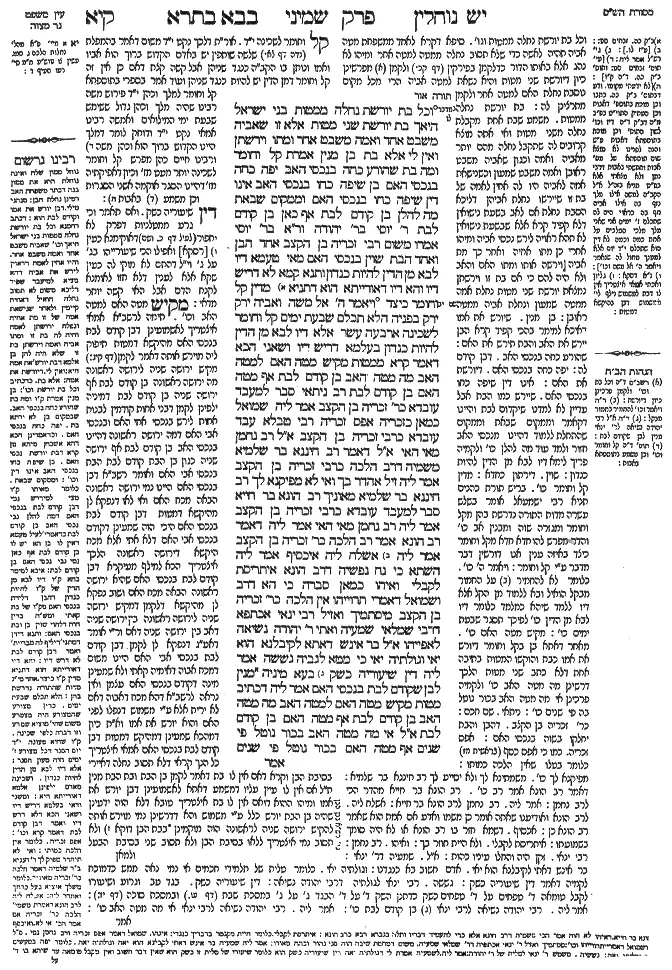
Bava Batra 111a - Guemara
(במדבר לו, ח) וכל בת יורשת נחלה ממטות בני ישראל היאך בת יורשת שני מטות אלא זו שאביה משבט אחד ואמה משבט אחר ומתו וירשתן ואין לי אלא בת בן מנין אמרת קל וחומר ומה בת שהורע כחה בנכסי האב יפה כחה בנכסי האם בן שיפה כחו בנכסי האב אינו דין שיפה כחו בנכסי האם וממקום שבאת מה להלן בן קודם לבת אף כאן בן קודם לבת ר' יוסי בר' יהודה ור"א בר' יוסי אמרו משום רבי זכריה בן הקצב אחד הבן ואחד הבת שוין בנכסי האם מאי טעמא דיו לבא מן הדין להיות כנדון ותנא קמא לא דריש דיו והא דיו דאורייתא הוא דתניא מדין קל וחומר כיצד (במדבר יב, יד) ויאמר ה' אל משה ואביה ירק ירק בפניה הלא תכלם שבעת ימים קל וחומר לשכינה ארבעה עשר אלא דיו לבא מן הדין להיות כנדון בעלמא דריש דיו ושאני הכא דאמר קרא ממטות מקיש מטה האם למטה האב מה מטה האב בן קודם לבת אף מטה האם בן קודם לבת רב ניתאי סבר למעבד עובדא כר' זכריה בן הקצב אמר ליה שמואל כמאן כזכריה אפס זכריה רבי טבלא עבד עובדא כרבי זכריה בן הקצב א"ל רב נחמן מאי האי א"ל דאמר רב חיננא בר שלמיא משמיה דרב הלכה כרבי זכריה בן הקצב אמר ליה זיל אהדר בך ואי לא מפיקנא לך רב חיננא בר שלמיא מאוניך רב הונא בר חייא סבר למעבד עובדא כרבי זכריה בן הקצב אמר ליה רב נחמן מאי האי אמר ליה דאמר רב הונא אמר רב הלכה כר' זכריה בן הקצב אמר ליה אשלח ליה איכסיף אמר ליה השתא כי נח נפשיה דרב הונא איתריסת לקבלי ואיהו כמאן סברה כי הא דרב ושמואל דאמרי תרוייהו אין הלכה כר' זכריה בן הקצב מיסתמיך ואזיל רבי ינאי אכתפא דרבי שמלאי שמעיה ואתי ר' יהודה נשיאה לאפייהו א"ל בר אינש דאתא לקיבלנא הוא יאי וגולתיה יאי כי מטא לגביה גששה אמר ליה דין שיעוריה כשק בעא מיניה מנין לבן שקודם לבת בנכסי האם אמר ליה דכתיב מטות מקיש מטה האם למטה האב מה מטה האב בן קודם לבת אף מטה האם בן קודם לבת א"ל אי מה מטה האב בכור נוטל פי שנים אף מטה האם בכור נוטל פי שנים
Comments from Rashbam - Bava Batra 111a
וכל בת יורשת נחלה ממטות וגו' . סיפא דקרא לאחד ממשפחת מטה אביה תהיה לאשה כדי שלא תסוב נחלה ממטה למטה אחר ומיהו לא נהג אלא באותו הדור כדלקמן בפירקין (בבא בתרא דף קכ.) ולקמן מפרשינן כיון דיורשת שני מטות והיא נשאת למטה אביה הרי מכל מקום נוסבת נחלת האם למטה אחר ולקמן מתרצינן לה: בת יורשת נחלה ממטות . משמע שבת אחת מקבלת נחלה משני מטות ואי אתה מוצא קרובים לה שתקבל נחלה מהם יותר מאביה ואמה וכגון שאביה משבט ראובן ואמה משבט שמעון וכשנישאת אמה לאביה היו לה אחין לאמה של בת זו שיירשו נחלת אביהן דליכא הסבת נחלת אם לאב בשעת נישואין דלא קפיד קרא אלא שבשעת נישואין לא תהא ראויה לירש נכסי אביה ומיהו אחרי כן מתו אחיה ואחר כך מת אביה וירשה אותו ומתו האם והאב ולא היה להם כי אם בת זו וירשתן נמצאת יורשת שני מטות נחלת אמה ממטה שמעון ונחלת אביה ממטה ראובן: בן מנין . שיורש את אמו דאיכא למימר בהכי קפיד קרא הבן יירש את האב והבת תירש את האם: שהורע כחה בנכסי האב . דבן קודם לה: יפה כחה בנכסי האם . דיורשת את האם: אינו דין שיפה כחו בנכסי האם . שיירש כמו הבת אבל עדיין לא למדנו שיקדום לבת והיינו דקאמר וממקום שבאת וממקום שהתחלת ללמוד דהיינו מנכסי האב חזור ולמד עוד מה להלן כו' ולקמיה פריך לימא דיו לבא מן הדין להיות כנדון: שוין . דירתון כחדא: מדין קל וחומר כו' . בריש תורת כהנים תניא רבי ישמעאל אומר בשלש עשרה מדות התורה נדרשת בהן מקל וחומר ומגזרה שוה ומבנין אב כו' והדר מפרש להו חדא חדא מקל וחומר כיצד באיזה ענין אנו דורשין דבר מדבר ע"י קל וחומר: ויאמר ה' כו' . כלומר לא להחמיר על החמור מבקל הואיל ובא ללמוד מן הקל אלא דיו ללמד שיהא כמלמד כלומר דיו לבא מן הדין כו' לפיכך תסגר שבעת ימים כו': מקיש מטה האם כו' . מאחר דאתא בן בקל וחומר דיורש את אמו כבת והוקשו המטות בתיבה אחת דלא כתב שני מטות הלכך דרשינן מה מטה האב כו' ולקמיה פרכינן אי מה מטה האב בכור נוטל בה פי שנים כו': ניתאי . שם חכם: כר' זכריה בן הקצב . דהבן והבת יחלקו בשוה בנכסי האם: אפס זכריה . כמו כי אפס כסף (בראשית מז) כלומר בטלו שאין הלכה כמותו: מפיקנא לך כו' . משמתינא לך ולא יסייע לך רב חיננא בר שלמיא: דאמר רב הונא אמר רב כו' . רב הונא בר חייא מהדר הכי לרב נחמן: אמר ליה . רב נחמן לרב הונא בר חייא: אשלח ליה . לרב הונא ואודיענו שאתה אומר כן משמו ואדע אם אמת הוא שאמר רב הונא כן: אכסיף . דשמא חזר בו רב הונא או לא היה סומך בשמועתו: איתריסת לקבלי . ולא היית חוזר בך: ואיהו . רב נחמן: רבי ינאי . זקן היה והחלו עיניו כהות: א"ל . שמעיה דר' ינאי: בר אינש דאתי לקיבלנא הוא יאי . אדם חשוב בא כנגדנו: וגולתיה יאי . כלומר טלית של תלמידי חכמים אי נמי נאה ממש כדמוכח לקמיה דאמר דין שיעוריה כשק: גששה . רבי ינאי לגולתיה דרבי יהודה נשיאה: דין שיעוריה כשק . בגד עב וגרוע ושיעורו לקבל טומאה ד' טפחים על ד' טפחים כשק כדתנן השק ד' על ד' הבגד ג' על ג' במסכת שבת (דף עו.) ובמסכת סוכה (דף יז:): אמר ליה . רבי יהודה נשיאה לרבי ינאי בן קודם לבת כו': אמר ליה . רבי יהודה נשיאה לרבי ינאי אי מה מטה האב כו':
Comments from Tosafot - Bava Batra 111a
קל וחומר לשכינה י"ד. אור"ת דלכך נקט י"ד משום דאמר בהמפלת (נדה דף לא.) שלשה שותפין יש באדם הקדוש ברוך הוא אביו ואמו ונותן בו הקב"ה כנגד שניהן אבל קשה קצת דאם כן אין זה קל וחומר דמן הדין יש להיות כנגד שניהן ועוד אמר בספרי בתוספתא קל וחומר למלך וכהן י"ד פירוש משה רבינו שהיה מלך וכהן גדול ששימש שבעת ימי המילואים ואמשה רבינו אמאי נקט י"ד ודוחק לומר דמלך היינו הקדוש ברוך הוא וכהן משה ורבינו חיים כהן מפרש קל וחומר לשכינה יותר מעט מז' וכיון דאפיקתיה מז' דהיינו הסגר אוקמה אשני הסגרות וכן משמע באבות: מקיש מטה האם למטה האב וכו'. תימה לרשב"א אמאי איצטריך לאשמועינן דבן קודם לבת בנכסי האם מהיקשא דמטות תיפוק ליה מוירש אותה דאמר לקמן (בבא בתרא דף קיג:) מקיש ירושה שניה לירושה ראשונה מה ירושה ראשונה בן קודם לבת אף ירושה שניה בן קודם לבת דמיניה ילפינן לקמן דבני אחות קודמין לבנות אחות לירש בנכסי אחי האם ובנכסי אבי האם דמה ירושה ראשונה דהיינו בנכסי האב בן קודם לבת אף ירושה שניה כגון בן הבת קודם לבת הבת בנכסי אבי האם ואומר רשב"א דבן בנכסי האם היינו נמי ירושה ראשונה הבאה מכח האם ואי לאו דנפקא לן מהיקשא דמטות דבן קודם לבת בנכסי האם היכי הוה שמעינן דקודם בנכסי אבי האם דלא אתי אלא מכח היקשא דירושה ראשונה הלכך איצטריך הכא למילף מעיקרא דבן קודם לבת בנכסי האם שהיא ירושה ראשונה הבאה מכח האם ושוב נפקא לן מהיקשא דלקמן דמקיש ירושה שניה לירושה ראשונה בין ירושה שניה דאב בין ירושה שניה דאם ור"י אומר דאע"ג דנפקא לן לקמן דבן קודם לבת בנכסי אבי האם היינו משום דמכח אבוה דאימיה קאתי ולא שמעינן מינה דקודם בנכסי האם עצמן ואין נראה לרשב"א דהא מכח דאבוה דאם לא ירית אלא ע"י משמוש דנפלו לפני האם והוא יורש את אמו וא"ת כיון דמהכא שמעינן דמהיקש דמטות דבן קודם לבת בנכסי האם אמאי איצטריך כל הנך קראי דלא תסוב נחלה דאיירי בסיבת הבן וקרא דאם אין לו בת דאמר לקמן בן הבת ובת הבת מנין ת"ל אם אין לו עיין עליו דמשמע דאתא לאשמועינן דבן יורש את אמו ומיהו ההוא דואם אין לו בת איצטריך טובא דלא הוה ידעינן שהיה בן הבת יורש כלל ע"י משמוש והא דדרשינן נמי מוירש אותה להקיש ירושה שניה לראשונה הוה מוקמינן בבת הבן דוקא ולא תסוב נמי איצטריך ללאו בסיבת הבן ולא תסוב שני בסיבת הבעל ולמאן דדריש בעל משארו איצטריך לעבור עליו בשני לאוין ומיהו קשה לרשב"א דאמאי איצטריך הכא היקשא דמטות כיון דשמעינן מואם אין לו בת ומלא תסוב דבן יורש את אמו תיפוק ליה מקל וחומר דבן קודם לבת והשתא לא אמר דיו כיון דמפריך ק"ו ומיהו פלוגתא היא בכיצד הרגל (ב"ק דף כה.) דאיכא מ"ד אפילו היכא דמיפרך ק"ו אמר דיו ומיהו אפילו למ"ד לא אמר דיו איכא למימר דמילתא דאתיא בק"ו טרח וכתב לה קרא: דין שיעוריה כשק. ואם תאמר וכי גרע ממטלניות דפרק לא יחפור (לעיל בבא בתרא דף כ. ושם) דאוקימנא כעין [רסקא] ואפילו הכי שיעורייהו בג' על ג' וי"ל דהתם לא מוקי לה כעין שקא אלא לענין דלא חזו לאומנא לקנח הדם אבל האי קשה יותר מדאי:
Bava Batra 111a - Mishnah translated into english
The verse states: “And every daughter who possesses an inheritance from the tribes of the children of Israel” (Numbers 36:8). Noting the plural in the phrase “from the tribes of the children of Israel,” the baraita asks: How can a daughter inherit land from two tribes? Rather, this is referring to a daughter whose father is from one tribe but her mother is from another tribe, and they both died, and she inherited from both of them. Therefore, it can be seen in this verse that a daughter inherits from her mother.
The baraita continues: I have derived only that a daughter inherits from her mother; from where do I derive that a son inherits from his mother as well? You can say an a fortiori inference: And just as a daughter, whose power is diminished with regard to her father’s property in that she does not inherit it when there is a son, yet her power is enhanced with regard to her mother’s property in that she inherits it; with regard to a son, whose power is enhanced with regard to his father’s property in that he is first in the order of inheritance, is it not logical that his power is enhanced with regard to his mother’s property? The baraita continues: And from the place that you came, i.e., from the inference that was just stated, one can say the following: Just as there, with regard to a father’s property, a son precedes a daughter, so too here, with regard to a mother’s property, a son precedes a daughter. This is the opinion of the first tanna.
The baraita continues: Rabbi Yosei, son of Rabbi Yehuda, and Rabbi Elazar, son of Rabbi Yosei, said in the name of Rabbi Zekharya ben Hakatzav: Both the son and the daughter are equal with regard to the mother’s property. What is the reason for his ruling? It is sufficient for the conclusion that emerges from an a fortiori inference to be like its source. According to this principle, a halakha derived by means of an a fortiori inference cannot go beyond the halakhot of the source from which it is derived. Since the halakha that a son inherits from his mother was derived via an a fortiori inference from the halakha that a daughter inherits from her mother, it cannot be that this inference should lead to the conclusion that a son precedes a daughter in inheriting from their mother.
The Gemara asks: And doesn’t the first tanna also interpret verses employing the principle of: It is sufficient for the conclusion that emerges from an a fortiori inference to be like its source? But the principle of: It is sufficient, which limits the extent of a fortiori inference, is found in the Torah, so how could he disagree with it?
As it is taught in a baraita that explains the hermeneutical principles: How does an a fortiori inference work? The verse states with regard to Miriam, after she spoke ill of her brother Moses: “And the Lord said to Moses: If her father had but spit in her face, should she not hide in shame seven days?” (Numbers 12:14). The verse is saying that if a father spits in the face of his daughter and reprimands her, she would feel shame for seven days. By an a fortiori inference it is derived that Miriam, who suffered the more severe reprimand of the Divine Presence, should be ostracized for fourteen days. Why then, was Miriam ostracized for only seven days?
Rather, it is sufficient for the conclusion that emerges from an a fortiori inference to be like its source, so her punishment cannot be for longer than the punishment of one who is reprimanded by a father. In any event, the principle the begins with: It is sufficient, can be seen in this verse, so how does the first tanna rule that a son precedes a daughter with regard to a mother’s property?
The Gemara answers: Generally, the first tanna also interprets verses employing the principle that begins with: It is sufficient, but it is different here with regard to inheritance, as the verse states: “And every daughter who possesses an inheritance from the tribes of the children of Israel” (Numbers 36:8). The verse juxtaposes the tribe of the mother to the tribe of the father. Therefore, the first tanna holds that just as with regard to the tribe of the father, i.e., inheriting from one’s father, a son precedes a daughter, so too, with regard to the tribe of the mother, i.e., inheriting from one’s mother, a son precedes a daughter.
The Gemara relates: Rav Nittai thought to perform an action, i.e., issue a ruling, in accordance with the opinion of Rabbi Zekharya ben HaKatzav, who taught that a son and daughter are equal with regard to inheriting from their mother. Shmuel said to him: In accordance with whose opinion do you wish to issue this ruling, in accordance with the opinion of Zekharya? Zekharya is nil [afes], i.e., his statement was not accepted as halakha. Rabbi Tavla performed an action, i.e., issued a ruling, in accordance with the opinion of Rabbi Zekharya ben HaKatzav. Rav Naḥman said to him: What is this? Rabbi Tavla said to him: As Rav Ḥinnana bar Shelamya says in the name of Rav: The halakha is in accordance with the opinion of Rabbi Zekharya ben HaKatzav. Rav Naḥman said to him: Go retract your ruling, and if you do not, I will take Rav Ḥinnana bar Shelamya out of your ear, i.e., I will punish you severely for ruling against the accepted halakha.
The Gemara relates further: Rav Huna bar Ḥiyya thought to perform an action, i.e., issue a ruling, in accordance with the opinion of Rabbi Zekharya ben HaKatzav. Rav Naḥman said to him: What is this? Rav Huna bar Ḥiyya said to him: As Rav Huna says that Rav says: The halakha is in accordance with the opinion of Rabbi Zekharya ben HaKatzav. Rav Naḥman said to him: Shall I send a messenger to Rav Huna to ask him if that is indeed what he said? Rav Huna bar Ḥiyya was embarrassed, as he was not certain that Rav Huna actually said this ruling. Rav Naḥman said to him: Now, if Rav Huna were to have died, you would have been brazen enough to say before me that this is what he said, but since he is still alive, you cannot be so brazen.
The Gemara asks: And he, Rav Naḥman, in accordance with whose opinion does he hold? As there were various sages who ruled in accordance with the opinion of Rabbi Zekharya ben HaKatzav, why did Rav Naḥman not agree? The Gemara answers: He holds in accordance with this statement of Rav and Shmuel, who both say: The halakha is not in accordance with the opinion of Rabbi Zekharya ben HaKatzav.
The Gemara relates: Rabbi Yannai, who had already grown old and whose eyes were dim, would walk leaning on the shoulder of Rabbi Simlai, his attendant, and Rabbi Yehuda Nesia came toward them. Rabbi Simlai said to Rabbi Yannai: The person who is coming toward us is handsome and his cloak is handsome. When Rabbi Yehuda Nesia reached him, Rabbi Yannai felt his cloak and said to Rabbi Simlai: Concerning this cloak, its measurement with regard to the halakhot of ritual impurity is like the measurement of sackcloth, meaning it was a cloak of inferior quality, as it was thick and rough.
When Rabbi Yehuda Nesia met Rabbi Yannai he asked him: From where is it derived that a son precedes a daughter with regard to the mother’s property? Rabbi Yannai said to him: As it is written: “And every daughter who possesses an inheritance from the tribes of the children of Israel” (Numbers 36:8). The verse juxtaposes the tribe of the mother to the tribe of the father. This teaches that just as with regard to the tribe of the father a son precedes a daughter, so too, with regard to the tribe of the mother, a son precedes a daughter. Rabbi Yehuda Nesia said to him: If so, if these two halakhot are in fact juxtaposed, the following should also be derived: Just as with regard to the inheritance of the father’s tribe a firstborn takes a double portion, so too, with regard to inheritance from the mother’s tribe, when he inherits from his mother a firstborn takes a double portion.
Traduction : The William Davidson digital edition of the Koren Noé Talmud, with commentary by Rabbi Adin Even-Israel Steinsaltz.