 Talmud Bavli
The learning on the whole site is dedicated : L'ilui Nishmat Rav Chlomo Ben Jamilla
The learning on the whole site is dedicated : L'ilui Nishmat Jamila bat Chlomo Abensour
The learning on the whole site is dedicated : L'ilui Nishmat Avraham Ben Simha
Bava Batra 176a : Youtube
Daf TubeYoutube
2 video classes :
Bava Batra Page 176a
Bava Batra 176a - Guemara
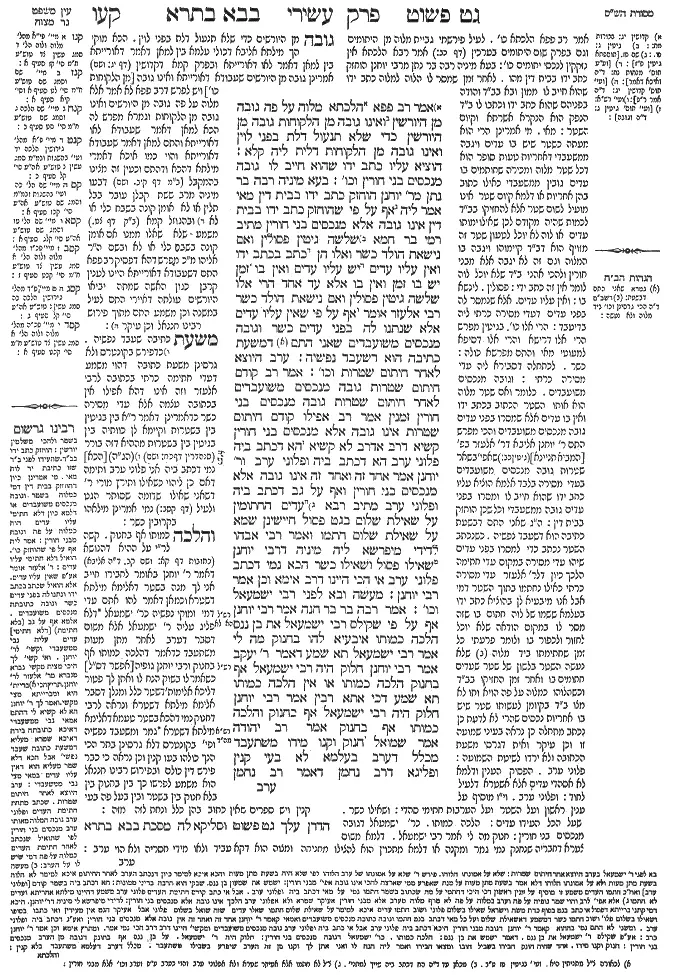
אמר רב פפא הלכתא מלוה על פה גובה מן היורשין ואינו גובה מן הלקוחות גובה מן היורשין כדי שלא תנעול דלת בפני לוין ואינו גובה מן הלקוחות דלית ליה קלא:
הוציא עליו כתב ידו שהוא חייב לו גובה מנכסים בני חורין וכו':
בעא מיניה רבה בר נתן מר' יוחנן הוחזק כתב ידו בבית דין מאי אמר ליה אף על פי שהוחזק כתב ידו בבית דין אינו גובה אלא מנכסים בני חורין מתיב רמי בר חמא שלשה גיטין פסולין ואם נישאת הולד כשר ואלו הן כתב בכתב ידו ואין עליו עדים יש עליו עדים ואין בו זמן יש בו זמן ואין בו אלא עד אחד הרי אלו שלשה גיטין פסולין ואם נישאת הולד כשר רבי אלעזר אומר אף על פי שאין עליו עדים אלא שנתנו לה בפני עדים כשר וגובה מנכסים משועבדים שאני התם דמשעת כתיבה הוא דשעבד נפשיה:
ערב היוצא לאחר חיתום שטרות וכו':
אמר רב קודם חיתום שטרות גובה מנכסים משועבדים לאחר חיתום שטרות גובה מנכסים בני חורין זמנין אמר רב אפילו קודם חיתום שטרות אינו גובה אלא מנכסים בני חורין קשיא דרב אדרב לא קשיא הא דכתב ביה פלוני ערב הא דכתב ביה ופלוני ערב ור' יוחנן אמר אחד זה ואחד זה אינו גובה אלא מנכסים בני חורין ואף על גב דכתב ביה ופלוני ערב מתיב רבא עדים החתומין על שאילת שלום בגט פסול חיישינן שמא על שאילת שלום חתמו ואמר רבי אבהו לדידי מיפרשא ליה מיניה דרבי יוחנן שאילו פסול ושאילו כשר הכא נמי דכתב פלוני ערב אי הכי היינו דרב אימא וכן אמר רבי יוחנן:
מעשה ובא לפני רבי ישמעאל וכו':
אמר רבה בר בר חנה אמר רבי יוחנן אף על פי שקילס רבי ישמעאל את בן ננס הלכה כמותו איבעיא להו בחנוק מה לי אמר רבי ישמעאל תא שמע דאמר ר' יעקב אמר רבי יוחנן חלוק היה רבי ישמעאל אף בחנוק הלכה כמותו או אין הלכה כמותו תא שמע דכי אתא רבין אמר רבי יוחנן חלוק היה רבי ישמעאל אף בחנוק והלכה כמותו אף בחנוק אמר רב יהודה אמר שמואל חנוק וקנו מידו משתעבד מכלל דערב בעלמא לא בעי קנין ופליגא דרב נחמן דאמר רב נחמן
Comments from Rashbam - Bava Batra 176a
אמר רב פפא הלכתא כו' . לעיל פירשתי גביית מלוה מן היתומים וגם בפרק שום היתומים בערכין (דף כב:) אמר רבא הלכתא אין נזקקין לנכסי יתומים כו': בעא מיניה רבה בר נתן מרבי יוחנן הוחזק כתב ידו בבית דין מהו . לאחר זמן שמסר לו הלוה למלוה כתב ידו שהוא חייב לו ממון ובא בב"ד והודה בפניהם שהוא כתב ידו וכתבו לו ב"ד הנפק הוא הנקרא אשרתא וקיום השטר: מאי . מי אמרינן הרי הוא מעתה כשטר שיש בו עדים ויגבה ממשעבדי דאחריות טעות סופר הוא דכל שטר מלוה ומכירה שחותמים בו עדים גובין ממשעבדי כאילו כתוב בהן אחריות או דלמא קיום שטר אינו מועיל לשום שטר אלא להחזיקו בב"ד לכמות שהיה מקודם לכן שאילו ימותו עדים או לוה לא יוכל לטעון שטר זה מזויף הוא דב"ד קיימוהו ויגבה בו המלוה וגם זה לא יגבה אלא מבני חורין ולהכי אהני ב"ד שלא יוכל לוה לומר אין זה כתב ידי: פסולין . לינשא בו: ואין עליו עדים . אלא שנמסר לה בפני עדים דעדי מסירה כרתי ליה בדיעבד: הרי אלו כו' . בגיטין מפרש הרי אלו דרישא והרי אלו דסיפא למעוטי מאי והתם מפרשא כולה: כשר . לכתחלה דסבירא ליה עדי מסירה כרתי: וגובה מנכסים משועבדים . כלומר ואם שטר מלוה הוא אותו השטר הכתוב בכתב ידו ואין בו עדים אלא שמסרו בפני עדים גובה מנכסים משועבדים והכי מפרש התם ר' יוחנן אליבא דר' אלעזר בפ' [המביא תניינא] (גיטין כב:) שאפי' בשאר שטרות גובה מנכסים משועבדים בעדי מסירה בלבד אלמא הוציא עליו כתב ידו שהוא חייב לו ומסרו בפני עדים גובה ממשעבדי וכל שכן הוחזק בבית דין: ה"ג שאני התם דבשעת כתיבה הוא דשעבד נפשיה . כשנכתב השטר נכתב כדי למסרו בפני עדים שיהו עדי מסירה במקום עדי חתימה הלכך כיון דלר' אלעזר עדי מסירה כרתי באילו נחתמו בתוך השטר דמי אבל אנו מיבעיא לן בהוציא כתב ידו בעלמא ששמו של לוה חתום בו שזה מסר לו במקום הודאה שלא יוכל לחזור ולכפור בו ולומר פרעתי כל זמן שחתימתו ביד מלוה שלא נעשה השטר בלשון של שטר שעדים חתומים בו ואחר זמן החזיקו בב"ד וכשהלוהו כמלוה על פה הויא ותו לא מצו ב"ד בקיומן לעשותו שטר שיש בו אחריות נכסים שהרי לא לדעת כן נכתב מתחלה כן נראה בעיני שמועה זו וכן עיקר ואית דגרסי משעת הכתובה ולא ירדו לשיטת השמועה: פלוני ערב . הפסיק הענין ודלמא לא אסהדי עדים אלא אשטרא דלעיל לחוד: ופלוני ערב . וי"ו מוסיף על ענין ראשון ועל השטר ועל הערבות חתימי סהדי: ושאילו כשר . שעל הכל העידו עדים: הלכה כמותו . כר' ישמעאל דגובה מנכסים בני חורין: חנוק מה לי אמר רבי ישמעאל . דלמא משום צערא דחבריה שנחנק נמי גמר ומקנה או דלמא מתכוין הוא להצילו מחניקה ומצוה הוא דקא עביד ולאו מידי חסריה ולא הוי ערב:
Comments from Tosafot - Bava Batra 176a
גובה מן היורשים כדי שלא תנעול דלת בפני לוין. הכא מוקי הך מילתא אליבא דכולי עלמא בין למאן דאמר דאורייתא בין למאן דאמר לאו דאורייתא ובפרק קמא דקדושין (דף יג: ושם) אמרינן גובה מן היורשים שעבודא דאורייתא ואינו גובה [מן הלקוחות כו'] ויש לפרש דרב פפא לא אמר אלא מלוה על פה גובה מן היורשים ואינו גובה מן הלקוחות וגמרא מפרש לה הכא למאן דאמר שעבודא לאו דאורייתא והתם למאן דאמר שעבודא דאורייתא והוי כמו איכא דאמרי מילתא דהכא ודהתם וכעין זה מצינו בהמקבל (ב"מ דף קיב. ושם) דבעו מיניה מרב ששת קבלן עובר בבל תלין או לא אומן קונה בשבת כלי או לא ובהגוזל קמא (ב"ק דף צט.) משמע שלא שאלו ממנו אם אומן קונה בשבח כלי או לא ובשם ה"ר אליהו מ"כ מפרש דהא דפסיק רב פפא התם דשעבודא דאורייתא היינו לענין קרבן כגון האשה שמתה יביאו היורשים עולתה דאיירי התם לעיל במשנה וכן משמע התם מתוך פירוש רבינו חננאל וכן עיקר: משעת כתיבה שעבד נפשיה. כדפירש בקונטרס ולא גרסינן משעת כתובה דהוי משמע דעדי חתימה כרתי בכתובה לרבי אלעזר וזה אינו דהא אפילו אין בכתובה עצמה אלא עדי מסירה כשר כדאמרינן דאמר ר"א בין בגיטין בין בשטרות וקיימא לן כוותיה בין בגיטין בין בשטרות מההיא דזה בורר (סנהדרין דף כח: ושם) (הג"ה) [הכא] נמי דכתב ביה אני פלוני ערב ותימה דאם כן ליהוי כשאילו ותירץ מורי ר' דשאני שאילו שדומה שסותר הגט ולעיל (בבא בתרא דף קסב:) נמי אמרינן מילאהו בקרובין כשר: והלכה כמותו אף בחנוק. קשה לר"י על ההיא דהנושא (כתובות דף קא: ושם קב. ד"ה אליבא) דאמר ר' יוחנן באומר לחבירו חייב אני לך מנה בשטר דאלימא מילתא דשטרא וכמאן דאמר להו אתם עדי דמי ומוקי נפשיה כר' ישמעאל. דלא פליג עליה ר' ישמעאל אלא משום דסבר דערב לאחר מתן מעות משתעבד כדאמר דהלכה כמותו אף בחנוק ורבי יוחנן גופיה [אפשר דס"ל] כשאמר לו בשוק הנח לו ואתן לך פטור דליכא אלימות' דשטר כלל ומנלן דסבר אלימא מילתא דשטרא ונראה לרבי דחנוק נמי דהכא בשטר טעמא דאלימא מילתא דשטרא גמר ומשעבד נפשיה ופי' בקונטרס דלא גרסינן בתר הכי הנך כולהו בעו קנין וכן נראה כי כבר פירש דין כולם ובפירוש רבינו חננאל הוא משמע לפרשו כך בין בחנוק בין בלא חנוק בין בשטר ובין בעל פה בעי קנין ויש ספרים שאין כתוב בהן כלל ונחת לזה מזה:
Bava Batra 176a - Mishnah translated into english
Rav Pappa said: The halakha is that when a creditor gives a loan by oral contract, he can collect the debt from the heirs of the debtor after his death, but he cannot collect the debt from the purchasers of the debtor’s property. He can collect the debt from the heirs so as not to lock the door in the face of potential borrowers. But he cannot collect the debt from the purchasers, as a loan by oral contract has no publicity associated with it.
§ The mishna teaches: If one presents to a debtor a document in the handwriting of the debtor stating that he owes money to him, but without witnesses signed on the document, the creditor can collect only from unsold property. Rabba bar Natan asked Rabbi Yoḥanan: If the document in the handwriting of the debtor was ratified in court at a later time, what is the halakha? Would it then be possible to collect the debt from liened property that has been sold? Rabbi Yoḥanan said to him in reply: Even if the document in the handwriting of the debtor was ratified in court, the creditor can collect the debt only from unsold property.
Rami bar Ḥama raises an objection from a mishna (Gittin 86a), which states: There are three types of bills of divorce that are not valid ab initio, but if the woman marries another man on the basis of one of these bills of divorce the lineage of the offspring from this marriage is unflawed. In other words, she is not considered to be a married woman who engaged in sexual intercourse with another man, which would impair the lineage of their child. And they are these: A bill of divorce that the husband wrote in his handwriting but there are no signatures of witnesses in the document at all; a bill of divorce where there are the signatures of witnesses in the document but there is no date written in it; and a bill of divorce where there is a date written in it, but it contains only one witness. These are the three bills of divorce that are not valid with regard to which the Sages said: And if she marries, the lineage of the offspring is unflawed.
Rabbi Elazar says: Even though there are no signatures of witnesses in the document, but he handed it to her in the presence of two witnesses, it is a valid bill of divorce. And on the basis of this bill of divorce the woman can collect the amount written to her in her marriage contract even from liened property that has been sold. This indicates that even when no witnesses signed the document, the debt listed therein can be collected from liened property that has been sold, as long as witnesses saw the document being transferred to the creditor. All the more so a debt listed in a document in the handwriting of the debtor that has been ratified by a court should be eligible for collection from liened property that has been sold.
The Gemara answers: There it is different, as the husband obligated himself and his property immediately from the time of the writing of the document, as he knew at that time that the document would be transferred in the presence of witnesses. By contrast, in the case of the mishna here, the document in the handwriting of the debtor was written without the intent of ratifying it. It was only at a later date, as an afterthought, that it was ratified, and the terms of the obligation of the debt cannot be changed at that time.
§ The mishna teaches: In the case of a guarantor whose commitment emerged, i.e., was written, after the signing of the promissory note, the creditor can collect the debt only from unsold property of the guarantor. Rav says: If the guarantor’s commitment is written before the signing of the document, the creditor can collect the debt from the guarantor from liened property that has been sold; if it is written after the signing of the document, the creditor can collect the debt only from unsold property.
At other times, Rav said: Even if the guarantee is written before the signing of the document, the creditor can collect the debt only from unsold property.
The Gemara asks: There is a difficulty resulting from the contradiction between one statement of Rav to the other statement of Rav, as they seem to contradict one another with regard to a guarantee that is written before the signing of the document. The Gemara answers: This is not difficult. This case, where Rav says the creditor can collect the debt only from unsold property, is where it was written in the document as follows: So-and-so is a guarantor, as this formulation is an independent statement, and the witnesses signing the document do not necessarily relate to that statement. And that case, where Rav says the creditor can collect the debt from liened property that has been sold, is where it was written in the document as follows: And so-and-so is a guarantor. The usage of the conjunctive: And, causes this clause to be an integral part of the document, so that the signatures of the witnesses relate to it as well.
And Rabbi Yoḥanan says: In both this case and that case, the creditor can collect the debt only from unsold property. The Gemara comments: And according to the opinion of Rabbi Yoḥanan, this is the halakha even if it is written in the document: And so-and-so is a guarantor.
Rava raises an objection from a baraita (Tosefta, Gittin 9:9): In a case where witnesses are signed on a greeting written in a bill of divorce, the bill of divorce is not valid, as we are concerned that perhaps the witnesses signed on the greeting alone, i.e., they did not intend to testify to the divorce, but only to verify that the greeting was written.
And Rabbi Abbahu said concerning this baraita: It was explained to me personally by Rabbi Yoḥanan himself that it is only when the wording of the greeting begins: Send a greeting to so-and-so, that the bill of divorce is not valid, as this is an independent statement and it is possible that the signatures relate to it alone. But if the wording is: And send a greeting to so-and-so, the usage of the conjunctive: And, causes this clause to be an integral part of the document, and the bill of divorce is valid. This indicates that Rabbi Yoḥanan himself maintains that when the conjunction is used the signatures relate to the entire document.
The Gemara answers: Here too, when did Rabbi Yoḥanan say that the creditor can collect the debt only from the guarantor’s unsold property? Where it was written: So-and-so is a guarantor. If the conjunction is used, he can collect the debt even from liened property that has been sold.
The Gemara objects: But if so, this is identical to the opinion of Rav, whereas Rabbi Yoḥanan was presented as disagreeing with Rav. The Gemara answers: That presentation was inaccurate. Say instead: And so Rabbi Yoḥanan says as Rav did.
§ The mishna relates: An incident occurred where such a case came before Rabbi Yishmael, and he said: The creditor can collect the debt from unsold property of the guarantor, but not from liened property that the guarantor has sold to others. Ben Nannas said to Rabbi Yishmael: The creditor cannot collect the debt from the guarantor at all, not from liened property that has been sold, nor from unsold property. Rabba bar bar Ḥana says that Rabbi Yoḥanan says: Although Rabbi Yishmael praised Ben Nannas after hearing his dissenting opinion (see 175b), the halakha is actually in accordance with Rabbi Yishmael’s opinion as he stated it initially, i.e., that in the case of a guarantee that is written after the signatures, the creditor can collect the debt only from unsold property of the guarantor, but not from liened property that has been sold.
A dilemma was raised before the Sages: What would Rabbi Yishmael say to me about the case of the debtor who was being strangled, as depicted by ben Nannas? Perhaps he would agree in that case, since the guarantee was given under duress, that it is not valid. The Gemara suggests: Come and hear, as Rabbi Yaakov says that Rabbi Yoḥanan says: Rabbi Yishmael disagreed with ben Nannas also in the case of the debtor being strangled.
The Gemara asks: And is the halakha in accordance with Rabbi Yishmael’s opinion even in the case of the debtor being strangled, or is the halakha not in accordance with his opinion in that case? Come and hear, as when Ravin came he said that Rabbi Yoḥanan says: Rabbi Yishmael disagreed with ben Nannas also in the case of the debtor being strangled, and the halakha is in accordance with Rabbi Yishmael’s opinion also in the case of the debtor being strangled.
Rav Yehuda says that Shmuel says: If the debtor was being strangled, and in addition an act of acquisition was performed with the guarantor, the guarantor becomes obligated to repay the debt. The Gemara deduces: By inference it emerges that a guarantor generally does not require an act of acquisition to become obligated to pay. And this disagrees with a statement of Rav Naḥman, as Rav Naḥman says:
Traduction : The William Davidson digital edition of the Koren Noé Talmud, with commentary by Rabbi Adin Even-Israel Steinsaltz.