 Talmud Bavli
Bava Batra 174a : Youtube
Daf TubeYoutube
2 video classes :
Bava Batra Page 174a
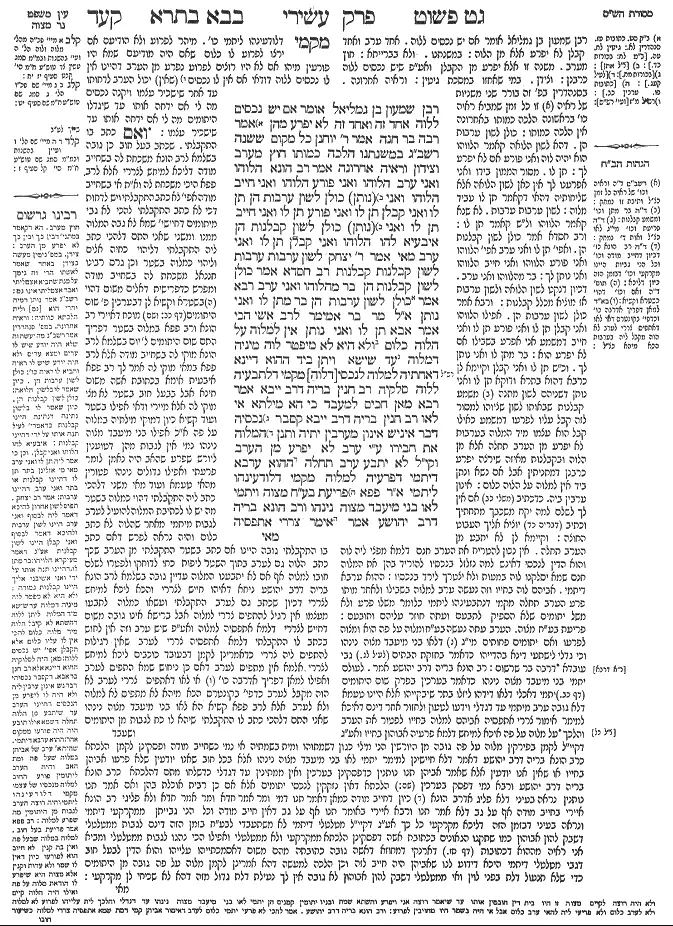
Bava Batra 174a - Guemara
רבן שמעון בן גמליאל אומר אם יש נכסים ללוה אחד זה ואחד זה לא יפרע מהן אמר רבה בר חנה אמר ר' יוחנן כל מקום ששנה רשב"ג במשנתנו הלכה כמותו חוץ מערב וצידון וראיה אחרונה אמר רב הונא הלוהו ואני ערב הלוהו ואני פורע הלוהו ואני חייב הלוהו ואני (נותן) כולן לשון ערבות הן תן לו ואני קבלן תן לו ואני פורע תן לו ואני חייב תן לו ואני (נותן) כולן לשון קבלנות הן איבעיא להו הלוהו ואני קבלן תן לו ואני ערב מאי אמר ר' יצחק לשון ערבות ערבות לשון קבלנות קבלנות רב חסדא אמר כולן לשון קבלנות הן בר מהלוהו ואני ערב רבא אמר כולן לשון ערבות הן בר מתן לו ואני נותן א"ל מר בר אמימר לרב אשי הכי אמר אבא תן לו ואני נותן אין למלוה על הלוה כלום ולא היא לא מיפטר לוה מיניה דמלוה עד שישא ויתן ביד ההוא דיינא דאחתיה למלוה לנכסי [דלוה] מקמי דלתבעיה ללוה סלקיה רב חנין בריה דרב ייבא אמר רבא מאן חכים למעבד כי הא מילתא אי לאו רב חנין בריה דרב ייבא קסבר נכסיה דבר איניש אינון מערבין יתיה ותנן המלוה את חבירו ע"י ערב לא יפרע מן הערב וקי"ל לא יתבע ערב תחלה ההוא ערבא דיתמי דפרעיה למלוה מקמי דלודעינהו ליתמי א"ר פפא פריעת בע"ח מצוה ויתמי לאו בני מיעבד מצוה נינהו ורב הונא בריה דרב יהושע אמר אימר צררי אתפסיה
Comments from Rashbam - Bava Batra 174a
רבן שמעון בן גמליאל אומר אם יש נכסים ללוה . אחד ערב ואחד קבלן לא יפרע אלא מן הלוה: במשנתנו . ולא בברייתא: חוץ מערב . משנה זו אלא יפרע מן הקבלן ואע"פ שיש נכסים ללוה כרבנן: וצידן . במי שאחזו במסכת גיטין: וראיה אחרונה . בסנהדרין בפ' זה בורר שני משניות של ראיה זו כל זמן שמביא ראיה כו' בראשונה הלכה כמותו באחרונה אין הלכה כמותו: כולן לשון ערבות הן . דהא לשון הלואה קאמר הלווהו הוא יהיה לוה ואני פורע אם לא יפרע לך: תן לו . מסור הממון בידו ואני אפרענו לך אין כאן לשון הלואה אלא שליחותיה דהאי דקאמר תן לו עביד מלוה: לשון ערבות ערבות . לא שנא קאמר הלווהו ול"ש קאמר תן לו: ורב חסדא אמר כולן לשון קבלנות הן . ואפי' תן לו ואני ערב אפי' הלווהו ואני פורע הלווהו ואני חייב הלווהו ואני נותן לך: בר מהלווהו ואני ערב . דכיון דנקט לשון הלואה ולשון ערבות אז מוציא מכלל קבלנות: ורבא אמר כולן לשון ערבות הן . אפילו הלווהו ואני קבלן תן לו ואני פורע תן לו ואני חייב דמשמע אני אפרע בשבילו אם לא יפרע הוא: בר מתן לו ואני נותן לך . וכ"ש תן לו ואני קבלן וקיימא לן כרבא דהוא בתרא ודוקא תן לו ואני נותן דשניהם לשון מתנה משמע קבלנות שבאותו לשון שציוהו למסור לזה קבל עליו לפרעו דמשמע כאילו קבל הוא עצמו מיד המלוה בערבות לא יפרע מן הערב תחלה אלא מן הלוה ובקבלנות מאיזה שירצה יפרע כרבנן דמתניתין אבל אם נשא ונתן ביד אין למלוה על הלוה כלום: אינון ערבין ביה . כדכתיב (משלי כב) אם אין לך לשלם למה יקח משכבך מתחתיך וכתיב (דברים כד) יוציא אליך העבוט החוצה: וקיימא לן לא יתבע מן הערב תחלה . אין נכון להטריח את הערב חנם דלמא מפצי ליה לוה והוא הדין לנכסי דאינש למה נזלזל בנכסיו להוריד בהן את המלוה חנם שמא יסלקנו לוה במעות ולא יצטרך לירד בנכסיו: ההוא ערבא דיתמי . אביהם לוה בחייו וזה נעשה ערב למלוה בשבילו ולאחר מותו פרע הערב תחלה מקמי דנתבעינהו ליתמי כלומר משלו פרע ולא משל יתומים שלא הספיק לתבעם ועתה חוזר עליהם ותובעם: פריעת בע"ח מצוה . הערב עתה נעשה בע"ח ומלוה על פה הוא ומצוה לפרעו ואם יתומים פחותים מי"ג דלאו בני מיעבד מצוה נינהו וכי גדלי לישתעי דינא בהדייהו כדאמר בחזקת הבתים (לעיל בבא בתרא לג.) גבי עובדא דרבה בר שרשום: רב הונא בריה דרב יהושע אמר . לעולם יתמי בני מיעבד מצוה נינהו כדאמר בערכין בפרק שום היתומים (דף כב.) יתמי דאכלי דלאו דידהו ליזלו בתר שיבקייהו אלא היינו טעמא דלא גובה ערב מיתמי עד דגדלי וידעו לטעון ולחזור אחר דינם דאיכא למימר אימור צררי אתפסיה אביהם למלוה בחייו לפטור את הערב והלכך על מלוה על פה איכא למיחש דלמא פרעיה אבוהון בחייו ואע"ג דקיי"ל לקמן בפירקין מלוה על פה גובה מן היורשין הני מילי כגון דשמתוהו ומית בשמתיה אי נמי כשחייב מודה ופסקינן לקמן הלכתא כרב הונא בריה דרב יהושע דאמר דלא חיישינן למימר יתמי לאו בני מיעבד מצוה נינהו אלא בכל חוב שאנו יודעין שלא פרעו אביהן בחייו או שאין אנו יודעין אלא שאמר אביהן תנו נותנין כדפסקינן בערכין ואין ממתינין עד דגדלי כדשלחו מתם דהלכתא כרב הונא בריה דרב יהושע ורבא נמי דפסק בערכין (שם:) הלכתא דאין נזקקין לנכסי יתומים אלא אם כן רבית אוכלת בהן ואם אמר תנו נותנין נראה בעיני דלא פליג אדרב הונא כיון דחייב מודה כמאן דאמר תנו דמי ומר אמר חדא ומר אמר חדא ולא פליגי רב הונא איירי בחייב מודה אף על גב דלא אמר תנו ורבא איירי באומר תנו אף על גב דאין חייב מודה וכל הני גבייתן ממקרקעי דיתמי ונראה בעיני דבזמן הזה דליכא מקרקעי כל כך אע"ג דקיי"ל מטלטלי דיתמי לא משתעבדי לבע"ח בזמן הזה דינם לגבות ממטלטלי דשבק להון אבוהון כמו שתקנו הגאונים בכתובת אשה דפסקינן הלכתא ממקרקעי ולא ממטלטלי ואפילו הכי נהגו לגבות ממטלטלי ומביא אני ראיה מההוא דכתובות (דף סז.) דארנקי דמחוזא דאשה גובה כתובתה מהם משום דאסמכתייהו עלייהו והוא הדין לבעל חוב דגבי מטלטלי דיתמי היכא דידוע לנו שאביהן היה חייב לזה וכן הלכה למעשה דהא אמרינן לקמן מלוה על פה גובה מן היתומים כדי שלא תנעול דלת בפני לוין ואי ממטלטלי דשבק להון אבוהון לא גובה אין לך נעילת דלת גדול מזה דהא לא שכיחי לן מקרקעי:
Comments from Tosafot - Bava Batra 174a
מקמי דלודעינהו ליתמי כו'. מיהר לפרוע ולא הודיעם אם ירצו לפרוע לו כלום שאם היה מודיעם שמא היו פורעין מיהו אם לא היו רוצים לפרוע נפרע מן הערב דהיינו אין לו נכסים ללוה דודאי אם אין לו נכסים (שאין) יכול הערב לדחותו עד אחר שישכיר עצמו ויקנה נכסים מה לי אם ידחה אותו עד שיגדלו היתומים מה לי אם ידחה אותו עד שישכיר עצמו:
Bava Batra 174a - Mishnah translated into english
Rabban Shimon ben Gamliel says: If the debtor has property, in both this case and in that case, i.e., whether the guarantor is a standard guarantor or an unconditional guarantor, the creditor cannot collect the debt from either type of guarantor.
Rabba bar Ḥana says that Rabbi Yoḥanan says: Wherever Rabban Shimon ben Gamliel taught a halakha in the corpus of our Mishna, the halakha is in accordance with his opinion, except for the following three cases: The responsibility of the guarantor, and the incident that occurred in the city of Tzaidan (see Gittin 74a), and the dispute with regard to evidence in the final disagreement (see Sanhedrin 31a).
§ The Gemara discusses which expressions confer upon a person the status of a standard guarantor, and which confer the status of an unconditional guarantor. Rav Huna says that if one says to a potential creditor: Lend money to him and I am a guarantor, or: Lend money to him and I will repay the debt, or: Lend money to him and I am obligated to repay the debt, or: Lend money to him and I will give the money back to you, all these are expressions that confer the status of a standard guarantee.
If one says: Give money to him and I am an unconditional guarantor, or: Give money to him and I will repay the debt, or: Give money to him and I am obligated to repay the debt, or: Give money to him and I will give the money back to you, all these are expressions that confer the status of an unconditional guarantee. The usage of the word give, as opposed to lend, confers the status of an unconditional guarantor.
A dilemma was raised before the Sages: What is the halakha if one says: Lend money to him and I am an unconditional guarantor? On the one hand, the word lend is used, as opposed to give, but on the other hand, he explicitly states that he will be an unconditional guarantor. What is the halakha if one says: Give money to him and I am a guarantor? On the one hand, the word give is used, as opposed to lend, but on the other hand, he states that he will be a guarantor.
Rabbi Yitzḥak says in resolving this dilemma: When one employs the language of a standard guarantee, it is a standard guarantee, even if he also used the word give. And when one employs the language of an unconditional guarantee, it is an unconditional guarantee, even if he also used the word lend.
Rav Ḥisda says: All of the expressions mentioned in this discussion are expressions of an unconditional guarantee, except for: Lend money to him and I am a guarantor.
Rava says: All of the expressions mentioned in this discussion are expressions of a standard guarantee, except for: Give money to him and I will give the money back to you.
Mar bar Ameimar said to Rav Ashi: My father said the following: If one says: Give money to him and I will give the money back to you, this expression binds the guarantor to such an extent that the lender has no claim against the debtor at all; his only option is to collect the debt from the guarantor.
The Gemara rejects this last statement: But that is not so. Rather, the debtor is not exempted from dealing with the creditor unless the guarantor takes the money from the creditor and gives it to the debtor with his own hand.
§ The Gemara relates: There was once a certain judge who permitted a creditor to enter the debtor’s property and collect it for his debt before lodging a claim against the debtor himself. Rav Ḥanin, son of Rav Yeiva, overruled that judge and expelled the creditor from the seized property.
When Rava heard about this he said: Who is wise enough to perform such a matter, i.e., to issue this ruling, if not Rav Ḥanin, son of Rav Yeiva? He holds that a person’s property is a guarantee for him, i.e., it acts as a guarantor for the loan if the debtor does not repay it; and we learned in the mishna: One who lends money to another with the assurance of a guarantor cannot collect the debt from the guarantor. And we established that the mishna means that he cannot collect the debt from the guarantor at the outset, before seeking payment from the debtor himself. So too, he cannot collect the debt by taking the debtor’s property without first seeking payment from the debtor himself.
§ The Gemara relates: There was once a certain guarantor for orphans whose father borrowed money and died, and the orphans were minors, and this guarantor repaid the debt to the creditor before informing the orphans that he was repaying the debt for them. The guarantor now sought reimbursement from the orphans.
Rav Pappa said: Repaying a creditor is a mitzva, and orphans who are minors are not obligated in performing a mitzva. They therefore do not have to repay any debts owed by their deceased father until they reach the age of majority.
And Rav Huna, son of Rav Yehoshua, also said that the orphans do not have to repay the guarantor until reaching majority, but for a different reason: Say that perhaps the deceased gave bundles of money to his creditor before his death, and therefore some or all of the debt has been paid. As long as they are minors, the heirs would not be aware of this payment, but upon reaching majority there is a chance that they may examine their father’s papers and discover that their father had done this. Therefore, payment is deferred until they reach majority.
Traduction : The William Davidson digital edition of the Koren Noé Talmud, with commentary by Rabbi Adin Even-Israel Steinsaltz.