 Talmud Bavli
Bava Batra 82b : Youtube
Daf TubeYoutube
2 video classes :
Bava Batra Page 82b
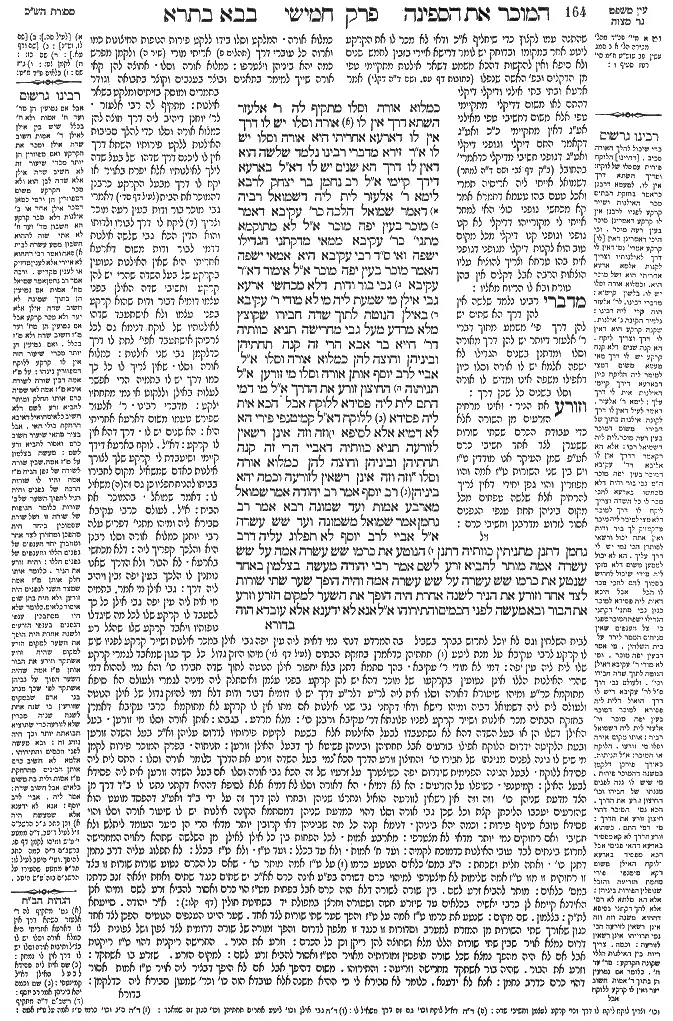
Bava Batra 82b - Guemara
כמלוא אורה וסלו מתקיף לה ר' אלעזר השתא דרך אין לו אורה וסלו יש לו דרך אין לו דארעא אחריתי היא אורה וסלו יש לו א"ר זירא מדברי רבינו נלמד שלשה הוא דאין לו דרך הא שנים יש לו דא"ל בארעא דידך קיימי א"ל רב נחמן בר יצחק לרבא לימא ר' אלעזר לית ליה דשמואל רביה דאמר שמואל הלכה כר' עקיבא דאמר מוכר בעין יפה מוכר א"ל לא מתוקמא מתני' כר' עקיבא ממאי מדקתני הגדילו ישפה ואי ס"ד רבי עקיבא היא אמאי ישפה האמר מוכר בעין יפה מוכר א"ל אימור דא"ר עקיבא גבי בור ודות דלא מכחשי ארעא גבי אילן מי שמעת ליה מי לא מודי ר' עקיבא באילן הנוטה לתוך שדה חבירו שקוצץ מלא מרדע מעל גבי מחרישה תניא כוותיה דר' חייא בר אבא הרי זה קנה תחתיהן וביניהן וחוצה להן כמלוא אורה וסלו א"ל אביי לרב יוסף אותן אורה וסלו מי זורען א"ל תניתוה החיצון זורע את הדרך א"ל מי דמי התם לית ליה פסידא ללוקח אבל הכא אית ליה פסידא ללוקח דא"ל קמיטנפי פירי הא לא דמיא אלא לסיפא וזה וזה אינן רשאין לזורעה תניא כוותיה דאביי הרי זה קנה תחתיהן וביניהן וחוצה להן כמלוא אורה וסלו וזה וזה אינן רשאין לזורעה וכמה יהא ביניהן רב יוסף אמר רב יהודה אמר שמואל מארבע אמות ועד שמונה רבא אמר רב נחמן אמר שמואל משמונה ועד שש עשרה א"ל אביי לרב יוסף לא תפלוג עליה דרב נחמן דתנן מתניתין כוותיה דתנן הנוטע את כרמו שש עשרה אמה על שש עשרה אמה מותר להביא זרע לשם אמר רבי יהודה מעשה בצלמון באחד שנטע את כרמו שש עשרה על שש עשרה אמה והיה הופך שער שתי שורות לצד אחד וזורע את הניר לשנה אחרת היה הופך את השער למקום הזרע וזרע את הבור ובא מעשה לפני חכמים והתירוהו א"ל אנא לא ידענא אלא עובדא הוה
Comments from Rashbam - Bava Batra 82b
כמלוא אורה . המלקט וסל בידו ללקט פירות הנופות החיצונות כמו וארוה כל עוברי דרך (תהלים פ) אריתי מורי (שיר ה) ולקמן מפרש כמה יהא ביניהן ויצטרפו: כמלוא אורה וסלו . אחוצה להן קאי אורה שייך למימר בתאנים ובוצר בענבים וקוצר בתבואה וגודר בתמרים ומוסק בזיתים ומלקט בשאר אילנות: מתקיף לה רבי אלעזר . לר' יוחנן דיהיב ליה דרך חוצה להן כמלוא אורה וסלו כדי להלך סביבות האילנות ללקט פירותיו השתא דרך אין לו ליכנס דרך שדהו של בעל שדה לילך לאילנותיו אלא יפרח באויר או יקח לו דרך מבעל הקרקע כרבנן דהמוכר את הבית (לעיל בבא בתרא דף סד.) דאמרי גבי מוכר בור ודות בעין רעה מוכר וצריך ליקח לו דרך לבורו ולדותו והוא הדין הכא גבי שלשה אילנות דדמי לבור ודות משום דארעא אחריתי היא שאין האילנות נטועין בקרקע של בעל השדה שהרי יש להן קרקע וחשיבי שדה האילן בפני עצמו דומיא דבור ודות שהוא קרקע בפני עצמו ולא אישתעבד שדהו לאילנותיו של לוקח דנימא גם לכל צרכיהן אישתעבד אפי' לתת לו דרך כדלקמן גבי שני אילנות: כמלוא אורה וסלו . שאין צריך לו כל כך כמו דרך יש לו בתמיה הרי אפשר לעלות באילן וללקוט אי נמי מתחתיו ילקט: מדברי רבינו . ר' אלעזר שפירש טעמו משום דארעא אחריתי היא: הא שנים יש לו . דרך דהא אין לו קרקע: דא"ל . לוקח בארעא דידך קיימי ושיעבדת לי קרקע שלך לצורך אילנות כאדם שמשאיל מקום לחבירו בביתו להניח חפציו כן גם זה משאיל לו: דאמר שמואל . בהמוכר את הבית: א"ל . לעולם כרבי עקיבא סבירא ליה ומיהו מתני' דפריש עלה רבי יוחנן כמלוא אורה וסלו רבנן היא והלכך קפריך ליה: דלא מכחשי בארעא . לא הבור ולא הדרך שאנו נותנין לו הלכך בעין יפה זבין ויהיב ליה דרך: גבי אילן מי אמר . בתמיה מי אית ליה עין יפה גבי אילן כל כך לשעבד לו קרקע שלו לכל מה שיגדלו נופותיו ויאבד קרקע שלו שהצל רע לבית השלחין וגם לא יוכל לחרוש בבקר בשביל בה המרדע דנהי נמי דאית ליה עין יפה גבי אילן במכר אילנות ושייר קרקע לפניו שיש לו קרקע לרבי עקיבא על מנת ליטע תחתיהן כדאמרן בחזקת הבתים (לעיל בבא בתרא דף לז.) מיהו היזק גדול כל כך כגון שמאבד לגמרי קרקע שלו לית ליה עין יפה: דמי לא מודי ר' עקיבא . בהך סתמא דתנן בלא יחפור אילן הנוטה לתוך שדה חבירו כו' והא נמי לההוא דמי שהרי האילנות הללו אינן נטועין בקרקעו של מוכר דהא יש להן קרקע בפני עצמן ואיסתלק ליה מיניה לגמרי ולעולם הא סיפא מתוקמא כר"ע ומיהו שיעורא דאורה וסלו אית ליה לר"ע דלר"ע דרך יש לו דומיא דבור ודות דלא דמי להיזק גדול של אילן הנוטה ולעולם לית ליה דשמואל רביה ומיהו רישא ודאי דקתני גבי שני אילנות אם מתו אין לו קרקע לא מתוקמא כרבי עקיבא דאמרן בחזקת הבתים מכר אילנות ושייר קרקע לפניו פלוגתא דר' עקיבא ורבנן כו': מלא מרדע . בגבהו: אותן אורה וסלו מי זורען . בעל האילן דשלו הן או בעל השדה דהא לא נשתעבדו לבעל האילנות אלא בשעת לקיטת פירותיו לדרוס עליהן וא"כ בעל השדה זורען ובעת הלקיטה ידרוס הלוקח אפילו בזרעים אבל תחתיהן וביניהן פשיטא לך דבעל האילן זורען: תניתוה . בפרק המוכר פירות לקמן מי שיש לו גינה לפנים מגינתו של חבירו כו' והחיצון זורע הדרך הכא נמי בעל השדה זורע את הדרך כלומר אורה וסלו: התם לית ליה פסידא ללוקח . לבעל הגינה הפנימית שידרוס יפה כשיצטרך על זרעיו של זה הכא גבי אורה וסלו אם בעל השדה זורען אית ליה פסידא לבעל האילן: קמיטנפי . כשיפלו על הזרעים: הא לא דמיא . הא דאורה וסלו לא דמיא אלא לסיפא דההיא דקתני נתנו לו ב"ד דרך מן הצד מדעת שניהן כו' וזה וזה אין רשאין לזורעה הואיל ונתרצו שניהן ובחרו להן דרך זה על ידי ב"ד ואע"ג דהפסד מועט הוא שהזרעים יעכבן הליכתן קצת וכל שכן גבי אורה וסלו דהוי כמדעת שניהן דמסתמא הקונה אילנות יש לו שיעור אורה וסלו והוי פסידא טובא טינוף פירות: וכמה יהא ביניהן . דנימא קנה כל מה שביניהן דאי קרובין יותר מדאי הרי הן כיער העומד ליתלש ולא חשיבי ואם רחוקים נמי יותר מדאי לא מצטרפי: מארבע אמות . לכל הפחות בין כל אילן לאילן מן השלשה שתהא ראויה המחרישה לחרוש בינתים לבד עובי האילנות כדמוכח לקמיה: ועד ח' אמות . ולא עד בכלל: ועד ט"ז . ולא ט"ז בכלל: לא תפלוג עליה דרב נחמן דתנן כו' . ואתה חלית ושכחת: ה"ג במס' כלאים הנוטע כרמו על ט"ז אמה מותר כו' . שאם כל הכרם נטוע שורות שורות זו בצד זו רחוקות זו מזו ט"ז אמה שלימות לא מיצטרפי למיהוי כרם דשורה בפ"ע אינה כרם אא"כ יש שתים כנגד שתים ואתת יוצאה זנב כדתנן במס' כלאים: מותר להביא זרע לשם . בין שורה לשורה דלא הוה כרם אבל בפחות מט"ז הוי כרם ואסור להביא זרע לשם ומיהו אנן האידנא קיימא לן כרבי יאשיה בכלאים עד שיזרע חטה ושעורה ותרצן במפולת יד בשחיטת תולין (דף קלו:): א"ר יהודה . סייעתא לת"ק: בצלמון . שם מקום: שנטע את כרמו ט"ז אמה על ט"ז והפך שער שתי שורות לצד אחד . שער היינו הענפים הנוטים הפכן לצד אחד כגון שאורך שתי השורות מן המזרח למערב וסדורות זו כנגד זו מצפון לדרום והפך זמורה של שורה דרומית לצד צפון ושל צפונית לצד דרום נמצא אויר שבין שתי שורות הללו מלא ושחוצה להן ריקן וכן כל הכרס: וזרע את הניר . החרישה ריקנית דהוי ט"ז ריקנות אבל אם לא היה מהפך נמצא שכל שורה תופסין זמורותיה מאויר הט"ז ואסור להביא זרע לשם: למקום הזרע . שזרע בו אשתקד: וזרע את הבור . שהיה בור אשתקד מחרישה וזריעה: והתירוהו . משום דהיפך אבל אם לא היפך דבציר ליה אויר ט"ז אמות אסור דהוי כרם כדרב נחמן: אנא לא ידענא . כלומר לא סבירא לי כי ההיא משנה אלא עובדא הוה כו' וכר' שמעון סבירא ליה כדלקמן:
Comments from Tosafot - Bava Batra 82b
מדברי רבינו נלמד שלשה אין להן דרך הא שתים יש להן דרך פי' משמע מתוך דברי ר' אלעזר דיותר יש להן דרך מאורה וסלו ומדתנן בשנים הגדילו לא ישפה אלמא יש לו אורה וסלו כיון דאפילו משפה אינו ומדיש לו אורה וסלו בשנים כל שכן דרך: וזורע. את הניר. ואינו מרחיק הזרעים מן השורה אלא כדי עבודת הכרם ששתי שורות ששערן לצד אחד חשיבי כרם אע"פ שמן העיקר אנו מודדין ט"ז ויש בין שני השורות ט"ז אמה והוו מפוזרין והוי גפן יחידי דאין צריך להרחיק אלא שלשה טפחים מכל מקום ביניהן תחת ענפי הגפנים אסור לזרוע מדרבנן וחשיבי כרם:
Bava Batra 82b - Mishnah translated into english
he has acquired an area sufficient for a gatherer of figs and his basket in hand to stand close to the tree. Rabbi Elazar objects to this: Now that the halakha is that the buyer has no path and must purchase a path through the field to access his trees; if so, does he have possession of an area for the gatherer and his basket? The Gemara elaborates: He has no path, even though he has no other means of gaining access to the trees, as the ground he acquired along with the trees is considered another land and is not part of the rest of the field. Why, then, would he have possession of an area for a gatherer and his basket?
Rabbi Zeira says: From the statement, i.e., the objection, of our teacher, we learn that it is in the case of three trees that the owner of the trees has no path, as the buyer acquired a separate piece of land along with the trees. But in the case of two trees the buyer has a path, as he says to the owner of the field: My trees are standing on your land, and as I am allowed to use your field to tend to my trees I have the right to walk through your land to reach them.
Rav Naḥman bar Yitzḥak said to Rava: Shall we say that Rabbi Elazar does not accept the opinion of Shmuel, who was his teacher? As Shmuel says: The halakha is in accordance with the opinion of Rabbi Akiva, who says: One who sells, sells generously. According to Rabbi Akiva, one sells in a manner that is advantageous for the buyer, and is presumed to have included in the sale even items that were not explicitly specified. In this case, as he has sold a tree that remains on his property, the seller grants the buyer the right to access his tree.
Rava said to him: Even if Rabbi Elazar himself agrees with Rabbi Akiva, the mishna cannot be explained in accordance with the opinion of Rabbi Akiva. Rather, the mishna must be in accordance with the opinion of the Rabbis, who hold that one who sells does so sparingly, and the difficulty that Rabbi Elazar raised against Rabbi Yoḥanan is predicated on the fact that the mishna is in accordance with the opinion of the Rabbis.
From where does Rava derive that the mishna is not in accordance with the opinion of Rabbi Akiva? From the fact that the mishna teaches: If the three trees grew, the owner of the land may cut down the branches that extend into his field. And if it enters your mind that the mishna is in accordance with the opinion of Rabbi Akiva, why may he cut them down? Doesn’t Rabbi Akiva say that one who sells, sells generously?
Rav Naḥman bar Yitzḥak said to him: This does not prove that the mishna is not in accordance with the opinion of Rabbi Akiva. You can say that Rabbi Akiva stated his ruling in the case of a pit and a cistern that are situated in a field belonging to another, which one sells in a generous manner, as they do not weaken the land. But did you hear him say that the seller is generous toward the buyer with regard to a tree, which can weaken the land?
Doesn’t Rabbi Akiva concede in the case of a tree that leans out into the field of another, in which the owner of the other field cuts down the branches until the full height of an ox-goad, the handle that protrudes over a plow? Since the extending branches impede his efforts to plow his field, it is permitted for him to cut them down. This indicates that even according to Rabbi Akiva one does not grant privileges that are detrimental to his own interests. If so, the mishna can be explained even in accordance with the opinion of Rabbi Akiva, which indicates that Rabbi Elazar does not accept his ruling.
The Gemara points out: It is taught in a baraita in accordance with the statement of Rabbi Ḥiyya bar Abba: If one buys three trees in a field belonging to another, this buyer has acquired the ground that is found underneath the trees, and the area between them, and outside of the trees and their branches an area sufficient for a gatherer of figs and his basket.
Abaye said to Rav Yosef: Those areas around the trees that are designated for a gatherer of figs and his basket are used for this purpose only at specific times. Who sows that land during the rest of the year, the owner of the trees or the owner of the field? Rav Yosef said to him: You learned the answer in a mishna (99b): If one owns a garden that is surrounded by the garden of another, the owner of the inner garden has a right to a path through the outer garden. Even so, the owner of the outer garden may sow the path.
Abaye said to him: Are the cases comparable? There, in the case of the outer and inner gardens, there is no loss suffered by the buyer when the owner of the outer garden sows the path, as he can still pass through it. But here, there is a loss for the buyer, as the one who bought the trees says to the owner of the field: The fruits that fall from the trees will become soiled by the plants.
This case is similar only to the last clause of that mishna, which states: If the owner of the inner garden is given a side path, so that he suffers a loss of some kind because he cannot take the shortest path to reach his garden, both this owner of the inner garden and that owner of the outer garden are not permitted to sow the path. Similarly, here too, neither the owner of the trees nor the owner of the field are permitted to sow the place designated for the gatherer of figs and his basket.
The Gemara comments: It is taught in a baraita in accordance with the opinion of Abaye: This buyer has acquired the ground that is found underneath the trees, and the area between them, and outside of the trees and their branches an area sufficient for a gatherer of figs and his basket. And both this owner of the field and that owner of the trees are not permitted to sow it.
The Gemara inquires: And how much space must there be between the three trees for them to be considered one unit, which means that the land is acquired by the owner of the trees? Rav Yosef says that Rav Yehuda says that Shmuel says: The distance between the trees must be from four cubits to eight cubits. Rava says that Rav Naḥman says that Shmuel says: It must be from eight cubits to sixteen cubits. Abaye said to Rav Yosef: Do not disagree with Rav Naḥman, as we learned in a mishna in accordance with his opinion.
As we learned in a mishna (Kilayim 4:9): One who plants his vineyard sixteen cubits by sixteen cubits, i.e., he leaves sixteen cubits between each row of vines, is permitted to bring other species of seeds to the empty spaces between the rows and sow them there. This is not considered a violation of the biblical prohibition with regard to sowing diverse crops in a vineyard, which is one of the prohibitions of diverse kinds.
Rabbi Yehuda said: There was an incident in the city of Tzalmon, where one individual planted his vineyard sixteen by sixteen cubits. And he would turn the branches of two rows that were facing each other to one side, so that there was a space of sixteen cubits between the two rows, and sow the clearing. The following year he would turn the branches to the place that was sown the year before, and would sow the land that had been left uncultivated the previous year, as it had been filled with the branches from the vines. And the incident came before the Sages and they permitted it. This demonstrates that sixteen cubits between plants is required for them to be considered separate units.
Rav Yosef said to him: I do not know about this, but there was a similar incident
Traduction : The William Davidson digital edition of the Koren Noé Talmud, with commentary by Rabbi Adin Even-Israel Steinsaltz.