 Talmud Bavli
The learning on the whole site is dedicated : L'ilui Nishmat Yechayahou ben Moche
The learning on the whole site is dedicated : L'ilui Nishmat Nissim ben Barukh Malka
The learning on the whole site is dedicated : L'ilui Nishmat Avraham Ben Simha
Bava Batra 146a : Youtube
Daf TubeYoutube
2 video classes :
Bava Batra Page 146a
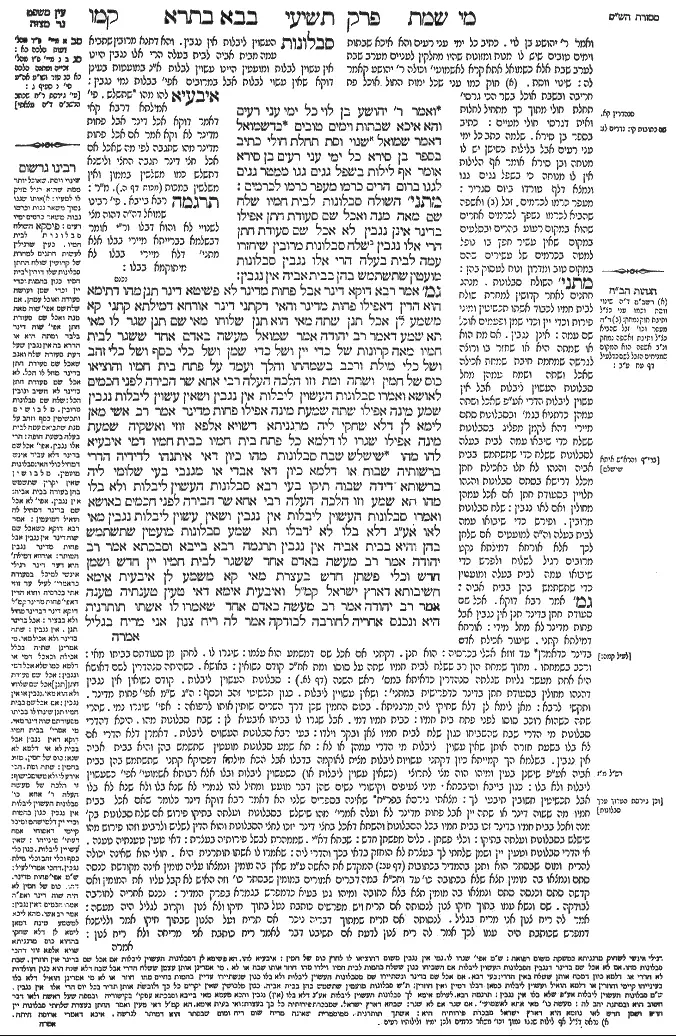
Bava Batra 146a - Guemara
ואמר ר' יהושע בן לוי כל ימי עני רעים והא איכא שבתות וימים טובים כדשמואל דאמר שמואל שנוי וסת תחלת חולי כתיב בספר בן סירא כל ימי עני רעים בן סירא אומר אף לילות בשפל גגים גגו ממטר גגים לגגו ברום הרים כרמו מעפר כרמו לכרמים:
מתני׳ השולח סבלונות לבית חמיו שלח שם מאה מנה ואכל שם סעודת חתן אפילו בדינר אינן נגבין לא אכל שם סעודת חתן הרי אלו נגבין שלח סבלונות מרובין שיחזרו עמה לבית בעלה הרי אלו נגבין סבלונות מועטין שתשתמש בהן בבית אביה אין נגבין:
גמ׳ אמר רבא דוקא דינר אבל פחות מדינר לא פשיטא דינר תנן מהו דתימא הוא הדין דאפילו פחות מדינר והאי דקתני דינר אורחא דמילתא קתני קא משמע לן אכל תנן שתה מאי הוא תנן שלוחו מאי שם תנן שגר לו מאי תא שמע דאמר רב יהודה אמר שמואל מעשה באדם אחד ששגר לבית חמיו מאה קרונות של כדי יין ושל כדי שמן ושל כלי כסף ושל כלי זהב ושל כלי מילת ורכב בשמחתו והלך ועמד על פתח בית חמיו והוציאו כוס של חמין ושתה ומת וזו הלכה העלה רבי אחא שר הבירה לפני חכמים לאושא ואמרו סבלונות העשוין ליבלות אין נגבין ושאין עשוין ליבלות נגבין שמע מינה אפילו שתה שמעת מינה אפילו פחות מדינר אמר רב אשי מאן לימא לן דלא שחקי ליה מרגניתא דשויא אלפא זוזי ואשקיה שמעת מינה אפילו שגרו לו דלמא כל פתח בית חמיו כבית חמיו דמי איבעיא להו מהו שישלש שבח סבלונות מהו כיון דאי איתנהו לדידיה הדרי ברשותיה שבוח או דלמא כיון דאי אבדי או מגנבי בעי שלומי ליה ברשותא דידה שבוח תיקו בעי רבא סבלונות העשוין ליבלות ולא בלו מהו תא שמע וזו הלכה העלה רבי אחא שר הבירה לפני חכמים באושא ואמרו סבלונות העשוין ליבלות אין נגבין ושאין עשוין ליבלות נגבין מאי לאו אע"ג דלא בלו לא דבלו תא שמע סבלונות מועטין שתשתמש בהן והיא בבית אביה אין נגבין תרגמה רבא בייבא וסבכתא אמר רב יהודה אמר רב מעשה באדם אחד ששגר לבית חמיו יין חדש ושמן חדש וכלי פשתן חדש בעצרת מאי קא משמע לן איבעית אימא חשיבותא דארץ ישראל קמ"ל ואיבעית אימא דאי טעין טענתיה טענה אמר רב יהודה אמר רב מעשה באדם אחד שאמרו לו אשתו תותרנית היא ונכנס אחריה לחורבה לבודקה אמר לה ריח צנון אני מריח בגליל
Comments from Rashbam - Bava Batra 146a
ואמר ר' יהושע בן לוי . כתיב כל ימי עני רעים והא איכא שבתות וימים טובים שיש לו מנות ומזונות שהיו מחלקין לעניים מערב שבת לערב שבת אלא כשמואל אתא קרא לאשמועי' וכולה ר' יהושע קאמר לה: שינוי ווסת . חוק כמו עני שכל ימות החול אוכל פת חריבה ובשבת אוכל בשר הכי גרסי' תחלת חולי מתוך כך מתחיל לחלות ואית דגרסי חולי מעיים: כתיב בספר בן סירא . שלמה כתב כל ימי עני רעים אבל בלילות כשישן יש לו מנוחה ובן סירא אומר אף הלילות אין לו מנוחה כי בשפל גגים גגו ונמצא דלף טורדו ביום סגריר: מעפר כרמו לכרמים . זבל ואשפה שהביא לכרמו נשפך לכרמים אחרים שהוא במקום רעוע בהרים ובסלעים במקום שאין עשיר חפץ בו נופל למטה בכרמים של עשירים שהם במקום טוב ומדרון ונוח לעסוק בהן: מתני' השולח סבלונות . מנהג חתנים לאחר קדושין למחרת שולח לבית חמיו לכבוד אשתו תכשיטין ומיני פירות וכדי יין וכדי שמן ופעמים אוכל שם עמה: אינן נגבין . אם מת הוא או שמתה היא או שחזר בו ורוצה לגרשה שמחמת חיבת שמחת אכילה שאכל ושתה ושמח עמהן מחל סבלונות העשוין ליבלות אבל אין עשוין ליבלות הדרי אע"פ שאכל ושתה עמהן כדתניא בגמ' ובסבלונות סתם מיירי דהא לקמן מפליג בסבלונות ששלח כדי שיבאו עמה לבית בעלה לסבלונות ששלח כדי שתשתמש בבית אביה והנהו לא תלו באכילת חתן מכלל דרישא בסתם סבלונות והנהו תלויין בסעודת חתן אם אכל עמהן מחולין ואם לאו נגבין: שלח סבלונות מרובין . ופירש כדי שיבואו עמה לבית בעלה וה"ה למועטים אם שלחן לכך אלא אורחא דמילתא נקט מרובים רגיל לשלוח ולפרש כדי שיבואו עמה לבית בעלה ומועטין כדי שתשתמש בהן בבית אביה: גמ' אמר רבא דוקא . אכל שם סעודת חתן בדינר תנן אין נגבין אבל פחות מדינר לא מחל מידי: אורחא דמילתא קתני . שיעור אכילת אדם בדינר כדאמרן עד זוזא אכלי בכרסיה: הוא תנן . דקתני אם אכל שם דמשמע הוא עצמו: שיגרו לו . לחתן מן סעודתם בביתו מאי: ורכב בשמחתו . מתוך שמחת הון רב ששלח לבית חמיו שתה על סוסו ומת אח"כ קודם נשואין: באושא . כשהיתה סנהדרין לשם דאושא היא אחת מעשר גליות שגלתה סנהדרין כדאיתא במס' ראש השנה (דף לא.): סבלונות העשוין ליבלות . קודם נשואין אין נגבין דהנהו מחולין בסעודת חתן בדינר כדפרישית במתני': ושאין עשויין ליבלות . כגון תכשיטי זהב וכסף: ה"ג ש"מ אפי' פחות מדינר . ותקשי לרבא: מאן לימא לן דלא שחיקי ליה מרגניתא . בכוס החמין שכן דרך השרים שותין אותו לרפואה: אפי' שיגרו נמי . שהרי שתה כשהוא רוכב סוסו לפני פתח בית חמיו: כבית חמיו דמי . אבל שגרו לו בביתו איבעיא לן: מצאתי גירסא בפר"ח שאינה בספרים שלנו הא דאמר רבא דוקא דינר כלומר שאם אכל בבית חמיו מה ששוה דינר או שתה יין אבל פחות מדינר לא ועלה אמרי' מהו שישלש בסבלונות ועלתה בתיקו פירוש אם שלח סבלונות בק' מנה ואכל בבית חמיו בדינר זכו בבית חמיו בכל הסבלונות והשתא דאכל בחצי דינר יזכו לחצי הסבלונות והוא הדין לשליש ולרביע וזהו פירוש מהו שישלש בסבלונות ועלתה בתיקו: שבח סבלונות מהו . היכא דהדרי סבלונות מי הדרי שבח שהשביחו כגון שלח לבית חמיו צאן ובקר וילדו: בעי רבא סבלונות העשוים ליבלות . דאמרן דלא הדרי אם לא בלו בשעת חזרה אותן שאין עשוין ליבלות מי הדרי עמהן או לא: תא שמע סבלונות מועטין שתשמש בהן והיא בבית אביה אין נגבין . בשלמא הך קמייתא כיון דקתני עשויות ליבלות מצית לאוקמה בדבלו אבל הכא מילתא דפסיקא קתני שתשתמש בהן בבית אביה אע"פ שישנן בעין ומיהו הוה מצי לתרוצי (כשאין עשוין ליבלות או) כשעשוין ליבלות ובלו אלא רבותא אשמועי' אפי' כשעשוין ליבלות ולא בלו: כגון בייבא וסיבכתא . מיני צעיפים וקישורי נשים שהן דבר מועט ומחיל להו לגמרי לא שנא בלו ולא שנא לא בלו אבל תכשיטין חשובין תיבעי לך: וכלי פשתן . כלים מפשתן חדש: שבחא דא"י . שממהרת לבשל פירותיה בעצרת: דאי טעין טענתיה טענה . אי הדרי סבלונות וטעין יין ושמן שלחתי לך בעצרת לא הוחזק בדאי בכך והדרי ליה: שאמרו לו אשתו תותרנית היא . חולי הוא שאינה יכולה להריח ומום שבסתר הוא ותנן בהמדיר בכתובות (דף עב:) המקדש את האשה ע"מ שאין בה מומין ונמצאו עליה מומין אינה מקודשת כנסה סתם ונמצאו בה מומין תצא שלא בכתובה כו' עד וחכ"א במה דברים אמורים במומין שבסתר כו' וזה האיש לא קבל עליו את המומין ואם קדשה סתם וכנסה סתם ונמצאו בה מומין תצא בלא כתובה ומיהו גט בעיא כדמפרש בגמרא בפרק המדיר: נכנס אחריה לחורבה לבודקה . שם ונשא עמו בתוך חיקו צנון לנסותה אם תריח ויש מפרשים כותבת נטל בתוך חיקו ולא צנון וקרוב לגליל היה מעשה: אמר לה ריח צנון אני מריח בגליל . לנסותה אם תריח שמתוך דבריה ניכר אם תריח ועל הצנון שבתוך חיקו אמר וללישנא דמפרש שכותבת היה עמו לכך אמר לה ריח צנון לדעת אם תשיבנו דבר לאמר ריח כותבת אני מריחה ולא ריח צנון:
Comments from Tosafot - Bava Batra 146a
סבלונות העשוין ליבלות אין נגבין. והא דתנא מרובין שתביא עמה מבית אביה לבית בעלה הרי אלו נגבין היינו אין עשוין לבלות ומועטין היינו עשוין לבלות א"נ במועטות בעינן דוקא שאין עשוי לבלות אבל במרובים אפי' בבלות נמי נגבין: איבעיא להו מהו שתשלש. פי' אמילתא דרבא קאי דאמר דוקא אכל דינר אבל פחות מדינר לא וקא אמר אם אכל פחות מדינר מהו שתגבה לפי מה שאכל אם אכל חצי דינר תגבה החצי ולישנא דתשלש כמו משלשין בממון ואין משלשין במכות (מכות דף ה.). מ"ר: תרגמה רבא בייבא. פי' רבינו שמואל דה"ה דהוה מצי לשנויי לא והוא דבלו ור"י אומר דבשלמא בברייתא מיירי בבלו אלא מתני' דלא מיירי בבלו לא מיתוקמא בבלו:
Bava Batra 146a - Mishnah translated into english
And Rabbi Yehoshua ben Levi says: Is it so that all the days of the poor are terrible? But aren’t there Shabbatot and Festivals, when even the poor enjoy their meals and rest? Rather, explain this in accordance with the statement of Shmuel, as Shmuel says: A change of regimen [veset] causes the onset of intestinal disease, and as a result the poor suffer even from a change for the good.
It is written in the book of ben Sira: All the days of the poor are terrible. Ben Sira says: The nights as well. His roof is at the lowest point of the roofs; the rain of roofs go onto his roof. His vineyard is at the height of the mountains; the soil of his vineyard goes onto other vineyards.
MISHNA: With regard to one who sends presents [sivlonot] to his father-in-law’s house following his betrothal, even if he sent there the sum of ten thousand dinars and subsequently ate there a groom’s feast even worth the value of a single dinar, if for any reason the marriage is not effected, the presents are not collected in return by the formerly betrothed man. If he did not eat a groom’s feast there, the presents are collected, as they were not an unconditional gift. If he sent many presents with the stipulation that they return with her to her husband’s house, i.e., to his own house, after the wedding, these are collected if the marriage is not effected. If he sent a few presents for her to use while in her father’s house, they are not collected.
GEMARA: The mishna states that if the betrothed man ate food worth even a single dinar at his father-in-law’s house, the presents are not returned. Rava says: This applies specifically to the value of a dinar, but if he ate food worth less than the value of a dinar, it is not so. The Gemara asks: Isn’t that obvious, as we learned the halakha in the mishna with reference to the value of a dinar? The Gemara answers: It is stated lest you say that the same is true even in the case of less than a dinar, and the reason that the mishna teaches the halakha with reference to a dinar is that it teaches the matter in the manner in which it typically occurs, and one does not usually eat less than that. Rava therefore teaches us that the formulation of the mishna is precise; the mishna is not referring to the value of less than a dinar.
§ The Gemara asks: We learned the halakha in the mishna with regard to a betrothed man who ate at his father-in-law’s house. What is the halakha if he drank there? We learned the halakha in the mishna with regard to a case where he, the betrothed, ate there. What is the halakha if his agent ate there? We learned the halakha in the mishna with regard to a case where the betrothed man ate there, at his father-in-law’s house. What is the halakha if his father-in-law sent him a feast to his home?
The Gemara answers: Come and hear a proof concerning one these matters, as Rav Yehuda says that Shmuel says: There was an incident involving one man who sent to his father-in-law’s house one hundred wagons full of jars of wine and of jars of oil, and one hundred wagons full of silver vessels, and one hundred wagons full of gold vessels, and one hundred wagons full of garments of fine wool [milat]. And he rode over in his state of joy and went and stood by the entrance to his father-in-law’s house. And they brought out to him a cup of hot drink and he drank it, and he subsequently died.
The question arose as to whether the presents must be returned to the betrothed’s heirs. And Rabbi Aḥa Sar HaBira raised this halakha before the Sages in Usha, and they said: Presents that are typically consumed are not collected, and those that are not typically consumed are collected. One can conclude from this incident that even if the betrothed only drank, some of the presents cannot be reclaimed.
The Gemara asks: Can you learn from this incident that the presents cannot be claimed even if he ate or drank less than the value of a dinar, since a cup of hot drink is not worth a dinar? Rav Ashi said: Who shall say to us that they did not grind a pearl worth one thousand dinars and serve it to him to drink? The Gemara asks: Can you learn from this incident that even if they sent the feast to him the presents cannot be claimed, as he drank at the entrance and did not enter inside? The Gemara rejects this conclusion: Perhaps the entire entrance of his father-in-law’s house is considered as his father-in-law’s house.
A dilemma was raised before the Sages: Rava states that if the betrothed man ate less than the value of a dinar at his father-in-law’s house, and the marriage is not effected, he can collect the presents he sent. What is the halakha concerning whether he must divide the value of the presents, and claim only part of the value, in proportion to the amount he ate? And what is the halakha concerning the enhancement of the value of the presents? Does one say that since the halakha is that if they are extant they are returned to him, therefore they were enhanced under his ownership? Or perhaps, since the halakha is that if they are lost or stolen, the betrothed woman’s family is required to repay him, therefore they were enhanced under her ownership. The Gemara concludes: These dilemmas shall stand unresolved.
Rava raises a dilemma: What is the halakha with regard to presents that are typically consumed, but were not consumed? The Gemara replies: Come and hear a proof: And Rabbi Aḥa Sar HaBira raised this halakha before the Sages at Usha, and they said: Presents that are typically consumed are not collected, and those that are not typically consumed are collected. What, is it not referring to presents that are typically consumed even though they were not consumed? The Gemara rejects this: No, the mishna is referring to presents that were actually consumed.
The Gemara replies: Come and hear a proof from the mishna: If he sent a few presents for her to use while she is in her father’s house, they are not collected. This indicates that they cannot be collected in any event, irrespective of whether they were used or not. Rava interpreted the mishna as referring to a snood or hairnet, which are insignificant items that the betrothed man sends without any intention of later collecting them.
§ Rav Yehuda says that Rav says: There was an incident involving one man who sent new wine, and new oil, and new linen garments to his father-in-law’s house at the time of Shavuot. The Gemara asks: What is this incident teaching us? The Gemara answers: If you wish, say that it teaches us the importance, i.e., the greatness, of Eretz Yisrael, where there is new wine, oil, and linen already available at the time of Shavuot. And if you wish, say instead that it teaches that if the betrothed man claims that he sent these items at the time of Shavuot, his claim is a plausible claim, and there is no reason to question it.
Rav Yehuda says that Rav says: There was an incident involving one man who was told that his wife, i.e., his betrothed, was one whose sense of smell was impaired, and he followed her into a ruin, carrying a date with him, to check her to see if she could correctly identify the smell. He said to her: I smell the scent of radish in the Galilee.
Traduction : The William Davidson digital edition of the Koren Noé Talmud, with commentary by Rabbi Adin Even-Israel Steinsaltz.