 Talmud Bavli
The learning on the whole site is dedicated : L'ilui Nishmat אליעזר בן רחל
The learning on the whole site is dedicated : L'ilui Nishmat Yechayahou ben Moche
The learning on the whole site is dedicated : L'ilui Nishmat Jacques Isaac Ben Amram Loubaton
Bava Batra 83a : Youtube
Daf TubeYoutube
2 video classes :
Bava Batra Page 83a
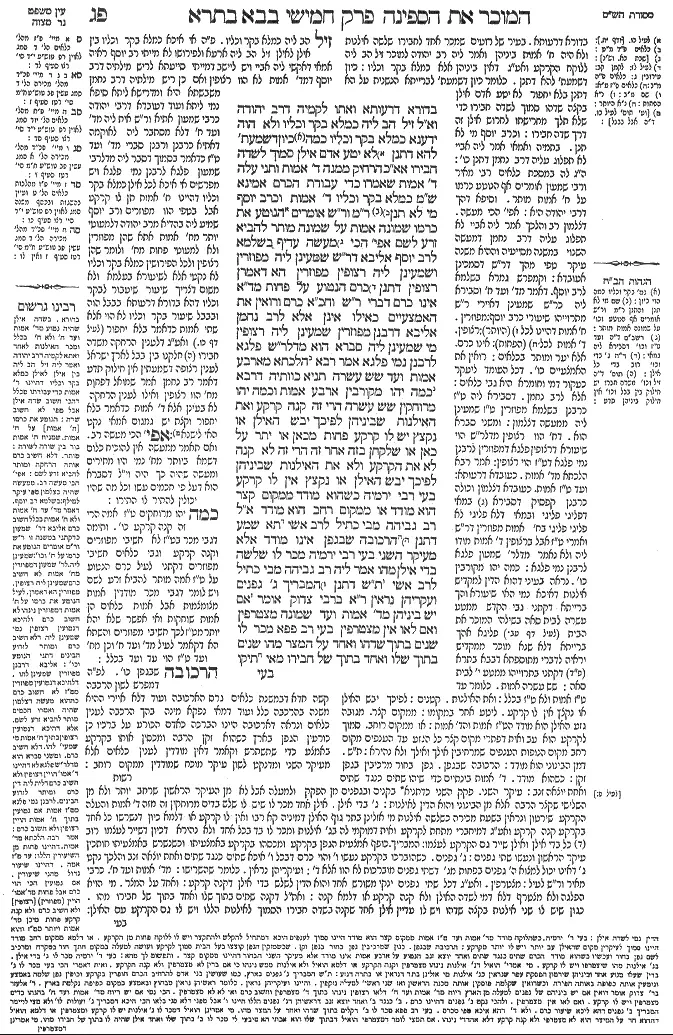
Bava Batra 83a - Guemara
בדורא דרעותא ואתו לקמיה דרב יהודה וא"ל זיל הב ליה כמלא בקר וכליו ולא הוה ידענא כמלא בקר וכליו כמה כיון דשמעת' להא דתנן לא יטע אדם אילן סמוך לשדה חבירו אא"כ הרחיק ממנה ד' אמות ותני עלה ד' אמות שאמרו כדי עבודת הכרם אמינא ש"מ כמלא בקר וכליו ד' אמות וכרב יוסף מי לא תנן ר"מ ור"ש אומרים הנוטע את כרמו שמונה אמות על שמונה מותר להביא זרע לשם אפילו הכי מעשה עדיף בשלמא לרב יוסף אליבא דר"ש שמעינן ליה מפוזרין ושמעינן ליה רצופין מפוזרין הא דאמרן רצופין דתנן כרם הנטוע על פחות מד"א אינו כרם דברי ר"ש וחכ"א כרם ורואין את האמצעיים כאילו אינן אלא לרב נחמן אליבא דרבנן מפוזרין שמעינן ליה רצופין מי שמעינן ליה סברא הוא מדלר"ש פלגא לרבנן נמי פלגא אמר רבא הלכתא מארבע אמות ועד שש עשרה תניא כוותיה דרבא כמה יהו מקורבין ארבע אמות וכמה יהו מרוחקין שש עשרה הרי זה קנה קרקע ואת האילנות שביניהן לפיכך יבש האילן או נקצץ יש לו קרקע פחות מכאן או יתר על כאן או שלקחן בזה אחר זה הרי זה לא קנה לא את הקרקע ולא את האילנות שביניהן לפיכך יבש האילן או נקצץ אין לו קרקע בעי רבי ירמיה כשהוא מודד ממקום קצר הוא מודד או ממקום רחב הוא מודד א"ל רב גביהה מבי כתיל לרב אשי תא שמע דתנן הרכובה שבגפן אינו מודד אלא מעיקר השני בעי רבי ירמיה מכר לו שלשה בדי אילן מהו אמר ליה רב גביהה מבי כתיל לרב אשי ת"ש דתנן המבריך ג' גפנים ועקריהן נראין ר"א ברבי צדוק אומר אם יש ביניהן מד' אמות ועד שמונה מצטרפין ואם לאו אין מצטרפין בעי רב פפא מכר לו שנים בתוך שדהו ואחד על המצר מהו שנים בתוך שלו ואחד בתוך של חבירו מאי תיקו
Comments from Rashbam - Bava Batra 83a
בדורא דרעותא. בעיר של רועים שמכר אחד לחבירו שלשה אילנות ולא היה ח' אמות ביניהן ואמר ליה רב יהודה למוכר זיל הב ליה ללוקח הקרקע ואע"ג דאין ביניהן אלא כמלא בקר וכליו: כיון דשמעת' להא דתנן . כלומר כיון דשמעת' לברייתא הנשנית על הא דתנן בלא יחפור לא יטע אדם אילן בקצה שדהו סמוך לשדה חבירו כדי שלא תלך מחרישתו לחרוש אילן זה דרך שדה חבירו: וכרב יוסף מי לא תנן . בתמיה ואמאי אמר ליה אביי לא תפלוג עליה דרב נחמן דתנן כו': ה"ג לה במסכת כלאים רבי מאיר ורבי שמעון אומרים אף הנוטע כרמו על ח' אמות מותר. וסיפא דהך דרבי יהודה היא: אפי' הכי מעשה . דצלמון רב והלכך אמר ליה אביי לא תפלוג עליה דרב נחמן דמעשה השנוי במשנה מסייעיה וההיא משנה עיקר טפי מהך דר"ש דסמכינן אעובדא: וקמפרש גמרא בשלמא לרב יוסף . דאמר מד' ועד ח' וסבירא ליה כר"ש שמעינן דאיירי ר"ש מתרוייהו שיעורי כרב יוסף: מפוזרין . ח' אמות דהיינו לכל (היותר): רצופין . ד' אמות לכל (הפחות): אינו כרם . אלא יער ומותר בכלאים: רואין את האמצעיים כו' . דכל העומד ליעקר כעקור דמי וחומרא היא גבי כלאים: אלא לרב נחמן . דסבירא ליה ט"ז כרבנן בשלמא מפוזרין ט"ז שמעינן ליה ממעשה דצלמון: ומשני סברא הוא . דח' הוו רצופין מדלר"ש הוי שיעורא דרצופים פלגא דמפוזרין לרבנן נמי פלגא דט"ז הוי רצופין: אמר רבא הלכתא מד' אמות . כעובדא דרעותא: ועד ט"ז אמות . כעובדא דצלמון וכולה כרבנן קפסיק דסבירא במאי דפליגי פליגי ובמאי דלא פליגי לא פליגי פליגי בח' אמות מפוזרין דר"ש ואמרי ט"ז אבל ברצופין ד' אמות מודו ליה ולא נאמר מדלר' שמעון פלגא לרבנן נמי פלגא: כמה יהו מקורבין כו' . נראה בעיני דהוא הדין למקדיש אילנות דאיכא נמי האי שיעורא והך ברייתא דקתני גבי הקדש ממטע עשרה לבית סאה בשילהי המוכר את הבית (לעיל בבא בתרא דף עב.) פליגא אהך ברייתא דלא שנא מוכר ממקדיש וראיה לדברי מתוספתא דבבא בתרא (פ"ד) דקתני בתרוייהו ממטע י' לבית סאה: שש עשרה אמות . כלומר עד ט"ז אמות ולא ט"ז בכלל: ואת האילנות . קטנים: לפיכך יבש האילן או נקצץ אין לו קרקע . ליטע אחר במקומו: ממקום קצר . מגובה גזע האילן הוא מודד הט"ז אמות והד' אמות: או ממקום רוחב . סמוך לקרקע הוא עב ואית דפתרי מקום קצר כל הגזע עד הענפים מקום רחב מקום הנופות הענפים שמרחיבין אילך ואילך ולא נהירא: ת"ש . דמן הבינוני הוא מודד: הרכובה שבגפן . גפן בחור מרכיבין בגפן זקן: כשהוא מודד . ד' אמות בינתיים כדי שיהו שתים כנגד שתים ואחת יוצאה זנב: עיקר השני . פקק השני כדתניא בקנים ובגפנים מן הפקק ולמעלה אבל לא מן העיקר הראשון שרחב יותר ולא מן השלישי שקצר הרבה אלא מן הבינוני והוא הדין לאילנות: ג' בדי אילן . אילן אחד מכר לו שיש לו שלש בדים מרוחקין זה מזה ד' אמות והעלה הקרקע שירטון ונראין בשעת מכירה כשלשה אילנות מי אזלינן בתר גוף האילן דמיניה קא רבו ואין לו קרקע או דלמא כיון דנשרשו כל אחד בקרקע קנה קרקע ואע"ג דמיחברי מתחת לקרקע ואית דמוקמי לה בג' אילנות ומכר לו בד בכל אחד ולא נהירא דכיון דשייר לעצמו רוב כל בדי אילן ואילן שייר גם הקרקע לעצמו: המבריך . כופף אמצעית הגפן בקרקע ומכסהו בקרקע באמצעיתו וכשנשרש באמצעיתו חותכין עיקר הראשון ונעשו שתי גפנים: ג' גפנים . כשהוברכו בקרקע נעשו ו' והוי כרם דבכל ו' איכא שתים כנגד שתים ואחת יוצאה זנב והלכך נקט ג' דאינו יכול למצוא ה' גפנים בפחות מג' דשתי גפנים מוברכות לא הוו אלא ד': ועיקריהן נראין . כלומר שהשרישו: מד' אמות ועד ח' . כרבי מאיר ור"ש לעיל: מצטרפין . ואע"ג דכל שתי גפנים ינקי משורש אחד והוא הדין לשלש בדי אילן דקנה קרקע: ואחד על המצר . מי הויא הפלגה ולא מצטרף דלא דמי לשדה האילן ולא קנה קרקע או דלמא קנה: ואת"ל דקנה שתים בתוך שלו ואחד בתוך של חבירו מהו . כגון שיש לו שני אילנות בקצה שדהו ויש לו עדיין אילן אחד שקנה בשדה חבירו הסמוך לאילנות הללו ויש לו גם הקרקע עם האילן:
Comments from Tosafot - Bava Batra 83a
זיל הב ליה כמלא בקר וכליו. פ"ה אי איכא כמלא בקר וכליו בין אילן לאילן זיל הב ליה ארעא ולפירושו לא מייתי רב יוסף ראיה אמאי דאקשי ליה אביי ויש ליישב דמייתי סייעתא לריש מילתיה דרב יוסף דמד' אמות לא הוו רצופין ואם כן ריש מילתיה דרב נחמן משבשתא היא ומדרישא ליתא סיפא נמי ליתא ועוד דעובדא דרבי יהודה כרבי שמעון אתיא ור"ש אית ליה מד' ועד ח' דלא מסתבר ליה לאוקמה דאתיא כרבנן ורבנן סברי מד' ועד ט"ז כדאמר בסמוך דסבר ליה מדלרבי שמעון פלגא לרבנן נמי פלגא ויש מפרשים אי איכא לכל אילן כמלא בקר וכליו דהיינו ח' אמות תן לו קרקע אבל בטפי הוו מפוזרים ורב יוסף שמיע ליה בהדיא מרב יהודה דלמעוטי יותר מח' אמות אתא שהן מפוזרין ולא למעוטי פחות מח' ולומר שהן רצופין ולכל הפירושין כמלא בקר וכליו לא נקטי אלא לשיעורא בעלמא ולא משום דצריך שיעור שיעבור לבקר וכליו דהא בדורא דרעותא בבבל הוה ובבבל שיעור בקר וכליו לא הוי אלא שתי אמות כדאמר בלא יחפור (לעיל בבא בתרא דף כו.) ואע"ג דלענין הרחקה משדה חבירו חלקנו בין בבל לארץ ישראל לענין רצופה דשמעתין אין חילוק תדע דאמר רב נחמן אמר שמואל דפחות מח' הוו רצופין ואילו לענין הרחקה לא בעינן אלא ד' אמות כדאמר בלא יחפור וקצת יש גמגום אמאי נקט האי לישנא: אפי' הכי מעשה רב. ואם תאמר ממעשה אין להוכיח כלום דשמא ביותר מח' נמי היו מתירים ומעשה שהיה כך היה וי"ל דסברא הוא דעל פי חכמים עשו וכל מה שהיו יכולין להתיר לו התירו: כמה יהו מרוחקים ט"ז אמה הרי זה קנה קרקע כו'. ותימה דגבי מכר בט"ז לא חשיבי מפוזרים וקנה קרקע וגבי כלאים חשיבי מפוזרים דקתני לעיל כרם הנטוע על ט"ז אמה מותר להביא זרע לשם ויש לומר דגבי מכר מודדין אמות מצומצמות אבל אמות כלאים הן אמות שוחקות ואי אפשר שלא יהא יותר מט"ז לכך חשיבי מפוזרים והשתא הא דקאמר לעיל מד' ועד ח' וכן מח' ועד ט"ז הוי עד ועד בכלל: הרכובה שבגפן כו'. לפ"ה דמפרש לשון הרכבה קשה חדא דבמשנת כלאים גרס הארכובה ועוד דלא איירי ההיא משנה בהרכבה כלל ועוד דמאי נפקא מינה בהך הרכבה לענין כלאים ונראה דארכובה היינו הברכה כאדם הכורע על ברכיו כן כורעין הגפן בארץ כשהוא זקן הרבה ומכסין אותו בקרקע באמצע כדי שתשתרש וקאמר דאין מודדין לענין כלאים אלא מעיקר השני ומדנקט לשון עיקר מוכח שמודדין ממקום רוחב:
Bava Batra 83a - Mishnah translated into english
involving the sale of trees in a village of shepherds, and they came before Rav Yehuda, and he said to the seller: Go and give to the one who bought the trees sufficient land for an ox and its vessels. But I did not know how much was sufficient land for an ox and its vessels. When I heard that which we learned in a mishna (26a), I came to a conclusion with regard to this case. The mishna teaches as follows: A person may not plant a tree close by the field of another, unless he places it at a distance of four cubits from the other field.
Rav Yosef continues: And it is taught in a baraita with regard to this mishna: The four cubits that the Sages stated are for the work of the vineyard, so that he does not take oxen and a plow into his neighbor’s field while tending to his vineyard. I studied this mishna and baraita and said: Learn from it that the phrase: Sufficient for the ox and its vessels, means four cubits. At this stage, the Gemara has demonstrated that Rav Naḥman’s opinion is supported by a mishna, whereas Rav Yosef’s ruling is supported by the incident involving Rav Yehuda.
The Gemara asks: But didn’t we also learn a ruling in a mishna (Kilayim 4:9) in accordance with the opinion of Rav Yosef? That mishna teaches: Rabbi Meir and Rabbi Shimon say: In a case of one who plants his vineyard eight cubits by eight cubits, i.e., he leaves eight cubits between each row of vines, it is permitted for him to bring seeds to the empty spaces between the rows. This ruling can be cited in support of the opinion of Rav Yosef that if there is a space of eight cubits between trees or vines they are not considered one unit. Why, then, is this mishna not brought as proof?
The Gemara answers: Even so, it is preferable to cite the incident in Tzalmon as proof. Whenever possible, it is preferable to provide support for an opinion by means of a practical ruling, as it demonstrates that the Sages took action in accordance with that opinion and did not merely teach it as halakha in theory.
The Gemara comments: Granted, according to the analysis of Rav Yosef stated in accordance with the opinion of Rabbi Shimon, we hear about the maximum distance that the trees can be scattered, and we hear about the minimum distance that they can be planted close together. The distance that the trees can be scattered is that which we said, i.e., eight cubits. The minimum distance that they can be planted close together is as we learned in a mishna (Kilayim 5:2): A vineyard that is planted in consecutive rows with less than four cubits between the rows is not classified as a vineyard, because the rows are planted too close together. This is the statement of Rabbi Shimon. And the Rabbis say: It is considered a vineyard, and one views the middle vines as if they are not there, as they are slated to be uprooted.
But according to the analysis of Rav Naḥman stated in accordance with the opinion of the Rabbis, we hear the maximum distance that the trees can be scattered, i.e., sixteen cubits, as in the incident in Tzalmon. Concerning the minimum distance that they can be planted close together, did we hear this distance? The Gemara answers: This is based on logical reasoning; from the fact that according to Rabbi Shimon the minimum distance is half of the maximum distance, according to the Rabbis as well, the minimum distance is half of the maximum, i.e., eight cubits.
Rava says: The halakha is that one who buys three trees acquires the land if the distance between the trees is anywhere from four cubits to sixteen cubits. This ruling is a combination of the two opinions, which is favorable to the buyer. It is taught in a baraita in accordance with the opinion of Rava: How close may they be? Four cubits. And how far apart may they be? Sixteen cubits.
If one bought three trees planted in this manner, this one has acquired the land and the small trees that are between them. Therefore, if the tree dried up or was cut down he has ownership of the land. If the distance between the trees was less than this or more than this, or if he bought the trees one after the other, this buyer has not acquired either the land or the trees that are between them. Therefore, if the tree dried up or was cut down he has no ownership over the land.
§ Rabbi Yirmeya raises a dilemma: When one measures the distance between the trees, does he measure from the narrow place on the trunk of the tree or does he measure from the wide place? Rav Geviha of Bei Khatil said to Rav Ashi: Come and hear a proof, as we learned in a mishna (Kilayim 7:1): When one comes to measure from the layered branch of the vine he measures only from the second root, as this is the average, not the widest part of the vine.
Rabbi Yirmeya raises a dilemma: If the owner of the field sold to someone three branches that grew from one tree, and its trunk was covered with earth so that the branches appeared to be three separate trees, what is the halakha? Are they considered three trees, which would mean that their owner acquires the ground between them?
Rav Geviha of Bei Khatil said to Rav Ashi: Come and hear a proof, as we learned in a mishna (Kilayim 7:2): With regard to one who layers the branches of three vines into the ground so that they take root while still attached to the base of the vine, and their roots that rise above the ground are visible, Rabbi Elazar, son of Rabbi Tzadok, says: If there is a distance between them of four cubits to eight cubits, they combine to form one vineyard composed of six grapevines. And if not, they do not combine. It can be inferred from this mishna that the different branches of a tree are considered separate entities when the trunk is covered by earth, provided the required distance between them is maintained.
Rav Pappa raises a dilemma: If the owner of a field sold to someone two trees in his field and one situated on its border, what is the halakha? Similarly, if one bought two trees in the field of one person and one in the field of another, what is the halakha? Do the trees combine to form one unit of three trees, or not? The Gemara states that this dilemma shall stand unresolved.
Traduction : The William Davidson digital edition of the Koren Noé Talmud, with commentary by Rabbi Adin Even-Israel Steinsaltz.