 Talmud Bavli
Bava Batra 87a : Youtube
Daf TubeYoutube
2 video classes :
Bava Batra Page 87a
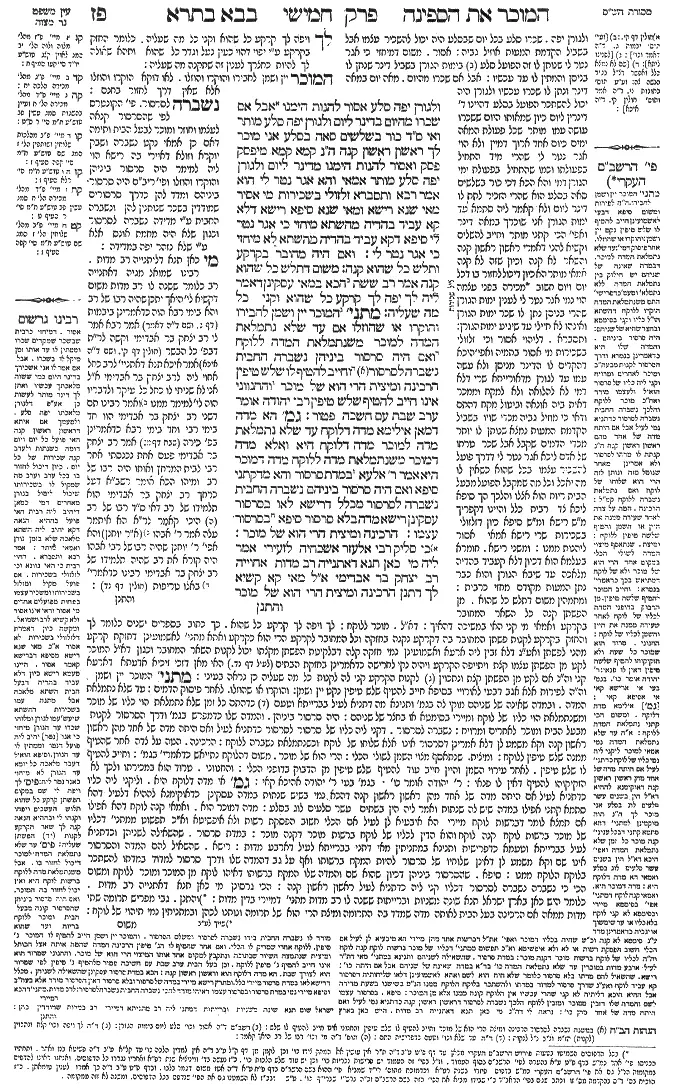
Bava Batra 87a - Guemara
ולגורן יפה סלע אסור להנות הימנו אבל אם שכרו מהיום בדינר ליום ולגורן יפה סלע מותר ואי ס"ד כור בשלשים סאה בסלע אני מוכר לך ראשון ראשון קנה ה"נ קמא קמא מיפסק פסק ואסור להנות הימנו מדינר ליום ולגורן יפה סלע מותר אמאי והא אגר נטר לי הוא אמר רבא ותסברא זלזולי בשכירות מי אסיר מאי שנא רישא ומאי שנא סיפא רישא דלא קא עביד בהדיה מהשתא מיחזי כי אגר נטר לי סיפא דקא עביד בהדיה מהשתא לא מיחזי כי אגר נטר לי:
ואם היה מחובר בקרקע ותלש כל שהוא קנה:
משום דתלש כל שהוא קנה אמר רב ששת הכא במאי עסקינן דאמר ליה לך יפה לך קרקע כל שהוא וקני כל מה שעליה:
מתני׳ המוכר יין ושמן לחבירו והוקרו או שהוזלו אם עד שלא נתמלאת המדה למוכר משנתמלאת המדה ללוקח ואם היה סרסור ביניהן נשברה החבית נשברה לסרסור וחייב להטיף לו שלש טיפין הרכינה ומיצית הרי הוא של מוכר והחנווני אינו חייב להטיף שלש טיפין רבי יהודה אומר ערב שבת עם חשכה פטור:
גמ׳ הא מדה דמאן אילימא מדה דלוקח עד שלא נתמלאת מדה למוכר מדה דלוקח היא ואלא מדה דמוכר משנתמלאת מדה ללוקח מדה דמוכר היא אמר ר' אלעא במדת סרסור והא מדקתני סיפא ואם היה סרסור ביניהם נשברה החבית נשברה לסרסור מכלל דרישא לאו בסרסור עסקינן רישא מדה בלא סרסור סיפא בסרסור עצמו:
הרכינה ומיצית הרי הוא של מוכר:
כי סליק רבי אלעזר אשכחיה לזעירי אמר ליה מי כאן תנא דאתנייה רב מדות אחוייה רב יצחק בר אבדימי א"ל מאי קא קשיא לך דתנן הרכינה ומיצית הרי הוא של מוכר
Comments from Rashbam - Bava Batra 87a
ולגורן יפה . שכרו סלע בכל יום שבסלע היה יכול להשכיר עצמו אבל בשביל הקדמת המעות אוזיל גביה: אסור . משום דמיחזי כי אגר נטר לי שנותן לו זה הפועל סלע בימות הגורן בשביל דינר שנתן לו בניסן והמתין לו עד עכשיו: אבל אם שכרו מהיום . מאה יום במאה דינר ונתן לו שכרו עכשיו ולגורן היה יכול להשתכר הפועל בסלע דהיינו ד' דינרין ליום כיון שמאותו היום ששכרו עושה עמו מותר שכל פעולת המאה ימים כיום אחד ארוך דמיין ולא הוי אגר נטר לי שהרי מיד התחיל בפעולתו וכמו שהתחיל בפעולת ימי הגורן דמי והא הכא דכי כור בשלשים סאה בסלע הוא שהרי הזכיר לתת לו דינר ליום ולא קאמר ליה סתמא עד ימות הגורן אני שוכרך במאה דינר ואפי' הכי קתני מותר וחייב להשלים וקשיא להני דאמרי ראשון ראשון קנה והשאר לא קנה וכיון שזה לא קנה אמאי מותר הא כיון דיכול לחזור בו דכל יום ויום חשוב מכירה בפני עצמה הוי נמי אגר נטר לי לענין ימות הגורן שהרי בניסן נתן לו שכר ימות הגורן ואינהו לא חיילי עד שיגיע ימות הגורן: ותסברא . דליהוי אסור וכי זלזולי בשכירות מי אסור בתמיה ואפי' היכא דהקדים לו הדינר מניסן ולא עשה עמו עד לגורן מדאורייתא שרי דלא דמי לא להלואה ולא למקח וממכר דאית ביה אונאה וביטול מקח דהתם ודאי כי מוזיל גביה מכדי שויו בשביל הקדמת המעות נמצא שנותן לו יותר מכדי הדמים שקבל אבל שכר טרחו של אדם ליכא אגר נטר לי דדרך פועל להשכיר עצמו בכל שהוא כשאין לו מה יאכל וכל מה שמקבל הפועל מבעל הבית ריוח הוא אצלו והלכך הך סיפא ליכא צד רבית כלל והיינו דקפריך מ"ש רישא ומ"ש סיפא כיון דזלזולי בשכירות שרי רישא אמאי אסור ליהנות ממנו: ומשני רישא . חומרא בעלמא הוא דכיון דלא קעביד בהדיה מלאכה עד שיבא הגורן והוא כבר נתן המעות מקודם מחזי כרבית: ומתמהין משום דתלש כל שהוא . מן הפשתן קנה כל השאר המחובר בקרקע ואמאי מי קני האי במשיכה דהאיך: דא"ל . מוכר ללוקח: לך ויפה לך קרקע כל שהוא . כך כתוב בספרים ישנים כלומר לך והחזק בקרקע לקנות פשתן המחובר בה דקרקע נקנה בחזקה וכל המחובר לקרקע הרי הוא כקרקע ואתא מתני' לאשמועינן דחזקת קרקע מהני לפשתן ואע"ג דלא זבין ליה ארעא ואשמועינן נמי חזקה קלה דבלקיטת הפשתן מקצתו יכול לקנות השאר המחובר וכגון דא"ל המוכר לקט מן הפשתן עצמו קצת ויתייפה הקרקע ויהיה נקי לחרישה כדאמרינן בחזקת הבתים (לעיל בבא בתרא דף נד.) האי מאן דזכי זיכיא אדעתא דארעא קני וה"נ אם לקט מן הפשתן קצת ונתכוין לקנות הקרקע קני לה לקנות כל מה שעליה כן נראה בעיני: מתני' המוכר יין ושמן . וה"ה לפירות אלא אגב דבעי לאורויי בסיפא חייב להטיף שלש טיפין נקט יין ושמן: והוקרו או שהוזלו . לאחר פיסוק הדמים: עד שלא נתמלאת המדה . ובמדה שאינה של שניהם מוקי לה בגמ' ותנינא מה דתניא לעיל בברייתא וטעם כדהתם כל זמן שלא נתמלאת הוי כליו של מוכר ומשנתמלאת הוי כליו של לוקח ומיירי בסימטא או בחצר של שניהם: היה סרסור ביניהן . והמדה שלו כדמפרש בגמ' ודרך הסרסור לקנות מבעל הבית ומוכר לאחרים ומרויח: נשברה לסרסור . דקני ליה כליו של סרסור לסרסור כדתניא לעיל ואם היתה מדה של אחד מהן ראשון ראשון קנה וקא משמע לן דלא אמרינן דסרסור אינו אלא שלוחו של לוקח וכשנתמלאת נשברה ללוקח: וחייב להטיף לו שלש טיפין . לאחר עירוי השמן והיין חייב עוד להטיף שלש טיפין מן הדבוק בדופני הכלי: הרכינה . הטה על צדה אחר שהטיף ממנה שלש טיפין ללוקח: ומיצית . שנתאסף מצוי השמן לשולי הכלי: הרי הוא של מוכר . משום דהלוקח נתייאש כדאמרי' בגמ': והחנווני . טרוד הוא במכירתו ולכך לא הזקיקוהו להטיף דאין לו פנאי: ר' יהודה אומר כו' . בגמ' בעי ר' יהודה אהיכא קאי: גמ' אי מדה דלוקח היא . וליקני ליה כליו כדתניא לעיל אם היתה מדה של אחד מהן ראשון ראשון קנה דהכא נמי בשיש שנתות במדה עסקינן כדאוקימנא לההיא דלעיל דהא סתמא קתני אפילו במדה שיש לה שנתות ואמר ליה הין בשתים עשר סלעים לוג בסלע: מדה דמוכר הוא . ואמאי קנה לוקח דהא אפילו אם תמצא לומר דברשות לוקח מיירי הא איבעיא לן לעיל אם הכלי חשוב הפסקת רשות ולא איפשיטא וא"כ תפשוט ממתני' דכליו של מוכר ברשות לוקח קנה לוקח והוא הדין לכליו של לוקח ברשות מוכר דקנה מוכר: במדת סרסור . שהשאילה לשניהן וכדתניא לעיל בברייתא וטעמא כדפרישית ותנינא במתניתין מאי דתני בברייתא לעיל דארבע מדות: רישא . שהשאיל להם המדה והסרסור אינו שם וקא משמע לן דאינן שלוחיו של סרסור להיות המקח ברשותו ואף על גב דהמדה שלו ודרך סרסור למדוד במדתו להשתכר בלוקח הלוקח ממנו: סיפא . שהסרסור ביניהן דכיון שהוא שם והמדה שלו המקח ברשותו דאיהו לוקח מן המוכר ומוכר ללוקח ומשום הכי כי נשברה נשברה לסרסור דכליו קני ליה כדתניא לעיל ראשון ראשון קנה: הכי גרסינן מי כאן תנא דאתנייה רב מדות . כלומר היש כאן בארץ ישראל תנא שונה משניות וברייתות ששנה לו רב מדות מתני' דמיירי בדין מדות:
Comments from Tosafot - Bava Batra 87a
לך ויפה לך קרקע כל שהוא וקני כל מה שעליה. כלומר החזק בקרקע ע"י יפוי דהוי כעין נעל וגדר כל שהוא ותהא שאולה לך להיות כחצרך לענין זה שתקנה מה שעליה: המוכר יין ושמן לחבירו והוקרו והוזלו. לאו דוקא הוקרו והוזלו אלא שאין דרך לחזור בחנם: נשברה לסרסור. פי' הקונטרס לפי שהסרסור קנאה לעצמו וחוזר ומוכר לבעל הבית ותימה דאם כן אמאי נקט נשברה ושבק יוקרא וזולא דאיירי בה רישא הוי ליה למימר היה סרסור ביניהן והוקרו והוזלו ופי' ריב"ם היה סרסור ביניהם ומדד להן כדרך סרסורים שמודדין בשכר שנותנין להן ונשברה החבית ע"י מדידה נשברה לסרסור וכגון שלא היה מחמת אונס אלא ע"י שלא נזהר יפה במדידה: מי כאן תנא דליתנייה רב מדות. רבינו שמואל מגיה דאתנייה רב כלומר ששנה לו רב מדות משום דקשיא לי' היאך יתכן שהיה רבו של רב והא בימי רבא הוה כדאמרינן ביבמות (דף ג. ושם ד"ה דאמר) אמר רבא אמר לי רב יצחק בר אבדימי וקשה לר"ת דבפ' כל הבשר (חולין דף קי. ושם ד"ה איכא) אמר איכא תנא דאתניי' לרב כחל אחוי ליה לרב יצחק בר אבדימי א"ל אני לא שניתי לו כחל כל עיקר ולדבריו הוה לי' למימר ממנו ואמר רבינו תם דשני רב יצחק בר אבדימי הוו חד בימי רבי וחד בימי רבא כדאמרינן בפ' כירה (שבת דף מ:) אמר רב יצחק בר אבדימי פעם אחת נכנסתי אחר רבי לבית המרחץ ואותו היה רבו של רב ומיהו הכא אומר רשב"א דעל כרחך רב יצחק בר אבדימי הוא תלמידו של רב דאי ס"ד רבו של רב היכי קאמר לר"א הא איתמר עלה אמר ר' אבהו (א"ר יוחנן) והא אפי' ר' יוחנן שהיה רבו של רבי אבהו היה קורא את רב שהיה תלמידו של רב יצחק בר אבדימי רבינו כדאמרי' באלו טריפות (חולין דף נד):
Bava Batra 87a - Mishnah translated into english
and a day of a laborer’s work during the harvest is worth a sela, the equivalent of four silver dinars, for each day, it is prohibited to derive benefit from him, i.e., one may not employ the laborer under these conditions. The reason is that this is akin to taking interest, as the laborer works and receives less than he is entitled to in exchange for early payment. But if one hires him already from now to work for one dinar a day for an extended period of time, including the harvest season, and the work of a laborer during the harvest is worth a sela, this is permitted.
And if it enters your mind, as Rav and Shmuel claim, that if a seller said: I am selling you one kor for thirty sela, each se’a for one sela, he cannot fully renege on the sale in the middle of the transaction, as the buyer acquires each se’a one by one as it is measured, then the halakha in this case should be different. Here too, as he does not agree to one large sum but fixes a price for each day, one by one, it is akin to taking interest, as the laborer works and receives less than he is entitled to in exchange for early payment. And therefore, it should be prohibited to derive benefit from him. Whereas the baraita states: If one hires him from now to work for one dinar a day over an extended period of time, including the harvest, and one day of a laborer’s work during the harvest is worth one sela, this is permitted. Why is it permitted? But isn’t it payment for waiting, i.e., for advancing the money to the laborer?
Rava said: And how can you understand the baraita in that manner? Is it prohibited for one to lower his hiring price and receive lower wages in order to ensure that he is employed? This arrangement is not a form of interest and violates no prohibition. The Gemara asks: If this is not considered taking interest, then what is different in the first clause, where the laborer is not employed immediately and this arrangement is prohibited, and what is different in the latter clause, where it is permitted?
The Gemara explains: In the first clause, as the laborer does not work with him from now, it has the appearance of payment for waiting, i.e., advancing the money to the laborer. In the latter clause, as the laborer works with him from now, it does not have the appearance of payment for waiting.
§ The mishna teaches: And if the flax was attached to the ground and he detached any amount, he has acquired it. The Gemara asks: Is it correct to say that due to the fact that he detached any amount, he acquired it? If he does not perform an act of acquisition with all of the flax, how can he acquire all of it? Rav Sheshet said: Here we are dealing with a case where the seller said to him: Go and clear for yourself any amount of land, and thereby acquire everything that is on it. When the buyer clears the land by detaching the flax from the ground, he is considered to be renting the land and thereby acquires all the flax that grows on it.
MISHNA: With regard to one who sells food or drink that has an established price, such as wine and oil, to another, and the price rises or falls and the buyer or the seller wishes to renege on the sale, if the price changed before the measuring vessel is filled, the merchandise still belongs to the seller and he can cancel the sale. Once the measuring vessel is filled the merchandise belongs to the buyer, and the seller can no longer cancel the sale. And if there was a middleman [sarsur] between them and the barrel belonging to the middleman, being used to measure the merchandise, broke during the transaction and the merchandise is ruined, it broke for the middleman, i.e., he is responsible for the ruined merchandise.
The mishna teaches an additional halakha with regard to sales: And anyone who sells wine, oil, or similar liquids is obligated, after he transfers the liquid into the buyer’s vessel, to drip for him three extra drops from the measure. After he drips those three drops, if he turned the barrel on its side and drained out the last bits of liquid that it contained, this belongs to the seller and he is not required to give these last drops to the buyer. And a storekeeper is not obligated to drip three drops, because he is too busy to do this constantly. Rabbi Yehuda says: If the sale occurs on Shabbat eve as nightfall arrives, one is exempt from dripping these three drops, as there is a need to complete the transaction before Shabbat begins.
GEMARA: The Gemara clarifies the mishna’s statement that the sale occurs once the measuring vessel is filled. This measuring vessel, to whom does it belong? If we say that the measuring vessel belongs to the buyer, why does the mishna teach that before the measuring vessel is filled the merchandise still belongs to the seller? Since it is the measuring vessel of the buyer, he should acquire everything that is placed in his vessel, whether or not it is filled. But if we say that the measuring vessel belongs to the seller, why does the mishna teach that once the measuring vessel is filled the merchandise belongs to the buyer? Since it is the measuring vessel of the seller, the merchandise has yet to enter the possession of the buyer.
Rabbi Ela says: The mishna is referring to a case where the measuring vessel belongs to the middleman. The middleman lends it to the seller, and once it is filled it is loaned to the buyer so that he can transfer its contents into his vessels. The Gemara asks: But from the fact that the latter clause teaches: And if there was a middleman between them and the barrel broke, it broke for the middleman, it may be inferred that in the first clause we are not dealing with a middleman. The Gemara answers: The first clause addresses a measuring vessel belonging to a middleman without the presence of the middleman at the transaction, whereas the latter clause is concerned with a middleman himself, who is present at the sale and therefore accepts responsibility for the barrel and its contents.
§ The mishna teaches that if he turned the barrel on its side and drained out the last bits of liquid within it, this liquid belongs to the seller. The Gemara relates: When Rabbi Elazar ascended from Babylonia to Eretz Yisrael, he found Ze’eiri and said to him: Who here is the tanna to whom Rav taught this halakha with regard to measures? Ze’eiri showed him Rav Yitzḥak bar Avdimi. Rav Yitzḥak bar Avdimi said to Rabbi Elazar: What is it about this halakha that poses a difficulty for you? Rabbi Elazar said to him that the problem is that we learned in the mishna: If he turned the barrel on its side and drained out the last bits of liquid within it, that liquid belongs to the seller.
Traduction : The William Davidson digital edition of the Koren Noé Talmud, with commentary by Rabbi Adin Even-Israel Steinsaltz.