 Talmud Bavli
Bava Batra 31a : Youtube
Daf TubeYoutube
2 video classes :
Bava Batra Page 31a
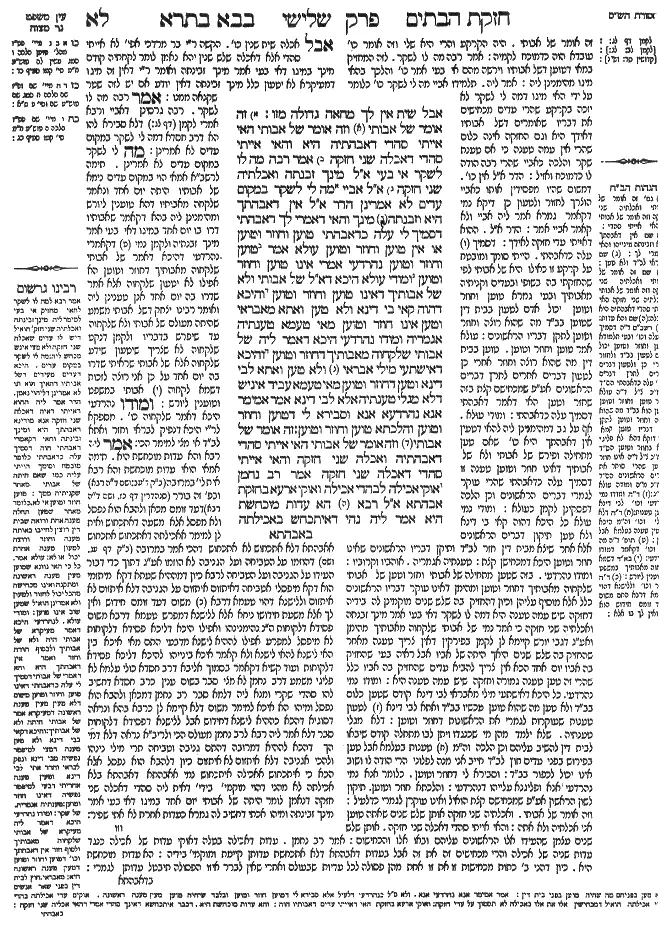
Bava Batra 31a - Guemara
אבל שית אין לך מחאה גדולה מזו:
זה אומר של אבותי וזה אומר של אבותי האי אייתי סהדי דאבהתיה היא והאי אייתי סהדי דאכלה שני חזקה אמר רבה מה לו לשקר אי בעי א"ל מינך זבנתה ואכלתיה שני חזקה א"ל אביי מה לי לשקר במקום עדים לא אמרינן הדר א"ל אין דאבהתך היא וזבנתה מינך והאי דאמרי לך דאבהתי דסמיך לי עלה כדאבהתי טוען וחוזר וטוען או אין טוען וחוזר וטוען עולא אמר טוען וחוזר וטוען נהרדעי אמרי אינו טוען וחוזר וטוען ומודי עולא היכא דא"ל של אבותי ולא של אבותיך דאינו טוען וחוזר וטוען והיכא דהוה קאי בי דינא ולא טען ואתא מאבראי וטען אינו חוזר וטוען מאי טעמא טענתיה אגמריה ומודו נהרדעי היכא דאמר ליה של אבותי שלקחוה מאבותיך דחוזר וטוען והיכא דאישתעי מילי אבראי ולא טען ואתא לבי דינא וטען דחוזר וטוען מאי טעמא עביד איניש דלא מגלי טענתיה אלא לבי דינא אמר אמימר אנא נהרדעא אנא וסבירא לי דטוען וחוזר וטוען והלכתא טוען וחוזר וטוען:
זה אומר של אבותי וזה אומר של אבותי האי אייתי סהדי דאבהתיה ואכלה שני חזקה והאי אייתי סהדי דאכלה שני חזקה אמר רב נחמן אוקי אכילה לבהדי אכילה ואוקי ארעא בחזקת אבהתא א"ל רבא הא עדות מוכחשת היא אמר ליה נהי דאיתכחש באכילתה
Comments from Rashbam - Bava Batra 31a
זה אומר של אבותי . היה הקרקע והרי היא שלי וזה אומר כו' עובדא הוה כדמוכח לקמיה: אמר רבה מה לו לשקר . לזה המחזיק במאי דטוען דשל אבותיו וירשה מהם אי בעי אמר כו' והלכך בהאי מיגו מהימנינן ליה: אמר ליה . תלמידו אביי מה לי לשקר כו' כלומר על ידי האי מיגו דמה לי לשקר לא יזכה בקרקע שהרי עדים מכחישים את דבריו שאומרים דשל אבותיו דאידך היא וגם החזקה אינה כלום שהרי אין עמה טענה כי אם טענת שקר והלכה כאביי שהרי רבה הודה לו כדמוכח ואזיל: הדר א"ל אין כו' . דמשום שהיו מפסידין אותו כאביי הוצרך לחזור ולטעון כן דיקא נמי דקאמר גמרא אמר ליה אביי ולא קאמר אביי אמר: הדר א"ל . ההוא דאייתי עדי חזקה לאידך: דסמיך עלה כדאבהתי . הייתי סומך ומובטח על קרקע זו כאילו היא של אבותי לפי שהחזקתי בה בשופי ובעדים וקניתיה מאבותיך ובעי גמרא טוען וחוזר וטוען יכול אדם לטעון בבית דין שטוען בב"ד מה שהוא רוצה וחוזר וטוען לתקן דבריו הראשונים: עולא אמר טוען וחוזר וטוען . טוען בבית דין מה שהוא רוצה וחוזר אחרי כן לטעון דברים אחרים לתרץ דברים הראשונים אע"פ שמכחישם קצת בזה שחזר וטען האי דאמר דאבהתי דסמיך עלה כדאבהתי: ומודי עולא . אף על גב דמהימנינן ליה להאי דטעין אין דאבהתך היא כו' שאם טען מתחילה ופירש של אבותי ולא של אבותיך דאינו חוזר וטוען טענה זו דסמיך עלה כדאבהתי שהרי עוקר לגמרי דברים הראשונים וכן הלכה דפסקינן לקמן כעולא: ומודי נמי עולא כל היכא דהוה קאי בי דינא ולא טען תיקון דברים הראשונים אלא אחר שיצא מבית דין חזר לב"ד ותיקן דבריו הראשונים שאינו חוזר וטוען היכא דמכחישן קצת: טענתיה אגמריה . אוהביו וקרוביו: ומודו נהרדעי . בזה שטען מתחילה של אבותי וחזר וטען של אבותי שלקחוה מאבותיך דחוזר וטוען ומהימן דאינו עוקר דבריו הראשונים כלל אלא מוסיף עליהן וכיון דהחזיק בה שלש שנים מוקמינן לה בידיה דחזקה שיש עמה טענה היא דמה לו לשקר דאי בעי אמר מינך זבנתה ואכלתיה שני חזקה כי אמר נמי של אבותי שלקחוה מאבותיך מהימן ואע"ג דגבי יורש קיימא לן לקמן בפירקין דאין צריך טענה מאחר שהחזיק בה שלש שנים היאך היתה של אביו אבל ראיה בעי שהחזיק בה אביו יום אחד הכא אין צריך להביא עדים שהחזיק בה אביו כלל שהרי זה טען טענה גמורה וחזקה שיש עמה טענה היא: ומודו נמי נהרדעי . כל היכא דאישתעי מילי מאבראי לבי דינא קודם שטען כלום בב"ד ולא טען מה שהוא טוען עכשיו בב"ד ואתא לבי דינא לטעון טענות שעוקרות לגמרי את הראשונות דחוזר וטוען: דלא מגלי טענתיה . שלא ילמד מהן מי שכנגדו ויתן לבו מתחלה קודם שיבאו לבית דין להשיב עליהם וכן הלכה וה"מ טענות בעלמא אבל טען בפירוש בפני עדים חוץ לב"ד חייב אני מנה לפלוני הרי הודה לו ושוב אינו יכול לכפור בב"ד: וסבירא לי דחוזר וטוען . כלומר אנא נמי נהרדעי אנא ופליגנא עלייהו דנהרדעי: והלכתא חוזר וטוען . תיקון לשון הראשון אע"פ שמכחישם קצת הואיל ואינו עוקרן לגמרי כדלעיל: וזה אומר של אבותי . ואכלתיה שני חזקה אותן שלש שנים שאתה טוען אני אכלתיה ולא אתה: והאי אייתי סהדי דאכלה שני חזקה . אותן שלש שנים עצמן שהעידו אלו הראשונים עליהם ובאו אלו והכחישום: אמר רב נחמן . עדות דאכילה בטלה דאוקי עדות של אכילה כנגד עדות שניה של אכילה והרי מכחישים זה את זה אבל בעדות דאבהתא דלא אתכחשת עדותן קיימת ומוקמי' בידיה: הא עדות מוכחשת היא . כיון דהני ב' כתות מכחישות זו את זו אחת מהן פסולה לכל עדיות שבעולם ואחרי שאין לברר איזו הפסולה תיבטל עדותן לגמרי:
Comments from Tosafot - Bava Batra 31a
אבל אכלה שית שנין כו'. הקשה ר"י בר מרדכי אפי' לא אייתי סהדי אלא דאכלה שלש שנין יהא נאמן לומר לקחתיה קודם מינך במיגו דאי בעי אמר מינך זבינתה ואומר ר"י דאין זה מיגו דמעיקרא לא יטעון כלל מינך זבינתה דאין יודע אם יש לזה שטר שקנאה ממנו: אמר רבה מה לו לשקר. רבה גרסינן דאביי ורבא אמרי לקמן (בבא בתרא דף לג:) דלא סבירא להו הא דרב חסדא דמה לי לשקר במקום עדים לא אמרינן: מה לי לשקר במקום עדים לא אמרינן. תימה לרשב"א אמאי הוי במקום עדים נימא של אבותיו היתה יום אחד ונאמר שלקחה מאבותיו דהא טוענין ליורש ומהימנינן ליה בהא דקאמר שאבותיו דרו בו יום אחד במיגו דאי בעי אמר מינך זבנתיה ולקמן נמי דקאמרי נהרדעי דהיכא דאמר של אבותי שלקחוה מאבותיך דחוזר וטוען הא אפילו לא יטעון שלקחוה אלא אמר שדרו בה יום אחד אנן טענינן ליה ואומר רבינו יצחק דשל אבותי משמע שהיתה מעולם של אבותי ולא שלקחוה עד שיפרש בדבריו ולקמן דנקט שלקחוה לא שצריך שיטעון שידע שלקחוה אלא של אבותי שראיתי שדרו בה יום אחד על כן אני רוצה לזכות דשמא לקחוה אבותי במשפט וטוענין ליורש: ומודו נהרדעי היכא דאמר שלקחוה כו'. מספקא לר"י היכא דנפיק לבראי וחזר ואתא לב"ד אי מצי למימר הכי: אמר ליה רבא והא עדות מוכחשת היא. תימה אמאי הואי עדות מוכחשת והא רבא אית לי' במרובה (ב"ק ד' עב: ושם ד"ה רבא) ובפ' זה בורר (סנהדרין דף כז. ושם ד"ה רבא) דעד זומם מכאן ולהבא הוא נפסל ולא מפסל אלא משעה דאתכחוש ואית לן למימר אאכילתה דאתכחוש אתכחוש אאבהתא דלא אתכחוש לא אתכחוש דהכי אמר במרובה (ב"ק דף עג. ושם) דהוזמו על הטביחה ועל הגניבה לא הוזמו אע"ג דתוך כדי דבור העידו על הגניבה ועל הטביחה לרבא כיון דמההיא שעתא דקא מיתזמי הוא דקא מיפסלי אטביחה דאיתזום איתזום על הגניבה דלא איתזום לא איתזום וללישנא דהוי טעמא דרבא משום דעד זומם חידוש ואין לך אלא משעת חידושו ניחא אלא ללישנא דמפרש טעמא דרבא משום פסידא דלקוחות ה"נ נהימנינהו ואפילו היכא דליכא פסידא דלקוחות לא מיפסל למפרע אפילו לההיא לישנא מדבעי התם מאי איכא בין האי לישנא להאי לישנא ולא קאמר איכא בינייהו להיכא דליכא פסידא דלקוחות ועוד קשיא דקאמר בסמוך אליבא דרב חסדא כולי עלמא לא פליגי משמע דרב נחמן לא מצי סבר בשום ענין כרב חסדא דחשיב להו סהדי שקרי ומנא ליה דלמא סבר רב נחמן דמכאן ולהבא הוא נפסל ומיהו הא איכא למימר משום דלא קיימא לן כרבא בהא ונראה דסוגיא דהכא כההיא לישנא דחידוש אבל ללישנא דפסידא דלקוחות סבר דלא אמר ליה רבא לרב נחמן מעולם הכי ולריב"א נראה דלא דמי הך דהכא לההיא דמרובה דהתם גניבה וטביחה תרי מילי נינהו ולהכי אגניבה דלא איתזום לא איתזום כיון דלהבא הוא נפסל אלא הכא כי איתכחוש אאכילה איתכחוש נמי אאבהתא דאבהתא בלא אכילתה לא מהני דהוי מוקמי' בידי' דאית ליה סהדי דאכלה שני חזקה דנאמן לומר היתה של אבותי יום אחד במיגו דאי בעי אמר מינך זבינתה ומיהו אכתי דחשיב לה גמרא כעדות אחרת לא אתי שפיר:
Bava Batra 31a - Mishnah translated into english
But if he profited from the land for only six years, so that the sale to the claimant took place before the years necessary for establishing the presumption of ownership were completed, you can have no greater protest than this, that the purported seller then sold the land to another. By doing so he indicated that he does not concede that the possessor was the rightful owner, and the possessor should have been careful to hold on to his bill of sale for even longer than three years.
There was an incident where two people disputed the ownership of land. This one says: The land belonged to my ancestors and I inherited it from them, and that one says: The land belonged to my ancestors and I inherited it from them. This one brings witnesses that the land belonged to his ancestors, and that one brings witnesses that he currently possesses the land and that he worked and profited from the land for the years necessary for establishing the presumption of ownership.
Rabba said: The judgment is in favor of the possessor, due to the legal principle that if the judgment would have been decided in one’s favor had he advanced a certain claim, and he instead advanced a different claim that leads to the same ruling, he has credibility, as why would he lie and state this claim? If the possessor wanted to lie, he could have said to the claimant: I purchased the land from you and I worked and profited from it for the years necessary for establishing the presumption of ownership, in which case he would have been awarded the land. Abaye said to Rabba: We do not say the principle of: Why would I lie, in a case where there are witnesses contradicting his current claim, as they testify that the land belonged to the ancestors of the claimant. Therefore, he should not be awarded the land.
The possessor then said to the claimant: Yes, it is true that it had belonged to your ancestors, but I purchased it from you, and by stating that which I said to you: It belonged to my ancestors, I merely meant that I rely upon my ownership of it as if it belonged to my ancestors, as I purchased it and then profited from it for the years necessary for establishing the presumption of ownership.
The Gemara asks: Can he state a claim and return and state a modified version of his claim, or can he not state a claim and return and state a modified version of his claim? Ulla said: He can state a claim and return and state a modified version of his claim. The Sages of Neharde’a say: He cannot state a claim and return and state a modified version of his claim.
The Gemara clarifies their respective opinions: And Ulla concedes that in a case where he had initially said to him: The land belonged to my ancestors and did not belong to your ancestors, that he cannot state a claim and return and state a modified version of his claim, as Ulla allows the litigant only to reinterpret his initial claim, not to replace it with a contradictory claim. And Ulla also concedes that in a case where he was standing in court and did not state a particular claim, and he later came in from outside and back into the court and he stated that claim, that he cannot return and state that claim. What is the reason for this? It is because it is apparent that these claims of his were taught to him by someone after he left the court.
And the Sages of Neharde’a concede that in a case where the litigant who changed his claim said to the other litigant that when he had initially claimed: The land belonged to my ancestors, he had actually meant: It belonged to my ancestors, who purchased it from your ancestors, that he can state a claim and return and state a modified version of his claim, as this serves only to clarify, and not negate, his initial claim. And the Sages of Neharde’a also concede that in a case where he discussed the matter outside of the court and did not state a particular claim, and then he came in to the court and stated that claim, that he can return and state that claim. What is the reason for this? Because a person is apt not to reveal his claims except to the court.
Ameimar said: I am from Neharde’a, but I nevertheless hold that a litigant can state a claim and return and state a modified version of his claim. The Gemara concludes: And the halakha is that a litigant can state a claim and return and state a modified version of his claim.
In an incident where two people dispute the ownership of land, this one says: The land belonged to my ancestors and I inherited it from them, and that one says: The land belonged to my ancestors and I inherited it from them. The first one brings witnesses that the land belonged to his ancestors, and that he worked and profited from the land for the years necessary for establishing the presumption of ownership. And the second one brings witnesses only that he worked and profited from the land for the years necessary for establishing the presumption of ownership.
Rav Naḥman said: Establish the testimony with regard to the profiting by the first litigant alongside the testimony with regard to the profiting by the second, and the two testimonies cancel each other out, leaving the testimony with regard to ownership by the ancestors of the first litigant. And therefore, establish the land in the presumptive ownership of the litigant who brought witnesses that it belonged to his ancestors. Rava objected and said to him: This testimony cannot be relied on, as it is contradicted by the other testimony. Rav Naḥman responded and said to him: Although it is so that the testimony was contradicted with regard to profiting from the land,
Traduction : The William Davidson digital edition of the Koren Noé Talmud, with commentary by Rabbi Adin Even-Israel Steinsaltz.