 Talmud Bavli
Bava Batra 11a : Youtube
Daf TubeYoutube
2 video classes :
Bava Batra Page 11a
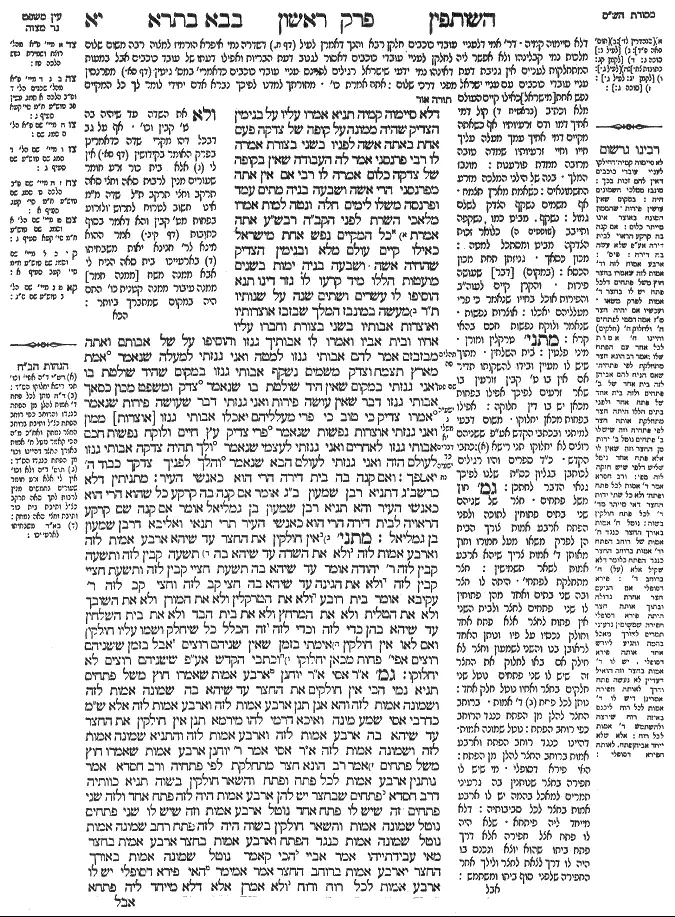
Bava Batra 11a - Guemara
דלא סיימוה קמיה תניא אמרו עליו על בנימין הצדיק שהיה ממונה על קופה של צדקה פעם אחת באתה אשה לפניו בשני בצורת אמרה לו רבי פרנסני אמר לה העבודה שאין בקופה של צדקה כלום אמרה לו רבי אם אין אתה מפרנסני הרי אשה ושבעה בניה מתים עמד ופרנסה משלו לימים חלה ונטה למות אמרו מלאכי השרת לפני הקב"ה רבש"ע אתה אמרת כל המקיים נפש אחת מישראל כאילו קיים עולם מלא ובנימין הצדיק שהחיה אשה ושבעה בניה ימות בשנים מועטות הללו מיד קרעו לו גזר דינו תנא הוסיפו לו עשרים ושתים שנה על שנותיו תנו רבנן מעשה במונבז המלך שבזבז אוצרותיו ואוצרות אבותיו בשני בצורת וחברו עליו אחיו ובית אביו ואמרו לו אבותיך גנזו והוסיפו על של אבותם ואתה מבזבזם אמר להם אבותי גנזו למטה ואני גנזתי למעלה שנאמר (תהלים פה, יב) אמת מארץ תצמח וצדק משמים נשקף אבותי גנזו במקום שהיד שולטת בו ואני גנזתי במקום שאין היד שולטת בו שנאמר (תהלים פט, טו) צדק ומשפט מכון כסאך אבותי גנזו דבר שאין עושה פירות ואני גנזתי דבר שעושה פירות שנאמר (ישעיהו ג, י) אמרו צדיק כי טוב כי פרי מעלליהם יאכלו אבותי גנזו [אוצרות] ממון ואני גנזתי אוצרות נפשות שנאמר (משלי יא, ל) פרי צדיק עץ חיים ולוקח נפשות חכם אבותי גנזו לאחרים ואני גנזתי לעצמי שנאמר (דברים כד, יג) ולך תהיה צדקה אבותי גנזו לעולם הזה ואני גנזתי לעולם הבא שנאמר (ישעיהו נח, ח) והלך לפניך צדקך כבוד ה' יאספך:
ואם קנה בה בית דירה הרי הוא כאנשי העיר:
מתניתין דלא כרשב"ג דתניא רבן שמעון ב"ג אומר אם קנה בה קרקע כל שהוא הרי הוא כאנשי העיר והא תניא רבן שמעון בן גמליאל אומר אם קנה שם קרקע הראויה לבית דירה הרי הוא כאנשי העיר תרי תנאי ואליבא דרבן שמעון בן גמליאל:
מתני׳ אין חולקין את החצר עד שיהא ארבע אמות לזה וארבע אמות לזה ולא את השדה עד שיהא בה תשעה קבין לזה ותשעה קבין לזה ר' יהודה אומר עד שיהא בה תשעת חציי קבין לזה ותשעת חציי קבין לזה ולא את הגינה עד שיהא בה חצי קב לזה וחצי קב לזה ר' עקיבא אומר בית רובע ולא את הטרקלין ולא את המורן ולא את השובך ולא את הטלית ולא את המרחץ ולא את בית הבד ולא את בית השלחין עד שיהא בהן כדי לזה וכדי לזה זה הכלל כל שיחלק ושמו עליו חולקין ואם לאו אין חולקין אימתי בזמן שאין שניהם רוצים אבל בזמן ששניהם רוצים אפי' פחות מכאן יחלוקו וכתבי הקדש אע"פ ששניהם רוצים לא יחלוקו:
גמ׳ א"ר אסי א"ר יוחנן ארבע אמות שאמרו חוץ משל פתחים תניא נמי הכי אין חולקים את החצר עד שיהא בה שמונה אמות לזה ושמונה אמות לזה והא אנן תנן ארבע אמות לזה וארבע אמות לזה אלא ש"מ כדרבי אסי שמע מינה ואיכא דרמי להו מירמא תנן אין חולקין את החצר עד שיהא בה ארבע אמות לזה וארבע אמות לזה והתניא שמונה אמות לזה ושמונה אמות לזה א"ר אסי אמר ר' יוחנן ארבע אמות שאמרו חוץ משל פתחים אמר רב הונא חצר מתחלקת לפי פתחיה ורב חסדא אמר נותנין ארבע אמות לכל פתח ופתח והשאר חולקין בשוה תניא כוותיה דרב חסדא פתחים שבחצר יש להן ארבע אמות היה לזה פתח אחד ולזה שני פתחים זה שיש לו פתח אחד נוטל ארבע אמות וזה שיש לו שני פתחים נוטל שמונה אמות והשאר חולקין בשוה היה לזה פתח רחב שמונה אמות נוטל שמונה אמות כנגד הפתח וארבע אמות בחצר ארבע אמות בחצר מאי עבידתייהו אמר אביי הכי קאמר נוטל שמונה אמות באורך החצר וארבע אמות ברוחב החצר אמר אמימר האי פירא דסופלי יש לו ארבע אמות לכל רוח ורוח ולא אמרן אלא דלא מייחד ליה פתחא
Comments from Rashi on Masechet Bava Batra Page 11a
דלא סיימוה קמיה . דר' אמי דלעניי עובדי כוכבים חלקן רבא והנך דאמרן לעיל (בבא בתרא דף ח.) דשדרה נמי איפרא הורמיז למצוה רבה משום שלום מלכות נמי קבלינהו ולא אפשר ליה לחלקן לעניי עובדי כוכבים דאסור לגנוב דעת הבריות ואפילו דעתו של עובד כוכבים אבל במעות המתחלקות לעניים אין גניבת דעת דאינהו נמי ידעי שישראל רגילים לפרנס עניי עובדי כוכבים כדאמרי' במס' גיטין (דף סא.) מפרנסין עניי עובדי כוכבים עם עניי ישראל מפני דרכי שלום: אתה אמרת כו' . מתורתך למדנו לפיכך נברא אדם יחידי לומר לך כל המקיים נפש אחת [מישראל] כאילו קיים העולם מלא וכתיב (בראשית ד) קול דמי אחיך דמו ודם זרעיותיו אף כשאתה מקיים דמי אחיך עמך מעלה עליך חייו וחיי זרעיותיו שמדה טובה מרובה ממדת פורענות: מונבז המלך . בנה של הילני המלכה מזרע החשמונאים: כשאמת מארץ תצמח . אף משמים נשקף הצדק לשלם גמול: נשקף . מביט כמו נשקפה ותייבב (שופטים ה) כלומר זכות הצדקה מביט ומסתכל למטה: מכון כסאך . גניזתן תחת מכון הכסא: (במקום) [דבר] שעושה פירות . והקרן קיים לעוה"ב והפירות אוכל בחייו שנאמר כי פרי מעלליהם יאכלו: אוצרות נפשות . שנאמר ולוקח נפשות חכם בהאי קרא: מתני' טרקלין ומורן . מיני פלטין: בית השלחין . מתוך שיש לו מעיין ובידו להשקותו תדיר אם אין בו ט' קבין זורעין בו שאר זרעים לפיכך אפילו בפחות מכאן יש בו דין חלוקה: אפילו בפחות מכאן יחלוקו . משום דבעי למיתני ובכתבי הקדש אע"פ ששניהם רוצים לא יחלוקו תני רישא: כתבי הקדש . כ"ד ספרים והיו רגילים לכותבן בגליון כס"ת שלנו לפיכך גנאי הדבר לחתכן: גמ' חוץ משל פתחים . חצר של שניהם שני בתים פתוחין לתוכה ולפני הפתח ארבע אמות צורך הבית הן לפרק משאו מעל חמורו וחוץ מאותן ד' אמות צריך שיהא ארבע אמות לשאר תשמישין: חצר מתחלקת לפתחי' . היתה לו חצר ובה שני בתים ואחד מהן פתוחין לו שני פתחים לחצר ולבית השני אין פתוח לחצר אלא פתח אחד וחולק נכסיו על פיו ונותן האחד לראובן בנו והשני לשמעון וחצר לא חילק אם באו לחלוק את החצר זה שיש לו שני פתחים נוטל שני חלקים בחצר ואחיו נוטל חלק אחד: נותן לכל פתח ד' אמות . ברוחב החצר להלן מן הפתח כנגד הרוחב כפי רוחב הפתח: נוטל שמונה אמות . דהיינו כנגד רוחב הפתח וארבע אמות ברוחב החצר להלן מן הפתח: האי פירא דסופלי . מי שיש לו חפירה בחצר שנותנין בה גרעיני תמרים למאכל בהמה יש לו ארבע אמות בחצר לכל סביבותיה: דלא מייחד ליה פיתחא . שלא היה לו פתח אצל חפירה אלא דרך פתח ביתו שהוא יוצא ונכנס בו היה לו דרך לצאת לחצר ולילך אחר החפירה שלפני סוף ביתו ומשתמש:
Comments from Tosafot - Bava Batra 11a
ולא את השדה עד שיהיה בה ט' קבין וכו'. אף על גב דבכל דהו מקרי שדה כדאמרינן בפרק האומר בקידושין (דף סא.) אין לי אלא בית כור זרע חומר שעורים מנין לרבות סאה וחצי סאה תרקב וחצי תרקב ת"ל שדה מ"מ אינו חשוב לטרוח לחרוש ולזרוע בפחות מט' קבין והא דאמר בסוף כתובות (דף קיב.) אמר ההוא מינא לר' חנינא יאות משבחיתו בארעייכו בית סאה הניח לי אבא ממנה משח [ממנה חמר] ממנה עיבור ממנה קטנית כו' התם היה במקום שמתברך ביותר:
Bava Batra 11a - Mishnah translated into english
those who reported the story to him did not conclude it before him; consequently, Rav Ami was not informed that Rava had indeed given the money to the gentile poor.
§ It is taught in a baraita: The following was said about Binyamin the righteous, who was appointed supervisor over the charity fund. Once, a woman came before him during years of drought and said to him: My master, sustain me. He said to her: I swear by the Temple service that there is nothing left in the charity fund. She said to him: My master, if you do not sustain me, a woman and her seven sons will die. He arose and sustained her with his own funds. After some time, he fell deathly ill. The ministering angels said to the Holy One, Blessed be He: Master of the Universe, You said that anyone who preserves a single life in Israel is regarded as if he has preserved an entire world. Should then Binyamin the righteous, who saved a woman and her seven sons, die after these few years, still in his youth? They immediately tore up his sentence. A Sage taught: They added twenty-two years to his life.
The Sages taught: There was an incident involving King Munbaz, who liberally gave away his treasures and the treasures of his ancestors in the years of drought, distributing the money to the poor. His brothers and his father’s household joined together against him to protest against his actions, and they said to him: Your ancestors stored up money in their treasuries and added to the treasures of their ancestors, and you are liberally distributing it all to the poor. King Munbaz said to them: Not so, my ancestors stored up below, whereas I am storing above, as it is stated: “Truth will spring out of the earth and righteousness will look down from heaven” (Psalms 85:12), meaning that the righteous deeds that one has performed are stored up in heaven. My ancestors stored up treasures in a place where the human hand can reach, and so their treasures could have been robbed, whereas I am storing up treasures in a place where the human hand cannot reach, and so they are secure, as it is stated: “Righteousness and justice are the foundation of Your throne” (Psalms 89:15).
My ancestors stored up something that does not generate profit, as money sitting in a treasury does not increase, whereas I am storing up something that generates profit, as it is stated: “Say of the righteous, that it shall be well with them, for they shall eat the fruit of their doings” (Isaiah 3:10). My ancestors stored up treasures of money, whereas I am storing up treasures of souls, as it is stated: “The fruit of the righteous is a tree of life, and he that wins souls is wise” (Proverbs 11:30). My ancestors stored up for others, for their sons and heirs, when they themselves would pass from this world, whereas I am storing up for myself, as it is stated: “And it shall be as righteousness to you” (Deuteronomy 24:13). My ancestors stored up for this world, whereas I am storing up for the World-to-Come, as it is stated: “And your righteousness shall go before you, the glory of the Lord shall be your rearguard” (Isaiah 58:8).
§ The Gemara resumes its analysis of the mishna, which taught that one must reside in a place for twelve months in order to be considered a resident for the purposes of issues such as paying taxes. But if he bought himself a residence in the city, he is immediately considered like one of the people of the city. The Gemara comments: The mishna is not in accordance with the opinion of Rabban Shimon ben Gamliel, as it is taught in a baraita that Rabban Shimon ben Gamliel says: If he bought any amount of land in the city, and not necessarily a residence, he is immediately considered like one of the people of the city.
The Gemara asks: But isn’t it taught otherwise in a different baraita: Rabban Shimon ben Gamliel says: If one bought land that is suitable for a residence, he is immediately considered like one of the people of the city. This contradicts the first baraita. The Gemara answers: This is a dispute between two tanna’im and they disagree with regard to the opinion of Rabban Shimon ben Gamliel.
MISHNA: The court does not divide a courtyard at the request of one of the joint owners unless there will be in it four by four cubits for this one and four by four cubits for that one, i.e., this minimum area for each of the joint owners. And the court does not divide a jointly owned field unless there is space in it to plant nine kav of seed for this one and nine kav of seed for that one. Rabbi Yehuda says: The court does not divide a field unless there is space in it to plant nine half-kav of seed for this one and nine half-kav of seed for that one. And the court does not divide a jointly owned garden unless there is space in it to plant a half-kav of seed for this one and a half-kav of seed for that one. Rabbi Akiva says that half that amount is sufficient, i.e., the area required for sowing a quarter-kav of seed [beit rova].
Similarly, the court does not divide a hall [hateraklin], a drawing room, a dovecote, a cloak, a bathhouse, an olive press, and an irrigated field unless there is enough for this one to use the property in the usual manner and enough for that one to use the property in the usual manner. This is the principle: Anything for which when it is divided, each of the parts is large enough to retain the name of the original item, the court divides it. But if the parts will not retain the original name, the court does not divide it.
When does this rule apply? It applies when the joint owners do not both wish to divide the item; when only one of the owners wishes to divide the property, he cannot force the other to do so. But when both of them wish to divide the item, they may divide it, even if each of the owners will receive less than the amounts specified above. But in the case of sacred writings, i.e., a scroll of any of the twenty-four books of the Bible, that were inherited by two people, they may not divide them, even if both of them wish to do so, because it would be a show of disrespect to cut the scroll in half.
GEMARA: Rabbi Asi says that Rabbi Yoḥanan says: The four cubits of the courtyard which they said each of the joint owners must receive is in addition to the space in front of the entrances to each of the houses that is assigned to the owner of the house for loading and unloading. That opinion is also taught in a baraita: The court does not divide a courtyard unless its area is sufficient so that there will be in it eight cubits for this one and eight cubits for that one. The Gemara asks: But didn’t we learn in the mishna that it suffices that there be four cubits for this one and four cubits for that one? Rather, conclude from it that the baraita was taught in accordance with the opinion of Rabbi Asi. The Gemara affirms: Conclude from it that it is so.
And there are those who raise the baraita as a contradiction to what is taught in the mishna and use the previously mentioned point to reconcile the two texts. We learned in the mishna: The court does not divide a courtyard at the request of one of the joint owners unless there will be in it four by four cubits for this one and four by four cubits for that one. But isn’t it taught in a baraita: The court does not divide a courtyard unless there are eight cubits for this one and eight cubits for that one? About this Rabbi Asi said that Rabbi Yoḥanan said: The four cubits of the courtyard which they said each of the joint owners must receive is in addition to the space in front of the entrances to each of the houses.
Further with regard to the division of a courtyard, Rav Huna says: A courtyard is divided according to its entrances. Each of the owners receives a share of the courtyard in proportion to the number of entrances that his house has opening onto the courtyard. And Rav Ḥisda says: Four cubits are allotted to each of the owners for each and every entrance, and the rest of the courtyard is then divided equally between them.
The Gemara comments: It is taught in a baraita in accordance with the opinion of Rav Ḥisda: Each of the entrances opening to a courtyard is allotted four cubits. If this one has one entrance and that one has two entrances, the one who has one entrance takes four cubits, and the one who has two entrances takes eight cubits, and they divide the rest of the courtyard equally between them. If this one had an entrance eight cubits wide, he takes eight cubits adjacent to the entrance and four cubits in the courtyard. The Gemara expresses surprise: What are these four cubits in the courtyard doing here? Doesn’t it all depend on the size of the courtyard? Abaye said: This is what the baraita is saying: For the entrance he takes eight cubits along the length of the courtyard and four cubits along the width of the courtyard. In other words, he takes a strip four cubits wide along the entire length of his entrance.
Ameimar says: A pit for holding animal food [peira desuflei] has four cubits on each and every side so that there will be sufficient space for the animals to stand. The Gemara adds: And we said this only when the pit has no special entrance to reach it, but rather it is accessed from all sides.
Traduction : The William Davidson digital edition of the Koren Noé Talmud, with commentary by Rabbi Adin Even-Israel Steinsaltz.