 Talmud Bavli
Bava Batra 68a : Youtube
Daf TubeYoutube
2 video classes :
Bava Batra Page 68a
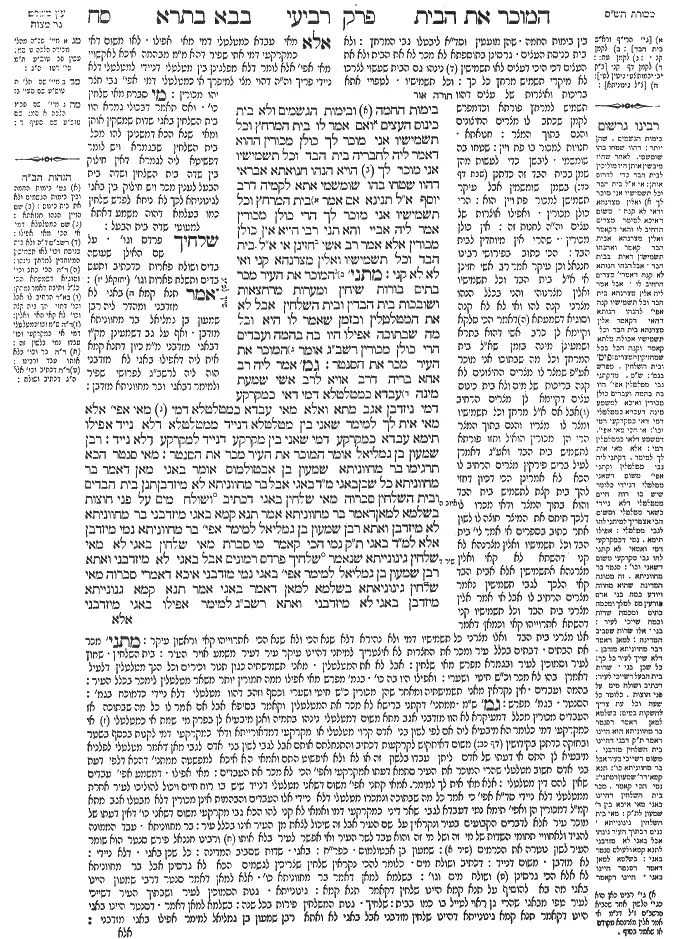
Bava Batra 68a - Guemara
בימות החמה ובימות הגשמים ולא בית כינוס העצים ואם אמר לו בית המרחץ וכל תשמישיו אני מוכר לך כולן מכורין ההוא דאמר ליה לחבריה בית הבד וכל תשמישיו אני מוכר לך הויא הנהו חנואתא אבראי דהוו שטחו בהו שומשמי אתא לקמיה דרב יוסף א"ל תנינא אם אמר בית המרחץ וכל תשמישיו אני מוכר לך הרי כולן מכורין אמר ליה אביי והא תני רבי חייא אין כולן מכורין אלא אמר רב אשי חזינן אי א"ל בית הבד וכל תשמישיו ואלין מצרנהא קני ואי לא לא קני:
מתני׳ המוכר את העיר מכר בתים בורות שיחין ומערות מרחצאות ושובכות בית הבדין ובית השלחין אבל לא את המטלטלין ובזמן שאמר לו היא וכל מה שבתוכה אפילו היו בה בהמה ועבדים הרי כולן מכורין רשב"ג אומר המוכר את העיר מכר את הסנטר:
גמ׳ אמר ליה רב אחא בריה דרב אויא לרב אשי שמעת מינה עבדא כמטלטלא דמי דאי כמקרקע דמי ניזדבן אגב מתא ואלא מאי עבדא כמטלטלא דמי מאי אפילו אלא מאי אית לך למימר שאני בין מטלטלא דנייד ממטלטלא דלא נייד אפילו תימא עבדא כמקרקע דמי שאני בין מקרקע דנייד למקרקע דלא נייד:
רבן שמעון בן גמליאל אומר המוכר את העיר מכר את הסנטר:
מאי סנטר הכא תרגימו בר מחווניתא שמעון בן אבטולמוס אומר באגי מאן דאמר בר מחווניתא כל שכן באגי מ"ד באגי אבל בר מחווניתא לא מיזדבן תנן בית הבדים ובית השלחין סברוה מאי שלחין באגי דכתיב (איוב ה, י) ושולח מים על פני חוצות בשלמא למאן דאמר בר מחווניתא אמר תנא קמא באגי מיזדבני בר מחווניתא לא מיזדבן ואתא רבן שמעון בן גמליאל למימר אפילו בר מחווניתא נמי מיזדבן אלא למ"ד באגי ת"ק נמי הכי קאמר מי סברת מאי שלחין באגי לא מאי שלחין גינונייתא שנאמר (שיר השירים ד, יג) שלחיך פרדס רמונים אבל באגי לא מיזדבני ואתא רבן שמעון בן גמליאל למימר אפילו באגי נמי מזדבני איכא דאמרי סברוה מאי שלחין גינוניאתא בשלמא למאן דאמר באגי אמר תנא קמא גנונייתא מיזדבן באגי לא מיזדבני ואתא רשב"ג למימר אפילו באגי מיזדבני
Comments from Rashbam - Bava Batra 68a
בין בימות החמה . שהן מועטין וסד"א ליבטלו גבי המרחץ: ולא בית כניסת העצים . גרסינן בתוספתא לא מכר לא את הבית ולא את העצים דכי היכי דעצים לאו תשמישין נינהו גם הבית שעשוי לצרכו לא מיקרי תשמיש מרחץ כל כך: וכל תשמישיו . לטפויי אתא בריכות ואוצרות של עצים דהוו תשמיש למרחץ פורתא וכדמפרש לקמן שכתב לו מצרים החיצונים והנם בתוך המצר: חנואתא . חנויות למכור בו פת ויין: שטחו בה שומשמי . ליבשן כדי לעשות מהן שמן בבית הבד זה כדתנן (שבת דף כד:) בשמן שומשמין אבל עיקר תשמישן למכור פת ויין הוא: הרי כולן מכורין . ואפילו אוצרות של עצים וה"ה לחנות זה: אין כולן מכורין . שהרי אין מיוחדין לבית הבד: הכי כתוב בפירושי רבינו חננאל וכן עיקר אמר רב אשי חזינן אי א"ל בית הבד וכל תשמישיו ואלין מצרנוהי והני בכלל הנהו מצרני קנה להו ואי לא לא קנה וסוגיא דשמעתא דאמר הכי סלקא וקיימא לן כרב אשי דהוא בתרא ושמעינן מינה בזמן שא"ל בית המרחץ וכל מה שבתוכו אני מוכר אע"פ שמצר לו מצרים החיצונים לא קנה בריכות של מים ולא בית כינוס עצים דקיימא לן מצרים הרחיב אבל אם א"ל מרחץ וכל תשמישיו ומצר לו מצריו והנם בתוך המצר הרי הן מכורין הואיל וחזו פורתא לתשמיש בית הבד ואע"ג דאמרן לעיל בריש פירקין מצרים הרחיב לו הכא לא אמרינן הכי דכיון דחזי להך בית קצת לתשמיש בית הבד והוא בתוך המצר ודאי מכרו לו דלכך תיחם את המיצר חוצה לו לשון אחר כתוב בספרים אי אמר לי' בית הבד וכל תשמישיו ואלין מצרנהא לא קני דהשתא לא קאי ואלין מצרנהא אתשמישין אלא אבית הבד קאי הלכך לגבי תשמישין נאמר מצרים הרחיב לו אבל אי אמר אלין מצרני בית הבד וכל תשמישיו קני דהשתא אתרוייהו קאי וכמאן דאמר אלו מצרני בית הבד ואלו מצרני כל תשמישיו דמי ולא נהירא דלא שנא הכי ולא שנא הכי אתרוייהו קאי וראשון עיקר: מתני' מכר את הבתים . דבתים בכלל עיר ומכר את החצרות לא איצטריך למיתני דהיינו עיקר עיר דעיר משמע אויר העיר: בית השלחין . שחוץ לעיר וסמוכין לעיר ובגמרא מפרש מאי שלחין: אבל לא את המטלטלין . מאני תשמישתיה כגון תנור וכירים וכל הנך מטלטלין דלעיל דאמרן בהו לא מכר וכ"ש חיטי ושערי: ואפילו היו בה כו' . בגמ' מפרש מאי אפילו ממה חמורין יותר משאר מטלטלין לימכר בכלל העיר: בהמה ועבדים . אין נקראין מאני תשמישתיה ומאחר שהן מכורין כ"ש חיטי ושערי וכסף וזהב דהוו מטלטלי דלא ניידי כדמוכח בגמ': הסנטר . בגמ' מפרש: גמ' ש"מ . ממתני' דקתני ברישא לא מכר את המטלטלין וקאמר בסיפא אבל אם אמר לו כל מה שבתוכה אז העבדים מכורין מכלל דמעיקרא לא הוו מזדבני אגב מתא משום דמטלטלי נינהו בתמיה ואנן מיבעיא לן בפרק מי שמת אי כמטלטלי אי כמקרקעי דמי כלומר הא מיבעיא ליה אם לפי לשון בני אדם קרוי מטלטלי או מקרקעי דמדאורייתא ודאי כמקרקעי דמי לקנות בכסף בשטר ובחזקה כדתנן בקידושין (דף כב:) משום דאיתקוש לקרקעות דכתיב והתנחלתם אותם אבל לגבי לשון בני אדם לגבי מאן דאמר מטלטלי לפלניא מיבעיא לן התם אי דעתו של אדם ליתן עבדו בלשון זה או לא ולא איפשוט התם ואמאי הא איכא למפשטה ממתני' דהכא דלפי דעת בני אדם חשוב מטלטלי שהרי המוכר את העיר סתמא דעתו אמקרקעי ואפי' הכי לא מכר את העבדים: מאי אפילו . דמשמע אפי' עבדים שאין להם דין מטלטלי: אלא מאי אית לך למימר . אמאי קתני אפי' משום דשאני מטלטלי דנייד שיש בו רוח חיים ויכול להוליכו לעיר אחרת ממטלטלי דלא ניידי סד"א אפי' כי אמר כל מה שבתוכה ונמכרו מטלטלי דלא ניידי אלו העבדים והבהמות אינן מכורין דלא מבטלו אגב מתא קמ"ל דמכורין הן ואפי' תימא נמי דעבדא לגבי שאר דיני כמקרקעי דמו ואמאי לא קני להו הכא גבי מקרקעי משום דשאני כו' דאין דעתו של מוכר עיר אלא לדברים הקבועים בעיר ונקראין על שם העיר אבל זה שיכול לצאת מן העיר אינו בכלל עיר: בר מחווניתא . עבד הממונה להגיד ולאחוויי תחומי השדות של מי זה ושל מי זה והוא עבד לשר העיר ואי אפשר לעיר בלא אותו ורבינו חננאל פירש סנטר הוא שומר העיר לשון נוטרה את הכרמים (שיר א): שמעון בן אבטולמוס . כפר"ח: באגי . שדות שסביב המדינה: כל שכן באגי . דלא ניידי: לא מזדבן . משום דנייד: דכתיב ושולח מים . כלומר להכי נקראין שלחין שצריכין לגשמים הכא לא גרסינן אבל בר מחווניתא לא אלא הכי גרסינן ושולח מים וגו': בשלמא למאן דאמר בר מחווניתא כו' . אלא למאן דאמר סנטר דרבי שמעון היינו באגי מה בא להוסיף על תנא קמא היינו שלחין דקאמר תנא קמא: גינונייתא . גנות הסמוכין לעיר ושבתוך העיר דשייכי לעיר טפי מבאגי שהרי גן ראוי לטייל בו כמו בבית: שלחיך . גנות המשלחין פירות בכל שנה: בשלמא למאן דאמר . דסנטר היינו באגי היינו דקאמר תנא קמא גינונייתא דהיינו שלחין מזדבני אבל באגי לא ואתא רבן שמעון בן גמליאל למימר אפילו באגי מזדבני:
Comments from Tosafot - Bava Batra 68a
אלא מאי עבדא כמטלטלי דמי מאי אפילו. לאו משום דאי כמקרקעי דמי אתי שפיר דהא מ"מ מבהמה איכא לאקשויי מאי אפי' אלא לומר דלא מפלגינן בין מטלטלי דניידי למטלטלי דלא ניידי פריך וה"ה דהוי מצי למיפרך אי כמטלטלי דמי אפי' גבי חצר יהו מכורין: מי סברת מאי שלחין כו'. ואם תאמר דבכולי גמרא הוו בית השלחין באגי שדות שמשקין אותן ומאי שנא הכא דמשנינן להו מכל בית השלחין שבגמרא ויש לומר דפשיטא ליה לגמרא דאין חילוק בין שדה בית השלחין ושדה בית הבעל לענין מכר ויש חילוק בין באגי לגינוניתא לכך לא ניחא לפרש שלחין כמו בעלמא דהוה משמע דאתא למעוטי שדה בית הבעל: שלחיך פרדס וגו'. על שם האילן שעושה בדים ושולח פארות כדכתיב ותעש בדים ותשלח פארות וגו' (יחזקאל יז):
Bava Batra 68a - Mishnah translated into english
in the summer season or in the rainy season, nor has he sold him the storeroom for the wood. But if the seller says to the buyer: I am selling you the bathhouse and all of its accompaniments, all these components are sold.
The Gemara relates: There was a certain person who said to another: I am selling you this olive press and all of its accompaniments. There were certain stores outside of the olive press, where, in addition to the ordinary services that these stores provided, sesame seeds would also be spread out to dry before they would be pressed for their oil. The seller and the buyer disagreed about whether these stores were included in the sale, and the buyer came before Rav Yosef, presenting him with his claim to ownership of the stores.
Rav Yosef said to him: We learned in the previously cited baraita that if the seller says to the buyer: I am selling you the bathhouse and all of its accompaniments, all these components are sold. Rav Yosef held that in this case too, the disputed stores were sold. Abaye said to Rav Yosef: But didn’t Rabbi Ḥiyya teach in a baraita: They are not all sold? Rather, the issue should be resolved as Rav Ashi said: We consider the seller’s statement, and if he said to the buyer: I am selling you the olive press and all of its accompaniments, and these are its boundaries, and he included the area of the stores within those boundaries, the buyer has acquired those stores, but if the seller does not say this, he has not acquired them, as they are not actually part of the olive press.
MISHNA: One who sells a city without specifying what is included in the sale has sold with it the houses, the pits, the ditches and caves, the bathhouses and the dovecotes, and the olive presses and beit hashelaḥin, as will be explained in the Gemara, but he has not sold the movable property in the city. But when the seller says to the buyer: I am selling you it and everything that is in it, even if there were cattle and Canaanite slaves in the city, all these entities are sold. Rabban Shimon ben Gamliel says: One who sells a city has sold with it the santar, the meaning of which will be explained in the Gemara.
GEMARA: Rav Aḥa, son of Rav Avya, said to Rav Ashi: Learn from the mishna that the legal status of a Canaanite slave is like that of movable property, as if it is like that of land, the slave should be sold along with the city. Rav Ashi responded: Rather, what do you claim, that the legal status of a Canaanite slave is like that of movable property? If that is the case, what is the meaning of the mishna’s statement that even if there were cattle and Canaanite slaves in the city, they are all sold? This is obvious, as the slaves should be treated no differently than the rest of the city’s movable property.
Rather, what have you to say? You must explain that there is a difference between movable property that moves about by itself, such as slaves, and movable property that does not move about by itself, i.e., inanimate objects. In exactly the same manner, one can claim that even if you say that the legal status of a Canaanite slave is like that of land, there is a difference between land that moves about by itself, i.e., slaves, and land that does not move about by itself.
§ The mishna teaches: Rabban Shimon ben Gamliel says: One who sells a city has sold with it the santar. The Gemara asks: What is the meaning of the term santar? Here in Babylonia they interpreted it to mean the land registrar [bar maḥavanita] in charge of keeping track of property boundaries. Shimon ben Avtolemos disagrees and says that it is referring to the fields that surround the city. The Gemara comments: The one who says that santar means the land registrar understands that according to Rabban Shimon ben Gamliel, when one sells a city, all the more so are the fields that surround the city included in the sale. But the one who says that it means the fields that surround the city holds that the land registrar is not sold with the city.
The Gemara attempts to adduce proof in support of one of the opinions: We learned in the mishna here that the olive presses and beit hashelaḥin are sold along with the city. The Sages initially maintained: What is meant by shelaḥin? This is referring to irrigated fields, fields that require additional irrigation to supplement the rain that they receive. As it is written: “Who gives rain upon the earth and sends [shole’aḥ] water upon the fields” (Job 5:10). Granted, according to the one who says that santar means the land registrar, the first tanna of the mishna said that the fields that surround the city are sold with the city, but the land registrar is not sold, and Rabban Shimon ben Gamliel comes to say that even the land registrar is sold. But according to the one who says that santar means fields, this is what the first tanna is saying as well. In what way, then, does Rabban Shimon ben Gamliel disagree with the first tanna?
The Gemara rejects this proof: Do you maintain that what is meant by shelaḥin is irrigated fields? This is not the case. Rather, what is meant by shelaḥin? This is referring to gardens found within the city, as it is stated: “Your shoots [shelaḥayikh] are an orchard of pomegranates” (Song of Songs 4:13). But the fields that surround the city are not sold. And Rabban Shimon ben Gamliel comes to say that even the fields are sold as well. This is one version of the discussion.
Some say that the discussion took place as follows: The Sages initially assumed that what is meant by shelaḥin? This is referring to gardens found within the city. Granted, according to the one who said that santar means the fields that surround the city, the first tanna of the mishna said that the gardens found within the city are sold along with the city, but the fields that surround the city are not sold, and Rabban Shimon ben Gamliel comes to say that even the fields that surround the city are sold.
Traduction : The William Davidson digital edition of the Koren Noé Talmud, with commentary by Rabbi Adin Even-Israel Steinsaltz.