 Talmud Bavli
Bava Batra 132a : Youtube
Daf TubeYoutube
2 video classes :
Bava Batra Page 132a
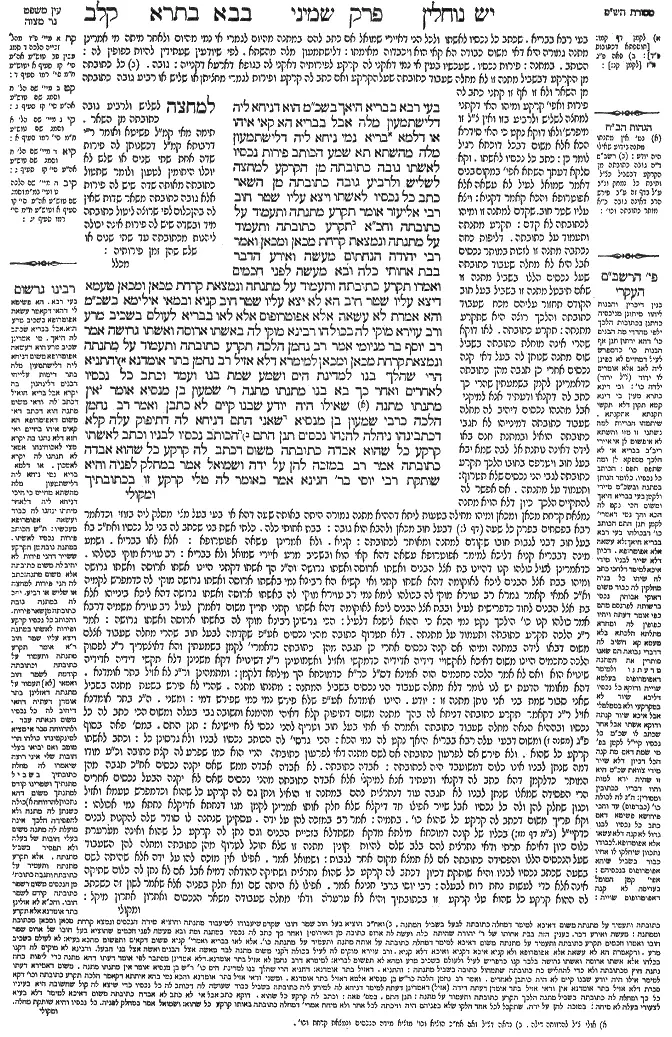
Bava Batra 132a - Guemara
בעי רבא בבריא היאך בשכ"מ הוא דניחא ליה דלישתמעון מלה אבל בבריא הא קאי איהו או דלמא בריא נמי ניחא ליה דלישתמעון מלה מהשתא תא שמע הכותב פירות נכסיו לאשתו גובה כתובתה מן הקרקע למחצה לשליש ולרביע גובה כתובתה מן השאר כתב כל נכסיו לאשתו ויצא עליו שטר חוב רבי אליעזר אומר תקרע מתנתה ותעמוד על כתובתה וחכ"א תקרע כתובתה ותעמוד על מתנתה ונמצאת קרחת מכאן ומכאן ואמר רבי יהודה הנחתום מעשה ואירע הדבר בבת אחותי כלה ובא מעשה לפני חכמים ואמרו תקרע כתובתה ותעמוד על מתנתה ונמצאת קרחת מכאן ומכאן טעמא דיצא עליו שטר חוב הא לא יצא עליו שטר חוב קניא ובמאי אילימא בשכ"מ והא אמרת לא עשאה אלא אפוטרופוס אלא לאו בבריא לעולם בשכיב מרע ורב עוירא מוקי לה בכולהו רבינא מוקי לה באשתו ארוסה ואשתו גרושה אמר רב יוסף בר מניומי אמר רב נחמן הלכה תקרע כתובתה ותעמוד על מתנתה ונמצאת קרחת מכאן ומכאן למימרא דלא אזיל רב נחמן בתר אומדנא והתניא הרי שהלך בנו למדינת הים ושמע שמת בנו ועמד וכתב כל נכסיו לאחרים ואחר כך בא בנו מתנתו מתנה ר' שמעון בן מנסיא אומר אין מתנתו מתנה שאילו היה יודע שבנו קיים לא כתבן ואמר רב נחמן הלכה כרבי שמעון בן מנסיא שאני התם דניחא לה דתיפוק עלה קלא דכתבינהו ניהלה להנהו נכסים תנן התם הכותב נכסיו לבניו וכתב לאשתו קרקע כל שהוא אבדה כתובתה משום דכתב לה קרקע כל שהוא אבדה כתובתה אמר רב במזכה להן על ידה ושמואל אמר במחלק לפניה והיא שותקת רבי יוסי בר' חנינא אמר באומר לה טלי קרקע זו בכתובתיך
Comments from Rashbam - Bava Batra 132a
בעי רבא בבריא . שכתב כל נכסיו לאשתו ולכל הני דאיירי שמואל אם כתב להם במתנה מהיום לגמרי אי נמי מהיום ולאחר מיתה מי אמרינן מתנה גמורה היא דאי משום כבודה הא קאי הוא ויכבדוה מאימתו: דלישתמעון מלה מהשתא . לפי שיודעין שעתידין להיות כפופין לה: הכותב . במתנה: פירות נכסיו . שעכשיו בעין אי נמי דאקני לה קרקע לפירותיה דאקני לה בגופא דארעא דקנייה: גובה . כל כתובתה מן הקרקע דבשביל מתנה זו לא מחלה שעבוד כתובתה שעל הקרקע ואם כתב לה קרקע ופירות לגמרי מחציתן או שליש או רביע גובה כתובתה מן השאר ולא זו אף זו קתני כתב לה פירות ואפי' קרקע ומיהו האי דקתני למחצה לשליש ולרביע בזו ואין צ"ל זו מיפרש' ולאו דוקא נקט כי האי סידרא הכא אלא משום דבכל דוכתא רגיל לומר כן: כתב כל נכסיו לאשתו . וקא סלקא דעתך השתא אפי' במקום בנים דאמר שמואל לעיל לא עשאה אלא אפוטרופא והכא קאמר דקניא: ויצא עליו שטר חוב . שקדם למתנה זו ומיהו לכתובתה לא קדם: תקרע מתנתה ותעמוד על כתובתה . דליפות כחה נכתבה מתנה זו לזכות במותר נכסים אבל היא לא מחלה שעבוד כתובתה שעל נכסים הללו בשביל מתנה זו שאם תיבטל מתנה זו בשביל בעל חוב הקודם תחזור עליהם מכח שעבוד כתובתה והלכך רוצה היא שתקרע מתנתה: תקרע כתובתה . לאו דוקא שהרי אינה מוחלת כתובתה בשביל שום מתנה שנותן לה בעל דאי קנה נכסים אחרי כן תגבה מהן כתובתה כדאמרינן לקמן בשמעתין שהרי כך כתב לה דקנאי ודעתיד אנא למיקני אבל מהנהו נכסים דיהיב לה מחלה שעבוד כתובתה דמינייהו לא תגבי כתובתה הואיל ובמתנת חנם באו לידה דאינה נותנת אל לבה שמא יבא בעל חוב ויטרפם בחובו הלכך תקרע כתובתה לגבי הני נכסים שלא תטרוף: ותעמוד על מתנתה . אם אפשר לה להתקיים הלכך כיון דלא הויא מתנה נמצאת קרחת מכאן ומכאן ומיהו מחילה בטעות ליתא דההיא מתנה גמורה היתה באותה שעה דהא אי בעי בעל מצי מסלק ליה בזוזי וכדאמר רבא בפסחים בפרק כל שעה (דף ל:) דבעל חוב מכאן ולהבא הוא גובה: בבת אחותי כלה . כלתי אשת בני שכתב לה בני כל נכסיו ואח"כ בא בעל חוב דבני לגבות חובו שקודם למתנה ומאוחר לכתובתה: קניא . ולא אמרינן עשאה אפוטרופא: אלא לאו בבריא . ושמע מינה דבבריא קניא דליכא למימר אפוטרופא עשאה דהא קאי הוא ובשכיב מרע איירי שמואל ולא בבריא: רב עוירא מוקי בכולהו . כדאמרינן לעיל כולהו קנו דהיינו בת אצל הבנים ואשתו ארוסה ואשתו גרושה וה"נ הך אשתו דקתני היינו אשתו ארוסה ואשתו גרושה ומיהו בבת אצל הבנים ליכא לאוקומה דהא אשתו קתני ואי קשיא הא רבינא נמי באשתו ארוסה ואשתו גרושה מוקי לה כדמפרש לקמיה וא"כ אמאי קאמר גמרא רב עוירא מוקי לה בכולהו לימא נמי רב עוירא מוקי לה באשתו ארוסה ואשתו גרושה דהא ליכא בינייהו אלא בת אצל הבנים לחוד כדפרישית לעיל ובבת אצל הבנים ליכא לאוקומה דהא אשתו קתני תריץ משום דאמרן לעיל רב עוירא משמיה דרבא אמר כולהו קני כו' הילכך נקט נמי הכא כי ההוא לישנא דלעיל: הכי גרסינן רבינא מוקי לה באשתו ארוסה ואשתו גרושה: אמר ר"נ הלכה תקרע כתובתה ותעמוד על מתנתה . דלא תטרוף כתובה מהני נכסים אע"פ שקדמה לבעל חוב שהרי מחלה שעבוד אצלם משום דבאו לידה במתנה ומיהו אם קנה נכסים אחרי כן תגבה מהן כתובתה כדאמרי' לקמן בשמעתין והא דאיצטריך ר"נ לפסוק הלכה כחכמים היינו משום דאיכא לאקשויי דידיה אדידיה כדמקשי ואזיל ואשמועינן ר"נ דשינויא דקא משנינן דלא תקשי דידיה אדידיה שינויא הוא ואם לא אמר הלכה כחכמים הוה אמינא דס"ל כר"א כדמוכחא הך מילתא דלקמן: ומתמהינן ור"נ לא אזיל בתר אומדנא . דהא מאומד הדעת יש לנו לומר דלא מחלה שעבוד הני נכסים בשביל המתנה: מתנתו מתנה . שהרי לא פירש בשעת מתנה בשביל שאני סבור שמת בני אני נותן מתנה זו: יודע . היינו אומדנא אע"פ שלא פירש נמי כמי שפירש דמי: ומשני . ה"נ בתר אומדנא אזיל ר"נ דקאמר תקרע כתובתה דניחא לה בהך מתנה משום דתיפוק קלא דאיהי מהימנא וחשובה גבי בעלה ומשום הכי כתב לה כל נכסיו ובההיא הנאה מחלה שעבוד כתובתה ואמרה אי אתי בעל חוב וטריף להני נכסי לא חיישינא: תנן התם . במס' פאה בסוף פ"ג (משנה ז) ומשום דבעי עלה רבא בבריא היאך נקט לה נמי הכא: הכי גרסי' לה הכותב נכסיו לבניו ולא גרסינן כל: וכתב לאשתו קרקע כל שהוא . ולא פירש אם לפרעון כתובתה אם לשם מתנה דאי לפרעון כתובתה הרי הוא כמו שפרע לה קצת כתובה וכ"ע מודו דמה שנתן לבניו אינו כלום דמשועבד היה לכתובתה: אבדה כתובתה . לא אבדה אבדה ממש שאם יקנה נכסים אח"כ תגבה מהן המותר כדלקמן דהא כתב לה דקנאי ודעתיד אנא למיקני אלא אבדה כתובתה מהני נכסים שאם לא יקנה הבעל נכסים אחרים הרי הפסידה שמאלו שנתן לבניו לא תגבה עוד דנתרצית להם במתנה זו הואיל ונתן גם לה קרקע כל שהוא וכדמפרש טעמא ואזיל וכגון שחלק להן ולה כל נכסיו אבל שייר אפילו חד דיקלא שלא חלק אותו אמרינן לקמן מגו דנחתא אדיקלא נחתא נמי אכולהו: וקא פריך משום דכתב לה קרקע כל שהוא כו' . בתמיה: אמר רב במזכה להן על ידה . עסקינן שנתנה לו סודר שלה להקנות לבנים כדקיי"ל (ב"מ דף מז:) בכליו של קונה דמוכחא מילתא מדקא משתדלא בזכיית הבנים וגם נתן לה קרקע כל שהוא ואינה מערערת כלום כיון דאיכא תרתי ודאי נתרצית להם בלב שלם להיות קונין מתנה זו שלא תוכל לטרוף מהן כתובתה ומחלה להן השעבוד שעל הנכסים הללו והפסידה כתובתה אם לא תמצא מקום אחר לגבות: ושמואל אמר . אפילו אין מזכה להו על ידה אלא שהיתה לשם בשעה שכתב נכסיו לבניו והיא שותקת דכיון דכתב לה קרקע כל שהוא נתרצית ושתיקה כהודאה דמיא אבל אם לא נתן לה כלום שתיקה אינה אלא כדי לעשות נחת רוח לבעלה: רבי יוסי ברבי חנינא אמר . אפילו לא היתה שם ולא חלק בפניה אלא שאמר לשון זה כשכתב לה ההוא קרקע כל שהוא טלי קרקע זו בכתובתיך והיא לא ערערה ודאי מחלה שעבודה משאר הנכסים ואחרון אחרון מיקל:
Comments from Tosafot - Bava Batra 132a
למחצה לשליש ולרביע גובה כתובתה מן השאר. תימה מאי קמ"ל פשיטא ואומר ר"י דרבותא קמ"ל דכשנותן לה פירות שדה אחת שתי שנים או שלש לא יוכלו היתומין לטעון ולומר שתטול כתובתה מאותה שדה שיש לה פירות אלא גובה כתובתה משאר שדות שאין לה בהן כלום לפי שרוצה ליטול כתובתה מיד ובשדה שיש לה פירות אינה יכולה ליהנות מכתובתה עד שתי שנים או שלש שהן זמן פירותיה:
Bava Batra 132a - Mishnah translated into english
With regard to the halakha that a person on his deathbed who wrote a document granting all his property to his wife has appointed her as a steward, Rava raises a dilemma: In the case of a healthy person, what is the halakha? Should it be reasoned that specifically in the case of a person on his deathbed it is assumed that he intended to appoint his wife as a steward, as it is preferable for him that her word be heard and she is honored after his death, but in the case of a healthy person, he is still standing and can ensure that his wife is honored, so he apparently intended to actually give her all of his property? Or perhaps should it be reasoned that in the case of a healthy person as well, it is preferable that his wife’s word be heard and she be given honor from now?
The Gemara suggests: Come and hear a resolution of the dilemma from a baraita: If one writes a document that the profits of his property should go to his wife in the event that he dies or divorces her, she collects payment of her marriage contract, which he wrote her at the time of their marriage, from the land itself. The profits are hers as a result of his gift. Similarly, if he wrote a document granting her one-half, one-third, or one-quarter of his property, she collects payment of her marriage contract from the rest of his property, which he did not give her as a separate gift.
The baraita continues: If one wrote a document granting all his property to his wife, and subsequently a promissory note emerged against him for a loan he took while they were married but before he gave her this gift, Rabbi Eliezer says that she should tear up her deed of gift and remain with her marriage contract, so that the creditor will not be able to collect the property she received, as her marriage contract preceded the promissory note. And the Rabbis say: She must tear up her marriage contract and remain with her deed of gift, as by accepting the gift of all her husband’s property she waived her right to receive payment of her marriage contract. Since the promissory note preceded the deed of gift, the creditor receives the property, and the wife is found to be bald from here and from there, i.e., she receives neither her gift nor her marriage contract.
And Rabbi Yehuda the baker said: There was an incident where this matter occurred to my sister’s daughter who is my daughter-in-law [kalla], that my son wrote such a document to her, and the incident came before the Sages. And they said that she must tear up her marriage contract and remain with her deed of gift, and she is found to be bald from here and from there.
The Gemara infers: The reason she loses her gift is that a promissory note emerged against him, but if a promissory note did not emerge against him, she acquires the gift of his property. And with regard to what case is this stated? If we say it is with regard to a person on his deathbed, but didn’t you say previously that in such a case he merely rendered her a steward? Rather, is it not with regard to a healthy person? Accordingly, Rava’s dilemma is resolved: If a healthy person writes a document granting all his property to his wife, it is hers.
The Gemara rejects this proof: Actually, the halakha of the baraita is stated with regard to a person on his deathbed; and Rav Avira would interpret the baraita as referring to all of the cases mentioned above in which, in his opinion, the wife acquires the property and is not appointed as a steward. And Ravina would interpret it specifically in reference to a case where one wrote a document granting all his property to his betrothed wife or his former wife, whom he divorced, where he concedes that she acquires the property.
Rav Yosef bar Minyumi says that Rav Naḥman says: The halakha is in accordance with the opinion of the Rabbis. She must tear up her marriage contract and remain with her deed of gift, and she is found to be bald from here and from there.
The Gemara asks: Is this to say that Rav Naḥman does not follow the principle of assessing intention, meaning that even if one did not state something explicitly, the court assesses what his intention was and decides the halakha based on that assessment? Clearly, upon accepting the gift the wife did not intend to waive payment of her marriage contract and thereby be left with nothing in the event that her husband’s creditor produces a promissory note that predates her gift.
But isn’t it taught in a baraita (Tosefta, Ketubot 5:9): In a case where one’s son went overseas and he heard that his son died, and then he arose and wrote a document granting all his property to others, and then his son came back, his gift to the other people is a valid gift. Rabbi Shimon ben Menasya says: His gift is not a valid gift, as had he known that his son was alive he would not have written a document granting them his property. And Rav Naḥman says that the halakha is in accordance with the opinion of Rabbi Shimon ben Menasya. Apparently, Rav Naḥman follows the principle of assessing intention.
The Gemara answers: There, in the case of one who writes a document granting all his property to his wife, it is different, as it is beneficial to her that it be publicized that he wrote a document granting her all of that property, and she was willing to risk not receiving payment of her marriage contract to gain this benefit.
§ We learned in a mishna there (Pe’a 3:7): If a man writes a document granting his property to his sons, and he wrote a document granting any amount of land to his wife, she has lost her right to receive payment of her marriage contract. The Gemara questions this: Because he wrote a document granting her any amount of land, she has lost her right to receive payment of her marriage contract? Why should this be?
Rav says: This mishna is referring to a case where the husband transfers ownership of his property to his sons through his wife’s participation in a formal act of acquisition. Not only did she not protest the transfer of property to the sons, but she facilitated the transaction. Clearly, she agreed to waive payment of her marriage contract. And Shmuel says: It is referring not only to a case where she actually participates in the act of acquisition, but also to a case where he distributes the property to his sons in her presence, and she is silent and does not ask about her marriage contract. Rabbi Yosei, son of Rabbi Ḥanina, says: It is referring to a case where he says to her: Take only this parcel of land for your marriage contract.
Traduction : The William Davidson digital edition of the Koren Noé Talmud, with commentary by Rabbi Adin Even-Israel Steinsaltz.