 Talmud Bavli
Bava Batra 97a : Youtube
Daf TubeYoutube
2 video classes :
Bava Batra Page 97a
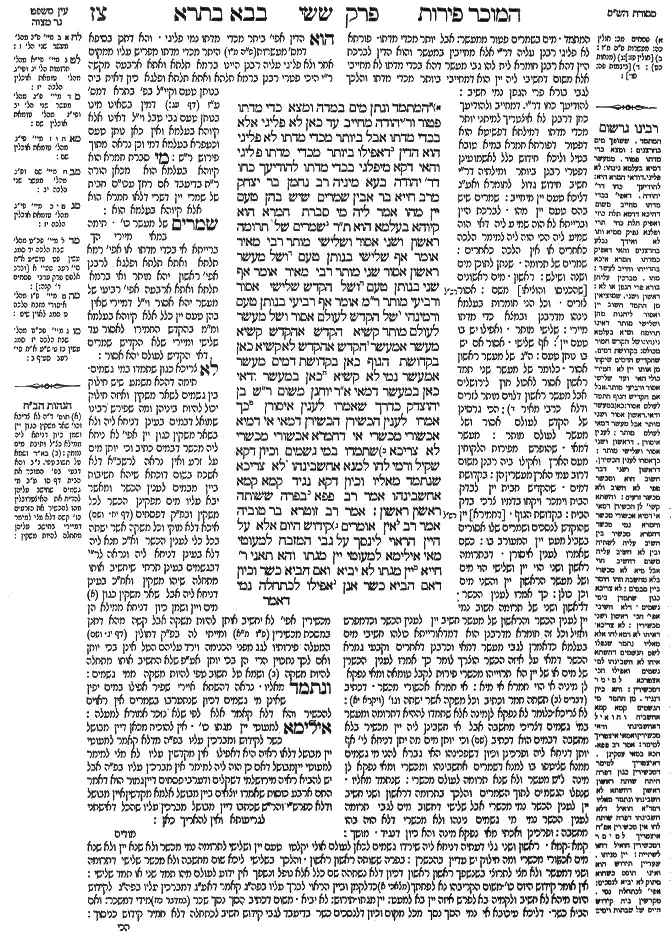
Bava Batra 97a - Guemara
המתמד ונתן מים במדה ומצא כדי מדתו פטור ור' יהודה מחייב עד כאן לא פליגי אלא בכדי מדתו אבל ביותר מכדי מדתו לא פליגי הוא הדין דאפילו ביותר מכדי מדתו פליגי והאי דקא מיפלגי בכדי מדתו להודיעך כחו דר' יהודה בעא מיניה רב נחמן בר יצחק מרב חייא בר אבין שמרים שיש בהן טעם יין מהו אמר ליה מי סברת חמרא הוא קיוהא בעלמא הוא ת"ר שמרים של תרומה ראשון ושני אסור ושלישי מותר רבי מאיר אומר אף שלישי בנותן טעם ושל מעשר ראשון אסור שני מותר רבי מאיר אומר אף שני בנותן טעם ושל הקדש שלישי אסור ורביעי מותר ר"מ אומר אף רביעי בנותן טעם ורמינהי של הקדש לעולם אסור ושל מעשר לעולם מותר קשיא הקדש אהקדש קשיא מעשר אמעשר הקדש אהקדש לא קשיא כאן בקדושת הגוף כאן בקדושת דמים מעשר אמעשר נמי לא קשיא כאן במעשר ודאי כאן במעשר דמאי א"ר יוחנן משום ר"ש בן יהוצדק כדרך שאמרו לענין איסורן כך אמרו לענין הכשירן הכשירן דמאי אי דמיא אכשורי מכשרי אי דחמרא אכשורי מכשרי לא צריכא שתמדו במי גשמים וכיון דקא שקיל ורמי להו למנא אחשבינהו לא צריכא שנתמד מאליו וכיון דקא נגיד קמא קמא אחשבינהו אמר רב פפא בפרה ששותה ראשון ראשון:
אמר רב זוטרא בר טוביה אמר רב אין אומרים קידוש היום אלא על היין הראוי לינסך על גבי המזבח למעוטי מאי אילימא למעוטי יין מגתו והא תאני ר' חייא יין מגתו לא יביא ואם הביא כשר וכיון דאם הביא כשר אנן אפילו לכתחלה נמי
Comments from Rashbam - Bava Batra 97a
המתמד . מים בשמרים פטור ממעשר: אבל יותר מכדי מדתו . פורתא לא פליגי רבנן עליה דר"י אלא מחייבין במעשר והוא הדין לברכת היין דהא רבנן חומרא לית להו גבי מעשר דהא בכדי מדתו לא מחייבי אלא משום דחשיבי ליה יין הוא דמחייבי ביותר מכדי מדתו והלכך לגבי בורא פרי הגפן נמי חשיב: להודיעך כחו דר"י . דמחייב ולהודיעך כחן דרבנן לא איצטריך למיתני יותר מכדי מדתו דמילתא דפשיטא הוא דפטור דפורתא חמרא במיא טובא בטיל וליכא חידוש כלל לאשמועינן דפטרי רבנן ביותר ומילתיה דר"י חשיב חידוש גדול לחומרא ואע"ג דליכא טעם יין מיחייב: שמרים שיש בהם טעם יין מהו . לברכת היין וברייתא לא הוה שמיע ליה דאי הוה שמיע ליה הכי הוה ליה למימר הלכה כאחרים או אין הלכה כאחרים: שמרים של תרומה . שנתן לתוכן מים ושנה ושילש: ראשון . מים ראשונים [שהכניסו והוציאו] משם: אסור לזרים . וכל הני חומרות בעלמא נינהו מדרבנן ובמצא כדי מדתו מיירי: שלישי מותר . ואפילו יש בו טעם יין: אף שלישי . אסור אם יש בו נותן טעם: ה"ג של מעשר ראשון אסור . כלומר של מעשר שני תמד ראשון אסור לאכול חוץ לירושלים אבל מעשר ראשון דלוים מותר לזרים ודלא כרבי מאיר: הכי גרסינן של הקדש לעולם אסור ושל מעשר לעולם מותר: בקדושת דמים . שהקדיש חבית יין לבדק הבית וימכר ויקחו בדמיו צרכי בדק הבית: בקדושת הגוף . [דחמירא] יין שהוקדש לנסכים ושמרים שלו אסורים בשביל מעט יין המעורב בו: מעשר דמאי . שהופרש מפירות הלקוחין מעם הארץ ואקילו ביה רבנן משום דרוב עמי הארץ מעשרין הן: כשם שאמרו לענין איסורן . דבתרומה ראשון ושני הוי יין ושלישי הוי מים ושל מעשר הראשון יין והשני מים וכן כולן: כך אמרו לענין הכשר . דראשון ושני של תרומה חשוב נמי יין לענין הכשר והראשון של מעשר חשיב יין לענין הכשר וכדמפרש ואזיל וכל זה חומרא מדרבנן הוא דמדאורייתא כולהו חשיבי מים בעלמא כדאמרן לגבי מעשר דמאי וכרבנן דאחרים וקבעי גמרא הכשר דמאי על איזה הכשר הוצרך לומר כך אמרו לענין הכשרן של מים או של יין הא תרוייהו מכשרי פירות לקבל טומאה ומאי נפקא לן מיניה אי הוי חמרא אי מיא: אי חמרא אכשורי מכשר . דכתיב (דברים לב) תשתה חמר וכתיב וכל משקה אשר ישתה וגו' (ויקרא יא): לא צריכא . כלומר לא נפקא לן מינה אלא שתמדו לההיא דתרומה ומעשר במי גשמים דצריכי מחשבה אבל אי חשבינן ליה יין מכשיר בלא מחשבה דבמים הוא דכתיב (שם) וכי יותן מים מה יתן דניחא לי' אף יותן דניחא ליה ופרכינן וכיון דשפכינהו האי גברא להני מי גשמים ממנא שניטפו בו למנא דשמרים אחשבינהו ומכשרי ומאי נפקא לן מינה ל"ש מעשר ולא שנא תרומה לעולם מכשרי: שנתמד מאליו . שנפלו הגשמים לתוך השמרים והלכך בתרומה דראשון ושני חשיב יין לענין הכשר נמי מכשרי אבל שלישי דחשוב מים לגבי תרומה לענין הכשר נמי מי גשמים נינהו ולא מכשרי דלא הוה בהו מחשבה: ופרכינן ואכתי מאי נפקא מינה והא כיון דנגיד . מושך: קמא קמא . ראשון ושני גלי דעתיה דניחא ליה שירדו גשמים לכאן לעולם אולי יקלטו טעם יין ושלישי לתרומה נמי מכשר ולא שנא יין ולא שנא מים אכשורי מכשרי ומה חילוק יש עדיין בהכשרן: בפרה ששותה ראשון ראשון . והלכך בשלישי ליכא שום מחשבה ולא מכשר שלישי דתרומה ושני דמעשר ולא מצי לתרוצי בשנשפך ראשון ראשון דכיון דלא נשתהה שם כלל לא נופל ונשפך אין ידוע לעולם מהו תמד שני או תמד שלישי: אין אומר קידוש היום כו' . משום הקריבהו נא לפחתך (מלאכי א) כדלקמן וביין הראוי לברך עליו בפה"ג קאמר דאע"ג דמברכין עליו בפה"ג לקידוש היום מיהא לא חשיב ולקמיה בא לפרש איזה יין בא למעט: יין מגתו . תירוש: לא יביא . משום דכתיב הסך נסך שכר (במדבר כח) מידי דמשכר: ואם הביא כשר . דליכא עיכובא אי נמי הסך נסך מכל מקום וכיון דלנסכים כשר בדיעבד לגבי קידוש חשיב לכתחלה דלא חמיר קידוש כניסוך:
Comments from Tosafot - Bava Batra 97a
הוא הדין אפי' ביתר מכדי מדתו נמי פליגי. והא דתנן בסיפא דמס' מעשרות (פ"ה מ"ו) היתר מכדי מדתו מפריש עליו ממקום אחר ולא פליגי עליה רבנן היינו ברמא תלתא ואתא ארבעה מקשה ר"י היכי פטרי רבנן ברמא תלתא ואתא תלתא ופלגא כיון דאית ביה בנותן טעם וקיי"ל בפ' בתרא דמס' ע"ז (דף עג:) דמין בשאינו מינו בנותן טעם גבי טבל וי"ל דאינו אלא קיוהא בעלמא ואין כאן נותן טעם וכעפרא בעלמא דמי וכן נראה מתוך פירוש ר"ש: מי סברת חמרא הוא קיוהא בעלמא הוא. מכאן הורה ר"ת בדיעבד אם רחץ עכו"ם חבית של שמרי יין דשרי דלאו חמרא הוא אלא קיוהא בעלמא הוא: שמרים של מעשר כו'. תימה במאי מיירי הך ברייתא אי בכדי מדתו או אפי' רמא תלתא ואתא תלתא ופלגא לרבנן אפי' ראשון יהא מותר ואי ברמא תלתא ואתא ארבעה אפי' רביעי של מעשר יהא אסור וי"ל דמיירי שאין בהן טעם יין כלל אלא קיוהא בעלמא ומ"מ בהקדש החמירו לאסור עד שלישי ומיירי שלא הקדיש שמרים דאי הקדיש לעולם יהא אסור: לא צריכא כגון שתמדו במי גשמים. תימה דהכא משמע שיש חילוק בין גשמים לשאר משקין ואיזה חילוק יכול להיות ביניהן ומה שפירש רבינו שמואל דבמים בעינן דניחא ליה ולא בשאר משקין כגון יין אפי' לא ניחא ליה מכשר דבמים כתיב וכי יותן מים על זרע ואין נראה לרשב"א דלא אשכח בשום דוכתא שיהא חשיבות ביין מבמים לענין הכשר ומאשר יבא עליו מים מפקינן הכשר לכל משקין ובפ"ק דפסחים (דף יח. ושם) איכא דלא מוקי וכל משקה אשר ישתה בכל כלי לענין הכשר וא"כ מנא ליה דלא בעינן דניחא ליה ונראה לר"י דבגשמים בעינן תרתי שיחשיב אותו מתחלה שיהו משקין ואח"כ בעינן דניחא ליה אבל שאר משקין כגון מים ויין ושמן כיון דניחא ממילא הן מכשירין אפי' לא יחשיב אותן להיות משקה אבל קשה מהא דתנן במסכת מכשירין (פ"ו מ"א) ומייתי לה בפ"ק דחולין (דף יג. ושם) המעלה פירותיו לגג מפני הכנימה וירד עליהם הטל אינן בכי יותן ואם לכך נתכוין הרי הן בכי יותן אע"פ שלא החשיב אותו מתחלה להיות משקה ושמא טל חשוב טפי להיות משקה ממי גשמים: ונתמד מאליו. נראה דהשתא איירי שפיר אפילו במים יפין שאינן מי גשמים דכיון שנתערבו בשמרים אין ראוים להכשיר והא דלא קאמר אלא לפי שלא נזכר אמורא למעלה: אילימא למעוטי יין מגתו כו'. אין להוכיח מכאן דיין מבושל כשר לקידוש ומברכין עליו בפ"ה מדלא קאמר למעוטי יין מבושל דלאו ראיה היא דאפילו אין מקדשין עליו לא מצי למימר למעוטי יין מבושל דאם כן הוה ליה למימר אין מברכין עליו בפ"ה אבל יש להביא ראיה מירושלמי דשקלים ודערבי פסחים דיין גמור הוא דאמר התם ארבע כוסות שאמרו יוצאים ביין מבושל אלמא מקדשין איין מבושל ודלא כפרש"י והר"ש שכתבו דיין מבושל מברכין עליו שהכל דאישתני לגריעותא ואין להאריך כאן:
Bava Batra 97a - Mishnah translated into english
In the case of one who produces tamad, a beverage made by steeping grape pomace in water, and he placed a measured amount of water into a container together with the pomace, and after removing the pomace he found that the volume of the tamad produced was equivalent to the amount of water used, one is exempt from the requirement to tithe the tamad, even though the pomace came from grapes that had not been tithed. And Rabbi Yehuda deems one liable to tithe the tamad. The Gemara explains the difficulty posed by this mishna: It would appear that they disagree only with regard to a case where the volume of the tamad produced was equivalent to the amount of water used, but in a case where the volume of the tamad produced was greater than the amount of water used, they do not disagree; rather, they all agree that it must be tithed because it is regarded as wine. This would appear to contradict Rava’s explanation.
The Gemara resolves the difficulty: Actually, the same is true in that they would disagree even where the volume of the tamad produced was greater than the amount of water used. And the reason that the mishna records only that they disagree about a case where the volume of the tamad produced was equivalent to the amount of water used is in order to convey to you the far-reaching nature of the opinion of Rabbi Yehuda, who holds that one is liable to tithe the tamad even in this case.
Rav Naḥman bar Yitzḥak asked Rav Ḥiyya bar Avin: If one steeps pomace and produces tamad that has the taste of wine, what is the blessing that one should recite before drinking it? Rav Ḥiyya bar Avin said to him: Do you hold that such a beverage is wine? It is merely a sharp-flavored beverage, not wine.
§ The Sages taught in a baraita concerning the production of successive batches of tamad of decreasing strengths by reusing the pomace after each time a tamad is produced: With regard to pomace of teruma wine, the first and second products are considered to be teruma, and it is prohibited for a non-priest to drink it. But with regard to the third product, a non-priest is permitted to drink it. Rabbi Meir says: Even with regard to the third product, if the wine that seeps out of the pomace imparts the flavor of wine to the water, it is forbidden to a non-priest.
The baraita continues: And with regard to water added to pomace of second-tithe wine, the first product is also considered to be second tithe, and it is prohibited to drink it outside Jerusalem. But with regard to the second product, it is permitted to drink it anywhere. Rabbi Meir says: Even with regard to the second product, if the wine that seeps out of the pomace imparts the flavor of wine to the water, it may be consumed only in Jerusalem. And with regard to water added to pomace of wine that was consecrated to the Temple, up to the third product it is prohibited to derive any benefit from it, as it is considered to be consecrated, but from the fourth product, it is permitted. Rabbi Meir says: Even with regard to the fourth product, if the wine that seeps out of the pomace imparts the flavor of wine to the water, it is prohibited.
And the Gemara raises a contradiction from a different baraita: Tamad produced from the pomace of wine that was consecrated to the Temple is always forbidden, even after having steeped them many times, and the beverage produced from pomace of second tithe is always permitted, even from the first such product. The Gemara explains: The ruling concerning consecrated pomace is difficult, as it is contradicted by the ruling of the first baraita concerning consecrated pomace. And the ruling concerning second-tithe pomace is difficult, as it is contradicted by the ruling of the first baraita concerning second-tithe pomace.
The Gemara answers: The contradiction between the ruling of one baraita concerning consecrated pomace and the ruling of the other baraita concerning consecrated pomace is not difficult, as one can explain that here, the second baraita is referring to pomace with inherent sanctity, and there, the first baraita is referring to pomace with sanctity that inheres in its value. Also, the contradiction between the ruling of one baraita concerning pomace of second tithe and the ruling of the other baraita concerning pomace of second tithe is not difficult, as one can explain that here, the first baraita is referring to pomace whose status as second tithe is certain and there, the second baraita is referring to pomace of second tithe of doubtfully tithed produce [demai].
Rabbi Yoḥanan says in the name of Rabbi Shimon ben Yehotzadak: In the same way in which the Sages said concerning differing strengths of tamad that with regard to their prohibition, after a certain number of times the tamad produced is not considered to be wine, so too they said the same rulings with regard to their capacity to render foods susceptible to ritual impurity.
The Gemara asks: When the baraita is referring to their capacity to render other foods susceptible to ritual impurity, why does it matter which kind of beverage the tamad is considered to be? Whether the tamad is regarded as water it can render food susceptible to impurity, or whether it is regarded as wine it can render food susceptible to impurity. The Gemara clarifies: No, it is necessary in a case in which one produced tamad with rainwater that he had not previously intended to use. Rainwater does not render food susceptible to ritual impurity, so the tamad will do so only if it is regarded as wine.
The Gemara challenges this: But since he took the rainwater and poured it into a container holding the grape pomace, he has thereby intended it for a use. Even if the resulting tamad is regarded as water, such rainwater renders food susceptible to ritual impurity. The Gemara answers: No, it is necessary in a case where the pomace produced tamad by itself, having been steeped in water that happened to fall upon it.
The Gemara persists: The baraita above states that from the third product, the tamad is regarded as water, which the Gemara has explained is referring to rainwater that one did not intend to use and that consequently cannot render food susceptible to impurity. The Gemara asks: But since he draws off each subsequent lot of tamad that is produced, one by one, in order to allow more rainwater to fall onto the pomace and produce more tamad, he thereby demonstrates his intent to use the rainwater. Therefore, even if the tamad is regarded as water, it should render food susceptible to impurity. The Gemara answers: Rav Pappa says that this is a case of a cow that drank the lots of tamad, one by one, and some inadvertently dripped from the cow’s mouth onto food. Since no person intended to use the tamad, if it is regarded as water it will not render food susceptible to impurity.
§ Rav Zutra bar Toviyya says that Rav says: One may recite the sanctification of the Shabbat day only over wine of a quality that is fit to be poured as a libation upon the altar.
The Gemara asks: This statement is said to exclude what? If we say it is to exclude the use of wine fresh from one’s press, i.e., grape juice, which has not yet fermented, that is difficult. But didn’t Rabbi Ḥiyya teach: One may not bring wine fresh from his press as a libation ab initio, but if one brought it as a libation, it is valid after the fact. And since if one brought it as a libation it is valid after the fact, we should also be able to use it for the sanctification of the Shabbat day, even ab initio.
Traduction : The William Davidson digital edition of the Koren Noé Talmud, with commentary by Rabbi Adin Even-Israel Steinsaltz.