 Talmud Bavli
Bava Batra 67a : Youtube
Daf TubeYoutube
2 video classes :
Bava Batra Page 67a
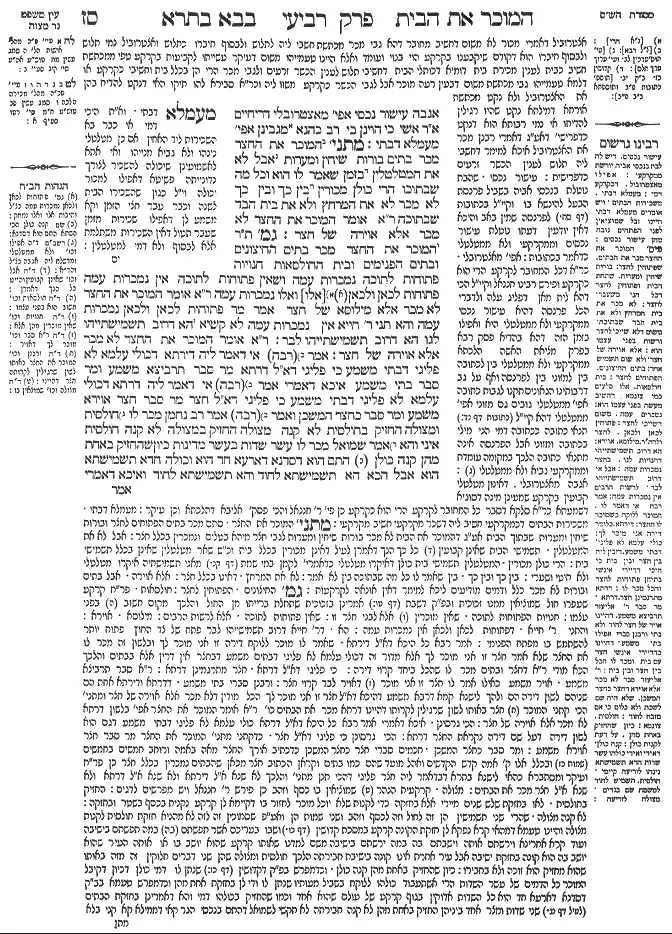
Bava Batra 67a - Guemara
אגבה עישור נכסי אפי' מאצטרובלי דריחיים א"ר אשי כי הוינן בי רב כהנא מגבינן אפי' מעמלא דבתי:
מתני׳ המוכר את החצר מכר בתים בורות שיחין ומערות אבל לא את המטלטלין בזמן שאמר לו הוא וכל מה שבתוכו הרי כולן מכורין בין כך ובין כך לא מכר לא את המרחץ ולא את בית הבד שבתוכה רבי אליעזר אומר המוכר את החצר לא מכר אלא אוירה של חצר:
גמ׳ תנו רבנן המוכר את החצר מכר בתים החיצונים ובתים הפנימים ובית החולסאות חנויות פתוחות לתוכה נמכרות עמה ושאין פתוחות לתוכה אין נמכרות עמה פתוחות לכאן ולכאן [אלו] ואלו נמכרות עמה ר"א אומר המוכר את החצר לא מכר אלא מילוסא של חצר אמר מר פתוחות לכאן ולכאן נמכרות עמה והא תני ר' חייא אין נמכרות עמה לא קשיא הא דרוב תשמישתייהו לגו הא דרוב תשמישתייהו לבר:
ר"א אומר המוכר את החצר לא מכר אלא אוירה של חצר:
אמר (רבה) אי דאמר ליה דירתא דכולי עלמא לא פליגי דבתי משמע כי פליגי דא"ל דרתא מר סבר תרביצא משמע ומר סבר בתי משמע איכא דאמרי אמר (רבה) אי דאמר ליה דרתא דכולי עלמא לא פליגי דבתי משמע כי פליגי דא"ל חצר מר סבר חצר אוירא משמע ומר סבר כחצר המשכן ואמר (רבה) אמר רב נחמן מכר לו חולסית ומצולה החזיק בחולסית לא קנה מצולה החזיק במצולה לא קנה חולסית איני והא אמר שמואל מכר לו עשר שדות בעשר מדינות כיון שהחזיק באחת מהן קנה כולן התם הוא דסדנא דארעא חד הוא וכולה חדא תשמישתא הוא אבל הכא הא תשמישתא לחוד והא תשמישתא לחוד ואיכא דאמרי
Comments from Rashbam - Bava Batra 67a
עישור נכסי . שהבת נוטלת בנכסי אביה בשביל פרנסת הבעל להינשא בו וקיי"ל בכתובות (דף סח.) לפרנסה שמין באב והיכא דאין יודעין דעתו נוטלת עישור נכסים וממקרקעי ולא ממטלטלי כדאמר בכתובות: אפי' מאצטרובלי . כר"א דכל המחובר לקרקע הרי הוא כקרקע ופירש רבינו חננאל וקיי"ל הכי דהא לית מאן דפליג עלה ולדברי הכל פרנסה דהיא עישור נכסי ממקרקעי ולא ממטלטלי היא ואפילו בזמן הזה דהא בהדיא פסק רבא בפרק מציאת האשה הלכתא ממקרקעי ולא ממטלטלי בין לכתובה בין למזוני בין לפרנסה ואף על גב דרבותינו הגאונים תקנו לגבות כתובה אפי' ממטלטלי גובים גם מזוני אפי' ממטלטלי דהא קיי"ל (כתובות דף נד:) תנאי כתובה ככתובה דמי הני מילי בכתובה ומזוני אבל הפרנסה אינה מתנאי כתובה הלכך במקומה עומדת וממקרקעי גביא ולא ממטלטלי: אגבה מאצטרובלי . דאינון מטלטלי קבועין בקרקע שמעינן מינה דסוגיא דשמעתא כר"א סלקא דסבר כל המחובר לקרקע הרי הוא כקרקע כן פי' ר' חננאל והכי פסק' אליבא דהלכתא וכן עיקר: מעמלא דבתי . משכירות הבתים דכמקרקעי חשיב ליה דשכר מקרקעי חשיב מקרקעי: מתני' המוכר את החצר . סתם מכר בתים הפתוחים לחצר ובורות שיחין ומערות שבתוך הבית אע"ג דהמוכר את הבית לא מכר בורות שיחין ומערות לגבי חצר מיהא בטלים ונמכרין בכלל חצר: אבל לא את המטלטלין . תשמישי הבית שאינן קבועין כל כך הנך דאמרן לעיל דאינן מכורין בכלל בית וכ"ש שאר מטלטלין שאינן בכלל תשמישי בית: הרי כולן מכורין . המטלטלין תשמישי בית כולן דאיקרו מטלטלי כדאמרי' לקמן במי שמת (בבא בתרא דף קנ.) מאני תשמישתיה איקרו מטלטלי ולא חיטי ושערי: בין כך ובין כך . בין שאמר לו כל מה שבתוכה בין לא אמר: לא את המרחץ . דאינו בכלל חצר: אלא אוירה . אבל בתים ובורות לא מכר כלל ודמים ומודיעים ליכא למימר דאין אונאה לקרקעות: גמ' החיצונים . הפתוחין לחצר: חולסאות . פר"ח קרקע שעפרו חול שמוציאין ממנו זכוכית ובפ"ק דשבת (דף טו:) אמרינן בזכוכית שתחלת ברייתו מן החול והלכך מקום חשוב בפני עצמו: חנויות הפתוחות לתוכה . שאין מוכרין אלא לבני חצר זו: שאין פתוחות לתוכה . אלא לרשות הרבים: מילוסא . אוירא: והתני ר' חייא . דפתוחות לכאן ולכאן אין נמכרות עמה: הא . דר' חייא דרוב תשמישייהו לבר פתח של צד החוץ פתוח יותר להשתמש בו מפתח הפנימי: אמר רבא כל היכא דא"ל דירתא . שאמר לו מוכר ללוקח דירה זו אני מוכר לך ובלשון זה מכר לו את החצר שלא אמר חצר זו אני מוכר לך אלא מדור זה דכולי עלמא לא פליגי דבתים משמע דבחצר אין דרין אלא בבתים והלכך הכא מודי ר"א דחצר ובתים מכר לו שהכל ביחד קרוי דירה: כי פליגי דא"ל דרתא . חצר מתרגמינן דרתא: ר"א סבר תרביצא משמע . אויר משמע כאילו אמר לו חצר זו אני מוכר דאויר לבד קרוי חצר: ורבנן סברי בתי משמע . דדרתא ודירתא אחת הם שניהם לשון דירה הם ולהך לישנא קמא דרבא משמע דהיכא דא"ל חצר זו אני מוכר לך הכל מודין דלא מכר אלא אוירה של חצר ומתני' הכי קתני המוכר חצר באותו לשון שרגילין לקרותו דהיינו דרתא מכר את הבתים כו' ר"א אומר המוכר את החצר אפי' בלשון דרתא לא מכר אלא אוירה של חצר: הכי גרסינן . איכא דאמרי אמר רבא כל היכא דא"ל דרתא כולי עלמא לא פליגי דבתי משמע דגם הוא לשון דירה דעל שם דירה נקראת החצר דרתא: הכי גרסינן כי פליגי דא"ל חצר . כדקתני מתני' המוכר את החצר מר סבר חצר אוירא משמע: ומר סבר כחצר המשכן . חכמים סברי חצר כחצר המשכן כדכתיב אורך החצר מאה באמה ורוחב חמשים בחמשים (שמות כז) ובכלל אלו ק' אמה קדש הקדשים ואהל מועד שהם כמו בתים וקראן הכתוב חצר מכאן שהבתים נמכרין בכלל חצר כן פר"ח ועיקר ומסתברא כהאי לישנא בתרא דבדאמר ליה חצר פליגי דהכי תנן מתני' והלכך לא שנא א"ל דירתא ולא שנא א"ל דרתא ולא שנא א"ל חצר מכר את הבתים: מצולה . קרקעית הנהר שמוציאין בו כסף וזהב כן פירש ר' חננאל ויש מפרשים לדגים: החזיק בחולסית . לאו בחזקת שלש שנים מיירי אלא בחזקה כדי לקנות שלא יוכל מוכר לחזור בו דקיימא לן קרקע נקנית בכסף בשטר ובחזקה: לא קנה מצולה . שהרי שני תשמישין הן זה לחול וזה לכסף וזהב ושני שמות הן ואע"פ שסמוכין זה לזה לא מהניא חזקת חולסית לקנות מצולה והיינו טעמא דמהאי קרא נפקא לן חזקת הקונה קרקע במסכת קדושין (דף כו.) ושבו בעריכם אשר תפשתם (בה) במה תפשתם בישיבה ועוד קרא אחרינא וירשתם אותה וישבתם בה במה ירשתם בישיבה משם למדנו שאותו קרקע שהוא יושב בו או אותה העיר שהוא יושב בה הוא קונה בחזקת ישיבה אבל עיר אחרת אינו קונה בישיבת חבירתה הלכך חולסית ומצולה שהן שני דברים חלוקין זה מזה באותו שהוא מחזיק הוא זוכה ולא בחבירו: כיון שהחזיק באחת מהן קנה כולן . וכדמפרש בפ"ק דקדושין (דף כז:) שנתן לו דמי כולן דכיון דקיבל המוכר כל הדמים של עשר השדות הרי אשתעבוד כולהו ללוקח בשביל מעותיו שנתן לו ודי לן בחזקת אחת מהן וכדמפרש טעמא בב"ק דסדנא דארעא חד הוא כל השדות אדוקין בגוף קרקע של עולם שהוא אחד וכמו שהחזיק בכולהו דמי והא דאמרינן בחזקת הבתים (לעיל בבא בתרא דף נג.) שני שדות ומצר אחד ביניהן החזיק באחת מהן לא קנה חבירתה לא תקשי לשמואל דהתם בנכסי הגר קאי דממילא קא קני בלא מתן מעות הלכך לא קנה אלא אותו שהחזיק דהא הך דשמואל נמי אילו לא נתן מעות לא קנה אלא מה שהחזיק ואם נתן דמי חציין לא קנה בחזקת אחת מהן אלא כנגד מעותיו וא"ת כיון דבנתן דמי כולן מיירי שמואל מה לנו לחזקת אחת מהן והלא קרקע נקנה בכסף ולא צריכה תו חזקה איכא למימר דבמקום שכותבין השטר מיירי דהתם לא קני קרקע במעות אלא בשטר או בחזקה כדאמרי' בפ"ק דקדושין (דף כו.) עלה דהך משנה נכסים שיש להן אחריות נקנין בכסף כו' אמר רבא לא שנו אלא במקום שאין כותבין את השטר אבל במקום שכותבין את השטר לא קנה עד שיכתוב את השטר א"נ עד שיחזיק:
Comments from Tosafot - Bava Batra 67a
מעלמא דבתי. וא"ת היכי דמי אי כבר בא השכירות ליד האחין אם כן מטלטלי נינהו ולא גביא מנייהו ואי אתא לאשמועינן שיכולה להשכיר לצורך נדונייתה פשיטא דאפילו למכור יכולה וי"ל כגון שהשכירו הבית לשנה וכבר עבר חצי הזמן וקא משמע לן דאפילו שכירות מזמן שעבר תטול דאין השכירות משתלמת אלא לבסוף ולא דמי למטלטלין:
Bava Batra 67a - Mishnah translated into english
collect for her one-tenth of her father’s estate, in keeping with the rabbinic ordinance that states that if a man dies, his sons are obligated to give his daughter a tenth of his landed properties as a dowry, and collect it even from his immovable lower millstones, as they too are considered landed property. Rav Ashi said: When we were students in Rav Kahana’s house we would collect for this purpose even from the rent of houses; since this money is earned from real estate, it too has the status of landed property and is included in the dowry calculations.
MISHNA: One who sells a courtyard without specifying what is included in the sale has sold with it the houses, pits, ditches, and caves found in the courtyard, but he has not sold the movable property. When the seller says to the buyer: I am selling you it and everything that is in it, all these components are sold along with the courtyard, even the movable property. Both in this case, where he executes the sale without specification, and in that case, where he adds the phrase that includes the movable property, he has not sold the bathhouse, nor has he sold the olive press that is in the courtyard, as each is an entity with a discrete purpose and not an integral part of the courtyard. Rabbi Eliezer says: One who sells a courtyard without specifying what is included in the sale has sold only the airspace, i.e., the open space, of the courtyard, but nothing found in the courtyard, not even the houses.
GEMARA: The Sages taught in a baraita (Tosefta, 3:1): One who sells a courtyard has sold with it the outer houses that can be accessed directly from the courtyard, and the inner houses that can be entered only via the outer houses, and the area of the sand fields [uveit haḥolsaot]. As for the stores, those that open into the courtyard are sold along with it; those that do not open into it, but rather open into the public domain, even if they are located in the courtyard, are not sold along with it; and those that open both into this courtyard and into that other public domain are grouped together with those that open into this courtyard alone, and both these and those are sold with it. Rabbi Eliezer says: One who sells a courtyard without specifying what is included in the sale has sold only the open space of the courtyard.
The Master said in the baraita: Stores that open both into this courtyard and into that public domain are sold along with the courtyard. The Gemara raises an objection: But didn’t Rabbi Ḥiyya teach a baraita that states that such stores are not sold with the courtyard? The Gemara answers that this is not difficult: This baraita, that teaches that the stores are sold along with the courtyard, is referring to a case where the majority of their use is from within, i.e., the stores are mainly accessed from within the courtyard, while that baraita of Rabbi Ḥiyya, that teaches that the stores are not sold along with the courtyard, is referring to a case where the majority of their use is from without, i.e., the stores are accessed mainly from the public domain.
The mishna teaches, and it was similarly taught in the baraita, that Rabbi Eliezer says: One who sells a courtyard has sold only the airspace of the courtyard, and he has sold nothing found in the courtyard, not even the houses. To clarify the disagreement between the unattributed opinion in the mishna and Rabbi Eliezer, Rabba said: If the seller said to the buyer that he is selling him dirata, i.e., the place of residence, everyone agrees that he means to sell the houses and that they are also included in the sale. When they disagree, it is where he said to him that he is selling him darta, i.e., the courtyard. One Sage, Rabbi Eliezer, holds that he means to sell only the garden, i.e., the space between the houses, and one Sage, the unattributed first opinion in the mishna, holds that he means to sell also the houses.
Some state a different version of this discussion, according to which Rabba says: If the seller says to the buyer that he is selling him darta, everyone agrees that he means to sell also the houses and that they are included in the sale. When they disagree, it is where he said to him that he is selling him the ḥatzer, the Hebrew term for courtyard. One Sage, Rabbi Eliezer, holds that when he says ḥatzer, he means to sell him only the airspace, i.e., the open space of the courtyard itself, and one Sage, the unattributed first opinion in the mishna, holds that houses are also included in the sale, just as the courtyard of the Tabernacle included the Tabernacle itself.
§ And Rabba says that Rav Naḥman says: If one sold another a sand field for glass making, and a pond for fishing or some other purpose, if the buyer took possession of the sand field in order to finalize the transaction, he has not acquired the pond and must therefore perform a separate act of acquisition for it. Conversely, if he took possession of the pond, he has not acquired the sand field. The Gemara asks: Is that so? But doesn’t Shmuel say: If one sold another ten fields in ten different regions, all in a single bill of sale, once he takes possession of one of them, he has acquired them all; and the two cases seem to be analogous.
The Gemara rejects the parallel: There, in the case of the ten fields, the land is all located in one geographic block, and it all has one use, i.e., to be farmed. The buyer, therefore, acquires all of the fields when he takes possession of one of them, even if they are not adjacent. But here, in the case of the sand field and the pond, this, the sand field, has a distinct use, i.e., to supply sand for glass making, and that, the pond, has a distinct use, i.e., for fishing. Therefore, taking possession of one of them does not effect a transfer of the other.
And some state a different version of the previous discussion.
Traduction : The William Davidson digital edition of the Koren Noé Talmud, with commentary by Rabbi Adin Even-Israel Steinsaltz.