 Talmud Bavli
Bava Batra 65a : Youtube
Daf TubeYoutube
2 video classes :
Bava Batra Page 65a
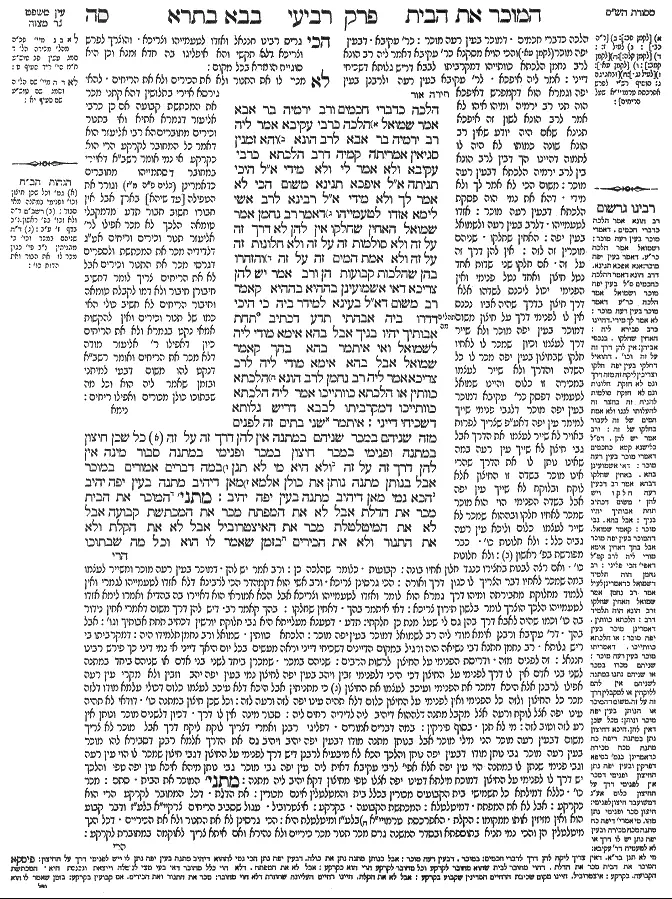
Bava Batra 65a - Guemara
הלכה כדברי חכמים ורב ירמיה בר אבא אמר שמואל הלכה כרבי עקיבא אמר ליה רב ירמיה בר אבא לרב הונא והא זמנין סגיאין אמריתה קמיה דרב הלכתא כרבי עקיבא ולא אמר לי ולא מידי אמר ליה היכי תניתה אמר ליה איפכא תנינא משום הכי לא אמר לך ולא מידי א"ל רבינא לרב אשי לימא אזדו לטעמייהו דאמר רב נחמן אמר שמואל האחין שחלקו אין להן לא דרך זה על זה ולא סולמות זה על זה ולא חלונות זה על זה ולא אמת המים זה על זה והזהרו בהן שהלכות קבועות הן ורב אמר יש להן צריכא דאי אשמועינן בההיא בההיא קאמר רב משום דא"ל בעינא למידר ביה כי היכי דדרו ביה אבהתי תדע דכתיב (תהלים מה, יז) תחת אבותיך יהיו בניך אבל בהא אימא מודי ליה לשמואל ואי איתמר בהא בהך קאמר שמואל אבל בהא אימא מודי ליה לרב צריכא אמר ליה רב נחמן לרב הונא הלכתא כוותין או הלכתא כוותייכו אמר ליה הלכתא כוותייכו דמקרביתו לבבא דריש גלותא דשכיחי דייני:
איתמר שני בתים זה לפנים מזה שניהם במכר שניהם במתנה אין להן דרך זה על זה כל שכן חיצון במתנה ופנימי במכר חיצון במכר ופנימי במתנה סבור מינה אין להן דרך זה על זה ולא היא מי לא תנן במה דברים אמורים במוכר אבל בנותן מתנה נותן את כולן אלמא מאן דיהיב מתנה בעין יפה יהיב הכא נמי מאן דיהיב מתנה בעין יפה יהיב:
מתני׳ המוכר את הבית מכר את הדלת אבל לא את המפתח מכר את המכתשת קבועה אבל לא את המיטלטלת מכר את האיצטרוביל אבל לא את הקלת ולא את התנור ולא את הכירים בזמן שאמר לו הוא וכל מה שבתוכו
Comments from Rashbam - Bava Batra 65a
הלכה כדברי חכמים . דמוכר בעין רעה מוכר: כר' עקיבא . דבעין יפה מוכר (לקמן בבא בתרא עא.) והכי הויא מסקנא כר' עקיבא דאמר ליה רב הונא לרב נחמן הלכתא כוותייהו דמקרביתו לבבא דריש גלותא דשכיחי דייני: אמר ליה איפכא . לר' עקיבא בעין רעה ולרבנן בעין יפה וגמרא הוא דקמפרש דאיפכא הוה תני רב ירמיה ומיהו איהו לא אמר לרב הונא לשון זה איפכא תנינא שאם היה יודע שאין רב הונא שונה כמותו לא היה לו לתמוה דהיינו הך דבין לרב הונא בין לרב ירמיה הלכתא דבעין רעה מוכר: משום הכי לא אמר לך ולא מידי . דהא את נמי הוה פסקת הלכתא דבעין רעה מוכר: אזדו לטעמייהו . דלרב בעין רעה ולשמואל בעין יפה: האחין שחלקו . שניהם מוכרין זה לזה: אין להן דרך זה על זה . אם חלקו שני שדות אחד נטל חיצון ואחד נטל פנימי ואין הפנימי יכול ליכנס לשדהו אלא דרך חיצון בדרך שהיה אביו נכנס אין לו לפנימי דרך על חיצון משום דמוכר בעין יפה מוכר ולא שייר דרך לעצמו וכיון שמכר לו לאחיו חלקו שבחיצון בעין יפה מכר לו כל השדה והדרך ולא שייר לעצמו במכירה זו כלום והיינו שמואל לטעמיה דפסק כר' עקיבא דמוכר בעין יפה מוכר דלגבי פנימי שייך למימר עין יפה דאע"פ שצריך לפרוח באויר לא שייר לעצמו את הדרך אבל גבי חיצון לא שייך עין רעה במה שאינו נותן לו את הדרך שהרי אינו מוכר בשדה זו החיצון אלא לוקח ובלוקח לא שייך עין יפה אבל בשדה הפנימי הוי הוא מוכר שמכר לאחיו חלקו ובההוא שמכר לא שייר לעצמו כלום וליכא עין רעה גביה כלל: ולא חלונות כו' . כבר מפורשת בפ' ראשון: ולא חלונות כו' . ואם רצה לבנות בחצירו כנגד חלון אחיו בונה: קבועות . כלומר שהלכה כן: ורב אמר יש להן . דמוכר בעין רעה מוכר ומשייר לעצמו במה שמכר לאחיו דבר הצריך לו כגון דרך ואורה: הכי גרסינן צריכא . ורב אשי הוא דקמהדר הכי לרבינא דלא אזדו לטעמייהו לגמרי ואין ללמוד מחלוקת מחבירתה ומיהו דרך גמרא הוא לומר ואזדו לטעמייהו וצריכא אבל הכא אמוראי הוא דאיירו בה בהדיא ואמרן לימא אזדו לטעמייהו הלכך הוצרך לומר בלשון תירוץ צריכא: דאי איתמר בהך . דאחין שחלקו: בהך קאמר רב . דיש להן דרך משום דאמרי אחין נידור בה כו' וכמו שהיה לאבא דרך בהן גם לי שעל מנת כן חלקתי: תדע . דטענא מעלייתא היא גבי חלוקת יורשין דכתיב תחת אבותיך וגו': אבל בהך . דר' עקיבא ורבנן אימא מודי ליה רב לשמואל דמוכר בעין יפה מוכר: הלכתא כוותין . שמואל ורב נחמן תלמידו היה: דמקרביתו בי ריש גלותא . רב נחמן חתנא דבי נשיאה הוה ורגיל במקום הדיינים דשכיחי דייני וראה מעשים בכל יום היאך דייני אי נמי דיני כך פירש רבינו חננאל: זה לפנים מזה . ודריסת הפנימי על החיצון לרשות הרבים: שניהם במכר . שמכרן ביחד לשני בני אדם או שניהם ביחד במתנה לשני בני אדם אין לו דרך לפנימי על החיצון דכי היכי דלפנימי זבין ויהב בעין יפה לחיצון נמי בעין יפה יהב וזבין ולא מקרי עין רעה אפילו לרבנן אלא היכא דמכר את הפנימי ועיכב לעצמו את החיצוץ כי מתניתין אבל היכא דלא עיכב לעצמו כלום דכולי עלמא מודו דלזה מכר כל החיצון ולזה כל הפנימי ואין לפנימי על החיצון כלום דלא תהיה עינו יפה לזה ורעה לזה: וכל שכן חיצון במתנה כו' . דודאי לא תהיה עינו יפה אצל לוקח ורעה אצל מקבל מתנה דלההוא דיהיב ליה לדידיה רחים ליה: סבור מינה אין לו דרך . דכיון דלשנים מוכר ונותן אין רע לזה וטוב לזה: מי לא תנן . בסוף פירקין: במה דברים אמורים . דפליגי רבנן ואמרי דצריך לוקח ליקח דרך אבל מוכר לא צריך משום דבעין רעה מוכר הני מילי מוכר אבל בנותן מתנה מודו דבעין יפה יהיב ויהיב גם את הדרך אלמא רבנן דסבירא להו מוכר בעין רעה מוכר גבי נותן מודו דבעין יפה נותן והלכך הכא לא מיבעיא לרבנן דיש דרך לפנימי על החיצון דגבי חיצון שמכר לו הוי עין רעה וגבי פנימי שנתן לו במתנה הוי עין יפה אלא אפי' לרבי עקיבא דאית ליה עין יפה גבי מוכר גבי נותן מיהא איכא עין יפה טפי והלכך יש דרך לו לפנימי על החיצון דמוכח מילתא דעינו יפה אצלו טפי מחיצון דקא יהיב ליה מתנה: מתני' המוכר את הבית . סתם: מכר כו' . כללא דמילתא כל תשמישי בית הקבועים מכורין בכלל בית והמטלטלין אינם מכורין: את הדלת . דכל המחובר לקרקע הרי הוא כקרקע: אבל לא את המפתח . דמיטלטלא: המכתשת הקבועה . בקרקע: איצטרוביל . עגול שסביב הריחים צרקיי"א בלע"ז ודבר קבוע הוא ואין מזיזין אותו ממקומו: הקלת . האפרכסת טרמויי"א בלע"ז ומיטלטלת היא: הכי גרסינן לא את התנור ולא את הכיריים . דכל הנך מיטלטלין הן והכי נמי תניא בתוספתא ובסדר המשנה גרס מכר תנור מכר כיריים ולא נהירא ואם איתא צריך לאוקמה במחוברת לקרקע:
Comments from Tosafot - Bava Batra 65a
הכי גריס רבינו חננאל ואזדו לטעמייהו וצריכא. והוצרך לפרש וצריכא דלא תקשי והא איפליגו בה חדא זמנא וכן היא סוגיית הגמרא בכל מקום: לא מכר לו את התנור ולא את הכירים ולא את הריחים. להאי גירסא איירי בתלושין דהא קתני מכר את המכתשת קבועה אם כן כרבי אליעזר דגמרא אתיא ואי בתנור וכירים מחוברים הא רבי אליעזר הוא דאמר כל המחובר לקרקע הרי הוא כקרקע אי נמי אומר רשב"א דאיירי במחובר דסתמייהו מחוברים כדאמרינן (כלים פ"ה מ"ז) וגורר את הטפילה [עד שיהא] בארץ אבל אין חבורו חשוב חבור תדע מדמקבלי טומאה הלכך לא מכר אפילו לר' אליעזר תנור וכירים וריחים אע"ג דלדידיה מכר את המכתשת ולספרים דגרסי מכר את התנור וכירים אבל לא את הריחים צריך לומר דחשיב חיבורן חיבור ולא דמו לקבלת טומאה וחיבור הריחים לא חשיב כולי האי כמו של תנור וכירים ואין להקשות אמאי נקט בגמרא ולא את הריחים כיון דאפילו ר' אליעזר מודה דלא מכר את הריחים ואומר רשב"א דנקט להו משום דבעי למיתני ובזמן שאמר ליה הוא וכל מה שבתוכו כולן מכורים ואפילו ריחים:
Bava Batra 65a - Mishnah translated into english
The halakha is in accordance with the statement of the Rabbis, while Rav Yirmeya bar Abba says that Shmuel says: The halakha is in accordance with the opinion of Rabbi Akiva. Rav Yirmeya bar Abba said to Rav Huna: But many times I said before Rav that the halakha is in accordance with the opinion of Rabbi Akiva, and never did he say anything to me, which indicates that he holds that the halakha is in accordance with the opinion of Rabbi Akiva and not that of the Rabbis. Rav Huna said to him: How did you teach the mishna before Rav? Rav Yirmeya bar Abba said to him: I taught it with the opposite attributions, that is to say, the opinion that is attributed in the mishna to Rabbi Akiva, I would teach in the name of the Rabbis. Rav Huna said to him: Due to that reason, he never said anything to you, as Rav agreed with the version that you attributed to Rabbi Akiva.
With regard to the opinions of Rav and Shmuel, Ravina said to Rav Ashi: Shall we say that Rav and Shmuel, in their opinions stated with regard to this matter, each follow their general lines of reasoning, as they appear to have disagreed about this same issue in another context as well?
As Rav Naḥman says that Shmuel says: With regard to brothers who divided their father’s estate between them, they do not have a right of way against each other, i.e., to walk through the other’s property to reach his own, even though this is how the place was used in their father’s lifetime; nor do they have the right of ladders against each other, i.e., the right to set up a ladder in the other’s property in order to get to his own; nor do they have the right of windows against each other, i.e., the right to prevent the other from building a wall facing his windows; nor do they have the right of a water channel against each other, i.e., the right to pass a water channel through the other’s property.
Rav Naḥman continues: And be careful with these rulings, since they are established halakhot. And Rav says: They do retain all of these privileges. Consequently, Rav and Shmuel appear to be following their general lines of reasoning here, as Shmuel holds that when the brothers, who are like sellers, divide their father’s estate, they transfer property to each other generously without retaining privileges in each other’s property, while Rav holds that they transfer the property sparingly.
The Gemara comments: Nevertheless, it was necessary to teach this disagreement in both cases, as the halakha in the one case cannot be derived from the halakha in the other. As had we been taught this dispute only in that case, of the brothers who divided their father’s estate, I would have said that only in that case does Rav say that they retain all of the earlier privileges, because one brother can say to the other: I wish to live in this house just as my ancestors, who had all of those privileges, lived in it. Know that there is substance to this claim, as it is written: “Instead of your fathers shall be your sons” (Psalms 45:17). But in this case of an ordinary house sale, say that he concedes to Shmuel that a seller sells generously.
And if the dispute was stated only in this case of an ordinary house sale, I would have said that only in this case does Shmuel say that a seller sells generously and does not withhold a path for himself, but in that case, of the brothers who divided their father’s estate, say that he concedes to Rav that the desire to live there just as his ancestors did supersedes the seller’s general tendency to sell generously. Therefore, it was necessary to teach this dispute in both cases.
As for the ruling itself, Rav Naḥman, who was a disciple of Shmuel, said to Rav Huna: Is the halakha in accordance with our opinion, or is the halakha in accordance with your opinion? Rav Huna said to him: The halakha is in accordance with your opinion, as you are near the gate of the Exilarch, where the judges are frequently found, and therefore you are more proficient in monetary law.
§ It was stated: If there are two residences, one situated behind the other, and the owner transferred ownership of the two of them, each one to a different person, by means of a sale, or if he transferred ownership of the two of them, each to a different person, as a gift, they do not have a right of way against each other. That is, the one who acquired the inner residence may not pass through the outer residence, since each of them received equal privileges from the previous owner. And all the more so is this the halakha if the outer residence was transferred by means of a gift, and the inner residence was transferred by means of a sale, as it may be assumed that a gift is made in a more generous manner than is a sale.
As for the case where the outer residence was transferred by means of a sale, and the inner residence was transferred by means of a gift, some Sages at first understood from here that they do not have a right of way against each other, that is, that the recipient of the inner residence may not pass through the outer residence.
But that is not so, as didn’t we learn in a mishna (71a): In what case is this statement, that these items are excluded, said? It is said with regard to one who sells a field, but with regard to one who gives it away as a gift, it is assumed that he gives all of it, including everything found in the field. Apparently, one who gives property as a gift gives it more generously than does one who sells it, as gifts are generally given to friends to whom one wishes to transfer as many privileges as possible. Here too, then, one who gives property as a gift gives it more generously than does one who sells it, and so the recipient of the inner residence acquires a right of way through the outer apartment.
MISHNA: One who sells a house has, as part of the sale, sold also the door, but not the key. He has sold the mortar that is fixed in the ground, but not the portable one. He has sold the immovable lower millstone [ha’itzterobil], but not the portable upper stone [hakelet], the funnel into which one pours the grain to be ground. And he has sold neither the oven nor the double stove, as they are deemed movable. When the seller says to the buyer: I am selling you it, and everything that is in it,
Traduction : The William Davidson digital edition of the Koren Noé Talmud, with commentary by Rabbi Adin Even-Israel Steinsaltz.