 Talmud Bavli
Bava Batra 88a : Youtube
Daf TubeYoutube
2 video classes :
Bava Batra Page 88a
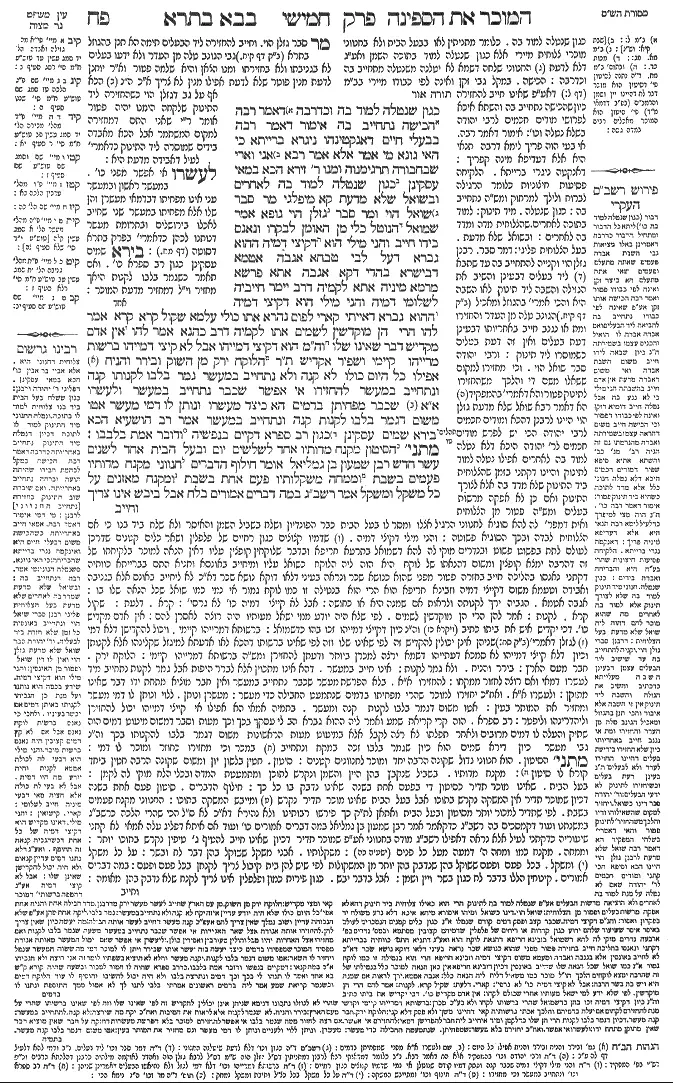
Bava Batra 88a - Guemara
כגון שנטלה למוד בה וכדרבה דאמר רבה הכישה נתחייב בה אימור דאמר רבה בבעלי חיים דאנקטינהו ניגרא ברייתא כי האי גונא מי אמר אלא אמר רבא אני וארי שבחבורה תרגימנוה ומנו ר' זירא הכא במאי עסקינן כגון שנטלה למוד בה לאחרים ובשואל שלא מדעת קא מיפלגי מר סבר שואל הוי ומר סבר גזלן הוי גופא אמר שמואל הנוטל כלי מן האומן לבקרו ונאנס בידו חייב והני מילי הוא דקיצי דמיה ההוא גברא דעל לבי טבחא אגבה אטמא דבישרא בהדי דקא אגבה אתא פרשא מרמא מיניה אתא לקמיה דרב יימר חייביה לשלומי דמיה והני מילי הוא דקיצי דמיה ההוא גברא דאייתי קארי לפום נהרא אתו כולי עלמא שקול קרא קרא אמר להו הרי הן מוקדשין לשמים אתו לקמיה דרב כהנא אמר להו אין אדם מקדיש דבר שאינו שלו וה"מ הוא דקיצי דמייהו אבל לא קיצי דמייהו ברשות מרייהו קיימי ושפיר אקדיש ת"ר הלוקח ירק מן השוק ובירר והניח אפילו כל היום כולו לא קנה ולא נתחייב במעשר גמר בלבו לקנותו קנה ונתחייב במעשר להחזירו אי אפשר שכבר נתחייב במעשר ולעשרו א"א שכבר מפחיתן בדמים הא כיצד מעשרו ונותן לו דמי מעשר אטו משום דגמר בלבו לקנות קנה ונתחייב במעשר אמר רב הושעיא הכא בירא שמים עסקינן כגון רב ספרא דקיים בנפשיה (תהלים טו, ב) ודובר אמת בלבבו:
מתני׳ הסיטון מקנח מדותיו אחד לשלשים יום ובעל הבית אחד לשנים עשר חדש רבן שמעון בן גמליאל אומר חילוף הדברים חנווני מקנח מדותיו פעמים בשבת וממחה משקלותיו פעם אחת בשבת ומקנח מאזנים על כל משקל ומשקל אמר רשב"ג במה דברים אמורים בלח אבל ביבש אינו צריך
Comments from Rashbam - Bava Batra 88a
כגון שנטלה למוד בה . כלומר מתניתין לאו בבעל הבית ולא בחנווני מוכרי צלוחית מיירי אלא כגון שנטלה למוד בתוכה השמן ואע"ג דלא לדעת החנווני שלחה דשמא לא יטלנה משנטלה מתחייב בה וכדרבה: הכישה . במקל גבי זקן ואינה לפי כבודו מיירי בב"מ (דף ל:) דאע"פ שאינו חייב להחזירה כיון שהכישה נתחייב בה והשתא איכא לפרושי מודים חכמים לרבי יהודה בשלא נטלה וכו': אימור דאמר רבה . אי בעי הוה פריך לימא דרבה תנאי היא אלא דעדיפא מינה קפריך: דאנקטה ניגרי ברייתא . הלקיחה פסיעות חיצוניות כלומר הרגילה לברוח ולילך למרחוק ומש"ה נתחייב בה: כגון שנטלה . מיד תינוק: למוד בתוכה לאחרים . שהצלוחית מדה ומדד בה לאחרים: ובשואל שלא מדעת . בעל הצלוחית פליגי: ורבי יהודה סבר שואל הוי . וכי מחזירו למקום ששאלו משם די והלכך משהחזירו לתינוק פטור והא דאמרי' בהמפקיד הא דאמר רבא שואל שלא מדעת גזלן הוי היינו לרבנן דהכא ומודים חכמים לרבי יהודה הכי יש לפרש מודים חכמים לר' יהודה היכא דלא נטלה למוד בה לאחרים אפילו נטלה למוד לתינוק והיינו דקתני בזמן שהצלוחית ביד התינוק שלא מדד בה אלא לצורך התינוק ואם כן לא אפקה מרשות בעלים ומש"ה פטור מן הצלוחית ואית דמפר' לה להא סוגיא לחנווני הרגיל אצלו ומסר לו בעל הבית כבר הפונדיון ושלח בשביל השמן והאיסר ולא שלח ביד בנו כי אם הצלוחית לבדה ובכך הסוגיא פשוטה: דמר סבר . רבנן גזלן הוי וקנייה להתחייב בה עד שתבא ליד בעלים דבעינן והשיב את הגזילה והשבה ליד תינוק לאו השבה היא והכי אמרי' בהגוזל ומאכיל (ב"ק דף קיח.) הגונב טלה מן העדר והחזירו ומת או נגנב חייב באחריותו דבעינן דעת בעלים ואין זה דעת בעלים כשמוסרו ליד תינוק: והני מילי דקיצי דמיה . שדמיו קצוצים כגון רחיים של פלפלין ושאר כלים קטנים שדרכן לעולם לתת בפשוט פשוט ובנדרים מוקי לה להא דשמואל בתרעא חריפא ובדבר שלוקחין קופצין עליו דאין הנאה למוכר בלקיחתו של זה דהרבה ימצא קופצין ומשום דהנאתו של לוקח היא הוה ליה הלוקח כשואל עליו ומיחייב באונסא ותניא התם בברייתא כוותיה דקתני נאנסו בהליכה חייב בחזרה פטור מפני שהוא כנושא שכר ונראה בעיני דלאו דוקא נושא שכר דא"כ לא ליחייב באונס אלא בגניבה ואבידה וטעמא משום דקייצי דמיה וזבינא חריפא הוא הרי הוא בנטילה זו כמו לוקח גמור אי נמי כמו שואל שכל הנאה שלו בו: אגבה אטמא . הגביה ירך לקנותה ולראות אם שמנה היא או כחושה: אבל לא קייצי דמיה כו' לא גרסי': קרא . דלעת: שקול קרא . לקנות: אמר להן הרי הן מוקדשין לשמים . לפי שלא היה יודע ממי ישאל מעותיו היה רוצה לאסרן להם: אין אדם מקדיש כו' . דכי יקדיש איש את ביתו כתיב (ויקרא כז) וה"נ כיון דקייצי דמייהו זכו בהו כדשמואל: ברשותא דמרייהו קיימי . ויכול להקדישן דלא דמי לגזלן דאמרי' (ב"ק סח:) שניהן אינן יכולין להקדיש זה לפי שאינו שלו וזה לפי שאינו ברשותו דהכא לאו אדעתא למיגזל שקלינהו אלא לקנותן וכיון דלא קייצי דמייהו לא סמכא דעתייהו דשמא ירצה למכרן ביותר ודעתן להחזירן ומש"ה ברשותא דמרייהו קיימי: הלוקח ירק . חבר מעם הארץ: בירר והניח . ולא גמר לקנות: אינו חייב במעשר . דהא אינו מתכוין אלא לברר היפות אבל גמר לקנות נתחייב מיד לעשרו דמאי ואם רוצה לחזור ממקחו: להחזירו א"א . בלא הפרשת מעשר שכבר נתחייב במעשר ואין חבר מוציא מתחת ידו דבר שאינו מתוקן: ולעשרו א"א . ואח"כ יחזירו למוכר שהרי מפחיתו בדמים שנתמעט החבילה כדי מעשר: מעשרן ונותן . ללוי ונותן לו דמי מעשר ומחזיר את המותר בעין: אטו משום דגמר בלבו לקנות קנה ומעשר . בתמיה אמאי הא אפילו אי קייצי דמייהו יכול להחזירן וליהדרינהו וליפטר: רב ספרא . הוה קרי קריאת שמע ואמר ליה ההוא גברא הב לי עסקך בכך וכך מעות וסבר דמשום מיעוט דמים הוה שתיק והעלה לו דמים מרובים ולאחר תפלתו לא רצה לקבל אלא במיעוט מעות הראשונות משום דגמר בלבו להקנותו בכך וה"נ גבי מעשר כיון דירא שמים הוא כיון שגמר בלבו זכה במקח ונתחייב במכר וכי מחזירו כחוזר ומוכר לו דמי: מתני' הסיטון . הוא חנווני גדול שקונה הרבה יחד ומוכר לחנוונים קטנים: סיטון . חטין בלשון יון ומשום שקונה הרבה חטין ביחד קורא לו סיטון: מקנח מדותיו . בשביל שנקבץ בהן היין והשמן ונקרש לתוכן ומתמעטת המדה ובכלי הלח מוקי לה לקמן: בעל הבית . שאינו מוכר תדיר כסיטון די בפעם אחת בשנה שאינו נדבק בו כל כך: חילוף הדברים . סיטון פעם אחת בשנה דכיון שמוכר תדיר אין המשקה נקרש בתוכו אבל בעל הבית שאינו מוכר תדיר נקרש ומייבש המשקה בתוכו: החנווני מקנח פעמים בשבת . לפי שתדיר למכור יותר מסיטון ובעל הבית ואתאן לת"ק כך פירשו רבותינו ולא נהירא דא"כ לא ס"ל הכי שהרי הלכה כרשב"ג במשנתנו ועוד דקמסכים בה רשב"ג כדקאמר אמר רבן שמעון בן גמליאל במה דברים אמורים כו' ועוד אם איתא דפליג עלה אמאי לא קתני שיעוריה כדקתני לעיל אלא נראה דאפילו רשב"ג מודה בחנווני אע"פ שמוכר תדיר דכיון שאינו חייב להטיף ג' טיפין נקרש בתוכו יותר: וממחה . מקנח כמו ומחה ה' דמעה מעל כל פנים (ישעיהו כה): משקלותיו . אבני משקל ששוקל בהן דבר לח ובשר: על כל משקל ומשקל . בכל פעם ופעם ששוקל בהן שנדבק בהן יותר מן המשקולות לפי שיש להן בית קיבול צריך לקנחן בכל פעם ופעם: במה דברים אמורים . קינוחין הללו בדבר לח כגון בשר ויין ושמן: אבל בדבר יבש . כגון פירות כמון ופלפלין אינו צריך לקנח שלא נדבק בהן מאומה:
Comments from Tosafot - Bava Batra 88a
מר סבר גזלן הוי. וחייב להחזירה ליד הבעלים תימה הא תנן בהגוזל בתרא (ב"ק דף קיח.) גבי הגונב טלה מן העדר ולא ידעו בעלים לא בגניבתו ולא בחזירתו ומנו הצאן והיא שלמה פטור וא"ר יוחנן לדעת מנין פוטר שלא לדעת אפילו מנין לא צריך א"כ ה"נ הכא אף על גב דגזלן הוי כשהחזירה ליד התינוק שלקחה הימנו יהיה פטור אומר ר"י שאני התם דמחזירה למקום המשתמר אבל הכא מאבדה בידים שמוסרה ליד התינוק כדאמרי' לעיל דאבידה מדעת היא: לעשרו אי אפשר מפני כו'. במעשר ראשון ובמעשר עני אינו מפחיתו דבדמאי מעשרן והן שלו אלא מפחיתו במעשר שני שחייב לאכלו בירושלים ובתרומת מעשר דנותנו לכהן כדאמרי' בפרק בתרא דסוטה (דף מח.): בירא שמים עסקינן כגון רב ספרא כו'. ואם תאמר כשגמר בלבו לקנות היאך מחזיר וי"ל דמחזיר מדעת המוכר:
Bava Batra 88a - Mishnah translated into english
The mishna is referring to a case where the storekeeper took the jug from the child in order to measure with it for him, and because he took it in his hands, he is liable in the event of an accident, in accordance with the opinion of Rabba. As Rabba says: With regard to the obligation to return lost animals, even in a case where the finder is exempt from caring for the animal and returning it to its owner, e.g., if he is an elderly person and it is beneath his dignity, if he struck the animal in order to lead it, then he becomes obligated to return it. Likewise, the Rabbis here maintain that the storekeeper’s action renders him liable for the jug.
The Gemara asks: You can say that Rabba says his statement with regard to animals, as the finder taught them to take steps away, i.e., he worsened the situation, as he causes them to stray even further from their owner. Nevertheless, in a case like this, where the storekeeper took the jug from the child, did Rabba say that the storekeeper is liable? The storekeeper’s action does not make it any more likely that the jug will break.
Rather, Rava said: I and the lion of the group explained it. And who is this great Sage, referred to as a lion? It is Rabbi Zeira, and the explanation is as follows: Here we are dealing with a case where the storekeeper took the jug from the child in order to measure with it for others, without the knowledge of the father.
And the Rabbis and Rabbi Yehuda disagree with regard to a borrower who takes an item without the owner’s knowledge. One Sage, Rabbi Yehuda, holds that the storekeeper is considered like any other borrower and once he returns the jug to the child, he is no longer responsible for it. And one Sage, i.e., the Rabbis, holds that someone who borrows without the owner’s knowledge is a robber and is obligated to return the item to its owner. Therefore, the storekeeper must pay for the jug that the child broke before it reached the father.
The Gemara returns to the matter itself. Shmuel says: With regard to one who takes a vessel from a craftsman in order to examine it, and an accident occurred while it was in his possession and it broke, he is liable to pay restitution for the vessel. The Gemara explains: And this statement applies only in a case where the monetary value of the vessel is fixed, because he examines the vessel merely to ensure there is nothing wrong with it, and it is assumed that if he finds no defect he will buy it.
The Gemara relates: There was a certain man who entered a butcher shop and lifted a thigh of meat to examine it. While he was lifting it, a horseman came and seized it from him. The buyer came before Rav Yeimar, who deemed him liable to pay its monetary value to the seller, because it was seized from him after he had lifted it. The Gemara again notes: And this matter, i.e., halakha, applies only in a place where the monetary value of the item is fixed, and therefore lifting it is equivalent to finalizing the sale.
The Gemara relates a similar incident: There was a certain man who brought pumpkins to the city of Pum Nahara. Everyone came and took a pumpkin with the intention of buying it, but had yet to pay for it. The seller was angry, and since he did not know from whom to demand payment, he said to them: The pumpkins are hereby consecrated to Heaven.
They came before Rav Kahana to inquire about the halakhic status of the pumpkins. Rav Kahana said to them: This statement has no effect, as a person cannot consecrate an item that is not his, and since the buyers had lifted the pumpkins, they no longer belonged to the seller. Once again the Gemara points out: And this matter, i.e., halakha, applies only in a place where the item’s monetary value is fixed, and therefore lifting it is akin to finalizing the sale. But if the item’s monetary value is not fixed, it remains in the jurisdiction of its owner, and the seller did well, i.e., was successful, in that he consecrated it.
§ The Sages taught: In the case of one who wishes to buy vegetables from the market and the seller is an am ha’aretz, i.e., one who is unreliable with regard to tithes, in which case the buyer is required to separate tithes after his purchase, and he selected superior-quality vegetables from inferior-quality vegetables and placed them to the side, as he was considering purchasing them, even if he did this all day, if he does not decide to buy the vegetables he does not acquire them and does not become obligated in separating tithes.
If he had determined to buy the vegetables he selected, he acquires them and becomes obligated in separating tithes. In such a case, it is not possible for him to decide to not buy the vegetables and to return them to the seller in their present state, as they have already became obligated in tithes, and, likewise, it is not possible to tithe them and return them to the seller, as he would then lower their monetary value. How should he proceed? He should tithe the produce, give the tithes to an appropriate recipient, and give the seller money in exchange for the tithes that he separated from it.
The Gemara asks: Is that to say that because one determined to buy the produce, even though he says nothing and performs no act of acquisition, he acquires the produce and becomes obligated in tithes? Rav Hoshaya said: Here, we are dealing with a buyer who is God-fearing, such as Rav Safra, who himself fulfilled the verse: “And speaks truth in his heart” (Psalms 15:2). With regard to business matters Rav Safra considered himself bound by his thoughts at the time of negotiations, even if he did not express them verbally or perform any action (see Makkot 24a). A person on the ethical level of Rav Safra acquires the produce and becomes obligated to separate tithes from the moment that he decides to buy it.
MISHNA: A wholesaler [hassiton] must clean his measuring vessels, which are used for measuring liquids such as oil and wine, once every thirty days, because the residue of the liquids sticks to the measure and reduces its capacity. And a homeowner who sells his goods must clean his measuring vessels only once every twelve months. Rabban Shimon ben Gamliel says: The matters are reversed. In the case of one who is constantly using his vessels for selling merchandise the residue does not adhere to the measuring vessel, and therefore a wholesaler must clean his measures only once a year. But in the case of a homeowner, who does not sell as often, the residue adheres to the measuring vessel; therefore, he must clean them every thirty days.
A storekeeper, who constantly sells merchandise in small quantities, cleans his measuring vessels twice a week and cleans his weights once a week; and he cleans the pans of his scales after each and every weighing, to ensure that no merchandise has adhered to the pans, thereby increasing their weight. Rabban Shimon ben Gamliel said: In what case is this statement, that it is necessary to clean a measuring vessel, said? With regard to moist items, which are likely to adhere to the measuring vessels. But with regard to dry goods, which do not adhere to the measuring vessels, one does not need to clean his measuring vessels.
Traduction : The William Davidson digital edition of the Koren Noé Talmud, with commentary by Rabbi Adin Even-Israel Steinsaltz.