 Talmud Bavli
Bava Batra 18a : Youtube
Daf TubeYoutube
2 video classes :
Bava Batra Page 18a
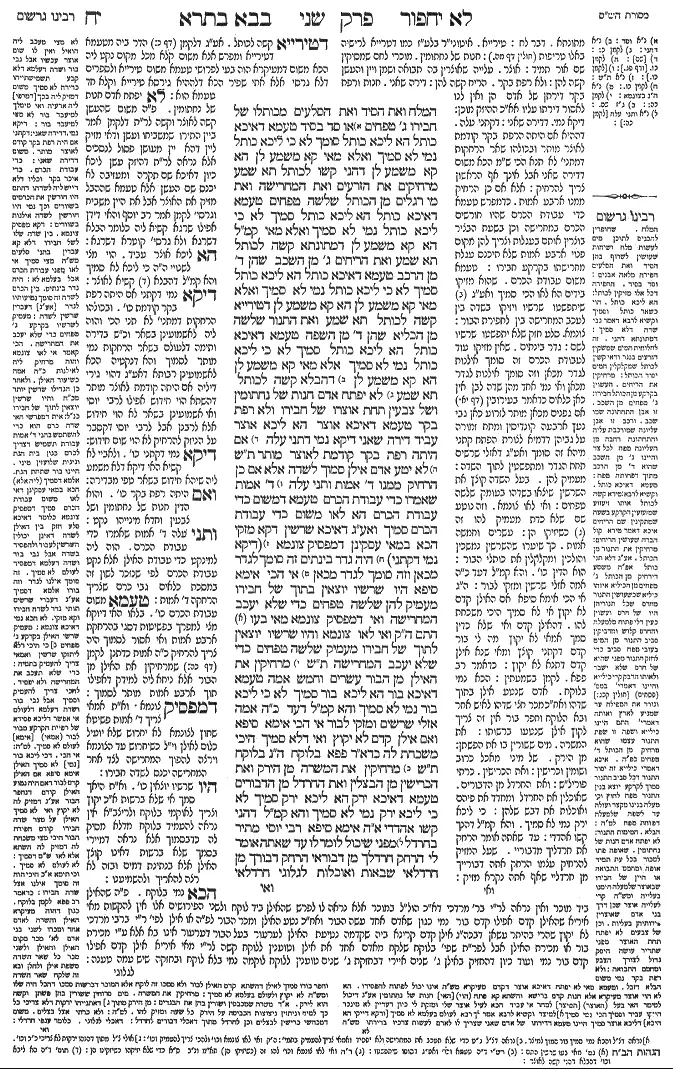
Bava Batra 18a - Guemara
המלח ואת הסיד ואת הסלעים מכותלו של חבירו ג' טפחים או סד בסיד טעמא דאיכא כותל הא ליכא כותל סומך לא כי ליכא כותל נמי לא סמיך ואלא מאי קא משמע לן הא קא משמע לן דהני קשו לכותל תא שמע מרחיקים את הזרעים ואת המחרישה ואת מי רגלים מן הכותל שלשה טפחים טעמא דאיכא כותל הא ליכא כותל סמיך לא כי ליכא כותל נמי לא סמיך ואלא מאי קמ"ל הא קא משמע לן דמתונתא קשה לכותל תא שמע ואת הריחים ג' מן השכב שהן ד' מן הרכב טעמא דאיכא כותל הא ליכא כותל סמיך לא כי ליכא כותל נמי לא סמיך ואלא מאי קא משמע לן הא קא משמע לן דטירייא קשה לכותל תא שמע ואת התנור שלשה מן הכליא שהן ד' מן השפה טעמא דאיכא כותל הא ליכא כותל סמיך לא כי ליכא כותל נמי לא סמיך אלא מאי קא משמע לן הא קא משמע לן דהבלא קשה לכותל תא שמע לא יפתח אדם חנות של נחתומין ושל צבעין תחת אוצרו של חבירו ולא רפת בקר טעמא דאיכא אוצר הא ליכא אוצר עביד דירה שאני דיקא נמי דתני עלה אם היתה רפת בקר קודמת לאוצר מותר תא שמע לא יטע אדם אילן סמוך לשדה אלא אם כן הרחיק ממנו ד' אמות ותני עלה ד' אמות שאמרו כדי עבודת הכרם טעמא דמשום כדי עבודת הכרם הא לאו משום כדי עבודת הכרם סמיך ואע"ג דאיכא שרשין דקא מזקי הכא במאי עסקינן דמפסיק צונמא (דיקא נמי דקתני) היה גדר בינתים זה סומך לגדר מכאן וזה סומך לגדר מכאן אי הכי אימא סיפא היו שרשיו יוצאין בתוך של חבירו מעמיק להן שלשה טפחים כדי שלא יעכב המחרישה ואי דמפסיק צונמא מאי בעו התם הכי קאמר ואי לאו צונמא והיו שרשיו יוצאין לתוך של חבירו מעמיק שלשה טפחים כדי שלא יעכב המחרישה תא שמע מרחיקין את האילן מן הבור עשרים וחמש אמה טעמא דאיכא בור הא ליכא בור סמיך לא כי ליכא בור נמי לא סמיך והא קמ"ל דעד כ"ה אמה אזלי שרשים ומזקי לבור אי הכי אימא סיפא ואם אילן קדם לא יקוץ ואי דלא סמיך היכי משכחת לה כדא"ר פפא בלוקח ה"נ בלוקח תא שמע מרחיקין את המשרה מן הירק ואת הכרישין מן הבצלין ואת החרדל מן הדבורים טעמא דאיכא ירק הא ליכא ירק סמיך לא כי ליכא ירק נמי לא סמיך והא קמ"ל דהני קשו אהדדי אי הכי אימא סיפא רבי יוסי מתיר בחרדל מפני שיכול לומר לו עד שאתה אומר לי הרחק חרדלך מן דבוראי הרחק דבורך מן חרדלאי שבאות ואוכלות לגלוגי וחרדלאי
Comments from Rashi on Masechet Bava Batra Page 18a
מתונתא . דבר לח: טירייא . איטוני"ר בלע"ז כמו דטרייא לרישיה באלו טריפות (חולין דף מה.): חנות של נחתומין . מוכרי לחם שמסיקין שם אור תמיד: אוצר . עלייה שאוצרין בה תבואה ושמן ויין והעשן קשה להן: ולא רפת בקר . הריח קשה להן: דירה שאני . חנות ורפת בקר דירתן של אדם הן ואין לנו לאסור דירתו עליו אא"כ ההיזק מוכן: דיקא נמי . דדירה שאני: דקתני עלה . דההיא אם היתה הרפת בקר קודמת לאוצר מותר ובכולהו שאר הרחקות דמתני' לא תנא הכי ש"מ הכא משום דדירה שאני אבל אינך אף הראשון צריך להרחיק: אלא אם כן הרחיק ממנו ארבע אמות . כדמפרש טעמא כדי עבודת הכרם שהיו חורשים הכרם במחרישה וכן בשעת הבציר בוצרין אותם בעגלות וצריך להן מקום פנוי ארבע אמות שלא תיכנס עגלת מחרישתו בקרקע חבירו: טעמא משום עבודת הכרם . שהוא מזיקו בידים הא לאו הכי סמיך ואע"ג שיתפשטו שרשיו ויזיקו בשדה בין לעכב המחרישה בין לחפירת הבור: צונמא . סלע חזק שלא יתפשטו שרשיו לשם: גדר בינתים . שאין מזיקו עוד לעבודת הכרם זה סומך אילנות לגדר מכאן וזה סומך אילנות לגדר מכאן ואי נמי אחד מהן שדה לבן אין כאן כלאים כדאמר בעירובין (דף יא.) אם גפנים מכאן מותר לזרוע כאן גבי נעץ ארבעה קונדיסין ומתח זמורה על גביהן דדמיא לצורת הפתח קתני מיהא זה סומך ואע"ג דאזלי שרשים תחת הגדר ומתפשטין לתוך השדה: מעמיק להן . בעל השדה קוצץ את השרשין שיצאו בשדהו בעומק שלשה טפחים: ואי לאו צונמא . וזה נוטע שם שלא כדת מעמיק להו זה כשיזיקו הן: עשרים וחמשה אמות . כך שיערו שהשרשין נמשכין והולכין ומקלקלין את כותלי הבור: הוא הדין כו' . והא קמ"ל דעד כ"ה אמה אזלי שרשין ומזקי לבור: ה"ג אי הכי אימא סיפא אם האילן קדם לא יקוץ אי לא סמיך היכי משכחת להו. דהאילן קדם ואי שלא כדין סמך אמאי לא יקוץ מה לי בור קדם דקתני קוצץ ומאי שנא אילן קדם דתנא לא יקוץ: כדאמר רב פפא . לקמן בשמעתין: הכא נמי בלוקח . אדם שנטע אילן בתוך שדהו ואח"כ מכר חצי שדהו לאיש אחר ובא הלוקח וחפר בור אין זה צריך לקוץ אילן שנטעו ברשותו: את המשרה . מים ששורין בו את הפשתן: מן הירק . של מיני מאכל כרוב ושומין וכרישין: ואת הכרישין . כרתי פוריל"ש: ואת החרדל מן הדבורים . שאוכלין את החרדל ומחדד את פיהם ואוכלות את דבש שלהן: כי ליכא ירק נמי לא סמיך . והא קמ"ל דהנך קשו אהדדי: עד שאתה אומר הרחק את חרדליך מדבוריי . שעל המזיק להרחיק עצמו הרחק אתה דבורייך מן חרדליי שאף אתה נקרא מזיק:
Comments from Tosafot - Bava Batra 18a
דטירייא קשה לכותל. אע"ג דלקמן (בבא בתרא דף כ:) הדר ביה מטעמא דטירייא ומפרש אלא משום קלא מכל מקום נקט ליה הכא משום דמעיקרא הוה בעי לפרושי טעמא משום טירייא ולספרים דלא גרסי אלא אתי שפיר הכא דלההיא גירסא טירייא וקלא חד טעמא הוא: לא יפתח אדם חנות של נחתומין. פ"ה משום שהעשן קשה לאוצר וקשה לר"ת דלקמן אמר ביין התירו שמשביחו ועשן ודאי מזיק ליין דהא יין מעושן פסול לנסכים אלא נראה לר"ת דהיזק עשן ליכא כיון דאיכא שם תקרה ומעזיבה לא יכנס שם העשן אלא טעמא שההבל מזיק את האוצר אבל את היין משביח וגרסי' לקמן אמר רב יוסף והאי דידן אפילו שרגא קשיא ליה כלומר הבלא דשרגא ולא גרסי' קוטרא דשרגא: הא ליכא אוצר עביד. הוי מצי לשנויי ה"ה כי ליכא לא סמיך והא קמ"ל דהבלא קשיא לאוצר: דיקא נמי דקתני אם היתה רפת בקר קודמת כו'. ובכולהו הרחקות דמתני' לא תני הכי והוה ליה לאשמועינן בשאר וכ"ש בדירה ותימה דלעולם בשאר הרחקות נמי מותר לסמוך והא דנקטיה הכא לאשמועינן רבותא דאע"ג דהוי גירי דיליה אם היתה קודמת לאוצר מותר דהשתא הוי חידוש אפילו לרבי יוסי ואי אשמועינן בשאר לא הוי חידוש אלא לרבנן אבל לרבי יוסי דקסבר על הניזק להרחיק לא הוי שום חידוש: דיקא נמי דקתני כו'. ולאביי לא קשיא האי דיקא דלא משמע ליה שיהא חידוש בשאר טפי מבדירה: ואם היתה רפת בקר כו'. והוא הדין חנות של נחתומין ושל צבעין וחדא מינייהו נקט: ותני עלה ד' אמות שאמרו כדי עבודת הכרם. הוה ליה למינקט כדי עבודת האילן אלא נקט עבודת הכרם לפי שנזכר לשון זה במסכת כלאים גבי כרם שצריך הרחקה ד' אמות: טעמא משום עבודת הכרם כו'. בלאו האי דיוקא מצי למפרך בפשיטות דסגי בהרחקת ארבע אמות ואי אסור לסמוך היה צריך להרחיק כ"ה אמות כדתנן לקמן (בבא בתרא דף כה:) שמרחיקין את האילן מן הבור אלא ניחא ליה למידק דאפילו תוך ארבע אמות מותר לסמוך: דמפסיק צונמא. וא"ת אמאי צריך ד' אמות פשיטא שחוץ לצונמא לא יחרוש שלא יועיל כלום לאילן וי"ל כשיחרוש עד הצונמא וירצה להפוך המחרישה לצד אחר המחרישה יכנס לשדה חבירו: היו שרשיו יוצאין כו'. וא"ת היאך סמך אי שלא ברשות א"כ יקוץ וצריך לאוקמי בלוקח ולריצב"א אין נראה להעמיד בלוקח מדלא מסיק לה כדבסמוך אלא נראה דמיירי בסמך שלא ברשות דאינו קוצץ האילן אלא בנתינת דמים ובזה לא רצה להאריך ולהשמיענו: הכא נמי בלוקח. פ"ה שהאילן ביד מוכר ואין נראה לר"י בר' מרדכי דא"כ הול"ל במוכר אלא נראה לו לפרש שהאילן ביד לוקח ולשני הפירושים אלו אין להקשות מאי איריא שהאילן קדם אפילו קדם בור נמי כגון שאדם אחד עשה הבור ואח"כ נטע האילן ומכר הבור לפ"ה או אילן לפי' ר"י ברבי מרדכי לא יקוץ שהרי בהיתר עשאן דבכה"ג אילן קדם קרינא ביה שקדמה נטיעת האילן לערעור בעל הבור דערעור אינו בא אלא ע"י מכירת בור או מכירת האילן אבל לפר"ת שפי' בלוקח שלקח מאדם אחד את אילן וטוענין ללוקח קשה לר"י מאי איריא אילן קדם אפילו קדם בור נמי ועוד כיון דהחזיק באילן ג' שנים איירי דבחזקת ג' שנים טוענין ללוקח לוקמה נמי בלא לוקח ובחזקה שיש עמה טענה: לגלוגי חרדל. פי' הקונטרס פרחים ובערוך פירש גרעין ותרוייהו אין נראה לר"י דהא קאמרי רבנן דבורים לחרדל לא מזקי אי בבינתא כו' אי בטרפא כו' משמע דלא פירש רבי יוסי בדבריו מה הן מזיקין ולכך היו מסתפקין אי בבינתא כו' ונראה לר"י דלגלוגי הם ענפים והשתא לא פירש רבי יוסי מה הם מזיקות לכך אמרו ליה רבנן אי בבינתא כו' וא"ת מכל מקום הרי הן מזיקין לחרדל שיאכלו הפרחים ויש לומר שהפרחים אינן כ"א מעט וביום או יומים שיעמדו אין יכולין להזיק:
Bava Batra 18a - Mishnah translated into english
salt, and lime, and rocks three handbreadths from the wall of another, or he can plaster the wall with lime. The Gemara analyzes this statement: The reason for this ruling is that there is a wall there belonging to his neighbor, from which it may be inferred that if there is no wall there, one may place these substances close to the boundary of his neighbor’s courtyard. This presents a difficulty for the opinion of Rava according to the first version of the dispute, which states that one may not place these substances close to a boundary even in the case of a field that is not designated for pits.
The Gemara rejects this proof: No, even if there is no wall one may also not place these substances close to the boundary. The Gemara asks: Rather, what does mentioning a wall here teach us? The Gemara answers: This teaches us that all these substances are damaging to a wall.
The Gemara suggests: Come and hear another proof from the mishna: One must distance seeds, and the plow, and urine three handbreadths from the wall of another. The Gemara analyzes this ruling: The reason for this ruling is that there is a wall, from which it may be inferred that if there is no wall, one may place these substances close to the boundary of the field. The Gemara rejects this proof as well: No, even if there is no wall, one may also not place these substances close by the boundary. The Gemara asks: But rather, what does this teach us? The Gemara answers: This teaches us that dampness [dimtunta] is damaging to a wall.
The Gemara suggests: Come and hear another proof from the mishna: And one must distance a mill from a wall by three handbreadths from the lower stone of the mill, which is four handbreadths from the upper stone. The Gemara analyzes this statement: The reason for this ruling is that there is a wall, from which it may be inferred that if there is no wall, one may place a mill close by the boundary. The Gemara rejects this proof: No, even if there is no wall, one may also not place his mill close by the boundary. The Gemara asks: But rather, what does this teach us? The Gemara answers: This teaches us that vibrations are damaging to a wall.
The Gemara suggests: Come and hear another proof from the mishna: And the oven must be distanced three handbreadths from the base, which is four handbreadths from the upper rim of the oven. The Gemara analyzes this statement: The reason for this ruling is that there is a wall, from which it may be inferred that if there is no wall, one may place an oven close by the boundary. The Gemara rejects this proof as well: No, even if there is no wall, one may also not place his oven close by the boundary. The Gemara asks: Rather, what does this teach us? The Gemara answers: This teaches us that heat is damaging to a wall.
The Gemara suggests: Come and hear a proof from the mishna (20b): A person may not open a bakery or a dye shop beneath the wine storeroom of another, nor may one open a cattle barn there. The Gemara analyzes this mishna: The reason for this ruling is that there is a storeroom already in place, from which it may be inferred that if there is no storeroom one may do so. If this is the case, then with regard to a pit as well, one may dig next to a boundary if there is as yet no pit.
The Gemara answers: The case of a residence is different, as in general one can use his domicile in any manner of his choosing unless he directly causes damage to another or his property. The Gemara adds: The language of the mishna is also precise, as an explicit baraita is taught with regard to that mishna: If the construction of the cattle barn preceded the storeroom, it is permitted. Nothing can be inferred from the case of the baraita with regard to the halakha of the mishna, which does not concern living quarters.
The Gemara suggests: Come and hear a proof from a mishna (26a): A person may not plant a tree close to another’s field unless he distances it four cubits from his neighbor. And it is taught with regard to this mishna: The four cubits of which the Sages spoke are to enable the work of the vineyard, i.e., a small space next to the trees is necessary to enable animals to plow between them.
The Gemara analyzes this ruling: The reason this distance is required is due to the work of the vineyard, from which it may be inferred that if not for the problem due to the work of the vineyard, it would be permitted for one to plant his tree close to the boundary, and apparently, this is the halakha even though there are roots of the tree that damage his neighbor’s field. The Gemara answers: With what are we dealing here? We are dealing with a case where a hard rock [tzunema] interrupts between the two fields, preventing the roots from passing through to the other field.
The Gemara continues: The language of the mishna is also precise with regard to this point, as it teaches further on: If there was a fence between them, this one places, i.e., plants a tree, close to the fence from here, and that one places, i.e., plants a tree, close to the fence from here. If the baraita were referring to a case where the roots could travel across, how could it be permitted for both neighbors to plant their trees alongside each other? Consequently, it must be referring to a situation where a rock separates between the two fields below, and therefore the neighbors may plant their trees near the fence.
The Gemara responds: If so, say the last clause of that mishna: If the roots of the tree extended into the field of another, the neighbor may cut them off to a depth of three handbreadths, so that they do not impede the plow. The Gemara asks: But if a rock interrupts between the two fields and forms a barrier, what are these roots doing there, i.e., how did they get there? The Gemara answers: This is what the tanna of the mishna is saying: And if there is no rock, and the roots of the tree extended into the field of another, the neighbor may cut them off to a depth of three handbreadths so that they do not impede the plow.
The Gemara suggests: Come and hear a proof from a mishna (25b): One must distance a tree twenty-five cubits from a cistern. The Gemara analyzes this halakha: The reason for this ruling is that there is a cistern, from which it may be inferred that if there is no cistern, one may place, i.e., plant, his tree close to the neighbor’s field. The Gemara answers: No, even when there is no cistern one may also not place it close to the neighbor’s field. And by mentioning a cistern, the tanna of the mishna teaches us this: That the roots of a tree extend and damage the cistern up to a distance of twenty-five cubits away.
The Gemara asks: If so, say the last clause of that mishna: And if the tree preceded the cistern, one is not required to cut down the tree. But if one may not place the tree close to the boundary even if there is no cistern, how can you find a case where the tree preceded the cistern? Why would its owner not be required to cut it down? The Gemara answers: This is as Rav Pappa says with regard to a similar matter, that it is referring to a buyer who purchases part of a field. So too here, it is referring to a buyer. In other words, a field contained a cistern and tree alongside each other, and the owner sold the part of the field containing the cistern.
The Gemara cites yet another source: Come and hear a proof from a mishna (25a): One must distance the water in which flax is steeped from vegetables growing in a neighbor’s field, and one must distance leeks from onions growing in a neighbor’s field, and one must likewise distance mustard from bees that are in a neighbor’s field. The Gemara analyzes this statement: The reason is that there are vegetables present, from which it may be inferred that if there are no vegetables, one may place the water close to the neighbor’s field. The Gemara rejects this opinion: No, even if there are no vegetables one may also not place the water close to the neighbor’s field. And the tanna teaches us that these items mentioned in that mishna are harmful to each other.
The Gemara responds: If so, say the last clause of that mishna: Rabbi Yosei renders it permitted to plant near the neighbor’s bees in the case of mustard. As explained in a baraita, this is because he can say to the owner of the bees: Just as you say to me: Keep your mustard away from my bees, I can say to you: Keep your bees away from my mustard, as they come and eat my mustard plants. In other words, you are damaging my property as well.
Traduction : The William Davidson digital edition of the Koren Noé Talmud, with commentary by Rabbi Adin Even-Israel Steinsaltz.