 Talmud Bavli
Bava Batra 170a : Youtube
Daf TubeYoutube
2 video classes :
Bava Batra Page 170a
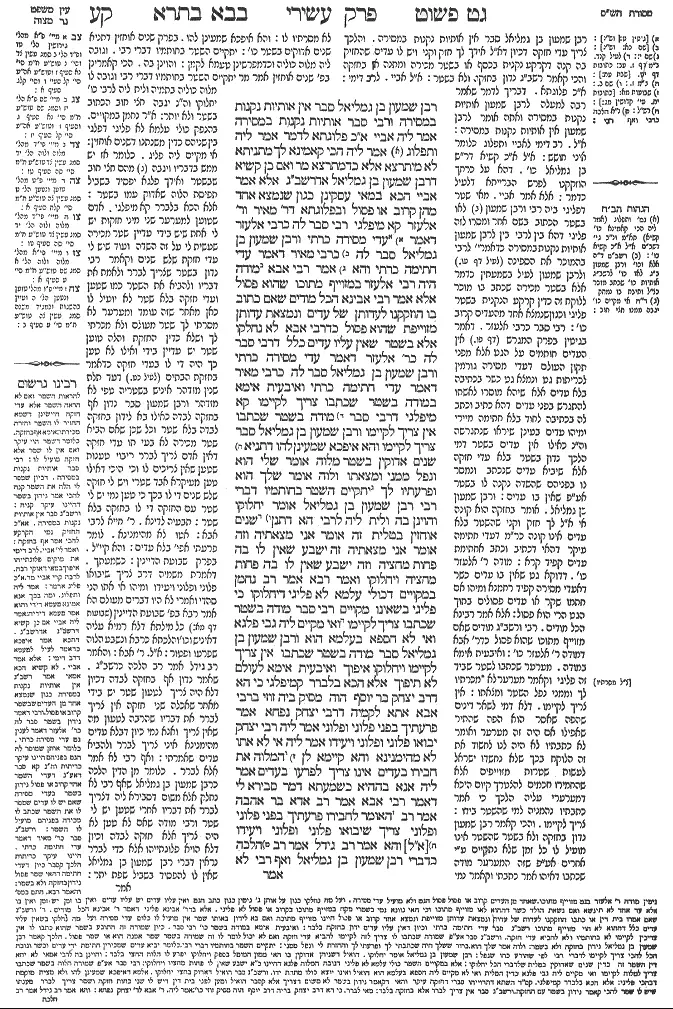
Bava Batra 170a - Guemara
רבן שמעון בן גמליאל סבר אין אותיות נקנות במסירה ורבי סבר אותיות נקנות במסירה אמר ליה אביי א"כ פלוגתא לדמר אמר ליה ותפלוג אמר ליה הכי קאמינא לך מתניתא לא מיתרצא אלא כדמתרצא מר ואם כן קשיא דרבן שמעון בן גמליאל אדרשב"ג אלא אמר אביי הכא במאי עסקינן כגון שנמצא אחד מהן קרוב או פסול ובפלוגתא דר' מאיר ור' אלעזר קא מיפלגי רבי סבר לה כרבי אלעזר דאמר עדי מסירה כרתי ורבן שמעון בן גמליאל סבר לה כרבי מאיר דאמר עדי חתימה כרתי והא אמר רבי אבא מודה היה רבי אלעזר במזוייף מתוכו שהוא פסול אלא אמר רבי אבינא הכל מודים שאם כתוב בו הוזקקנו לעדותן של עדים ונמצאת עדותן מזוייפת שהוא פסול כדרבי אבא לא נחלקו אלא בשטר שאין עליו עדים כלל דרבי סבר לה כר' אלעזר דאמר עדי מסירה כרתי ורבן שמעון בן גמליאל סבר לה כרבי מאיר דאמר עדי חתימה כרתי ואיבעית אימא במודה בשטר שכתבו צריך לקיימו קא מיפלגי דרבי סבר מודה בשטר שכתבו אין צריך לקיימו ורבן שמעון בן גמליאל סבר צריך לקיימו והא איפכא שמעינן להו דתניא שנים אדוקין בשטר מלוה אומר שלי הוא ונפל ממני ומצאתו ולוה אומר שלך הוא ופרעתיו לך יתקיים השטר בחותמיו דברי רבי רבן שמעון בן גמליאל אומר יחלוקו והוינן בה ולית ליה לרבי הא דתנן שנים אוחזין בטלית זה אומר אני מצאתיה וזה אומר אני מצאתיה זה ישבע שאין לו בה פחות מחציה וזה ישבע שאין לו בה פחות מחציה ויחלוקו ואמר רבא אמר רב נחמן במקויים דכולי עלמא לא פליגי דיחלוקו כי פליגי בשאינו מקויים רבי סבר מודה בשטר שכתבו צריך לקיימו ואי מקיים ליה גבי פלגא ואי לא חספא בעלמא הוא ורבן שמעון בן גמליאל סבר מודה בשטר שכתבו אין צריך לקיימו ויחלוקו איפוך ואיבעית אימא לעולם לא תיפוך אלא הכא בלברר קמיפלגי כי הא דרב יצחק בר יוסף הוה מסיק ביה זוזי ברבי אבא אתא לקמיה דרבי יצחק נפחא אמר פרעתיך בפני פלוני ופלוני אמר ליה רבי יצחק יבואו פלוני ופלוני ויעידו אמר ליה אי לא אתו לא מהימנינא והא קיימא לן המלוה את חבירו בעדים אינו צריך לפרעו בעדים אמר ליה אנא בההיא כשמעתא דמר סבירא לי דאמר רבי אבא אמר רב אדא בר אהבה אמר רב האומר לחבירו פרעתיך בפני פלוני ופלוני צריך שיבואו פלוני ופלוני ויעידו [א"ל] והא אמר רב גידל אמר רב הלכה כדברי רבן שמעון בן גמליאל ואף רבי לא
Comments from Rashbam - Bava Batra 170a
רבן שמעון בן גמליאל סבר אין אותיות נקנות במסירה . והלכך צריך עדי חזקה דכיון דא"ל אידך לך חזק וקני ויש לו עדים שהחזיק בה קנה דקרקע נקנית בכסף או בשטר מכירה ומתנה או בחזקה והכי קאמר רשב"ג נדון בחזקה ולא בשטר: רבי סבר אותיות נקנות במסירה . כדקאמר נמי רבי בהדיא בפרק המוכר את הספינה (לעיל בבא בתרא דף עו.) שהמוכר שטר חוב לחבירו כיון שמסר לו את השטר בידו קנה החוב ונשתעבד לו לוה לזה הקונה כמו שהיה משועבד למלוה כל זמן שלא חזר ומחלו כדאמר שמואל (במסכת גיטין) (דף יג) וה"ק הבא לידון בשטר ובחזקה וטוען ראובן כנגד המערער שדה זו שלי היא שהרי שמעון שקנאו מלוי מסר לו שטר מכירה הכתוב בשמו וקניתי השדה במסירת השטר כאילו נכתב בשמי וגם החזקתי בשדה שלש שנים נידון בשטר דברי רבי ועל ידי השטר שמסר לו הלוקח קנוי לו השדה דאותיות נקנות במסירה ולא צריך תו עדי חזקה: א"ל אביי . לרב דיני: א"כ פלוגתא . דבריך לדמר שאמר רבה למעלה לרבן שמעון אותיות נקנות במסירה ואתה אומר לרבן שמעון אין אותיות נקנות במסירה: א"ל . רב דימי לאביי ותפלוג כלומר איני חושש: א"ל א"כ קשיא דר"ש בן גמליאל כו' . דהא על כרחך הוזקקנו לפרש הברייתא דלעיל כדמר: אלא אמר אביי . מאי שטר דפליגי ביה רבי ורבן שמעון לאו בשטר הכתוב בשם אחר ומסרו לזה פליגי דהא בין לרבי בין לרבן שמעון אותיות נקנות במסירה כדאמרי' לרבי בהמוכר את הספינה (לעיל בבא בתרא דף עו.) ולרבן שמעון לעיל בשמעתין כדמר אלא בשטר מכירה שכתב בו מוכר ללוקח זה כדין קרקע הנקנית בשטר פליגי וכגון שנמצא אחד מהעדים קרוב כו': רבי סבר כרבי אלעזר . דאמר בגיטין בפרק המגרש (דף פו.) אין העדים חותמים על הגט אלא מפני תקון העולם דעדי מסירה גורמין לכריתות גט ונמצא גט כשר בכתיבה בלא עדים אלא שיהא מוסרו לאשתו להתגרש בפני עדים דהא כתיב וכתב לה בכתיבה לחוד בלא חתימה מיירי ומיהו עדים בעינן שיראו שנתגרשה וה"נ כאילו אין עדים בשטר דמי הלכך נדון בשטר בלא עדי חזקה אלא שיביא עדים שנכתב ונמסר לו בפניהם שהשדה נקנה לו בשטר אע"פ שאין בו עדים: ורבן שמעון בן גמליאל . אומר בחזקה הוא קונה אי א"ל לך חזק וקני שהשטר בלא עדים אינו קונה כר"מ דעדי חתימה עיקר דהאי דכתיב וכתב אחתימת עדים קפיד קרא: מודה ר' אלעזר כו' . דדוקא גט שאין בו עדים כשר דאעדי מסירה קפיד רחמנא ומיהו אם חתמו שקר או עדים פסולים בתוך הגט הרי הוא פסול: אלא אמר רבינא הכל מודים . רבי ורשב"ג מודים שאם מזוייף מתוכו שהוא פסול כדר' אבא דמודה ר' אלעזר כו': ואיבעית אימא במודה . מערער שכתבו לשטר שביד זה פליגי וקאמר מערער לא מכרתיו לך וממני נפל השטר ומצאתו: אין צריך לקיימו . דלא דמי לשאר דינים שהפה שאסר הוא הפה שהתיר שאפילו אם היה זה מערער ואומר לא כתבתיו לא היה לנו לחשוד את זה הלוקח בכך שלא נחשדו ישראל לעשות שטרות מזוייפים אלא שהחמירו חכמים להצטרך קיום היכא דמערערי עליה הלכך כי אמר כתבתיו נהמניה למי שהשטר בידו: צריך לקיימו . והכי קאמר רבן שמעון נדון בחזקה ולא בשטר שהשטר אינו מועיל לו כל זמן שלא נתקיים ע"י אחרים אע"פ שזה המערער מודה שכתבו דאיהו אמר כתבתי וקאמר נמי לא מסרתיו לו: והא איפכא שמעינן להו . בפרק שנים אוחזין דתניא שנים אדוקים בשטר כו': יתקיים השטר בחותמיו דברי רבי . וגובה ליה מלוה כוליה וכדמפרשינן טעמא לקמן: והוינן בה . הכי קאמרינן בפ' שנים אוחזין אמר מר יתקיים השטר בחותמיו דברי רבי וגובה לו מלוה כוליה בתמיה ולית ליה לרבי כו' יחלוקו וה"נ יגבה חצי חוב הכתוב בשטר ולא יותר: א"ר נחמן במקויים . בהנפק כולי עלמא לא פליגי דפלגי בין שניהם כדין משנתנו דשנים אוחזין: אי מקיים ליה פליג . כלומר אז יש ממש בדבריו ויגבה מהם חצי חוב שבשטר ואידך פלגא יפסיד בשביל תפיסת הלוה שאדוק עמו בשטר: אלא הכא בלברר קא מיפלגי . אדם שטוען למערער שני מיני חזקות יש לי אחת שיש בידי עדיין שטר מכירה שעשית לי על זה השדה ועוד שיש לי עדי חזקת שלש שנים וקאמר רבי נדון בשטר שצריך לברר ולאמת את דבריו ולהביא את השטר כמו שטען ועדי חזקה בלא שטר לא יועיל לו כאן מאחר שזה עומד ומערער לא מסרתי לך שטר מעולם ולא מכרתי לך ושלא כדין החזקת והלה טוען שטר יש עדיין בידי ואילו לא טען כך היה די לו בעדי חזקה כדאמר בחזקת הבתים (לעיל בבא בתרא כט.) דעד תלת שנין מזדהר איניש בשטריה טפי לא מזדהר ורבן שמעון סבר נדון אף בחזקה לבדה כאילו בא לידון בחזקה לבדה בלא שטר וכל שכן שאם הביא שטר מכירה לא בעי תו עדי חזקה דאין אדם צריך לברר ריבוי טענות שטען שאין צריכים לו וכי היכי דאילו טען מעיקרא אבד שטרי ויש לי חזקה שלש שנים די לו בכך כי טען נמי יש לי שטר עם החזקה די לו בחזקה בלא שטר: תבעיה לדינא . ר' חייא לרבי אבא: אטו לא מהימנינא . לומר פרעתי אפי' בלא עדים: והא קיי"ל . בפרק שבועת הדיינין: כשמעתך . דאמרת משמיה דרב צריך שיבואו פלוני ופלוני ויעידו ומיהו אי אתו הני סהדי ואמרי לא היו דברים מעולם הא אמר רבא בפ' שבועת הדיינין (שבועות דף מא:) כל מילתא דלא רמיא עליה דאיניש וכו' והלכתא כרבא ונשבע הלוה שפרעו ופטור: א"ל . ר' אבא: והאמר רב גידל אמר רב הלכה כרשב"ג . שאמר נדון אף בחזקה לבדה דכיון דלא היה צריך לטעון שטר יש בידי מאחר שאכלה שני חזקה אין צריך לברר את דבריו שהרבה לטעון מה שאין צריך ואנא נמי כיון דבלא עדים מהימנינא איני צריך לברר ולהביא עדים שאמרתי: אף רבי לא אמר אלא לברר . כלומר מן הדין הלכה כרבן שמעון בן גמליאל שאף רבי לא נחלק אלא משום דסבירא ליה דצריך לברר את דבריו אחרי שטען יש לי שטר ורבי מודה שאם לא טען לא היה צריך אלא חזקה לבדה וכיון דלא הויא פלוגתייהו אלא כדי לברר נראין דברי רבן שמעון בן גמליאל שאין לו להפסיד בשביל שפת יתר:
Comments from Tosafot - Bava Batra 170a
ורבן שמעון בן גמליאל סבר לה כר"מ דאמר עדי חתימה כרתי. יש מקשים דבפ"ק דגיטין (דף יא. ושם) תניא א"ר אלעזר בר' יוסי לא נחלקו על שטרות העולים בערכאות של עובדי כוכבים דאע"פ דחותמיהם עובדי כוכבים כשרים לא נחלקו אלא כו' דרשב"ג אומר אף הן כשרין אלמא ס"ל עדי מסירה כרתי ואור"י דס"ל כר' אלעזר בגיטין ולא בשטרות כי הנהו אמוראי דהמגרש בגיטין (דף פו: ושם) (ודוחק הוא דהא אף אלו קאמר דמשמע דבשאר שטרות נמי ס"ל הכי) וצריך לומר דאליבא דרבנן דפליגי עליה קאמר להו דאף אותם היה להם להכשיר כיון דסברי עדי מסירה כרתי:
Bava Batra 170a - Mishnah translated into english
The Gemara explains: This is a case where one party sold land to another, who then sold it to a third party by transferring the bill of sale to him. Rabban Shimon ben Gamliel holds that the letters are not acquired by transferring possession of the document. Handing the bill to the third party is therefore not a valid act of acquisition. In order to establish that the land is his, one must prove presumptive ownership by demonstrating that he has lived in the land uncontested for three years. And Rabbi Yehuda HaNasi holds that the letters are acquired by transferring possession of the document. Therefore, if the third party produces the bill of sale that had been transferred to him, this is sufficient proof that the land is his.
Abaye objected and said to Rav Dimi: If that is so, that Rabban Shimon ben Gamliel holds that letters are not acquired by transferring possession of the bill of sale, this would be in disagreement with what the Master, Rabba, said earlier, that Rabban Shimon ben Gamliel maintains that letters are acquired by transferring possession of the bill of sale. Rav Dimi said back to him: And let it be in disagreement. I am not obligated to be in agreement with Rabba.
Abaye clarified his objection and said to him: This is what I meant to say to you. The baraita (168b), which Rabba was explaining, can be explained only the way the Master, Rabba, explained it. And if so, i.e., if you do not agree with Rabba’s understanding of the opinion of Rabban Shimon ben Gamliel, there is a difficulty, as there is a contradiction between one statement of Rabban Shimon ben Gamliel and the other statement of Rabban Shimon ben Gamliel.
Rather, Abaye said that the explanation of the baraita concerning one who appears before a court to be judged is as follows: With what are we dealing here? We are dealing with a case where one of the witnesses signed on the bill was found to be a relative to one of the parties, or he was found to be disqualified from bearing witness for another reason, and therefore the document is rendered invalid.
Abaye continues: And the two opinions in the baraita disagree with regard to the issue that is the subject of the dispute between Rabbi Meir and Rabbi Elazar. Rabbi Yehuda HaNasi holds in accordance with the opinion of Rabbi Elazar, who says: The witnesses of the transmission of the document effect the transaction, meaning that witnesses are not required to be signed on a document at all, provided that there are witnesses who saw the transfer of the document to the relevant party. It is therefore inconsequential that one of the witnesses that signed the document is disqualified. This is why Rabbi Yehuda HaNasi says that the claim is judged based on the deed, i.e., the deed is valid.
And Rabban Shimon ben Gamliel holds in accordance with the opinion of Rabbi Meir, who says: The signatory witnesses on the document effect the transaction, meaning that it is necessary for a document to have witnesses sign it. If there are no witnesses or if one or both of them are disqualified, the document is not valid even if its transmission is witnessed by qualified witnesses. This is why Rabban Shimon ben Gamliel says that the claim is judged based on the claimant’s presumptive ownership; this is his only valid proof since the deed he possesses is not valid.
The Gemara objects to Abaye’s explanation: But doesn’t Rabbi Abba say that Rabbi Elazar concedes that in the case of a document whose falsification is inherent in it that it is not valid? Rabbi Elazar said only that a document that has no witnesses signed on it at all is valid if its transmission was witnessed. If the document has disqualified witnesses, he agrees it is not valid.
Rather, Rabbi Avina said a modification of Abaye’s explanation. All concede that if it is written in the document: We, the court, engaged in an investigation of the testimony of the witnesses and have determined that they signed the document, and their testimony was found to be false, the document is not valid, in accordance with the statement of Rabbi Abba. They disagree only with regard to a document upon which there are no witnesses signed at all. As Rabbi Yehuda HaNasi holds in accordance with the opinion of Rabbi Elazar, who says: The witnesses of the transmission of the document effect the transaction. Signatory witnesses are not necessary, and the deed can therefore be used as proof. And Rabban Shimon ben Gamliel holds in accordance with the opinion of Rabbi Meir, who says: The signatory witnesses on the document effect the transaction, so the deed cannot be used. Therefore, the only valid proof would be based on his presumptive ownership.
The Gemara suggests: And if you wish, say instead: The case in the baraita is one where the alleged purchaser has a bill of sale for the land, but the alleged seller, although he admits that the document was written with his consent, claims that the sale did not ultimately occur, and that the alleged purchaser took the document from him. And the tanna’im in the baraita disagree, with regard to the halakha in the case of a debtor who admits that he wrote a promissory note, whether the creditor is required to ratify it in court in order to collect, and, by extension, in a case where a seller admits that he wrote a bill of sale, whether the purchaser must ratify it in court in order to establish its validity.
As, Rabbi Yehuda HaNasi holds that in the case of a debtor who admits that he wrote a promissory note, the creditor is not required to ratify it in court in order to collect what is owed to him. In this case as well, the purchaser can use the bill of sale as proof that he is the rightful owner of the property. And Rabban Shimon ben Gamliel holds that in the case of a debtor who admits that he wrote a promissory note, the creditor is required to ratify it in court in order to use it to collect the debt. In this case as well, since the purchaser is unable to ratify it, his only recourse to prove his ownership is showing that he lived in the land uncontested for three years.
The Gemara asks: But didn’t we hear the opposite concerning Rabbi Yehuda HaNasi and Rabban Shimon ben Gamliel? As it is taught in a baraita (Tosefta, Bava Metzia 1:8) that if two people, the debtor and the creditor, are grasping a promissory note, and the creditor says: It is mine, i.e., the debt has not yet been paid, and it fell from me, and you, the debtor, found it, and the debtor says: It is in fact yours, i.e., I did borrow the money from you, but I paid you and was given the promissory note, and it fell from me, and you found it, the promissory note must be ratified through its signatories, even though the debtor admits it is a valid document. This is the statement of Rabbi Yehuda HaNasi. Rabban Shimon ben Gamliel says: They should divide the amount written in the promissory note, i.e., the debtor must pay half of the recorded sum to the creditor.
The Gemara explains: And we discussed it once before and asked the following question about it: But doesn’t Rabbi Yehuda HaNasi agree to that which we learned in a mishna (Bava Metzia 2a), with regard to two people who came to court holding a garment, where this one is saying: I found it, and that one is saying: I found it; that this one takes an oath that he does not have claim to less than half of it, and that one takes an oath that he does not have claim to less than half of it, and they divide it? Why does Rabbi Yehuda HaNasi not maintain that in a case where the debtor and creditor are grasping a promissory note, there too they should divide the money?
And in response to this question Rava said that Rav Naḥman said: In the case of a ratified promissory note, everyone agrees that they should divide it. Where they disagree is in the case of a note that is not ratified. Rabbi Yehuda HaNasi holds that in the case of a debtor who admits that he wrote a promissory note, the creditor is required to ratify it in court in order to collect the debt from him. And if he successfully ratifies it, the creditor collects half of the recorded sum, since the two parties are contesting ownership of the document. And if he is not successful in ratifying the note, it is merely a shard, i.e., a worthless piece of paper.
And Rabban Shimon ben Gamliel holds that in the case of a debtor who admits that he wrote a promissory note, the creditor is not required to ratify it in court in order to collect payment. Since the note is valid and fit for collection, they should divide it, i.e., the creditor collects half the sum, as the ownership of the document is contested. The positions of Rabbi Yehuda HaNasi and Rabban Shimon ben Gamliel are therefore the reverse of what the Gemara proposed in its explanation of the first baraita.
The Gemara answers: Reverse the way the opinions of Rabbi Yehuda HaNasi and Rabban Shimon ben Gamliel are recorded in one of the two baraitot so that they are consistent in both baraitot.
And if you wish, say instead: Actually, do not reverse their opinions. There is no contradiction between them, because the issue in the first baraita is not whether or not a bill of sale must be ratified when the seller admits that he wrote it. Rather, here the tanna’im disagree with regard to verifying, i.e., they disagree about whether a litigant is required to verify all his claims in circumstances where his case is strong enough to have the court rule in his favor even if they were to disregard some of his claims. Generally, if one has evidence of presumptive ownership of a field he does not have to produce a bill of sale for it. Here, Rabbi Yehuda HaNasi holds that since the one occupying the land claims that he has a bill of sale, he must verify this claim by producing it. Rabban Shimon ben Gamliel holds that he is not required to produce it, as the claim of presumptive ownership suffices.
The Gemara explains: It is like this case where Rav Yitzḥak bar Yosef was owed money by Rabbi Abba. The case came before Rabbi Yitzḥak Nappaḥa. Rabbi Abba said: I already repaid you the debt in the presence of so-and-so and so-and-so. Rabbi Yitzḥak Nappaḥa said to Rabbi Abba: The witnesses you have named, so-and-so and so-and-so, must come and testify that they saw you repay the loan. Rabbi Abba said to Rabbi Yitzḥak Nappaḥa: If they do not come, am I not deemed credible to say that I repaid the loan? But don’t we maintain that with regard to one who lends money to another in the presence of witnesses, the debtor need not repay him in the presence of witnesses, as he is deemed credible to say he repaid the debt even with no supporting testimony?
Rabbi Yitzḥak Nappaḥa said to Rabbi Abba: With regard to this issue, I hold like the halakha said by the Master, i.e., you yourself. As Rabbi Abba says that Rav Adda bar Ahava said that Rav says: If one says to another, i.e., if a debtor says to his creditor: I repaid you in the presence of so-and-so and so-and-so, it is required that so-and-so and so-and-so come to court and testify that they witnessed the repayment. Rabbi Abba said to Rabbi Yitzḥak Nappaḥa: But doesn’t Rav Giddel say that Rav says that the halakha is in accordance with the statement of Rabban Shimon ben Gamliel, that it is not required that a litigant verify all his stated claims if his case is sufficiently strong without those claims? And moreover, even Rabbi Yehuda HaNasi did not
Traduction : The William Davidson digital edition of the Koren Noé Talmud, with commentary by Rabbi Adin Even-Israel Steinsaltz.