 Talmud Bavli
Bava Batra 8a : Youtube
Daf TubeYoutube
2 video classes :
Bava Batra Page 8a
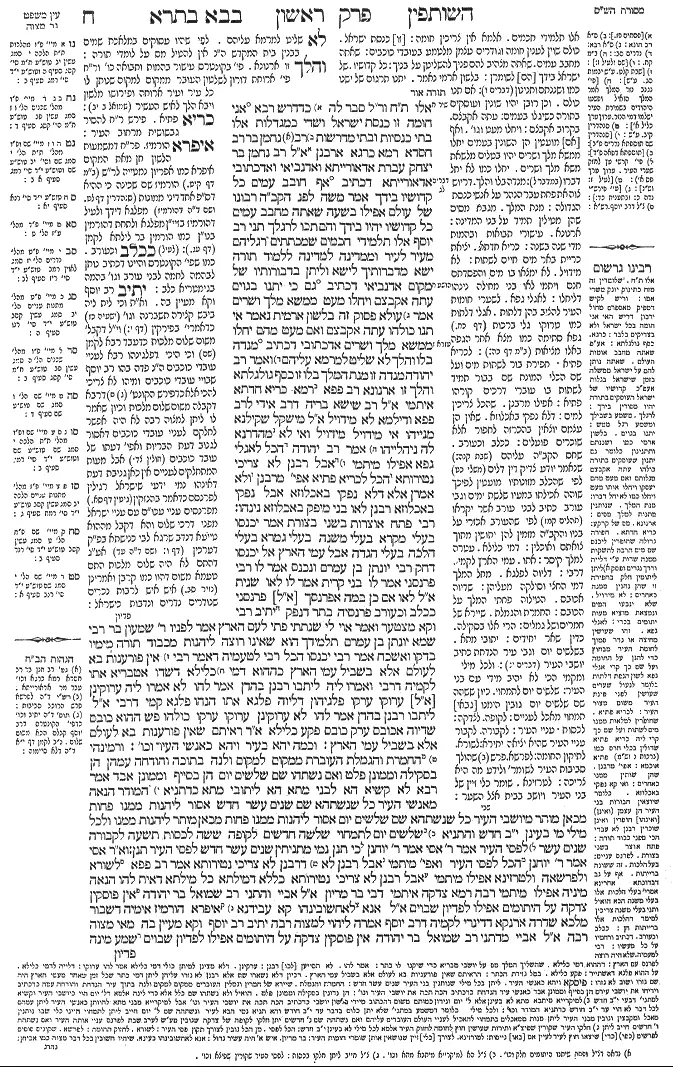
Bava Batra 8a - Guemara
אלו ת"ח ור"ל סבר לה כדדרש רבא (שיר השירים ח, י) אני חומה זו כנסת ישראל ושדי כמגדלות אלו בתי כנסיות ובתי מדרשות רב נחמן בר רב חסדא רמא כרגא ארבנן א"ל רב נחמן בר יצחק עברת אדאורייתא ואדנביאי ואדכתובי אדאורייתא דכתיב (דברים לג, ג) אף חובב עמים כל קדושיו בידך אמר משה לפני הקב"ה רבונו של עולם אפילו בשעה שאתה מחבב עמים כל קדושיו יהיו בידך והם תכו לרגלך תני רב יוסף אלו תלמידי חכמים שמכתתים רגליהם מעיר לעיר וממדינה למדינה ללמוד תורה ישא מדברותיך לישא וליתן בדבורותיו של מקום אדנביאי דכתיב (הושע ח, י) גם כי יתנו בגוים עתה אקבצם ויחלו מעט ממשא מלך ושרים אמר עולא פסוק זה בלשון ארמית נאמר אי תנו כולהו עתה אקבצם ואם מעט מהם יחלו ממשא מלך ושרים אדכתובי דכתיב (עזרא ז, כד) מנדה בלו והלך לא שליט למרמא עליהם ואמר רב יהודה מנדה זו מנת המלך בלו זו כסף גולגלתא והלך זו ארנונא רב פפא רמא כריא חדתא איתמי א"ל רב שישא בריה דרב אידי לרב פפא ודילמא לא מידויל אמר ליה מישקל שקילנא מנייהו אי מידויל מידויל ואי לא מהדרנא לה ניהלייהו אמר רב יהודה הכל לאגלי גפא אפילו מיתמי אבל רבנן לא צריכי נטירותא הכל לכריא פתיא אפילו מרבנן ולא אמרן אלא דלא נפקי באכלוזא אבל נפקי באכלוזא רבנן לאו בני מיפק באכלוזא נינהו:
רבי פתח אוצרות בשני בצורת אמר יכנסו בעלי מקרא בעלי משנה בעלי גמרא בעלי הלכה בעלי הגדה אבל עמי הארץ אל יכנסו דחק רבי יונתן בן עמרם ונכנס אמר לו רבי פרנסני אמר לו בני קרית אמר לו לאו שנית אמר לו לאו אם כן במה אפרנסך [אמר לו] פרנסני ככלב וכעורב פרנסיה בתר דנפק יתיב רבי וקא מצטער ואמר אוי לי שנתתי פתי לעם הארץ אמר לפניו ר' שמעון בר רבי שמא יונתן בן עמרם תלמידך הוא שאינו רוצה ליהנות מכבוד תורה מימיו בדקו ואשכח אמר רבי יכנסו הכל רבי לטעמיה דאמר רבי אין פורענות בא לעולם אלא בשביל עמי הארץ כההוא דמי כלילא דשדו אטבריא אתו לקמיה דרבי ואמרו ליה ליתבו רבנן בהדן אמר להו לא אמרו ליה ערוקינן [אמר להו] ערוקו ערקו פלגיהון דליוה פלגא אתו הנהו פלגא קמי דרבי א"ל ליתבו רבנן בהדן אמר להו לא ערוקינן ערוקו ערקו כולהו פש ההוא כובס שדיוה אכובס ערק כובס פקע כלילא א"ר ראיתם שאין פורענות בא לעולם אלא בשביל עמי הארץ:
וכמה יהא בעיר ויהא כאנשי העיר וכו':
ורמינהי החמרת והגמלת העוברת ממקום למקום ולנה בתוכה והודחה עמהן הן בסקילה וממונן פלט ואם נשתהו שם שלשים יום הן בסייף וממונן אבד אמר רבא לא קשיא הא לבני מתא הא ליתובי מתא כדתניא המודר הנאה מאנשי העיר כל שנשתהא שם שנים עשר חדש אסור ליהנות ממנו פחות מכאן מותר מיושבי העיר כל שנשתהא שם שלשים יום אסור ליהנות ממנו פחות מכאן מותר ליהנות ממנו ולכל מילי מי בעינן י"ב חדש והתניא שלשים יום לתמחוי שלשה חדשים לקופה ששה לכסות תשעה לקבורה שנים עשר לפסי העיר אמר ר' אסי אמר ר' יוחנן כי תנן נמי מתניתין שנים עשר חדש לפסי העיר תנן:
וא"ר אסי אמר ר' יוחנן הכל לפסי העיר ואפי' מיתמי אבל רבנן לא דרבנן לא צריכי נטירותא אמר רב פפא לשורא ולפרשאה ולטרזינא אפילו מיתמי אבל רבנן לא צריכי נטירותא כללא דמילתא כל מילתא דאית להו הנאה מיניה אפילו מיתמי רבה רמא צדקה איתמי דבי בר מריון א"ל אביי והתני רב שמואל בר יהודה אין פוסקין צדקה על היתומים אפילו לפדיון שבוים אמר ליה אנא לאחשובינהו קא עבידנא איפרא הורמיז אימיה דשבור מלכא שדרה ארנקא דדינרי לקמיה דרב יוסף אמרה ליהוי למצוה רבה יתיב רב יוסף וקא מעיין בה מאי מצוה רבה א"ל אביי מדתני רב שמואל בר יהודה אין פוסקין צדקה על היתומים אפילו לפדיון שבוים שמע מינה
Comments from Rashi on Masechet Bava Batra Page 8a
אלו תלמידי חכמים . אלמא אין צריכין חומה: [זו] כנסת ישראל . כולם שוין לענין חומה וגודרים עצמן מלטמע בעובדי כוכבים: שאתה מחבב עמים . שאתה מצהיב להם פניך להשליטן על בניך: כל קדושיו . של ישראל בידך [הם] לשומרן: בלשון ארמי נאמר . יתנו תרגום של ישנו כמו ושננתם ותנינון (דברים ו): אם תנו כולם . וכן רובן יהיו שונין ועוסקים בתורה כשיגלו בעמים: עתה אקבצם . בקרוב אקבצם: ויחלו מעט וגו' . ואף [אם] מועטין הן השונין בעמים יחלו ממשא מלך ושרים יהיו בטלים מלשאת משא מלך ושרים. יחלו כמו לא יחל דברו (במדבר ל): מנדה בלו והלך . דריוש צוה את פחת עבר הנהר על אנשי כנסת הגדולה: מנת המלך . מגבת מסים שהן מטילין תמיד על בני המדינה: ארנונא . עישורי תבואות ובהמות מדי שנה בשנה: כריא חדתא . יציאת כריית באר מים חיים לשתות: לא מידויל . לא ימצאו בו מים והפסדתם חנם ויתמי לאו בני מחילה נינהו דליחלו: לאגלי גפא . לשערי חומות העיר להציב בהן דלתות. אגלי דלתות כמו טרוקו גלי ברכות (דף כח.) גפא סתימה כמו מצא אחר הגפה באלו מציאות (ב"מ דף כה:): לכריא פתיא . חפירת בור לשתות מים ועל שם הכלי המונח שם בבור תמיד לשתות בו עוברי דרכים קורהו פתיא: אפילו מרבנן . שהכל צריכין למים: דלא נפקי באכלוזא . שאין הן עצמם יוצאין בהכרזה לחפור אלא שוכרים פועלים: ככלב וכעורב . שחס הקב"ה עליהם (שבת קנה:) שנאמר יודע צדיק דין דלים (משלי כט) לפי שהכלב מזונותיו מועטין לפיכך שוהה אכילתו במעיו שלשת ימים וגבי עורב כתיב לבני עורב אשר יקראו (תהלים קמז) לפי שהעורב אכזרי על בניו והקב"ה מזמין להן יתושין מתוך צואתם ואוכלין: דמי כלילא . עטרה למלך קיסר: אתו . עמי הארץ לקמיה דרבי: דליוה לפלגא . מחל המלך דמי החצי וסילקה מעליהן: שדיוה אכובס . הטילוה פחתי המלך על הכובס: החמרת והגמלת . שיירא של חמרים ושל גמלים: הרי אלו בסקילה . כדין שאר יחידים: יתובי מתא . בשלשים יום וגבי עיר הנדחת כתיב יושבי העיר (דברים יג): ולכל מילי . ומקמי הכי לא יהיב מידי עם בני העיר: שלשים יום לתמחוי . כיון ששהה שם שלשים יום גובין הימנו [גבאי] תמחוי מאכל לעניים: לקופה . לצדקה: לכסות . עניי העיר: לקבורה . לקבור עניי העיר שהיא יציאה יתירא: לשורא . לתיקון החומה: לפרשא . פרש שהולך סביבות העיר לשומר' ולידע מה היא צריכה: לטרזינא . שומר כלי זיין של בני העיר ויושב בבית אצל השער:
Comments from Tosafot - Bava Batra 8a
לא שליט למרמא עליהם. לפי שהיו עסוקים במלאכת שמים בבנין בית המקדש ה"נ אין להטיל מס על לומדי תורה: והלך זו ארנונא. פי' בקונטרס עישור בהמות ותבואה כו' ור"ח פי' ארוחת דורון לשלטון העובר ממקום למקום שנותן לו כל עיר ועיר ארוחה ופירושו מלשון ויבא הלך לאיש העשיר (שמואל ב יב): כריא פתיא. פירש ר"ח להסיר גבשושית מרחוב העיר: ככלב וכעורב. כמו שפי' הקונטרס והיינו דכתיב נותן לבהמה לחמה לבני עורב וגו' בהמה בגימטריא כלב: איפרא הורמיז. פר"ח דמשמעות הלשון חן מאת המקום איפרא כמו אפריון נמטייה לר"ש (ב"מ דף קיט.) הורמיז שם שכינה כי ההיא דס"פ אחד דיני ממונות (סנהדרין דף לט. ושם ד"ה דהורמיז) מפלגא דידך ולעיל דהורמיז בזיי"ן מפלגא ולתחת דהורמין בנו"ן כמו הורמין בר לילתא לקמן (בבא בתרא דף עג.): יתיב רב יוסף וקא מעיין בה. וא"ת וכי לית ליה ביבש קצירה תשברנה וגו' (ישעיהו כז) כדאמרי' בפירקין (דף י:) וי"ל דקבל' משום שלום מלכות כדעבד רבא לקמן (שם) וכי היכי דפלגינהו רבא לעניי עובדי כוכבים ה"נ פדה בהו רב יוסף שבויי עובדי כוכבים ומיהו לא צריכי להכי אלא כדפירש הקונט' דרבא דקבלה משום שלום מלכות וכיון שאמר לו ליתן למצוה רבה לא היה אפשר לחלקם לעניי עובדי כוכבים דאסור לגנוב דעת הבריות ואפי' דעתו של עובד כוכבים (חולין צד.) אבל מעות המתחלקים לעניים אין כאן גניבת דעת דאינהו נמי ידעי שישראל רגילין לפרנסם כדאמר בהנזקין (גיטין דף סא.) מפרנסים עניי עכו"ם עם עניי ישראל מפני דרכי שלום והא דקבל מההוא טייעא דנדב שרגא לבי כנישתא בפ"ק דערכין (דף ו: ושם ד"ה עד) אע"ג דהתם לא היה שלום מלכות התם טעמא משום דהוו כמו קרבן ואמרינן (נזיר סב.) איש איש לרבות נכרים שנודרים נדרים ונדבות כישראל:
Bava Batra 8a - Mishnah translated into english
these are Torah scholars, and towers do not require additional protection? The Gemara comments: And Reish Lakish, who did not cite this verse, holds in accordance with the way that Rava expounded the verse: “I am a wall”; this is referring to the Congregation of Israel. “And my breasts are like towers”; these are the synagogues and study halls.
It is similarly related that Rav Naḥman bar Rav Ḥisda once imposed payment of the poll tax [karga] even on the Sages. Rav Naḥman bar Yitzḥak said to him: You have transgressed the words of the Torah, the Prophets, and the Writings.
You have transgressed the words of the Torah, as it is written: “Even when He loves the peoples, all His holy ones are in Your hand” (Deuteronomy 33:3), which is understood to mean that Moses said to the Holy One, Blessed be He: Master of the Universe, even when You hold the other nations dear and grant them dominion over Israel, let “all His holy ones,” meaning the Torah scholars, be exclusively in Your hand and free from the authority of the nations, and therefore be exempt from paying taxes. The continuation of that verse can also be understood as referring to Torah scholars, as it states: “And they sit [tukku] at Your feet, receiving Your words” (Deuteronomy 33:3), and Rav Yosef teaches: These are Torah scholars who pound [mekhatetim] their feet from city to city and from country to country to study Torah; “receiving [yissa] Your words,” to discuss [lissa velitten] the utterances of God.
And you have transgressed the words of the Prophets, as it is written: “Though they have hired lovers [yitnu] among the nations, now I will gather them, and they will begin to be diminished by reason of the burden of kings and princes” (Hosea 8:10). With regard to this verse, Ulla says: Part of this verse is stated in the Aramaic language; the word yitnu should be understood here in its Aramaic sense: To learn. And the verse should be interpreted as follows: If all of Israel learns Torah, I will gather them already now; and if only a few of them learn Torah, they will be excused from the burden imposed by kings and princes. This indicates that those who study Torah should not be subject to paying taxes.
And furthermore, you have transgressed the words of the Writings, as it is written: “It shall not be lawful to impose tribute, impost or toll upon them” (Ezra 7:24), i.e., upon the priests and Levites who serve in the Temple. This halakha would apply to Torah scholars as well. And Rav Yehuda says: “Tribute”; this is referring to the king’s portion, a tax given to the king. “Impost”; this is referring to the head tax. “Toll”; this is referring to a tax [arnona] paid with property that was imposed from time to time.
It is related that Rav Pappa once imposed a tax for the digging of a new cistern even on orphans. Rav Sheisha, son of Rav Idi, said to Rav Pappa: Perhaps they will dig, but in the end they will not draw any water from there, and it will turn out that the money will have been spent for nothing. The rest of the townspeople can relinquish their rights to their money, but orphans who are minors cannot do so. Rav Pappa said to him: I shall collect money from the orphans; if they draw water, they will draw water, and if not, I will return the money to the orphans.
Rav Yehuda says: All of the city’s residents must contribute to the building and upkeep of the city gates [le’aglei gappa], and for this purpose money is collected even from orphans. But the Sages do not require protection and are therefore exempt from this payment. All of the city’s residents must contribute to the digging of cisterns [lekarya patya], and for this purpose money is collected even from the Sages, since they too need water. The Gemara comments: And we said this only when the people are not required to go out en masse [be’akhluza] and do the actual digging, but are obligated merely to contribute money for that purpose. But if the people are required to go out en masse and actually dig, the Sages are not expected to go out with them en masse, but rather they are exempt from such labor.
It is related that Rabbi Yehuda HaNasi once opened his storehouses to distribute food during years of drought. He said: Masters of Bible, masters of Mishna, masters of Talmud, masters of halakha, masters of aggada may enter and receive food from me, but ignoramuses should not enter. Rabbi Yonatan ben Amram, whom Rabbi Yehuda HaNasi did not know, pushed his way in, and entered, and said to him: Rabbi Yehuda HaNasi, sustain me. Rabbi Yehuda HaNasi said to him: My son, have you read the Bible? Rabbi Yonatan ben Amram said to him, out of modesty: No. Rabbi Yehuda HaNasi continued: Have you studied Mishna? Once again, Rabbi Yonatan ben Amram said to him: No. Rabbi Yehuda HaNasi then asked him: If so, by what merit should I sustain you? Rabbi Yonatan ben Amram said to him: Sustain me like a dog and like a raven, who are given food even though they have not learned anything. Rabbi Yehuda HaNasi was moved by his words and fed him.
After Rabbi Yonatan left, Rabbi Yehuda HaNasi sat, and was distressed, and said: Woe is me, that I have given my bread to an ignoramus. His son, Rabbi Shimon bar Rabbi Yehuda HaNasi, said to him: Perhaps he was your disciple Yonatan ben Amram, who never in his life wanted to materially benefit from the honor shown to the Torah? They investigated the matter and found that such was the case. Rabbi Yehuda HaNasi then said: Let everyone enter, as there may also be others who hide the fact that they are true Torah scholars.
Commenting on Rabbi Yehuda HaNasi’s opinion, the Gemara notes that Rabbi Yehuda HaNasi conformed to his standard line of reasoning, as Rabbi Yehuda HaNasi says: Suffering comes to the world only due to ignoramuses. This is like the incident of the crown tax [kelila] that was imposed on the residents of the city of Tiberias. The heads of the city came before Rabbi Yehuda HaNasi and said to him: The Sages should contribute along with us. Rabbi Yehuda HaNasi said to them: No, the Sages are exempt. They said to him: Then we will run away and the entire burden will fall on the Torah scholars. Rabbi Yehuda HaNasi said to them: Run away as you please. Half of the city’s residents ran away. The authorities then waived half the sum that they had initially imposed on the city.
The half of the population that remained in the city then came before Rabbi Yehuda HaNasi, and said to him: The Sages should contribute along with us. Rabbi Yehuda HaNasi said to them: No, the Sages are exempt. They said to him: Then we too will run away. Rabbi Yehuda HaNasi said to them: Run away as you please. They all ran away, so that only one launderer was left in the city. The authorities imposed the entire tax on the launderer. The launderer then ran away as well. The crown tax was then canceled in its entirety. Rabbi Yehuda HaNasi said: You see from this that suffering comes to the world only due to ignoramuses, for as soon as they all fled from the city, the crown tax was completely canceled.
§ The mishna teaches: And how long must one live in the city to be considered like one of the people of the city? Twelve months. And we raise a contradiction from what is taught in a baraita: In the case of a donkey caravan or a camel caravan that was journeying from place to place, and it lodged inside an idolatrous city, and its members were led astray along with the other residents of the city, and they too engaged in idol worship, they, the members of the caravan, are liable to death by stoning like ordinary individual idolaters, and their property escapes destruction, i.e., they are not treated like the residents of an idolatrous city, who are liable to death by the sword and whose property is destroyed.
The baraita continues: And if the caravan members had remained in that city for thirty days, they are liable to death by the sword and their property is destroyed, just as it is for the rest of the residents of the city. This seems to indicate that once an individual has lived in a city for thirty days, he is already considered one of its residents.
Rava said: This is not difficult. This period, i.e., twelve months, is required in order to be considered one of the members of the city; and that period, i.e., thirty days, suffices in order to be considered one of the residents of the city. As it is taught in a baraita: One who is prohibited by a vow from deriving benefit from the people of a particular city is prohibited from deriving benefit from anyone who has stayed there for twelve months, but it is permitted for him to derive benefit from anyone who has stayed there for less time than that. By contrast, if he prohibited himself by way of a vow from deriving benefit from the residents of a particular city, he is prohibited from deriving benefit from anyone who has stayed there for thirty days, but it is permitted for him to derive benefit from anyone who has stayed there for less time than that.
The Gemara asks: And do we require that one lives in a city for twelve months for all matters? But isn’t it taught in a baraita: If one lives in city for thirty days, he must contribute to the charity platter from which food is distributed to the poor. If he lives there for three months, he must contribute to the charity box. If he lives there for six months, he must contribute to the clothing fund. If he lives there for nine months, he must contribute to the burial fund. If he lives there for twelve months, he must contribute to the columns of the city [lepassei ha’ir], i.e., for the construction of a security fence. Rabbi Asi said that Rabbi Yoḥanan said: When we learned twelve months in the mishna, we learned that with regard to contributing to the columns of the city, money used for protecting and strengthening the city, but not for other matters.
And Rabbi Asi says that Rabbi Yoḥanan says: All are required to contribute to the columns of the city, and money is collected for that purpose even from orphans. But the Sages are not required to contribute, since the Sages do not need protection. Rav Pappa said: Money is collected even from orphans for the city wall, for the city horseman, and for the guard [uletarzina] of the city armory, but the Sages do not require protection. The principle of the matter is: Money is collected even from orphans for anything from which they derive benefit.
It is reported that Rabba imposed a contribution to a certain charity on the orphans of the house of bar Maryon. Abaye said to him: But didn’t Rav Shmuel bar Yehuda teach: One does not impose a charity obligation on orphans even for the sake of redeeming captives, since they are minors and are not obligated in the mitzvot? Rabba said to him: I did this to elevate them in standing, i.e., so that people should honor them as generous benefactors; not in order that the poor should benefit.
Incidental to this story, the Gemara relates that Ifera Hurmiz, the mother of King Shapur, king of Persia, sent a purse [arneka] full of dinars to Rav Yosef. She said to him: Let the money be used for a great mitzva. Rav Yosef sat and considered the question: What did Ifera Hurmiz mean when she attached a condition to the gift, saying that it should be used for a great mitzva? Abaye said to him: From what Rav Shmuel bar Yehuda taught, that one does not impose a charity obligation on orphans even for the sake of redeeming captives, learn from this
Traduction : The William Davidson digital edition of the Koren Noé Talmud, with commentary by Rabbi Adin Even-Israel Steinsaltz.