 Talmud Bavli
Bava Batra 14a : Youtube
Daf TubeYoutube
2 video classes :
Bava Batra Page 14a
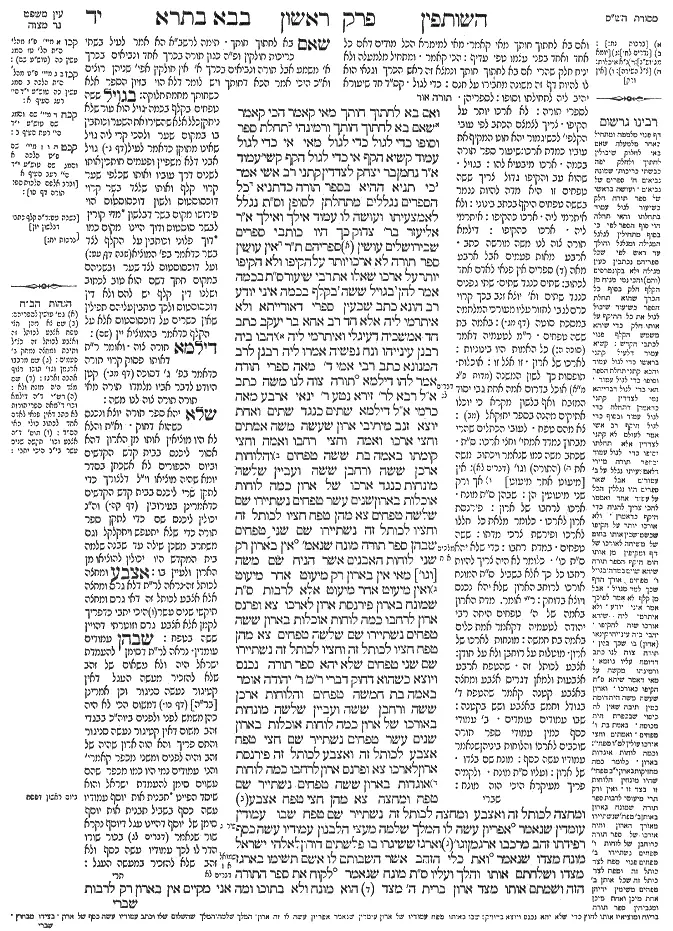
Bava Batra 14a - Guemara
ואם בא לחתוך חותך מאי קאמר הכי קאמר שאם בא לחתוך חותך ורמינהי תחלת ספר וסופו כדי לגול כדי לגול מאי אי כדי לגול עמוד קשיא הקף אי כדי לגול הקף קשיא עמוד א"ר נחמן בר יצחק לצדדין קתני רב אשי אמר כי תניא ההיא בספר תורה כדתניא כל הספרים נגללים מתחלתן לסופן וס"ת נגלל לאמצעיתו ועושה לו עמוד אילך ואילך א"ר אליעזר בר' צדוק כך היו כותבי ספרים שבירושלים עושין ספריהם תנו רבנן אין עושין ספר תורה לא ארכו יותר על הקיפו ולא הקיפו יותר על ארכו שאלו את רבי שיעור ס"ת בכמה אמר להן בגויל ששה בקלף בכמה איני יודע רב הונא כתב שבעין ספרי דאורייתא ולא איתרמי ליה אלא חד רב אחא בר יעקב כתב חד אמשכיה דעיגלי ואיתרמי ליה יהבו ביה רבנן עינייהו ונח נפשיה אמרו ליה רבנן לרב המנונא כתב רבי אמי ד' מאה ספרי תורה אמר להו דילמא (דברים לג, ד) תורה צוה לנו משה כתב א"ל רבא לר' זירא נטע ר' ינאי ארבע מאה כרמי אמר ליה דילמא שתים כנגד שתים ואחת יוצא זנב מיתיבי ארון שעשה משה אמתים וחצי ארכו ואמה וחצי רחבו ואמה וחצי קומתו באמה בת ששה טפחים והלוחות ארכן ששה ורחבן ששה ועביין שלשה מונחות כנגד ארכו של ארון כמה לוחות אוכלות בארון שנים עשר טפחים נשתיירו שם שלשה טפחים צא מהן טפח חציו לכותל זה וחציו לכותל זה נשתיירו שם שני טפחים שבהן ספר תורה מונח שנאמר (מלכים א ח, ט) אין בארון רק שני לוחות האבנים אשר הניח שם משה [וגו'] מאי אין בארון רק מיעוט אחר מיעוט ואין מיעוט אחר מיעוט אלא לרבות ס"ת שמונח בארון פירנסת ארון לארכו צא ופרנס ארון לרחבו כמה לוחות אוכלות בארון ששה טפחים נשתיירו שם שלשה טפחים צא מהן טפח חציו לכותל זה וחציו לכותל זה נשתיירו שם שני טפחים שלא יהא ספר תורה נכנס ויוצא כשהוא דחוק דברי ר"מ ר' יהודה אומר באמה בת חמשה טפחים והלוחות ארכן ששה ורחבן ששה ועביין שלשה מונחות באורכו של ארון כמה לוחות אוכלות בארון שנים עשר טפחים נשתייר שם חצי טפח אצבע לכותל זה ואצבע לכותל זה פירנסת ארון לארכו צא ופרנס ארון לרחבו כמה לוחות אוגדות בארון ששה טפחים נשתייר שם טפח ומחצה צא מהן חצי טפח אצבע ומחצה לכותל זה ואצבע ומחצה לכותל זה נשתייר שם טפח שבו עמודין עומדין שנאמר (שיר השירים ג, ט) אפריון עשה לו המלך שלמה מעצי הלבנון עמודיו עשה כסף רפידתו זהב מרכבו ארגמן וגו' וארגז ששיגרו בו פלשתים דורון לאלהי ישראל מונח מצדו שנאמר (שמואל א ו, ח) ואת כלי הזהב אשר השבותם לו אשם תשימו בארגז מצדו ושלחתם אותו והלך ועליו ס"ת מונח שנאמר (דברים לא, כו) לקוח את ספר התורה הזה ושמתם אותו מצד ארון ברית ה' מצד הוא מונח ולא בתוכו ומה אני מקיים אין בארון רק לרבות
Comments from Rashi on Masechet Bava Batra Page 14a
ואם בא לחתוך חותך מאי קאמר . מאי למימרא הכל מודים דאם כל אחד ואחד בפני עצמו טפי עדיף: הכי קאמר . ומתחיל מלמעלה ולא יניח חלק שהרי אם בא לחתוך חותך ונמצא זה ראש הכרך וגנאי הוא לו להיות דף זה משונה מחבירו על חנם: כדי לגול . קס"ד חד שיעורא יהיב ליה לתחילתו וסופו: לספריהן . לספרי תורה: לא ארכו יותר על הקיפו . צריך לצמצם הכתב לפי עובי הקלפי' לכשיגמור יהא חוט המקיף את עוביו כמדת ארכו: שיעור ספר תורה בכמה . ארכו מיבעיא להו: בגויל . שהוא עב והקיפו גדול צריך ששה טפחים זו היא מדה להיות נגמר בששה טפחים היקף בכתב בינוני: ולא איתרמי ליה . ארכו כהקיפו: איתרמי ליה . ארכו כהקיפו: דילמא תורה צוה לנו משה מורשה כתב . ארבע מאות פעמים אבל ארבע מאה ספרים אין פנאי לאדם אחד לכתוב: שתים כנגד שתים . שתי גפנים כנגד שתים וא' יוצא זנב בכך קרוי כרם לגבי לחזור עליו מעורכי המלחמה במסכת סוטה (דף מג:): באמה בת ששה טפחים . ר"מ לטעמיה דאמר (סוכה ה:) כל האמות היו בינוניות: לארכו של ארון . זו אצל זו: אוכלות . תופסות כך לשון המשנה (מדות פ"ג מ"א) אוכל בדרום אמה אחת גבי יסוד המזבח ואף בלשון מקרא כי יוכלו אתיקים מהנה בספר יחזקאל (מב): צא מהם טפח . לעובי הכתלים שהרי מבחוץ נמדד אמתי' וחצי ארכו: ס"ת . שכתב משה כמו שנאמר ויכתוב משה את (התורה) וגו' (דברים לא): שבהן ס"ת מונח . ארכו לרחבו של ארון: אין [מיעוט אחר מיעוט] . אך ורק שני מיעוטין הן: פירנסת ארון לארכו . כלומר מלאת כל חללו לארכו ופירשת צרכי מדתו: ששה טפחים . במדת רחבו: כדי שלא יהא ס"ת כו' . כלומר לא היה צריך להיות רחבו כל כך אלא בשביל ס"ת המונח אורכו לרוחב הארון שלא יהא נכנס ויוצא בדוחק: ר"י אומר . מדת הארון באמה של ה' טפחים היתה רבי יהודה לטעמיה דקאמר אמת כלים באמה בת חמשה: מונחות לארכו של ארון . מוטלות על רוחבן ולא על חודן: אצבע לכותל זה . שהטפח ארבע אצבעות ולמאן דגריס אצבע ומחצה באצבע קטנה קאמר שהטפח ד' בגודל וחמש באצבע ושש בקטנה: שבו עמודים עומדים . ב' עמודי כסף כמין עמודי ספר תורה שוכבים לארכו והלוחות ביניהן שנאמר עמודיו עשה כסף: מונח שם בצדו . של ארון: ועליו ס"ת מונח . ולקמיה פריך מעיקרא היכי הוה מונח:
Comments from Tosafot - Bava Batra 14a
שאם בא לחתוך חותך. תימה לרשב"א הא אמר לעיל בשתי כריכות חולקין ופ"ה כגון תורה בכרך אחד ונביאים בכרך א' משמע אבל תורה ונביאים בכרך א' אין חולקין אפי' שניהן רוצים וא"כ היכי אמר הכא דחותך ויש לומר דלא הוי בזיון הספר אלא כשחותך מחמת חלוקה: בגויל ששה טפחים בקלף בכמה. גויל הוא עור שלא ניתקן כלל אלא שהשירו את השער וכותבין בו במקום שער ולהכי קרי ליה גויל שאינו מתוקן כדאמר לעיל (בבא בתרא דף ג.) גויל אבני דלא משפיין ופעמים חותכין אותו לשנים דרך עוביו ואותו שכלפי שער קרוי קלף ואותו שלצד בשר קרוי דוכסוסטוס ולשון דוכסוסטוס הוי פירושו מקום בשר דבלשון מדי קורין לבשר סוסטוס ודוך היינו מקום כמו דוך פלוני וכותבין על הקלף לצד בשר כדאמר בפ' המוציא (שבת דף עט:) ועל דוכסוסטוס לצד שער ובשניהם במקום חתך דשם הוא טוב לכתוב ושלנו דין קלף יש להם ולא דין דוכסוסטוס ולכך כותבין עליהם תפילין שאין כשרים על דוכסוסטוס אלא על הקלף כדאמר בהמוציא יין (שם): דילמא תורה צוה. ואומר ר"ת דאותו פסוק קרוי תורה כדאמר בפ' ג' דסוכה (דף מב.) קטן היודע לדבר אביו מלמדו תורה מאי תורה תורה צוה לנו משה: שלא יהא ספר תורה יוצא ונכנס כשהוא דחוק. וא"ת והלא לא היו מוציאין אותו מן הארון דהא אסור ליכנס בבית קדש הקדשים וביום הכפורים לא אשכחן בסדר יומא שהיה מוציאו וי"ל דלצורך כדי לתקן שרי ליכנס בבית קדש הקדשים כדאמרינן בעירובין (דף קה.) וה"נ יכולין ליכנס שם כדי לתקן ספר תורה כדי שלא יתעפש ויתקלקל וגם משחרב משכן שילה עד שבנה שלמה בית המקדש היו יכולין להוציאו מן הארון ולעיין בו: אצבע ומחצה לכותל זה. נראה לר"ת דלא גרס ומחצה אלא אצבע לכותל זה דאי גרס ומחצה תיקשי שנים עשר היכי יתבי כדפריך לקמן אלא אצבע גרס וזוטרתי דהויין ששה בטפח: שבהן עמודים עומדין. נראה לר"ת דסימן להעמדת ישראל היה ולא עשאום של זהב שלא להזכיר מעשה העגל דאין קטיגור נעשה סניגור וכן אמרינן [בר"ה] (דף כו.) דמשום הכי לא היה כהן משמש לפני ולפנים ביוה"כ בבגדי זהב משום דאין קטיגור נעשה סניגור והתם פריך והא הוה ארון שהיה של זהב והיה לפנים ומשני מכפר קאמרי' והני עמודים נמי היו כמו מכפר שהם עשוים סימן להעמדת ישראל והוא שיסר הפייט תבנית אות יוסף עמודיו עשה כסף בשביל תבנית אות יוסף סימן של יוסף דהיינו עגל דיוסף נקרא שור שנאמר (דברים לג) בכור שורו הדר לו לכך עמודיו עשה כסף ולא זהב שלא להזכיר במעשה העגל:
Bava Batra 14a - Mishnah translated into english
And if he wishes to cut the scroll, he may cut it. The Gemara is surprised at this: What is the tanna saying? Why is mention made here of cutting the scroll? The Gemara answers: This is what the tanna is saying: He arranges the text so that if he finishes a book at the bottom of one column, he begins the next book at the top of the next column without leaving any empty space, so that if he wishes to cut the scroll, he may cut it. If he does not begin the next book at the top of the next column, he will not be able to cut the scroll, because it is not fitting for a scroll to begin with an empty space.
The Gemara raises a contradiction between this baraita and another baraita that teaches: Enough parchment should be left at the beginning of the scroll and at its end for winding. The Gemara clarifies: For winding around what? If it means for winding around the pole to which the beginning of the scroll is fastened, this is difficult in light of what is taught in the first baraita, that at the end of the scroll enough parchment should be left for winding around the entire circumference of the scroll. And if it means for winding around the entire circumference, this is difficult in light of what is taught in the first baraita that at the beginning of the scroll enough parchment should be left for winding around the pole.
Rav Naḥman bar Yitzḥak said: The tanna teaches the halakha disjunctively, referring to two separate cases. He issues a general statement requiring that enough parchment be left for winding as needed: At the beginning of the pole, enough to wind around the pole, and at the end of the scroll, enough to wind around the circumference.
Rav Ashi said: When that second baraita is taught, indicating that the same measure of parchment is left at both the beginning and the end of the scroll, it was referring to a Torah scroll, as it is taught in a baraita: All other scrolls are wound from the beginning to the end around a single pole, but a Torah scroll is wound from both ends to the middle around two poles, one of which he attaches at this end of the scroll and the other at the other end. Rabbi Eliezer, son of Rabbi Tzadok, said: This is how the scribes in Jerusalem made their scrolls, i.e., with poles at either end so that it could be rolled to the middle.
§ The Sages taught: A Torah scroll should not be made in such a manner that its length, i.e., its height, is greater than its circumference when it is rolled up; nor should its circumference be greater than its length. They asked Rabbi Yehuda HaNasi: What should the size of a Torah scroll be? Rabbi Yehuda HaNasi said to them: If it was written on a hide that was treated with gallnuts [gevil ] it should be six handbreadths long. They asked him further: How much should it be if it was written on ordinary parchment [kelaf ]? Rabbi Yehuda HaNasi said to them: I do not know.
It is related that Rav Huna wrote seventy Torah scrolls himself, and it happened for him only once that the length and the circumference were equal. Rav Aḥa bar Ya’akov wrote one Torah scroll on calf hide and it happened to have the same length and circumference. The Sages looked at him and his achievement with jealousy, and he died from their envious gaze.
The Sages said to Rav Hamnuna: Rabbi Ami wrote four hundred Torah scrolls. Rav Hamnuna said to them: Perhaps he wrote the verse: “Moses commanded us the Torah” (Deuteronomy 33:4) four hundred times, rather than four hundred complete Torah scrolls, as it is difficult to say that he could have written so many, even over a lifetime. Similarly, Rava said to Rabbi Zeira: Rabbi Yannai planted four hundred vineyards. Rava said to him: Perhaps he did not plant large vineyards, but only the smallest possible vineyards recognized by halakha, which are composed of two vines facing another two vines, with a fifth one protruding like a tail, extending out beyond the square.
The Gemara raises an objection to what is taught with regard to the length of a Torah scroll from a baraita: With regard to the Ark of the Covenant that Moses fashioned, its length was two and one-half cubits, its width was one and one-half cubits, and its height was one and one-half cubits (see Exodus 25:10), the cubit used for these measurements being six handbreadths. Therefore, the Ark was fifteen handbreadths long, nine handbreadths wide, and nine handbreadths high.
The baraita continues: And as for the tablets, their length was six handbreadths, their width was six handbreadths, and their thickness was three handbreadths. The tablets were placed along the length of the Ark, one next to the other. If so, how much space did the tablets occupy along the length of the Ark? Twelve handbreadths, as each tablet was six handbreadths long. Three handbreadths were left there along the length of the Ark, for a total of fifteen handbreadths. Deduct a handbreadth from them: One-half a handbreadth for this wall, namely, the thickness of the wooden Ark itself, and one-half a handbreadth for the other wall. Accordingly, two handbreadths were left there, in which the Torah scroll written by Moses lay.
What biblical source indicates that a Torah scroll was placed there? As it is stated: “There was nothing in the Ark except the two tablets of stone which Moses put there” (I Kings 8:9). What does “there was nothing in the Ark except” mean? This is an example of a restriction following a restriction, as both terms, “nothing” and “except,” indicate that the Ark was empty. And there is a hermeneutical principle that a restriction following a restriction serves only to amplify and include other matters. In this case, it serves to include a Torah scroll that lies in the Ark.
The baraita continues: With this explanation you have accounted for the entire length of the Ark; go now and account for the width of the Ark, which was nine handbreadths. How much space did the tablets occupy of the width of the Ark, which was nine handbreadths wide? Six handbreadths; therefore, three handbreadths were left there along the width of the Ark. Deduct a handbreadth from them: One-half a handbreadth for the thickness of this wall and one-half a handbreadth for the thickness of the other wall. Accordingly, two handbreadths were left there. What was their purpose? These were necessary so that the Torah scroll would be able to go in and out without being pressed; this is the statement of Rabbi Meir.
Rabbi Yehuda disagrees and says: The cubit used for all the measurements of the Ark was five handbreadths long. There-fore, the Ark was twelve and one-half handbreadths long, seven and one-half handbreadths wide, and seven and one-half handbreadths high. And as for the tablets, their length was six handbreadths, their width was six handbreadths, and their thickness was three handbreadths, and they were placed along the length of the Ark, one next to the other. If so, how much space did the tablets occupy along the length of the Ark? Twelve handbreadths, so that one-half a handbreadth was left there, which is two fingerbreadths. One fingerbreadth of those two was for the thickness of this wall and one fingerbreadth of those two was for the thickness of the other wall.
With this explanation, you have accounted for the entire length of the Ark; go now and account for the width of the Ark, which was seven and one-half handbreadths. How much space did the tablets occupy in the Ark? Six handbreadths, meaning that one and one-half handbreadths were left there along the width of the Ark. Deduct one-half a handbreadth, one and one-half fingerbreadths for the thickness of this wall, and one and one-half fingerbreadths for the thickness of the other wall. Accordingly, one handbreadth was left there in which the silver columns were placed on either side of the tablets, as it is stated: “King Solomon made himself a palanquin of the timbers of Lebanon; he made its columns of silver, its back of gold, its seat of purple” (Song of Songs 3:9–10). This is understood as an allusion to the Ark of the Covenant.
And the chest in which the Philistines sent the gift to the God of Israel was placed alongside the Ark, as it is stated: “And put the golden devices which you are restoring to Him for a guilt-offering in a chest by the side of it, and send it away that it may go” (I Samuel 6:8). And upon this chest lay the Torah scroll, as it is stated: “Take this Torah scroll and put it at the side of the Ark of the Covenant of the Lord” (Deuteronomy 31:26). This means that it was placed at the side of the Ark, and not inside it.
And accordingly, how do I realize the meaning of that which is stated: “There was nothing in the Ark except the two tablets of stone which Moses put there,” which, according to the opinion of Rabbi Meir, teaches that something else was in the Ark besides the tablets themselves? It serves to include
Traduction : The William Davidson digital edition of the Koren Noé Talmud, with commentary by Rabbi Adin Even-Israel Steinsaltz.