 Talmud Bavli
Bava Batra 79a : Youtube
Daf TubeYoutube
2 video classes :
Bava Batra Page 79a
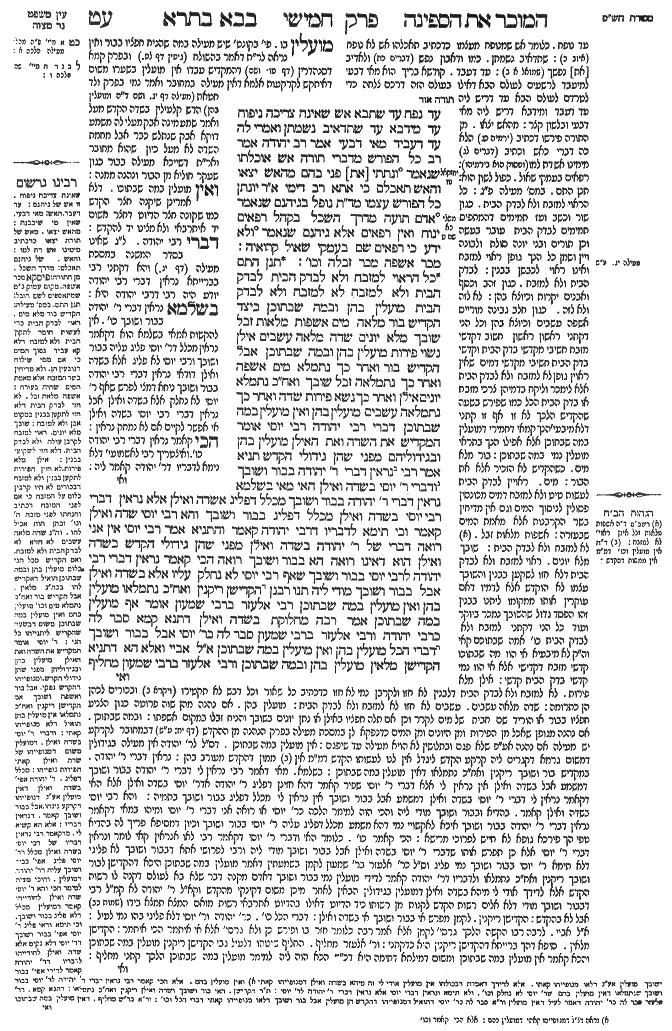
Bava Batra 79a - Guemara
עד נפח עד שתבא אש שאינה צריכה ניפוח עד מידבא עד שתדאיב נשמתן ואמרי לה עד דעביד מאי דבעי אמר רב יהודה אמר רב כל הפורש מדברי תורה אש אוכלתו שנאמר (יחזקאל טו, ז) ונתתי [את] פני בהם מהאש יצאו והאש תאכלם כי אתא רב דימי א"ר יונתן כל הפורש עצמו מד"ת נופל בגיהנם שנאמר (משלי כא, טז) אדם תועה מדרך השכל בקהל רפאים ינוח ואין רפאים אלא גיהנם שנאמר (משלי ט, יח) ולא ידע כי רפאים שם בעמקי שאול קרואיה:
מכר אשפה מכר זבלה וכו':
תנן התם כל הראוי למזבח ולא לבדק הבית לבדק הבית ולא למזבח לא למזבח ולא לבדק הבית מועלין בהן ובמה שבתוכן כיצד הקדיש בור מלאה מים אשפות מלאות זבל שובך מלא יונים שדה מלאה עשבים אילן נשוי פירות מועלין בהן ובמה שבתוכן אבל הקדיש בור ואחר כך נתמלא מים אשפה ואחר כך נתמלאה זבל שובך ואח"כ נתמלא יונים אילן ואחר כך נשא פירות שדה ואחר כך נתמלאה עשבים מועלין בהן ואין מועלין במה שבתוכן דברי רבי יהודה רבי יוסי אומר המקדיש את השדה ואת האילן מועלין בהן ובגידוליהם מפני שהן גידולי הקדש תניא אמר רבי נראין דברי ר' יהודה בבור ושובך ודברי ר' יוסי בשדה ואילן האי מאי בשלמא נראין דברי ר' יהודה בבור ושובך מכלל דפליג אשדה ואילן אלא נראין דברי רבי יוסי בשדה ואילן מכלל דפליג בבור ושובך והא רבי יוסי שדה ואילן קאמר וכי תימא לדבריו דרבי יהודה קאמר והתניא אמר רבי יוסי אין אני רואה דבריו של ר' יהודה בשדה ואילן מפני שהן גידולי הקדש בשדה ואילן הוא דאינו רואה הא בבור ושובך רואה הכי קאמר נראין דברי רבי יהודה לרבי יוסי בבור ושובך שאף רבי יוסי לא נחלק עליו אלא בשדה ואילן אבל בבור ושובך מודי ליה תנו רבנן הקדישן ריקנין ואח"כ נתמלאו מועלין בהן ואין מועלין במה שבתוכן רבי אלעזר ברבי שמעון אומר אף מועלין במה שבתוכן אמר רבה מחלוקת בשדה ואילן דתנא קמא סבר לה כרבי יהודה ורבי אלעזר ברבי שמעון סבר לה כר' יוסי אבל בבור ושובך דברי הכל מועלין בהן ואין מועלין במה שבתוכן א"ל אביי ואלא הא דתניא הקדישן מלאין מועלין בהן ובמה שבתוכן ורבי אלעזר ברבי שמעון מחליף
Comments from Rashbam - Bava Batra 79a
עד נופח . כלומר אש שמנופח מעצמו כדכתיב תאכלהו אש לא נופח (איוב כ): שתדאיב נשמתן . כמו ודאבון נפש (דברים כח) ולאדיב נפשך (שמואל א ב): עד דעבד . קודשא בריך הוא מאי דבעי למיעבד לרשעים לעולם הבא דאילו בעולם הזה דרכם צלחה כדי לטרדם לעולם הבא עד דריש ליה עד דעבד ומידבא דריש ליה מאי דבעי ובלשון קצר: מהאש יצאו . מן התורה פירשו דכתיב (ירמיהו כג) הלא כה דברי כאש וכתיב (דברים לג) מימינו אש דת למו (ופסוק הוא בירמיהו): רפאים בעמקי שאול . כפול לשון הוא: תנן התם . במס' מעילה פ"ג: כל הראוי למזבח ולא לבדק הבית . כגון שור וכשב ועז תמימים דהמתפיס תמימים לבדק הבית עובר בעשה וכן תורים ובני יונה סולת ולבונה ויין ושמן כל הנך גופן ראוי למזבח ואינו ראוי לכבשן בבנין: לבדק הבית ולא למזבח . כגון זהב וכסף ואבנים יקרות וכיוצא בהן: לא לזה ולא לזה . כגון חלב גבינה מורייס אשפה עשבים וכיוצא בהן וכל הני דקתני ראשון ראשון חשוב דקדשי מזבח חשיבי מקדשי בדק הבית וקדשי בדק הבית חשיבי מקדשי דמים שאין ראוין גופן לא למזבח ולא לבדק הבית אלא לימכר וליקח בדמיהן צרכי מזבח או בדק הבית הכל כמו שפירש בשעה שהקדיש הלכך לא זו אף זו קתני דלא מיבעי' הנך קמאי דחמירי דמועלין במה שבתוכן אלא אפילו הנך בתראי מועלין נמי במה שבתוכן: בור מלא מים . כשהקדיש לא הזכיר אלא את הבור: מים . ראויין לבדק הבית לעשות טיט ולא למזבח דמים מכונסין פסולין לניסוך המים וגם אין מדיחין בשר הקרבנות אלא מאמת המים שבעזרה: אשפות מלאות זבל . לא למזבח ולא לבדק הבית: שובך מלא יונים . ראוי למזבח ולא לבדק הבית דלא חזו לשקען בבנין והשובך עצמו לא הוקדש אלא לדמיו דאם עוקרין אותו ממקומו ליתנו בבנין זהו הפסד גדול שהשובך נמכר ביוקר ועוד כל הני דקתני למזבח ולא לבדק הבית כו' אמה שבתוכם קאי וה"ק לא מיבעיא אי הוו מה שבתוכו קדשי מזבח דקדישי אלא אי הוו נמי קדשי בדק הבית קדשי: אילן מלא פירות . לא למזבח ולא לבדק הבית דלבנין לא חזו ולקרבן נמי לא חזו כדכתיב כל שאור וכל דבש לא תקטירו (ויקרא ב) ובכורים לכהן הן כתרומה: שדה מלאה עשבים . עשבים לא חזו לא למזבח ולא לבדק הבית: מועלין בהן . אם נהנה מהן שוה פרוטה כגון הצניע חפציו בבור או הוריד שם חבית של מים לקרר וכן אם תלה חפציו באילן או נתן יונים בשובך והניח זבלו במקום אשפתו: ובמה שבתוכן . אם נהנה מגופן שאכל מן הפירות ומן היונים ומן המים כדנפקא לן במסכת מעילה בפרק הנהנה מן ההקדש (דף יח: ע"ש) דבמחובר לקרקע יש מעילה אם נהנה אע"פ שלא פגם ובתלושין לא הויא מעילה עד שיפגם: אין מועלין במה שבתוכן . דס"ל לר' יהודה אין מעילה בגידולין דמשום גרמא דקגרים ליה קרקע הקדש ליגדל אין לנו לעשותו הקדש דמ"מ אין ממון דהקדש מעורב בהן: נראין דברי ר' יהודה . במקדיש בור ושובך ריקנין ואח"כ נתמלאו דאין מועלין במה שבתוכן: בשלמא . מאי דאמר רבי נראין לי דברי ר' יהודה בבור ושובך דמשמע אבל בשדה ואילן אין נראין לי אלא דברי ר' יוסי שפיר קאמר דהא חזינן דפליג ר' יהודה אדר' יוסי בשדה ואילן אלא האי דקאמר נראין לי דברי ר' יוסי בשדה ואילן דמשמע אבל בבור ושובך אין נראין לי מכלל דפליג בבור ושובך בתמיה: והא רבי יוסי בשדה ואילן קאמר . בהדיא ובבור ושובך מודי ליה והכי הוה למימר הלכה כר' יוסי או רואה אני דברי ר' יוסי ומיהו במאי דקאמר נראין דברי ר' יהודה בבור ושובך איכא לאקשויי נמי דהא משמע מכלל דפליג עליה ר' יוסי בבור ושובך וכיון דמסיפא פריך לה בהדיא טפי הך פירכא גופא לא חייש לפרוכי מרישא: הכי קאמר כו' . כלומר האי ודברי ר' יוסי דקאמר רבי לאו אנראין קאי לומר ונראין דברי ר' יוסי אלא כן תפרש אותו שדברי ר' יוסי בשדה ואילן אבל בבור ושובך מודי ליה ורבי לפרושי אתא דבבור ושובך לא פליגי דלא תימא ר' יוסי בבור ושובך נמי פליג וס"ל כר' אלעזר בר' שמעון לקמן בשמעתין דאמר מועלין במה שבתוכן היכא דהקדישן לבור ושובך ריקניץ ואח"כ נתמלאו ולדבריו דר' יהודה קאמר לדידי מועלין נמי בבור ושובך דאדם מקנה דבר שלא בא לעולם דקנה לו רשות הקדש אלא לדידך אודי לי מיהא בשדה ואילן דמועלין בגידולין הבאין לאחר מיכן משום דקינקי מהקדש וקא"ל ר' יהודה לא קמ"ל רבי דבבור ושובך מודי דלא אלים רשות הקדש לקנות מן רשותו כיד הדיוט דאילו בהדיוט אתרבאי רשות מואם המצא תמצא בידו (שמות כב) אבל לא בהקדש: הקדישן ריקנין . לקמן מפרש אי בבור ושובך אי בשדה ואילן: דברי הכל כו' . כר' יהודה ור' יוסי דלא פליגי בהו נמי לעיל: א"ל אביי . לרבה רבו הקשה הלכך גרסי' לקמן אלא אמר רבה כלומר חזר בו ופירש כן ולא גרסי' אלא אי איתמר הכי איתמר: הקדישן מלאין . סיפא דהך ברייתא דהקדישן ריקנין היא כדקתני: ור' אלעזר מחליף . החליף שיטתו דלעיל גבי הקדישן ריקנין מועלין במה שבתוכן והכא קאמר אין מועלין במה שבתוכן ומשום דמילתא דתימה היא דכ"ש הכא הוה ליה למימר מועלין במה שבתוכן הלכך קתני מחליף:
Comments from Tosafot - Bava Batra 79a
מועלין בו. פי' בקונט' שיש מעילה במה שהניח חפציו בבור ואין נראה לר"ת דאמר בהשולח (גיטין דף לט.) ובפרק קמא דסנהדרין (דף טו. ושם) דהמקדיש עבדו אין מועלין בשערו משום דאיתקש לקרקעות אלמא דאין מעילה במחובר ואמר נמי בפרק ולד חטאת (מעילה דף יג. ושם ד"ה ומועלין בהן) הדש קלעילין בשדה הקדש מעל ואמר שמע מינה אבק מעלי לה משמע דוקא אבק שנתלש כבר אבל מחמת השדה לא מעל כיון שהוא מחובר ואר"ת דשייכא מעילה בבור כגון שעקר חוליא מן הבור ונהנה ממנה: ואין מועלין במה שבתוכו. דלא אמרינן שיקנה חצר הקדש כמו שקונה חצר הדיוט דחצר משום יד איתרבאי ולא מצינו יד להקדש: דברי רבי יהודה. ל"ג שאינו בסדר המשנה במסכת מעילה (דף יג.) והא דקתני רבי בברייתא נראין דברי רבי יהודה יודע היה רבי דרבי יהודה היא: בשלמא נראין דברי ר' יהודה בבור ושובך כו'. אין להקשות אמאי בשלמא הוא דקאמר נראין מכלל דר' יוסי פליג עליה בבור ושובך ורבי יוסי לא פליג אלא בשדה ואילן דודאי נראין דברי רבי יהודה בבור ושובך ניחא דמצי לפרש שאף ר' יוסי לא נחלק אלא בשדה ואילן אבל נראין דברי רבי יוסי בשדה ואילן אי אפשר לקיים אם לא נמחק נראין: הכי קאמר נראין דברי רבי יהודה כו'. ואיצטריך רבי לאשמועי' דלא נימא לדבריו דר' יהודה קאמר ליה:
Bava Batra 79a - Mishnah translated into english
even until Nophah,” meaning until the fire comes that does not require fanning [nippuaḥ], i.e., the fire of Gehenna, which will consume them. “Until Medeba [Medeva]”; this means until their souls are pained [tadiv]. And some say an alternative explanation: It means until God does what He wishes [mai deva’ei] with them and punishes them as they deserve.
Rav Yehuda says that Rav says: With regard to anyone who separates himself from matters of Torah, a fire consumes him, as it is stated: “And I will set My face against them; out of the fire they come forth, and the fire shall devour them” (Ezekiel 15:7). The Torah is likened to fire in the verse: “Is not My word like fire?” (Jeremiah 23:29). The verse in Ezekiel teaches: “Out of the fire they come forth,” referring to those who separate themselves from the fire of Torah; “and the fire shall devour them,” i.e., they are consumed by the fire of Gehenna.
When Rav Dimi came from Eretz Yisrael to Babylonia, he said that Rabbi Yonatan says: Anyone who separates himself from the matters of Torah falls into Gehenna. As it is stated: “The man who strays out of the way of understanding shall rest in the congregation of the spirits” (Proverbs 21:16). “The way of understanding” is the way of the Torah. And one who departs from the Torah arrives in the place of the spirits, which is nothing other than Gehenna, as it is stated: “But he does not know that the spirits are there; that those whom she has called are in the depths of the netherworld” (Proverbs 9:18).
§ The mishna teaches: One who sold a dunghill has sold its manure, and one who sold a cistern has sold its water. We learned in a mishna elsewhere (Me’ila 12b): With regard to any item that is fit to be sacrificed on the altar but is not fit for Temple maintenance, or is fit for Temple maintenance but not for the altar, or items that are fit neither for the altar nor for Temple maintenance in their current state and are slated to be sold with the profit used for the Temple, in all these cases if one consecrates these items and then derives benefit from them or their contents for a non-sacred purpose, he thereby is liable for misuse of consecrated property and is obligated to bring an offering as atonement.
How so? One who consecrated a cistern filled with water, dunghills filled with manure, a dovecote filled with doves, a field filled with plants, or a tree bearing fruit, and subsequently derived benefit from them or their contents is liable for misuse of consecrated property.
But with regard to one who consecrated a cistern and it was later filled with water, a dunghill and it was later filled with manure, a dovecote and it later was filled with doves, a tree and it later bore fruit, or a field and it was later filled with plants, if he derives benefit from them he is liable for misuse of consecrated property but he is not liable for misuse of consecrated property by deriving benefit from its contents. This is the statement of Rabbi Yehuda. Rabbi Yosei says: With regard to one who consecrated a field or a tree, he is liable for misuse of consecrated property if he derives benefit from them or that which grows from them, because they are growths of consecrated property.
It is taught in a baraita that Rabbi Yehuda HaNasi said: The statement of Rabbi Yehuda appears to be correct in the cases of a cistern and a dovecote, i.e., if one consecrated an empty cistern or dovecote, the water or doves that later fill it do not become consecrated. And the statement of Rabbi Yosei appears to be correct in the cases of a field and a tree. The Gemara asks: What is the meaning of this statement of Rabbi Yehuda HaNasi? Granted, when he says that the statement of Rabbi Yehuda appears to be correct in the cases of a cistern and a dovecote, by inference this means that Rabbi Yehuda disagrees with Rabbi Yosei in the cases of a field and a tree, and Rabbi Yehuda does explicitly disagree in those cases.
But when Rabbi Yehuda HaNasi says that the statement of Rabbi Yosei appears to be correct in the cases of a field and a tree, this indicates by inference that Rabbi Yosei disagrees with Rabbi Yehuda in the cases of a cistern and a dovecote. But Rabbi Yosei stated his opinion solely in the cases of a field and a tree, as only plants and fruit grow directly from consecrated property, and this reasoning is not relevant in the case of a cistern or dovecote.
And if you would say that Rabbi Yosei stated his opinion in accordance with the statement of Rabbi Yehuda, whereas he himself holds that even the items found in a dovecote or a cistern are consecrated, this is difficult: But isn’t it taught in a baraita that Rabbi Yosei said: I do not see the statement of Rabbi Yehuda as correct in the cases of a field and a tree, because the plants and the fruit are the growths of consecrated property? Infer from here that it is in the cases of a field and a tree that Rabbi Yosei does not see and accept the opinion of Rabbi Yehuda. But in the cases of a cistern and a dovecote, he does see and accept his opinion.
The Gemara answers that this is what Rabbi Yehuda HaNasi is saying: The statement of Rabbi Yehuda appears to Rabbi Yosei to be correct in the cases of a cistern and a dovecote. In other words, Rabbi Yehuda HaNasi is saying that even Rabbi Yosei disagrees with Rabbi Yehuda only in the cases of a field and a tree. But in the cases of a cistern and a dovecote, he concedes to him that the prohibition against misuse of consecrated property does not apply to items that were added afterward and were not present at the time of the consecration.
The Sages taught: In the case of cisterns, with regard to one who consecrated them when they were empty and they were later filled, if one derives benefit from them he is liable for misuse of consecrated property, but he is not liable for misuse of consecrated property if he derives benefit from their contents. This ruling will be clarified below. Rabbi Elazar, son of Rabbi Shimon, says: One is liable for misuse of consecrated property even by deriving benefit from their contents.
Rabba says: This dispute in the baraita applies only in the cases of a field and a tree, as the first tanna holds in accordance with the opinion of Rabbi Yehuda, and Rabbi Elazar, son of Rabbi Shimon, holds in accordance with the opinion of Rabbi Yosei. But in the cases of a cistern and a dovecote, everyone agrees that if one derives benefit from them he is liable for misuse of consecrated property but he is not liable for misuse of consecrated property if he derives benefit from their contents.
Abaye said to him: But consider that which is taught in the continuation of the baraita: If one consecrated them when they were full and then derives benefit from them or from their contents, he is liable for misuse of consecrated property. And Rabbi Elazar, son of Rabbi Shimon, reverses his previous ruling in this case and holds that if the items were consecrated when full their contents are not subject to the prohibition against misuse of consecrated property.
Traduction : The William Davidson digital edition of the Koren Noé Talmud, with commentary by Rabbi Adin Even-Israel Steinsaltz.