 Talmud Bavli
Bava Batra 140b : Youtube
Daf TubeYoutube
2 video classes :
Bava Batra Page 140b
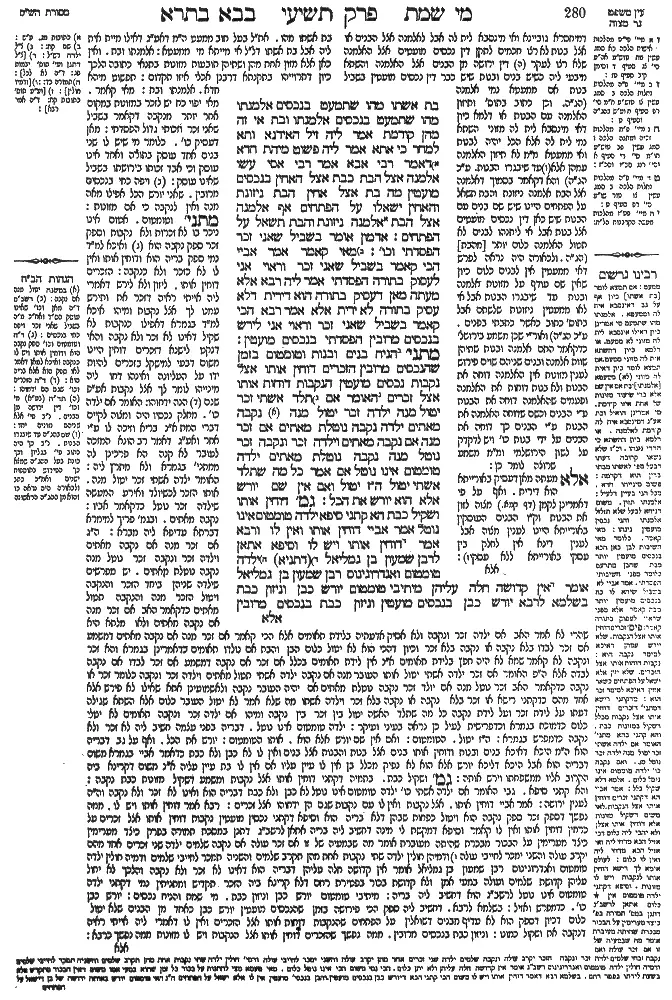
Bava Batra 140b - Guemara
בת אשתו מהו שתמעט בנכסים אלמנתו מהו שתמעט בנכסים אלמנתו ובת אי זה מהן קודמת אמר ליה זיל האידנא ותא למחר כי אתא אמר ליה פשוט מיהת חדא דאמר רבי אבא אמר רבי אסי עשו אלמנה אצל הבת כבת אצל האחין בנכסים מועטין מה בת אצל אחין הבת ניזונת והאחין ישאלו על הפתחים אף אלמנה אצל הבת אלמנה ניזונת והבת תשאל על הפתחים:
אדמון אומר בשביל שאני זכר הפסדתי וכו':
מאי קאמר אמר אביי הכי קאמר בשביל שאני זכר וראוי אני לעסוק בתורה הפסדתי אמר ליה רבא אלא מעתה מאן דעסיק בתורה הוא דירית דלא עסיק בתורה לא ירית אלא אמר רבא הכי קאמר בשביל שאני זכר וראוי אני לירש בנכסים מרובין הפסדתי בנכסים מועטין:
מתני׳ הניח בנים ובנות וטומטום בזמן שהנכסים מרובין הזכרים דוחין אותו אצל נקבות נכסים מועטין הנקבות דוחות אותו אצל זכרים האומר אם תלד אשתי זכר יטול מנה ילדה זכר יטול מנה נקבה מאתים ילדה נקבה נוטלת מאתים אם זכר מנה אם נקבה מאתים וילדה זכר ונקבה זכר נוטל מנה נקבה נוטלת מאתים ילדה טומטום אינו נוטל אם אמר כל מה שתלד אשתי יטול ה"ז יטול ואם אין שם יורש אלא הוא יורש את הכל:
גמ׳ דוחין אותו ושקיל כבת הא קתני סיפא ילדה טומטום אינו נוטל אמר אביי דוחין אותו ואין לו ורבא אמר דוחין אותו ויש לו וסיפא אתאן לרבן שמעון בן גמליאל (דתניא) ילדה טומטום ואנדרוגינוס רבן שמעון בן גמליאל אומר אין קדושה חלה עליהן מיתיבי טומטום יורש כבן וניזון כבת בשלמא לרבא יורש כבן בנכסים מועטין וניזון כבת בנכסים מרובין
Comments from Rashbam - Bava Batra 140b
בת אשתו מהו . את"ל בעל חוב ממעט ה"מ דאע"ג דאילו מיית אית ליה אבל בת אשתו דל"ל אי מייתא מי ממעטא: אלמנתו ובת . ואין כאן אלא מזון אחת מהן ושתיהן תובעות מזונות בתנאי כתובה הלכך כיון דתרוייהו בתקנתא דרבנן אכלי איזו תקדום: תפשוט מיהא חדא . אלמנתו ובת: מאי קאמר . מאי יפוי כח יש לזכר במזונות במקום אחר יותר מנקבה דקאמר בשביל שאני זכר וזכותי גדול הפסדתי: מאן דעסיק כו' . כלומר מי שיש לו שני בנים אחד עוסק בתורה ואחד אינו עוסק וכי אבד זכותו בירושתו בשביל שאינו עוסק: ויפה כחי בנכסים מרובין . שאני יורש הכל אפילו מאה מנה ואין לנקבה כי אם מזונות: מתני' וטומטום . אטום אינו ניכר בו לא זכרות ולא נקבות וספק זכר ספק נקבה הוא ואיכא למ"ד נמי ספק בריה הוא ודוחין אותו ואין לו לא כזכר ולא כנקבה: הזכרים דוחין אותו . ליזון ולא לירש דאמרי ליה אייתי ראיה דזכר את ותירש עמנו לך אצל נקבות ומיהו איכא למ"ד בגמרא דאפילו כנקבות לא שקיל דאינו לא זכר ולא נקבה והאי דנקט לישנא דזכרים דוחין היינו משום דבעי למישקל בזכרים להיות ידו על העליונה ואינהו דחו ליה מינייהו לומר לך אצל נקבות אע"פ שגם הנה ידחוהו: האומר אם ילדה כו' . מחלק נכסיו היה ומצוה לקיים דברי המת א"נ בריא וזיכה לו ע"י אחר ואע"ג דאמר רב הונא המזכה לעובר לא קנה הא פרכינן לה ממתני' בגמרא ולא מתרץ ליה: האומר ילדה אשתי זכר יטול מנה . אותו הזכר לכשיולד ואירע המעשה שילדה זכר נוטל כדקאמר אביו: נקבה מאתים . ובגמ' פריך למימרא דברתא עדיפא ליה מברא: ה"ג אם זכר מנה אם נקבה מאתים וילדה זכר ונקבה זכר נוטל מנה נקבה נוטלת מאתים. יש מפרשים שילדה שניהן ביחד הזכר והנקבה ויטול הזכר מנה והנקבה תטול מאתים כדקאמר האב אם זכר מנה אם נקבה מאתים ולאו מלתא היא שהרי לא אמר האב אם ילדה זכר ונקבה ולא אסיק אדעתיה בלידת תאומים אלא הכי קאמר אם זכר מנה אם נקבה מאתים דמשמע אם זכר לבדו בלא נקבה או נקבה בלא זכר וכיון דהכי הוא לא יטול כלום הבן והבת אם נולדו תאומים כדאמרינן בגמרא והא זכר ונקבה לא קאמר שמא לא היה חפץ בלידת תאומים א"נ אין לידת תאומים בכלל אם זכר אם נקבה דמשמע אם זכר לבדו אם נקבה לבדה אלא ה"פ האומר אם זכר ילדה אשתי יטול אותו העובר מנה אם נקבה ילדה אשתי תטול מאתים וילדה זכר ונקבה כלומר זכר או נקבה כדקאמר האב זכר נוטל מנה אם יולד זכר נקבה נוטלת מאתים אם יהיה העובר נקבה ולאשמועינן אתא שאילו לא פירש אלא אחד מהם כדקתני רישא או זכר בלא נקבה או נקבה בלא זכר וילדה אשתו מה שלא אמר לא יטול העובר כלום אלא השתא שגילה דעתו על לידת זכר ועל לידת נקבה כל מה שתלד האשה יטול בין זכר בין נקבה ומיהו אם ילדה זכר ונקבה תאומים לא יטלו כלום כדמוכח בגמרא וכדפרישית לעיל כן נראה בעיני ועיקר: ילדה טומטום אינו נוטל . דבריה בפני עצמה חשיב ליה לא זכר ולא נקבה כדמפרש בגמרא: ה"ז יטול . הטומטום: ואם אין שם יורש אלא הוא . אותו הטומטום: יורש את הכל . ואף על גב דבריה הוא ה"מ היכא דאיכא בנים ובנות ודוחין אותו בנים אצל בנות והבנות אצל בנים ואין לו לא כבן ולא כבת כדאמר אביי בגמרא משום דבריה הוא אבל היכא דליכא יורש אלא הוא לא נפיק מכלל בן אין לו עיין עליו אם אין לו בת עיין עליה א"נ משום דקרינא ביה הקרוב אליו ממשפחתו וירש אותה: גמ' ושקיל כבת . בתמיה דקתני דוחין אותו אצל נקבות ומשמע דשקיל מזונות כבת נקבה: והא קתני סיפא . גבי האומר אם ילדה אשתי כו' ילדה טומטום אינו נוטל לא כבן ולא כבת דבריה הוא ואינו לא זכר ולא נקבה וה"ה לענין ירושה: אמר אביי דוחין אותו . אצל נקבות ואין לו עם נקבות שגם הן ידחוהו אצל זכרים: רבא אמר דוחין אותו ויש לו . ממה נפשך דספק זכר ספק נקבה הוא ויטול כפחות שבהן דלא בריה הוא וסיפא דקתני נכסין מועטין נקבות דוחין אותו אצל זכרים על כרחין דוחין אותו ואין לו קאמר וסיפא דמקשת לי מינה דחשיב ליה בריה אתאן לרשב"ג דתנן במסכת תמורה בפרק כיצד מערימין כיצד מערימין על הבכור מבכרת שהיתה מעוברת אומר מה שבמעיה של זו אם זכר עולה אם נקבה שלמים ילדה שני זכרים אחד מהם יקרב עולה והשני ימכר לחייבי עולה ודמיהן חולין ילדה שתי נקבות אחת מהן תקרב שלמים והשניה תמכר לחייבי שלמים ודמיה חולין ילדה טומטום ואנדרוגינוס רבן שמעון בן גמליאל אומר אין קדושה חלה עליהן דבריה הוא דאינו לא זכר ולא נקבה והלכך לא יחול עליהן קדושת שלמים ועולה במעי אמן ולא קדושת בכור בפטירת רחם דלא קרינא ביה הזכר תקדיש ומתניתין נמי דקתני ילדה טומטום אינו נוטל לרשב"ג הוא דחשיב ליה בריה: מיתיבי טומטום יורש כבן וניזון כבת . מי שמת והניח נכסים: יורש כבן כו' . כדמפרש ואזיל: בשלמא לרבא . דחשיב ליה ספק הכי פירושה בזמן שהנכסים מועטין יורש כבן כאחד מן הבנים שלא יטול כלום דכיון דספק הוא לא עדיף מבנים דשואלין על הפתחים שהנקבות דוחות אותו אצל הזכרים ואין לו דאמרי ליה אייתי ראיה דנקבה את ושקול כמונו: וניזון כבת בנכסים מרובין . ממה נפשך שהזכרים דוחין אותו אצל הנקבות ויש לו מזונות ממה נפשך כרבא:
Comments from Tosafot - Bava Batra 140b
אלא מעתה מאן דעסיק באורייתא הוא דירית. ואף על פי דאמרינן לקמן (בבא בתרא דף קמא.) מצוה לזון את הבנות וק"ו הבנים העוסקין באורייתא היינו לענין מצוה אבל לענין דינא אין לחלק בין עסקי באורייתא ללא עסקי:
Bava Batra 140b - Mishnah translated into english
What is the halakha with regard to sustenance the deceased pledged to give the daughter of his wife from a previous marriage? Does it reduce the value of the estate? What is the halakha with regard to the sustenance to which his widow is entitled? Does it reduce the value of the estate? Furthermore, with regard to his widow and daughter, which of them takes precedence if the estate is insufficient to provide sustenance for both?
Rabbi Abbahu said to Rabbi Yirmeya: Go now and come back tomorrow. When he came back, Rabbi Abbahu said to him: Resolve at least one of your questions, as Rabbi Abba says that Rabbi Asi says: The Sages established the status of the widow in relation to the daughter as equivalent to the status of the daughter in relation to the brothers in the case of a small estate. Just as in the case of a daughter in relation to her brothers, the daughter is sustained and the brothers go and request charity at the doors, so too in the case of a widow in relation to the daughter, the widow is sustained and the daughter goes and requests charity at the doors.
§ The mishna teaches: Admon says, rhetorically: I lost out just because I am male? Rather, he holds that the sons also receive sustenance. The Gemara asks: What is he saying? Abaye said that this is what he is saying: Because I am male, and I am fit to engage in the study of the Torah, I lost out and must go begging instead of studying the Torah? Rava said to him: If that is so, should one conclude that it is only one who engages in the study of the Torah who inherits, whereas one who does not engage in the study of the Torah does not inherit? Rather, Rava said that this is what Admon is saying: Because I am male, and I am fit to inherit in the case of a large estate, should I lose my inheritance entirely in the case of a small estate?
MISHNA: With regard to one who left behind sons and daughters and a tumtum, whose halakhic status as male or female is indeterminate, the halakha is as follows: When the estate is large the males direct the tumtum to the females and exclude him from the inheritance, claiming that perhaps the tumtum is female. When the estate is small, the females direct the tumtum to the males and exclude him from receiving sustenance, claiming that perhaps the tumtum is male.
With regard to one who says: If my wife gives birth to a male the offspring shall receive a gift of one hundred dinars, if she in fact gave birth to a male, the offspring receives one hundred dinars. If he says: If my wife gives birth to a female the offspring shall receive a gift of two hundred dinars, if she in fact gave birth to a female, the offspring receives two hundred dinars.
If he says: If my wife gives birth to a male the offspring shall receive a gift of one hundred dinars and if she gives birth to a female the offspring shall receive a gift of two hundred dinars, and in fact she gave birth to both a male and a female, the male offspring receives one hundred dinars and the female offspring receives two hundred dinars. If she gave birth to a tumtum, the tumtum does not receive anything. If he said: Whatever offspring my wife gives birth to shall receive a gift of a certain sum, and she gave birth to a tumtum, the tumtum receives it. And if there is no heir other than the tumtum, the tumtum inherits all of the estate.
GEMARA: The mishna states that the males direct the tumtum to the females. The Gemara asks: Does this mean that they direct him, and he takes sustenance like a daughter? Isn’t it taught in the latter clause of the mishna that if one said that either his male or female child will receive a certain sum once his wife gives birth, and she gave birth to a tumtum, the tumtum does not receive anything? This indicates that the tumtum does not have the rights of a female. Abaye says: The mishna means that they direct him to the females, but he has no rights to sustenance.
And Rava says: They direct him to the females and he has a right to sustenance. And with regard to the latter clause of the mishna, which grants the tumtum nothing at all, there we arrive at the opinion of Rabban Shimon ben Gamliel, as it is taught in a mishna (Temura 24b): If one consecrates a firstborn animal while it is still a fetus, stating that if it is male it shall be a burnt-offering and if it is female it shall be a peace-offering, and the mother gave birth to a tumtum or a hermaphrodite [androginos], Rabban Shimon ben Gamliel says: It is not imbued with sanctity, as it is neither male nor female. So too, in the case discussed in the mishna here, Rabban Shimon ben Gamliel maintains that the tumtum receives nothing, as he is considered to be a distinct entity of indeterminate sex, neither male nor female.
The Gemara raises an objection from a baraita: A tumtum inherits as a son and is sustained as a daughter. Granted, according to Rava, the baraita can be explained to mean that the clause: Inherits as a son, is in the case of a small estate, as the daughters direct the tumtum to the sons, and just as there is no inheritance for the sons, there is none for the tumtum either. And the clause: And is sustained as a daughter, is in the case of a large estate, as the sons direct the tumtum to the daughters, and the tumtum receives sustenance along with them.
Traduction : The William Davidson digital edition of the Koren Noé Talmud, with commentary by Rabbi Adin Even-Israel Steinsaltz.