 Talmud Bavli
The learning on the whole site is dedicated : L'ilui Nishmat Amram ben Itshak Loubaton
The learning on the whole site is dedicated : L'ilui Nishmat Nissim ben Barukh Malka
The learning on the whole site is dedicated : L'ilui Nishmat Yechayahou ben Moche
Bava Batra 144b : Youtube
Daf TubeYoutube
2 video classes :
Bava Batra Page 144b
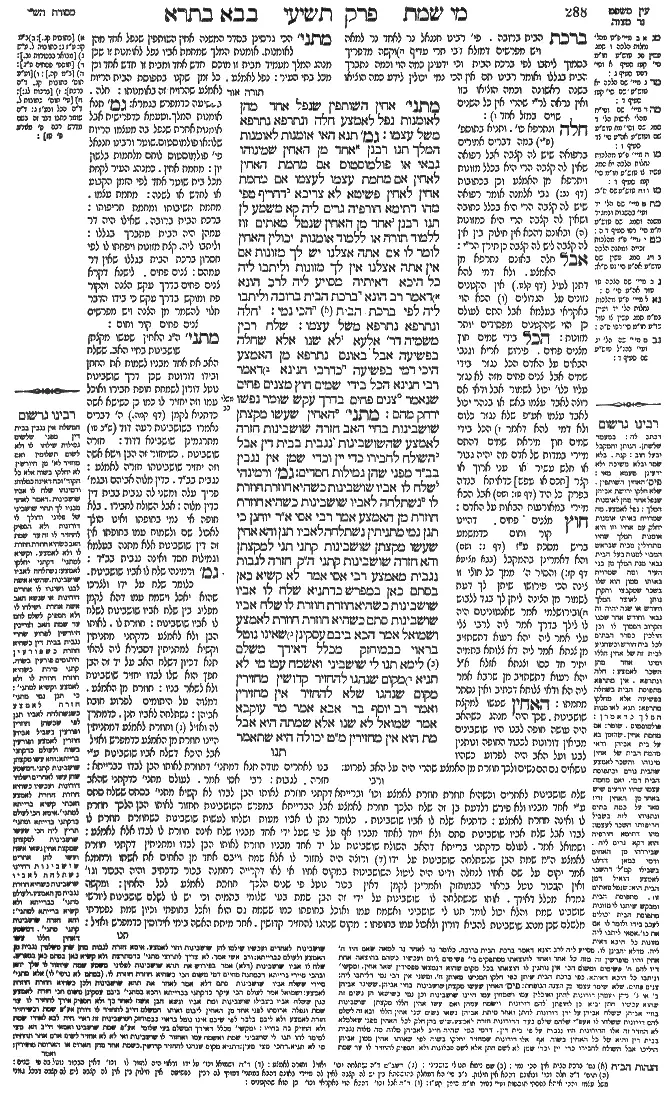
Bava Batra 144b - Guemara
מתני׳ אחין השותפין שנפל אחד מהן לאומנות נפל לאמצע חלה ונתרפא נתרפא משל עצמו:
גמ׳ תנא האי אומנות לאומנות המלך תנו רבנן אחד מן האחין שמינוהו גבאי או פולמוסטוס אם מחמת האחין לאחין אם מחמת עצמו לעצמו אם מחמת אחין לאחין פשיטא לא צריכא דחריף טפי מהו דתימא חורפיה גרים ליה קא משמע לן תנו רבנן אחד מן האחין שנטל מאתים זוז ללמוד תורה או ללמוד אומנות יכולין האחין לומר לו אם אתה אצלנו יש לך מזונות אם אין אתה אצלנו אין לך מזונות וליתבו ליה כל היכא דאיתיה מסייע ליה לרב הונא דאמר רב הונא ברכת הבית ברובה וליתבו ליה לפי ברכת הבית הכי נמי:
חלה ונתרפא נתרפא משל עצמו:
שלח רבין משמיה דר' אלעא לא שנו אלא שחלה בפשיעה אבל באונס נתרפא מן האמצע היכי דמי בפשיעה כדרבי חנינא דאמר רבי חנינא הכל בידי שמים חוץ מצנים פחים שנאמר (משלי כב, ה) צנים פחים בדרך עקש שומר נפשו ירחק מהם:
מתני׳ האחין שעשו מקצתן שושבינות בחיי האב חזרה שושבינות חזרה לאמצע שהשושבינות נגבית בבית דין אבל השולח לחבירו כדי יין וכדי שמן אין נגבין בב"ד מפני שהן גמילות חסדים:
גמ׳ ורמינהי שלח לו אביו שושבינות כשהיא חוזרת חוזרת לו נשתלחה לאביו שושבינות כשהיא חוזרת חוזרת מן האמצע אמר רבי אסי א"ר יוחנן כי תנן נמי מתניתין נשתלחה לאביו תנן והא אחין שעשו מקצתן שושבינות קתני תני למקצתן והא חזרה שושבינות קתני ה"ק חזרה לגבות נגבית מאמצע רבי אסי אמר לא קשיא כאן בסתם כאן במפרש כדתניא שלח לו אביו שושבינות כשהיא חוזרת חוזרת לו שלח אביו שושבינות סתם כשהיא חוזרת חוזרת לאמצע ושמואל אמר הכא ביבם עסקינן שאינו נוטל בראוי כבמוחזק מכלל דאידך משלם לימא תנו לי שושביני ואשמח עמו מי לא תניא מקום שנהגו להחזיר קדושין מחזירין מקום שנהגו שלא להחזיר אין מחזירין ואמר רב יוסף בר אבא אמר מר עוקבא אמר שמואל לא שנו אלא שמתה היא אבל מת הוא אין מחזירין מ"ט יכולה היא שתאמר
Comments from Rashbam - Bava Batra 144b
מתני' הכי גרסינן בסדר המשנה אחין השותפין שנפל אחד מהן לאומנות . אומנות המלך שמחמת אביו נפל לאומנות זו שכן מנהג המלך מעמיד מבית זו מוכס חדש אחד ומבית זו חדש אחד וכן מכל בתי העיר: נפל לאמצע . כל זמן שקנו בתפוסת הבית הריוח לאמצע שהרויח זה באומנותו: חלה . בפשיעה כדמפרש בגמרא: גמ' תנא אומנות המלך . וטעמא כדפרישית אבל אומנות אחרת שנפל בה מעצמו הריוח שלו: או פולמוסטוס . שוטר ורבינו חננאל פי' פולמוסטוס לוחם מלחמות בלשון יון: מחמת אחין . כמנהג העיר לקחת מכל בית שוטר אחד לפי הזמן הקבוע או לחדש או לשנה: מחמת עצמו . מחמת חשיבותו ומחמת חריפותו: ברכת הבית ברובה . שאילו היה דר עמהן היה הבית מתברך בגללו: וליתבו ליה . קצת מזונות ויפחתו לו לפי חסרון ברכת הבית בגללו שאין דר עמהם: צנים פחים . לישנא דקרא צנים פחים בדרך עקש הצנה והקור פח ומוקש בדרך עקש כי בידו הדבר תלוי להשמר מן הצנה ויש מפרשים צנים פחים קור וחום: מתני' ה"ג האחין שעשו מקצתן שושבינות בחיי האב . ששלח האב את אחד מבניו לשמוח את החתן ובידו דורונות שכן דרך שושבינות נוטל דורון לשמחת חופת חבירו ואוכל עמו וזה יחזיר לו כמו כן כשישא אשה כדתניא לקמן (בבא בתרא דף קמה.) ה' דברים נאמרו בשושבינות רעה דוד (ש"ב טו) מתרגמינן שושבינא דדוד: חזרה שושבינות . כשיחזור זה הבן וישא אשה וזה יחזיר שושבינותו חזרה לאמצע: נגבית בב"ד . כדין מלוה אביהם ובגמ' פריך עלה ומשני לה נגבית בבית דין כדין מלוה: אבל השולח לחבירו . בלא חופה אי נמי בחופתו ואינו הולך לאכול שם ולשמוח עמו בחופתו אין זה דין שושבינות אלא מתנה בעלמא וגמילות חסד ואינה נגבית בב"ד: גמ' ורמינהי שלח לו אביו שושבינות . כלומר שלח על ידו ולצרכו שהוא יאכל וישמח עמו דהא לקמן מפליג בין שלח אביו שושבינות לשלח לו אביו שושבינות: חוזרת לו . לאותו הבן ולא לאמצע כדקתני מתניתין וקשיא למתניתין דסבירא ליה להאי תנא דכיון דשלח האב על יד זה הבן חפץ הוא שלו לבדו יחזיר שושבינות ולא לשאר בניו: חוזרת מן האמצע . דמצוה על היתומים לפרוע חובת אביהן: נשתלחה לאביו תנן . כדמתרץ לה ואזיל וחוזרת לאמצע דמתניתין היינו חוזרת מן האמצע כדמפרש ואזיל אבל היכא דשלח אביו שושבינות ע"י בנו לאחרים מודה תנא דמתני' דחוזרת לאותו הבן לבדו כברייתא: חזרה . לגבות: רבי אסי אמר . לעולם מתני' כדקתני שהאב שלח שושבינות לאחרים וכשהיא חוזרת חוזרת לאמצע וכו' וברייתא דקתני חוזרת לאותו הבן לבדו לא קשיא מתני' בסתם ששלח סתם ע"י אחד מבניו ולא פירש דלדעת בן זה שלח הלכך חוזרת לאמצע אבל הברייתא במפרש השושבינות תחזור לאותו הבן הלכך חוזרת לו ואינה חוזרת לאמצע: כדתניא שלח לו אביו שושבינות . כלומר נתן לו אביו מעות ושלחו לעשות שושבינות כשחוזרת חוזרת לו לבדו אבל שלח אביו שושבינות סתם ולא ייחד לאחד מבניו אף על פי שעל ידי אחד מבניו שלח אינה חוזרת לו לבדו אלא לאמצע: ושמואל אמר . לעולם כדקתני ברייתא דהאב השולח שושבינות על יד אחד מבניו חוזרת לאותו הבן לבדו ומתניתין דקתני חוזרת לאמצע ה"מ שמת הבן שנשתלחה שושבינות על ידו ורוצה היה לחזור לו אלא שמת וייבם אחד מן האחים את אשתו ורחמנא אמר יקום על שם אחיו לנחלה ודינו היה ליטול השושבינות במקום אחיו אי לאו דקרייה רחמנא בכור כדכתיב והיה הבכור וגו' ואין הבכור נוטל בראוי כבמוחזק ואמרינן לקמן דאין בכור נוטל פי שנים הלכך חוזרת לאמצע לכל האחין: ומקשה גמרא מכלל דאידך . אותו שנשתלחה לו שושבינות על ידי זה הבן שמת בעי שלומי בתמיה וכי יש לו לשלם שושבינות ליורשי שושבינו שמת והלא יכול לומר תנו לי שושביני ואשמח עמו ואוכל בחופתו כמו ששמח גם הוא ואכל בחופתי וכיון שמת נפטרתי מלשלם שכן מנהג שושבינות להביא דורון ולאכול עמו בחופתו: מקום שנהגו להחזיר קדושין . אחר מיתת האשה בימי אירוסין כדמפרש ואזיל:
Comments from Tosafot - Bava Batra 144b
ברכת הבית ברובה. פי' רבינו חננאל נר לאחד נר למאה ויש מפרשים דמזלא דבי תרי עדיף וקשה מדפריך בסמוך ליתבו לפי ברכת הבית וכי ידעינן כמה הוי וכמה נתברך הבית בגללו ואומר רבינו תם אין הכי נמי יכולין לידע כמה הוציאו בשנה ראשונה וכמה הוציאו בזו ואין נראה לר"י שהרי אין כל השנים שוים במזל אחד: חלה ונתרפא כו'. ותניא בתוספ' (פ"י) במה דברים אמורים ברפואה שיש לה קצבה אבל רפואה שאין לה קצבה הרי היא בכלל מזונות ויתרפא מן האמצע וכן בכתובות (דף נב:) גבי אלמנה אומר רפואה שיש לה קצבה הרי היא בכלל כתובה ושאין לה קצבה הרי היא כמזונות ובאונס דהכא אין חילוק בין אין לה קצבה ליש לה קצבה כן תירץ הר"י: אבל חלה באונס נתרפא מן האמצע. ולא דמי להא דתנן לעיל (בבא בתרא דף קלט.) אין הקטנים נזונים על הגדולים הכא הוי באקראי בעלמא אבל התם לעולם כן הוי שהקטנים מפסידים יותר מזונות: הכל בידי שמים חוץ מצנים פחים. פירוש אריא וגנבי הבאים על האדם הכל נגזר בידי שמים אבל צנים פחים מזה לא נגזר עליו כלו' יכול לשמור אבל ודאי אם רוצה לאבד עצמו באש או בנהר יכול לאבד עצמו אע"פ שלא נגזר כלום ולא דמי להא דאמר הכל בידי שמים חוץ מיראת שמים דהתם מיירי במדות של אדם מה יהיה גבור או חלש עשיר או עני ארוך או קצר [חכם או טפש] כדאיתא בנדה בפרק כל היד (דף טז: ושם) אבל הכא מיירי במאורעות הבאות על האדם: חוץ מצנים פחים. דהיינו קור וחום כדמשמע בריש מסכת ע"ז (דף ג: ושם) והא דאמרינן בהמקבל (בבא מציעא דף קז:) והסיר ה' ממך כל חולי זו צינה הכי פירושו שיתן לך דעת לשמור מן הצינה ליתן לך בגד ללבוש ובירושלמי אמר שאנטונינוס היה לו לילך בדרך אמר ליה לרבי צלי עלי אמר ליה יהא רעוא דתשתזיב מן צנתא אמר ליה דא צלותא בתמיה יתיר חד כסו וצנתא אזלא א"ל יהא רעוא דתשתזיב מן שרבא אמר ליה הא ודאי צלותא דכתיב ואין נסתר מחמתו: האחין שעשו למקצת שושבינות. שכך היה מנהג כשהאב היה עושה חופה לבנו היו שושבינים מביאין דורונות לכבוד החופה ונותנין לבנו ועל האב היה לפרוע כשהיו נושאים גם הם נשים ולכך חוזרת מן האמצע שהרי היה על האב לפרוע:
Bava Batra 144b - Mishnah translated into english
MISHNA: With regard to brothers who were also partners, and it occurred that one of them was summoned to public service, which is assessed per family, he was summoned from the middle, i.e., the profits or expenses of his service are divided among them. If one of the brothers became sick and sought treatment, the cost of the treatment is paid from his own resources.
GEMARA: The Sages taught: This service mentioned in the mishna is referring to forced imperial service, but if one of the brothers engaged in a trade of his own volition, the profits are his alone. The Sages taught in a baraita (Tosefta 10:5): In the case of one of the brothers who was appointed as a tax collector or a military commander [polmustos], a position with the potential for profit, if he was appointed on account of all the brothers, as the procedure was to impress a representative from each family for this purpose, any profit accrues to all the brothers. If he was appointed on account of himself, the profit accrues to himself.
The Gemara asks: Isn’t it obvious that if he was appointed on account of all the brothers, then the profit accrues to all the brothers? The Gemara responds: No, it is necessary to state this halakha in a case where the brother appointed was sharper, i.e., more capable, than the other brothers. Lest you say that his sharpness caused him to be selected for the position, and he should receive all the profits, the baraita teaches us that his talent notwithstanding, since he was selected as a representative of the family, the profit accrues to all the brothers.
The Sages taught: With regard to one of the brothers, who took two hundred dinars from the common inheritance to support himself when he went to another place to study Torah or to learn a trade, the brothers can say to him: If you are here with us, you are entitled to sustenance along with us. If you are not here with us, you are not entitled to sustenance.
The Gemara asks: But shouldn’t they give him his sustenance wherever he is? The Gemara answers: This ruling supports the opinion of Rav Huna, as Rav Huna says: The blessing of the house is in its abundance. This means that the extent to which blessing permeates a home is proportionate to the number of people who live there, and when many people live together the expenses per capita decrease. The Gemara asks: But shouldn’t they give him his sustenance according to the blessing of the house, i.e., the expenses he would incur even if he were in the house? The Gemara responds: Indeed, they are required to provide for those expenses that he would incur in any event.
§ The mishna teaches: If one of the brothers became sick and sought treatment, the cost of the treatment is paid from his own resources. Ravin sent a ruling in the name of Rabbi Ela: They taught this only in a case where he became ill through negligence. But if he became ill through circumstances beyond his control, the cost of the treatment is paid from the middle, i.e., from the common inheritance. The Gemara asks: What are the circumstances in which it is considered negligence? This is in accordance with the statement of Rabbi Ḥanina, as Rabbi Ḥanina says: All occurrences that befall man are in the hand of Heaven except for colds and obstacles [paḥim], from which one is able to protect himself, as it is stated: “Colds and snares are on the path of the crooked; he who guards his soul shall keep far from them” (Proverbs 22:5).
MISHNA: It was common practice for friends of a groom to give him gifts in order to help cover the expenses of the wedding feast. These gifts are known as gifts of groomsmen, and would be reciprocated in turn. While the groom and the groomsman were at times the recipient and the giver of the gifts, respectively, the gifts were at times provided by the father of the groomsman and received by the father of the groom. In the case of brothers, some of whom brought gifts of groomsmen in their father’s lifetime, which were provided by their father, when the gifts of groomsmen are reciprocated after the father’s death, when one of the brothers gets married, they are reciprocated to the middle, i.e., the gift is divided among the brothers. This is because gifts of groomsmen are a legal debt owed to the father, collectible in court. But with regard to one who sends his friend jugs of wine or jugs of oil, a reciprocal gift is not collectible in court, because they are considered acts of kindness.
GEMARA: And the Gemara raises a contradiction between the mishna’s ruling that the gifts of groomsmen are reciprocated to the middle, and the first clause of a baraita: If a father sent his son with gifts of groomsmen, when they are reciprocated when that son gets married, they are reciprocated to that son. If his father was sent gifts of groomsmen for the wedding of one of his sons, when they are reciprocated from the father’s estate, they are reciprocated from the middle, i.e., the cost of the gift is divided among the brothers. Rabbi Asi says that Rabbi Yoḥanan says: When we learned the mishna as well, we learned it as teaching the halakha with regard to gifts of groomsmen that were sent to the father for the wedding of one of his sons, not with regard to gifts of groomsmen sent by the father.
The Gemara objects: But the mishna teaches the halakha with regard to brothers, some of whom brought gifts of groomsmen. The Gemara responds: Emend the text of the mishna and teach it as saying: With regard to brothers, to some of whom gifts of groomsmen were brought. The Gemara objects: But the mishna explicitly teaches the halakha if the gifts of groomsmen are reciprocated. The Gemara responds: This is what the mishna is saying: When it is collected from the brothers in return, it is collected from the middle.
Rabbi Asi says: Even if the text of the mishna is not emended, it is not difficult and can be reconciled with the baraita. Here in the mishna it is referring to where the father sent the gifts of groomsmen without specifying which son should be ascribed credit for bringing the gifts. There in the baraita, it is referring to where the father specified that the credit for the gifts of groomsmen should be ascribed to a specific son, who receives gifts in return, as it is taught in another baraita: If his father sent gifts of groomsmen on his, i.e., the son’s, behalf, then when the gift is reciprocated, it is reciprocated to him, i.e., to that specific son. If his father sent gifts of groomsmen without specification, then when the gift is reciprocated, it is reciprocated to the middle.
And Shmuel says: Here in the mishna we are dealing with a man whose married brother died childless [yavam]. The son who brought the gifts of groomsmen died childless, his brother entered into levirate marriage with the widow, and the gifts of groomsmen were reciprocated at the wedding of the yavam. Although the yavam inherits the property of his brother, since the reciprocal gifts were not extant when his brother died, they do not belong solely to him; rather, they are divided among the brothers. This is because the yavam does not take in inheritance the property due the deceased as he does the property the deceased already possessed.
The Gemara asks: Is it possible to conclude by inference from Shmuel’s statement that the other side, i.e., a friend who had received gifts of groomsmen from the deceased, is obligated to repay the gifts of groomsmen he received from the deceased? Why should this be so? Let him say: Give me my groomsman and I will rejoice with him. Since the one who gave him the gifts is deceased, he is not obligated to reciprocate.
Isn’t it taught in a baraita (Tosefta, Pesaḥim 3:1) with regard to similar circumstances: In a place where people are accustomed to return the betrothal money when the betrothed man or woman dies, they return it; in a place where people are accustomed not to return it, they do not return it. And Rav Yosef bar Abba says that Mar Ukva says that Shmuel says: They taught this only with regard to when the woman dies, in which case one follows the local custom. But if the man dies, all agree that they do not return the money. What is the reason for this? Since she can say:
Traduction : The William Davidson digital edition of the Koren Noé Talmud, with commentary by Rabbi Adin Even-Israel Steinsaltz.