 Talmud Bavli
Bava Batra 124b : Youtube
Daf TubeYoutube
2 video classes :
Bava Batra Page 124b
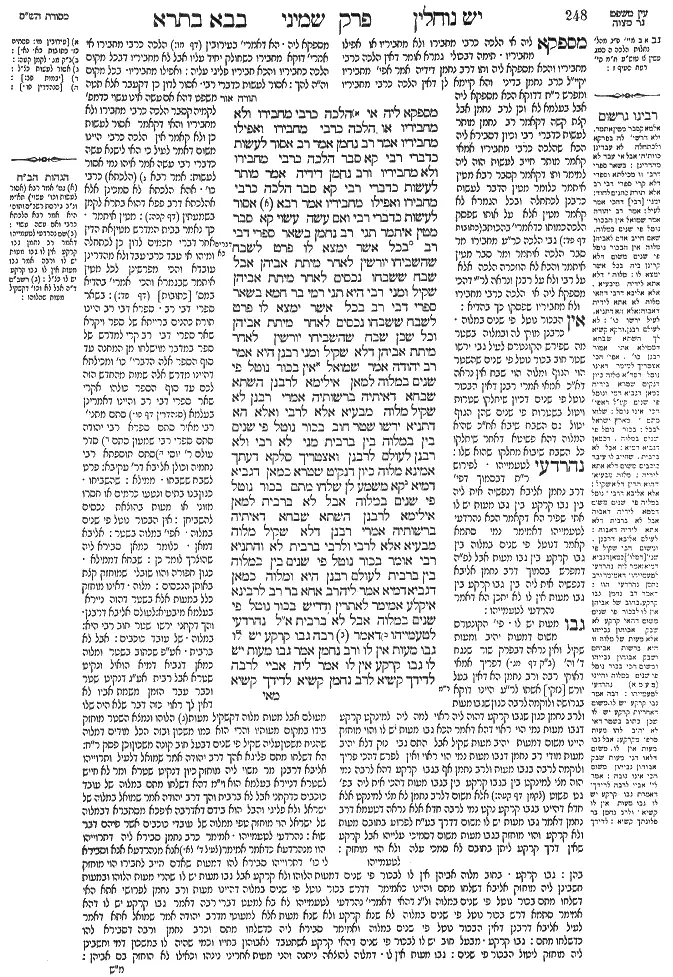
Bava Batra 124b - Guemara
מספקא ליה אי הלכה כרבי מחבירו ולא מחביריו או הלכה כרבי מחבירו ואפילו מחביריו אמר רב נחמן אמר רב אסור לעשות כדברי רבי קא סבר הלכה כרבי מחבירו ולא מחביריו ורב נחמן דידיה אמר מותר לעשות כדברי רבי קא סבר הלכה כרבי מחבירו ואפילו מחביריו אמר רבא אסור לעשות כדברי רבי ואם עשה עשוי קא סבר מטין איתמר תני רב נחמן בשאר ספרי דבי רב (דברים כא, יז) בכל אשר ימצא לו פרט לשבח שהשביחו יורשין לאחר מיתת אביהן אבל שבח ששבחו נכסים לאחר מיתת אביהן שקיל ומני רבי היא תני רמי בר חמא בשאר ספרי דבי רב בכל אשר ימצא לו פרט לשבח ששבחו נכסים לאחר מיתת אביהן וכל שכן שבח שהשביחו יורשין לאחר מיתת אביהן דלא שקיל ומני רבנן היא אמר רב יהודה אמר שמואל אין בכור נוטל פי שנים במלוה למאן אילימא לרבנן השתא שבחא דאיתיה ברשותיה אמרי רבנן לא שקיל מלוה מבעיא אלא לרבי ואלא הא דתניא ירשו שטר חוב בכור נוטל פי שנים בין במלוה בין ברבית מני לא רבי ולא רבנן לעולם לרבנן ואצטריך סלקא דעתך אמינא מלוה כיון דנקיט שטרא כמאן דגביא דמיא קא משמע לן שלחו מתם בכור נוטל פי שנים במלוה אבל לא ברבית למאן אילימא לרבנן השתא שבחא דאיתיה ברשותיה אמרי רבנן דלא שקיל מלוה מבעיא אלא לרבי ולרבי ברבית לא והתניא רבי אומר בכור נוטל פי שנים בין במלוה בין ברבית לעולם רבנן היא ומלוה כמאן דגביא דמיא אמר ליה רב אחא בר רב לרבינא איקלע אמימר לאתרין ודריש בכור נוטל פי שנים במלוה אבל לא ברבית א"ל נהרדעי לטעמייהו דאמר רבה גבו קרקע יש לו גבו מעות אין לו ורב נחמן אמר גבו מעות יש לו גבו קרקע אין לו אמר ליה אביי לרבה לדידך קשיא לרב נחמן קשיא לדידך קשיא
Comments from Rashbam - Bava Batra 124b
מספקא ליה . הא דאמרי' בעירובין (דף מו:) הלכה כרבי מחבירו אי אמרי' דוקא מחבירו כשחולק יחיד עליו אבל לא מחביריו דבכל מקום הלכה כחביריו והכא חביריו פליגי עליה: ואפילו מחביריו . בכל מקום וה"ה להך: אסור לעשות כדברי רבי . אסור לדון כן דקעבר אלא תטה משפט דהא אם עשה אינו עשוי כדמפ' לקמיה קסבר הלכה כרבי מחבירו ולא מחביריו והאי דקאמר אסור לעשות כן ולא קאמר אין הלכה כרבי היינו משום דאמר לעיל כי האי לישנא עשה כדברי רבי עשה אמר איהו נמי אסור לעשות: אמר רבא (הלכתא) כרבי כו' . אהא הלכתא לא סמכינן אלא אהלכתא דרב פפא דהוא בתרא לקמן בשמעתין (בבא בתרא דף קכה:): מטין איתמר . כך נאמר בבית המדרש מטין את הדין אחר דברי חכמים לדון כן לכתחלה ומיהו אי עבד כרבי עבד ולא מהדרינן עובדא והכי מפרשינן לכל מטין איתמר שבגמרא והכי אמרי' בהדיא במס' [כתובות] (דף פד:): בשאר ספרי דבי רב . ספרא דבי רב היינו תורת כהנים ברייתא של ספר ויקרא שאר ספרי דבי רב קרי למדרש של ספר במדבר מוישלחו מן המחנה עד סוף הספר אלה הדברי' כו' ומכילתא דהיינו מדרש אלה שמות מהחדש הזה לכם עד סוף הספר כולהו אקרי שאר ספרי דבי רב והיינו דאמרינן בעלמא (סנהדרין דף פו.) סתם מתני' רבי מאיר סתם ספרא רבי יהודה סתם ספרי רבי שמעון סתם סדר עולם ר' יוסי סתם תוספתא רבי נחמיה וכולן אליבא דר' עקיבא: שהשביחו . כגון בנו בתים ונטעו כרמים או חסרו מזוני או מעות בהוצאת נכסים להשביחן: פרט לשבח ששבחו . ממילא: אין הבכור נוטל פי שנים במלוה . אפי' במלוה בשטר: אליבא דמאן . כלומר כמאן סבירא ליה שהוצרך לומר כן: שבחא דממילא . כגון חפורה והוו שובלי שמוחזק קצת באותן הנכסים: מלוה . דאינו מוחזק כלל במעות אלא בשטר דהוה ניירא בעלמא מיבעיא: לעולם אליבא דרבנן . והך דקתני ירשו שטר חוב רבי היא: במלוה . של עובד כוכבים: אבל לא ברבית . אע"פ שכתוב בשטר ומלוה כמאן דגביא דמיא הואיל ונקיט שטרא אבל רבית אע"ג דנקיט שטר וכבר עבר הזמן משמת אביו לא דאין לך ראוי כזה דבר שלא היה שלו מעולם אבל מעות מלוה דקשקיל מעות הלוהו ונמצא השטר מוחזק בידו במקום מעותיו והרי הוא כמו משכון ובזה הכל מודים דמלוה שהניח משכון עליה שקיל פי שנים דבעל חוב קונה משכון וכן פסק ר"ח: הא דשלחו מתם . פליגא אהך דרב יהודה אמר שמואל דלעיל ותרוייהו אליבא דרבנן מר משוי ליה מוחזק כיון דנקיט שטרא ומר לא חייש לשטרא דניירא בעלמא הוא וי"מ דהא דשלחו מתם במלוה של עובד כוכבים כדקתני אבל לא ברבית והך דרב יהודה אמר שמואל במלוה של ישראל ולא פליגי והבל הוא בידם דאדרבה איפכא מסתברא דבמלוה של ישראל הוי מוחזק טפי ממלוה של עובדי כוכבים אשר פיהם דבר שוא: נהרדעי לטעמייהו . אמימר כרב נחמן סבירא ליה דתרוייהו הוו מנהרדעא כדאמר אמימר (לעיל בבא בתרא ד' לא.) אנא מנהרדעא אנא וסבירא לי כו' דתרוייהו סבירא להו דמעות שאדם חייב לחבירו הוי מוחזק בהן: גבו קרקע . בחוב מלוה אביהן אין לו לבכור פי שנים דמעות הלוהו ולא קרקע אבל גבו מעות יש לו שהרי מעות הלוהו ובמעות חשבינן ליה מוחזק אליבא דשלחו מתם והיינו כאמימר דדרש בכור נוטל פי שנים במלוה דהיינו מעות ורב נחמן לפרושי אתא האי דשלחו מתם בכור נוטל פי שנים במלוה ול"נ דהאי דאמרי' נהרדעי לטעמייהו לא בא למעט דברי רבה דאמר גבו קרקע יש לו דהא אמימר סתמא דרש בכור נוטל פי שנים במלוה לא שנא קרקע ולא שנא מעות אלא למעוטי מדרב יהודה אמר שמואל אתא דאמר לעיל אליבא דרבנן דאין הבכור נוטל פי שנים במלוה ואמימר סבירא ליה כדשלחו מתם וכרב נחמן ורבה דסבירא להו כדשלחו מתם: גבו קרקע . מבעל חוב יש לו לבכור פי שנים דהאי קרקע אשתעבד לאבוהון בחייו וכמי שהיה לו במשכון דמי וחשבינן ליה מוחזק ליטול הבכור פי שנים: גבו מעות אין לו . דמלוה להוצאה ניתנה והני מעות אחריני נינהו וכאילו לא הוחזק בם אביהן:
Comments from Tosafot - Bava Batra 124b
מספקא ליה אי הלכה כרבי מחבירו ולא מחביריו או אפילו מחביריו. תימה דבכולי גמרא אומר דאין הלכה כרבי מחביריו והכא מספקא ליה ותו דרב נחמן דידיה אמר אפי' מחביריו וקיי"ל כרב נחמן בדיני והא קיימא לן דאין הלכה כרבי מחביריו ומפרש ר"ת דדוקא הכא מספקא ליה אבל בעלמא לא וכן לרב נחמן אבל קצת קשה דקאמר רב נחמן מותר לעשות כדברי רבי וכיון דסבירא ליה הכא שהלכה כרבי מחביריו אמאי קאמר מותר חייב לעשות הוה ליה למימר ותו דקאמר קסבר רבא מטין איתמר כלומר מטין הדבר לעשות כרבנן לכתחלה ובכל הגמרא לא קאמר מטין אלא על אותו שפסק הלכה כמותו כדאמרי' בהכותב (כתובות דף פד:) גבי הלכה כר"ע מחבירו מר סבר הלכה איתמר ומר סבר מטין איתמר והכא לא הוזכרה הלכה אלא על רבי ולא על רבנן ונראה לר"י דהכי מספקא ליה אי הלכה כרבי מחבירו ולא מחביריו שפסקו כך בהדיא: אין הבכור נוטל פי שנים במלוה. כרבנן מוקי לה ובמלוה בשטר מה שפירש הקונטרס לעיל גבי ירשו שטר חוב בכור נוטל פי שנים שהשטר הוי הגוף ומלוה הוי שבח אין נראה דא"כ אמאי אמרי רבנן דאין הבכור נוטל פי שנים דכיון שיחלקו שטרות ויטול בשטרות פי שנים שהן הגוף יטול גם השבח שיבא אח"כ שהיא המלוה דהא פשיטא דאחר שיחלקו כל השבח שיבוא מחלקו שהוא שלו: נהרדעי לטעמייהו. לפירוש ר"ת דבסמוך דפי' דרב נחמן אליבא דנפשיה אית ליה בין גבו קרקע בין גבו מעות יש לו אתי שפיר הא דקאמר הכא נהרדעי לטעמייהו דאמימר נמי סתמא קאמר דנוטל פי שנים במלוה בין גבו קרקע בין גבו מעות אבל לפ"ה דמפרש בסמוך דרב נחמן אליבא דנפשיה אית ליה בין גבו קרקע בין גבו מעות אין לו לא יתכן הא דאמר נהרדעי לטעמייהו: גבו מעות יש לו. פי' הקונטרס משום דמעות יהיב ומעות שקיל ואין נראה דבפרק שור שנגח ד' וה' (ב"ק דף מג.) דפריך אמאי דאוקי רבה ורב נחמן הא דאין בעל יורש [נזקי] אשתו לר"ע היינו דוקא בגרושה ולוקמה לרבה כגון שגבו מעות ולרב נחמן כגון שגבו קרקע דהוה ליה ראוי למה ליה למינקט קרקע דגבו מעות נמי הוי ראוי דהא דאמר הכא גבו מעות יש לו והוי מוחזק היינו משום דמעות יהיב מעות שקיל אבל התם גבי נזק דלא יהיב מעות מודי רב נחמן דגבו מעות נמי הוי ראוי ואין לפרש דהכי פריך ולוקמה לרבה בגבו מעות ולרב נחמן אף בגבו קרקע דהא לרבה נמי הוה מצי למינקט בין בגבו קרקע בין בגבו מעות דהכי אית ליה בפ' גט פשוט (לקמן בבא בתרא דף קעה:) אלא משום דלרב נחמן לא מצי למינקט אלא חדא דהיינו בגבו קרקע נקט נמי לרבה חדא אלא נראה דטעמא דרב נחמן דאמר גבו מעות יש לו משום דדרך בע"ח לפרוע בחובם מעות ולא קרקע והוי מוחזק בגבו מעות משום דסמיכי עלייהו אבל קרקע שאין דרך קרקע ליתן בחובם לא סמכי עלה ולא הוי מוחזק:
Bava Batra 124b - Mishnah translated into english
The Gemara explains: Rabbi Ḥiyya is uncertain as to whether the principle that the halakha is in accordance with the opinion of Rabbi Yehuda HaNasi in his disputes with his colleague applies specifically to a dispute with one other tanna but not to a dispute with several of his colleagues, or whether the principle that the halakha is in accordance with the opinion of Rabbi Yehuda HaNasi in his disputes with his colleague applies even to a dispute with several of his colleagues, as in this case, where the Rabbis disagree with Rabbi Yehuda HaNasi. Since he was uncertain, he left the decision to each individual judge.
Rav Naḥman says that Rav says: It is prohibited to act in accordance with the statement of Rabbi Yehuda HaNasi. The Gemara explains: Rav holds that the halakha is in accordance with the opinion of Rabbi Yehuda HaNasi in his disputes with his single colleague, but not in his disputes with several of his colleagues.
And Rav Naḥman says his own statement: It is permitted to act in accordance with the statement of Rabbi Yehuda HaNasi. The Gemara explains: He holds that the halakha is in accordance with the opinion of Rabbi Yehuda HaNasi not only in his disputes with his single colleague, but even in his disputes with several of his colleagues.
Rava says: It is prohibited to act in accordance with the statement of Rabbi Yehuda HaNasi, but if a judge acted in accordance with the statement of Rabbi Yehuda HaNasi, what is done is done and the decision stands. The Gemara explains: He holds that it was stated that one is inclined to follow the opinion of the Rabbis ab initio, but if a judge rules in accordance with the opinion of Rabbi Yehuda HaNasi, his decision stands.
The Gemara comments that there are conflicting opinions in halakhic midrash as to whether the halakha is in accordance with the opinion of Rabbi Yehuda HaNasi or in accordance with the opinion of the Rabbis, as each opinion is supported by a different version of the midrash. Rav Naḥman taught a baraita from the other books of the school of Rav [debei Rav], i.e., a volume of halakhic midrash other than Torat Kohanim, which is a halakhic midrash on the book of Leviticus. The phrase from the verse: “By giving him a double portion of all that he has” (Deuteronomy 21:17), excludes the enhancement that the heirs brought about after their father’s death, of which the firstborn is not entitled to a double portion. The Gemara infers: But of the enhancement of the property that occurred by itself after their father’s death, he does take a double portion. The Gemara comments: And whose opinion is this? It is the opinion of Rabbi Yehuda HaNasi.
Rami bar Ḥama taught a different version of the baraita from the other books of the school of Rav: “Of all that he has” excludes the enhancement of the property that occurred by itself after their father’s death, of which the firstborn is not entitled to a double portion. The Gemara infers: And all the more so, he does not take a double portion of the enhancement that the heirs brought about after their father’s death. The Gemara comments: And whose opinion is this? It is the opinion of the Rabbis. Accordingly, there is a discrepancy between the baraitot as to whether the halakha is in accordance with the opinion of the Rabbis or Rabbi Yehuda HaNasi.
§ Rav Yehuda says that Shmuel says: A firstborn does not take a double portion of a loan, i.e., of a debt that is owed to the father. The Gemara asks: According to whom is this halakha stated? If we say it is in accordance with the opinion of the Rabbis, now that the Rabbis say that a firstborn does not take a double portion even with regard to the enhancement of property that is in the possession of the father, is it necessary to state that he is not entitled to a double portion of a loan? The debt is not in the father’s possession at the time of his death; it is merely due to him.
Rather, it must be in accordance with the opinion of Rabbi Yehuda HaNasi. Although he holds that a firstborn is entitled to a double portion of the enhancement of the property itself, he concedes that he is not entitled to a double portion of the payment of a debt, as it was not in the possession of his father at the time of his death.
The Gemara asks: But if so, in accordance with whose opinion is that which is taught in a baraita: If the sons inherited a promissory note, the firstborn takes a double portion of the payment of both the value of the loan itself and the interest? It is neither in accordance with the opinion of Rabbi Yehuda HaNasi, nor the opinion of the Rabbis.
The Gemara answers: Actually, Shmuel’s statement that the firstborn is not entitled to a double portion of the payment of a debt is in accordance with the opinion of the Rabbis, and it was necessary to state it. It might enter your mind to say that with regard to a loan, since the creditor holds a promissory note, it is considered as though it has already been collected and is in the creditor’s possession, so too, the firstborn should be entitled to a double portion even according to the opinion of the Rabbis. Therefore, Shmuel teaches us that the loan is not considered to be in the creditor’s possession, and the firstborn is not entitled to a double portion.
The Gemara relates: They sent the following ruling from there, Eretz Yisrael: If the father lent money to a gentile, the firstborn takes a double portion of the value of the loan itself, but not of the interest, as the interest is considered property due to the father.
The Gemara asks: According to whom is this halakha stated? If we say it is in accordance with the opinion of the Rabbis, now that the Rabbis say that a firstborn does not take a double portion even with regard to the enhancement of property, which is in the possession of the father, is it necessary to state that they would hold that he is not entitled to a double portion of a loan? Since the debt is not in the father’s possession at the time of his death, as it is merely due to him, the rabbis would certainly not hold that the firstborn takes a double portion of it.
Rather, it must be in accordance with the opinion of Rabbi Yehuda HaNasi. The Gemara asks: And according to the opinion of Rabbi Yehuda HaNasi, is it so that the firstborn is not entitled to a double portion of the interest? But isn’t it taught in a baraita that Rabbi Yehuda HaNasi says: A firstborn takes a double portion of both the value of the loan itself and the interest?
The Gemara answers: Actually, the halakha sent from the Sages of Eretz Yisrael is in accordance with the opinion of the Rabbis. And the Sages of Eretz Yisrael hold that the Rabbis concede that the firstborn receives a double portion of the value of the loan itself, because a loan is considered as though it has already been collected and is in the creditor’s possession. By contrast, the interest on the loan is not considered as though it is already in the creditor’s possession, and therefore the firstborn does not receive a double portion of its payment.
Rav Aḥa bar Rav said to Ravina: Ameimar arrived at our locale and taught that a firstborn takes a double portion of the value of a loan itself, but not of the interest. Ravina said to him: The Sages of Neharde’a conform to their standard line of reasoning. Ameimar followed the opinion of Rav Naḥman, who was one of the Sages of Naharde’a, as was Ameimar.
The Gemara explains: As Rabba says: If the sons collected land as payment of a debt owed to their father, the firstborn has a double portion of it, but if they collected money, he does not have a double portion. And Rav Naḥman says that if they collected money, he has a double portion, but if they collected land, he does not have a double portion.
Abaye said to Rabba: According to your opinion it is difficult, and according to the opinion of Rav Naḥman it is also difficult. According to your opinion it is difficult
Traduction : The William Davidson digital edition of the Koren Noé Talmud, with commentary by Rabbi Adin Even-Israel Steinsaltz.