 Talmud Bavli
Bava Batra 122b : Youtube
Daf TubeYoutube
2 video classes :
Bava Batra Page 122b
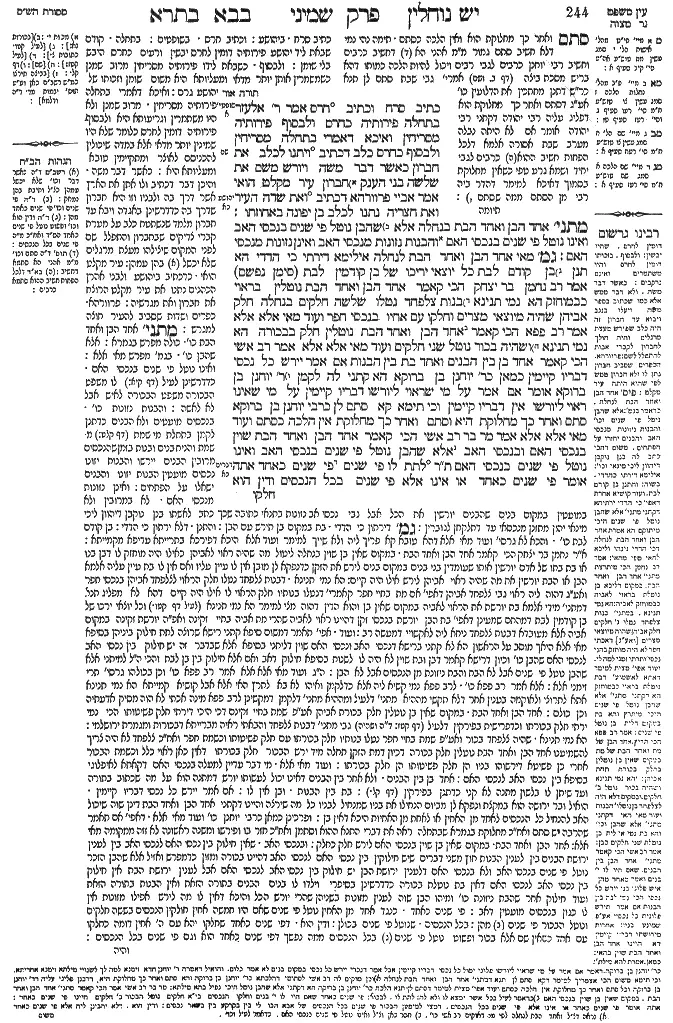
Bava Batra 122b - Guemara
כתיב סרח וכתיב (שופטים א, לה) חרס אמר ר' אלעזר בתחלה פירותיה כחרס ולבסוף פירותיה מסריחין ואיכא דאמרי בתחלה מסריחין ולבסוף כחרס כלב דכתיב (שופטים א, כ) ויתנו לכלב את חברון כאשר דבר משה ויורש משם את שלשה בני הענק חברון עיר מקלט הואי אמר אביי פרוורהא דכתיב (יהושע כא, יב) ואת שדה העיר ואת חצריה נתנו לכלב בן יפונה באחוזתו:
מתני׳ אחד הבן ואחד הבת בנחלה אלא שהבן נוטל פי שנים בנכסי האב ואינו נוטל פי שנים בנכסי האם והבנות נזונות מנכסי האב ואינן נזונות מנכסי האם:
גמ׳ מאי אחד הבן ואחד הבת לנחלה אילימא דירתי כי הדדי הא תנן בן קודם לבת כל יוצאי יריכו של בן קודמין לבת (סימן נפשם) אמר רב נחמן בר יצחק הכי קאמר אחד הבן ואחד הבת נוטלין בראוי כבמוחזק הא נמי תנינא בנות צלפחד נטלו שלשה חלקים בנחלה חלק אביהן שהיה מיוצאי מצרים וחלקו עם אחיו בנכסי חפר ועוד מאי אלא אלא אמר רב פפא הכי קאמר אחד הבן ואחד הבת נוטלין חלק בבכורה הא נמי תנינא ושהיה בכור נוטל שני חלקים ועוד מאי אלא אלא אמר רב אשי הכי קאמר אחד בן בין הבנים ואחד בת בין הבנות אם אמר יירש כל נכסי דבריו קיימין כמאן כר' יוחנן בן ברוקא הא קתני לה לקמן ר' יוחנן בן ברוקא אומר אם אמר על מי שראוי ליורשו דבריו קיימין על מי שאינו ראוי ליורשו אין דבריו קיימין וכי תימא קא סתם לן כרבי יוחנן בן ברוקא סתם ואחר כך מחלוקת היא וסתם ואחר כך מחלוקת אין הלכה כסתם ועוד מאי אלא אלא אמר מר בר רב אשי הכי קאמר אחד הבן ואחד הבת שוין בנכסי האם ובנכסי האב אלא שהבן נוטל פי שנים בנכסי האב ואינו נוטל פי שנים בנכסי האם ת"ר (דברים כא, יז) לתת לו פי שנים פי שנים כאחד אתה אומר פי שנים כאחד או אינו אלא פי שנים בכל הנכסים ודין הוא
Comments from Rashbam - Bava Batra 122b
כתיב סרח . ביהושע: וכתיב חרס . בשופטים: בתחלה . קודם שבאת ליד יהושע פירותיה דומין לחרס יבשין ורעים כחרס היבש בלי שומן: ולבסוף . כשבאת לידו פירותיה מסריחין מרוב שמנן כשמשמרין אותן יותר מדאי ומעליותא היא משום שומן וזכותו של יהושע גרם: ואיכא דאמרי בתחלה פירותיה מסריחין . מרוב שמנן ולא היו משתמרין וגריעותא היא ולבסוף פירותיה דומין לחרס כלומר שלא היו שמינין יותר מדאי אלא במדה שיכולין להכניסם לאוצר ומתקיימין טובא ומעליותא היא: כאשר דבר משה . והיכן דבר דכתיב ולו אתן את הארץ אשר דרך בה ולבניו וזו היא חברון שדרך בה כדדרשינן באגדה ויבא עד חברון מלמד שנשתטח כלב על מערת קברי צדיקים שבחברון והתפלל שם לפני המקום שיצילהו מעצת מרגלים שלא יכשל בהן עמהן: עיר מקלט הואי . כדכתיב ביהושע ולבני אהרן הכהנים נתנו את עיר מקלט הרוצח את חברון ואת מגרשיה: פרוורהא . כפרים ושדות שסביב להעיר חוצה למגרש: מתני' אחד הבן ואחד הבת כו' . כולה מפרש בגמרא: אלא שהבן כו' . בגמ' מפרש מאי אלא: ואינו נוטל פי שנים בנכסי האם . כדדרשינן לעיל (בבא בתרא דף קיא:) לו משפט הבכורה משפט הבכורה לאיש אבל לא לאשה: והבנות נזונות כו' . בנכסים מועטים ולא הבנים כדתנן לקמן בתחלת מי שמת (בבא בתרא דף קלט:) מי שמת והניח בנים ובנות בזמן שהנכסים מרובין הבנים יירשו והבנות יזונו נכסים מועטין הבנות יזונו והבנים ישאלו על הפתחים: ואינן נזונות מנכסי האם . לא במרובין ולא במועטין במקום בנים שהבנים יורשין את הכל אבל גבי נכסי אב נזונות בתנאי כתובה שכך כתב לאשתו בנן נוקבן דיהוון ליכי מינאי יהון מתזנן מנכסאי עד דתלקחן לגוברין: גמ' דירתון כי הדדי . בת במקום בן תירש עם הבן: והתנן . דלא ירתון כי הדדי: בן קודם לבת כו' . והכא לא גרסי' ועוד מאי אלא דהא טובא קא פריך ליה ולא שייך למימר ועוד אלא היכא דפירכא בתרייתא עדיפא מקמייתא: א"ר נחמן בר יצחק הכי קאמר אחד הבן ואחד הבת . במקום שאין בן שוין בנחלה ליטול מה שהיה ראוי לאביהן כאילו היה מוחזק לו דבן בנו או בת בתו של אדם יורשין אותו שעומדין בני בנים במקום בנים לירש את הזקן כדנפקא לן מובן אין לו עיין עליו ואם אין לו בת עיין עליה אלמא הבן או הבת יורשין את מה שהיה ראוי אביהן לירש אילו היה קיים: הא נמי תנינא . דבנות צלפחד נטלו חלק הראוי לצלפחד אביהן בנכסי חפר ואע"ג דהוה ליה ראוי גבי צלפחד אביהן דאפי' אם מת בחיי חפר קאמרי' דנטלו בנותיו חלק הראוי לו אילו היה קיים דהא לא מפליג תנא דמתני' מידי אלמא בת יורשת את הראוי לאביה במקום שאין בן והוא הדין דהוה מצי למימר הא נמי תנינא (לעיל בבא בתרא דף קטו.) וכל יוצאי ירכו של בן קודמין לבת דמהתם שמעינן דאפי' בת הבן יורשת בנכסי זקן דהיינו ראוי לאביה שהרי מת אביה בחיי זקינה ואפ"ה יורשת זקינה במקום אביה אלא מעובדא דבנות צלפחד ניחא ליה לאקשויי דמעשה רב: ועוד . אפי' תאמר דמשום סיפא קתני רישא שרוצה לתת חילוק ביניהן בסיפא מאי אלא היאך מוסב על הראשון הא לא קתני ברישא דנכסי האב ונכסי האם שוין דליתני בסיפא אלא שבדבר זה יש חילוק בין נכסי האב לנכסי האם שהבן כו' וכיון דרישא קאמר דבן ובת שוין לא היה לו לשנות בסיפא חילוק דאב ואם אלא חילוק בין בן לבת והכי ה"ל למיתני אלא שהבן נוטל פי שנים אבל לא הבת והבת ניזונת מן הנכסים אבל לא הבן: ה"ג ועוד מאי אלא אלא אמר רב פפא כו' וכן בכולהו גרסי' תרי זימני אלא: אלא אמר רב פפא כו' . לרב פפא נמי קשיא ליה אלא כדלקמן ואיהו לא בא לתרץ האי אלא אבל קושיא קמייתא הא נמי תנינא אתא לתרוצי ולאוקמה בענין אחר דלא תקשי מההיא מתני' דלעיל ומההיא מתני' דלקמן דמקשינן לרב פפא מינה אכתי לא הוה מסיק אדעתיה וכן כולם: אחד הבן ואחד הבת . במקום שאין בן נוטלין חלק בכורת אביהן אע"פ שמת בחיי זקינם דכי היכי דירתי חלק פשיטותו הכי נמי ירתי חלק בכורתו וכדפרישית בפירקין דלעיל (בבא בתרא דף קטז: ד"ה ושהיה) גבי מתני' דבנות צלפחד והבאתי ראיה מברייתא דבכורות ומגמרת ירושלמי: הא נמי תנינא . שהיה צלפחד בכור ואע"פ שמת בחיי חפר נטלו בנותיו חלק בכורתו עם חלק פשיטותו וכשמת חפר ואח"כ צלפחד לא היה צריך להשמיענו אחד הבן ואחד הבת נוטלין חלק בכורה דכיון דמת הזקן תחלה מיד ירש הבכור חלק בכורתו דאין כאן ראוי כלל וכשמת הבכור אחרי כן פשיטא דירשוהו בניו הן חלק פשיטותו הן חלק בכורתו: ועוד מאי אלא . מי דבר עדיין למעלה בנכסי האם דקאתא לאיפלוגי בסיפא בין נכסי האב לנכסי האם: אחד בן בין הבנים . ולא אחר בין הבנים דאינו יכול לעשותו יורש דמתנה הוא על מה שכתוב בתורה ועד שיתן לו בלשון מתנה לא קני כדתנן בפירקין (דף קל.): בת בין הבנות . ובן אין לו: אם אמר יירש כל נכסי דבריו קיימין . הואיל ובר ירושה הוא במקצת ונפקא לן מביום הנחילו את בניו שמנחיל לבניו כל מה שירצה והיינו דקתני אחד הבן ואחד הבת דינן שוה שיכול האב להנחיל כל הנכסים לאחד מן האחין או לאחת מן האחיות היכא דאין בן: ופרכינן כמאן כרבי יוחנן כו' ועוד מאי אלא . דאפי' אם תאמר שהרבה יש סתם ואח"כ מחלוקת בגמרא שבתחלה ראה את דברי התנא ההוא וסתמן ואח"כ חזר בו ופירשו ומשנה ראשונה לא זזה ממקומה מאי אלא: אחד הבן ואחד הבת . במקום שאין בן שוין בנכסי האם לירש חלק כחלק: ובנכסי האב . שאין חילוק בין נכסי האם לנכסי האב בין לענין ירושת הבנים בין לענין הבנות חוץ משני דברים שיש חילוקין בין נכסי האם לנכסי האב דהיינו בכורה ומזון כדמפרש ואזיל אלא שהבן הזכר נוטל פי שנים בנכסי האב ולא בנכסי האם דלענין ירושת הבן יש חילוק בין נכסי האב לנכסי האם אבל לענין ירושת הבת אין חילוק בין נכסי האב לנכסי האם דאין בת נוטלת בכורה כדדרשינן בסיפרי וילדו לו בנים הבנים בתורה הזאת ואין הבנות בתורה הזאת ועוד חילוק אחר שהבת ניזונת כו' ומיהו הבן שוה לענין מזונות בשניהן שהרי יורש הכל והיכא דאין לו מה לירש אפילו מזונות אין לו כגון בנכסים מועטין דאב: פי שנים כאחד . כנגד אחד מן האחין נוטל פי שנים שאם היו חמשה אחין חולקין הנכסים בששה חלקים ונוטל הבכור פי שנים מהן: בכל הנכסים . שנוטל פי שנים בכולן: ודין הוא . דפי שנים כאחד שחלקו יהא עם ה' אחין דומה כחלקו עם אחד כשאין שם אלא בכור ופשוט נוטל פי שנים בכל הנכסים ממה נפשך דפי שנים כאחד הוא וגם פי שנים בכל הנכסים:
Comments from Tosafot - Bava Batra 122b
סתם ואחר כך מחלוקת הוא ואין הלכה כסתם. תימה נהי נמי דלא חשיב סתם גמור מ"מ אהני הא דחשיב כרבים וחשיב רבי יוחנן כרבים לגבי רבים ויכול להיות הלכה כמותו דהא בריש מסכת ביצה (דף ב. ושם) אמרי' גבי שבת סתם לן תנא כר"ש דתנן מחתכין את הדלועין כו' אע"ג דסתם ואחר כך מחלוקת הוא דפליג עליה רבי יהודה דקתני רבי יהודה אומר אם לא היתה נבלה מערב שבת אסורה אלמא דלכל הפחות חשיב ההוא כרבים לגבי יחיד ושמא גרע טפי כשאין מחלוקת בסמוך דאיכא למימר דהדר ביה רבי מן הסתם ממה שסתם:
Bava Batra 122b - Mishnah translated into english
The Gemara interjects: It is written concerning Joshua’s burial: “And they buried him in the border of his inheritance in Timnath Serah” (Joshua 24:30), and it is written: “And they buried him in the border of his inheritance in Timnath Heres” (Judges 2:9). Why is the name changed? Rabbi Elazar says: Initially, its fruits were as dry as clay [keḥeres], and ultimately, its fruits were so plump that they were spoiling [masriḥin]. And there are those who say the opposite: Initially, the fruits were spoiling prematurely, and ultimately, they lasted as long as clay without spoiling.
Caleb also received his portion directly from God and not through the lottery, as it is written: “And they gave Hebron to Caleb, as Moses had spoken; and he drove out from there the three sons of the giant” (Judges 1:20). The Gemara asks about this verse: But Hebron was a city of refuge that belonged to the priests, as described in the book of Joshua (21:13); how could it have been given to Caleb? Abaye said: Its outskirts [parvaraha], i.e., only the fields and vineyards lying beyond the city limits, were given to Caleb. As it is written: “But the fields of the city, and the villages thereof, they gave to Caleb the son of Jephunneh for his possession” (Joshua 21:12).
MISHNA: Both the son and the daughter of the deceased are included in the halakhot of inheritance. But the difference is that the firstborn son takes a double portion of the property of the father, and he does not take a double portion of the property of the mother. And another difference is that the daughters are sustained from the property of the father after he dies, as it is a mandatory condition of their mother’s marriage contract that they are to be sustained even before the estate is disbursed to the children, but the daughters are not sustained from the property of the mother, which is all inherited by the sons.
GEMARA: The Gemara analyzes the mishna: What is meant by the first clause of the mishna: Both the son and the daughter of the deceased are included in the halakhot of inheritance? If we say that they inherit together, didn’t we learn in a mishna (115a): A son precedes a daughter? Additionally, all descendants of a son precede a daughter. It is clear that a daughter does not inherit together with a son.
Nafsham is a mnemonic for the names of the Sages cited in the following discussion: Naḥman; Pappa; Ashi; Mar. Rav Naḥman bar Yitzḥak says: This is what the mishna is saying: Both the son and the daughter take in inheritance the property due to their father as they would take in inheritance the property that he had in his possession.
The Gemara questions this explanation: We already learn this as well in a mishna (116b): Zelophehad’s daughters took three portions of land in the inheritance of Eretz Yisrael: Their father’s portion that he received because he was among those who left Egypt; and his portion that he received with his brothers in the property of Hepher, their father, although Zelophehad predeceased his father and never was in possession of the inheritance from Hepher; and an additional portion that he received from Hepher because he was a firstborn. It is already taught in that mishna that property due to the deceased is inherited in the same manner as property possessed by the deceased.
And furthermore, if the explanation of the mishna is as stated by Rav Naḥman, what is meant by the phrase: But the difference is that the firstborn son takes a double portion of the property of the father, and he does not take a double portion of the property of the mother? According to Rav Naḥman’s explanation, what is the contrast between the two clauses in the mishna?
Rather, Rav Pappa said: This is what the mishna is saying: Both the son and the daughter of the deceased take a portion of the firstborn.
The Gemara questions this explanation: We already learn this in a mishna as well (116b), which explains the third portion taken by the daughters of Zelophehad: And they took an additional portion that he received from Hepher, as he was a firstborn, and a firstborn takes two portions of inheritance from his father. And furthermore, if the explanation of the mishna is as stated by Rav Pappa, what is meant by the phrase: But the difference is that the firstborn son takes a double portion of the property of the father, and he does not take a double portion of the property of the mother? According to this explanation as well, the first clause of the mishna has nothing to do with inheriting from the mother.
Rather, Rav Ashi said: This is what the mishna is saying: With regard to both a son among the sons, and a daughter among the daughters, if the father says: This particular child shall inherit all my property, his statement stands. A father can do so for any one son, or, when there are no sons, for any one daughter.
The Gemara asks: In accordance with whose opinion does Rav Ashi say this? Is it in accordance with the opinion of Rabbi Yoḥanan ben Beroka? The Gemara challenges: But the mishna teaches this later (130a), as Rabbi Yoḥanan ben Beroka says: If one said about another who is fit to inherit from him that the named individual should inherit all his property, his statement stands, but if one said it about another who is unfit to inherit from him, his statement does not stand. It is not reasonable to say that this mishna is stating the same halakha that is recorded in the later mishna in the name of Rabbi Yoḥanan ben Beroka.
And if you would say that the tanna here taught us an unattributed mishna in accordance with the opinion of Rabbi Yoḥanan ben Beroka, in order to demonstrate that his opinion is accepted as halakha, this would not establish the halakha in accordance with his opinion. The reason is that this would be an instance of an unattributed mishna and thereafter a mishnaic dispute concerning the same matter, as in the later mishna there is a tanna who disagrees with the ruling of Rabbi Yoḥanan ben Beroka; and in an instance of an unattributed mishna and thereafter a mishnaic dispute, the halakha is not in accordance with the unattributed mishna.
And furthermore, if the explanation of the mishna is as stated by Rav Ashi, what is meant by the clause: But the difference is that the firstborn son takes a double portion of the property of the father, and he does not take a double portion of the property of the mother? According to this explanation as well, the first clause of the mishna has nothing to do with inheriting from the mother.
Rather, Mar bar Rav Ashi said: This is what the mishna is saying: Both the son and the daughter are equal in their rights both with regard to the property of the mother and with regard to the property of the father. Sons and daughters can inherit from either fathers or mothers. But the differences are that the firstborn son takes a double portion of the property of the father, and he does not take a double portion of the property of the mother, and that the daughters are sustained from their father’s estate before it is disbursed to the children, but they are not sustained from the property of their mother.
§ The Sages taught in a baraita: When the verse states: “But he shall acknowledge the firstborn, the son of the hated, by giving him a double portion of all that he has” (Deuteronomy 21:17), this means the firstborn receives double the property received by any other one inheritor. The baraita analyzes this statement: Do you say the firstborn receives double the property received by any one inheritor, or rather, is it a double portion of all the property, such that the firstborn receives two-thirds of the entire estate, which is twice the portion left for the other inheritors to divide between themselves? The baraita suggests: And this question can be resolved through logical inference:
Traduction : The William Davidson digital edition of the Koren Noé Talmud, with commentary by Rabbi Adin Even-Israel Steinsaltz.