 Talmud Bavli
Bava Batra 123b : Youtube
Daf TubeYoutube
2 video classes :
Bava Batra Page 123b
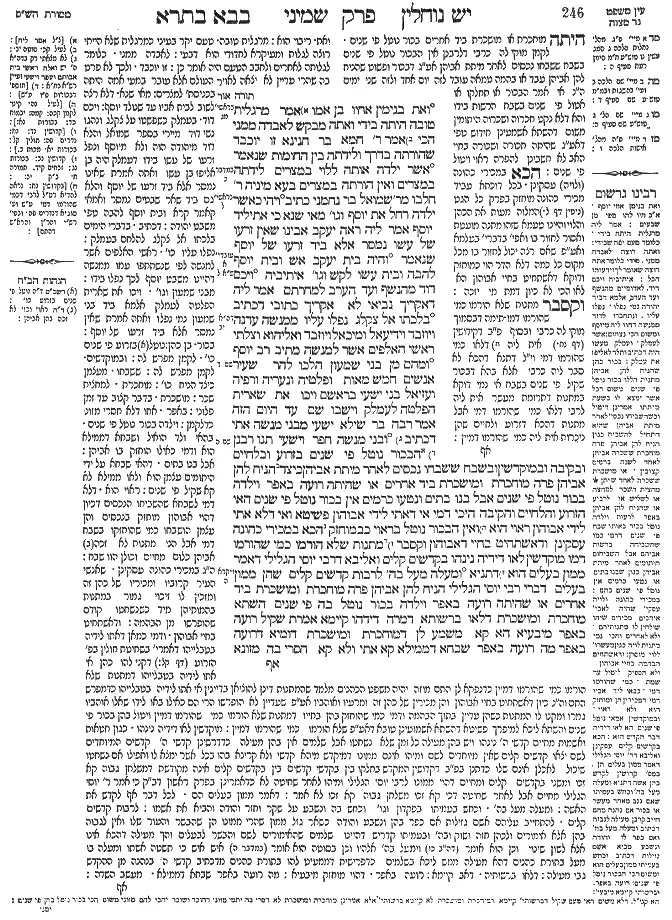
Bava Batra 123b - Guemara
(בראשית מג, כט) ואת בנימין אחיו בן אמו אמר מרגלית טובה היתה בידי ואתה מבקש לאבדה ממני הכי אמר ר' חמא בר חנינא זו יוכבד שהורתה בדרך ולידתה בין החומות שנאמר (במדבר כו, נט) אשר ילדה אותה ללוי במצרים לידתה במצרים ואין הורתה במצרים בעא מיניה ר' חלבו מר' שמואל בר נחמני כתיב (בראשית ל, כה) ויהי כאשר ילדה רחל את יוסף וגו' מאי שנא כי אתיליד יוסף אמר ליה ראה יעקב אבינו שאין זרעו של עשו נמסר אלא ביד זרעו של יוסף שנאמר (עובדיה א, יח) והיה בית יעקב אש ובית יוסף להבה ובית עשו לקש וגו' איתיביה (שמואל א ל, יז) ויכם דוד מהנשף ועד הערב למחרתם אמר ליה דאקריך נביאי לא אקריך כתובי דכתיב (דברי הימים א יב, כא) בלכתו אל צקלג נפלו עליו ממנשה עדנה ויוזבד וידיעאל ומיכאל ויוזבד ואליהוא וצלתי ראשי האלפים אשר למנשה מתיב רב יוסף (דברי הימים א ד, מב) ומהם מן בני שמעון הלכו להר שעיר אנשים חמש מאות ופלטיה ונעריה ורפיה ועזיאל בני ישעי בראשם ויכו את שארית הפלטה לעמלק וישבו שם עד היום הזה אמר רבה בר שילא ישעי מבני מנשה אתי דכתיב (דברי הימים א ה, כד) ובני מנשה חפר וישעי תנו רבנן הבכור נוטל פי שנים בזרוע ובלחיים ובקיבה ובמוקדשין ובשבח ששבחו נכסים לאחר מיתת אביהן כיצד הניח להן אביהן פרה מוחכרת ומושכרת ביד אחרים או שהיתה רועה באפר וילדה בכור נוטל פי שנים אבל בנו בתים ונטעו כרמים אין בכור נוטל פי שנים האי הזרוע והלחיים והקיבה היכי דמי אי דאתי לידי אבוהון פשיטא ואי דלא אתי לידי אבוהון ראוי הוא ואין הבכור נוטל בראוי כבמוחזק הכא במכירי כהונה עסקינן ודאשתחיט בחיי דאבוהון וקסבר מתנות שלא הורמו כמי שהורמו דמו מוקדשין לאו דידיה נינהו בקדשים קלים ואליבא דרבי יוסי הגלילי דאמר ממון בעלים הוא דתניא (ויקרא ה, כא) ומעלה מעל בה' לרבות קדשים קלים שהן ממון בעלים דברי רבי יוסי הגלילי הניח להן אביהן פרה מוחכרת ומושכרת ביד אחרים או שהיתה רועה באפר וילדה בכור נוטל בה פי שנים השתא מוחכרת ומושכרת דלאו ברשותא דמרה דידהו קיימא אמרת שקיל רועה באפר מיבעיא הא קא משמע לן דמוחכרת ומושכרת דומיא דרועה באפר מה רועה באפר שבחא דממילא קא אתי ולא קא חסרי בה מזונא
Comments from Rashbam - Bava Batra 123b
ואת . ריבוי הוא: מרגלית טובה . טעם יקר בעיני כמרגלית שלא הייתי רוצה לגלות ומעיקרא לחדודי הוא דבעי: לאבדה ממני . כלומר לגלותה לאחרים ולחבב הטעם היה אומר כן: זו יוכבד . ולכך לא פרט בה שהרי עדיין לא יצאה לאויר העולם אלא עובר במעי אמה היתה בכניסת' למצרים: מאי שנא . דלא רצה לשוב לבית אביו עד שנולד יוסף: ויכם דוד . בעמלק כשפשטו על צקלג ונהגו נשי דוד מיירי בספר שמואל והלא דוד מיהודה הוה ולא מיוסף ונפל זרעו של עשו בידו דעמלק היה בן אליפז בן עשו ואתה אמרת שאינו נמסר אלא ביד זרעו של יוסף והלא גם ביד שאר שבטים נמסר ואמאי קאמר קרא ובית יוסף להבה טפי משבט יהודה: דכתיב . בדברי הימים בלכתו אל צקלג להלחם בעמלק: נפלו עליו כו' . ראשי האלפים אשר למנשה לפי שנשתתפו עמו ממנשה דהיינו משבט יוסף לכך נפלו בידו: מבני שמעון וגו' . ויכו את שארית הפלטה לעמלק אלמא ביד בני שמעון נמי נפלו ואתה אמרת שאין נמסר אלא ביד זרעו של יוסף: בכור . בן כהן: נוטל בזרוע פי שנים כו' . לקמן מפרש לה: ובמוקדשים . לקמן מפרש לה: ששבחו . מעצמן כיצד הניח כו': מוחכרת . למחצית שכר: מושכרת . בדבר קצוב עד זמן פלוני: באפר . אחו דלא חסרי מזוני כדלקמן: וילדה בכור נוטל פי שנים . בהאי ולד הואיל ושבחא דממילא הוא ודמי כאילו הוחזק בו אביהן: אבל בנו בתים . דהאי שבחא על ידי היתומים עצמן הוא ולאו ממילא לא קא שקיל פי שנים: ראוי הוא . דלא דמי לשבחא שהשביחו הנכסים דכיון דהוי אבוהון מוחזק בנכסים והן עצמן הושבחו כמי שהוחזקו בשבח דמי אבל הני מתנות לא זכה אביהן כלום מחיים וכולן הוו שבח: ה"ג במכירי כהונה עסקינן . שאנשי העיר קרוביו ומכיריו של כהן זה ומזכין לו זיכוי גמור במתנות בהמותיהן מיד כשנשחטו קודם שהופרשו מן הבהמה: ודאשתחיט בחיי אבוהון . ודמי כמאן דאתו לידיה בטבלייהו דאמרי' בשחיטת חולין בפ' הזרוע (דף קל:) דקני להו כהן אי אתו לידיה בטבלייהו דמתנות שלא הורמו כמי שהורמו דמיין כדנפקא לן התם מוזה יהיה משפט הכהנים מלמד שהמתנות דינן להוציאן בדיינין אי אתו לידיה בטבלייהו כדמפרש התם וה"נ כיון דאשתחיט בחיי אבוהון והן מכירין של כהן זה ומרעיו ואוהביו אע"פ שעדיין לא הופרשו הרי הם כאילו באו לידו שאלו אוהביו גמרו ומקנו לו המתנות כשהן עדיין בתוך הבהמה ודמי כמי שהוחזק בהן בחייו דמתנות שלא הורמו כמי שהורמו דמיין ויטול בהן בכור פי שנים והשתא ליכא למיפרך פשיטא דהשתא אשמועינן טובא דאע"פ שלא הורמו כמי שהורמו דמיין: מוקדשין לאו דידיה נינהו . כגון חטאות ואשמות מחיים קדשי ה' נינהו ויש בהן מעילה כל זמן שלא נשחטו אבל שלמים אין בהן מעילה כדדרשינן קדשי ה' קדשים המיוחדים לשם יצאו קדשים קלים שאין מיוחדים לשם ומיהו אינם ממונו דמיקדש מיהא קדשי ולא קרינא בהו בכל אשר ימצא לו ואפילו אם נשחטו שיכול לאכלן אינם שלו כדתנן בפ"ב דקדושין המקדש בחלקו בין בקדשי קדשים בין בקדשים קלים אינה מקודשת דמשלחן גבוה קא זכו ומשני בקדשים קלים ומחיים דהוי ממונו לרבי יוסי הגלילי ומיהו לאחר שחיטה לא כדאמרינן בפרק ראשון דב"ק כי אמר ר' יוסי הגלילי מחיים אבל לאחר שחיטה דכי קא זכו משלחן גבוה קא זכו לא אמר: דאמר ממון בעלים הם . לכל דבר אף לקדש את האשה: ומעלה מעל בה' . וכחש בעמיתו בפקדון וגו' וכחש בה ונשבע על שקר וחזר והודה והביא את אשמו: לרבות קדשים קלים . להתחייב עליהם אשם גזילות אם כפר בהן ונשבע והודה כשאר גזל ממון שהרי ממונו הן שהבשר והעור שלו ואין לגבוה בהן אלא אימורים ולכהן חזה ושוק ובה' ובעמיתו קדריש דהיינו שלמים שהאימורים לשם והבשר לבעלים והך מעילה דהכא אינו אלא לשון שינוי וכן הוא אומר (דברי הימים ב כו) וימעל בה' אלהיו וכן בסוטה הוא אומר (במדבר ה) איש איש כי תשטה אשתו ומעלה בו מעל בתורת כהנים דהא מעילה ממש ליכא בשלמים כדפרישית דממעיט להו בתורת כהנים מדכתיב קדשי ה' בנהנה מן ההקדש גבי מעילה: דלאו ברשותיה . דאב קיימא: רועה באפר . דהוי מוחזק מיבעיא: מה רועה באפר שבחא דממילא . מעשב השדה:
Comments from Tosafot - Bava Batra 123b
היתה מוחכרת או מושכרת ביד אחרים בכור נוטל פי שנים. לקמן מוקי לה כרבי דלרבנן אין הבכור נוטל פי שנים בשבח ששבחו נכסים לאחר מיתת אביהן אע"ג דבכור ופשוט שהניח להן אביהן עבד או בהמה טמאה עובד לזה יום אחד ולזה שני ימים ה"נ אי אמר הבכור או תחלקו או אטול פי שנים בשבח הרשות בידו והא דלא נקט חכרוה ושכרוה היתומין משום דהשתא אשמעינן חידוש טפי דאע"ג שהיתה חכורה ושכורה בחיי האב לא חשבינן להפרה ראוי ויטול פי שנים: הכא במכירי כהונה (ולויה) עסקינן. בכל דוכתא עביד מכירי כהונה מוחזק בפרק כל הגט (גיטין דף ל.) המלוה מעות את הכהן והלוי והיינו טעמא שזהו מתנה מועטת ואסור לחזור בו ואפי' בדברי' בעלמא ואע"פ שאם רצה יכול לחזור בו מכל מקום כל כמה דלא הדר הוי כמוחזק ודוקא דאשתחיט בחיי אבוהון הא לאו הכי לא כיון דמת מי יזכה: וקסבר מתנות שלא הורמו כמי שהורמו דמו. תימה דבסמוך מוקי לה כרבי ובסוף פ"ב דקידושין (דף נח.) אית ליה דלאו כמי שהורמו דמי וי"ל דתנא דהכא לא סבר ליה כרבי אלא בהא דבכור שקיל פי שנים בשבח אי נמי דוקא במתנות דתרומת מעשר אית ליה לרבי דלאו כמי שהורמו דמי אבל מתנות דהכא דזרוע ולחיים שהן ניכרות אית ליה כמי שהורמו דמיין:
Bava Batra 123b - Mishnah translated into english
“And he lifted up his eyes, and saw et Benjamin his brother, his mother’s son” (Genesis 43:29), which would render the count of seventy incorrect. Rabbi Ḥiyya bar Abba said: There was a goodly pearl [margalit] in my hand, and you are trying to have me lose it. He continued: So said Rabbi Ḥama bar Ḥanina: This missing seventieth person is Jochebed, whose conception was on the journey, as the family of Jacob descended to Egypt, and she was born within the walls, i.e., in Egypt, as it is stated: “And the name of Amram’s wife was Jochebed, the daughter of Levi, who was born to Levi in Egypt” (Numbers 26:59). Her birth was in Egypt, but her conception was not in Egypt. Accordingly, the family had seventy persons upon arrival, but she could not have been listed as descending to Egypt.
§ Rabbi Ḥelbo asked Rabbi Shmuel bar Naḥmani: It is written: “And it came to pass, when Rachel gave birth to Joseph, that Jacob said to Laban: Send me away, that I may go to my own place, and to my country” (Genesis 30:25). What was different when Joseph was born, that Jacob decided only then to return home? Rabbi Shmuel bar Naḥmani said to him: Jacob our patriarch saw prophetically that the descendants of Esau will be delivered only to the hand of the descendants of Joseph, as it is stated: “And the house of Jacob shall be a fire, and the house of Joseph a flame, and the house of Esau for straw, and they shall kindle in them, and devour them” (Obadiah 1:18). Jacob had left Eretz Yisrael to escape Esau, but he now felt confident that he could return without endangering his family.
Rabbi Ḥelbo raised an objection to Rabbi Shmuel bar Naḥmani: Concering a battle between the Jewish people and the nation of Amalek, who descend from Esau, the verse states: “And David smote them from the twilight even to the evening of the next day” (I Samuel 30:17). David was from the tribe of Judah, yet he was able to defeat the descendants of Esau. Rabbi Shmuel bar Naḥmani said to him: Whoever read and taught Prophets to you did not read and teach Writings to you, as it is written: “As he went to Ziklag, there fell to him of Manasseh, Adnah, and Jozabad, and Jediael, and Michael, and Jozabad, and Elihu, and Zillethai, captains of thousands that were of Manasseh, and they helped David against the troop” (I Chronicles 12:21–2). The verse in Writings teaches that David’s campaign against Esau was led by Joseph’s descendants, from the family of Manasseh.
Rav Yosef raises an objection: Another verse indicates that the descendants of Simeon also have the ability to defeat the descendants of Esau: “And some of them, even of the sons of Simeon, five hundred men, went to Mount Seir, having for their captains Pelatiah, and Ne’ariah, and Rephaiah, and Uzziel, the sons of Ishi. And they struck the remnant of the Amalekites that escaped, and dwelled there until this day” (I Chronicles 4:42–43). Rabba bar Sheila said in response: Ishi came from the children of Manasseh, as it is written: And the sons of Manasseh: Hepher and Ishi.
§ The Sages taught (Tosefta 7:4–5): The firstborn priest takes a double portion of the foreleg, and of the jaw, and of the maw, which are given to a priest from all slaughtered non-sacred cattle, sheep, and goats (see Deuteronomy 18:3). And a firstborn, whether he is a priest or non-priest, takes a double portion of his father’s sacrificial animals and of the enhancement of the property that occurred after the death of their father.
The baraita continues: How so? To what type of enhancement is this referring? If their father left them a cow that was leased or rented in the possession of others, or if it was grazing in the meadow, and it gave birth, then the firstborn takes a double portion of the rental income or of the calf. But if the inheritors built homes or planted vineyards after their father’s death, thereby enhancing the property, the firstborn does not take a double portion. This is not considered enhancement of the father’s property, but profit due to their actions.
The Gemara analyzes the baraita: Concerning this right to collect a double portion of the foreleg, and the jaw, and the maw, what are the circumstances? If they came into the possession of their father, then it is obvious that the firstborn collects a double portion. And if they did not come into the possession of their father, then these items are merely property due to their father, and the firstborn does not take a double portion of property due to the deceased as he does the property his father possessed.
The Gemara answers: Here, we are dealing with associates of the priesthood, i.e., people who have an arrangement with a specific priest to give him their priestly gifts. And it was a case where the animal was slaughtered while the father was alive, and the tanna of this baraita holds: Priestly gifts that were not yet separated are considered as though they have already been separated. Therefore, even though the gifts were not yet given, they were considered in the possession of the priest before his death.
The Gemara continues to analyze the baraita: Why does the firstborn take a double portion of the father’s sacrificial animals? Isn’t it so that once the father consecrates them, they belong to Heaven and are not his?
The Gemara answers: This is stated with regard to a case of offerings of lesser sanctity, such as peace offerings, and in accordance with the opinion of Rabbi Yosei HaGelili, who says: These sacrificial animals are considered the property of their owners, as opposed to property of Heaven. As it is taught in a baraita that concerning one who steals another’s property and takes a false oath denying he has done so, incurring the obligation to bring a guilt-offering, the verse states: “And commits a trespass against the Lord, and deals falsely with his neighbor” (Leviticus 5:21). The verse serves to include offerings of lesser sanctity, which are the property of their owners; this is the statement of Rabbi Yosei HaGelili. Consequently, the firstborn collects a double portion of these as well.
The baraita states: If their father left them a cow that was leased or rented in the possession of others, or if it was grazing in the meadow, and it gave birth, then the firstborn takes a double portion of the rental income or calf. The Gemara asks: Now that in a case where the cow was leased or rented to others, where the animals are not in their owner’s possession, you say that the firstborn takes a double portion, in a case where it was grazing in the meadow, is it necessary for the baraita to state that he receives a double portion?
The Gemara answers that this is what the baraita teaches us: It teaches that a case where the animal was leased or rented is similar to a case where it was grazing in the meadow, in that just as in a case where it was grazing in the meadow, the enhancement came by itself and the brothers did not lose money for its sustenance,
Traduction : The William Davidson digital edition of the Koren Noé Talmud, with commentary by Rabbi Adin Even-Israel Steinsaltz.