 Talmud Bavli
Bava Batra 156b : Youtube
Daf TubeYoutube
2 video classes :
Bava Batra Page 156b
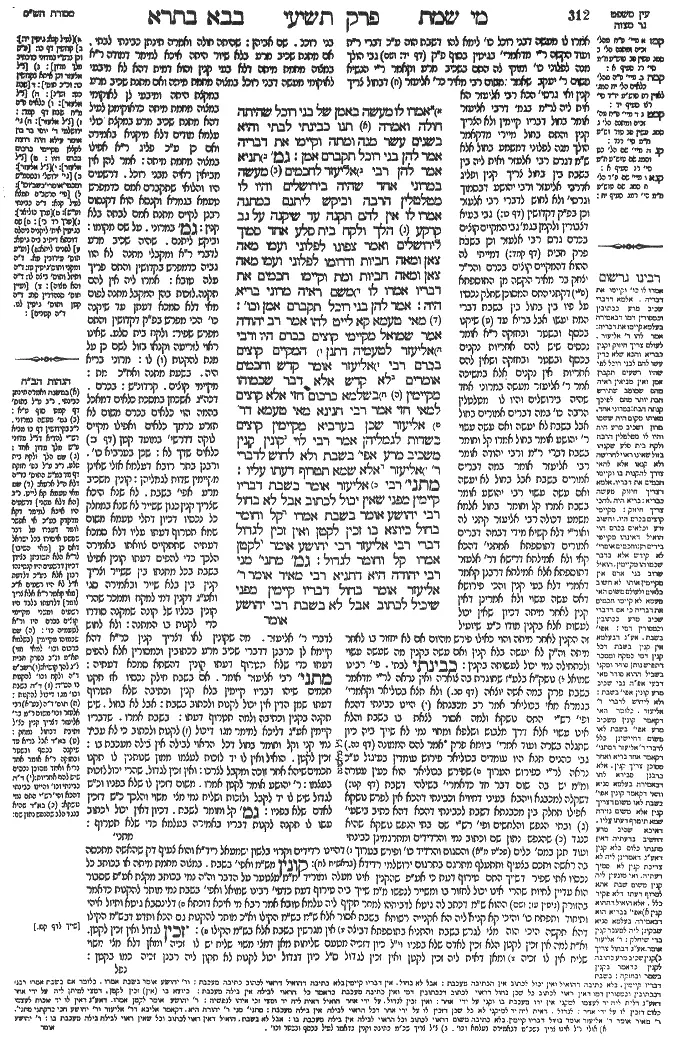
Bava Batra 156b - Guemara
אמרו לו מעשה באמן של בני רוכל שהיתה חולה ואמרה תנו כבינתי לבתי והיא בשנים עשר מנה ומתה וקיימו את דבריה אמר להן בני רוכל תקברם אמן:
גמ׳ תניא אמר להן רבי אליעזר לחכמים מעשה במרוני אחד שהיה בירושלים והיו לו מטלטלין הרבה וביקש ליתנם במתנה אמרו לו אין להם תקנה עד שיקנה על גב קרקע הלך ולקח בית סלע אחד סמוך לירושלים ואמר צפונו לפלוני ועמו מאה צאן ומאה חביות ודרומו לפלוני ועמו מאה צאן ומאה חביות ומת וקיימו חכמים את דבריו אמרו לו משם ראיה מרוני בריא היה:
אמר להן בני רוכל תקברם אמן וכו':
מאי טעמא קא לייט להו אמר רב יהודה אמר שמואל מקיימי קוצים בכרם היו ורבי אליעזר לטעמיה דתנן המקיים קוצים בכרם רבי אליעזר אומר קדש וחכמים אומרים לא קדש אלא דבר שכמוהו מקיימין בשלמא כרכום חזי אלא קוצים למאי חזי אמר רבי חנינא מאי טעמא דר' אליעזר שכן בערביא מקיימין קוצים בשדות לגמליהן אמר רבי לוי קונין קנין משכיב מרע אפי' בשבת ולא לחוש לדברי ר' אליעזר אלא שמא תטרוף דעתו עליו:
מתני׳ רבי אליעזר אומר בשבת דבריו קיימין מפני שאין יכול לכתוב אבל לא בחול רבי יהושע אומר בשבת אמרו קל וחומר בחול כיוצא בו זכין לקטן ואין זכין לגדול דברי רבי אליעזר רבי יהושע אומר לקטן אמרו קל וחומר לגדול:
גמ׳ מתני' מני רבי יהודה היא דתניא רבי מאיר אומר ר' אליעזר אומר בחול דבריו קיימין מפני שיכול לכתוב אבל לא בשבת רבי יהושע
Comments from Rashbam - Bava Batra 156b
בני רוכל . שם אביהן: שהיתה חולה ואמרה תינתן כבינתי לבתי . אם מתנת שכיב מרע בלא שיור היתה איכא למימר דמודה ר"א במצוה מחמת מיתה דלא בעי קנין והוא דמית דהא לא מיבעי לאוקומי מעשה דבני רוכל במצוה מחמת מיתה ואם מתנת שכיב מרע במקצת היתה ומיבעי לן לאוקומי במצוה מחמת מיתה כדאוקימנן לעיל דהא מתנת שכיב מרע במקצת כולי עלמא מודים דלא מיקניא באמירה ואם כן ע"כ פליג ר"א אפילו במצוה מחמת מיתה: אמר להן אין מביאין ראיה מבני רוכל . דרשעים היו והלואי שתקברם אמם כדמפרש טעמא בגמרא וקנסא הוא דקנסום רבנן לקיים מתנת אמם לבתה בלא קנין: גמ' במרוני . על שם מקומו: וביקש ליתנם . שהיה שכיב מרע לדברי ר"א ומקבלי מתנה לא הוו גביה כדמפרש בקדושין והתם פריך עלה טובא: אמרו ליה אין להם תקנה . לזכות בהן המקבל מתנה לפום מאי דלא סמכא דעתן עד שיקנה כו' הכי מפרש בפ"ק דקדושין והתם מפרש שפיר: ולקח בית סלע . שאינו ראוי לזריעה וקנאו בזול לשם כן על מנת להקנות לו: מרוני בריא היה . בשעת מתנה ואח"כ מת: מקיימי קוצים . קרדונ"ש: בכרם . דכה"ג אשכחן במסכת כלאים דמאכל בהמה הוי כלאים בכרם משום לא תזרע כרמך כלאים ואפילו מקיים לוקה דדרשי' במועד קטן (דף ב:) כלאים שדך לא: שכן בערביא כו' . ורבנן בתר רובא דעלמא אזלי שאינן מקיימין שדות לגמליהן: קונין משכיב מרע אפי' בשבת . לא שנא היכא שצריך קנין כגון ששייר לא שנא במחלק כל נכסיו דכיון דתלי טעמא משום שמא תטרוף דעתו עליו דלא סמכא דעתיה שתתקיים צוואתו באמירה הלכך כדי להפיס דעתו קונין אפילו בשבת בכל מתנתו בין ששייר וצריך קנין בין בלא שייר ובאמירה סגי ואע"ג דקנין דמי למקח וממכר שהרי קונין בכליו של קונה שמקנה סודרו כדי לקנות בו המתנה: ולא לחוש לדברי ר' אליעזר . מה שקונין לאו דצריך קנין כר"א דהא קיימא לן כרבנן דדברי שכיב מרע ככתובין וכמסורין אלא להפיס דעתו כדי שלא תטרוף דעתו קונין דהשתא סמכא דעתיה: מתני' רבי אליעזר אומר . אם בשבת חילק נכסיו אז תקנו חכמים שיהו דבריו קיימין בלא קנין וכתיבה שלא תטרוף דעתו שמן הדין אין יכול לקנות ולכתוב בשבת: אבל לא בחול . שיש תקנה בקנין וכתיבה ולמה תטרוף דעתו: בשבת אמרו . שדבריו קיימין אע"ג דליכא למימר מגו דיכול לקנות ולכתוב כי לא עביד נמי קני וקל וחומר בחול דכל הראוי לבילה אין בילה מעכבת בו: זכין לקטן . הואיל ואין לו יד לזכות לעצמו ממון שנותנין לו תקנו חכמים שיהא אחר זוכה ומקבל לצרכו: ואין זכין לגדול . שהרי יכול לזכות בעצמו: ר' יהושע אומר לקטן אמרו . משום דזכין לו שלא בפניו וכ"ש לגדול שיש לו יד לקבל ולזכות ושליח נמי מצי משוי והלכך כ"ש דזכין לאדם שלא בפניו:
Comments from Tosafot - Bava Batra 156b
כבינתי לבתי. פי' רבינו שמואל נושק"א בלע"ז שחוגרת בה צוארה ואין נראה לר"י מדאמר בשבת פרק במה אשה יוצאה (דף סב.) ולא תצא בכוליאר וקאמרי' בגמרא מאי בכוליאר אמר רב מכבנתא היינו כבינתי דהכא ופי' רש"י התם נושקא ולמה אסור לצאת בו בשבת והלא אינו עשוי אלא דרך מלבוש ושלפא ומחוי נמי לא שייך ביה כיון שתגלה בשרה ועוד אמרי' ביומא פרק אמר להם הממונה (דף כה.) גבי כהנים תנא היו עומדים בכוליאר פירוש עומדין בעיגול ע"כ נראה לר"י כפירוש הערוך שפירש בכוליאר הוא כעין עטרה ומ"מ יש בה שום דבר חד כדאמרי' בשילהי דשבת (דף קנו:) דשקלה למכבנא ויהבא בעיני דחיויא וכבינתי דהכא אין לפרש נושקא אפילו תחלק בין מכבנתא דשבת לכבינתי דהכא דהא כתיב בישעי' (ג) ובתי הנפש והלחשים ופי' רש"י שם בתי הנפש נושקא שהיא כנגד שהנפש נתון שם וכתוב נמי והרדידים ומתרגמינן כבינתי ועוד תנן במס' כלים (פכ"ט מ"א) והסגוס והרדיד כו' ופירש בערוך דהיינו רדידים וקרוי בלשון ישמעאל ריד"א והוא צעיף דק שהאשה מתכסה בה ראשה ותכס בצעיף ותתעלף מתרגם בתרגום ירושלמי רדידא (בראשית לח): קונין מש"מ ואפי' בשבת. במצוה מחמת מיתה או בכותב כל נכסיו אתי שפיר דשייך התם טירוף דעת כי אע"פ שהקנין אינו מעלה ומוריד מ"מ מצטער על הדבר וה"ה נמי בכותב מקצת אע"פ שסבור הוא עדיין לחיות שהרי אינו יכול לחזור בו ומשייר לנפשו מ"מ שייך ביה טירוף דעת כדפי' רבינו שמואל ואפי' בשבת נמי מותר להקנות כדאמר בהזורק (גיטין עז: ושם) ההוא ש"מ דכתב לה גיטא לדביתהו למחר תקיף ליה עלמא טובא אמר רבא מי איכא דוכתא דלינסבא גיטא ותיזל איהי ותיחוד ותפתח כו' והיכי קא קניא ליה הא אקנייה רשותא בשבת אסור אלא ש"מ בש"מ הקילו וא"כ מותר להקנות גם הכא ותדע דבש"מ הקילו דהא תקשה היכי הוה מצי לגרש בשבת והתניא בתוספתא דביצה אין מגרשין בשבת אלא בש"מ הקילו:
Bava Batra 156b - Mishnah translated into english
The Rabbis said to Rabbi Elazar: There was an incident involving the mother of the sons of Rokhel, who was sick, and who said: My brooch shall be given to my daughter, and it is valued at twelve hundred dinars. And this woman subsequently died, and the Sages upheld her statement. This indicates that a person on his deathbed can gift property without an act of acquisition. Rabbi Elazar said to them: That case was different; the sons of Rokhel should be buried by their mother, i.e., he cursed them. It is not possible to bring a proof from this incident, as these sons were wicked people. Consequently, when ruling in this matter the Sages did not act in accordance with the halakha, but allowed the mother of the sons of Rokhel to give this valuable piece of jewelry to their sister without an act of acquisition having been performed.
GEMARA: It is taught in a baraita: Rabbi Eliezer said to the Rabbis: There was an incident involving a certain man of Meron who was in Jerusalem, and he had a lot of movable property. And he desired to give the movable property as gifts to various individuals, but they could not be acquired by pulling. The Rabbis said to him: There is no remedy for transferring the property unless he transfers the movable property by means of transferring the ownership of land.
He went and acquired one plot of rocky land adjacent to Jerusalem, and he said: I give the north part of this area to so-and-so, and with it one hundred sheep and one hundred barrels. And I give the south part of the area to so-and-so, and with it one hundred sheep and one hundred barrels. And he died, and the Sages upheld his statement. This indicates that a person on his deathbed cannot transfer property without an act of acquisition. The Rabbis said to Rabbi Eliezer: Do you bring proof from there? The man of Meron was healthy at the time. This was not the gift of a person on his deathbed, and it could not be acquired by verbal instruction.
§ The mishna teaches: Rabbi Elazar said to them: That case was different; the sons of Rokhel should be buried by their mother. The Gemara asks: What is the reason that he was cursing them? Rav Yehuda says that Shmuel says: They were maintaining thorns in a vineyard and did not uproot them, and Rabbi Eliezer conforms to his line of reasoning, as we learned in a mishna (Kilayim 5:8): With regard to one who maintains thorns in a vineyard, Rabbi Eliezer says: He has proscribed the vineyard, rendering it forbidden due to the prohibition against diverse kinds. And the Rabbis say: Only growing a matter, i.e., a crop, the like of which people usually maintain, proscribes a vineyard and renders it forbidden.
The Gemara asks: Granted, if it were saffron that grew in the vineyard, it is useful for seasoning and other uses, and therefore it proscribes the vineyard. But with regard to thorns, for what are they useful? Rabbi Ḥanina said: What is the reasoning of Rabbi Eliezer? It is because in Arabia they maintain thorns in the fields for their camels. Rabbi Eliezer holds that since thorns are maintained in one place, they are considered useful everywhere.
Rabbi Levi says: An act of acquisition may be performed in order to effect acquisition of property from a person on his deathbed even on Shabbat, even though transactions are not performed on Shabbat. And this, that an act of acquisition must be performed, is not stated in order to take into consideration the statement of Rabbi Eliezer that the gifts of any person on his deathbed require an act of acquisition. Rather, the reason for this is that if a person on his deathbed requests the performance of an act of acquisition, his request is fulfilled, lest his anxiety upon seeing that his will is not being carried out cause him to lose control of his mind due to his grief, exacerbating his poor physical state.
MISHNA: Rabbi Eliezer says: On Shabbat, the verbal statement of a person on his deathbed stands, as he cannot write, and the Sages instituted that he can effect the transaction verbally lest the inability to do so exacerbate his condition. But a verbal instruction does not stand if stated on a weekday. Rabbi Yehoshua says: With regard to Shabbat, the Sages stated that his verbal instruction is sufficient, even though writing is prohibited. One can infer a fortiori that the same applies with regard to a weekday, when writing is permitted.
Similarly, one can acquire property on behalf of a minor, but one cannot acquire property on behalf of an adult, since he can perform the act of acquisition himself; this is the statement of Rabbi Eliezer. Rabbi Yehoshua says: The Sages stated this halakha with regard to a minor, and one may infer a fortiori that this also applies with regard to an adult, who is able to perform the act of acquisition himself.
GEMARA: The Gemara asks: Whose opinion is expressed in the mishna? The Gemara answers: This is the opinion of Rabbi Yehuda. This is as it is taught in a baraita: Rabbi Meir says that Rabbi Eliezer says: With regard to a person on his deathbed who distributes his property by verbal instruction, on a weekday, his statements stand, because he can write, but his statement does not stand on Shabbat, because he cannot write.
Rabbi Yehoshua
Traduction : The William Davidson digital edition of the Koren Noé Talmud, with commentary by Rabbi Adin Even-Israel Steinsaltz.