 Talmud Bavli
Bava Batra 119b : Youtube
Daf TubeYoutube
2 video classes :
Bava Batra Page 119b
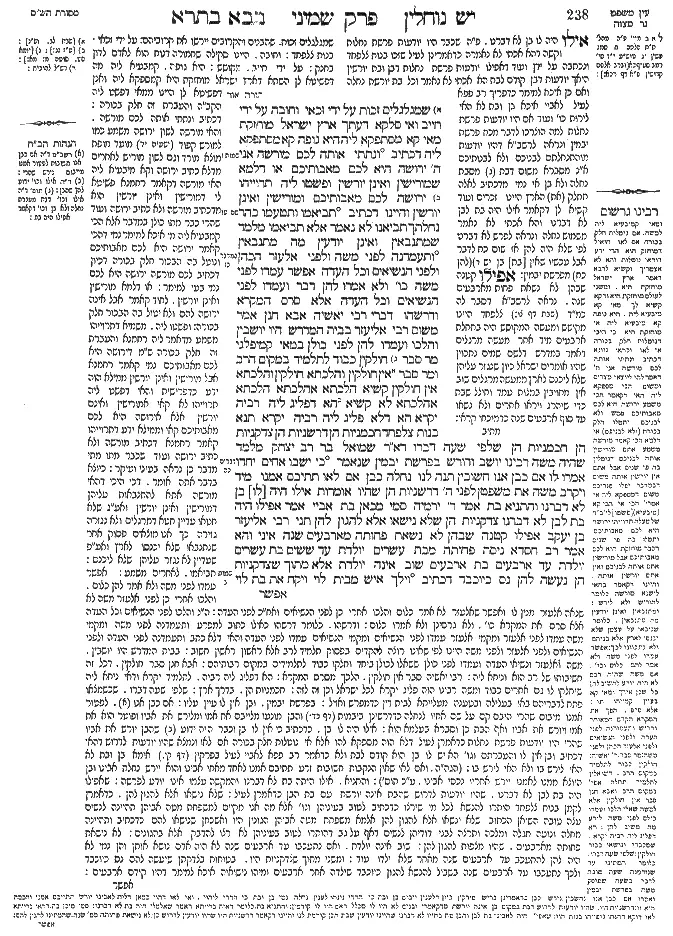
Bava Batra 119b - Guemara
שמגלגלים זכות על ידי זכאי וחובה על ידי חייב ואי סלקא דעתך ארץ ישראל מוחזקת מאי קא מסתפקא ליה היא גופה קא מסתפקא ליה דכתיב (שמות ו, ח) ונתתי אותה לכם מורשה אני ה' ירושה היא לכם מאבותיכם או דלמא שמורישין ואינן יורשין ופשטו ליה תרוייהו ירושה לכם מאבותיכם ומורישין ואינן יורשין והיינו דכתיב (שמות טו, יז) תביאמו ותטעמו בהר נחלתך תביאנו לא נאמר אלא תביאמו מלמד שמתנבאין ואינן יודעין מה מתנבאין (במדבר כז, ב) ותעמדנה לפני משה ולפני אלעזר הכהן ולפני הנשיאים וכל העדה אפשר עמדו לפני משה כו' ולא אמרו להן דבר ועמדו לפני הנשיאים וכל העדה אלא סרס המקרא ודרשהו דברי רבי יאשיה אבא חנן אמר משום רבי אליעזר בבית המדרש היו יושבין והלכו ועמדו להן לפני כולן במאי קמיפלגי מר סבר חולקין כבוד לתלמיד במקום הרב ומר סבר אין חולקין והלכתא חולקין והלכתא אין חולקין קשיא הלכתא אהלכתא הלכתא אהלכתא לא קשיא הא דפליג ליה רביה יקרא, הא דלא פליג ליה רביה יקרא תנא בנות צלפחד חכמניות הן דרשניות הן צדקניות הן חכמניות הן שלפי שעה דברו דא"ר שמואל בר רב יצחק מלמד שהיה משה רבינו יושב ודורש בפרשת יבמין שנאמר (דברים כה, ה) כי ישבו אחים יחדו אמרו לו אם כבן אנו חשובין תנה לנו נחלה כבן אם לאו תתיבם אמנו מיד ויקרב משה את משפטן לפני ה' דרשניות הן שהיו אומרות אילו היה [לו] בן לא דברנו והתניא בת אמר ר' ירמיה סמי מכאן בת אביי אמר אפילו היה בת לבן לא דברנו צדקניות הן - שלא נישאו אלא להגון להן תני רבי אליעזר בן יעקב אפילו קטנה שבהן לא נשאת פחותה מארבעים שנה איני והא אמר רב חסדא ניסת פחותה מבת עשרים יולדת עד ששים, בת עשרים יולדת עד ארבעים, בת ארבעים שוב אינה יולדת אלא מתוך שצדקניות הן נעשה להן נס כיוכבד דכתיב (שמות ב, א) וילך איש מבית לוי ויקח את בת לוי
Comments from Rashbam - Bava Batra 119b
שמגלגלים זכות . שהבנים והקרובים יירשו את קרוביהם: על ידי זכאי . בנות צלפחד: וחובה . היינו סקילה שחמורה דנוח הוא לאדם לדון בחנק: על ידי חייב . מקושש: היא גופה . קמבעיא ליה מה דפשיטא לן השתא דארץ ישראל מוחזקת היא קמספקא ליה ואנן דפשיטא לן היינו ממאי דפשט ליה הקב"ה והעברת זה חלק בכורה: דכתיב ונתתי אותה לכם מורשה . והאי מורשה לשון ירושה משמע כמו למורש קפוד (ישעיהו יד) מועד מופת מוצא מורד וגם לשון מוריש לאחרים מדלא כתיב ירושה וקא מיבעיא ליה האי מורשה דקאמר רחמנא פשיטא לי' דמורישין ואינן יורשין הוא מדכתיב מורשה ולא כתיב ירושה ועוד שהרי כבר מתו כולן במדבר אלא הכי קמבעיא ליה מי איכא למימד נמי דהכי קאמר ירושה היא לכם מאבותיכם ונוטל בה הבכור חלק בכורה דכיון דכתיב לכם מורשה ירושה היא לכם נמי בעי למימר: או דלמא מורישין ואינן יורשין . לחוד קאמר אבל אינה ירושה להם ולא יטול בה הבכור חלק בכורה: ופשטו ליה . משמיא דתרוייהו משמע מדאמר ליה רחמנא והעברת זה חלק בכורה ש"מ דירושה היא לכם מאבותיכם נמי קאמר רחמנא אבל מורישין ואינן יורשין ממילא הוה ידע כדפרישית והאי דפשט ליה תרוייהו לא קאי אמורישין ואינם יורשין אלא אירושה היא לכם מאבותיכם קאי וממילא ידע דתרוייהו קאמר רחמנא דכתיב מורשה ולא כתיב ירושה ועוד שכבר מתו מתי מדבר כן נראה בעיני ועיקר: כיוצא בדבר אתה אומר . דכי היכי דהאי מורשה אתא להתנבאות עליהן דמורישין ואינן יורשין ואע"ג שלא חטאו עדיין חטא דמרגלים ולא נגזרה גזירה כך אנו מוצאים פסוק אחר שנתנבאו שלא יכנסו לארץ ואע"פ שעדיין לא נגזר עליהן שלא ליכנס: תביאמו . לאחרים משמע: אפשר עמדו לפני משה ולא אמר להן כלום . והלכו אחרי כן לפני אלעזר משה לא שנאה אלעזר מנין לו ואפשר שאלעזר לא אמר כלום והלכו אחרי כן לפני הנשיאים ואח"כ לפני העדה: ה"ג והלכו לפני הנשיאים וכל העדה אלא סרס את המקרא כו' . ולא גרסינן ולא אמרו כלום: ודרשהו . כלומר דרשהו כאילו כתוב למפרע ותעמדנה לפני משה ומקמי משה עמדו לפני אלעזר ומקמי אלעזר עמדו לפני הנשיאים ומקמי הנשיאים עמדו לפני העדה והאי דלא כתב ותעמדנה לפני העדה ולפני הנשיאים ולפני אלעזר ולפני משה היינו לפי שאינו רוצה להקדים בפסוק תלמיד לרב אלא ראשון ראשון חשוב: בבית המדרש היו יושבין . משה ואלעזר ונשיאי העדה ועמדו לפני כולן ששאלו לכולן ביחד וחלקו כבוד לתלמידים במקום רבותיהם: אבא חנן סבר חולקין . דכל זה חשיבותו של רב הוא וניחא ליה: רבי יאשיה סבר אין חולקין . הלכך מסרס המקרא: הא דפליג ליה רביה . לתלמיד יקרא ודאי ניחא ליה שיחלקו לו גם אחרים כבוד ומשה רבינו הוה פליג יקרא לכל ישראל וכן זה לזה: חכמניות הו . בדרך ארץ: שלפי שעה דברו . שכשמצאו פתח לדבריהם באו בעלילה ובטענה מעלייתא לבית דין כדמפרש ואזיל: בפרשת יבמין . ובן אין לו עיין עליו: אם כבן אנו . לפטור אמנו מיבום שהרי היבם קם על שם אחיו לנחלה כדדרשינן ביבמות (דף כד.) והבן מונעו מלייבם את אמו ומלירש את אביו ופוטר הוא את אמו ויורש את אביו ואף הבת כן וסברא בעלמא הוא: (הגה"ה. ואם לאו שאין הנקבות חשובות זרע תתיבם אמנו לאחד מאחי אבינו והוא יירש נחלת אבינו ובן היוצא ממנו לאמנו יירש אחריו נכסי אבינו. ע"כ תוס'): אילו היה לו בן . כדכתיב כי אין לו בן וכבר היה ידוע שהבן יורש את אביו שהרי היו יודעות פרשת נחלות כדאמרן לעיל דלא הוה מספקא להו אלא אי נוטלות חלק בכורה אם לאו ונמצא שהיו יודעות לדרוש דהאי דכתיב ובן אין לו והעברתם וגו' הא יש לו בן הוא קודם לבת ולא כדאמר רב פפא לאביי לעיל בפרקין (בבא בתרא דף קי.) אימא בן ובת לא האי לירש בו ולא האי לירש בו: והתניא . אילו היתה בת לא דברנו והמקשה עצמו אינו יודע לפרשה: שאפילו היה בת לבן לא דברנו . שהיו יודעות לדרוש שהבת אינה יורשת עם בת הבן כדאמרן לעיל: שלא נישאו אלא להגון לה . כדאמרן לקמן בנות צלפחד הותרו להנשא לכל מי שירצו כדכתיב לטוב בעיניהן וגו' אלא מה אני מקיים למשפחת מטה אביהן תהיינה לנשים עצה טובה השיאן הכתוב שלא ינשאו אלא להגון להן אלמא משפחת מטה אביהן הגונין היו ואשכחן שנישאו להם כדכתיב ותהיינה מחלה ונועה חגלה ומלכה ותרצה לבני דודיהן לנשים דאף על גב דהותרו לטוב בעיניהן לא רצו להדבק אלא בהגונים: לא נישאת פחותה מארבעים . שהיו מצפות להגון להן: שוב אינה יולדת . ואם נתעכבו עד ארבעים שנה לא היה אדם נושא אותן והן נמי לא היה להן להתעכב עד ארבעים שנה מאחר שלא ילדו עוד: ומשני מתוך שצדקניות היו . בטוחות בצדקתן שיעשה להם נס כיוכבד ולכך נתעכבו עד ארבעים שנה בשביל להנשא להגון כיוכבד שילדה אחר ארבעים ומיהו נישואיה איכא למימר דהיו קודם ארבעים:
Comments from Tosafot - Bava Batra 119b
אילו היה לו בן לא דברנו. פ"ה שכבר היו יודעות פרשת נחלות וקשה דהא אכתי לא נאמרה כדאמרינן לעיל שזכו בנות צלפחד ונכתבה על ידן ועוד דאפילו יודעות פרשת נחלות דבן ובת יורשין היאך יודעות דבן קודם לבת הא אכתי לא נאמר וכל בת יורשת נחלה ואם כן איכא למימר כדפריך רב פפא לעיל לאביי איכא בן ובת לא האי לירות כו' ועוד אם היו יודעות פרשת נחלות למה הוצרכו לדבר מכח פרשת יבמין ונראה לרשב"א דהיו יודעות מוהתנחלתם לבניכם ולא לבנותיכם א"נ מסברא משום דבת מסבת נחלה ולא בן אי נמי מדכתיב לאלה תחלק (את) הארץ היינו זכרים ועוד קשיא לן דקאמר אילו היה בת לבן לא דברנו והא אכתי לא נאמר משמוש נחלה ונראה לפרש לא דברנו לפי שלא היה להן אז שום כח לדבר אבל עכשיו שאין [בת] בן יש (להן כח) מפרשת יבמין: אפילו קטנה שבהן לא נשאת פחות מארבעים שנה. נראה לרשב"א דסבר לה כמ"ד (שבת דף צו:) צלפחד היינו מקושש ומעשה המקושש היה בתחלת ארבעים מיד אחר מעשה מרגלים דאמר במדרש דלשם שמים נתכוין שהיו אומרים ישראל כיון שנגזר עליהן שלא ליכנס לארץ ממעשה מרגלים שוב אין מחויבין במצות עמד וחילל שבת כדי שיהרג ויראו אחרים ולא נשאו עד סוף ארבעים שנה כדמוכחי קראי:
Bava Batra 119b - Mishnah translated into english
that merit is brought about by means of one who is meritorious and liability by means of one who is liable. Accordingly, the daughters of Zelophehad merited that the Torah portion concerning a positive matter be written through them, and the wood gatherer deserved that a portion concerning a negative matter be written through him. This concludes Rabbi Ḥideka’s citation of Rabbi Shimon HaShikmoni.
The Gemara states its objection: And if it enters your mind to say that Eretz Yisrael was already in possession of the Jewish people even before the land was assigned, what was Moses uncertain about with regard to the right of Zelophehad’s daughters to collect a double portion; after all, Hepher’s portion in the land was in his possession, and Zelophehad was the firstborn?
The Gemara answers: This matter itself is what Moses was uncertain about, as it is written: “And I will give it to you for a heritage [morasha]: I am the Lord” (Exodus 6:8). Moses was unsure if the verse should be understood: It is an inheritance [yerusha] for you from your fathers, such that it is considered in the possession of those who left Egypt; or perhaps the verse indicates another matter, that the generation of those who left Egypt bequeath [morishin] the portions to others but they do not inherit [yoreshin] the portions themselves, because they are destined to die in the wilderness.
The Gemara continues: And God resolved the question for him: The verse teaches both of them. It is an inheritance for you from your fathers and is considered in your possession; and also the generation that left Egypt bequeath but they do not inherit. And this is the meaning of that which is written in the song that the Jewish people sang after the splitting of the Red Sea: “You will bring them in, and plant them in the mountain of Your inheritance” (Exodus 15:17). It is not stated: You will bring us in, rather: “You will bring them in,” which teaches that in their song, the Jewish people were prophesying that their generation would never enter Eretz Yisrael, but they did not know what they were prophesying.
§ The Gemara continues its discussion of the incident involving Zelophehad’s daughters. The verse states: “And they stood before Moses, and before Eleazar the priest, and before the princes and all the congregation” (Numbers 27:2). The Gemara asks: Is it possible that Zelophehad’s daughters stood before Moses and then Eleazar to ask their question, and they said nothing to them; and then the daughters stood before the princes and all the congregation to ask them? How would the princes or the congregation know an answer if Moses and Eleazar did not?
The Gemara answers: Rather, transpose the verse and interpret it: First, the daughters went to the congregation and ultimately came to Moses, this is the statement of Rabbi Yoshiya. Abba Ḥanan says in the name of Rabbi Eliezer: Those enumerated in the verse were all sitting in the house of study, and Zelophehad’s daughters went and stood before all of them at once. They were not asked separately; rather, the order of the verse reflects their stature.
The Gemara clarifies: With regard to what do they disagree? One Sage, Abba Ḥanan, holds that one may show honor to a student in the presence of the teacher, such that the verse would mention all the others even though they were in the presence of Moses; and one Sage, Rabbi Yoshiya, holds one may not show honor to a student in the presence of the teacher, such that only Moses would have been mentioned if they were all in the same place.
The Gemara concludes: And the halakha is that one may show honor to a student, and the halakha is that one may not show honor. The Gemara asks: This is difficult, as there is a contradiction between the one halakha and the other halakha. The Gemara answers: The contradiction between the one halakha and the other halakha is not difficult, as this ruling, that one may show honor, was stated where his teacher himself accords the student honor. In such a case, others also may show the student honor. And that ruling, that one may not show honor, was stated where his teacher does not accord him honor.
§ The Sages taught: The daughters of Zelophehad are wise, they are interpreters of verses, and they are righteous.
The Gemara proves these assertions. That they are wise can be seen from the fact that they spoke in accordance with the moment, i.e., they presented their case at an auspicious time. As Rabbi Shmuel bar Rav Yitzḥak says: Tradition teaches that Moses our teacher was sitting and interpreting in the Torah portion about men whose married brothers had died childless, as it is stated: “If brothers dwell together, and one of them dies, and has no child, the wife of the dead shall not be married abroad to one not of his kin; her husband’s brother shall come to her, and take her for him as a wife” (Deuteronomy 25:5). The daughters of Zelophehad said to Moses: If we are each considered like a son, give us each an inheritance like a son; and if not, our mother should enter into levirate marriage. Immediately upon hearing their claim, the verse records: “And Moses brought their cause before the Lord” (Numbers 27:5).
That they are interpreters of verses can be seen from the fact that they were saying: If our father had had a son, we would not have spoken; but because he had no son, we are filling the role of the heir. The Gemara asks: But isn’t it taught in a baraita: They would say, if he had had a daughter, we would not have spoken? Rabbi Yirmeya said: Delete from the baraita here the word: Daughter. As they were themselves daughters, this cannot have been their claim. Abaye said that the baraita need not be emended, and should be understood as follows: Even if there was a daughter of a son of Zelophehad, we would not have spoken, for she would have been the heir.
That they are righteous can be seen from the fact that they did not rush to marry, but rather waited to marry those fit for them. Rabbi Eliezer ben Ya’akov teaches: Even the youngest to be married among them was not married at less than forty years of age.
The Gemara asks: Is that so? But doesn’t Rav Ḥisda say: If a woman marries when she is less than twenty years old, she is able to give birth until she reaches the age of sixty; if she marries when she is twenty years old or older, she is able to give birth until she reaches the age of forty; if she marries when she is forty years old or older, she is no longer able to give birth at all. If so, how could Zelophehad’s daughters have waited until the age of forty to marry? Rather, since they are righteous women, a miracle was performed for them, like the one done for Jochebed. As it is written: “And a man of the house of Levi went, and took as a wife a daughter of Levi” (Exodus 2:1).
Traduction : The William Davidson digital edition of the Koren Noé Talmud, with commentary by Rabbi Adin Even-Israel Steinsaltz.
Bava Batra 119b : Significance
Next step
Finished studying Bava Batra 119b? Carry on with the rest of the tractate.
Study Bava Batra 120aFrequently asked questions: Bava Batra 119b
Where is Bava Batra 119b in tractate Bava Batra?
Bava Batra 119b is page 236 of 350 in tractate Bava Batra (Seder Nezikin).
When is daf 119 of Bava Batra studied in Daf Yomi?
Daf Yomi covers one daf a day, both sides. Daf 119 of Bava Batra will be studied on March 25, 2032.
Is there a video class on Bava Batra 119b?
Yes, by Daf Tube, Rabbi Dr. Moshe Weisblum. These classes were published on YouTube by their authors and are gathered on this site.
What is tractate Bava Batra about?
Masechet Baba Batra is the third tractate of the Seder Nezikin. The Baba Batra gemara is the study of laws relating to matters relating to individual responsibility and the rights of property holders. The Baba Batra tractate is a gemara which contains 10 chapters.
Your study is also dedicated to them
- L'ilui Nishmat רינה בת לדיסיה
- L'ilui Nishmat Jamila bat Chlomo Abensour
- L'ilui Nishmat אסתר בת חיים