 Talmud Bavli
Bava Batra 78b : Youtube
Daf TubeYoutube
2 video classes :
Bava Batra Page 78b
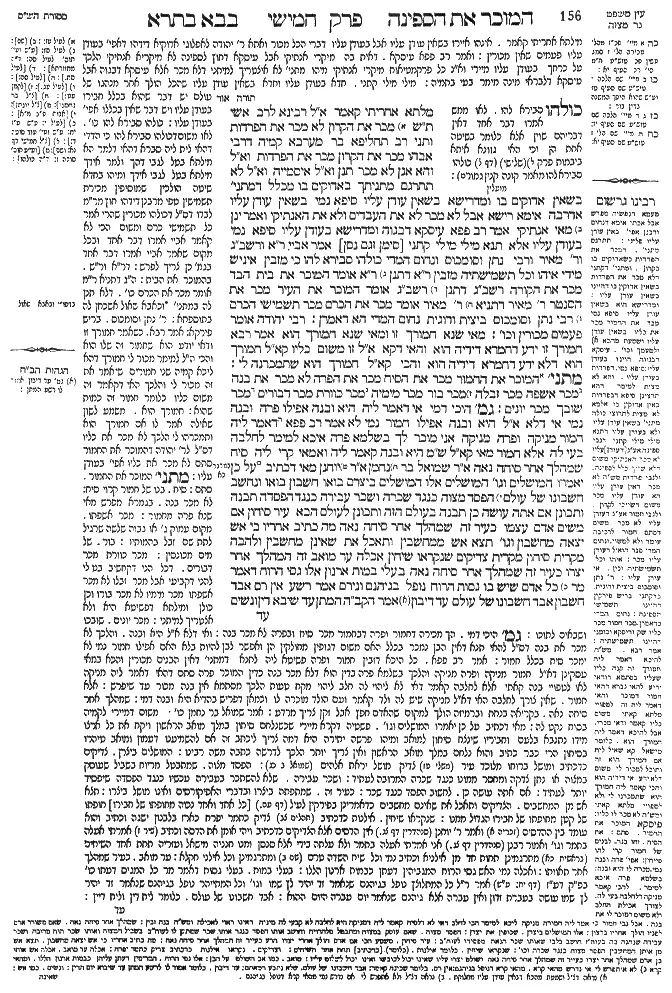
Bava Batra 78b - Guemara
מלתא אחריתי קאמר א"ל רבינא לרב אשי ת"ש מכר את הקרון לא מכר את הפרדות ותני רב תחליפא בר מערבא קמיה דרבי אבהו מכר את הקרון מכר את הפרדות וא"ל והא אנן לא מכר תנן ואמר ליה איסמייה ואמר ליה לא תתרגם מתניתך באדוקים בו מכלל דמתני' בשאין אדוקים בו ומדרישא בשאין עודן עליו סיפא נמי בשאין עודן עליו אדרבה אימא רישא אבל לא מכר לא את העבדים ולא את האנתיקי ואמרינן מאי אנתיקי אמר רב פפא עיסקא דבגוה ומדרישא בעודן עליו סיפא נמי בעודן עליו אלא תנא מילי מילי קתני [סימן זגם נסן] אמר אביי ר"א ורשב"ג ור' מאיר ורבי נתן וסומכוס ונחום המדי כולהו סבירא להו כי מזבין איניש מידי איהו וכל תשמישתיה מזבין ר"א דתנן ר"א אומר המוכר את בית הבד מכר את הקורה רשב"ג דתנן רשב"ג אומר המוכר את העיר מכר את הסנטר ר' מאיר דתניא ר' מאיר אומר מכר את הכרם מכר תשמישי הכרם רבי נתן וסומכוס ביצית ודוגית נחום המדי הא דאמרן:
רבי יהודה אומר פעמים מכורין וכו':
מאי שנא חמורך זו ומאי שנא חמורך הוא אמר רבא חמורך זו ידע דחמרא דידיה הוא והאי דקא א"ל זו משום כליו קא"ל חמורך הוא דלא ידע דחמרא דידיה הוא והכי קא"ל חמורך הוא שתמכרנה לי:
מתני׳ המוכר את החמור מכר את הסיח מכר את הפרה לא מכר את בנה מכר אשפה מכר זבלה מכר בור מכר מימיה מכר כוורת מכר דבורים מכר שובך מכר יונים:
גמ׳ היכי דמי אי דאמר ליה היא ובנה אפילו פרה ובנה נמי אי דלא א"ל היא ובנה אפילו חמור נמי לא אמר רב פפא דאמר ליה חמור מניקה ופרה מניקה אני מוכר לך בשלמא פרה איכא למימר לחלבה בעי לה אלא חמור מאי קא"ל שמע מינה היא ובנה קאמר ליה ואמאי קרי ליה סיח שמהלך אחר סיחה נאה א"ר שמואל בר נחמן א"ר יוחנן מאי דכתיב (במדבר כא, כז) על כן יאמרו המושלים וגו' המושלים אלו המושלים ביצרם בואו חשבון בואו ונחשב חשבונו של עולם הפסד מצוה כנגד שכרה ושכר עבירה כנגד הפסדה תבנה ותכונן אם אתה עושה כן תבנה בעולם הזה ותכונן לעולם הבא עיר סיחון אם משים אדם עצמו כעיר זה שמהלך אחר סיחה נאה מה כתיב אחריו כי אש יצאה מחשבון וגו' תצא אש ממחשבין ותאכל את שאינן מחשבין ולהבה מקרית סיחון מקרית צדיקים שנקראו שיחין אכלה ער מואב זה המהלך אחר יצרו כעיר זה שמהלך אחר סיחה נאה בעלי במות ארנון אלו גסי הרוח דאמר מר כל אדם שיש בו גסות הרוח נופל בגיהנם ונירם אמר רשע אין רם אבד חשבון אבד חשבונו של עולם עד דיבון אמר הקב"ה המתן עד שיבא דין ונשים
Comments from Rashbam - Bava Batra 78b
מילתא אחריתי קאמר . אינהו איירו בשאין עודן עליו אבל בעודן עליו דברי הכל מכור ואתא ר' יהודה לאפלוגי אדוקיא דידהו דאפי' בעודן עליו פעמים שאין מכורין: ואמר רב פפא עיסקא . דאית בה מיקרי אנתיקי אבל עיסקא דחוץ לספינה לא מיקריא אנתיקי הלכך על כרחך בעודן עליו מיירי וא"נ כל פרקמטיאות מיקרי אנתיקי מיהו מתני' לא איצטריך למיתני דלא מכר אלא עיסקא דבגוה אבל עיסקא דלבראי מינה מימר בעי בתמיה: מילי מילי קתני . חדא בעודן עליו וחדא בשאין עודן עליו שהכל הולך אתר מנהגו של עולם יש דבר שהוא בכלל חבירו בעודן עליו ויש דבר שאין בכללו אפי' בעודן עליו: כולהו סבירא להו כו' . לאו משום דכולהו סבירא להו כי הדדי דהאי לית ליה סברא דהאי דלמר הא מילתא בטל לגבי דהך ולמר אידך מילתא בטל לגבי אידך ומיהו בחדא שיטה הולכין שמוסיפין מכירת תשמישין טפי מרבנן דידהו חוץ מר"מ לבדו דס"ל דכולהו מכורין שהרי אמר כל תשמישי כרם ומשום הכי לא קאמר אביי אמרו דבר אחד ובכל מקום שאמר אביי אמרו דבר אחד בגמ' כן צריך לפרש: דר"א ור"ש . בהמוכר את הבית: ה"ג דתניא ר"מ אומר מכר את הכרם כו' . דלא תנן לה במתני' וכאבא שאול אשכחן לה בתוספתא: ר' נתן וסומכוס . בריש פירקא: אמר רבא . כשאמר חמורך זו ודאי יודע הוא שחמור זה שלו הוא והכי ה"ל למימר מכור לי חמורך דהא ליכא קמיה שני חמורים שיאמר את זה מכור לי והלכך האי דקאמר זה משום כליו כלומר חמור זה כמות שהוא: חמורך הוא . משמע לשון שאילה אמר לו אם חמורך הוא ותמכרהו לי הלכך לא מכר את כליו דס"ל לר' יהודה דהמוכר את החמור סתם לא מכר את כליו אפי' בעודן עליו: מתני' המוכר את החמור . סתם: סיח . בנו של חמור קרוי סית: לא מכר בנה . בגמרא מפרש מאי שנא פרה מחמור: מכר אשפתו . מקום עמוק ג' או גבוה שלשה שרגיל לתת שם זבל בהמותיו: בור . של מים מכונסין: מכר כוורת מכר דבורים . דכל הני דקחשיב בטילי להני דקביעי אבל מכר זבלו לא מכר אשפתו מכר מימיו לא מכר בורו וכן כולן ומילתא דפשיטא היא ולא אצטריך למיתני: מכר יונים . שובכו ושבאים לתוכו: גמ' היכי דמי . הך מכירה דחמור ופרה דבחמור מכר סיח ובפרה לא מכר בנה: ואי דלא א"ל היא ובנה . והלכך לא מכר את בנה דס"ל להאי תנא דאין הבן נמכר בכלל האם משום דגופין מחולקין הן ואפשר לבן להיות בלא האם אפילו חמור נמי לא ימכר סיח בכלל חמור: אמר רב פפא . כל היכא דזבין חמור ופרה פשיטא ליה לתנא דמתני' דאין הבנים מכורין והכא במאי עסקינן דא"ל חמור מניקה ופרה מניקה והלכך בשלמא פרה בדין הוא דלא מכר בנה כדין המוכר פרה סתם דהאי דאמר ליה מניקה לאו לטפויי בנה קאתי אלא לחלבה קאמר דאי לא ליהוי לה חלב ליהוי מקח טעות הלכך מסתמא אין בנה מכור עד שיפרש: אלא חמור . שאין צורך לחלבה האי דא"ל מניקה שיש לה ולד קאמר ועם הולד מוכרה לו וכמאן דפריש בהדיא היא ובנה דמי: שמהלך אחר סיחה נאה . בקריאה בנחת וברמיזה הולך למקום שהאדם חפץ אבל זקן צריך מרדע: אמר שמואל בר נחמן כו' . משום דמיירי לקמיה בסיח נקט לה: מאי דכתיב על כן יאמרו המושלים וגו' . פשטיה דקרא מיירי שכשנלחם סיחון במלך מואב הראשון ויקח את כל ארצו מידו נתנבא בלעם וחביריו שינצח סיחון למואב ומיהו פרשה יתירה היא דמה צריך ליכתב זה אם להשמיענו דעמון ומואב טיהרו בסיחון הרי כבר כתיב והוא נלחם במלך מואב הראשון ואין צריך יותר הלכך לדרשה כתבה משה רבינו: המושלים ביצרן . צדיקים כדכתיב ומושל ברוחו מלוכד עיר (משלי טז) צדיק מושל יראת אלהים (שמואל ב כג): הפסד מצוה . שמתבטל מריות בשביל שעוסק במצוה או נתן צדקה ומחסר ממונו כנגד שכרה המרובה לעתיד: ושכר עבירה . שלא להשתכר בעבירה עכשיו כנגד הפסדה שיפסיד יותר לעתיד: אם אתה עושה כן . לחשוב הפסד כנגד שכר: כעיר זה . שמתפתה ביצרו ובדברי האפיקורסים ואינו מושל ביצרו: תצא אש מן המחשבים . הצדיקים ותאכל את שאינם מחשבים כדאמרינן בפירקין לעיל (בבא בתרא דף עה.) [כל אחד ואחד נכוה מחופתו של חבירו] חופתו של קטן מחופתו של חבירו הגדול ממנו: שנקראו שיחין . אילנות כדכתיב (תהלים צב) צדיק כתמר יפרח כארז בלבנון ישגה וכתיב והוא עומד בין ההדסים (זכריה א) ואמר ר' יוחנן (סנהדרין דף צג.) אין הדסים אלא הצדיקים כדכתיב ויהי אומן את הדסה וכתיב (שיר ז) אמרתי אעלה בתמר וגו' ואמור רבנן (סנהדרין דף צג.) אני אמרתי אעלה בתמר ולא עלתה בידי אלא סנסן ומנו חנניה מישאל ועזריה תחת אחד השיחים (בראשית כא) מתרגמינן תחות חד מן אילניא וכתיב נמי וכל שיח השדה טרם (שם ב) ומתרגמינן וכל אילני חקלא: ואכלה נמי האש . גסי הרוח המגביהין דעתן כבמות ארנון הללו: ער מואב . כעיר שמהלך אחר תאוותו: בעלי במות . בעלי גסות דאמר מר כל המגיס דעתו כו' בפ"ק דע"ז (דף יח: ע"ש) אמר ר"ל כל המתלוצץ נופל בגיהנם שנאמר זד יהיר לץ שמו וגו' וכל המתייהר נופל בגיהנם שנאמר זד יהיר לץ שמו עושה בעברת זדון ואין עברה אלא גיהנם שנאמר יום עברה היום ההוא: אבד חשבונו של עולם . כלומר לית דין ולית דיין:
Comments from Tosafot - Bava Batra 78b
כולהו סבירא להו. לאו ממש אמרו דבר אחד דאין דבריהם שוין אלא כלומר בשיטה אחת הן וכי האי גוונא איתא ביבמות פרק (שלישי) (דף ל) כולהו סבירא להו מאמר קונה קנין גמור:
Bava Batra 78b - Mishnah translated into english
was speaking of a different matter and was not necessarily addressing the same case discussed in the beginning of the mishna.
Ravina said to Rav Ashi: Come and hear a resolution of the dilemma, as it was taught in the previous mishna: If one sold a wagon he has not sold the mules that pull the wagon. And Rav Taḥlifa, from the West, i.e., Eretz Yisrael, taught a baraita before Rabbi Abbahu: If one sold a wagon, he has sold the mules along with it. And Rabbi Abbahu said to him: But didn’t we learn in the mishna that he has not sold the mules? And Rav Taḥlifa said to him: Should I erase this baraita? And Rabbi Abbahu said to him: No, you should explain that your baraita is referring to a case where the mules are fastened to the wagon.
One can learn by inference from Rabbi Abbahu’s statement that the mishna is referring to a situation where the mules are not fastened to the wagon. And since the first clause, i.e., the previous mishna, is referring to a case corresponding to where the vessels are not on the donkey, i.e., the mules are not fastened to the wagon, the latter clause, the mishna here, must also be referring to a situation where the vessels are not on the donkey.
The Gemara rejects this proof: On the contrary, say the first clause, i.e., the preceding mishna: One who sells a ship sells the mast along with it, but he has not sold either the slaves or the antikei. And we said: What is the meaning of antikei? Rav Pappa said: It means the merchandise that is in the ship. But according to your logic, since the first clause, i.e., the mishna concerning the ship, is referring to a case where the merchandise is on the ship, the latter clause, the mishna here, must also be referring to a case where the vessels are on the donkey. Rather, the tanna teaches each statement individually, and the circumstances of one ruling do not prove that another ruling is referring to a parallel case.
The Gemara provides a mnemonic based on the letters of the names of the tanna’im who appear here: Zayin, gimmel, mem; nun, samekh, nun. Abaye said: Rabbi Eliezer, and Rabban Shimon ben Gamliel, and Rabbi Meir, and Rabbi Natan, and Sumakhos, and Naḥum the Mede all hold that when a person sells an item, he sells it and all of its accoutrements.
Rabbi Eliezer holds this, as we learned in a mishna (67b) that Rabbi Eliezer says: One who sells an olive press has sold the beam used for pressing the olives, despite the fact that the beam can be removed from the press. Rabban Shimon ben Gamliel holds this, as we learned in a mishna (68b) that Rabban Shimon ben Gamliel says: One who sells a city has sold the city’s guardsman. Rabbi Meir holds this, as it is taught in a baraita that Rabbi Meir says: If one sold a vineyard, he has sold the accoutrements of the vineyard. Rabbi Natan and Sumakhos hold this, as they state with regard to the bitzit and the dugit, i.e., the light-going boats of the ship, which they claim are sold when the ship is sold (73a). Naḥum the Mede holds this, as is evident from that which we said in the mishna here.
§ The mishna teaches that Rabbi Yehuda says: There are times when the vessels are sold, and there are times when they are not sold. How so? If the donkey was before him and its vessels were on it, and the buyer said to him: Sell me this donkey of yours, its vessels are sold. If the buyer said: Is the donkey yours? I wish to purchase it, its vessels are not sold. The Gemara asks: What is different in a case where the buyer said: Sell me this donkey of yours, and what is different in a case where he said: Is the donkey yours?
Rava said that when the buyer says: Sell me this donkey of yours, he knows that the donkey belongs to the seller, and as for that which he said to him: This, he said that to him due to its vessels. By contrast, when the buyer says: Is the donkey yours, this indicates that the buyer does not know that the donkey belongs to the seller, and this is what he is saying to him: Is the donkey yours that you can sell it to me? In this case, he is interested only in the donkey and not its vessels.
MISHNA: One who sells a female donkey has sold its foal along with it. But one who sold a cow has not sold its young. One who sold a dunghill has sold its manure. One who sold a cistern has sold its water. One who sold a beehive has sold the bees in it, and likewise one who sold a dovecote has sold the doves.
GEMARA: The mishna teaches that if one sells a donkey he has sold its foal, but if one sells a cow he has not sold its calf. The Gemara asks: What are the circumstances? If this is a case where the seller says to the buyer that he is selling it and its young, even the cow and its young should be sold as well. If this is a case where he does not say to him that he is selling it and its young, even the donkey should not be sold with its foal.
Rav Pappa said: This is referring to a case where the seller said to the buyer: I am selling you a nursing donkey, or: I am selling you a nursing cow. Granted, with regard to the cow, one could say that he needs it for its milk, and the suckling calf would not necessarily be included in the sale. But with regard to the donkey, for what reason is he saying to him that the donkey is nursing? Since he does not need the milk of a donkey, learn from here that he is saying to him that he is selling it and its young. The Gemara adds tangentially: And why does the mishna call a donkey foal a seyaḥ? It is because it follows after and obeys pleasant talk [siḥa], whereas an old donkey must be led forcibly.
The Gemara cites a related discussion. Rabbi Shmuel bar Naḥman says that Rabbi Yoḥanan says: What is the meaning of that which is written: “Therefore they that speak in parables [hamoshlim] say: Come to Heshbon! Let the city [ir] of Sihon be built and established! For a fire is gone out of Heshbon, a flame from the city of Sihon; it has devoured Ar of Moab, the lords of the high places of Arnon” (Numbers 21:27–28)?
The Gemara interprets these verses homiletically. “Hamoshlim”; these are the people who rule over [hamoshlim] their evil inclination. They will say: “Come to Heshbon,” meaning: Come and let us calculate the account of [ḥeshbono] the world, i.e., the financial loss incurred by the fulfillment of a mitzva in contrast to its reward, and the reward for committing a transgression, i.e., the pleasure and gain received, in contrast to the loss it entails.
“Let it be built and established” means that if you make this calculation, you will be built in this world and you will be established in the World-to-Come. The phrase “city [ir] of Sihon” means that if a person fashions himself like this young donkey [ayir] that follows after pleasant talk [siḥa], i.e., if one is easily tempted to listen to his inclination, what is written after it? “For a fire is gone out of Heshbon…it has devoured,” i.e., a fire will go out from those who calculate the effect of their deeds in the world, and will consume those who do not calculate and examine their ways but instead do as they please.
A similar interpretation applies to the continuation of the verse: “A flame from the city of Sihon”; this means that a flame will come from the city of righteous people, who are called trees [siḥin]. “It has devoured Ar of Moab”; this is referring to one who follows after his inclination like this young donkey [ayir] that follows after pleasant talk. “The lords of the high places of Arnon”; this is referring to the arrogant. As the Master says: Every person who has arrogance in him will fall into Gehenna.
The Gemara interprets a subsequent verse: “We have shot at them [vanniram], Heshbon is perished, even until Dibon, and we have laid waste even until Nophah, which reaches until Medeba” (Numbers 21:30). “Vanniram”; this indicates that the wicked person says: There is no higher [ein ram] power governing the world. “Heshbon is perished” means: The account [ḥeshbon] of the world has perished, i.e., they claim there is no accountability for one’s actions. “Even until Dibon [divon]”; the Holy One, Blessed be He, says: Wait until judgment comes [yavo din]. “And we have laid waste
Traduction : The William Davidson digital edition of the Koren Noé Talmud, with commentary by Rabbi Adin Even-Israel Steinsaltz.