 Talmud Bavli
Bava Batra 68b : Youtube
Daf TubeYoutube
2 video classes :
Bava Batra Page 68b
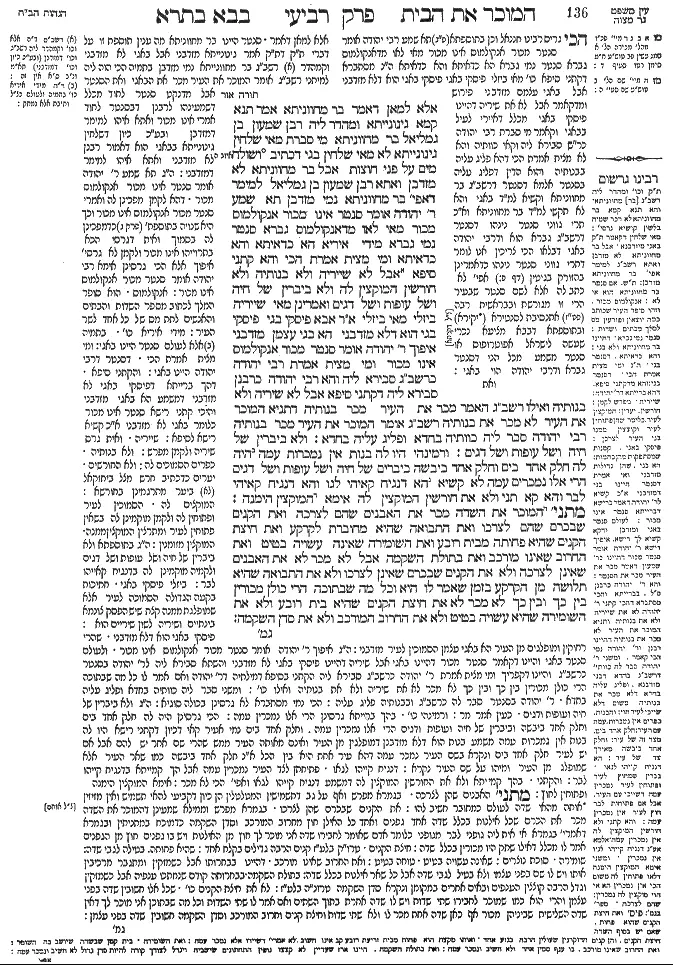
Bava Batra 68b - Guemara
אלא למאן דאמר בר מחווניתא אמר תנא קמא גינונייתא ומהדר ליה רבן שמעון בן גמליאל בר מחווניתא מי סברת מאי שלחין גינונייתא לא מאי שלחין בגי דכתיב (איוב ה, י) ושולח מים על פני חוצות אבל בר מחווניתא לא מזדבן ואתא רבן שמעון בן גמליאל למימר דאפילו בר מחווניתא נמי מזדבן תא שמע ר' יהודה אומר סנטר אינו מכור אנקולמוס מכור מאי לאו מדאנקולמוס גברא סנטר נמי גברא מידי איריא הא כדאיתא והא כדאיתא ומי מצית אמרת הכי והא קתני סיפא אבל לא שייריה ולא בנותיה ולא חורשין המוקצין לה ולא ביברין של חיה ושל עופות ושל דגים ואמרינן מאי שייריה ביזלי מאי ביזלי א"ר אבא פיסקי בגי פיסקי בגי הוא דלא מזדבני הא בגי עצמן מזדבני איפוך ר' יהודה אומר סנטר מכור אנקולמוס אינו מכור ומי מצית אמרת רבי יהודה כרשב"ג סבירא ליה והא רבי יהודה כרבנן סבירא ליה דקתני סיפא אבל לא שיריה ולא בנותיה ואילו רשב"ג האמר מכר את העיר מכר בנותיה דתניא המוכר את העיר לא מכר את בנותיה רשב"ג אומר המוכר את העיר מכר בנותיה רבי יהודה סבר ליה כוותיה בחדא ופליג עליה בחדא:
ולא ביברין של חיה ושל עופות ושל דגים:
ורמינהי היו לה בנות אין נמכרות עמה היה לה חלק אחד בים וחלק אחד ביבשה ביברים של חיה ושל עופות ושל דגים הרי אלו נמכרים עמה לא קשיא הא דנגיח קאיהי לגו והא דנגיח קאיהי לבר והא קא תני ולא את חורשין המוקצין לה אימא המוקצין הימנה:
מתני׳ המוכר את השדה מכר את האבנים שהם לצרכה ואת הקנים שבכרם שהם לצרכו ואת התבואה שהיא מחוברת לקרקע ואת חיצת הקנים שהיא פחותה מבית רובע ואת השומירה שאינה עשויה בטיט ואת החרוב שאינו מורכב ואת בתולת השקמה אבל לא מכר לא את האבנים שאינן לצרכה ולא את הקנים שבכרם שאינן לצרכו ולא את התבואה שהיא תלושה מן הקרקע בזמן שאמר לו היא וכל מה שבתוכה הרי כולן מכורין בין כך ובין כך לא מכר לא את חיצת הקנים שהיא בית רובע ולא את השומירה שהיא עשויה בטיט ולא את החרוב המורכב ולא את סדן השקמה:
Comments from Rashbam - Bava Batra 68b
אלא למאן דאמר . סנטר היינו בר מחווניתא מה ענין תוספת זו על דברי ת"ק דת"ק אמר גינונייתא מזדבני אבל באגי לא מזדבני וקמהדר רשב"ג בר מחוונייתא נמי מזדבן בתמיה הכי הוה ליה למיתני רשב"ג אומר המוכר את העיר מכר את הבאגי ואת הסנטר אבל מדנקט סנטר לחוד מכלל דשמעינהו לרבנן דבסנטר לחוד אמרי אינו מכור ואתא איהו למימר דמזדבן ובע"כ כיון דשלחין גינונייתא בבאגי הוא דאמור רבנן לא מזדבני ואתא איהו למימר דמזדבני: ה"ג תא שמע ר' יהודה אומר סנטר אינו מכור אנקולמוס מכור . דהא לקמן מפכינן לה ואמרי סנטר מכור אנקולמוס אינו מכור וכך היא שנויה בתוספת' (פרק ג) כדמפכינן לה בסמוך ואית דגרסי הכא בתרוייהו אינו מכור ולקמן לא גרסי' איפוך אלא הכי גרסינן אימא רבי יהודה אומר סנטר מכור אנקולמוס אינו מכור: אנקולמוס . הוא סופר המלך לכתוב מספר השדות והבתים והאנשים לתת מס של כל אחד לשר העיר: מידי איריא כו' . בתמיה אלא לעולם סנטר היינו באגי: ומי מצית אמרת הכי . דסנטר דרבי יהודה היינו באגי: והקתני סיפא . דהך ברייתא דפיסקי באגי לא מזדבני דמשמע הא באגי מזדבני והיכי קתני רישא סנטר אינו מכור כלומר באגי לא מזדבני א"כ קשיא רישא לסיפא: שייריה . ואית גרס שיריה ולקמן מפרש: ולא בנותיה . כפרים הסמוכים לה: ולא החורשים . יערים כדכתיב חרש מצל ביחזקאל (לא) ביער מתרגמינן בחורשא: המוקצים לה . הסמוכין לעיר ופתוחין לה ולקמן מוקמינן לה בשאין פתוחין לעיר ומתרצין המוקצין ממנה המוקצין מזומנין: ה"ג בתוספתא ולא ביברין של חיה ושל עופות ושל דגים ולקמיה מוקמינן לה בדנגיח קאייהו לבר: ביזלי פיסקי באגי . חתיכות בקעה הגדולה הסמוכה לעיר אלא שמופלגת ממנה קצת שיש הפסק צונמא בינתיים ושיריה לשון שיריים הוא: פיסקי באגי הוא דלא מזדבני . שהרי רחוקין ומופלגים מן העיר הא באגי עצמן הסמוכין לעיר מזדבני: ה"ג איפוך ר' יהודה אומר סנטר מכור אנקולמוס אינו מכור . ולעולם סנטר באגי והיינו דקאמר סנטר מכור דהיינו באגי אבל שיריה דהיינו פיסקי באגי לא מזדבני והשתא סבירא ליה לר' יהודה בסנטר כרשב"ג והיינו דקפריך ומי מצית אמרת ר' יהודה כרשב"ג סבירא ליה הקתני בסיפא דמילתיה דר' יהודה ואם אמר לו כל מה שבתוכה הרי כולן מכורין בין כך ובין כך לא מכר לא את שיריה ולא את בנותיה ואילו כו': ומשני סבר ליה כוותיה בחדא ופליג עליה בחדא . ר' יהודה בסנטר סבר לה כרשב"ג ובבנותיה פליג עליה: הכי נמי מסתברא . לא גרסינן בכולה סוגיא: ה"ג ולא ביברין של חיה ועופות ודגים . כעין אמר מר: ורמינהי כו' . בהך ברייתא גרסינן הרי אלו נמכרין עמה: הכי גרסינן היה לה חלק אחד בים וחלק אחד ביבשה וביברין של חיה ועופות ודגים הרי אלו נמכרין עמה. וחלק אחד בים נמי אעיר קאי דכיון דקתני רישא היו לה בנות אין נמכרות עמה משמע בנות הוא דלא מזדבנן דמופלגין מן העיר ואינם מאותה העיר ממש שהרי שם אחר יש להם אבל אם יש לעיר חלק אחד בים ונקרא בשם העיר נמכר עמה דהא עיר אחת היא בין הכל א"נ חלק אחד ביבשה כמו שאר העיר אלא שמופלג מן העיר ומיהו על שם העיר נקרא: דנגיח קייהו לגאו . פתיחתן לצד העיר נמכרין עמה אבל הך קמייתא בדנגיח קייהו לבר: והקתני . בהך קמייתא ולא את החורשין המוקצין לה דמשמע דנגיח קייהו לגאו ואפי' הכי לא מכר: אימא המוקצין הימנה . ופתוחין לחוץ: מתני' האבנים שהן לצרכה . בגמרא מפרש ואף על גב דתשמישין המטלטלין הן כיון דקביעי להאי תשמיש ואין מזיזין אותה מהאי שדה לעולם כמחובר חשיב להו: את הקנים שבכרם שהן לצרכו . בגמרא מפרש וממילא שמעינן דהמוכר את השדה מכר את הכרם שכל אילנות בכלל שדה אחד גפנים ואחד כל האילן חוץ מחרוב המורכב וסדן השקמה כדמוכח במתניתין ובגמרא דאמרי' בגמרא אי אית ליה גופני לבר מגופני כלומר אדם שאומר לחבירו שדה אני מוכר לך חוץ מן האילנות ויש בו גפנים חוץ מן הגפנים אמר לו מכלל דאילו שתק היו מכורין בכלל שדה: חיצת הקנים . טרו"ק בלע"ז קנים הרבה גדילים בקלח אחד: שהיא פחותה . בטילה לגבי שדה: שומירה . סוכת נוצרים: שאינה עשויה בטיט . טוחה בטיט: ואת החרוב שאינו מורכב . דהיינו בבחרותו אבל כשמזקין ומתגבר מרכיבין אותו ויש לו שם בפני עצמו ולא בטיל לגבי שדה אבל כל שאר אילנות בכלל שדה: בתולת השקמה . בבחרותה קודם שנחתכו ענפיה אבל כשמזקין וגדל הרבה קוצצין הענפים ובאים אחרים במקומן ונקרא סדן השקמה טרונ"ה בלע"ז: לא את חיצת הקנים כו' . שכל אלו חשובין שדה בפני עצמן והרי הוא כמו שמוכר לחבירו שתי שדות ויש לו שדה אחרת בתוך השתים ואם אמר לו שתי השדות וכל מה שבתוכן אני מוכר לך דאין שדה השלישית שביניהן מכור אף כאן שדה אחת מכר לו ולא שתי שדות וחיצת קנים וחרוב המורכב וסדן השקמה חשובין שדה בפני עצמן:
Comments from Tosafot - Bava Batra 68b
אמר תנא קמא באגי לא מזדבני ומהדר ליה רבן שמעון בן גמליאל בר מחווניתא מזדבן. ואף על גב דשמעינן מק"ו דבאגי מזדבני מ"מ כיון דתנא קמא אית ליה דאפילו באגי לא מזדבני הוה ליה לרשב"ג לפרושי שפיר ולמימר דבאגי ובר מחווניתא מזדבן: הכי גריס רבינו חננאל וכן בתוספתא (פ"ג) תא שמע רבי יהודה אומר סנטר מכור אנקולמוס אינו מכור מאי לאו מדאנקולמוס גברא סנטר נמי גברא הא כדאיתא והא כדאיתא ה"נ מסתברא דקתני סיפא כו' מאי ביזלי פיסקי באגי פיסקי באגי הוא דלא מזדבני אבל באגי עצמם מזדבני פירוש ומדקאמר אבל לא את שיריה דהיינו פיסקי באגי מכלל דאיירי לעיל בבאגי וקאמר מי סברת רבי יהודה כר"ש סבירא ליה וקאי כוותיה והא לא מצית אמרת הכי דהא פליג עליה בבנותיה והוא הדין דפליג עליה בסנטר אלמא דסנטר דרשב"ג בר מחווניתא וקשיא למ"ד באגי והא לא תקשי למ"ד בר מחווניתא וא"כ תרי גווני סנטר נינהו דסנטר דרשב"ג גברא הוא ודרבי יהודה באגי דבלאו הכי צריכין אנו לומר דתרי גווני סנטר נינהו כדאמרינן בהזורק בגיטין (דף פ:) אפי' לא כתב לה אלא לשם סנטר שבעיר הרי זו מגורשת ובבראשית רבה (פט"ז) אתנסיבת לסנטירא (יקירא) ובתוספתא דבבא מציעא נכרי שעשה לישראל אפוטרופוס או סנטר משמע מכל הני דסנטר גברא ודרבי יהודה הוי באגי: ואת השומירה. רשב"ם גריס ברישא שאין עשויה בטיט ובסיפא גבי לא מכר גריס העשויה ורבינו חננאל גריס איפכא:
Bava Batra 68b - Mishnah translated into english
But according to the one who says that santar means the land registrar, is it reasonable that the first tanna of the mishna said that the gardens within the city are included in the sale of the city, and Rabban Shimon ben Gamliel responded to him that the land registrar is included? How are the two connected? The Gemara answers: Do you maintain that what is meant by shelaḥin is gardens? This is not the case. Rather, what is meant by shelaḥin? This is referring to the fields that surround the city, as it is written: “Who gives rain upon the earth and sends [sholeaḥ] waters upon the fields” (Job 5:10). According to the first tanna, it is specifically the fields that are sold with the city, but the land registrar is not sold. And Rabban Shimon ben Gamliel comes to say that even the land registrar is also sold.
The Gemara suggests: Come and hear a proof from the following baraita: Rabbi Yehuda says: The santar is not sold with the city, but the city scribe [ankolemus] is sold with it. What, is it not clear from the fact that the city scribe is a man that the santar is also a man? The Gemara rejects this proof: Are the cases comparable? This case is as it is, and that case is as it is, and santar means fields, and not the land registrar.
The Gemara asks: How can you say that according to Rabbi Yehuda the fields surrounding the city are not sold along with it? But isn’t it taught in the latter clause of this baraita: But when one sells a city he has not sold its remnants, and not its daughters, i.e., the nearby rural villages, and not the woods that are set aside and designated for the city, and not the enclosures [beivarin] for animals, for birds, and for fish. And we said in explanation: What is meant by its remnants? Bizlei. The Gemara asks: What is the meaning of bizlei? Rabbi Abba said: The strips of the fields that are separated from the main fields by a stretch that cannot be cultivated. From here, it may be inferred that it is the strips of the fields that are not sold with the city, but the fields themselves are sold with it.
The Gemara suggests: Reverse the statement found in the baraita so that Rabbi Yehuda says that the santar, now understood to mean fields, is sold with the city, but the city scribe is not sold with it.
The Gemara asks: How can you say that Rabbi Yehuda holds in accordance with the opinion of Rabban Shimon ben Gamliel, to the point that you adduce proof from the words of Rabbi Yehuda with regard to the opinion of Rabban Shimon ben Gamliel? But doesn’t Rabbi Yehuda hold in accordance with the opinion of the Rabbis? As it is taught in the latter clause of that same baraita: But when one sells a city he does not sell its remnants, and he does not sell its daughters, i.e., the nearby rural villages. Whereas with regard to Rabban Shimon ben Gamliel, doesn’t he say that one who sold a city sold its daughters along with it, i.e., the nearby rural villages, as it is taught in a baraita: One who sells a city has not sold its daughters; Rabban Shimon ben Gamliel disagrees and says: One who sells a city has sold its daughters.
The Gemara answers: This does not prove that Rabbi Yehuda disagrees with Rabban Shimon ben Gamliel, as it may be suggested that Rabbi Yehuda holds in accordance with the opinion of Rabban Shimon ben Gamliel with regard to one issue, that the fields that surround the city are included in the sale, and disagrees with him with regard to another issue, as according to Rabbi Yehuda the nearby villages are not sold along with the city.
§ The baraita teaches: When one sells a city he has not sold, among other things, the enclosures for animals, for birds, and for fish. And the Gemara raises a contradiction from another baraita: If the city has daughters, i.e., nearby villages, they are not sold along with it. If it has one part on the sea and one part on dry land, or if it has enclosures for animals, for birds, or for fish, these are all sold along with the city.
The Gemara answers that this is not difficult, as a distinction can be made between different cases: Here, the one baraita addresses animal enclosures whose openings face inward, i.e., toward the city, and they are therefore considered a part of the city, whereas there, the other baraita addresses animal enclosures whose openings face outward, i.e., away from the city, and therefore they are not included in its sale. The Gemara raises a difficulty: But doesn’t the baraita teach: And he has not sold the woods that are set aside for the city, indicating that they face the city, and nevertheless they are not sold along with the city? The Gemara answers: Say that the baraita should be emended so that it reads instead: And he has not sold the woods that are set apart from the city, i.e., that are at a distance and do not face the city.
MISHNA: One who sells a field without specifying what is included in the sale has sold the stones in the field that are for its use, and the reeds in the vineyard that are for its use, and the produce that is still attached to the ground, and the cluster of reeds that occupy less than the area required for sowing a quarter-kav of seed [beit rova], and the watch station that is not plastered with clay, and the young carob tree that has not yet been grafted, and the untrimmed sycamore that is still young.
But he has not sold along with the field the stones that are not designated for use in the field, and not the reeds in the vineyard that are not designated for its use, and not the produce that is already detached from the ground. When the seller says to the buyer: I am selling you it and everything that is in it, all these components are sold along with the field. Both in this case, where he executes the sale without specification, and in that case, where he adds the phrase that he is selling everything that is in the field, he has not sold the cluster of reeds that occupy a beit rova or more, as they are considered a separate field, and he has not sold the watch station that is plastered with clay, and not the carob tree that has been grafted, and not the sycamore trunk. All of these entities are significant in their own right and have a status independent from that of the fields, and they are therefore not included in the sale of the field.
Traduction : The William Davidson digital edition of the Koren Noé Talmud, with commentary by Rabbi Adin Even-Israel Steinsaltz.