 Talmud Bavli
The learning on the whole site is dedicated : L'ilui Nishmat Rav Chlomo Ben Jamilla
The learning on the whole site is dedicated : L'ilui Nishmat Ledicia bat David Banoun
The learning on the whole site is dedicated : L'ilui Nishmat אליעזר בן רחל
Bava Batra 72b : Youtube
Daf TubeYoutube
2 video classes :
Bava Batra Page 72b
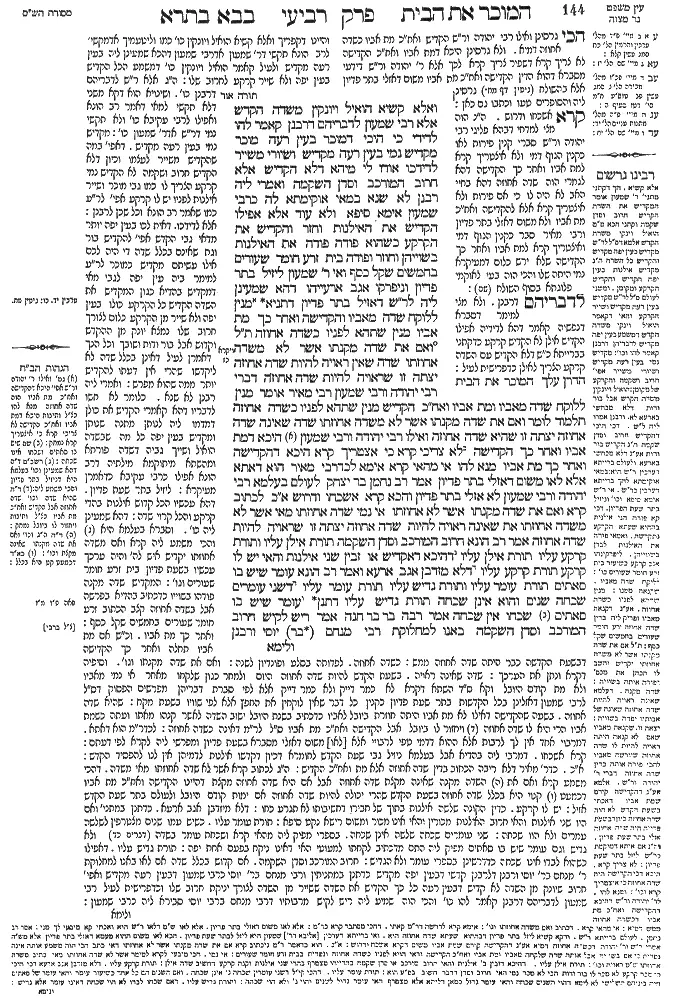
Bava Batra 72b - Guemara
ואלא קשיא הואיל ויונקין משדה הקדש אלא רבי שמעון לדבריהם דרבנן קאמר להו לדידי כי היכי דמוכר בעין רעה מוכר מקדיש נמי בעין רעה מקדיש ושיורי משייר לדידכו אודו לי מיהא דלא הקדיש אלא חרוב המורכב וסדן השקמה ואמרי ליה רבנן לא שנא במאי אוקימתא לה כרבי שמעון אימא סיפא ולא עוד אלא אפילו הקדיש את האילנות וחזר והקדיש את הקרקע כשהוא פודה פודה את האילנות בשוייהן וחוזר ופודה בית זרע חומר שעורים בחמשים שקל כסף ואי ר' שמעון ליזיל בתר פדיון וניפרקו אגב ארעייהו דהא שמעינן ליה לר"ש דאזיל בתר פדיון דתניא מנין ללוקח שדה מאביו והקדישה ואחר כך מת אביו מנין שתהא לפניו כשדה אחוזה תלמוד לומר (ויקרא כז, כב) ואם את שדה מקנתו אשר לא משדה אחוזתו שדה שאין ראויה להיות שדה אחוזה יצתה זו שראויה להיות שדה אחוזה דברי רבי יהודה ורבי שמעון רבי מאיר אומר מנין ללוקח שדה מאביו ומת אביו ואח"כ הקדיש מנין שתהא לפניו כשדה אחוזה תלמוד לומר ואם את שדה מקנתו אשר לא משדה אחוזתו שדה שאינה שדה אחוזה יצתה זו שהיא שדה אחוזה ואילו רבי יהודה ורבי שמעון היכא דמת אביו ואחר כך הקדישה לא צריכי קרא כי אצטריך קרא היכא דהקדישה ואחר כך מת אביו מנא להו אי מהאי קרא אימא לכדרבי מאיר הוא דאתא אלא לאו משום דאזלי בתר פדיון אמר רב נחמן בר יצחק לעולם בעלמא רבי יהודה ורבי שמעון לא אזלי בתר פדיון והכא קרא אשכחו ודרוש א"כ לכתוב קרא ואם את שדה מקנתו אשר לא אחוזתו אי נמי שדה אחוזתו מאי אשר לא משדה אחוזתו את שאינה ראויה להיות שדה אחוזה יצתה זו שראויה להיות שדה אחוזה אמר רב הונא חרוב המורכב וסדן השקמה תורת אילן עליו ותורת קרקע עליו תורת אילן עליו דהיכא דאקדיש או זבין שני אילנות והאי יש לו קרקע תורת קרקע עליו דלא מזדבן אגב ארעא ואמר רב הונא עומר שיש בו סאתים תורת עומר עליו ותורת גדיש עליו תורת עומר עליו דשני עומרים שכחה שנים והוא אינן שכחה תורת גדיש עליו דתנן עומר שיש בו סאתים שכחו אין שכחה אמר רבה בר בר חנה אמר ריש לקיש חרוב המורכב וסדן השקמה באנו למחלוקת רבי מנחם (בר) יוסי ורבנן
Comments from Rashbam - Bava Batra 72b
ה"ג אלא ר"ש לדבריהם דרבנן כו' . ושינויא הוא דקא משני דלא תקשי למאי דאמר רב הונא ואפילו לרבי עקיבא כו' ולא תקשי נמי דר"ש אדר' שמעון כו': מקדיש נמי בעין רעה מקדיש . דאפי' במה שהקדיש משייר לעצמו וכיון דלא הקדיש חרוב ושקמה לא הקדיש נמי קרקע הצריך לו כמו גבי מוכר ושייר אילנות לפניו יש לו קרקע אפי' לר"ע כמו שאמר רב הונא וכל שכן לרבנן: אלא לדידכו . דאית לכו בעין יפה יותר מדאי גבי הקדש אפי' להקדיש בור וגת שאינם בכלל שדה די היה לכם אילו עשיתם מקדיש כמוכר לר"ע למימר ביה עין יפה לגבי מאי דמקדיש בהדיא כגון המקדיש את השדה הקדיש כל הקרקע כולו בעין יפה ולא שייר מן הקרקע כלום לצורך חרוב שלו נמצא יונק מן ההקדש וקדוש אבל בור ודות ושובך וכל הנך דאמרן לעיל דאינן בכלל שדה לא ליקדשו שהרי אין דעתו להקדיש יותר ממה שהוא מפרש: ואמרי ליה רבנן לא שנא . כלומר לא חשו לדבריו דהא קאמרי הקדיש את כולן דמדמו ליה לנותן מתנה שנותן ומקדיש בעין יפה כל מה שבשדה הואיל ושייך גביה דשדה פורתא ומהשתא מיתוקמא מילתיה דרב הונא אפילו כרבי עקיבא כדאמרן מעיקרא: ליזיל בתר שעת פדיון . דהא עכשיו הכל קדוש אילנות בהדי קרקע והכל קרוי שדה: דהא שמעינן ליה כו' . וסברא בעלמא היא והכי משמע ליה קרא ואם משדה אחוזתו יקדיש איש לה' והיה ערכך עכשיו בשעת פדיון בית זרע חומר שעורים וגו': המקדיש שדה מקנה פודהו בשוייו כדכתיב בהדיא בפרשה אבל בשדה אחוזה קצב הכתוב זרע חומר שעורים בחמשים שקל כסף: ואחר כך מת אביו . וכ"ש אם מת אביו תחלה ואחר כך הקדישה דבשעת הקדשה כבר היתה שדה אחוזה ממש: כשדה אחוזה . לפדותה בסלע ופונדיון לשנה: ואם את שדה מקנתו וגו' . וסיפיה דקרא ונתן את הערכך: שדה שאינה ראויה . בשעת הקדש להיות שדה אחוזה היום ולמחר כגון שלקחו מאחר אי נמי מאביו ולא מת קודם היובל וקא ס"ד השתא דקרא לא כמר דייק ולא כמר דייק אלא לפי סברת דבריהן מפרשים הפסוק דס"ל לרבי שמעון דאזלינן בכל הקדשות בתר שעת פדיון כקנין כל דבר שאין לוקחין את החפץ אלא לפי שוויו בשעת מקח: שהיא שדה אחוזה . בשעה שהקדישה דאילו לא מת אביו היתה חוזרת ביובל לאביו כדכתיב בשנת היובל ישוב השדה לאשר קנהו מאתו ועתה כשמת אביו הרי היא לו שדה אחוזה ויחזור לו ביובל אבל הקדישה ואח"כ מת אביו ס"ל לר"מ דאינה כשדה אחוזה: לכדר"מ הוא דאתא . דמרבוי אחד אין לך לרבות אלא ההוא דדמי טפי לרבויי אלא [לאו] משום דאזלי מסברא בשעת פדיון ומפרשי ליה לקרא לפי דעתם: קרא אשכחו . דמרבי ליה בהדיא אבל בעלמא ניזיל גבי שעת הקדש לחומרא דכיון דקדשו אילנות לדמיהן אין לנו להפסיד הקדש: א"כ . כדר' מאיר דלא ריבה הכתוב בדין שדה אחוזה אלא מת ואח"כ הקדיש: ה"ג לכתוב קרא אשר לא שדה אחוזתו מאי משדה . דהכי משמע קרא ואם את השדה מקנה שאינה מקצת שדה אחוזה אבל אם היא שדה אחוזה מקצת דהיינו הקדישה ואח"כ מת אביו דכמעט קנוי היא בכלל שדה אחוזה בשעת הקדש שהרי יכולה להיות שדה אחוזה אם ימות קודם היובל ולעולם בתר שעת הקדש אזיל: יש לו קרקע . כדין הקונה שלשה אילנות בתוך של חבירו דחשיבותו לא תגרע כחו: דלא מיזדבן אגב ארעא . כדתנן במתני' ואם היו שני אילנות והאי חרוב האילנות מכורין והאי אינו מכור ומשום רישא נקט סיפא: תורת עומר עליו . כשיש עמו שנים מצטרפין לשלשה עמרים ולא הוו שכחה: שני עומרים שכחה שלשה אינן שכחה . בספרי מפיק ליה מהאי קרא ושכחת עומר בשדה (דברים כד) ולא גדיש וגם עומר שיש בו סאתים מפיק ליה התם מדכתיב לקחתו למעוטי האי דאינו ניקח בפעם אחת יפה: תורת גדיש עליו . דאפילו כשהוא לבדו אינו שכחה כדדרשינן בספרי עומר ולא הגדיש: חרוב המורכב וסדן השקמה . אם קדוש בכלל שדה אם לאו באנו למחלוקת ר' מנחם בר' יוסי ורבנן דלרבנן קדשי דבעין יפה מקדיש כדתנן במתניתין ורבי מנחם בר' יוסי כרבי שמעון דבעין רעה מקדיש ואפי' חרוב שיונק מן השדה לא קדיש דבעין רעה כל כך הקדיש את השדה ששייר מן השדה לצורך יניקת חרוב שלו וכדפרישית לעיל רבי שמעון לדבריהם דרבנן קאמר להו כו' והכי הוה שמיע ליה ריש לקיש מרבותיו דרבי מנחם ברבי יוסי סבירא ליה כרבי שמעון:
Comments from Tosafot - Bava Batra 72b
לדבריהם דרבנן. ולא מצי למימר דסברא דנפשיה קאמר דהא לדידיה אפילו הקדיש אילן לא הקדיש קרקע כדקתני בברייתא כ"ש דלא הקדיש עם השדה קרקע הצריך לאילן כדפרישית לעיל: הכי גרסינן ואילו רבי יהודה ור"ש הקדיש ואח"כ מת אביו כשדה אחוזה דמיא. ולא גרסינן היכא דמת אביו ואח"כ הקדישה לא צריך קרא דשפיר צריך קרא לכך אלא ר' יהודה ור"ש דידעי מסברא דהוא הדין הקדישה ואח"כ מת אביו משום דאזלי בתר פדיון אלא בהשולח (גיטין דף מח.) גרסינן ליה והסופרים טעו וכתבו גם כאן: קרא אשכחו ודרוש. ה"נ הוה מצי למדחי דבהא פליגי רבי יהודה ור"ש. סברי קנין פירות לאו כקנין הגוף דמי ולא איצטריך קרא למת אביו ואחר כך הקדישה דהא לגמרי הוה שדה אחוזה דהא בחיי האב לא היה לו כי אם פירות ולא איצטריך קרא אלא להקדישה ואח"כ מת אביו ולא משום דאזלי בתר פדיון ורבי מאיר סבר כקנין הגוף דמי ואיצטריך קרא למת אביו ואחר כך הקדישה שלא ירש כלום דמעיקרא נמי היתה שלו והכי הוה בעי לאוקמי פלוגתא בסוף השולח (שם):
Bava Batra 72b - Mishnah translated into english
The Gemara concludes stating the difficulty: But this is difficult, as Rabbi Shimon himself said that the grafted carob tree and the sycamore trunk are consecrated along with the field since they draw their nutrients from a consecrated field, indicating that one who consecrates acts generously and does not retain the land around the trees for himself.
The Gemara explains: Rather, it must be understood that when Rabbi Shimon stated his ruling in the mishna, he was not expressing his own opinion. Rather, he was speaking to the Rabbis in accordance with their statement, and he meant to say: According to my opinion, just as one who sells, sells sparingly, so too, one who consecrates, consecrates sparingly and retains for himself land to nurture the trees. Therefore, when one consecrates a field, even the sycamore and carob tree are not consecrated along with it. But according to your opinion, that one who consecrates does so generously, agree with me at least that one who consecrates a field has consecrated only the grafted carob and the sycamore trunk, because they draw nutrients from consecrated ground, but he has not consecrated the other items that are not integral parts of the field. And the Rabbis said to him: There is no difference between the two in this regard. Since one who consecrates an item does so generously, everything found in the field is consecrated.
The Gemara returns to the baraita that it had concluded was taught according to the opinion of Rabbi Shimon, and asks: In accordance with which opinion did you interpret the baraita discussing consecrated property? It was interpreted in accordance with the opinion of Rabbi Shimon. But say the last clause: And moreover, even if one consecrates the trees and then afterward he consecrates the land, when he redeems them, he redeems the trees separately in accordance with their worth, and then he redeems the land according to the standard rate, where an area fit for the sowing of a ḥomer of barley seed is redeemed for fifty silver shekels.
And if the baraita is in accordance with the opinion of Rabbi Shimon, let him follow the character of the field at the time of its redemption, and so the trees should be redeemed along with their land, as at the time of the redemption both the trees and the land are consecrated. As we have already heard that Rabbi Shimon follows the time of the redemption, i.e., he determines the price at which a field is redeemed based on the time it is being redeemed.
As it is taught in a baraita: From where is it derived that with regard to one who purchases a field from his father and consecrates it, and afterward his father dies, so the field would now be considered his as an inheritance, from where is it derived that with regard to its redemption it should be considered before him as an ancestral field and not a field that he purchased? The verse states about a field that was purchased: “And if he sanctifies to the Lord a field that he has bought, which is not of his ancestral fields” (Leviticus 27:22). The verse speaks specifically of a field that is not fit at the time of its consecration to be an ancestral field, meaning that he never could have inherited it in the future. This specification excludes this field that was fit to be an ancestral field from this halakha, since eventually it would have become his through inheritance, even had he not purchased it. This is the statement of Rabbi Yehuda and Rabbi Shimon.
The baraita continues: Rabbi Meir learns a different halakha from this verse, and he says: From where is it derived that in the case of one who purchases a field from his father, and his father dies, and afterward he consecrates the field, from where is it derived that it should be considered before him like an ancestral field? The verse states: “And if he sanctifies to the Lord a field that he has bought, which is not of his ancestral fields.” The verse refers specifically to a field that is not now an ancestral field at the time of its consecration. This specification excludes this field, as after the death of the father, it is an ancestral field.
But according to Rabbi Yehuda and Rabbi Shimon, a verse is not required to teach that, in a case where his father dies and afterward he consecrates the field, it is considered to be an ancestral field, as this is obvious. A verse is required only to teach the halakha in a case where he consecrates the field after having bought it, and afterward his father dies.
The Gemara asks: From where do Rabbi Yehuda and Rabbi Shimon arrive at this conclusion? If they derive it only from this verse, you can say that the verse came to be interpreted in accordance with the opinion of Rabbi Meir, as opposed to the opinions of Rabbi Yehuda and Rabbi Shimon, as there is no clear proof from the verse to support either opinion. Rather, is it not due to the fact that they follow the time of the redemption, and at the time of the redemption the father is dead, and the field is the son’s ancestral field that is currently in the possession of the Temple treasury?
Rav Naḥman bar Yitzḥak says: Actually, I can say to you that generally speaking, Rabbi Yehuda and Rabbi Shimon do not follow the time of the redemption, and therefore their ruling here is not based on this premise. But here they found a verse and interpreted it, as, if the verse is to be understood as it was explained by Rabbi Meir, then let the verse write: And if he sanctifies to the Lord a field that he has bought, which is not his ancestral estate, or let it write: Which is not his ancestral field. What is meant by the expression: “Which is not of his ancestral fields” (Leviticus 27:22)? It means that a field that is not fit to ever be an ancestral field is considered a purchased field. That excludes this field, as it is fit to be an ancestral field. Based on this explanation, the baraita that addresses one who consecrates trees can, in fact, be understood to be in accordance with the opinion of Rabbi Shimon.
§ Rav Huna says: A grafted carob and a sycamore trunk have both the status of a tree and the status of land. Each of these has the status of a tree, so if one consecrates or buys two trees and this carob or sycamore, he has also consecrated or bought the land between them, as the sycamore or carob joins with the other two trees to form a unit of three trees that take their land with them. And each has the status of land, as it is not sold along with land, as explained in the mishna, that one who sells a field has not sold a grafted carob or a sycamore trunk that is in the field.
And Rav Huna says in a similar fashion: A large sheaf of grain that contains two se’a has both the status of a sheaf and the status of a heap with regard to the halakhot of forgotten sheaves that must be left for the poor. It has the status of a sheaf, as the principle is that two sheaves that were inadvertently left in the field are considered forgotten sheaves that must be left for the poor, whereas three sheaves need not be left for the poor, but rather the owner of the field may go back and take them for himself. In this regard a two-se’a sheaf is considered one sheaf, so if one forgot two sheaves and also this sheave that contains two se’a, the three together are three sheaves and are not considered forgotten sheaves that must be left for the poor.
And it has the status of a heap, as we learned in a mishna (Pe’a 6:6): In the case of a sheaf that contains two se’a, if one forgets it in a field, it is not considered a forgotten sheaf that must be left for the poor, as its size and importance grant it the status of a heap, rather than a sheaf.
§ Rabba bar bar Ḥana says that Reish Lakish says: With regard to whether a grafted carob and a sycamore trunk are consecrated along with a field that one has consecrated, we have arrived at the dispute between Rabbi Menaḥem bar Yosei and the Rabbis, as Rabbi Menaḥem bar Yosei rules that they are not consecrated, whereas the Rabbis rule that they are.
Traduction : The William Davidson digital edition of the Koren Noé Talmud, with commentary by Rabbi Adin Even-Israel Steinsaltz.