 Talmud Bavli
Bava Batra 111b : Youtube
Daf TubeYoutube
2 video classes :
Bava Batra Page 111b
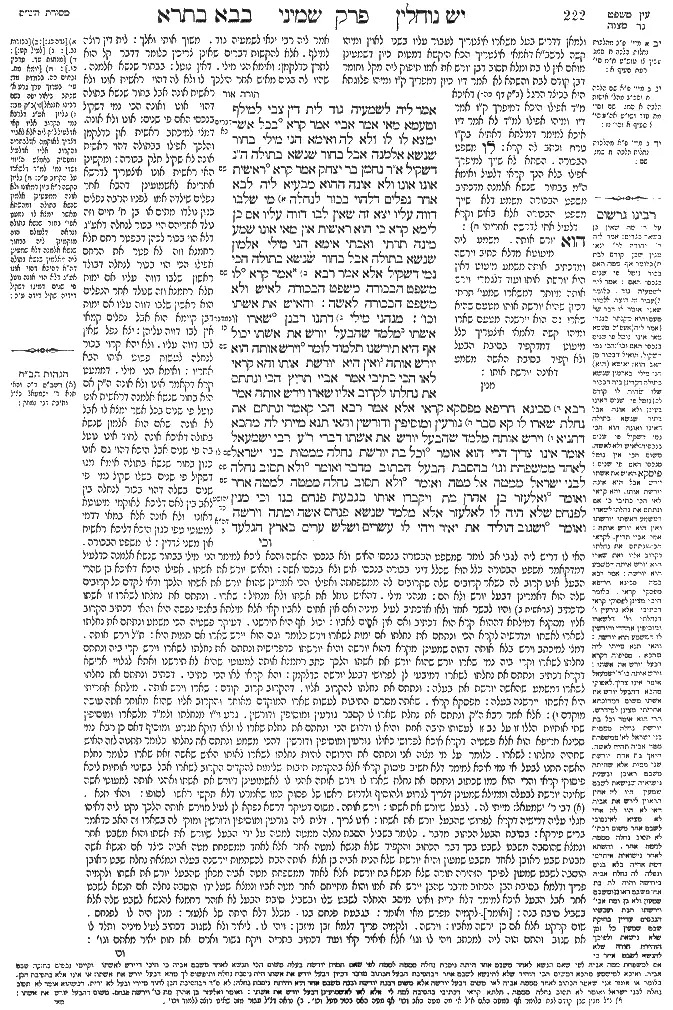
Bava Batra 111b - Guemara
אמר ליה לשמעיה גוד לית דין צבי למילף וטעמא מאי אמר אביי אמר קרא (דברים כא, יז) בכל אשר ימצא לו לו ולא לה ואימא הני מילי בחור שנשא אלמנה אבל בחור שנשא בתולה ה"נ דשקיל א"ר נחמן בר יצחק אמר קרא (דברים כא, יז) ראשית אונו אונו ולא אונה ההוא מבעיא ליה לבא אחר נפלים דלהוי בכור לנחלה מי שלבו דווה עליו יצא זה שאין לבו דווה עליו אם כן לימא קרא כי הוא ראשית און מאי אונו שמע מינה תרתי ואכתי אימא הני מילי אלמון שנשא בתולה אבל בחור שנשא בתולה הכי נמי דשקיל אלא אמר רבא אמר קרא (דברים כא, יז) לו משפט הבכורה משפט הבכורה לאיש ולא משפט הבכורה לאשה:
והאיש את אשתו וכו':
מנהני מילי דתנו רבנן (במדבר כז, יא) שארו זו אשתו מלמד שהבעל יורש את אשתו יכול אף היא תירשנו תלמוד לומר (במדבר כז, יא) וירש אותה הוא יורש אותה ואין היא יורשת אותו והא קראי לאו הכי כתיבי אמר אביי תריץ הכי ונתתם את נחלתו לקרוב אליו שארו וירש אותה אמר רבא סכינא חריפא מפסקא קראי אלא אמר רבא הכי קאמר ונתתם את נחלת שארו לו קא סבר גורעין ומוסיפין ודורשין והאי תנא מייתי לה מהכא דתניא וירש אותה מלמד שהבעל יורש את אשתו דברי ר"ע רבי ישמעאל אומר אינו צריך הרי הוא אומר (במדבר לו, ח) וכל בת יורשת נחלה ממטות בני ישראל לאחד ממשפחת וגו' בהסבת הבעל הכתוב מדבר ואומר (במדבר לו, ז) ולא תסוב נחלה לבני ישראל ממטה אל מטה ואומר (במדבר לו, ט) ולא תסוב נחלה ממטה למטה אחר ואומר (יהושע כד, לג) ואלעזר בן אהרן מת ויקברו אותו בגבעת פנחס בנו וכי מנין לפנחס שלא היה לו לאלעזר אלא מלמד שנשא פנחס אשה ומתה וירשה ואומר (דברי הימים א ב, כב) ושגוב הוליד את יאיר ויהי לו עשרים ושלש ערים בארץ הגלעד
Comments from Rashbam - Bava Batra 111b
אמר ליה רבי ינאי לשמעיה גוד . משוך אותי ואלך: לית דין רוצה למילף . אלא להקשות דברים שאינן צריכין כלומר דדבר קל הוא לתרץ כדלקמן: ואימא הני מילי . דאין נוטל: בבחור שנשא אלמנה . שהיו לה בנים מאיש אחר הילכך לו ולא לה דהוי ראשית אונו ולא ראשית אונה אבל בחור שנשא בתולה דהוי אונו ואונה הכי נמי דשקיל בנכסי האם פי שנים: אונו ולא אונה . דמצי למיכתב ראשית און כדלקמן והלכך אפילו בבתולה דהוי ראשית אונה לא שקיל חלק בכורה: ומקשינן האי ראשית אונו איצטריך לדרשא אחרינא לאשמועינן דהבא אחר נפלים שילדה אמו לפניו הרבה נפלים כגון נולדו מתים או בן ח' חיים וזה נולד אחריהם הוי בכור לנחלה דאע"ג דלא הוי בכור לכהן דבפטר רחם תלא רחמנא וזה לא פטר את הרחם אפילו הכי הוי בכור לנחלה דבולד ראשון שלבו דווה עליו אם ימות תלא רחמנא וזה שנולד אחר הנפלים הוא ראשון שלבו דווה עליו אם ימות דבן קיימא הוא אבל נפלים קמאי אין לבו דווה עליהן: יצא נפל שאין לבו דווה עליו . ולא יהא קרוי בכור לנחלה לעשות פשוט אותו הבא אחריו: ואימא הני מילי . דממעט קרא דקאמר אונו ולא אונה ה"ק אם הוא בחור שנשא אלמנה דראשית אונו נוטל פי שנים בכל אשר ימצא לו אבל לא אונה שאם הוא אלמון שנשא בתולה דאיכא אונה לחוד אינו נוטל בה פי שנים אבל היכא דהוי גם אונו כגון בחור שנשא בתולה אימא מגו דשקיל פי שנים בשלו שקיל נמי פי שנים בשלה דהוי בכור לנחלה בין לאב בין לאם דליכא לאוקמי מיעוטא דאונו ולא אונה אלא במאי דדמי למעוטי טפי כגון היכא דליכא ראשית און משני צדדין: לו משפט הבכורה . האי לו דריש ליה לגבי אב לומר שמשפט הבכורה בנכסי האיש ולא בנכסי האשה והכא ליכא למימר הני מילי בבחור שנשא אלמנה כדלעיל דמדקאמר משפט הבכורה כלל הוא שכלל דיני בכורה בנכסי איש ולא בנכסי אשה: והאיש יורש את אשתו . אפילו היכא דאיכא בן שהרי הבעל אינו קרוב לה כשאר קרובים שלה שקרובים לה ממשפחתה ואפילו הכי אמרינן שהוא יורש את אשתו הלכך ודאי לקדם כל קרובים שלה הוא דאמרינן דבעל יורש ולא הם: מנהני מילי . דהאיש נוחל את אשתו ולא מנחיל: שארו . ונתתם את נחלתו לשארו זו אשתו כדכתיב (בראשית ב) והיו לבשר אחד ולאו אדכתיב לעיל מיניה ואם אין אחים לאביו קאי אלא מילתא באנפי נפשה היא והאי דכתיב הקרוב אליו מסקנא דמילתא דההוא קרא הוא דכתיב ואם אין אחים לאביו: יכול אף היא תירשנו . דעיקר פשטיה הכי משמע ונתתם את נחלתו לשארו לאשתו ונדרשיה לקרא הכי ונתתם את נחלתו אם ימות לשארו וירש כלומר וגם הוא יירש שארו אם תמות היא: ת"ל וירש אותה . דמצי למיכתב וירש בלא אותה דהוה שמעינן מקרא דהוא יורשה והיא יורשתו כדפרישית ונתתם את נחלתו לשארו וירש קרי ביה ונתתם נחלתו לשארו וקרי ביה נמי שארו יורש שהוא יורש את אשתו הלכך כתב רחמנא אותה למעוטי שהיא לא תירשנו ואתא לגלויי ארישא דקרא דכתיב ונתתם את נחלתו לשארו דמיבעי לן לפרושי דבעל יורשה כדלקמן: והא קראי לאו הכי כתיבי . דכתיב ונתתם את נחלתו לשארו דמשמע שהאשה יורשת את בעלה: ונתתם את נחלתו להקרוב אליו . דהקרוב קרוב קודם: שארו וירש אותה . מילתא אחריתי היא דאשתו יירשנה בעלה: מפסקא קראי . שאתה מסרס התיבות לעשות שארו המוקדם מאוחר והקרוב אליו שהוא מאוחר אתה עושה מוקדם: אלא אמר רבא ה"ק ונתתם את נחלת שארו לו קסבר גורעין ומוסיפין ודורשין. גרע וי"ו מנחלתו ולמ"ד מלשארו ומוסיפין שתי אותיות הללו זו על גב זו לעשותו תיבה אחת והיא לו ודרוש הכי ונתתם את נחלת שארו לו ולאו דוקא מגרע ומוסיף דאם כן רבא נמי סכינא חריפא הוא אלא פשטיה דקרא איכא לפרושי כאילו גורעין ומוסיפין ודורשין דהכי משמע ונתתם את נחלתו כלומר תתנוה לזה האיש שתהיה נחלתו לשארו כלומר על מי מצוה אני ונתתם את הירושה להיות נחלתו לשארו לאותו האיש שאשה זאת שארו כלומר נחלת האשה תתנו לבעל אי נמי איכא למימר דלא חשיב פיסוק קראי אלא בהקדמת תיבות שלימות להקדים הקרוב לשארו אבל בשינוי אותיות ליכא פיסוקי קראי והרי הוא כמו שכתוב ונתתם את נחלת שארו לו וירש אותה אהני לו לאשמועינן דיורש את אשתו ואהני אותה למעוטי אשה שאינה יורשת לבעלה וממילא שמעינן דצריך לגרוע ולהוסיף ולדרוש ראשו של פסוק כמו שאמרנו דלא תקשי ראשו לסופו: והאי תנא . דבי ר' ישמעאל: מייתי לה . לבעל שיורש את אשתו: וירש אותה . משום דעיקר דרשא נפקא לן לעיל מוירש אותה הלכך נקט ליה דאיהו מגלי עליה דרישיה דקרא לפרושי שהבעל יורש את אשתו: אינו צריך . דלית ליה גורעין ומוסיפין ודורשין ומוקי לה בשארו זה האב כדאמר בריש פירקא: בסיבת הבעל הכתוב מדבר . כלומר בשביל הסבת נחלה ממטה למטה על ידי הבעל שיורש את אשתו והוא משבט אחר ונמצא שהוסבה משבט לשבט בכך דבר הכתוב והקפיד שלא תנשא למטה אחר אלא לאחד ממשפחת מטה אביה כיצד אם תנשא אשה מבנות שבט ראובן לאחד משבט שמעון והיא יורשת שלא הניח אביה בן אלא אותה הבת לכשתמות יירשנה בעלה ונמצאת נחלת שבט ראובן הוסבה לשבט שמעון לפיכך הזהירה תורה שלא תנשא בת יורשת אלא לאחד ממשפחת מטה אביה מכאן שהבעל יורש את אשתו ולקמיה פריך ודלמא בסיבת הבן הכתוב מדבר שהבן יירש את אמו והוא מתייחס אחר מטה אביו ונמצא שעל ידו הוסבה נחלה אם תנשא לשבט אחר אבל הבעל איכא למימר דלא ירית ואינו מיסב הנחלה לשבט שלו ובשביל סיבת הבעל לא אזהר רחמנא להנשא לשבט שלה אלא בשביל סיבת בנה: [ואומר] . לקמיה מפרש מאי ואומר: בגבעת פנחס בנו . מכלל דלא היתה של אלעזר: מנין היה לו לפנחס . שום קרקע אלא אם כן ירשה מאביו: וירשה . ולקמיה פריך דלמא זבן מיזבן: ויהי לו . ליאיר ולא לשגוב דכתיב לעיל מיניה ותלד לו את שגוב והתם הוה ליה למכתב ויהי לו וגו' אלא איאיר קאי ועוד דכתיב בתריה ויקח גשור וארם את חות יאיר מאתם וגו':
Comments from Tosafot - Bava Batra 111b
לו משפט הבכורה. השתא לא שייך למיפרך אפילו בלא הנך קראי דלעיל ואימא ה"מ בבחור שנשא אלמנה מדכתיב משפט הבכורה משמע דלא שייך משפט הבכורה אלא באיש וקרא דלעיל אתי לדרשה אחריתי: הוא יורש אותה. משמע ליה מיעוטא מדלא כתיב וירשה ומדכתיב אותה משמע מיעוט דאין היא יורשת אותו ועוד דלגמרי וירש אותה מיותר דמשארו שמעי' תרתי דכיון שהיא יורשת אותו מטעם שהיא שארו גם הוא יירשנה מטעם שארו ומיהו קשה דאמאי איצטריך כלל מיעוט דמדקפיד בסיבת הבעל ולא קפיד בסיבת האשה משמע דאינה יורשת אותו:
Bava Batra 111b - Mishnah translated into english
He said to his attendant: Take me away from here, as this man, Rabbi Yehuda Nesia, does not desire to learn but is instead raising difficulties that are easily resolved. And what is the reason he does not receive a double portion? Abaye said: The verse concerning the double portion received by a firstborn son states: “By giving him a double portion of all that he has” (Deuteronomy 21:17), indicating that he receives a double portion in all that he has, but not in all that she has.
The Gemara asks: And why not say that this statement applies in the case of a bachelor who married a widow, i.e., a man who marries a woman who already has children from another man, so that the firstborn son is his firstborn but not hers, but in the case of a bachelor who married a virgin, so too the halakha will be that their firstborn son will take a double portion of his mother’s inheritance?
Rav Naḥman bar Yitzḥak said: There is a different derivation teaching that halakha, as the same verse states: “For he is the first fruits of his strength [ono]” (Deuteronomy 21:17), indicating that the halakha of the double portion is stated with regard to his strength, but not her strength, thereby excluding a son who is the firstborn of his mother alone.
The Gemara challenges: But that verse is required to derive the halakha of a child who came into the world after his mother gave birth to non-viable newborns who did not reach the full term of nine months. This verse teaches that such a firstborn son should be a firstborn with regard to inheritance, even though he is not a firstborn with regard to the mitzva to redeem one’s firstborn son. How is this halakha derived from the verse? The term “his strength [ono]” is understood as referring to acute mourning [aninut], in the following manner: A firstborn son for the purpose of inheritance of land is only one whose father’s heart is pained about him when he dies, i.e., a son who lives beyond birth, excluding this non-viable newborn whose father’s heart is not pained about him when he dies. Therefore, the next viable son to be born after a non-viable newborn is considered the firstborn.
The Gemara answers: If so, that the sole purpose of the term: “His strength” is to teach that halakha, let the verse say: For he is the first fruit of strength [on], omitting the possessive “his,” represented by the letter vav. What is derived from the more expanded term: “His strength [ono],” which indicates specifically the father’s strength? Conclude two conclusions from it, both with regard to mourning and with regard to the status of the firstborn as the father’s heir specifically.
The Gemara raises a difficulty: But one can still say that this statement applies in a case of a widower who married a virgin, so that he already has a firstborn from his previous marriage who is the first fruit of his strength. And the son born to him and his second wife is not the first fruit of his strength, and it is this type of firstborn who does not inherit a double portion of his mother’s estate. But in a case of a bachelor who married a virgin, so too the halakha will be that their shared firstborn son will take a double portion of his mother’s inheritance.
Rather, Rava said: There is a different derivation teaching that halakha, as the same verse states: “The right of the firstborn is his” (Deuteronomy 21:17). The emphasis on “his” indicates that the primogeniture applies specifically to a man, and the primogeniture does not apply to a woman, whether the woman is the one inheriting or is the legator.
§ The mishna teaches: And a man with regard to his wife inherits but does not bequeath. The Gemara asks: From where are these matters derived? The Gemara explains: As the Sages taught in a baraita: The verse concerning inheritance states: “And if his father has no brothers, then you shall give his inheritance to his kinsman [she’ero] who is next to him of his family, and he shall inherit it” (Numbers 27:11). This kinsman is one’s wife, and the Torah teaches that a husband inherits from his wife, as the Gemara will explain later. One might have thought that she would also inherit from him; therefore, the verse states: “And he shall inherit it,” with the word “it” written in the feminine “otah,” which can also be translated as: Her. This teaches that it is he who inherits from her, but she does not inherit from him.
The Gemara questions this explanation: But the verses are not written like this. The verse states that “his kinsman” inherits from the deceased, so that if that term is referring to one’s wife, a wife should inherit from her husband. Abaye said: Answer like this, i.e., as if the verse were split into two parts. The first part is: Then you shall give his inheritance to he who is next to him, which is a general statement with regard to the inheritance of relatives. The second is: His kinsman, and he shall inherit it, meaning that a husband inherits from his kinsman, referring to his wife.
Rava said: Does a sharp knife cut verses? How can you split the verse, rearrange it and omit letters from its words? Abaye’s derivation rearranges the words and omits the letter lamed from the term “to his kinsman [leshe’ero].” Rather, Rava said: This is what the verse is saying: And you shall give the inheritance of his kinsman [she’ero] to him. The letters should be arranged differently, removing the letter lamed from the word leshe’ero and the letter vav from the word naḥalato and combining them to form the word lo, meaning: To him. Accordingly, the verse teaches that a husband inherits from his wife. The Gemara explains that Rava holds that the Sages subtract and add and interpret homiletically, meaning that letters can be removed from words and appended to each other, and a halakha can be derived from the new word formed by the combination of letters.
The Gemara comments: And this tanna cites the halakha that a husband inherits from his wife from here, as it is taught in a baraita: “And he shall inherit it,” with the word “it” written in the feminine “otah,” which can also be translated as: Her. This teaches that a husband inherits from his wife; this is the statement of Rabbi Akiva, similar to the derivation cited in the baraita above.
The baraita quotes another tanna. Rabbi Yishmael says: This derivation is not necessary, as the verse states: “And every daughter who possesses an inheritance from the tribes of the children of Israel shall be wife to one of the family of the tribe of her father” (Numbers 36:8). The purpose of this mitzva was so that the land she inherited from her father’s tribe will not be transferred to another tribe upon her death. The verse speaks of a transfer of inheritance from one tribe to another by means of the husband, i.e., she must not marry a man from another tribe so that the land will not be transferred to that tribe when her husband inherits from her upon her death. This indicates that a husband inherits from his wife.
Rabbi Yishmael continues: And another verse states: “So shall no inheritance of the children of Israel transfer from tribe to tribe” (Numbers 36:7), and another verse states: “So shall no inheritance transfer from one tribe to another tribe” (Numbers 36:9), also indicating that a husband inherits from his wife.
Rabbi Yishmael continues: And the verse in the Prophets states: “And Elazar, the son of Aaron, died; and they buried him in the Hill of Pinehas his son, which was given him in Mount Ephraim” (Joshua 24:33). And from where did Pinehas have land that his father, Elazar, did not have? Rather, this teaches that Pinehas married a woman who inherited her father’s land, and she died and he inherited from her so that he had his own land. This also indicates that a husband inherits from his wife.
Rabbi Yishmael continues. And the verse in the Writings states: “And Seguv begot Yair, who had twenty-three cities in the land of Gilead” (I Chronicles 2:22).
Traduction : The William Davidson digital edition of the Koren Noé Talmud, with commentary by Rabbi Adin Even-Israel Steinsaltz.