 Talmud Bavli
Bava Batra 9b : Youtube
Daf TubeYoutube
2 video classes :
Bava Batra Page 9b
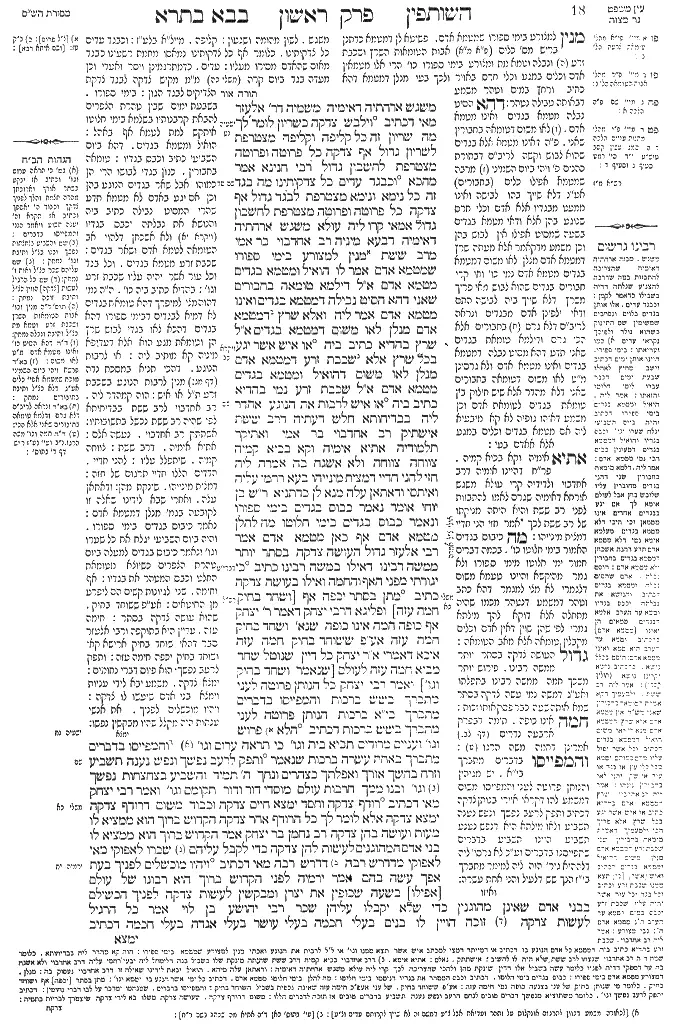
Bava Batra 9b - Guemara
משגש ארחתיה דאימיה משמיה דר' אלעזר מאי דכתיב (ישעיהו נט, יז) וילבש צדקה כשריון לומר לך מה שריון זה כל קליפה וקליפה מצטרפת לשריון גדול אף צדקה כל פרוטה ופרוטה מצטרפת לחשבון גדול רבי חנינא אמר מהכא (ישעיהו סד, ה) וכבגד עדים כל צדקותינו מה בגד זה כל נימא ונימא מצטרפת לבגד גדול אף צדקה כל פרוטה ופרוטה מצטרפת לחשבון גדול אמאי קרו ליה עולא משגש ארחתיה דאימיה דבעא מיניה רב אחדבוי בר אמי מרב ששת מנין למצורע בימי ספורו שמטמא אדם אמר לו הואיל ומטמא בגדים מטמא אדם אמר ליה דילמא טומאה בחבורים שאני דהא הסיט נבילה דמטמא בגדים ואינו מטמא אדם אמר ליה ואלא שרץ דמטמא אדם מנלן לאו משום דמטמא בגדים אמר ליה שרץ בהדיא כתיב ביה (ויקרא כב, ה) או איש אשר יגע בכל שרץ אלא שכבת זרע דמטמא אדם מנלן לאו משום דהואיל ומטמא בגדים מטמא אדם אמר ליה שכבת זרע נמי בהדיא כתיב ביה (ויקרא כב, ד) או איש לרבות את הנוגע אהדר ליה בבדיחותא חלש דעתיה דרב ששת אישתיק רב אחדבוי בר אמי ואתיקר תלמודיה אתיא אימיה וקא בכיא קמיה צווחה צווחה ולא אשגח בה אמרה ליה חזי להני חדיי דמצית מינייהו בעא רחמי עליה ואיתסי ודאתאן עלה מנא לן כדתניא ר"ש בן יוחי אומר נאמר כבוס בגדים בימי ספורו ונאמר כבוס בגדים בימי חלוטו מה להלן מטמא אדם אף כאן מטמא אדם אמר רבי אלעזר גדול העושה צדקה בסתר יותר ממשה רבינו דאילו במשה רבינו כתיב (דברים ט, יט) כי יגורתי מפני האף והחמה ואילו בעושה צדקה כתיב (משלי כא, יד) מתן בסתר יכפה אף [ושחד בחיק חמה עזה] ופליגא דרבי יצחק דאמר ר' יצחק אף כופה חמה אינו כופה שנאמר ושחד בחיק חמה עזה אע"פ ששוחד בחיק חמה עזה איכא דאמרי א"ר יצחק כל דיין שנוטל שחד מביא חמה עזה לעולם [שנאמר ושחד בחיק וגו'] ואמר רבי יצחק כל הנותן פרוטה לעני מתברך בשש ברכות והמפייסו בדברים מתברך בי"א ברכות הנותן פרוטה לעני מתברך בשש ברכות דכתיב (ישעיהו נח, ז) הלא פרוש וגו' ועניים מרודים תביא בית וגו' כי תראה ערום וגו' והמפייסו בדברים מתברך באחת עשרה ברכות שנאמר (ישעיהו נח, י) ותפק לרעב נפשך ונפש נענה תשביע וזרח בחשך אורך ואפלתך כצהרים ונחך ה' תמיד והשביע בצחצחות נפשך וגו' ובנו ממך חרבות עולם מוסדי דור ודור תקומם וגו' ואמר רבי יצחק מאי דכתיב (משלי כא, כא) רודף צדקה וחסד ימצא חיים צדקה וכבוד משום דרודף צדקה ימצא צדקה אלא לומר לך כל הרודף אחר צדקה הקדוש ברוך הוא ממציא לו מעות ועושה בהן צדקה רב נחמן בר יצחק אמר הקדוש ברוך הוא ממציא לו בני אדם המהוגנים לעשות להן צדקה כדי לקבל עליהם שכרו לאפוקי מאי לאפוקי מדדרש רבה דדרש רבה מאי דכתיב (ירמיהו יח, כג) ויהיו מוכשלים לפניך בעת אפך עשה בהם אמר ירמיה לפני הקדוש ברוך הוא רבונו של עולם [אפילו] בשעה שכופין את יצרן ומבקשין לעשות צדקה לפניך הכשילם בבני אדם שאינן מהוגנין כדי שלא יקבלו עליהן שכר רבי יהושע בן לוי אמר כל הרגיל לעשות צדקה זוכה הויין לו בנים בעלי חכמה בעלי עושר בעלי אגדה בעלי חכמה דכתיב
Comments from Rashi on Masechet Bava Batra Page 9b
משגש . לשון מהומה ושגעון: קליפה . מייל"א בלע"ז: וכבגד עדים כל צדקותינו . כלומר אף כל צדקותינו נמאסו מחמת רשעינו כבגד מאוס שהאדם מסירו מעליו: עדים . כדמתרגמינן ויסר ואעדי וכן מעדה בגד ביום קרה (משלי כה) מ"מ מקיש צדקה לבגד צדקת הצדיקים לבגד הגון: בימי ספורו . בשבעת ימים שבין טהרת הצפרים להבאת קרבנותיו בשלמא בימי חלוטו איתקש למת לטמא אף באהל: הואיל ומטמא בגדים . דהא ביום השביעי כתיב וכבס בגדיו: טומאה בחבורין . כגון בגדי לבושו הרי הן כמוהו אבל שאר בגדים הנוגע בהן וכן אם יגע באדם לא מטמא תדע שהרי המסיט נבילה כתיב ביה והנושא את נבלתה יכבס בגדיו (ויקרא יא) ולא אשכחן דלהוי אב הטומאה לטמא אדם ושאר בגדים: שכבת זרע מטמא בגדים . וכל בגד וכל עור אשר יהיה עליו שכבת זרע וגו': בהדיא כתיב ביה כו' . ה"ה נמי דהוה מצי למיפרך דהא טומאת בגדים לא דמיא לבגדים דבימי ספורו דהא בגדים דהכא לאו בגדי לבוש שרץ הן וטומאת מגע הוא אלא דעדיפא מיניה קא מותיב ליה: או לרבות הנוגע . דהכי תניא במסכת נדה (דף מג:) מנין לרבות הנוגע בשכבת זרע ת"ל או איש: הוה קמהדר ליה . רב אחדבוי לרב ששת בבדיחותא לפי שהיה רב ששת נכשל בתשובותיו: אשתתק רב אחדבוי . נעשה אלם: אתיא אימיה . דרב ששת: צווחה קמיה . שיתפלל עליו: להני חדיי . הדדים הללו חדיי תרגום של חזה: דמצית מינייהו . שינקת מהן: ודאתאן עלה . ואחרי שבא לידינו שאלה זו לקובעה בגמ' מנלן דמטמא אדם: נאמר כיבוס בגדים בימי ספורו . והיה ביום השביעי יגלח את כל שערו וגו' ונאמר כיבוס בגדים למעלה ביום טהרת הצפרים כשיוצא מטומאת החלט וכבס המטהר את בגדיו: אף וחימה . שני לגיונות קשים הם ליפרע מן החוטאים: אע"פ ששוחד בחיק . שהוא עושה צדקה בסתר: חימה עזה . עדיין היא בתוקפה ורבי אלעזר סבר דהאי שוחד בחיק ארישא קאי ושוחד בחיק יכפה חימה עזה: ותפק לרעב נפשך . הוא פיוס דברי נחומים: ימצא צדקה . משמע יבא לידי עניות וימצא בני אדם שיעשו לו צדקה: ויהיו מוכשלים לפניך . את אנשי ענתות היה מקלל שהיו מבקשין נפשו:
Comments from Tosafot - Bava Batra 9b
מנין למצורע בימי ספורו שמטמא אדם. פשיטא לן דמטמא כדתנן בריש מס' כלים (פ"א מ"א) אבות הטומאות השרץ ושכבת זרע ונבלה וטמא מת ומצורע בימי ספורו כו' הרי אלו מטמאין אדם וכלים במגע וכלי חרס באויר ולכך בעי מנלן דמטמא דהא כתיב ורחץ במים וטהר משמע דבאותה טבילה נטהר: דהא הסיט נבלה מטמא בגדים ואינו מטמא אדם. לאו משום דטומאה בחבורין שאני. פ"ה דאינו מטמא אלא בגדים שהוא לבוש וקשה לריב"ם דבתורת כהנים פ' ויהי ביום השמיני מרבה שמטמא אפילו כלים (בחבורים) אע"ג דלא שייך בהו לבישה ואינו ממעט מבגדיו אלא אדם וכלי חרס שנוגע בהן אלא ודאי מטמא בגדים בשעה שמסיט אפילו אין לבוש בהן וכן משמע מדקאמר אלא מעתה שרץ דמטמא אדם מנלן לאו משום דמטמא בגדים מטמא אדם נמי כו' ואי קרי חבורים בגדים שהוא לבוש מאי פריך משרץ דלא שייך ביה לבישה התם ודאי ילפינן אדם מבגדים ונראה לריב"ם דלא גרס בחבורים אלא הכי גרס ודילמא טומאת בגדים שאני תדע דהא מסיט נבלה דמטמא בגדים ואינו מטמא אדם ולא גרסינן מ"ט לאו משום דטומאה בחבורים שאני דלא מהדר אלא שיש חילוק בין טומאת בגדים לטומאת אדם וכן משמע דאיהו גופיה לא קא מיבעיא ליה אם מטמא בגדים וכלים במגע אלא אאדם בעי: אתיא אימיה וקא בכיא קמיה. פר"ח דהיינו אימיה דרב אחדבוי ולדידיה קרי עולא משגש אורחא דאימיה שגרם לאמו להתבזות לפני רב ששת והיא היתה מניקתו של רב ששת לכך אמר חזי הני חדיי דמצית מינייהו: מה כיבוס בגדים האמור בימי חלוטו כו'. בכמה דברים חמור ימי חלוטו מימי ספורו ולא גמר מהיקשא והיינו טעמא משום דלגמרי לא מצי למגמר דהא כתב וטהר דמשמע דנטהר מכמו שהיה מתחלה אלא דוקא להך מילתא גמרי לפי שהן שוין דאין אדם וכלים מקבלין טומאה אלא מאב הטומאה: גדול העושה צדקה בסתר יותר ממשה רבינו. פירוש יותר משכך חמה ממשה רבינו בתפלתו ואע"ג דמשה נמי עשה צדקה בסתר שמא אותה שעה כבר פסק אותו זכות: חמה אינו כופה. תימה דבפרק ארבעה נדרים (דף לב.) אמרינן דחמה משה הרגו: והמפייסו בדברים מתברך בי"א. יש מגיהין והנותן פרוטה לעני והמפייסו משום דמשמע להו דקראי איירי בנותן צדקה דכתיב ותפק לרעב נפשך ונפש נענה תשביע ולאו מילתא היא דנפש נענע תשביע היינו תשביע בדברים שתפייסנו בדברים וע"כ לא גרסי' ליה דלההיא גיר' הוה ליה למימר מתברך בי"ז הנך שש דלעיל והני אחת עשרה:
Bava Batra 9b - Mishnah translated into english
who perverted the ways of his mother. He said in the name of Rabbi Elazar: What is the meaning of that which is written: “And He donned charity like a coat of mail” (Isaiah 59:17)? This verse serves to tell you that just as with regard to this coat of mail, each and every scale of which it is fashioned combines to form one large coat of mail, so too with regard to charity, each and every peruta that one gives combines to form a great sum. Rabbi Ḥanina says: The same idea is derived from here, as it is stated: “And all our charity is as a polluted garment” (Isaiah 64:5). Just as with regard to this garment, each and every thread in it combines to form one large garment, so too with regard to charity, each and every peruta combines to form a great sum.
The Gemara comments: Why was this Sage called the infant who perverted the ways of his mother? It was because of the following incident: Rav Aḥadvoi bar Ami asked Rav Sheshet: From where is it derived that a leper renders a person impure through contact during his days of counting, i.e., during the seven days that the leper must count from the start of his purification process, when he brings his birds, until he completes that process with the bringing of his sacrifices? Rav Sheshet said to him: Since he renders his garments impure, as it states that on the seventh day of his purification he must wash his clothes (see Leviticus 14:9), he also renders people impure.
Rav Aḥadvoi said to him: Perhaps connected impurity is different, meaning perhaps he renders his garments impure because they are connected to the source of the impurity, but this does not mean that he renders impure a person whom he touches. A proof for this distinction may be brought from the fact that if one moves an animal carcass, an action that renders him impure even if there was no actual contact with the carcass, he renders the garments that he is wearing impure but does not render another person impure.
Rav Sheshet said to him: But from where do we derive that the carcass of a creeping animal renders a person impure? Is it not because we know that it renders his garments impure? Rav Aḥadvoi said to him: It is written explicitly with regard to the carcass of a creeping animal: “Or a man who touches any creeping animal, whereby he may be made unclean” (Leviticus 22:5). Rav Sheshet said to him: But from where do we derive that semen renders a person impure? Is it not because we say that since it renders his garments impure (see Leviticus 15:17) it also renders a person impure? Rav Aḥadvoi said to him: It is also written explicitly with regard to semen: “Or a man from whom semen is expelled” (Leviticus 22:4), and the Sages expound the superfluous word “or” as serving to include as impure one who touches semen.
The Gemara relates that with each of his answers Rav Aḥadvoi responded to Rav Sheshet in a mocking tone, intimating that he doubted Rav Sheshet’s grasp of Torah verses. Rav Sheshet was deeply offended, and as punishment, Rav Aḥadvoi bar Ami became mute and forgot his learning. Rav Aḥadvoi’s mother came and wept before Rav Sheshet. She cried and cried but he ignored her. As she had once been Rav Sheshet’s nursemaid, she said to him: Look at these breasts of mine from which you suckled. Upon hearing that, Rav Sheshet prayed for mercy for Rav Aḥadvoi, and he was healed. And since it was Rav Aḥadvoi whose behavior led to his mother’s acting in this manner, he was referred to as the infant who perverted his mother’s ways.
The Gemara comments: With regard to that which we arrived at, i.e., this particular subject, let us clarify the matter: From where do we derive that a leper renders impure a person with whom he comes into contact during his days of counting? As it is taught in a baraita: Rabbi Shimon bar Yoḥai says: Washing garments is stated with respect to his days of counting, and washing garments is stated with respect to his days of confirmed leprosy, after he has been declared conclusively impure by a priest. Just as there, when he is a confirmed leper he renders a person impure, as is explicitly stated in the Torah, so too here, during his days of counting he renders a person impure.
§ The Gemara resumes its discussion of the virtues of giving charity. Rabbi Elazar said: One who performs acts of charity in secret is greater than Moses, our teacher. Whereas with regard to Moses, our teacher, it is written: “For I was afraid of the anger and the wrath” (Deuteronomy 9:19), with regard to one who performs acts of charity it is written: “A gift in secret pacifies anger, and a present in the bosom fierce wrath” (Proverbs 21:14). The Gemara comments: And this statement disagrees with a statement of Rabbi Yitzḥak, as Rabbi Yitzḥak says: A secret gift pacifies anger, but it does not pacify wrath, as it is stated: “And a present in the bosom fierce wrath,” meaning that although a present is in the bosom, i.e., even if one gives charity in secret, nevertheless fierce wrath can still harm him. There are those who say that Rabbi Yitzḥak says as follows: Any judge who accepts a bribe brings fierce wrath upon the world, as it is stated: “And a present in the bosom fierce wrath.”
And Rabbi Yitzḥak says: Anyone who gives a peruta to a poor person receives six blessings, and whoever consoles him with words of comfort and encouragement receives eleven blessings. The Gemara explains: One who gives a peruta to a poor person receives six blessings, as it is written: “Is it not to share your bread with the hungry, and that you shall bring the poor that are cast out to your house? When you see the naked, that you cover him” (Isaiah 58:7). And the next verses list six blessings: “Then shall your light break forth like the dawn, and your health shall spring forth speedily, and your righteousness shall go before you, the glory of the Lord shall be your rearguard. Then, shall you call, and the Lord shall answer; you shall cry, and He shall say: Here I am” (Isaiah 58:8–9).
And whoever consoles a poor person with words of comfort and encouragement receives eleven blessings, as it is stated: “And if you draw out your soul to the hungry and satisfy the afflicted soul, then shall your light shine in darkness, and your gloom shall be as the noonday. And the Lord shall guide you continually, and satisfy your thirst in drought… And they that shall be of you shall build the old waste places, you shall raise up the foundations of many generations” (Isaiah 58:10–12).
And Rabbi Yitzḥak says: What is the meaning of that which is written: “He who pursues charity and mercy finds life, charity, and honor” (Proverbs 21:21)? Is this to say that because one has pursued charity, he himself shall find charity? That is, shall the reward of one who has always given charity be that he will eventually become poor and other people will act charitably toward him? Rather, the verse serves to tell you that with regard to anyone who pursues charity, giving to the poor and leading others to do so, the Holy One, Blessed be He, furnishes him with money with which to perform his acts of charity.
Rav Naḥman bar Yitzḥak says: The Holy One, Blessed be He, sends him people who are deserving of charity, so that he will reap his just reward for helping them. The Gemara comments: What does this statement serve to exclude? It serves to exclude Rabba’s homiletical interpretation of a different verse, as Rabba taught: What is the meaning of that which is written: “Let them be made to stumble before You; deal thus with them in the time of Your anger” (Jeremiah 18:23)? The prophet Jeremiah said before the Holy One, Blessed be He: Master of the Universe, even when those wicked men who pursued me subdue their inclinations and seek to perform acts of charity before You, cause them to stumble upon dishonest people who are not deserving of charity, so that they will not receive reward for coming to their assistance.
Rabbi Yehoshua ben Levi says: Anyone who is accustomed to performing acts of charity merits blessing; he will have sons who are masters of wisdom, masters of wealth, and masters of aggada. The Gemara explains: Masters of wisdom, as it is written:
Traduction : The William Davidson digital edition of the Koren Noé Talmud, with commentary by Rabbi Adin Even-Israel Steinsaltz.
Bava Batra 9b : Significance
Next step
Finished studying Bava Batra 9b? Carry on with the rest of the tractate.
Study Bava Batra 10aFrequently asked questions: Bava Batra 9b
Where is Bava Batra 9b in tractate Bava Batra?
Bava Batra 9b is page 16 of 350 in tractate Bava Batra (Seder Nezikin).
When is daf 9 of Bava Batra studied in Daf Yomi?
Daf Yomi covers one daf a day, both sides. Daf 9 of Bava Batra will be studied on December 6, 2031.
Is there a video class on Bava Batra 9b?
Yes, by Daf Tube, Rabbi Dr. Moshe Weisblum. These classes were published on YouTube by their authors and are gathered on this site.
What is tractate Bava Batra about?
Masechet Baba Batra is the third tractate of the Seder Nezikin. The Baba Batra gemara is the study of laws relating to matters relating to individual responsibility and the rights of property holders. The Baba Batra tractate is a gemara which contains 10 chapters.
Your study is also dedicated to them
- L'ilui Nishmat Rav Chlomo Ben Jamilla
- L'ilui Nishmat Chemouel Eliezer ben Batcheva
- L'ilui Nishmat Nissim ben Barukh Malka