 Talmud Bavli
Bava Batra 10b : Youtube
Daf TubeYoutube
2 video classes :
Bava Batra Page 10b
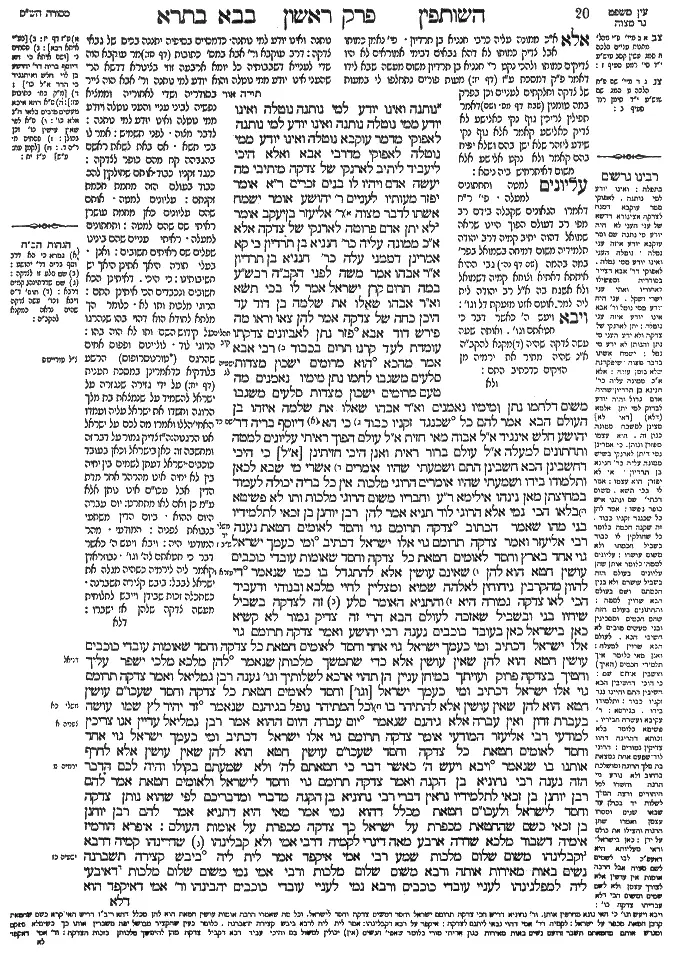
Bava Batra 10b - Guemara
נותנה ואינו יודע למי נותנה נוטלה ואינו יודע ממי נוטלה נותנה ואינו יודע למי נותנה לאפוקי מדמר עוקבא נוטלה ואינו יודע ממי נוטלה לאפוקי מדרבי אבא ואלא היכי ליעביד ליתיב לארנקי של צדקה מיתיבי מה יעשה אדם ויהיו לו בנים זכרים רבי אליעזר אומר יפזר מעותיו לעניים ר' יהושע אומר ישמח אשתו לדבר מצוה ר' אליעזר בן יעקב אומר לא יתן אדם פרוטה לארנקי של צדקה אלא אם כן ממונה עליה כר' חנניא בן תרדיון כי קא אמרינן דממני עלה כר' חנניא בן תרדיון א"ר אבהו אמר משה לפני הקב"ה רבונו של עולם במה תרום קרן ישראל אמר לו בכי תשא וא"ר אבהו שאלו את שלמה בן דוד עד היכן כחה של צדקה אמר להן צאו וראו מה פירש דוד אבא (תהלים קיב, ט) פזר נתן לאביונים צדקתו עומדת לעד קרנו תרום בכבוד רבי אבא אמר מהכא (ישעיהו לג, טז) הוא מרומים ישכון מצדות סלעים משגבו לחמו נתן מימיו נאמנים מה טעם מרומים ישכון מצדות סלעים משגבו משום דלחמו נתן ומימיו נאמנים וא"ר אבהו שאלו את שלמה איזהו בן העולם הבא אמר להם כל (ישעיהו כד, כג) שכנגד זקניו כבוד כי הא דיוסף בריה דר' יהושע חלש אינגיד א"ל אבוה מאי חזית אמר ליה עולם הפוך ראיתי עליונים למטה ותחתונים למעלה אמר ליה עולם ברור ראית ואנן היכי חזיתינן [א"ל] כי היכי דחשבינן הכא חשבינן התם ושמעתי שהיו אומרים אשרי מי שבא לכאן ותלמודו בידו ושמעתי שהיו אומרים הרוגי מלכות אין כל בריה יכולה לעמוד במחיצתן מאן נינהו אילימא ר"ע וחבריו משום הרוגי מלכות ותו לא פשיטא בלאו הכי נמי אלא הרוגי לוד תניא אמר להן רבן יוחנן בן זכאי לתלמידיו בני מהו שאמר הכתוב (משלי יד, לד) צדקה תרומם גוי וחסד לאומים חטאת נענה רבי אליעזר ואמר צדקה תרומם גוי אלו ישראל דכתיב (שמואל ב ז, כג) ומי כעמך ישראל גוי אחד בארץ וחסד לאומים חטאת כל צדקה וחסד שאומות עובדי כוכבים עושין חטא הוא להן שאינם עושין אלא להתגדל בו כמו שנאמר (עזרא ו, י) די להוון מהקרבין ניחוחין לאלהה שמיא ומצליין לחיי מלכא ובנוהי ודעביד הכי לאו צדקה גמורה היא והתניא האומר סלע זה לצדקה בשביל שיחיו בני ובשביל שאזכה לעולם הבא הרי זה צדיק גמור לא קשיא כאן בישראל כאן בעובד כוכבים נענה רבי יהושע ואמר צדקה תרומם גוי אלו ישראל דכתיב ומי כעמך ישראל גוי אחד וחסד לאומים חטאת כל צדקה וחסד שאומות עובדי כוכבים עושין חטא הוא להן שאין עושין אלא כדי שתמשך מלכותן שנאמר (דניאל ד, כד) להן מלכא מלכי ישפר עליך וחטיך בצדקה פרוק ועויתך במיחן עניין הן תהוי ארכא לשלותיך וגו' נענה רבן גמליאל ואמר צדקה תרומם גוי אלו ישראל דכתיב ומי כעמך ישראל [וגו'] וחסד לאומים חטאת כל צדקה וחסד שעכו"ם עושין חטא הוא להן שאין עושין אלא להתיהר בו וכל המתיהר נופל בגיהנם שנאמר (משלי כא, כד) זד יהיר לץ שמו עושה בעברת זדון ואין עברה אלא גיהנם שנאמר (צפניה א, טו) יום עברה היום ההוא אמר רבן גמליאל עדיין אנו צריכין למודעי רבי אליעזר המודעי אומר צדקה תרומם גוי אלו ישראל דכתיב ומי כעמך ישראל גוי אחד וחסד לאומים חטאת כל צדקה וחסד שעכו"ם עושין חטא הוא להן שאין עושין אלא לחרף אותנו בו שנאמר (ירמיהו מ, ג) ויבא ויעש ה' כאשר דבר כי חטאתם לה' ולא שמעתם בקולו והיה לכם הדבר הזה נענה רבי נחוניא בן הקנה ואמר צדקה תרומם גוי וחסד לישראל ולאומים חטאת אמר להם רבן יוחנן בן זכאי לתלמידיו נראין דברי רבי נחוניא בן הקנה מדברי ומדבריכם לפי שהוא נותן צדקה וחסד לישראל ולעכו"ם חטאת מכלל דהוא נמי אמר מאי היא דתניא אמר להם רבן יוחנן בן זכאי כשם שהחטאת מכפרת על ישראל כך צדקה מכפרת על אומות העולם:
איפרא הורמיז אימיה דשבור מלכא שדרה ארבע מאה דינרי לקמיה דרבי אמי ולא קבלינהו שדרינהו קמיה דרבא וקבלינהו משום שלום מלכות שמע רבי אמי איקפד אמר לית ליה (ישעיהו כז, יא) ביבש קצירה תשברנה נשים באות מאירות אותה ורבא משום שלום מלכות ורבי אמי נמי משום שלום מלכות דאיבעי ליה למפלגינהו לעניי עובדי כוכבים ורבא נמי לעניי עובדי כוכבים יהבינהו ור' אמי דאיקפד הוא
Comments from Rashi on Masechet Bava Batra Page 10b
נותנה ואינו יודע למי נותנה . כדמסיים בסיפיה יתננה בכיס של גבאי צדקה: דרב עוקבא ור' אבא במס' כתובות (דף סז:) מר עוקבא הוה שדי לענייא דשבבותיה כל יומא ארבעה זוזי בצינורא דדשא הרי שהעני אינו יודע ממי נוטלה והוא יודע למי נותנה ור' אבא הוה צייר בסודריה ושדי לאחוריה וממציא נפשיה לביני עניי והעני נוטלה ויודע ממי נוטלה ואינו יודע למי נותנה: לדבר מצוה . לפני תשמיש: אמר לו בכי תשא . אם באת לשאת ראשם בהגבהה קח מהם כופר לצדקה: כנגד זקניו כבוד . אותם שחולקין להם כבוד בעולם הזה מחמת חכמת זקנתם: עליונים למטה . אותם שהם עליונים כאן מחמת עושרן ראיתי שם שהם למטה: ותחתונים למעלה . ראיתי עניים שהם בינינו שפלים שם ראיתים חשובים: ואנן . בעלי תורה היאך אתינן היאך יש חשיבותינו: כי היכי . דאיתינן הכא חשובים ונכבדים הכי איתינן התם: הרוגי מלכות ותו לא . כלומר הך מלתא לחודא הוא דהוי בהו שנהרגו על קידוש השם ותו לא הוה בהו: הרוגי לוד . לוליינוס ופפוס אחים שהרגם (טורנוסרופוס) הרשע בלודקיא כדאמרינן במסכת תענית (דף יח:) על ידי גזירה שנגזרה על ישראל להשמיד על שנמצאת בת מלך הרוגה וחשדו את ישראל עליה ועמדו האחי' הללו ואמרו מה לכם על ישראל אנו הרגנוה: ה"ז צדיק גמור . על דבר זה ומחשבה זו: כאן בישראל וכאן בעובד כוכבים . ישראל דעתן לשמים בין יחיה בין לא יחיה אינו מהרהר אחר מדת הדין אבל עכו"ם אינו נותן אלא ע"מ כן ואם לאו מתחרט: יום עברה היום ההוא . ביום הדין משתעי בנבואת צפניה: המודעי . מהר המודעי היה: ויבא ויעש ה' כאשר דבר כי חטאתם לה' וגו' . נבוזראדן קאמר ליה לירמיה כשהיה מגלה את ישראל לבבל: ביבש קצירה תשברנה . כשתכלה זכות שבידן וייבש לחלוחית מעשה צדקה שלהן אז ישברו:
Comments from Tosafot - Bava Batra 10b
אלא א"כ ממונה עליה כרבי חנניא בן תרדיון. פי' נאמן כמותו אבל צדיק כמותו לא דהא גבאים דבימי אמוראים לא היו צדיקים כמותו ולהכי נקט ר' חנניא בן תרדיון משום מעשה שבא לידו דאמר פ"ק דמסכת ע"ז (דף יז:) מעות פורים נתחלפו לי במעות של צדקה וחלקתים לעניים וכן בפרק במה טומנין (שבת דף מט. ושם) דאמר תפילין צריכין גוף נקי כאלישע לא צדיק כאלישע קאמר אלא גוף נקי שידע ליזהר שלא ישן בהם ושלא יפיח בהם קאמר ולא נקט אלישע אלא משום דאיתרחיש ביה ניסא: עליונים למטה ותחתונים למעלה. פי' ר"ח דאמרו הגאונים שקבלה בידם רב מפי רב דעולם הפוך היינו שראה שמואל דהוה יתיב קמיה דרב יהודה תלמידיה משום דמיחה בשמואל בפר' במה בהמה (שם דף נה.) גבי ההיא איתתא דאתיא וצוחא קמיה דשמואל ולא אשגח בה א"ל רב יהודה לית ליה למר אוטם אזנו מזעקת דל וגו': ויבא ויעש ה' כאשר דבר כי חטאתם וגו'. ואותה שעה עשה צדקה שהיה מקנא להקב"ה א"נ שהיה מתיר את ירמיה מן הזיקים כדכתיב התם:
Bava Batra 10b - Mishnah translated into english
It is the type in which one gives the charity without knowing to whom he gave it, and the other one takes it without knowing from whom he took it. The Gemara explains: One gives it without knowing to whom he gave it, this serves to exclude the practice of Mar Ukva, who would personally give charity to poor people without their knowing he was the donor. The other one takes it without knowing from whom he took it; this serves to exclude the practice of Rabbi Abba, who would render his money ownerless, so that poor people would come and take it without his knowing whom he helped, although they would know from whom the money came. The Gemara asks: Rather, how then should one act to conceal his own identity and also remain ignorant of the identities of the recipients? The Gemara answers: The best method is to put the money into the charity purse.
The Gemara raises an objection from what is taught in a baraita: What should a person do to have male offspring? Rabbi Eliezer says: He should distribute his money liberally among the poor. Rabbi Yehoshua says: He should gladden his wife before engaging in the mitzva of conjugal relations. Rabbi Eliezer ben Ya’akov says: A person should not donate a peruta to the charity purse unless a great and trusted individual like Rabbi Ḥananya ben Teradyon is appointed as supervisor over it. This seems to indicate that putting money into the charity box is not always preferred. The Gemara answers: When we say that putting money into the charity box is the preferred way to give charity, this is referring to when a man like Rabbi Ḥananya ben Teradyon is appointed as supervisor over it.
The Gemara discusses other matters concerning charity. Rabbi Abbahu says: Moses said before the Holy One, Blessed be He: Master of the Universe, with what shall the horn of Israel be exalted? God said to him: With the passage of “When you raise,” i.e., Israel will be exalted by way of the donations and charity that they will give, as it is stated: “When you raise the heads of the children of Israel…then shall they give” (Exodus 30:12).
And Rabbi Abbahu says: They asked King Solomon, son of David: How far does the power of charity extend? King Solomon said to them: Go out and see what my father David explained: “He has distributed freely, he has given to the poor, his righteousness endures forever, his horn shall be exalted with honor” (Psalms 112:9). Rabbi Abba said: It is derived from here how far the power of charity extends: “He shall dwell on high, his place of defense shall be the fortress of rocks; his bread shall be given, his water shall be sure” (Isaiah 33:16). What is the reason that “He shall dwell on high, his place of defense shall be the fortress of rocks”? Because “his bread shall be given” to the poor, and “his water shall be sure,” i.e., it shall be given faithfully and he can be trusted in the matter.
And Rabbi Abbahu says: They asked King Solomon: Who is one who is destined for the World-to-Come? King Solomon said to them: All those about whom it is stated: “And before His Elders will be His glory” (Isaiah 24:23), referring to those who are honored in this world due to their wisdom. This is like the incident involving Yosef, son of Rabbi Yehoshua, who became ill and fainted. When he returned to good health, his father said to him: What did you see when you were not conscious? Yosef said to him: I saw an inverted world. Those above, i.e., those who are considered important in this world, were below, insignificant, while those below, i.e., those who are insignificant in this world, were above. Rabbi Yehoshua said to him: You have seen a clear world. The world you have seen is the true world, one in which one’s spiritual and moral standing determines his true importance. Rabbi Yehoshua further asked him: And how did you see us, the Torah scholars, there? Yosef said to him: Just as we are important here, we are important there.
Yosef added: And I heard that they were saying in that world: Happy is the one who arrives with his studies in hand. And I also heard that they were saying: Those executed by the government enjoy such exalted status that no one can stand in their section. The Gemara asks: Who are these martyrs to whom Yosef was referring? If we say that he was referring to Rabbi Akiva and his colleagues, who were killed by the Romans, this cannot be: Is their elevated status due only to the fact that they were martyred by the Roman government and nothing more? These men were exceptional in their piety and sanctity during their lives as well. Therefore it is obvious that even without their martyrdom they would be greater than other people. Rather, it is referring to those like the martyrs of Lod, who died for the sanctification of God’s name but were not Torah scholars.
It is taught in a baraita: Rabban Yoḥanan ben Zakkai said to his students: My sons, what is the meaning of that which the verse states: “Righteousness exalts a nation, but the kindness of the peoples is sin” (Proverbs 14:34)? Rabbi Eliezer answered and said: “Righteousness exalts a nation”; these are the people of Israel, as it is written: “And who is like your people Israel, one nation on the earth?” (I Chronicles 17:21). “But the kindness of the peoples is sin,” meaning that all the acts of charity and kindness that the nations of the world perform are counted as a sin for them, since they perform them only to elevate themselves in prestige, as it is stated: “That they may sacrifice offerings of pleasing aroma to the God of heaven, and pray for the life of the king and of his sons” (Ezra 6:10). Even though they donated offerings, they did so only for their own benefit.
The Gemara asks: And if one acts this way, is it not full-fledged charity? But isn’t it taught in a baraita that one who says: I am contributing this sela to charity so that my sons will live, or if he says: I am performing the mitzva so that I will merit a share in the World-to-Come, this person is a full-fledged righteous person, as far as that mitzva is concerned, even though he has his own welfare in mind? The Gemara answers: This is not difficult. Here, the statement that he is considered absolutely righteous is with regard to a Jew; while there, the statement that such benefaction is not credited as charity is with regard to a gentile.
Rabbi Yehoshua answered Rabban Yoḥanan ben Zakkai’s challenge to interpret the verse and said: “Righteousness exalts a nation”; these are the people of Israel, as it is written: “And who is like your people Israel, one nation on the earth.” “But the kindness of the peoples is sin” means that all the acts of charity and kindness that the nations of the world perform is counted as a sin for them, since they perform them only to perpetuate their dominion, as it is stated by Daniel to Nebuchadnezzar: “Therefore, O king, let my counsel be acceptable to you, and break off your sins by charity, and your iniquities by showing mercy to the poor; that there may be an extension of your serenity” (Daniel 4:24). Since this is the argument that persuaded Nebuchadnezzar, it would appear that his actual motive was his own benefit.
Rabban Gamliel answered and said: “Righteousness exalts a nation”; these are the people of Israel, as it is written: “And who is like your people Israel, one nation on the earth.” “But the kindness of the peoples is sin” means that all the acts of charity and kindness that the nations of the world perform is counted as a sin for them, since they perform them only in order to act haughtily through them, and whoever acts haughtily falls into Gehenna, as it is stated: “The proud and haughty one, scorner is his name, acts in arrogant wrath” (Proverbs 21:24). And wrath means nothing other than Gehenna, as it is stated: “That day is a day of wrath” (Zephaniah 1:15).
Rabban Gamliel said: We still need to hear what the Moda’i has to say, as Rabbi Eliezer HaModa’i says: “Righteousness exalts a nation”; these are the people of Israel, as it is written: “And who is like your people Israel, one nation on the earth.” “But the kindness of the peoples is sin” means that all the acts of charity and kindness that the nations of the world perform is counted as a sin for them, since they perform them only to taunt us with them, as it is stated that the Babylonian officer Nebuzaradan said: “The Lord has brought it, and done according as He has said; because you have sinned against the Lord and have not obeyed His voice, therefore this matter is come upon you” (Jeremiah 40:3).
Rabbi Neḥunya ben HaKana answered and said: “Righteousness exalts a nation and kindness” is referring to Israel; and in addition, “of the peoples is sin.” Rabban Yoḥanan ben Zakkai said to his students: The statement of Rabbi Neḥunya ben HaKana appears to be more precise than both my statement and your statements, because he assigns both righteousness and kindness to Israel, and sin to the peoples of the world. The Gemara asks: By inference, it appears that he, Rabban Yoḥanan ben Zakkai, also offered an interpretation of this verse. What is it? As it is taught in a baraita: Rabban Yoḥanan ben Zakkai said to them that the verse should be understood as follows: Just as a sin-offering atones for Israel, so charity atones for the nations of the world.
It is related that Ifera Hurmiz, the mother of King Shapur, king of Persia, sent four hundred dinars to Rabbi Ami, but he did not accept them. She then sent them to Rava, and he accepted them for the sake of peace with the kingdom. Rabbi Ami heard what Rava had done and was angry. He said: Does Rava not accept the lesson of the verse: “When the boughs are withered, they shall be broken off; the women shall come and set them on fire” (Isaiah 27:11), meaning that when righteousness has ceased from a particular nation, it is time for its citizens to be punished, and therefore we should not help them perform any meritorious deeds, which would delay their punishment? The Gemara asks: And why did Rava accept the money? The Gemara answers: He did so for the sake of peace with the kingdom.
The Gemara asks: But did Rabbi Ami not also see the importance of accepting the money for the sake of peace with the kingdom? The Gemara answers: Rabbi Ami maintains that Rava should have distributed the money to the gentile poor rather than to the Jewish poor, as it is a disgrace to the Jews to require the kindness of the nations of the world in order to support their poor. The Gemara comments: In fact, Rava also gave the money to the gentile poor and not to the Jewish poor. And Rabbi Ami got angry because
Traduction : The William Davidson digital edition of the Koren Noé Talmud, with commentary by Rabbi Adin Even-Israel Steinsaltz.