 Talmud Bavli
Bava Batra 62b : Youtube
Daf TubeYoutube
2 video classes :
Bava Batra Page 62b
Bava Batra 62b - Guemara
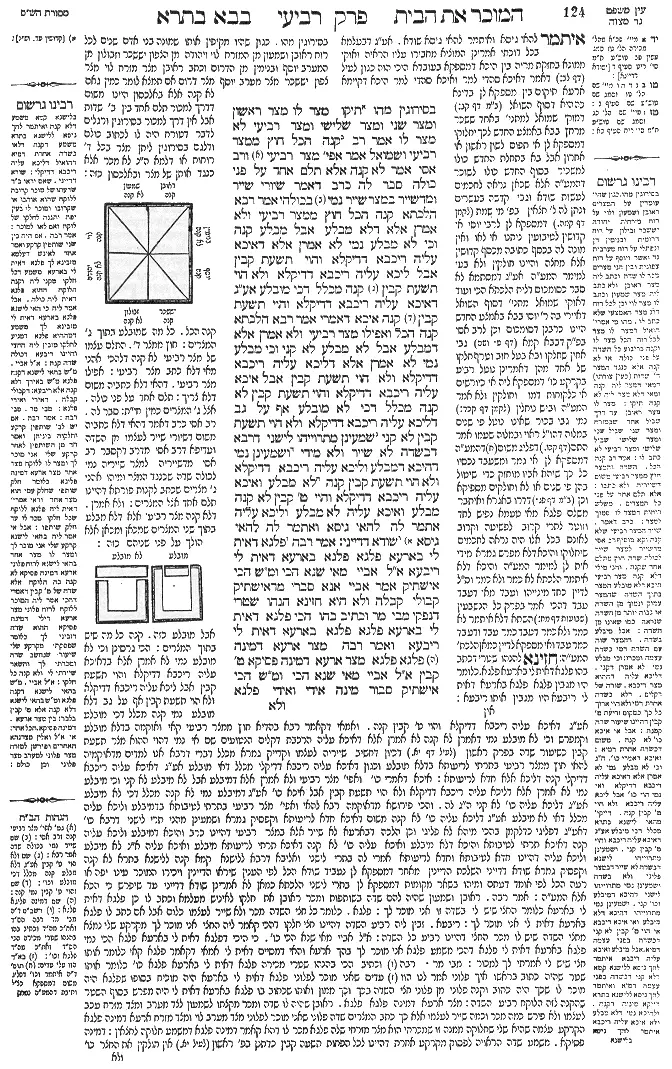
בסירוגין מהו תיקו מצר לו מצר ראשון ומצר שני ומצר שלישי ומצר רביעי לא מצר לו אמר רב קנה הכל חוץ ממצר רביעי ושמואל אמר אפילו מצר רביעי ורב אסי אמר לא קנה אלא תלם אחד על פני כולה סבר לה כרב דאמר שיורי שייר ומדשייר במצר שייר נמי בכולהי אמר רבא הלכתא קנה הכל חוץ ממצר רביעי ולא אמרן אלא דלא מבלע אבל מבלע קנה וכי לא מבלע נמי לא אמרן אלא דאיכא עליה ריכבא דדיקלא והוי תשעת קבין אבל ליכא עליה ריכבא דדיקלא ולא הוי תשעת קבין קנה מכלל דכי מובלע אע"ג דאיכא עליה ריכבא דדיקלא והוי תשעת קבין קנה איכא דאמרי אמר רבא הלכתא קנה הכל ואפילו מצר רביעי ולא אמרן אלא דמבלע אבל לא מבלע לא קני וכי מבלע נמי לא אמרן אלא דליכא עליה ריכבא דדיקלא ולא הוי תשעת קבין אבל איכא עליה ריכבא דדיקלא והוי תשעת קבין לא קנה מכלל דכי לא מובלע אף על גב דליכא עליה ריכבא דדיקלא ולא הוי תשעת קבין לא קני שמעינן מתרוייהו לישני דרבא דבשדה לא שייר ולא מידי ושמעינן נמי דהיכא דמבלע וליכא עליה ריכבא דדיקלא ולא הוי תשעת קבין קנה לא מבלע ואיכא עליה ריכבא דדיקלא והוי תשעה קבין לא קנה מבלע ואיכא עליה לא מבלע וליכא עליה אתמר לה להאי גיסא ואתמר לה להאי גיסא שודא דדייני:
אמר רבה פלגא דאית לי בארעא פלגא פלגא בארעא דאית לי ריבעא א"ל אביי מאי שנא הכי ומ"ש הכי אישתיק אמר אביי אנא סברי מדאישתיק קבולי קבלה ולא היא חזינא הנהו שטרי דנפקי מבי מר וכתיב בהו הכי פלגא דאית לי בארעא פלגא פלגא בארעא דאית לי ריבעא ואמר רבה מצר ארעא דמינה פלגא פלגא מצר ארעא דמינה פסיקא ט' קבין א"ל אביי מאי שנא הכי ומ"ש הכי אישתיק סבור מינה אידי ואידי פלגא
Comments from Rashbam - Bava Batra 62b
בסירוגין מהו . כגון שהיו מקיפין אותו שמונה בני אדם שנים לכל רוח ראובן ושמעון מן המזרח לוי ויהודה מן הצפון יששכר וזבולון מן המערב יוסף ובנימין מן הדרום וכתב ראובן מצר מזרח לוי מצר צפון יששכר מצר מערב יוסף מצר דרום אם תמצא לומר כמין גאם לא קנה אלא באלכסון היינו משום דדרך למכור תלם אתד בין ב' שדות אבל אין דרך למכור בסירוגין ורגלים לדבר דטורח היה לו לכתוב כולם ודלגם בסירוגין ליתן מצר בכל ד' רוחות או דלמא ה"נ לא מכר אלא כנגד אותן של מצר ובאלכסון כזה:  קנה הכל . כל מה שמובלע בתוך ג' המצרים: חוץ ממצר ד' . התלם עצמו של מצר רביעי לא קנה דלהכי אהני מאי דלא כתב מצר רביעי: אפילו מצר רביעי . דהאי דלא כתביה משום דלא צריך: תלם אחד על פני כולה . אצל ג' המצרים כמין חי"ת: סבר לה . רב אסי כרב דאמר דהאי דלא כתביה משום דשיורי שייר לעצמו מן השדה ועדיפא דרב אסי מדרב דקסבר רב אסי מדשייריה למצר שייריה נמי לכולה שדה שכנגד המצר ומיהו אהני ג' מצרים שכתב לקנות פורתא דהיינו תלם אחד אצל המצרים: ולא אמרן . דלא קנה מצר רביעי אלא דלא מבלע בתוך שני המצרים שמכאן ומכאן אלא הולך על פני שניהם כזה:
 אבל מובלע . כזה

Comments from Tosafot - Bava Batra 62b
איתמר להאי גיסא ואיתמר להאי גיסא שודא. אע"ג דבעלמא בכל דוכתי אמרינן המוציא מחבירו עליו הראיה ואוקי ממונא בחזקת מריה בין היכא דמספקא בעובדא היכי הוה כגון לעיל (בבא בתרא דף לב:) דאמר דאיכא סהדי למר ואיכא סהדי למר היכא דקיימא ארעא תיקום בין מספקא לן בדינא כההיא דסוף השואל (ב"מ דף קב:) דמוקי שמואל למתני' באחד ששכר מרחץ בבא באמצע החדש לכך יחלוקו דמספקא לן אי תפוס לשון ראשון או אחרון אבל בא בתחלת החדש כולו למשכיר בסוף החדש כולו לשוכר דהמע"ה אלא שכאן נראה לחכמים לעשות שודא וגבי קדשה בעשרים ונתן לה ל' חצאין בפ' מי שמת (לקמן בבא בתרא דף קמה.) דמספקא לן לרבי יוסי אי קדושין לטיבועין ניתנו אי לאו ואין מונה לה בכסף כתובה מכסף קדושין אלא מחצה והיינו חולקין ולא בעי למימר המע"ה אע"ג דמסתמא לא סבר כסומכוס דלית הלכתא הכי ועוד דאוקי שמואל מתני' דסוף השואל דאיירי בה ר' יוסי בבא באמצע החדש היינו כרבנן דסומכוס וכן לרב אסי בפ"ק דבבא קמא (דף ט. ושם) גבי אחין שחלקו ובא בעל חוב וטרף חלקו של אחד מהן דאמרינן נוטל רביע בקרקע כו' דמספקא ליה אי כיורשים אי כלקוחות דמו וחולקין ולא אמר המע"ה וביש נוחלין (לקמן בבא בתרא דף קכד:) נמי גבי בכור שאינו נוטל פי שנים במלוה דהו"ל ראוי ובמלוה שעמו אמר התם (דף קכו.) דפליג משום דהמע"ה דמספקא לן אי גמר ומשעבד נכסיו כל כך שיהא אביו מוחזק כדי שיטול בהן פי שנים או לא וחולקים מספיקא וכן (ב"מ דף פג.) דדרו באגרא ואיתבר משלם פלגא מאי טעמא נפיש לחד וזוטר לתרי קרוב לפשיעה וקרוב לאונס בכל אלו היה נראה לחכמים שיחלוקו והיכא דלא מפרש גמרא מידי אית לן למימר המע"ה והיכא דלא איתמר הלכתא לא כמר ולא כמר וס"ל לדיין כחד מינייהו ועבד מאי דעבד עבד דהכי אמר בפרק כל הנשבעין (שבועות דף מח:) השתא דלא איתמר לא כמר ולא כמר דעבד כמר עבד ודעבד כמר עבד ואי מספקא לדיין כמאן הלכת' המע"ה: חזינא להנהו שטרי דכתב בהו פלגא דאית לי בארעא פלגא. כלומר היו מגבין פלגא פלגא בארעא דאית לי ריבעא היו מגבין אותו ריבעא:
Bava Batra 62b - Mishnah translated into english
A third dilemma was also raised before the Sages: If the seller defined the boundaries of the property he is selling in an alternating fashion, mentioning only some of the fields bordering each side of the field being sold, while omitting others, what is the halakha? No resolution was found for these questions, and these dilemmas shall stand unresolved.
§ The Gemara raises a similar dilemma. If, in the bill of sale, the seller delineated for the buyer the field’s first boundary, its second boundary, and its third boundary, but he did not delineate its fourth boundary at all, Rav says: The buyer acquires the entire field, except for the one furrow along which the fourth boundary runs, which is usually differentiated in some way from the field itself. And Shmuel says: The buyer acquires even the furrow along which the fourth boundary runs. And Rav Asi says: He acquires only the width of one furrow along the entire perimeter of the three boundaries specified by the seller.
The Gemara explains Rav Asi’s opinion: He holds in accordance with the opinion of Rav, who said that by failing to delineate the fourth boundary, the seller withheld some part of the field, i.e., one furrow, for himself. But Rav Asi takes this further and says that since he withheld some part of the field for himself at the fourth boundary, he withheld also some portion of the entire field, and therefore the buyer acquires only that which is adjacent to the specified boundaries.
Rava said: The halakha is that the buyer acquires the entire field except for the one furrow along which the fourth boundary runs, in accordance with the opinion of Rav. And we said this only in a case where the fourth boundary is not included within the space between two adjacent boundaries, but rather juts out beyond them. But when it is included within the space delineated by the other boundaries, the buyer acquires it as well.
Rava adds: And even when it is not included in that space, we said that the buyer does not acquire it only in a case where there is a row of trees on it, or it is an area fit for sowing nine kav of seed. But where there is no row of trees on it, and it is not an area fit for sowing nine kav of seed, the buyer acquires it along with the rest of the field. By inference one derives from here that when the fourth border is included within the space delineated by the two adjacent boundaries, even if there is a row of trees on it and it is an area fit for sowing nine kav, the buyer acquires it.
There are those who say that Rava’s ruling and the conclusion drawn from it are as follows: Rava said: The halakha is that the buyer acquires the entire field, and he acquires even the furrow along which the fourth boundary runs, in accordance with the opinion of Shmuel. And we said this only in a case where the fourth boundary is included within the space delineated by the two adjacent boundaries. But when it is not included within those boundaries, the buyer does not acquire it.
Rava adds: And even when it is included within the adjoining boundaries, we said that the buyer acquires it only in a case where there is no row of trees on it, and it is not an area fit for sowing nine kav of seed. But where there is a row of trees on it, or it is an area fit for sowing nine kav of seed, the buyer does not acquire it. By inference one derives from here that when the fourth boundary is not included within the two adjacent boundaries, even if there is no row of trees on it and it is not an area fit for sowing nine kav of seed, the buyer does not acquire it.
We conclude according to both versions of the statement of Rava that even if the seller withheld something for himself along the fourth boundary, he did not withhold anything at all in the field itself. And we also conclude according to both versions that where the fourth boundary is included within the space defined by the two adjacent boundaries, and there is no row of trees on it and it is not an area fit for sowing nine kav of seed, the buyer acquires it. And furthermore, we conclude according to both versions that if the fourth boundary is not included within the two adjacent boundaries, and there is a row of trees on it, or it is an area fit for sowing nine kav of seed, the buyer does not acquire it.
If the fourth boundary is included within the two adjacent boundaries, and there is a row of trees on it or it is fit for sowing nine kav of seed, or if the fourth boundary is not included within the two adjacent boundaries, and there is no row of trees on it nor is it fit for sowing nine kav, the ruling in these cases was stated in this direction, that the land adjacent to the fourth boundary is acquired by the buyer, and it was stated in that direction, that this land is not acquired by the buyer, depending upon which version of Rava’s statement is accepted. Since there is no clear ruling in these cases, the decision is left to the discretion of the judges, who must rule in accordance with what appears to them to be the intention of the seller.
§ Rabba said: If one owns a field in partnership with another, and he says to a third person: I am selling you the half that I have in this land, he means to sell him half of that field, i.e., his entire share. If he says to the buyer: I am selling you half of the land that I have, he means to sell him one-quarter of that field, i.e., half of his share. Abaye said to him: What is different about this wording and what is different about that wording, that you rule differently in the two cases? Rabba was silent, offering no reply.
Abaye said: I had assumed that since he was silent, he must have accepted my opinion and retracted his statement; but that is not so. As on another occasion I saw certain bills of sale that issued from my Master’s house, that is, they were issued under the auspices of my master Rabba, in which it was written: The half that I have in this land, and it was clear from another clause in the bill that half of the field was being sold. And there was another bill of sale in which it was written: Half of the land that I have, and it was clear from another clause in the bill that one-quarter of the field was being sold.
And Rabba also said: If one sold land to another and delineated boundaries on three sides of the field, and with regard to the fourth side he wrote in the bill of sale: The boundary of the field is the land through which the field is halved, he has sold him half of the field. If he writes with regard to the fourth boundary: The boundary of the field is the land from which a plot can be set apart, he has sold him only an area fit for sowing nine kav of seed, as that is the minimum size of a plot of land defined as a field.
Abaye said to him: What is different about this wording, and what is different about that wording, that you rule differently in the two cases? Rabba was silent, and did not respond. The Sages understood from this silence that Abaye understood that Rabba retracted his ruling and conceded that in both this case and that case, the buyer acquires half of the field.
Traduction : The William Davidson digital edition of the Koren Noé Talmud, with commentary by Rabbi Adin Even-Israel Steinsaltz.