 Talmud Bavli
Bava Batra 57b : Youtube
Daf TubeYoutube
2 video classes :
Bava Batra Page 57b
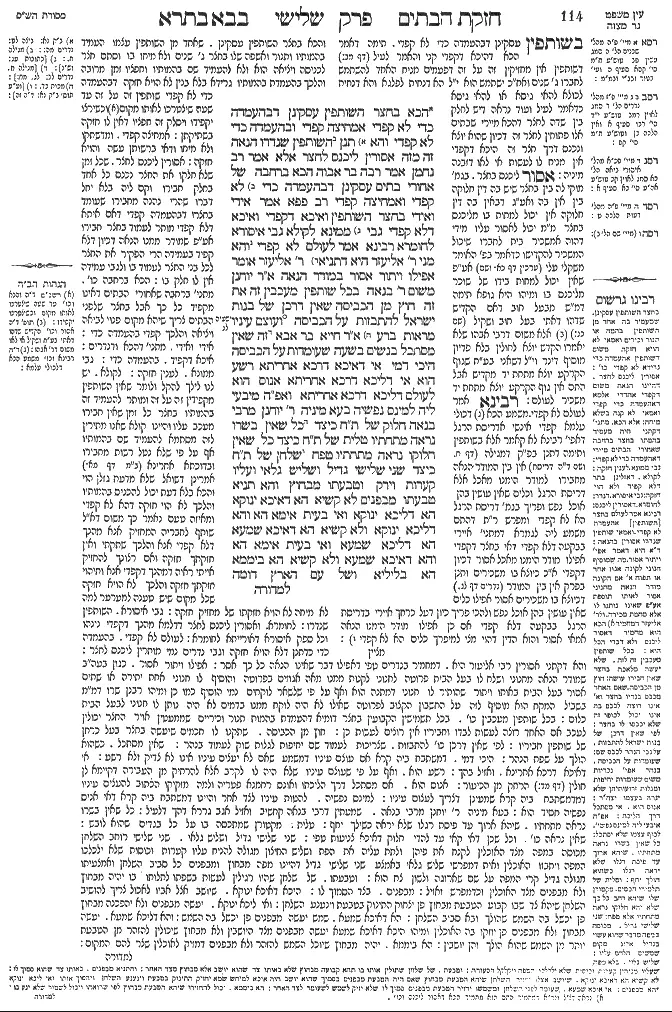
Bava Batra 57b - Guemara
הכא בחצר השותפין עסקינן דבהעמדה כדי לא קפדי אמחיצה קפדי ובהעמדה כדי לא קפדי והא תנן השותפין שנדרו הנאה זה מזה אסורין ליכנס לחצר אלא אמר רב נחמן אמר רבה בר אבוה הכא ברחבה של אחורי בתים עסקינן דבהעמדה כדי לא קפדי ואמחיצה קפדי רב פפא אמר אידי ואידי בחצר השותפין ואיכא דקפדי ואיכא דלא קפדי גבי ממונא לקולא גבי איסורא לחומרא רבינא אמר לעולם לא קפדי והא מני ר' אליעזר היא דתניא ר' אליעזר אומר אפילו ויתור אסור במודר הנאה א"ר יוחנן משום ר' בנאה בכל שותפין מעכבין זה את זה חוץ מן הכביסה שאין דרכן של בנות ישראל להתבזות על הכביסה (ישעיהו לג, טו) ועוצם עיניו מראות ברע א"ר חייא בר אבא זה שאין מסתכל בנשים בשעה שעומדות על הכביסה היכי דמי אי דאיכא דרכא אחריתא רשע הוא אי דליכא דרכא אחריתא אנוס הוא לעולם דליכא דרכא אחריתא ואפ"ה מיבעי ליה למינס נפשיה בעא מיניה ר' יוחנן מרבי בנאה חלוק של ת"ח כיצד כל שאין בשרו נראה מתחתיו טלית של ת"ח כיצד כל שאין חלוקו נראה מתחתיו טפח שלחן של ת"ח כיצד שני שלישי גדיל ושליש גלאי ועליו קערות וירק וטבעתו מבחוץ והא תניא טבעתו מבפנים לא קשיא הא דאיכא ינוקא הא דליכא ינוקא ואי בעית אימא הא והא דליכא ינוקא ולא קשיא הא דאיכא שמעא הא דליכא שמעא ואי בעית אימא הא והא דאיכא שמעא ולא קשיא הא ביממא הא בליליא ושל עם הארץ דומה
Comments from Rashbam - Bava Batra 57b
והכא בחצר השותפין עסקינן . שאחד מן השותפין עצמו העמיד בהמותיו ותנור ואשפה שלו בחצר ג' שנים ולא מיחו בו וסתם חצר לכניסה ויציאה הוא ולא להעמיד שם בהמותיו וחפציו זמן מרובה והלכך בהעמדת בהמותיו גרידא בלא בנין לא הויא חזקה דבהעמדה כדי לא קפדי שותפין זה על זה עד שעה שיצטרכו לאותו מקום וכשירצו יקפידו ויסלק זה חפציו דאין לו חזקה בשתיקתן: אמחיצה קפדי . ומדשתקו ולא מיחו ודאי ברשותן עשה והויא חזקה: אסורין ליכנס לחצר . שכל זמן שלא חלקו את החצר נכנס כל אחד בחלק חבירו וקם ליה בלא יחל דברו שהרי נהנה מחבירו שעומד בחצרו דבהעמדה קפדי דאם איתא דלא קפדי מותר לעמוד בחצר חבירו אע"פ שמודר ממנו הנאה דכיון דלא קפיד בעמידה הרי הפקיר את החצר לכל בני החצר לעמוד בו ולגבי עמידה אין לו חלק בו: הכא ברחבה כו' . מתני' ברחבה שאחורי הבתים דאינו מקפיד כל כך אבל בחצר שלפני הבתים צריך שיהא מקום פנוי לביאה ויציאה והלכך קפדי בהעמדה כדי: אידי ואידי . מתני' דהכא ודנדרים: איכא דקפיד . בהעמדה כדי: גבי ממונא . לענין חזקה: לקולא . יש לנו לילך להקל ולומר שאין השותפין מקפידין זה על זה ומותר להעמיד זה בהמותיו בחצר כל זמן שאין חבירו מעכב עליו והיינו קולא שאנו מתירין לזה מסתמא להעמיד שם בהמותיו אף על פי שלא נטל רשות מחבירו ובדוכתא אחרינא (ב"מ דף מא.) אמרינן דשואל שלא מדעת גזלן הוי והכא בלא דעת יכול להכניס בהמותיו והלכך לא הוי חזקה דהא לא קפדי ומאיזה טעם נאמר כך משום דא"ל שותף לחבריה המחזיק אנא מהנך דלא קפדי אנא והלכך שתקתי ואין חזקתך חזקה ואם רצונך להחזיק אייתי ראיה דמהנך דקפדי אנא ותיהוי חזקתך חזקה והלכך לא הויא חזקה שכל מקום שיש טענה למערער למה לא מיחה לא הויא חזקתו של מחזיק חזקה: גבי איסורא . השותפין שנדרו: לחומרא . ואסורין ליכנס לחצר דדלמא מהנך דקפדי נינהו וכל ספק איסורא דאורייתא לחומרא: לעולם לא קפדי . בהעמדה כדי כדתנן דלא הויא חזקה וגבי נדרים נמי מותרין ליכנס לחצר: והא דקתני אסורין רבי אליעזר היא . דמחמיר בנדרים טפי דאפילו דבר שאינו הנאה כל כך אסר: אפילו ויתור אסור . כגון בעה"ב שמודר הנאה מחנוני ושלח לו בעל הבית פרוטה לחנוני לקנות ממנו מאה אגוזים בפרוטה והוסיף לו חנוני אחת יתירה או שתים אסור בעל הבית באותו ויתור שהותיר לו חנוני דמתנה הוא ואף על פי שלשאר לוקחים נמי הוסיף כמו כן ומיהו רבנן שרו דמ"מ בשביל המקח הוא מוסיף לזה על החשבון הקצוב לפרוטה שאילו לא היה לוקח ממנו בדמים לא היה נותן לו חנוני לבעל הבית כלום: בכל שותפים מעכבין כו' . בכל תשמישין הקבועין בחצר דומיא דהעמדת בהמות תנור וכיריים שממעטין אויר החצר יכולין לעכב אם האחד רוצה לעשות לבדו וחביריו אין רוצים לעשות כן: חוץ מן הכביסה . שתקנו לו חכמים שיעשה בחצר בעל כרחן של שותפין חביריו: לפי שאין דרכן כו' להתבזות . שצריכות לעמוד שם יחיפות לגלות שוק לעמוד בנהר: שאין מסתכל . כשהוא הולך על שפת הנהר: היכי דמי . דמשתבח ביה קרא אם עוצם עיניו דמשמע שאם לא יעצים עיניו אינו לא צדיק ולא רשע: אי דאיכא דרכא אחרינא . ואזיל בהך: רשע הוא . ואף על פי שעוצם עיניו שלא היה לו לקרב אלא להרחיק מן העבירה דקיימא לן חולין (דף מד:) הרחק מן הכיעור: אנוס הוא . אם מסתכל דרך הליכתו ואונס רחמנא פטריה ולמה מזקיקו הכתוב להעצים עיניו דמדמשתבח ביה קרא שמעינן דצריך לעצום עיניו: למינס נפשיה . להטות עיניו לצד אחר והיינו דמשתבח ביה קרא דאי אניס נפשיה חסיד הוא: בעא מיניה ר' יוחנן מרבי בנאה . שמעתין דרבי בנאה קחשיב ואזיל אגב גררא דהך דלעיל: כל שאין בשרו נראה מתחתיו . שיהא ארוך עד פיסת רגלו שלא יראה כשילך יחף: טלית . מקטורן שמתכסה בו על כל בגדים שהוא לובש: שאין נראה כו' . וכל שכן דאי קאי עד להדי חלוק דאיכא צניעות טפי: שני שלישי גדיל ושליש גלאי . שני שלישי רוחב השלחן מכוסה במפה מצד האוכלין לקנח את פיהן ולתת עליה את הפת ושליש החיצון מגולה להניח עליו קערות וכוסות שלא ילכלכו המפה ויתבזו האוכלין ואית דמפרשי שליש גלאי באמצע שני שלישי גדיל דהיינו מפה מבחוץ ומבפנים כל סביב השלחן ואמצעיתו מגולה גדיל קרי המפה על שם שארוגה ולשון צח הוא: וטבעתו . של שלחן שהיו רגילין לעשות בשפתו לתלות בו יהיה מבחוץ ולא מבפנים מצד האוכלין וכדמפרש ואזיל: מבפנים . בצד הסמוך לו: היכא דאיכא ינוקא . שיושב אצל אביו לאכול צריך להושיב השלחן שיהא צד שבו קבוע הטבעת מבחוץ פן יצחוק התינוק בטבעת וינענע השלחן: ואי ליכא ינוקא . יעשה מבפנים ולא יהפכנה מבחוץ פן יכשל בה השמש שהולך ובא סביב השלחן: הא דאיכא שמעא . שמש יעשה מבפנים פן יכשל בה השמש: והא דליכא שמעא . יעשה מבחוץ ולא מבפנים פן יוזקו בה האוכלין ומיהו היכא דאיכא שמעא יעשה מבפנים מצד היושבין ולא מבחוץ שיכולין להזהר מן הטבעת יותר מן השמש שהוא הולך והן יושבין: הא ביממא . יהיה מבחוץ שיוכל השמש להזהר ולא מבפנים דמזיק לאוכלין שצר להם המקום:
Comments from Tosafot - Bava Batra 57b
בשותפין עסקינן דבהעמדה כדי לא קפדי. תימה דאמר הכא דהיכא דקפדי קני והאמר לעיל (בבא בתרא דף מב:) דשותפין אין מחזיקין זה על זה דפעמים מניח האחד להשתמש לחברו ג' שנים ואח"כ ישתמש הוא י"ל הא דנחית לפלגא והא דנחית לכולא להאי גיסא או להאי גיסא כדאמר לעיל ועוד נראה דיש לחלק בין שדה לחצר דהכא מיירי שבתים אלו פתוחין לחצר זה דכיון שהוא יוצא ונכנס דרך חצר זה היכא דקפדי אין מניח לו לעשות אי לאו דזבנה מיניה: אסור ליכנס בחצר. בגמ' מוקי לה בין בחצר שיש בה דין חלוקה בין אין בה ואע"ג דבאין בה דין חלוקה אין יכול למחות בו מליכנס בחצר מ"מ יכול לאסור עליו מידי דהוה אמשכיר בית לחברו שיכול המשכיר להקדישו כדאמר בפ' האומר משקלי עלי (ערכין דף כא. ושם) אע"פ שאין יכול למחות בידו של שוכר מליכנס בו ומיהו היא גופא תימה דמ"ש מבעל חוב דאם הקדיש שדהו דאתי בעל חוב ושקיל (שם כג:) אלא משום דרבי אבהו שלא יאמרו הקדש יוצא לחולין בלא פדיון מוסיף דינר וי"ל דשאני בע"ח שגוף הקרקע יוצא מתחת יד מקדיש אבל התם אין גוף הקרקע יוצא מתחת יד משכיר לעולם: רבינא אמר לעולם לא קפדי. משמע הכא דכולי עלמא קפדי אינשי אדריסת הרגל דאפי' רבינא לא קאמר אלא בשותפין ותימה דתנן בפ"ק דמגילה (דף ח. ושם ד"ה דריסת) אין בין המודר הנאה מחבירו למודר הימנו מאכל אלא דריסת הרגל וכלים שאין עושין בהן אוכל נפש ופריך בגמ' דריסת הרגל הא לא קפדי ומפרש ר"ת דהתם משמע ליה לגמרא דמתני' איירי בבקעה דלא קפדי דאי בחצר דקפדי אפילו מודר הימנו מאכל אסור דכיון דקפדי א"כ כיוצא בו משכירים ותנן בפרק אין בין המודר (נדרים דף לג.) דכיוצא בו משכירים אסור אפילו כלים שאין עושין בהן אוכל נפש ולהכי פריך כיון דעל כרחך איירי בדריסת הרגל בבקעה דלא קפדי אם כן אפילו מודר הימנו הנאה אמאי אסור והוא הדין דהוי מצי למיפרך כלים הא לא קפדי:
Bava Batra 57b - Mishnah translated into english
Here we are dealing with a courtyard belonging to partners, where they are not particular with regard to the mere placing of items in the courtyard, but are particular with regard to the construction of a partition. The presumption of ownership is established only where the lack of a protest indicates that the prior owner concedes that the property is no longer his. The co-owner’s silence in the face of his partner using the courtyard for a temporary purpose does not indicate a concession, but silence in the face of one who constructed a partition is a concession.
The Gemara asks: And are they not particular with regard to the mere placing of items? But didn’t we learn in a mishna (Nedarim 45b): Partners who through vows prohibited themselves from deriving benefit from one another are forbidden to enter into a courtyard jointly owned by them, since each one has a portion in it, and it would be considered a violation of one’s vow if one were to benefit from any part of the other’s property? This indicates that partners are particular even with regard to passage through the field; all the more so are they particular with regard to placing animals or vessels in the field.
Rather, Rav Naḥman said that Rabba bar Avuh said: Here we are dealing with a fenced-in yard located behind a group of houses that is used to store items not in regular use, where they are not particular with regard to the mere placing of items but are particular with regard to the construction of a partition.
Rav Pappa said: This and that, i.e., the rulings of the mishna in tractate Nedarim as well as the rulings of the mishna here, are stated with regard to a courtyard belonging to partners, and the reason for the difference in the rulings is that there are those who are particular with regard to the other partner placing items in or passing through the courtyard, and there are those who are not particular. Therefore, in the mishna here, which issues a ruling concerning monetary matters, the halakha is to be lenient, and it is assumed that the partner is not particular about placing items in the courtyard, and the presumption of ownership is established. In the mishna in tractate Nedarim, which issues a ruling concerning ritual matters, the halakha is to be stringent, to prevent one from violating a vow.
Ravina said: Actually, partners are not particular about placing items in the courtyard, and in accordance with whose opinion is this mishna in tractate Nedarim? It is in accordance with the opinion of Rabbi Eliezer, as it is taught in a baraita that Rabbi Eliezer says: Even negligible benefits ordinarily waived are forbidden in the case of one prohibited by a vow from deriving benefit from another. In other words, one prohibited by a vow may not derive any benefit from the other, even a benefit that people commonly are not particular about and allow others to enjoy without first receiving permission. Therefore, although people are ordinarily not particular about others passing through their property, according to the opinion of Rabbi Eliezer, one who is prohibited by a vow from deriving benefit from his partner is prohibited from walking on the property.
Rabbi Yoḥanan says in the name of Rabbi Bena’a: Partners may prevent each other from using their courtyard for any purpose except for washing laundry. This is because it is not the way of Jewish women to be degraded over washing laundry by laundering their clothing in a public area. Therefore, they must be allowed to launder in the courtyard.
In connection with the matter of laundry being washed in public, the Gemara quotes the homiletic interpretation of a verse: “He that walks righteously, and speaks uprightly; he that despises the gain of oppressions, that shakes his hands from holding of bribes, that stops his ears from hearing of blood, and shuts his eyes from looking upon evil” (Isaiah 33:15). Rabbi Ḥiyya bar Abba says: This is referring to one who does not gaze at women while they are standing over the laundry, as it was common for them to stand in the water and raise the hems of their garments while laundering their clothing.
The Gemara clarifies: What are the circumstances? If it is referring to a case where there is another way by which the one walking could reach his destination, then one who walks past the women, consequently placing himself in a situation where he will be tempted to gaze at them, is wicked. Alternatively, if it is referring to a case where there is no other way by which he can reach his destination, then he is a victim of circumstance, so why is he required to shut his eyes? The Gemara explains: Actually, it is referring to a case where there is no other way by which he can reach his destination, and even so, he is required to compel himself to avoid gazing at the women.
§ The Gemara quotes additional matters that Rabbi Yoḥanan learned from Rabbi Bena’a. Rabbi Yoḥanan asked Rabbi Bena’a: How should the garment of a Torah scholar worn under his clothes be fashioned? He replied: He can wear any garment long enough that his flesh is not visible from beneath it. Rabbi Yoḥanan asked: How should the cloak of a Torah scholar be fashioned? He replied: He can wear any garment long enough that a handbreadth of his garment worn under his clothes is not visible from beneath it. Rabbi Yoḥanan asked: How should the table of a Torah scholar appear? He replied: Two-thirds of the table is covered with a cloth, and one-third is uncovered, and upon that third are dishes and vegetables. And its ring, used to hang the table, should be positioned on the outside, not on the side that faces the one who is eating.
The Gemara asks: But isn’t it taught in a baraita that its ring should be positioned on the inside? The Gemara answers: This is not difficult. This baraita, which states that its ring should be positioned on the outside, is referring to a case where there is a child who may play with the ring and overturn the table, while that baraita, which states that its ring should be positioned on the inside, is referring to a case where there is no child present.
And if you wish, say instead that both this and that refer to a case where there is no child present, and this is not difficult: This baraita, which states that its ring should be positioned on the inside, is referring to a case where there is an attendant who may bump into the ring, while that baraita, which states that its ring should be positioned on the outside, is referring to a case where there is no attendant.
And if you wish, say instead that both this and that refer to a case where there is an attendant, and this is not difficult: This baraita, which states that its ring should be positioned on the outside, is referring to when the meal is eaten during the day, when the attendant can see the ring and avoid it, while that baraita, which states that its ring should be positioned on the inside, is referring to when the meal is eaten during the night.
The Gemara continues: All of the above is referring to the table of a Torah scholar, but the table of an ignoramus is similar
Traduction : The William Davidson digital edition of the Koren Noé Talmud, with commentary by Rabbi Adin Even-Israel Steinsaltz.