 Talmud Bavli
The learning on the whole site is dedicated : L'ilui Nishmat Yechayahou ben Moche
The learning on the whole site is dedicated : L'ilui Nishmat Jamila bat Chlomo Abensour
The learning on the whole site is dedicated : L'ilui Nishmat אליעזר בן רחל
Bava Batra 50b : Youtube
Daf TubeYoutube
2 video classes :
Bava Batra Page 50b
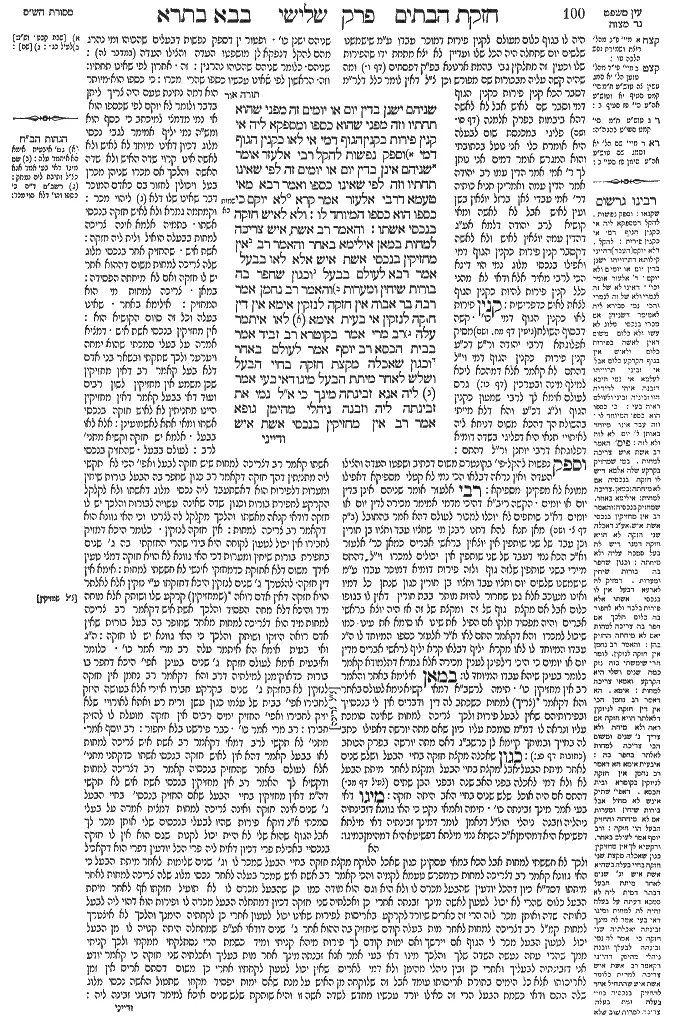
Bava Batra 50b - Guemara
שניהם ישנן בדין יום או יומים זה מפני שהוא תחתיו וזה מפני שהוא כספו ומספקא ליה אי קנין פירות כקנין הגוף דמי אי לאו כקנין הגוף דמי וספק נפשות להקל רבי אלעזר אומר שניהם אינן בדין יום או יומים זה לפי שאינו תחתיו וזה לפי שאינו כספו ואמר רבא מאי טעמא דרבי אלעזר אמר קרא (שמות כא, כא) לא יוקם כי כספו הוא כספו המיוחד לו:
ולא לאיש חזקה בנכסי אשתו:
והאמר רב אשת איש צריכה למחות במאן אילימא באחר והאמר רב אין מחזיקין בנכסי אשת איש אלא לאו בבעל אמר רבא לעולם בבעל וכגון שחפר בה בורות שיחין ומערות והאמר רב נחמן אמר רבה בר אבוה אין חזקה לנזקין אימא אין דין חזקה לנזקין אי בעית אימא לאו איתמר עלה רב מרי אמר בקוטרא רב זביד אמר בבית הכסא רב יוסף אמר לעולם באחר וכגון שאכלה מקצת חזקה בחיי הבעל ושלש לאחר מיתת הבעל מיגו דאי בעי אמר ליה אנא זבינתה מינך כי א"ל נמי את זבינתה ליה וזבנה ניהלי מהימן גופא אמר רב אין מחזיקין בנכסי אשת איש
Comments from Rashbam - Bava Batra 50b
שניהם ישנן כו' . ופטורין דספק נפשות דבעלים שהכוהו ומי נהרג מהם להקל דנפקא לן מושפטו העדה והצילו העדה (במדבר לה): שניהם . כלומר שניהם שהכוהו נהרגין: זה . אחרון לפי שאינו תחתיו: וזה . הראשון לפי שאינו עכשיו כספו שהרי מכרו: כי כספו הוא . מיותר הוא דמה נתינת טעם היה צריך ליתן בדבר ולומר לא יוקם לפי שכספו הוא אי נמי מדמצי למיכתב כי כסף הוא ומש"ה נמי יליף אמימר לגבי נכסי מלוג דכיון דאינו מיוחד לא לאיש ולא לאשה אינו קרוי שדה האיש ולא שדה האשה והלכך אם מכרו שניהן מכרן בטל ויכולין לחזור בם כאדם המוכר דבר שאינו שלו דלא ליהוי מכר: וקמתמה גמרא ולא לאיש חזקה בנכסי אשתו . בתמיה אלמא אינה צריכה למחות בבעלה הואיל ולית ליה חזקה: אשת איש . שהחזיק אחר בנכסי מלוג שלה צריכה למחות משום דההוא אחר יש לו חזקה ואם לא מיחתה הפסידה: במאן . צריכה למחות מי הוא המחזיק: אילימא באחר . שאינו בעלה וכל זה סיום הקושיא הוא: אין מחזיקין בנכסי אשת איש . דמציא אמרה על בעלי סמכתי שהוא ימחה ויערער ולכך שתקתי ובשאר בני אדם דלא בעל קאמר רב דאין מחזיקין שכן משמע אין מחזיקין לשון רבים ועוד דאי בבעל קאמר דאין מחזיקין היינו מתניתין לא לאיש חזקה בנכסי אשתו ומאי אתא לאשמועינן: אלא לאו בבעל . אלמא יש חזקה וקשיא מתני' לרב: לעולם בבעל . שהחזיק בנכסי אשתו קאמר רב דצריכה למחות שיש חזקה לבעל ואפי' הכי לא תקשי ליה מתניתין דהך חזקה דקאמר רב כגון שחפר בה הבעל בורות שיחין ומערות דלפירות הוא דאשתעבד ליה נכסי מלוג דאשתו ולא לקלקל הקרקע לחפירת בורות וכגון שדה שאינה עשויה לבורות והלכך יש לו חזקה דודאי קנאה מאשתו והלכך מקלקל לה לצרכו וכי האי גוונא הוא דקאמר רב צריכה למחות: אין חזקה לנזקין . כלומר היכא דמזיק לחבירו אין יכול לטעון לקוחה היא בידי שהרי החזקתי בה ג' שנים בחפירת בורות שיחין ומערות דכי האי גוונא לא הויא חזקה דמצי טעין אידך משום דלא אחזקת כדמחזקי אינשי לא חששתי למחות: אימא אין דין חזקה . להצטרך ג' שנים לנזקין היכא דחזקתו ע"י נזקין אלא לאלתר הויא חזקה דאין אדם רואה (שמחזיקין) קרקע שלו ושותק אלא מוחה מיד והיכא דלא מחה הפסיד והלכך אשת איש דקאמר רב צריכה למחות מיד הוא דצריכה למחות מאחר שחופר בה בעל בורות שאין אדם רואה היזקו ושותק והלכך כי האי גוונא יש לו חזקה: ה"ג ואי בעית אימא הא איתמר עלה רב מרי אמר כו' . כלומר ואיבעית אימא לעולם חזקת ג' שנים בעינן אפי' היכא דחפר בו בורות כדאוקימנן למילתיה דרב והא דקאמר רב נחמן אין חזקה לנזקין לא בחזקת ג' שנים בקרקע חבירו איירי אלא בעושה היזק לחבירו אפי' בבית של עצמו כגון עשן וריח רע ואתא לאורויי שלא יזיק לחבירו ואפי' החזיק ימים רבים אין חזקה מועלת לו להזיק חבירו: רב מרי אמר כו' . כבר פירשנו בלא יחפור: רב יוסף אמר . מתני' לא תקשי לרב דמאי דקאמר רב אשת איש צריכה למחות לאו בבעל קאמר דהא אין לאיש חזקה בנכסי אשתו כדקתני מתני' אלא לעולם באחר שהחזיק בנכסיה קאמר רב דצריכה למחות ודקשיא לך האמר רב אין מחזיקין בנכסי אשת איש לא תקשי דה"מ דאין מחזיקין בחיי הבעל שאם החזיק בנכסי' בחיי הבעל ג' שנים אינה חזקה ואינה צריכה למחות דמצית אמרה על בעלי סמכתי א"נ דוקא פירות שהיו לבעלי בנכסים שלי אותן מכר לך אבל הגוף שהוא שלי לא היית יכול לקנות שגם הוא אין לו חזקה בנכסיי באכילת פרי דכיון דאית ליה פרי הכל יודעין דפרי הוא דקאכיל ולכך לא חששתי למחות אבל הכא במאי עסקינן כגון שאכל הלוקח מקצת חזקה בחיי הבעל שמכר לו וג' שנים שלימות לאחר מיתת הבעל כי האי גוונא קאמר רב דצריכה למחות כדמפרש טעמא לקמיה והכי קאמר רב אשת איש שמכר בעלה לאחר נכסי מלוג שלה צריכה למחות לאחר מיתתו דסד"א כיון דהכל יודעין שהבעל מכרם לו ולא היא וגם הוא מודה כמו כן שהבעל מכרם לו לא תועיל חזקתו אף לאחר מיתת הבעל כלום שהרי לא יכול לטעון לאשה מינך זבנתה אחרי כן ואכלתיה שני חזקה דכיון דמתחלה הבעל מכרה לו ופירות הוא דהוי ליה לבעל באותה שדה ואותן מכר לזה הרי זה כאריס שיורד לקרקע באריסות לפירות שאינו יכול לטעון אחרי כן לקחתיה הימנך והלכך לא איצטרך למחות קמ"ל רב דצריכה למחות לאחר מות בעלה קודם שיחזיק בה ההוא אחר ג' שנים דודאי אע"פ שמתחלה היתה קנויה לו מן הבעל יכול לטעון הבעל מכר לי הגוף אם יירשך ואם ימות קודם לך פירות מיהא קניתי ומיד כשמת הרי נסתלקתי ממקחי ולכך קניתי ממך שהרי עתה נעשה השדה שלך והלכך מיגו דאי בעי אמר אנא זבנתה מינך אחר מות בעלים ואכלתיה שני חזקה כי קאמר יודע אני דזבינתיה לבעליך ואחרי כן זבין ניהלי מהימן ולא דמי לאריס שאין יכול לטעון לקחתיו אחרי כן משום דסתם אריס אין זמן לאריסותו אלא כל הימים בתורת אריסותו עומד אבל זה שלוקחה מן האיש על מנת שאם ימות יפסיד מקחו שתטול האשה נכסי מלוג שלה התם ודאי כשמת הבעל הרי זה כאילו יורד עכשיו מחדש לשדה אשה זו והיא שותקת שלש שנים איכא למימר דזבוני זבינה ליה:
Comments from Tosafot - Bava Batra 50b
וספק נפשות להקל. פי' בקונטרס משום דכתיב ושפטו העדה והצילו העדה ואין נראה דבלאו הכי נמי לא קטלי מספיקא דאפילו ממונא לא מפקינן מספיקא: רבי אלעזר אומר שניהם אינן בדין יום או יומים. הקשה ריב"א דהיכי מדמי אמימר מכירה לדין יום או יומים דא"כ שותפים לא יוכלו למכור לעולם דהא אמר בהחובל (ב"ק דף צ. ושם) מאן תנא להא דתנו רבנן מי שחציו עבד וחציו בן חורין וכן עבד של שני שותפין אין יוצאין בראשי אברים כמאן כר' אלעזר וא"כ הכא נמי דעבד של שני שותפין אין יכולים למכרו וי"ל דהתם מיירי בשני שותפין שלזה גוף ולזה פירות דומיא דמוכר עבדו ע"מ שישמשנו שלשים יום וחציו עבד וחציו בן חורין כגון שנתן כל דמיו ואינו מעוכב אלא גט שחרור להיות מותר בבת חורין דאין לו בגופו כלום אבל אם מקצת גוף של זה ומקצת של זה אז היה יוצא בראשי אברים והיה מפסיד חלקו אם הפיל את שינו או סימא את עינו כמו שיכול למכרו והא דקאמר התם לאו א"ר אלעזר כספו המיוחד לו ה"נ עבדו המיוחד לו לאו מקרא יליף דבלאו קרא יליף לראשי אברים מדין יום או יומים כי היכי דילפינן לענין מכירה אלא גמרא דתלמודא קאמר כלומר בעינן שיהא עבדו המיוחד לו: במאן אילימא באחר והאמר רב אין מחזיקין כו'. תימה לרשב"א דמאי קשיא נימא לעולם באחר והא דקאמר (צריך) למחות כשכתב לה דין ודברים אין לי בנכסייך ובפירותיהם שאין לבעל פירות ולכך צריכה למחות שאינה סומכת עליו ונראה לו דמ"מ סומכת עליו כיון שאם מתה יורשה דאפילו כתב לה בחייך ובמותך קיימא לן כרשב"ג דאם מתה יורשה בפרק הכותב (כתובות דף פג.): כגון שאכלה מקצת חזקה בחיי הבעל ושלש שנים לאחר מיתת הבעל. אבל מקצת בחיי הבעל ומקצת לאחר מיתת הבעל לא ולא דמי לאכלה בפני האב שנה ובפני הבן שתים (לעיל בבא בתרא דף מב.) דהתם אם היה אוכל שלש שנים בחיי האב היתה חזקה: מיגו דאי בעי אמר מינך זבינתה כו'. תימה ואמאי נקט כי האי גוונא דזבינתיה ניהליה וזבנה ניהלי הול"ל דנאמן לומר דמינך זבינתיה דאי מילתא דפשיטא היא דמהימן א"כ השתא נמי מילתא דפשיטא היא דמהימן במיגו:
Bava Batra 50b - Mishnah translated into english
both of them are included in the halakha of “a day or two days.” This first master is included because the slave is under his authority, and that second master is included because the slave is “his money.” The Gemara explains Rabbi Yosei’s reasoning: And he is uncertain if ownership of the rights to use an item and the profits it engenders is like ownership of the item itself, in which case only the first master would be exempt, or if it is not like ownership of the item itself, in which case only the second master would be exempt. And where there is an uncertainty in a case of capital law, the ruling is to be lenient. Therefore, neither of them would receive court-imposed capital punishment in this case.
The baraita continues: Rabbi Elazar says that both of them are not included in the halakha of “a day or two days,” and both would receive court-imposed capital punishment. This second master is not included because the slave is not under his authority, and that first master is not included because the slave is not “his money.” Rabbi Eliezer holds that one must both own the slave himself and enjoy the use of the slave to be included in the exemption.
The Gemara explains how Ameimar’s statement is in accordance with the opinion of Rabbi Elazar. And Rava says: What is the reason for the opinion of Rabbi Elazar? The verse states: “Notwithstanding if he continue a day or two days, he shall not be punished; for he is his money” (Exodus 21:21), and he understands this to be referring to a slave that is “his money,” a slave that is unique to him, so this exemption does not apply to one who does not have total ownership of the slave. Rabbi Elazar holds that one is considered to own an item only if he owns the item itself and also enjoys the use of it. This is the source of Ameimar’s statement that neither the husband nor the wife can sell usufruct property: The husband cannot sell it because he does not own it, and the wife cannot sell it because only the husband has the right to enjoy the profits.
§ The mishna teaches that a man does not have the ability to establish the presumption of ownership with regard to his wife’s property. The Gemara asks: But doesn’t Rav say that a married woman must protest? The Gemara clarifies: With regard to whom must she protest? If we say: With regard to another, i.e., one who is not her husband who has taken possession of her property, that is problematic: But doesn’t Rav say that one cannot establish the presumption of ownership with regard to the property of a married woman, as she can claim that she did not lodge a protest because she expected her husband to do so? Rather, Rav’s intention must be that she must lodge a protest with regard to the husband. This indicates that absent her protest, it is possible for a husband to establish the presumption of ownership with regard to her property, in contrast to the ruling of the mishna.
Rava said: Actually, Rav is referring to her lodging a protest with regard to the husband, and is speaking of a case where he dug pits, ditches, and caves in her property. In other words, he did not simply work and profit from the land, but damaged it in a way that demonstrates that he considered himself the owner. If he does this for three years and she does not lodge a protest, he establishes the presumption of ownership. The mishna, which states that he cannot establish the presumption of ownership, is referring to standard use.
The Gemara asks: But doesn’t Rav Naḥman say that Rabba bar Avuh said: There is no presumptive ownership with regard to damage? This is understood to mean that one cannot establish the presumption of ownership of another’s field by damaging it, as it is not considered to be standard use. Therefore, even after three years have passed the owner can remove one from his field. Since in this case the husband is damaging the field, he should not be able to establish the presumption of ownership.
The Gemara answers: Say that this means that the halakha of presumptive ownership does not apply with regard to damage, meaning that one who damages another’s property without the owner lodging a protest does not need three years to establish the presumption of ownership, but does so immediately, as an owner who sees another damage his land is expected to protest without delay. Consequently, a husband who digs pits and the like in his wife’s property without her lodging a protest establishes the presumption of ownership immediately.
The Gemara offers an alternative answer. If you wish, say instead: Was it not stated with regard to the halakha that there is no presumptive ownership with regard to damage that Rav Mari says: Damage is referring specifically to smoke, and Rav Zevid says that it is referring to a bathroom? The statement that there is no presumptive ownership [ḥazaka] with regard to damage was not stated concerning establishing the presumption of ownership of property, but concerning acquiring the privilege [ḥazaka] to engage in certain activities on one’s own property, and is stating that even if one has engaged in activities that produce smoke or foul odors, the fact that the neighbors did not lodge a protest in the past does not prevent them from doing so in the future.
Rav Yosef said: Actually, Rav is referring to her lodging a protest with regard to another, and is speaking of a case where the one who has possession of her property worked and profited from the field for part of the time necessary to establish the presumption of ownership during the husband’s lifetime, and for three additional years after the husband’s death. In this case, if the woman does not lodge a protest, the possessor establishes the presumption of ownership, since if he wanted to, he could say to the woman: I purchased it from you and then possessed the field for three years, and he would be awarded the field. When he said to her as well: You sold the field to your husband and he sold it to me, he is deemed credible.
The Gemara returns to discuss Rav’s statement: With regard to the matter itself, Rav says that one cannot establish the presumption of ownership with regard to the property of a married woman,
Traduction : The William Davidson digital edition of the Koren Noé Talmud, with commentary by Rabbi Adin Even-Israel Steinsaltz.