 Talmud Bavli
The learning on the whole site is dedicated : L'ilui Nishmat Nissim ben Barukh Malka
The learning on the whole site is dedicated : For the success of Elyahou ben H'anna & family
The learning on the whole site is dedicated : L'ilui Nishmat Jamila bat Chlomo Abensour
Bava Batra 102b : Youtube
Daf TubeYoutube
2 video classes :
Bava Batra Page 102b
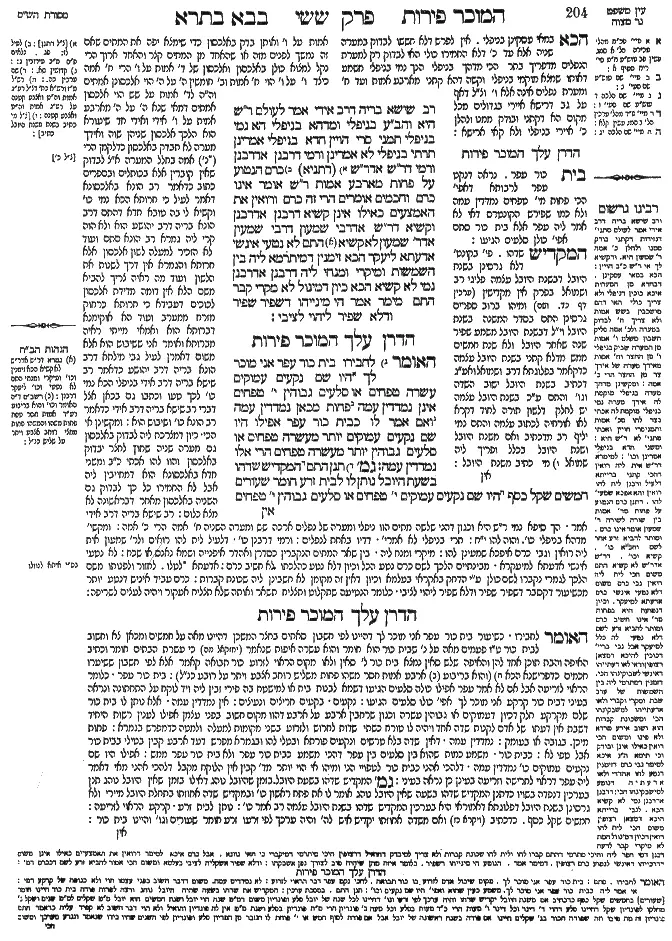
Bava Batra 102b - Guemara
רב שישא בריה דרב אידי אמר לעולם ר"ש היא והב"ע בניפלי ומדהא בניפלי הא נמי בניפלי תמני סרי הויין חדא בניפלי אמרינן תרתי בניפלי לא אמרינן ורמי דרבנן אדרבנן ורמי דר"ש אדר"ש (דתניא) כרם הנטוע על פחות מארבע אמות ר"ש אומר אינו כרם וחכמים אומרים הרי זה כרם ורואין את האמצעים כאילו אינן קשיא דרבנן אדרבנן וקשיא דר"ש אדרבי שמעון דרבי שמעון אדר' שמעון לא קשיא התם לא נטעי אינשי אדעתא ליעקר הכא זימנין דמיתרמא ליה בין השמשות ומיקרי ומנחי ליה דרבנן אדרבנן נמי לא קשיא הכא כיון דמינול לא מקרי קבר התם מימר אמר הי מינייהו דשפיר שפיר ודלא שפיר ליהוי לציבי:
הדרן עלך המוכר פירות
מתני׳ האומר לחבירו בית כור עפר אני מוכר לך היו שם נקעים עמוקים עשרה טפחים או סלעים גבוהין י' טפחים אינן נמדדין עמ פחות מכאן נמדדין עמה ואם אמר לו כבית כור עפר אפילו היו שם נקעים עמוקים יותר מעשרה טפחים או סלעים גבוהין יותר מעשרה טפחים הרי אלו נמדדין עמה:
גמ׳ תנן התם המקדיש שדהו בשעת היובל נותן לו לבית זרע חומר שעורים חמשים שקל כסף היו שם נקעים עמוקים י' טפחים או סלעים גבוהין י' טפחים
Comments from Rashbam - Bava Batra 102b
רב שישא בריה דרב אידי אמר . הך סיפא נמי ר"ש היא וכגון דהני שלשה מתים הוו ניפלי ומערה של נפלים ארכה שש ומערה השניה ח' אמה הרי כ' אמה: ומקשי' מדהא בניפלי כו' . והוה להו י"ח: תרי בניפלי לא אמרי' . דדיו באחת לנפלים: ורמי דרבנן כו' . דלעיל לית להו רואים ולר' שמעון אית ליה רואין וגבי כרם איפכא שמעינן להו: מיקרי ומנח ליה . בין שאר המתים הנקברין כסדרן ואהדר איפנייה ושמא נאנס או שכח: לא נטעי אינשי אדעתא למיעקרא . מבינתיים הלכך לשם כרם נטע הכל וכיון דלא נטע כהלכתו לא חשיב כרם: אדעתא לטלו . לחזור ולפנותו משם הלכך לגמרי נקברו לשם כולן ע"י הדחק באקראי בעלמא וכיון דאין זה מקומן לא חשבינן ליה שכונת קברות: כרם עביד איניש דנטע יותר מכשיעור דקסבר דשפיר שפיר ודלא שפיר ליהוי לציבי. כלומר הנטיעה שתקלוט ותצליח תשאר ואותה שלא תצליח אעקור ויהיה לעצים לשריפה: מתני' האומר לחבירו . כשיעור בית כור עפר אני מוכר לך דהיינו לפי חשבון סאתים בחצר המשכן דהיינו מאה על חמשים ומכאן צא וחשוב לבית כור ט"ו פעמים מאה על נ' שבית כור הוא חומר והוא עשרה איפות שנאמר (יחזקאל מה) כי עשרת הבתים חומר וכתיב האיפה והבת תוכן אחד להן והאיפה שלש סאין נמצא בית כור ל' סאין ולאו מקום הראוי לזרוע כור תבואה קאמר אלא לפי חשבון ששיערו חכמים כדפרישנא הכא (והוא בריבוע ארבע אמות חסר משהו פחות משליש רוחב אצבע ויתר על רובע כנ"ל): בית כור עפר . כלומר הראוי לזריעה אבל אם לא אמר עפר אפילו כולה סלעים הגיעו דשמא לבנות בית או למישטח בה פירי זבין ליה ויד לוקח על התחתונה ונראה בעיני דבית כור קרקע אני מוכר לך אפי' כולו סלעים הגיעו: נקעים . בקעים חריצים ונעיצים: אין נמדדין עמה . אלא נותן לו בית כור שלם מקרקע חלק דכיון דעמוקים או גבוהין עשרה וכגון שרחבין ארבע על ארבע דהוו מקום חשוב בפני עצמן אפילו לענין רשות היחיד דשבת אין דעתו של אדם לקנות שדה אחד ויהיה לו טורח כשתי שדות לחרוש ולזרוע בשני מקומות למעלה ולמטה כדמפרש בגמרא: פחות מיכן . בגובה או בעומק: נמדדין עמה . דאין שדה בלא טרשים ונקעים פורתא ובטלי להו ובגמרא מפרש דעד ארבע קבין בטילי בבית כור אבל טפי לא: כבית כור . משמע כמות שהוא בין סלעים בין עפר דהכי משמע כבית כור עפר ולא בית כור עפר ממש: אפילו היו שם נקעים עמוקים כו' נמדדין עמה . דלהכי אהני כבית כור לטפויי הני ומיהו אי הוי יותר מד' קבין אין הלוקח מקבל דלהכי אהני מאי דאמר ליה עפר דראוי לחרישה וזריעה בעינן כן נראה בעיני: גמ' המקדיש שדהו בשעת היובל . בזמן שהיובל נוהג דאילו בזמן שאין היובל נוהג תנן בערכין דנפדה בשויו כדתנן המקדיש שדהו בשעה שאין היובל נוהג אומר לו את פתח ראשון כו' ובמקדיש שדה אחוזתו בתחלת היובל מיירי ולא גרסינן בשנת היובל דפלוגתא דאמוראי היא בערכין המקדיש שדהו בשנת היובל עצמה רב אמר כו': נותן לבית זרע . קרקע הראוי לזריעה: חמשים שקל כסף . (ויקרא כז) ואם משדה אחוזתו יקדיש איש לה' והיה ערכך לפי זרעו זרע חומר שעורים וגו' והיינו בית כור:
Comments from Tosafot - Bava Batra 102b
הכא במאי עסקינן בניפלי. אין לפרש דלא חששו לבדוק במערה שניה אלא עד כ' דלא החמירו כולי האי לבדוק רק למערת הנפלים מדפריך בתר הכי מדהך בניפלי הנך נמי בניפלי משמע דאותו שמצא מוקמי בניפלי וקשה דהא קתני מארבע אמות ועד ח' ומערת נפלים אינה אלא ו' וצ"ל דאף על גב דרישא איירי בגדולים מכל מקום הא דקתני ובודק ממנו ולהלן כ' איירי בניפלי ולא קאי ארישא: מתני' בית כור עפר. נראה דנקט עפר לרבותא דאפי' הכי פחות מי' טפחים נמדדין עמה ולא כמו שפירש הקונטרס דאי לא אמר ליה עפר אלא בית כור סתם אפי' כולן סלעים הגיעו: המקדיש שדהו. פי' בקונט' דלא גרסינן בשנת היובל דבשנת היובל עצמה פליגי רב ושמואל בפרק אין מקדישין (ערכין דף כד. ושם) ומיהו ברוב ספרים גרסינן התם בסדר המשנה בשנת היובל וי"ל דבשנת היובל משמע שפיר שנה שאחר היובל ולא שנת חמשים ממש מדלא קתני בשנת היובל עצמה כדקאמר בפלוגתא דרב ושמואל ואע"ג דכתיב בשנת היובל ישוב השדה וגו' והתם ע"כ בשנת היובל עצמה יש לחלק דלשון תורה לחוד דקרא לאו אורחיה לכתוב עצמה והתם נמי יליף רב מדכתיב ואם משנת היובל ושנת היובל בכלל ופריך ליה שמואל מי כתיב משנת היובל:
Bava Batra 102b - Mishnah translated into english
Rav Sheisha, son of Rav Idi, said: Actually, the mishna is in accordance with the opinion of Rabbi Shimon, and here we are dealing with a case where the corpses found were of non-viable newborns buried in a smaller chamber only six cubits long. Adding a courtyard of six cubits and another regular-sized chamber of eight cubits yields a total length of the catacomb of twenty cubits.
The Gemara asks: But since this is dealing with a chamber that was created for burying non-viable newborns, there too, with regard to that chamber, on the other side of the courtyard, we are dealing with a chamber created for non-viable newborns as well. Therefore, the total length of the catacomb would be eighteen cubits. The Gemara answers: We say that perhaps one of the chambers is for non-viable newborns, but we do not say that two chambers might have been constructed for non-viable newborns.
§ Above, the Gemara cited a baraita that relates a dispute between Rabbi Shimon and the Rabbis with regard to three corpses buried close together. The Rabbis hold that this is not considered a graveyard, whereas Rabbi Shimon maintains that it can be. And the Gemara raises a contradiction from another ruling of the Rabbis against this ruling of the Rabbis, and it also raises a contradiction from another ruling of Rabbi Shimon against this ruling of Rabbi Shimon.
As it is taught in a mishna (Kilayim 5:2): With regard to a vineyard that is planted on an area where there is less than four cubits of open space between the vines, Rabbi Shimon says: It is not considered to be a vineyard with regard to the prohibition of diverse kinds and other halakhot, as it is overcrowded. And the Rabbis say: This is considered to be a vineyard, and the reason for this is that the middle vines are viewed as if they are not there, and the outer vines meet the requirements for a vineyard. Therefore, it is prohibited to plant other crops anywhere in that area.
The ruling of the Rabbis in this mishna is difficult, as it is contradicted by the ruling of the Rabbis in the baraita, as there the Rabbis did not say: The middle ones are viewed as if they are not there. And the ruling of Rabbi Shimon in this mishna is difficult, as it is contradicted by the ruling of Rabbi Shimon in the baraita, as there he did say: The corpses in the middle are viewed as if they are not there.
The Gemara answers: The fact that one ruling of Rabbi Shimon is contradicted by the other ruling of Rabbi Shimon is not difficult. There, with regard to vineyards, Rabbi Shimon holds that middle vines cannot be disregarded, as people do not plant vines with the intention of uprooting them. But here, with regard to burial, sometimes it happens that one has to bury a corpse at twilight just before the onset of Shabbat, and indiscriminately inters the body between other corpses with the intention of reburying it at a later date.
Similarly, the fact that one ruling of the Rabbis is contradicted by the other ruling of the Rabbis is not difficult. Here, with regard to burial, since it is a disgrace to bury bodies so close together, it is not called an area of graves. But there, with regard to vineyards, the owner of the vineyard says to himself: Whichever of the vines will flourish, will flourish and I will leave them, and whichever ones do not flourish, I will uproot them and they will be for firewood.
MISHNA: If one says to another: I am selling you a plot of earth of the size required for sowing one kor of seed [beit kor], and there on that plot there were crevices [neka’im] ten handbreadths deep or rocks ten handbreadths high, they are not measured together with the rest of the field. Rather, the buyer must be provided with land measuring a beit kor exclusive of those crevices or rocks. If the crevices or rocks measured less than ten handbreadths, they are measured together with the rest of the field. But if the seller said to the buyer: I am selling you a plot of earth that is about the size of a beit kor, then even if there on that plot there were crevices deeper than ten handbreadths or rocks higher than ten handbreadths, they are measured together with the rest of the field.
GEMARA: We learned in a mishna elsewhere (Arakhin 25a): With regard to one who consecrates his ancestral field during the time that the halakhot of the Jubilee Year are practiced, if he wishes to redeem the field he must give the Temple treasurer fifty silver shekels for every place that is fit for sowing a ḥomer of barley seed, which is the biblical equivalent of a kor, for all the years of the Jubilee cycle, as this is the sum fixed by the Torah for this purpose (see Leviticus 27:16). But if there were crevices ten handbreadths deep there, in the field, or rocks ten handbreadths high,
Traduction : The William Davidson digital edition of the Koren Noé Talmud, with commentary by Rabbi Adin Even-Israel Steinsaltz.