 Talmud Bavli
The learning on the whole site is dedicated : L'ilui Nishmat Reuven ben Rivka SEBBAG
The learning on the whole site is dedicated : L'ilui Nishmat יוסף בן מושה
The learning on the whole site is dedicated : L'ilui Nishmat Yaakov ben Myriam
Bava Batra 22b : Youtube
Daf TubeYoutube
2 video classes :
Bava Batra Page 22b
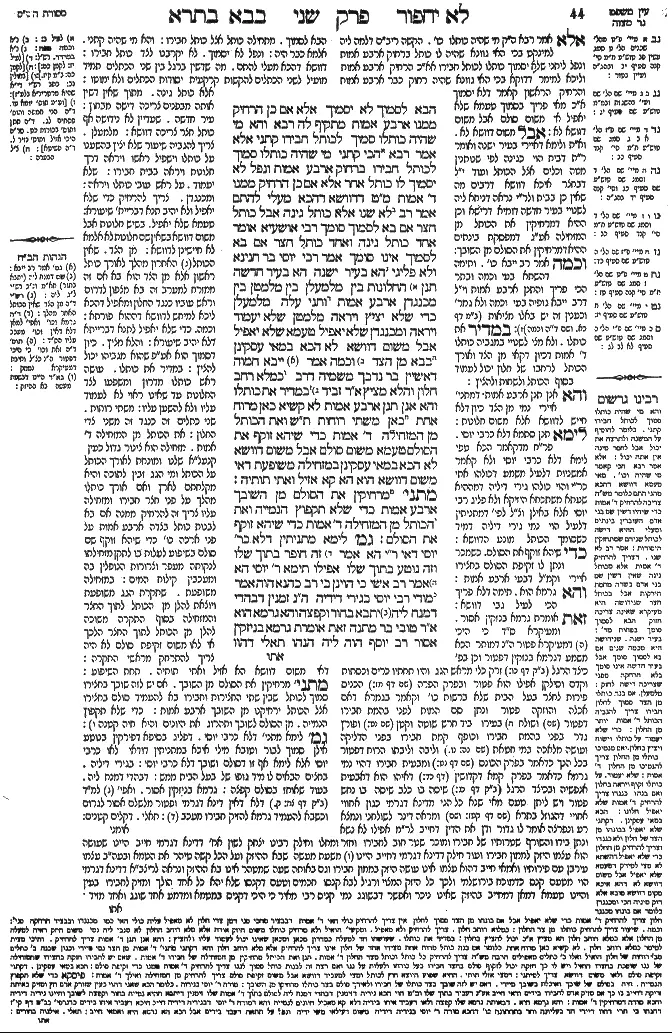
Bava Batra 22b - Guemara
הבא לסמוך לא יסמוך אלא אם כן הרחיק ממנו ארבע אמות מתקיף לה רבא והא מי שהיה כותלו סמוך לכותל חבירו קתני אלא אמר רבא הכי קתני מי שהיה כותלו סמוך לכותל חבירו ברחוק ארבע אמות ונפל לא יסמוך לו כותל אחר אלא אם כן הרחיק ממנו ד' אמות מאי טעמא דדוושא דהכא מעלי להתם אמר רב לא שנו אלא כותל גינה אבל כותל חצר אם בא לסמוך סומך רבי אושעיא אומר אחד כותל גינה ואחד כותל חצר אם בא לסמוך אינו סומך אמר רבי יוסי בר חנינא ולא פליגי הא בעיר ישנה הא בעיר חדשה תנן החלונות בין מלמעלן בין מלמטן בין מכנגדן ארבע אמות ותני עלה מלמעלן כדי שלא יציץ ויראה מלמטן שלא יעמוד ויראה ומכנגדן שלא יאפיל טעמא שלא יאפיל אבל משום דוושא לא הכא במאי עסקינן בבא מן הצד וכמה אמר ייבא חמוה דאשיין בר נדבך משמיה דרב כמלא רחב חלון והלא מציץ א"ר זביד במדיר את כותלו והא אנן תנן ארבע אמות לא קשיא כאן מרוח אחת כאן משתי רוחות תא שמע ואת הכותל מן המזחילה ד' אמות כדי שיהא זוקף את הסולם טעמא משום סולם אבל משום דוושא לא הכא במאי עסקינן במזחילה משופעת דאי משום דוושא הוא הא קא אזיל ואתי תותיה:
מתני׳ מרחיקין את הסולם מן השובך ארבע אמות כדי שלא תקפוץ הנמייה ואת הכותל מן המזחילה ד' אמות כדי שיהא זוקף את הסולם:
גמ׳ לימא מתניתין דלא כר' יוסי דאי ר"י הא אמר זה חופר בתוך שלו וזה נוטע בתוך שלו אפילו תימא ר' יוסי הא אמר רב אשי כי הוינן בי רב כהנא הוה אמר מודי רבי יוסי בגירי דידיה ה"נ זמנין דבהדי דמנח ליה יתבא בחור וקפצה והא גרמא הוא א"ר טובי בר מתנה זאת אומרת גרמא בניזקין אסור רב יוסף הוה ליה הנהו תאלי דהוו
Comments from Rashi on Masechet Bava Batra Page 22b
הבא לסמוך . מתחילה כותל אצל כותל חבירו: והא מי שהיה קתני . אלמא כבר היה: ונפל לא יסמוך . לא יקרבנו לצד כותל חבירו: דוושא דהכא מעלי להתם . מה שדשין ברגל בין שני הכתלים תמיד מועיל לשני הכתלים להקשות קרקעית יסודות הכתלים ולא ימוטו: אלא כותל גינה . מתוך שאין דשין אותה מבפנים צריכה דישה מבחוץ: עיר חדשה . שעדיין לא נידושה אף כותל חצר צריכה דוושא: מלמעלן . צריך להגביה שיעור שלא יציץ בהשענו על כותלו וישפיל ראשו ויראה דרך חלונות ויראה בבית חבירו: שלא יעמוד . על ראש עובי כותלו ויראה: ומכנגדן . צריך להרחיק כדי שלא יאפיל ולא יהיב תנא דבריית' שיעורא: טעמא שלא יאפיל . בשיש חלונות אבל משום דוושא בשאין שם חלונות לא אלמא לא חיישינן לדוושא: מן הצד . שאין הכותל האחרון מהלך לאורך כותל ראשון אלא מן הצד הוא בא אם זה ממזרח למערב זה בא מצפון לדרום וראש עוביו כנגד החלון ומאפיל דהכא ליכא למיחש לדוושא דההוא פורתא: וכמה . כדי שלא יאפיל לתנא דברייתא דלא יהיב שיעורא: והלא מציץ . כיון דסמוך הוא אע"פ שהוא מגביהו יכול להציץ: במדיר את כותלו . עושה ראש כותלו מדרון ומשפעו לצד החלונות עד שאינו ראוי לא לעמוד עליו ולא להשען עליו: משתי רוחות . שני כתלים זה כנגד זה משני צדי החלון: את הכותל מן המזחילה ד' אמות . מזחילה הוא צינור גדול כעין קנעל"א שלנו ומונחת לאורך הכותל על הכותל ומי הגג זבין לתוכה והיא מקלחתם לארץ ואם אורך כותלו מהלך על פני חצר חבירו ומזחילה עליו צריך זה להרחיק ממנה אם בא לבנות כותל בצדה ארבע אמות על פני ארכה כו' כדי שיהא זוקף שם סולם בשיפוע לעלות בו לתקן מזחילתו לנקותה מעפר וצרורות הנופלין בה ומעכבין קילוח המים: במזחילה משופעת . שתקרת הגג משופעת ויוצאת להלן מן הכותל לתוך החצר והמזחילה בסוף התקרה משוכה להלן מן הכותל לתוך החצר הלכך אי לאו משום זקיפת סולם לא היה צריך להתרחק מראשי התקרה: דאי משום דוושא הא אזיל ואתי תותיה . תחת השיפוע: מתני' מרחיקין את הסולם מן השובך . אם יש לזה שובך בחצירו סמוך לכותל שבין שתי החצירות וחבירו בא להעמיד סולם בחצירו אצל הכותל ירחיקנו מן השובך ארבע אמות: כדי שלא תקפוץ הנמייה . מן הסולם לשובך ותהרוג את היונים והיא חיה קטנה: גמ' לימא מתני' דלא כרבי יוסי . דפליג בסיפא דפירקין בנוטע אילן סמוך לבור וטובא מילי איכא במתניתין דודאי לאו כרבי יוסי אלא לימא אף זו דסולם ושובך דלא כרבי יוסי: בגירי דיליה . בחצים הבאים לו מיד גופו של בעל הבית ממש: דבהדי דמנח ליה . בעוד שאוחז בסולם קפצה: גרמא בניזקין אסור . ואפי' למ"ד (ב"ק דף צח: ק.) דלא דאין דינא דגרמי ופטור מלשלם אסור לגרום וכשבא להעמיד גרמא להזיק חבירו מעכב: תאלי . דקלים קטנים:
Comments from Tosafot - Bava Batra 22b
אלא אמר רבא ה"ק מי שהיה כותלו כו'. הקשה ריב"ם דלמה ליה למינקט בכי האי גוונא שהיה לו כותל ברחוק ארבע אמות ונפל ליתני שלא יסמוך כותלו לכותל חבירו אא"כ הרחיק ארבע אמות וליכא למימר דדוקא בכי האי גוונא שהיה רחוק כבר ארבע אמות והרחיק הראשון קאמר דלא יסמוך א"כ מאי פריך בסמוך טעמא שלא יאפיל אי משום סולם אבל משום דוושא לא: אבל משום דוושא לא. וא"ת ולימא דאיירי בעיר ישנה ואומר ר"ת דבית הוי כגינה לפי שנותנין מטה וכלים אצל הכותל ועוד י"ל דבחצר איכא דוושא דרבים מה שאין כן בבית ולר"י נראה דניחא ליה לשנויי בעיר חדשה דומיא דרישא וכן ההיא דמרחיקין את הכותל מן המזחילה אע"ג דמפסקת בינתים ההיא דמרחיקין את הסולם מן השובך: וכמה אמר רב ייבא כו'. ותימה דהשתא בעי וכמה ובתר הכי פריך והתנן ארבע אמות וי"ל דרב ייבא גופיה בעי וכמה ולא גמר' וכענין זה יש באלו מציאות (ב"מ דף כא. ושם ד"ה וכמה): במדיר את כותלו. ולא מצי לשנויי במגביה כותלו ד' אמות דכיון דקאי מן הצד ואורך הכותל לרחבו של חלון יכול לעמוד בסוף הכותל ולשחות ולהציץ: והא אנן תנן ארבע אמות. דמתני' איירי נמי מן הצד כיון דלא חייש לדוושא אלא משום חלונות: כדי שיהא זוקף את הסולם. כשמכר ונתן לו זקיפת הסולם בחצירו איירי וקמ"ל דבעי ארבע אמות: לימא תנן סתמא דלא כרבי יוסי. פר"ח מדקאמר הכא טפי לימא דלא כרבי יוסי ולא קאמר אמשניות דלעיל משמע דכולהו אתי כר"י והוי כולהו גירי דיליה דמההיא שעתא משתכחא היזיקא ולא פליג רבי יוסי אלא באילן וצ"ל לפי' דמתניתין דלעיל הוי נמי גירי דיליה דמיד כשסומך הכותל מונע הדוושא: והא גרמא הוא. תימה דלא פריך הכי לעיל גבי דוושא: זאת אומרת גרמא בנזקין אסור. ומעיקרא ס"ד כי היכי דמעיקרא פטור ה"נ דמותר הכא משמע דגרמא בנזקין דפטור וכן בפ' כיצד הרגל (ב"ק דף כו:) זרק כלי מראש הגג והיו תחתיו כרים וכסתות וקדם וסילקן אפילו הוא פטור ובפרק הפרה (שם דף מז:) הכניס פירות לחצר בעל הבית שלא ברשות כו' וקאמר בגמרא דאם אכלה והוזקה פטור ונתן סם המות לפני בהמת חבירו דפטור (שם) ושולח בעירו ביד חרש שוטה וקטן (שם נט:) ופורץ גדר בפני בהמת חבירו וכופף קמת חבירו בפני הדליקה ועושה מלאכה במי חטאת (שם נה: נו.) וליבה וליבתו הרוח דפטור בכל הנך כדאמר בפרק הכונס (שם דף נט:) ומבעית חבירו דהוי נמי גרמא כדאמר בפרק קמא דקדושין (דף כד:) דאיהו הוא דאבעית אנפשיה ובכיצד הרגל (ב"ק דף כג:) שיסה בו כלב שיסה בו נחש פטור ויש ליתן טעם מאי שנא כל הני מדינא דגרמי כגון אחווי אחויי דהגוזל בתרא (שם דף קטז: ושם) ומראה דינר לשולחני ונמצא רע ונפרצה אומר לו גדור ודן את הדין דחייב לר"מ אפילו לא נשא ונתן בידו והשורף שטרותיו של חבירו ומוכר שטר חוב לחבירו וחזר ומחלו וחילק רבינו יצחק לשון אח' דדינא דגרמי חייב היינו שעושה הוא עצמו היזק לממון חבירו ועוד חילק דדינא דגרמי דחייב היינו משעת מעשה שבא ההיזק ועל הכל קשה טיהר את הטמא ובעה"ב עצמו עירבן עם פירותיו ואמאי חייב דהוא עצמו אינו עושה היזק בממון חבירו וגם באותה שעה שמטהר אינו בא ההיזק ונראה לריצב"א דדינא דגרמי הוי מטעם קנס כדמוכח בירושלמי ולכך כל היזק המצוי ורגיל לבא קנסו חכמים וטעם דקנסו שלא יהא כל אחד הולך ומזיק לחבירו בעין והיינו טעמא דמאן דמחייב בהיזק שאינו ניכר ואפשר דבשוגג נמי קניס רבי מאיר כי היכי דקניס במטמא ומדמע אחד שוגג ואחד מזיד.
Bava Batra 22b - Mishnah translated into english
One who comes to place a wall close to his neighbor’s wall may place that wall close to the neighbor’s wall only if he distances his wall four cubits from the existing wall. Accordingly, the mishna is discussing one constructing a wall close to his neighbor’s wall the first time. Rava objects to this explanation: But the mishna teaches: One whose wall was near the wall of another, which indicates that there had already been a wall there.
Rather, Rava said that this is what the mishna is teaching: In a case of one whose wall was near the wall of another at a distance of four cubits and it fell, he may not place another wall close to his neighbor’s wall unless he distances the wall four cubits from it. What is the reason that this distance must be observed? The reason is that walking here benefits there, i.e., the ground is strengthened by people walking on the land in the area between the walls.
Rav says: They taught that one must leave a space of four cubits between his wall and that of his neighbor only if he builds it alongside the wall of his neighbor’s garden, where people do not usually walk due to the seeds. But with regard to the wall of a courtyard, where people walk, if he comes to place his wall close by, he may place it close by. By contrast, Rabbi Oshaya says: With regard to both the wall of a garden and the wall of a courtyard, if one comes to place his wall close by, he may not place his wall close by.
Rabbi Yosei bar Ḥanina said: And the two amora’im do not disagree, as they are referring to different cases. This statement of Rav is referring to an old city, whose ground is well trodden and stable, and that statement of Rabbi Oshaya is referring to a new city, where even the wall of a courtyard requires walking on its adjacent ground to strengthen it.
With regard to the claim that the halakha of the mishna is due to the need for space for people to walk on the ground between the walls, the Gemara asks: We learned in the mishna: And one who desires to build a wall opposite the windows of a neighbor’s house must distance the wall four cubits from the windows, whether above, below, or opposite. And it is taught in a baraita with regard to this ruling: Concerning the requirement of a distance above, the wall must be high enough so that one cannot peer into the window and see into the window; concerning the requirement of a distance below, the wall must be low so that he will not be able to stand on top of it and see into the window; and concerning the requirement of a distance opposite, one must distance the wall from the windows so that it will not darken his neighbor’s house by blocking the light that enters the house through the window.
The Gemara analyzes this statement: The reason that distance is required opposite the window is so that he will not darken his neighbor’s house by blocking the light that enters the house through the window, but it is not due to the fact that walking will strengthen the ground. The Gemara answers: With what are we dealing here? We are dealing with a wall that is positioned to the side, i.e., perpendicular to the wall with the window in it, and therefore it blocks the light from entering the house through the window but does not prevent walking along the length of the neighbor’s wall.
The Gemara asks: And how far must one distance his wall if it is perpendicular to the other wall? Yeiva, the father-in-law of Ashyan bar Nidbakh, says in the name of Rav: As much as the full width of the window. The Gemara asks: But why is this sufficient? Can’t he still peer into the window if he is that close? Rav Zevid says: This is referring to one who slopes his wall, i.e., he fashions an incline on the upper surface of the wall so that he will not be able to stand on top of it and look through the window.
The Gemara asks: But didn’t we learn in the mishna that one must keep the wall four cubits away from the window? The Gemara answers: This is not difficult; here, he builds the wall on one side of the window, whereas there, in the mishna, he builds walls on two sides of the window. In the latter case, if he builds the walls any closer he will block the light from entering the house through the window even if they are perpendicular.
The Gemara suggests: Come and hear a further difficulty from the mishna below with regard to the claim that the requisite gap between the walls is for the purpose of walking, as the mishna teaches: And one must distance his wall four cubits from a roof gutter so that his neighbor can lean a ladder in the empty space to clean and repair the gutter. The Gemara analyzes this statement: The reason this distance is required is due to the fact that he will be able to lean a ladder, but it is not due to the fact that walking will strengthen the ground. The Gemara answers: With what are we dealing here? We are dealing with a sloping roof gutter, which protrudes beyond the boundary of the wall. As in this case, if the reason for distancing the wall is due to walking, one can walk back and forth beneath it. Nevertheless, a distance of four cubits from the roof gutter is required so that repairs can be performed.
MISHNA: One must distance his ladder four cubits from a neighbor’s dovecote so that a mongoose will not be able to jump from the ladder to the dovecote and devour the birds. And one must distance his wall four cubits from a roof gutter, so that the neighbor can lean a ladder in the empty space to clean and repair the gutter.
GEMARA: Let us say that the mishna is not in accordance with the opinion of Rabbi Yosei, as, if it were in accordance with the opinion of Rabbi Yosei, doesn’t he say with regard to planting a tree next to a neighbor’s cistern: This one digs within his land, and that one plants within his land, and neither individual need consider what is happening in the property of the other?
The Gemara answers: You may even say that the mishna follows the opinion of Rabbi Yosei, as didn’t Rav Ashi say: When we were studying in the study hall of Rav Kahana, he would say to us that Rabbi Yosei concedes with regard to his arrows, i.e., he concedes that one must distance himself if his actions will cause damage to his neighbor. Here too, sometimes when he places the ladder, the mongoose might be sitting in a hole and will immediately jump up and climb the ladder to the dovecote. The Gemara challenges: But that is indirect damage, as he is not the immediate cause. Rav Tovi bar Mattana said: That is to say that it is prohibited to cause even indirect damage.
The Gemara relates: Rav Yosef had certain small palm trees [talei], and
Traduction : The William Davidson digital edition of the Koren Noé Talmud, with commentary by Rabbi Adin Even-Israel Steinsaltz.