 Talmud Bavli
Ketubot 34b : Youtube
Daf TubeYoutube
1 video class :
Ketubot Page 34b
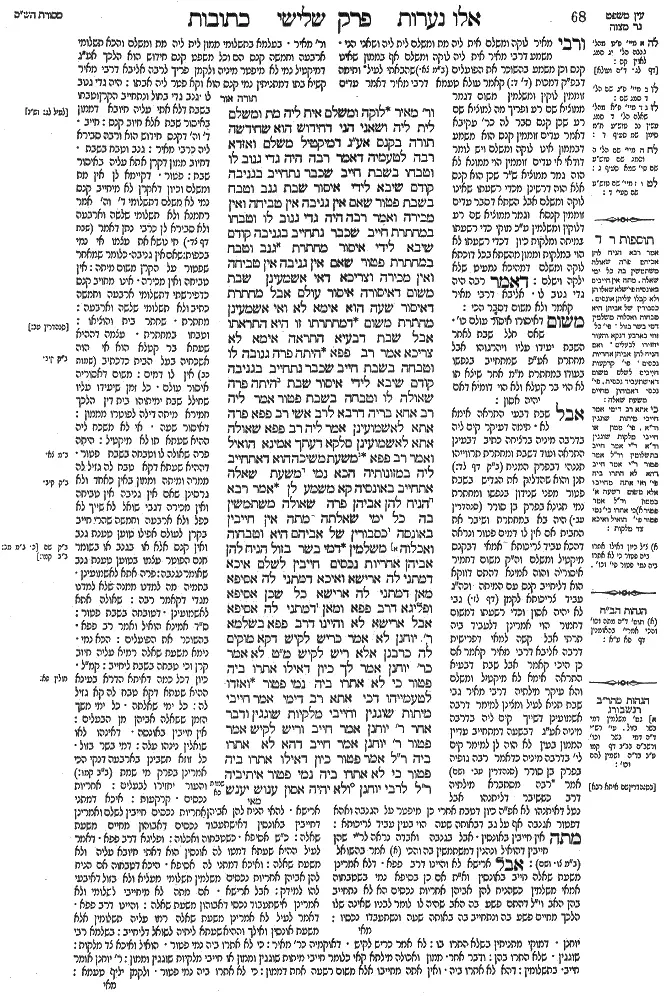
Ketubot 34b - Guemara
ור' מאיר לוקה ומשלם אית ליה מת ומשלם לית ליה ושאני הני דחידוש הוא שחידשה תורה בקנס אע"ג דמיקטיל משלם ואזדא רבה לטעמיה דאמר רבה היה גדי גנוב לו וטבחו בשבת חייב שכבר נתחייב בגניבה קודם שיבא לידי איסור שבת גנב וטבח בשבת פטור שאם אין גניבה אין טביחה ואין מכירה ואמר רבה היה גדי גנוב לו וטבחו במחתרת חייב שכבר נתחייב בגניבה קודם שיבא לידי איסור מחתרת גנב וטבח במחתרת פטור שאם אין גניבה אין טביחה ואין מכירה וצריכא דאי אשמעינן שבת משום דאיסורה איסור עולם אבל מחתרת דאיסור שעה הוא אימא לא ואי אשמעינן מחתרת משום דמחתרתו זו היא התראתו אבל שבת דבעיא התראה אימא לא צריכא אמר רב פפא היתה פרה גנובה לו וטבחה בשבת חייב שכבר נתחייב בגניבה קודם שיבא לידי איסור שבת היתה פרה שאולה לו וטבחה בשבת פטור אמר ליה רב אחא בריה דרבא לרב אשי רב פפא פרה אתא לאשמועינן אמר ליה רב פפא שאולה אתא לאשמועינן סלקא דעתך אמינא הואיל ואמר רב פפא משעת משיכה הוא דאתחייב ליה במזונותיה הכא נמי משעת שאלה אתחייב באונסיה קא משמע לן אמר רבא הניח להן אביהן פרה שאולה משתמשין בה כל ימי שאלתה מתה אין חייבין באונסה כסבורין של אביהם היא וטבחוה ואכלוה משלמין דמי בשר בזול הניח להן אביהן אחריות נכסים חייבין לשלם איכא דמתני לה ארישא ואיכא דמתני לה אסיפא מאן דמתני לה ארישא כל שכן אסיפא ופליגא דרב פפא ומאן דמתני לה אסיפא אבל ארישא לא והיינו דרב פפא בשלמא ר' יוחנן לא אמר כריש לקיש דקא מוקים לה כרבנן אלא ריש לקיש מ"ט לא אמר כר' יוחנן אמר לך כיון דאילו אתרו ביה פטור כי לא אתרו ביה נמי פטור ואזדו לטעמייהו דכי אתא רב דימי אמר חייבי מיתות שוגגין וחייבי מלקיות שוגגין ודבר אחר ר' יוחנן אמר חייב וריש לקיש אמר פטור ר' יוחנן אמר חייב דהא לא אתרו ביה ר"ל אמר פטור כיון דאילו אתרו ביה פטור כי לא אתרו ביה נמי פטור איתיביה ר"ל לרבי יוחנן (שמות כא, כב) ולא יהיה אסון ענוש יענש
Comments from Rashi on Masechet Ketubot Page 34b
רבה אמר לעולם בטובח בעצמו ור' מאיר . בעלמא בתשלומי ממון לית ליה מת ומשלם והכא תשלומי ארבעה וחמשה קנס הם וכל משפט קנס חידוש הוא הלכך אע"ג דמיקטיל נמי לא מיפטר מיניה ולקמן פריך לרבה אליבא דרבי מאיר קשיא בתו דמתניתין נמי קנס הוא וקא פטר ליה אבתו: היה גדי גנוב לו . גנב גדי בחול ונתחייב הקרן וטבחו בשבת דלא אתי עליה חיובא דממון באיסור שבת אלא חיוב קנס: חייב . ד' וה' דקנס חידוש הוא ורבה סבירא ליה כרבי מאיר: גנב וטבח בשבת . דחיוב ממון דקרן אתא עליה באיסור שבת: פטור . דקיימא לן אין מת ומשלם וכיון דאקרן לא מיחייב קנס נמי לא משלם דתשלומי ד' וה' אמר רחמנא ולא תשלומי שלשה וארבעה ולא סבירא לן כרבי נתן דאמר (שבת דף צד) חי נושא את עצמו אי נמי בכפות: שאם אין גניבה . כלומר שמאחר שפטור על הקרן משום מיתה: אין טביחה ואין מכירה . אינו מחויב קנס כדפירשתי דתשלומי ארבעה וחמשה כתיב ולא תשלומי שלשה וארבעה: מחתרת . שחתר בית והוציאו: וטבחו במחתרת . עצמה דההיא שעתא בר קטלא הוא אי הוה אשכחיה בעל הבית כדכתיב (שמות כב) אין לו דמים: משום דאסוריה איסור עולם . כל זמן שיעידו עליו שחילל שבת ימיתוהו בית דין הלכך חמירא מיתה דילה לפוטרו מממון: דאיסור שעה . אי לא משכח ליה ההיא שעתא תו לא מיקטיל: היתה פרה שאולה לו וטבחה בשבת פטור . דההיא שעתא דקא טבח לה גזיל לה ממרה ומיתה וממון באין כאחד ולא גרסינן שאם אין גניבה אין טביחה ואין מכירה דגבי שואל לא שייך לא כפל ולא ארבעה וחמשה שהרי חייב בקרן לעולם אפילו טוען טענת גנב ואין קנס אלא או בגנב או בשומר חנם הפוטר עצמו בטוען טענת גנב שאומר נגנבה: פרה אתא לאשמועינן . בתמיה מה למדנו ממנה שלא למדנו מגדי דקאמר רבה: שאולה אתא לאשמועינן . דטובחה בשבת פטור: ס"ד אמינא הואיל ואמר רב פפא . בהשוכר את הפועלים: הכא נמי . נימא משעת שאלה רמיא עליה חיוב קרן וכי טבחה בשבת ליחייב: קמ"ל . כיון דכל כמה דאיתא הדרא בעינא ההיא שעתא דקא טבח לה קא גזיל לה: כל ימי שאלתה . כל ימי משך הזמן ששאלה אביהן מן הבעלים: אין חייבין באונסה . דאינהו לאו שואלין נינהו עלה: דמי בשר בזול . כל זוזא חשבינן בארבעה דנקי הכי אמרינן בפרק מי שמת (ב"ב קמו:) והעור יחזירו לבעלים: אחריות נכסים . קרקעות: איכא דמתני ארישא . להאי הניח להן אביהן אחריות נכסים חייבין לשלם ואמרינן דחייבין באונסין דאישתעבוד נכסים דאבוהון מחיים משעת שאלה: כ"ש אסיפא . כשטבחוה ואכלוה: ופליגא דרב פפא . דאמר לעיל ההיא שעתא דמטו לה אונסין הוא דאתי חיובא עליה ולא משעת שאלה: ואיכא דמתני לה אסיפא . היכא דטבחוה אם הניח להן אביהן אחריות נכסים משלמין תשלומי מעליא ולא בזול דאיבעי להו למידק: אבל ארישא . אם מתה לא מיחייבי לשלומי ולא אמרינן אישתעבוד נכסי דאבוהון משעת שאלה: והיינו דרב פפא . דאמר לעיל לא אמרינן משעת שאלה רמו עליה תשלומין אלא משעת אונסין ואילך וההיא שעתא ליתיה לשואל דליחייב: בשלמא רבי יוחנן . דמוקי מתניתין בשלא התרו בו: לא אמר כריש לקיש . דאוקמיה כר' מאיר: כי לא אתרו ביה נמי פטור . הואיל ואיכא צד מלקות: כי לא אתרו ביה נמי פטור . הואיל ואיכא צד מלקות: שוגגין . שלא התרו בהן: ודבר אחר . ממון ואכולה מילתא קאי כלומר חייבי מיתות שוגגין וממון או חייבי מלקיות שוגגין וממון: ר' יוחנן אומר חייב . בתשלומין: ר' יוחנן אומר חייב . בתשלומין: דהא לא אתרו ביה . ואין אתה מחייבו אלא משום רשעה אחת דממון: כי לא אתרו ביה נמי פטור . ולקמן [כתובות לה.] יליף טעמא:
Comments from Tosafot - Ketubot 34b
ורבי מאיר לוקה ומשלם אית ליה מת ומשלם לית ליה ושאני הני . משמע דרבי מאיר אית ליה לוקה ומשלם אף בממון שאינו קנס וכן משמע בהשוכר את הפועלים (ב"מ צא.) שהבאתי לעיל ותימה דבפ"ק דמכות (ד' ד:) קאמר עולא טעמא דרבי מאיר דאמר עדים זוממין לוקין ומשלמין משום דגמר ממוציא שם רע ופריך מה למוציא שם רע שכן קנס סבר לה כר' עקיבא דאמר עדים זוממין קנס הוא משמע דבממון אינו לוקה ומשלם ויש לומר דודאי אי עדים זוממין הוי ממונא לא הוה גמר ממוציא ש"ר שכן הוא קנס אלא הוה דרשינן מכדי רשעתו שאינו לוקה ומשלם אבל השתא דסבר עדים זוממין קנסא וגמר ממוציא שם רע דלוקין ומשלמין ע"כ מוקי כדי רשעתו במיתה ומלקות כיון דכדי רשעתו לא הוי במלקות וממון מהשתא בכל דוכתא לוקה ומשלם דמהיכא נמעיט שלא ילקה וישלם: דאמר רבה היה גדי גנוב לו . אליבא דרבי מאיר קאמר ולא משום דסבר הכי: דאמר רבה היה גדי גנוב לו. אליבא דרבי מאיר קאמר ולא משום דסבר הכי: משום דאיסורו איסור עולם כו' . שאם חלל שבת לאחר השבת יעידו עליו ויהרגוהו אבל מחתרת אע"פ שמתחייב בנפשו בעודו במחתרת מ"מ אחר שיצא תו לא הוי בר קטלא ולא הוי דומיא דאם יהיה אסון: אבל שבת דבעי התראה אימא לא . תימה דעיקר קים ליה בדרבה מיניה ברציחה כתיב דבעינן התראה ועוד דשבת ומחתרת תרווייהו תננהי דבפרק המניח (ב"ק דף לד:) תנן והוא שהדליק את הגדיש בשבת פטור מפני שנידון בנפשו ומחתרת נמי תנינא בפרק בן סורר (סנהדרין עב.) היה בא במחתרת ושיבר את החבית אם אין לו דמים פטור ונראה דהכא עביד צריכותא אמאי דבקנס מיקטיל ומשלם וה"ק משום דחמיר איסוריה והוה אמינא דהתם דווקא הוא דליחייב קנס עם המיתה וכה"ג עביד צריכותא לקמן (כתובות דף לז.) גבי לא יהיה אסון וכדי רשעתו דמשום דחמור הוי אמרינן דלעביד ביה תרתי אבל קשה למאי דפרישית דרבה אליבא דרבי מאיר קאמר אם כן היכי קאמר אבל שבת דבעיא התראה אימא לא מיקטיל ומשלם והא עיקר מילתיה דרבי מאיר גבי שבת תניא לעיל ומצינן למימר דרבה אשמועינן דשייך קים ליה בדרבה מיניה אע"ג דבשעה דמתחייב עדיין הממון בעין לא הוה לן למימר קים לי' בדרבה מיניה כדאמר רבה גופיה בפרק בן סורר (סנהדרין עב. ושם) אמר רבה מסתברא מילתיה דרב כששיבר דליתנהו אבל נטל דאיתנהו לא אפ"ה כיון דטבח אחרי כן מיפטר על הגנבה ואהא דפטור אגנבה אף על גב דבאותה שעה הוי בעין עביד צריכותא: מתה אין חייבין באונסין . אבל בגנבה ואבדה נראה לר"י שהן חייבין דהואיל ונהנין דמשתמשין בה והכי אמר בהשואל (ב"מ צו. ושם): אבל ארישא לא והיינו דרב פפא . דלא אמרינן משעת שאלה חייב באונסין וא"ת אם כן בסיפא נמי בשטבחוה אמאי משלמין כשהניח להן אביהן אחריות נכסים הא לא נתחייב בהן האב וי"ל דהתם פשע בה האב שהיה לו לומר לבניו שאינה שלו הלכך מחיים פשע בה ונתחייב בה באותה שעה ונשתעבדו נכסיו:
Ketubot 34b - Mishnah translated into english
and Rabbi Meir is of the opinion that one is flogged and pays, but is not of the opinion that one dies by execution and pays. And these halakhot are different, as it is a novel element that the Torah innovated with regard to the halakhic category of fines; although he is killed, he pays. And Rabba followed his line of reasoning stated elsewhere, as Rabba said: If one had a stolen kid in his possession that he had stolen previously, and he slaughtered it on Shabbat, he is liable to pay five times the principal for slaughtering the kid, as he was already liable for stealing before he came to violate the prohibition against performing labor on Shabbat. Although he slaughtered the goat on Shabbat, a capital crime, he is liable for the payment because it is a fine. However, if he stole the goat and slaughtered it on Shabbat, he is exempt from the payment of five times the principal as, if there is no payment for theft, due to his liability to receive the death penalty for desecrating Shabbat, and his obligation to repay the theft is not a fine, there is no liability for slaughter and there is no liability for sale.
And Rabba said: If one had a stolen kid in his possession that he had stolen previously, and he slaughtered it in the course of an act of burglary, he is liable to pay four or five times the principal, as he was already liable for theft before he came to violate the prohibition against burglary. However, if he stole and slaughtered an animal in the course of an act of burglary, he is exempt. Because the owner of the house is permitted to kill the burglar, the status of the burglar is tantamount to one liable to receive the death penalty. As, if there is no payment for theft, there is no liability for slaughter and there is no liability for sale. Rabba’s statements indicate that one pays the fines for slaughter or sale even if he is liable to receive the death penalty.
The Gemara comments: And it was necessary for Rabba to state this halakha with regard to both Shabbat and burglary; as, if he had taught us that one is exempt from payment only with regard to Shabbat, it is because Shabbat is severe since punishment for violation of its prohibition is an eternal prohibition, as whenever witnesses testify that one desecrated Shabbat, he can be executed. However, in the case of burglary, as punishment for violating its prohibition is transitory, e.g., it is permitted for the homeowner to kill the burglar only as long as the burglar remains on his property, say that he is not exempt from payment. And if he taught us the exemption only with regard to burglary, that would be because his burglary is his forewarning. Because he certainly intends to kill the homeowner, it is permitted for the homeowner to kill him without forewarning. In that respect, burglary is a severe prohibition and exempts one from payment. However, Shabbat, which requires forewarning, is a less severe prohibition, and in that case, say that one is not exempt from payment. Therefore, it was necessary for Rabba to state the exemption in both cases.
Rav Pappa said: If one had a stolen cow in his possession that he had stolen previously and he slaughtered it on Shabbat, he is liable to pay four or five times the principal as he was already liable for theft before he came to violate the prohibition of Shabbat. If a cow was lent to him and he slaughtered it on Shabbat, he is exempt from paying the fine. Rav Aḥa, son of Rava, said to Rav Ashi: Is Rav Pappa coming to teach us the case of a cow? In other words, what did Rav Pappa add that was not already clear from Rabba’s statement? The same principle applies with regard to both a kid and a cow. If one was liable to pay for the theft when he stole the animal, he is liable to pay the fine for slaughter as well, even if he is liable to receive the death penalty.
Rav Ashi said to him: Rav Pappa is coming to teach us the halakha with regard to a borrowed cow, as it could enter your mind to say that since Rav Pappa said: It is from the moment of pulling the animal into his domain that the borrower is obligated to provide the animal’s sustenance, then here too, from the moment of borrowing he is liable to pay for its unavoidable accidents. From that point, the animal is legally in his possession and therefore, even if he slaughtered the animal on Shabbat he should be liable. Therefore, he teaches us that one assumes liability for unavoidable accidents only when they actually occur, and if that is on Shabbat, he is exempt.
Rava said: If their father died and left them a borrowed cow, they may use it for the entire duration of the period for which it was borrowed. The right to use a borrowed article continues even after the borrower himself dies. However, if the cow died, they are not liable to pay for its unavoidable accident, as they did not borrow the animal themselves. Similarly, if they thought the cow was their father’s and they slaughtered it and ate it, they pay only a reduced assessment of the price of the meat. They are required to pay only for the benefit they received, not the damage they caused the owner. However, if their father left them property as a guarantee for return of the borrowed item, i.e., there was a lien on the father’s property during his lifetime, they are obligated to pay the entire sum of the damage.
The Gemara comments: Some teach this statement, that if the father left property as a guarantee his heirs are liable to pay the entire damage, with regard to the first clause of this halakha, and some teach it with regard to the latter clause. The Gemara elaborates: According to the one who teaches it with regard to the first clause, when the animal died, all the more so would he teach this halakha with regard to the latter clause, as since they slaughtered the animal they must pay full damages. And this approach differs with the opinion of Rav Pappa, who said that a borrower is liable for accidents only when the incident occurs. And according to the one who teaches it with regard to the latter clause, this halakha applies only when they slaughtered and ate it; however, with regard to the first clause, when it died, they would not be liable, as the tanna too maintains that liability for unavoidable accidents begins only when the incident occurs, not from when the cow was borrowed. And this is consistent with the ruling of Rav Pappa.
Several possible solutions were proposed to resolve the apparent contradiction between the mishna here that says that one who rapes his sister pays a fine and the mishna in Makkot that says that he is flogged. The Gemara comments: Granted, Rabbi Yoḥanan, who explains the mishna as referring to a case where he was not forewarned, did not state his opinion in accordance with the opinion of Reish Lakish, who explains that the mishna is in accordance with the opinion of Rabbi Meir, as he establishes the mishna in accordance with the opinion of the Rabbis, a preferable option, as that aligns the unattributed mishna with the halakha. However, what is the reason that Reish Lakish didn’t state his opinion in accordance with the opinion of Rabbi Yoḥanan? The Gemara answers: Reish Lakish could have said to you: Since if they forewarned him he is exempt from payment, when they did not forewarn him, he is exempt as well.
And Rabbi Yoḥanan and Reish Lakish each follow their standard lines of reasoning in this regard, as when Rav Dimi came from Eretz Yisrael to Babylonia, he said: With regard to those who unwittingly performed a transgression for which one is liable to receive the death penalty, or those who unwittingly performed a transgression for which one is liable to receive lashes, and that transgression also involved another matter, monetary payment, Rabbi Yoḥanan said: He is liable to pay; since he sinned unwittingly he did not receive the severe punishment. And Reish Lakish said he is exempt. The Gemara clarifies the rationales for their statements. Rabbi Yoḥanan said he is liable; since they did not forewarn him, he sinned unwittingly. Reish Lakish said he is exempt; since if they forewarned him he is exempt from payment, when they did not forewarn him, he is exempt as well.
Reish Lakish raised an objection to the opinion of Rabbi Yoḥanan from the following verse, which describes a case where two people fought and during their struggle they hurt a pregnant woman, causing her to miscarry: “And yet no harm follow, he shall be punished as imposed upon him by the woman’s husband” (Exodus 21:22).
Traduction : The William Davidson digital edition of the Koren Noé Talmud, with commentary by Rabbi Adin Even-Israel Steinsaltz.