 Talmud Bavli
Ketubot 12a : Youtube
Daf TubeYoutube
1 video class :
Ketubot Page 12a
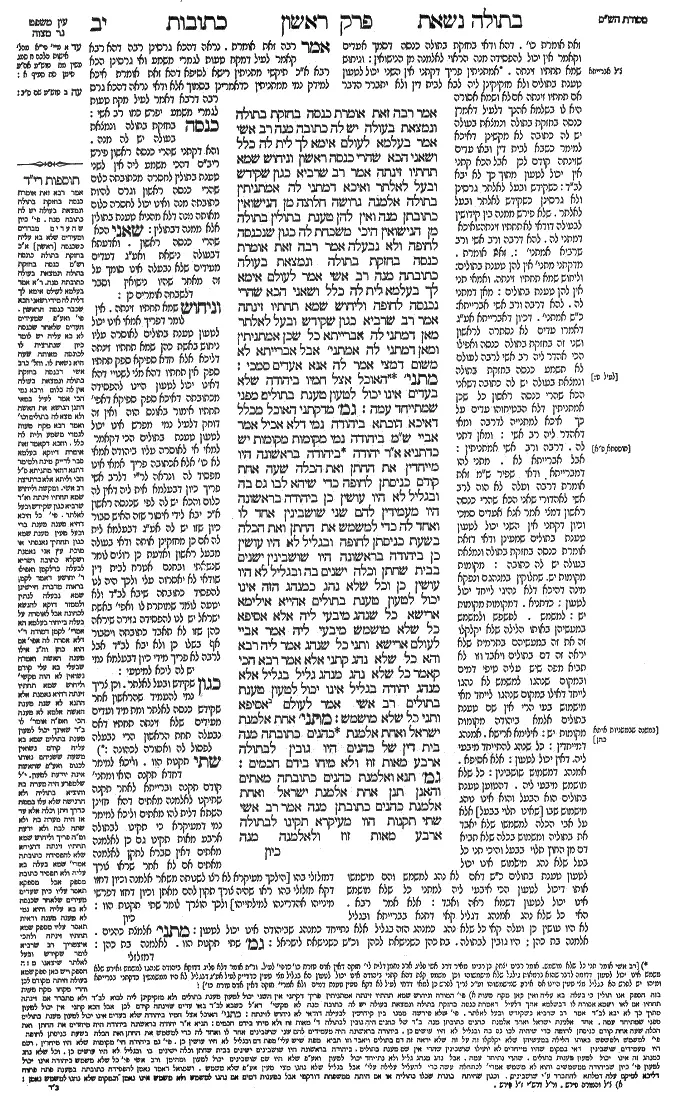
Ketubot 12a - Guemara
אמר רבה זאת אומרת כנסה בחזקת בתולה ונמצאת בעולה יש לה כתובה מנה רב אשי אמר בעלמא לעולם אימא לך לית לה כלל ושאני הכא שהרי כנסה ראשון וניחוש שמא תחתיו זינתה אמר רב שרביא כגון שקידש ובעל לאלתר ואיכא דמתני לה אמתניתין בתולה אלמנה גרושה חלוצה מן הנישואין כתובתן מנה ואין להן טענת בתולין בתולה מן הנישואין היכי משכחת לה כגון שנכנסה לחופה ולא נבעלה אמר רבה זאת אומרת כנסה בחזקת בתולה ונמצאת בעולה כתובתה מנה רב אשי אמר לעולם אימא לך בעלמא לית לה כלל ושאני הכא שהרי נכנסה לחופה וליחוש שמא תחתיו זינתה אמר רב שרביא כגון שקידש ובעל לאלתר מאן דמתני לה אברייתא כל שכן אמתניתין ומאן דמתני לה אמתני' אבל אברייתא לא משום דמצי אמר לה אנא אעדים סמכי:
מתני׳ האוכל אצל חמיו ביהודה שלא בעדים אינו יכול לטעון טענת בתולים מפני שמתייחד עמה:
גמ׳ מדקתני האוכל מכלל דאיכא דוכתא ביהודה נמי דלא אכיל אמר אביי ש"מ ביהודה נמי מקומות מקומות יש כדתניא א"ר יהודה ביהודה בראשונה היו מייחדין את החתן ואת הכלה שעה אחת קודם כניסתן לחופה כדי שיהא לבו גס בה ובגליל לא היו עושין כן ביהודה בראשונה היו מעמידין להם שני שושבינין אחד לו ואחד לה כדי למשמש את החתן ואת הכלה בשעת כניסתן לחופה ובגליל לא היו עושין כן ביהודה בראשונה היו שושבינין ישנים בבית שחתן וכלה ישנים בה ובגליל לא היו עושין כן וכל שלא נהג כמנהג הזה אינו יכול לטעון טענת בתולים אהייא אילימא ארישא כל שנהג מיבעי ליה אלא אסיפא כל שלא מושמש מיבעי ליה אמר אביי לעולם ארישא ותני כל שנהג אמר ליה רבא והא כל שלא נהג קתני אלא אמר רבא הכי קאמר כל שלא נהג מנהג גליל בגליל אלא מנהג יהודה בגליל אינו יכול לטעון טענת בתולים רב אשי אמר לעולם אסיפא ותני כל שלא מושמש:
מתני׳ אחת אלמנת ישראל ואחת אלמנת כהנים כתובתה מנה בית דין של כהנים היו גובין לבתולה ארבע מאות זוז ולא מיחו בידם חכמים:
גמ׳ תנא ואלמנת כהנים כתובתה מאתים והאנן תנן אחת אלמנת ישראל ואחת אלמנת כהנים כתובתן מנה אמר רב אשי שתי תקנות הוו מעיקרא תקינו לבתולה ארבע מאות זוז ולאלמנה מנה
Comments from Rashi on Masechet Ketubot Page 12a
זאת אומרת כו' . דהא ודאי בחזקת בתולה כנסה דסמך אעדים וקאמר אין יכול להפסידה מנה הראוי לאלמנה מן הנישואין: וניחוש שמא תחתיו זינתה . אמתניתין פריך דקתני אין השני יכול לטעון טענת בתולים ולא מזקיקינן ליה לבא לבית דין ולא יתברר הדבר אם תחתיו זינתה אם לא ושמא אסורה היא לו בשלמא אהנך דלעיל דאמרן כנסה בחזקת בתולה ונמצאת בעולה יש לה כתובה לא מקשינן דאיכא למימר כשבא לבית דין ובאו עדים שזינתה קודם לכן אבל הכא קתני אין יכול לטעון מתוך כך לא יבא לב"ד: כשקידש ובעל לאלתר גרסינן ולא גרסינן כשקידש לאלתר ובעל לאלתר. שלא פירש ממנה בין קידושין לבעילה דודאי לא תחתיו זינתה: ואיכא דמתני לה . להא דרבה ורב אשי ורב שרביא אמתני': זאת אומרת . מדקתני מתני' אין להן טענת בתולים: וליחוש שמא תחתיו זינתה . ואמאי תני אין להן טענת בתולים: מאן דמתני לה . להא דרבה ורב אשי אברייתא: כ"ש אמתני' . דכיון דאברייתא אע"ג דאמרו עדים לא נסתרה לראשון ושני זה בחזקת בתולה כנסה ואפילו הכי אהדר ליה רב אשי לרבה לעולם לא תשמע כנסה בחזקת בתולה ונמצאת בעולה יש לה כתובה דשאני הכא שהרי כנסה ראשון כל שכן אמתניתין דלא הבטיחוהו עדים על כך איכא למתנייה לדרבה ומאי דאהדר ליה רב אשי: ומאן דתני לה . דרבה ורב אשי אמתניתין: אבל אברייתא לא . מתני להו דמברייתא ודאי שפיר ש"מ זאת אומרת דרבה ועלה לא הוה לרב אשי לאהדורי שאני הכא שהרי כנסה ראשון דמצי אמר אנא אעדים סמכי וכיון דקתני אין השני יכול לטעון טענת בתולים שמעינן ודאי דזאת אומרת כנסה בחזקת בתולה ונמצאת בעולה יש לה כתובה: מקומות מקומות יש . שחלוקין במנהגם ונפקא מינה דהיכא דלא נהיגי לייחד יכול לטעון: כדתניא . דמקומות מקומות יש: למשמש . לפשפש ולמשמש במעשיהן באותו הלילה שלא יקלקלו זה את זה במעשיהם בתרמית שלא יראה זה דם בתולים ויאבד וזו לא תביא מפה שיש עליה טיפי דמים ובמקום שנהגו למשמש לא נהגו לייחד דאילו במקום שנהגו לייחד מאי מישמוש בעי הרי אין שם טענת בתולים אלמא ביהודה מקומות מקומות יש: אילימא ארישא . אמנהג דמייחדין: כל שנהג להתייחד מיבעי ליה . דאין יכול לטעון: אלא אסיפא . אמנהג דמשמוש שושבינין: כל שלא מושמש מיבעי ליה . דהטוען טענת בתולים הוא הבעל והוא אינו נוהג מישמוש שבו [שאינו תלוי בבעל] אלא על אבי הכלה למשמשו שלא יאבד את בתוליה ומשמוש בכלה שלא תביא דם מן החוץ תלוי בבעל והיכי תני כל בעל שלא נהג מישמוש אינו יכול לטעון טענת בתולים כ"ש דאם לא נהג למשמש והם מישמשו אותו דיכול לטעון הכי איבעי ליה למתני כל שלא מושמש אינו יכול לטעון דשמא ראה ואבד: אלא אמר רבא . האי כל שלא נהג אמנהג דגליל קאי דתנא בברייתא ובגליל לא היו עושין כן ועלה קאי כל שלא נהג כמנהג הזה בגליל אלא נתייחד כמנהג שביהודה אינו יכול לטעון: מתני' אלמנת כהנים . אלמנה בת כהן: היו גובין לבתולה . בת כהן כשנישאת לכהן וכ"ש כשנישאת לישראל: גמ' שתי תקנות הוו . לאלמנה בת כהן:
Comments from Tosafot - Ketubot 12a
אמר רבה זאת אומרת . נראה דהכא גרסינן רבה דהא רבא קאמר לעיל דמקח טעות לגמרי משמע ואי גרסינן הכא רבא א"כ תיקשי מתניתין רישא לסיפא דהא זאת אומרת איכא למידק נמי ממתניתין כדאמרינן בסמוך אלא ודאי נראה דהכא גרס רבה דרבא דאמר לעיל מקח טעות לגמרי משמע יפרש כמו רב אשי: אמר רבה זאת אומרת. נראה דהכא גרסינן רבה דהא רבא קאמר לעיל דמקח טעות לגמרי משמע ואי גרסינן הכא רבא א"כ תיקשי מתניתין רישא לסיפא דהא זאת אומרת איכא . למידק נמי ממתניתין כדאמרינן בסמוך אלא ודאי נראה דהכא גרס רבה דרבא דאמר לעיל מקח טעות לגמרי משמע יפרש כמו רב אשי: כנסה בחזקת בתולה ונמצאת בעולה יש לה מנה . והא דקתני שהרי כנסה ראשון פירש ריב"ם דהכי משמע ליה אין לשני טענת בתולין לחסרה מכתובתה כלום שהרי כנסה ראשון וגרם להיות כתובתה מנה ואינו יכול לחסרה כלום מאותה מנה דלא מהניא טענת בתולין אלא ממנה דבתולין: שאני הכא שהרי כנסה ראשון . ואדעתא דבעולה נישאת ואע"ג דעדים מעידים שלא נבעלה אינו סומך על זה מאחר שהיו נישואין וסבר דלשבחה אומרים כן: וניחוש שמא תחתיו זינתה . אין לומר דפריך אמאי אינו יכול לטעון טענת בתולים לאוסרה עליו ניחוש באשת כהן שמא תחתיו זינתה דליכא אלא חדא ספיקא ספק תחתיו ספק אין תחתיו דהא מצי לשנויי דהא דאינו יכול לטעון היינו להפסידה מכתובתה דאיכא ספק ספיקא דאפי' תחתיו אימור באונס הוה ואין זה דוחק דלעיל נמי מפרש אינו יכול לטעון טענת בתולים הכי דקאמר למאי אי לאוסרה עליו ביהודה אמאי לא כו' אלא אכתובה פריך אמאי אינו מפסיד לה ונראה לר"י דלרב אשי פריך כיון דבעלמא אית ליה דאין לה כלום והכא יש לה לפי שכנסה ראשון א"כ יבא לידי איסור שזה האיש סבור כיון שזו יש לה אע"ג דבעלמא לית לה אם כן מחזקינן אותה ודאי בעולה מבעל ראשון ואדעת כן רוצים לומר שנשאתי ובחנם אטרח לבית דין שודאי לא יאסרוה עלי ולכך היה לנו להפסיד כתובתה שיבא לב"ד ולא יטעה לומר שמותרת לו ואפי' באשת ישראל יש לנו להפסידה גזירה שיראה כהן שזו לא תאבד כתובתה ויסבור אף בשלו כן ולא יבא לב"ד אבל לרבה לא פריך מידי כיון דבעלמא נמי יש לה ליכא למיטעי: כגון שקידש ובעל לאלתר . וכן צריך נמי להעמיד שהראשון אחר שקידש כנסה לאלתר ומת מיד ועדים מעידים שלא זינתה תחתיו דאם נבעלה תחת הראשון הרי נבעלה לפסול לה ואסורה לכהונה: בית דין של כהנים היו גובין כו' ולא מיחו בידם חכמים . אע"פ שלא כתב בלשון תוספת אלא ארבע מאות דחזו ליכי וקא ס"ד דלא תגבה דלא חזו ובלשון תוספת לא כתב קא משמע לן דמנהג טוב מאד הוא וראוי להיות בכהונה ובמשפחות המיוחסות ושייך בהו למימר דחזו ליכי ואפי' לא כתב לה כתובה גובה ארבע מאות בתנאי ב"ד כמו בבנות ישראל מאתים דתקנה גמורה היא: שתי תקנות הוו . וליכא למימר דחדא תקנה הואי ומתני' קודם תקנה וברייתא לאחר תקנה שתיקנו לאלמנה מאתים דהא חזינן השתא דלית להו מאתים וליכא למימר נמי דמעיקרא כי תקינו לבתולה ארבע מאות תקינו גם כן לאלמנה מאתים דאין סברא לתקן לאלמנה מאתים אם לא אחר שראו צורך דמזלזלי בהו [הילכך מעיקרא לא רצו לשנותה משאר אלמנה וכיון דחזו דקא מזלזלי בהו ראו שהיה צורך תקון להם מאתן וכיון דחזו דפרשי מינייהו אהדרינהו למילתייהו] ולכך הוצרך לומר שתי תקנות הוו:
Ketubot 12a - Mishnah translated into english
Rabba said: That is to say, if one married a woman with the presumptive status of a virgin, as there were witnesses that she did not engage in intercourse, and she was found to be a non-virgin, she is entitled to a marriage contract of one hundred dinars. The Gemara rejects the proof. Rav Ashi said: In general, actually, I would say to you that in that case she does not receive a marriage contract at all, as it is a mistaken transaction. But here it is different, and she does not totally lose her marriage contract, because the first husband brought her into his house. Therefore, the second husband should have considered that a woman who entered her husband’s home is no longer a virgin.
The Gemara asks: And since there are witnesses that she did not engage in intercourse with the first husband, let us be concerned that perhaps she committed adultery after betrothal, while under the jurisdiction of the second husband, and rule that she is forbidden to him due to suspicion of adultery and is not entitled to a marriage contract at all. Rav Sherevya said: The baraita is referring to a case where he betrothed her and engaged in intercourse immediately. Therefore, there was no opportunity to engage in adultery between her betrothal and her marriage to the second husband.
Others taught this statement of Rabba with regard to the mishna: Concerning a virgin who is a widow, a divorcée, or a ḥalutza who achieved that status from a state of marriage, for all these women their marriage contract is one hundred dinars, and they are not subject to a claim concerning their virginity. The Gemara asks: How can you find a virgin from a state of marriage? It is in a case where she entered the wedding canopy and did not engage in intercourse.
Rabba said: That is to say, if one married a woman with the presumptive status of a virgin and she was found to be a non-virgin, her marriage contract is one hundred dinars. The Gemara rejects the proof. Rav Ashi said: In general, actually, I would say to you that in general, she does not receive a marriage contract at all, as it is a mistaken transaction. But here it is different, and she does not totally lose her marriage contract, because she entered the wedding canopy. Therefore, the second husband should have considered that a woman who entered her husband’s home is no longer a virgin.
The Gemara asks: And let us be concerned that perhaps she committed adultery after betrothal, while under the jurisdiction of the second husband. Rav Sherevya said: The baraita is referring to a case where he betrothed her and engaged in intercourse immediately. Therefore, there was no opportunity to engage in adultery between her betrothal and her marriage to the second husband.
The Gemara notes: The one who taught the exchange between Rabba and Rav Ashi with regard to the baraita, where there is explicit testimony that she did not engage in intercourse with the first husband and nevertheless no proof can be brought that if he discovers that she is not a virgin she receives a marriage contract of one hundred dinars, all the more so would he say that the same is true with regard to the mishna. And the one who taught the exchange with regard to the mishna, however, would not say the same with regard to the baraita, due to the fact that the husband could say to her: I relied on witnesses. Therefore, proof can be brought from the baraita that if he discovered that she is not a virgin, she receives a marriage contract of one hundred dinars.
MISHNA: A man who eats at the house of his father-in-law in Judea after betrothal and without witnesses to attest to the fact that he was not alone with his betrothed is unable to make a claim concerning virginity after marriage because in accordance with the custom in Judea, the assumption is that he secluded himself with her, and the concern is that it was he who engaged in intercourse with her.
GEMARA: The Gemara infers: From the fact that the mishna teaches the halakha employing the phrase: A man who eats, by inference one may conclude that there is also a place in Judea where the groom does not eat at the house of his father-in-law, and does not enter into seclusion with his betrothed. Abaye said: Conclude from it that in Judea too there are different places with different customs, as it is taught in a baraita that Rabbi Yehuda said: In Judea, at first they would seclude the groom and bride together for a brief period before their entry into the wedding canopy, so that he would grow accustomed to her companionship in order to ease the awkwardness when they would consummate the marriage. And in the Galilee they did not do so.
The baraita continues. In Judea, at first they would appoint for them two groomsmen [shushvinin], one for him and one for her, in order to examine the groom and the bride at the time of their entry into the wedding canopy and thereafter, to ensure that neither would engage in deception with regard to the presence or absence of blood from the rupture of the hymen. And in the Galilee they would not do so. As the custom of appointing groomsmen would be relevant only in a case where the groom and the bride had not been together in seclusion prior to marriage, this is apparently a custom in Judea different from the first custom cited in the mishna, where they would enter into seclusion prior to marriage.
The baraita continues. In Judea, at first the groomsmen would sleep in the house in which the groom and bride sleep, in order to examine the sheet on which the marriage was consummated immediately following intercourse. This was in order to ensure that the groom would not attempt to obscure the blood of the rupture of the hymen and claim that the bride was not a virgin. And in the Galilee they would not do so.
The baraita concludes: And anyone who did not conduct himself in accordance with this custom cannot make a claim concerning virginity against the bride. The Gemara asks: Concerning which case in the baraita was this principle stated? If we say it is concerning the first clause of the baraita, regarding the custom to seclude the couple prior to marriage, in that case, the phrase: Anyone who conducted himself in accordance with this custom cannot make a claim concerning virginity, is what it needed to say, due to the concern that perhaps they had sexual relations before the marriage.
Rather, it is concerning the latter clause of the baraita: They would appoint for them two groomsmen to examine them, that the principle was stated. In that case, the phrase: Anyone who was not examined by the groomsmen, is what it needed to say, as it is dependent on the family of the bride, and not the phrase: Anyone who did not conduct himself in accordance with this custom, which indicates that it depends on him.
Abaye said: Actually, the principle is stated concerning the first clause; and emend the baraita and teach: Anyone who conducted himself in accordance with this custom. Rava said to him: But isn’t it teaching explicitly: Anyone who did not conduct himself in accordance with this custom? One should not corrupt a baraita due to a difficulty that arose in understanding it. Rather, Rava said that this is what the baraita is saying: Anyone who did not practice the custom of the Galilee in the Galilee, but instead observed the custom of Judea in the Galilee, cannot make a claim concerning virginity against the bride. Rav Ashi said: Actually, this principle could be applied concerning the latter clause, and teach: Anyone who was not examined. When it said in the baraita: Anyone who did not conduct himself in accordance with this custom, it is referring to the custom of being examined.
MISHNA: For both a widow who is an Israelite woman and a widow who is the daughter of priests, her marriage contract is one hundred dinars. A court of priests would collect a marriage contract of four hundred dinars for a virgin daughter of a priest, twice the sum of the standard marriage contract for a virgin, and the Sages did not reprimand them.
GEMARA: A Sage taught in a baraita: And for a widow who is the daughter of priests, her marriage contract is two hundred dinars. The Gemara asks: But didn’t we learn in the mishna: For both a widow who is an Israelite woman and a widow who is the daughter of priests, their marriage contract is one hundred dinars?
Rav Ashi said: There were two ordinances instituted: Initially, the court of priests instituted for a virgin daughter of a priest a marriage contract of four hundred dinars, and for a widow, a marriage contract of one hundred dinars.
Traduction : The William Davidson digital edition of the Koren Noé Talmud, with commentary by Rabbi Adin Even-Israel Steinsaltz.