 Talmud Bavli
Ketubot 91a : Youtube
Daf TubeYoutube
1 video class :
Ketubot Page 91a
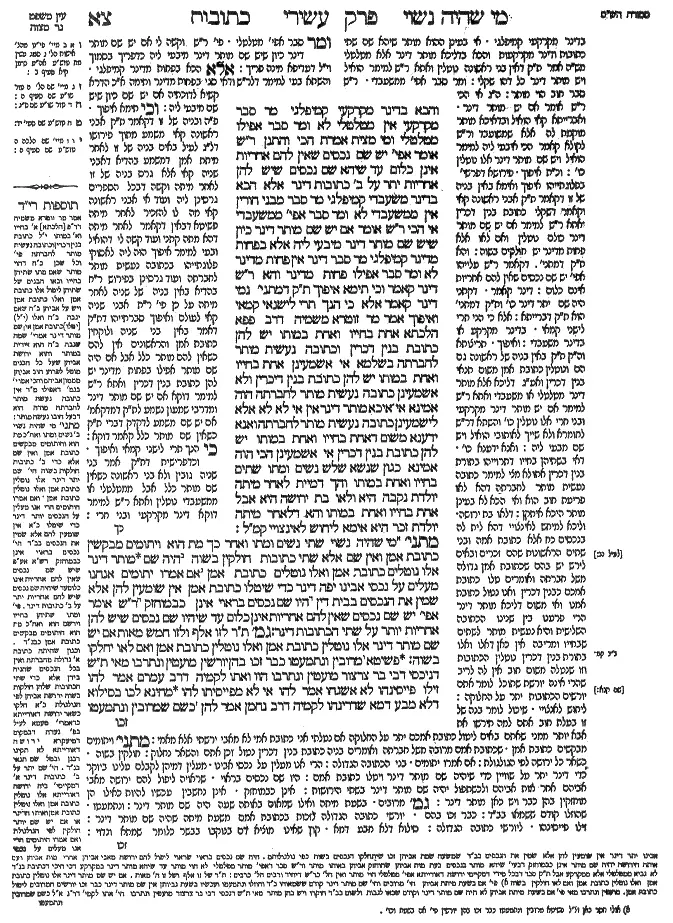
Ketubot 91a - Guemara
והכא בדינר מקרקעי קמיפלגי מר סבר מקרקעי אין מטלטלי לא ומר סבר אפילו מטלטלי ומי מצית אמרת הכי והתנן ר"ש אומר אפי' יש שם נכסים שאין להם אחריות אינן כלום עד שיהא שם נכסים שיש להן אחריות יתר על ב' כתובות דינר אלא הכא בדינר משעבדי קמיפלגי מר סבר מבני חורין אין ממשעבדי לא ומר סבר אפי' ממשעבדי אי הכי ר"ש אומר אם יש שם מותר דינר כיון שיש שם מותר דינר מיבעי ליה אלא בפחות מדינר קמיפלגי מר סבר דינר אין פחות מדינר לא ומר סבר אפילו פחות מדינר והא ר"ש דינר קאמר וכי תימא איפוך ת"ק דמתני' נמי דינר קאמר אלא כי הנך תרי לישנאי קמאי ואיפוך אמר מר זוטרא משמיה דרב פפא הלכתא אחת בחייו ואחת במותו יש להן כתובת בנין דכרין וכתובה נעשית מותר לחברתה בשלמא אי אשמעינן אחת בחייו ואחת במותו יש להן כתובת בנין דיכרין ולא אשמעינן כתובה נעשית מותר לחברתה הוה אמינא אי איכא מותר דינר אין אי לא לא אלא לישמעינן כתובה נעשית מותר לחברתה ואנא ידענא משום דאחת בחייו ואחת במותו יש להן כתובת בנין דכרין אי אשמעינן הכי הוה אמינא כגון שנשא שלש נשים ומתו שתים בחייו ואחת במותו והך דמיית לאחר מיתה יולדת נקבה היא ולאו בת ירושה היא אבל אחת בחייו ואחת במותו והא דלאחר מיתה יולדת זכר היא אימא ליחוש לאינצויי קמ"ל:
מתני׳ מי שהיה נשוי שתי נשים ומתו ואחר כך מת הוא ויתומים מבקשין כתובת אמן ואין שם אלא שתי כתובות חולקין בשוה היה שם מותר דינר אלו נוטלים כתובת אמן ואלו נוטלים כתובת אמן אם אמרו יתומים אנחנו מעלים על נכסי אבינו יפה דינר כדי שיטלו כתובת אמן אין שומעין להן אלא שמין את הנכסים בבית דין היו שם נכסים בראוי אינן כבמוחזק ר"ש אומר אפי' יש שם נכסים שאין להם אחריות אינן כלום עד שיהיו שם נכסים שיש להן אחריות יותר על שתי הכתובות דינר:
גמ׳ ת"ר לזו אלף ולזו חמש מאות אם יש שם מותר דינר אלו נוטלין כתובת אמן ואלו נוטלין כתובת אמן ואם לאו יחלקו בשוה:
פשיטא מרובין ונתמעטו כבר זכו בהן יורשין מועטין ונתרבו מאי ת"ש דניכסי דבי בר צרצור מועטין ונתרבו הוו ואתו לקמיה דרב עמרם אמר להו זילו פייסינהו לא אשגחו אמר להו אי לא מפייסיתו להו מחינא לכו בסילוא דלא מבע דמא שדרינהו לקמיה דרב נחמן אמר להן כשם שמרובין ונתמעטו
Comments from Rashi on Masechet Ketubot Page 91a
בדינר מקרקעי קמיפלגי . אי בעינן ההוא מותר שיהא שם שתי כתובות ודינר מקרקעות והכא בדליכא מותר דינר אלא מטלטלי מש"ה אמר ת"ק דאין בני ראשונה נוטלין ואתא ר"ש למימר הואיל ויש מותר דינר כל דהו שקלי: ומר סבר אפי' ממשעבדי . ר"ש סבר חוב הוי מותר: ה"ג אי הכי ר"ש אומר אם יש מותר דינר . ואברייתא קאי הואיל ובדאיכא מותר מוקמת לה אלא שמשועבד ור"ש לקולא קאמר הכי איבעי ליה למימר הואיל ויש שם מותר דינר אלו נוטלין כו': וכ"ת איפוך . פירושא דפרשי' בפלוגתייהו איפוך ואימא באין בניה של זו דקאמר ת"ק אבני ראשונה קאי וקאמר דשקלי כתובת בנין דכרין ואתא ר"ש למימר אם יש שם מותר דינר כולם נוטלין ואם לאו אלא פחות מדינר יש חולקים בשוה: והא ת"ק דמתני' . דקאמר ר"ש עלייהו אפי' יש שם נכסים שאין להם אחריות אינם כלום: דינר קאמר . דקתני היה שם יתר דינר כו' ות"ק דמתני' הוא ת"ק דברייתא: אלא כי הני תרי לישני קמאי . בדינר מקרקע או בדינר משעבדי: ואיפוך . תריצותא וה"ק ת"ק באין בניה של ראשונה גם הם ונוטלין כתובת אמן משום תנאי בנין דכרין ואע"ג דליכא אלא מותר דינר מטלטלי או משעבדי ואתא ר"ש למימר אם יש מותר דינר מקרקעי ובני חרי אלו נוטלין כו' והשתא דר"ש לחומרא ולא שייך לאותובי הואיל ויש שם מבעי ליה: ואנא ידענא כו' . דאי בשתיהן בחייו דתרוייהו בתורת בנין דכרין אתו לא מצי למימר כתובה נעשית מותר לחברתה דהא לאו פריעת חוב הוא ואי הכא לא בעינן מותר היכא איתקן: דלאו בת ירושה . וליכא למיחש לאינצויי דהא לית לה בנכסים כח אלא כתובת אמה ובני שתים הראשונות שהם זכרים ובאים לירש יש בהם שכתובת אמן גדולה משל חברתה ואומרים טלו כתובת אמכם כבנין דכרין ואנו נטול כתובת אמנו ואי משום דליכא מותר דינר הרי פרענו בין שנינו הכתובה השלישית והיא נעשית מותר לשתים שבחייו ומריבה אין כאן דאלו ואלו בתורת בנין דכרין נוטלין הכתובות וזו שנטלה משום חוב אין לה לריב שהרי אינה יורשת שתוכל לומר אתם יורשים הכתובות יתר על החלוקה: ליחוש לאנצויי . שיכול לומר בנה של זו בעלת חוב אתם למה תירשו את אבא יותר ממני שאתם באים ליטול כתובת אמכם יתר על החלוקה אם נטלתי אני כתובת אמי לא מאבי ירשתי אלא מאמי: מתני' ויתומים מבקשים כתובת אמן . שכתובת אמם מרובה משל חברתה ואומרים בניה כתובת בנין דכרין נטול וכן אתם והשאר נחלוק: חולקין בשוה . כשאר כל ירושה לפי הגולגולת: אם אמרו יתומים . בני הכתובה הגדולה: הרי אנו מעלין על נכסי אבינו . מעלין דמיהן לקבלם עלינו ביוקר כדי דינר יתר על שוויין כדי שיהיה שם מותר דינר ויטלו כתובת אמם: היו שם נכסים בראוי . שראויה ליפול להם ירושה מאבי אביהם אחר מות אביהם ולכשתפול יהיה שם מותר דינר בשתי הירושות: אינן כבמוחזק . אינן נחשבין עכשיו להיות כאילו הן מוחזקין בהן כבר ויש כאן מותר דינר: גמ' מרובים . בשעת מיתה ואילו שמאום באותה שעה היה שם מותר דינר: ונתמעטו . שהוזלו קודם ששמאו בב"ד: כבר זכו בהם . יורשי כתובה הגדולה לזכות בכתובת אמם משעת מיתה שהיה שם מותר דינר: זילו פייסינהו . ליורשי כתובה הגדולה: סילוא דלא מבע דמא . קוץ שאינו מוציא דם בנוקבו בבשר כלומר שמתא ונדוי:
Comments from Tosafot - Ketubot 91a
ומר סבר אפי' מטלטלי . פי' ר"ש וקשה לי אם יש שם מותר דינר כיון שיש שם מותר דינר מיבעי ליה כדפריך בסמוך וי"ל דעדיפא מינה פריך: אלא הכא בפחות מדינר קמיפלגי . והשתא בעי למימר דלר"ש ודאי סגי בפחות מדינר ותימה א"כ הדרא קשיא לדוכתיה אם יש שם כיון שיש שם מיבעי ליה: וכי תימא איפוך . פ"ה ובניה של זו דקאמר ת"ק אבני ראשונה קאי משמע מתוך פירושו דל"ג לעיל באים בניה של זו לאחר מיתת אמן דמשמע בהדיא דאבני שניה קאי אלא גרס בניה של זו לאחר מיתה וקשה דבכל הספרים גרסינן ליה ועוד אי אבני ראשונה קאי מה לו להזכיר לאחר מיתה פשיטא דבאין דקאמר לאחר מיתה דהא מתה קתני ועוד קשה לי דהואיל ובעי למימר איפוך הוה ליה לאסוקי פלוגתייהו בכתובה נעשית מותר לחברתה ועוד גרסינן בפירוש ר"ח בהדיא באין בניה של שניה לאחר מיתה על כן פי' ר"ת אבני שניה קאי לעולם ואיפוך סברתייהו דת"ק דאמר באין בני שניה ולוקחין כתובת אמן והראשונים אין להם כשאין להם מותר כלל אבל אם היה שם מותר אפילו בפחות מדינר יש להן כתובת בנין דכרין ואתא ר"ש למימר דוקא אם יש שם מותר דינר ומדרבי שמעון נשמע לת"ק דמדקאמ' אם יש שם משמע לדקדק דברי ת"ק כשאין שם מותר כלל קאמר דוקא: כי הנך תרי לישני קמאי ואיפוך . וכדפרישית דת"ק אמר בני שניה גובין ולא בני ראשונה כשאין שם מותר כלל אבל ממטלטלי או ממשעבדי נוטלין ואתא ר"ש למימר דוקא דינר מקרקעי ובני חרי:
Ketubot 91a - Mishnah translated into english
and here they disagree about a dinar’s worth of real estate: One Sage, the first tanna, holds that if the surplus was in the form of real estate, meaning that there was sufficient real estate to cover the sums specified in the marriage contracts and one dinar’s worth of land was still left over, then yes, each can claim his mother’s marriage contract, but if the surplus of the dinar was only in movable property, then no, they cannot; and one Sage, Rabbi Shimon, holds that the heirs may claim the marriage contracts even if the surplus is in movable property.
The Gemara asks: But how can you say that? Didn’t we learn in the mishna (91a) that Rabbi Shimon says: Even if there is property that does not serve as a guarantee for a loan, i.e., movable property, it is considered as nothing, unless there is property that serves as a guarantee for a loan with a promissory note, i.e., land, exceeding the value of the two marriage contracts by at least one additional dinar.
Rather, here they disagree about a dinar of liened property: One Sage, the first tanna, holds that if the surplus was in the form of unsold property, then yes, each can claim the sum specified in his mother’s marriage contract, but if the surplus was only in liened property then no, he cannot. And one Sage, Rabbi Shimon, holds that it is deemed a surplus even if it was in the form of liened property.
The Gemara asks: If that is so, the baraita should not have stated Rabbi Shimon’s opinion using the conditional: Rabbi Shimon says: If there is a surplus of a dinar. In this case such a surplus certainly exists, and therefore it should have said: Since there is a surplus of a dinar.
Rather, the dispute can be explained differently: They disagree about a case where there is less than a dinar of surplus: One Sage, the first tanna, holds that if the surplus was worth a dinar, then yes, each can claim his mother’s marriage contract, but if it was less than a dinar then no, he cannot. And one Sage, Rabbi Shimon, holds that it is deemed a surplus even if it was less than a dinar.
The Gemara asks: But Rabbi Shimon said: If there is a surplus of a dinar, and not less. And if you would say: Reverse the interpretation of the opinion of the first tanna in the baraita cited above, that would be unacceptable, because the first tanna of the mishna (91a), who is presumably identical to the first tanna of the baraita, also said that the surplus must be at least one dinar.
The Gemara concludes: Rather, the dispute in the baraita must be explained according to those first two formulations cited above, that they disagree about a surplus in movable property or about a surplus in liened property. And reverse the interpretation of the opinion of the first tanna, so that he holds that the sons of the first wife may collect her marriage settlement if there is a surplus in their father’s estate of one dinar worth of movable property or liened property, whereas Rabbi Shimon holds that there must be a surplus of one dinar worth of land that is not liened.
Mar Zutra said in the name of Rav Pappa: The halakha in the case where one wife died in his lifetime and one died following his death is that the sons of the first wife are entitled to the collect the marriage contract concerning male children, and furthermore, that one marriage contract becomes surplus for the other.
The Gemara wonders: Granted, if Mar Zutra would have taught us only that in a case where one wife died in his lifetime and one died following his death, the sons of the first wife are entitled to collect the marriage contract concerning male children, and he would not have taught us that one marriage contract becomes surplus for the other, I would say that if there is a surplus of a dinar after the payment of both marriage settlements, then yes, the sons of the first wife can claim their mother’s marriage settlement, but if not, then no, they cannot.
However, let him teach us only that one marriage contract becomes surplus for the other, and I would know that it is due to the fact that if one wife died in his lifetime and one died following his death, the sons of the first wife are entitled to claim payment of the marriage contract concerning male children.
The Gemara answers: If he would have taught us only that, that a marriage contract can serve as a surplus, I would say that this applies specifically in a case where an individual married three women, and two of them died in his lifetime and one after his death, and that wife who died after his death had given birth to a daughter but no sons, and the daughter does not inherit any part of the estate. Although the daughter is entitled to be sustained from her father’s estate, she has no claim to a share in the inheritance. Consequently, there is no concern for quarreling, as all the heirs are in the same situation.
However, in a case where one wife died in his lifetime and one died after his death, where the one who died after his death had given birth to a son who is suing for his portion of the estate, one could say that there is a concern about quarreling arising from the complaints of the son of the second wife. Therefore, Mar Zutra mentions both halakhot explicitly in order to teach us that this concern is not taken into account.
MISHNA: In the case of one who was married to two women and the women died, and subsequently he died, and the orphans of one of the wives are now seeking to collect the payment specified in their mother’s marriage contract, i.e., the marriage contract concerning male children, but there is only enough in the estate to pay the value of the two marriage contracts, the marriage contract concerning male children cannot be collected, and the sons distribute the estate equally among themselves according to the biblical laws of inheritance.
If there was a surplus of a dinar left there, in the estate, beyond the value of the two marriage contracts, then these sons collect their mother’s marriage contract and those sons collect their mother’s marriage contract, and the remaining property valued at a dinar is divided equally among all the sons.
If the orphans who are entitled to receive the marriage settlement of greater value say: We inflate the value of our father’s property by a dinar, i.e., we agree to evaluate the property we will receive for our mother’s marriage settlement at a value higher than the market value so that there will be a dinar left in the estate after the two marriage contracts have been paid, so that they can collect their mother’s marriage contract, the court does not listen to them. Rather, the value of the property is appraised in court, and the distribution of the estate is based on that evaluation.
If there was potential inheritance there, meaning that there was no surplus of a dinar in the existing properties of the estate, but there was property that was expected to be paid to the estate and which would increase the overall value of the estate so that there would be a surplus of a dinar after the payment of the marriage contracts, these properties are not considered to be in the possession of the estate in determining the total value of the estate.
Rabbi Shimon says: Even if there is property that does not serve as guarantee for a loan, i.e., movable property, there in the estate, it does not have any impact on the value of the estate. The marriage contracts concerning male children are not collected unless there is property that serves as a guarantee, i.e., land, exceeding the value of the two marriage contracts by at least one additional dinar.
GEMARA: The Sages taught in a baraita: If this wife had a marriage contract valued at one thousand dinars and that wife had a marriage contract valued at five hundred dinars, if there is a surplus of one dinar, then these sons collect their mother’s marriage contract and those sons collect their mother’s marriage contract. And if not, they divide the inheritance equally.
The Gemara notes: It is obvious that if there were abundant properties, i.e., there was a surplus of a dinar above the value of the two marriage settlements at the time of the man’s death, but they depreciated before the sons collected the marriage settlements, the heirs have already acquired rights to the marriage settlements. However, what is the halakha if the estate’s holdings were few, i.e., there was no surplus at the time of the man’s death, but they appreciated before the sons divided the estate, so that there was a surplus? Do the sons collect the mothers’ marriage settlements?
The Gemara suggests: Come and hear a solution based upon the following case: The properties of the house of bar Tzartzur were few, i.e., there was no surplus beyond his wives’ marriage settlements, and they appreciated. The sons of the two wives came before Rav Amram to discuss the matter. He said to the sons of the wife who had the more valuable marriage contract: Go appease the sons of the other wife and give them some of your share. They did not heed his advice.
He said to them: If you will not appease them, I will strike you with a thorn [silva] that does not draw blood, i.e., I will excommunicate you. He sent them before Rav Naḥman. Rav Naḥman said to them: Just as the halakha is that if the properties were abundant but depreciated,
Traduction : The William Davidson digital edition of the Koren Noé Talmud, with commentary by Rabbi Adin Even-Israel Steinsaltz.