 Talmud Bavli
Ketubot 52a : Youtube
Daf TubeYoutube
1 video class :
Ketubot Page 52a
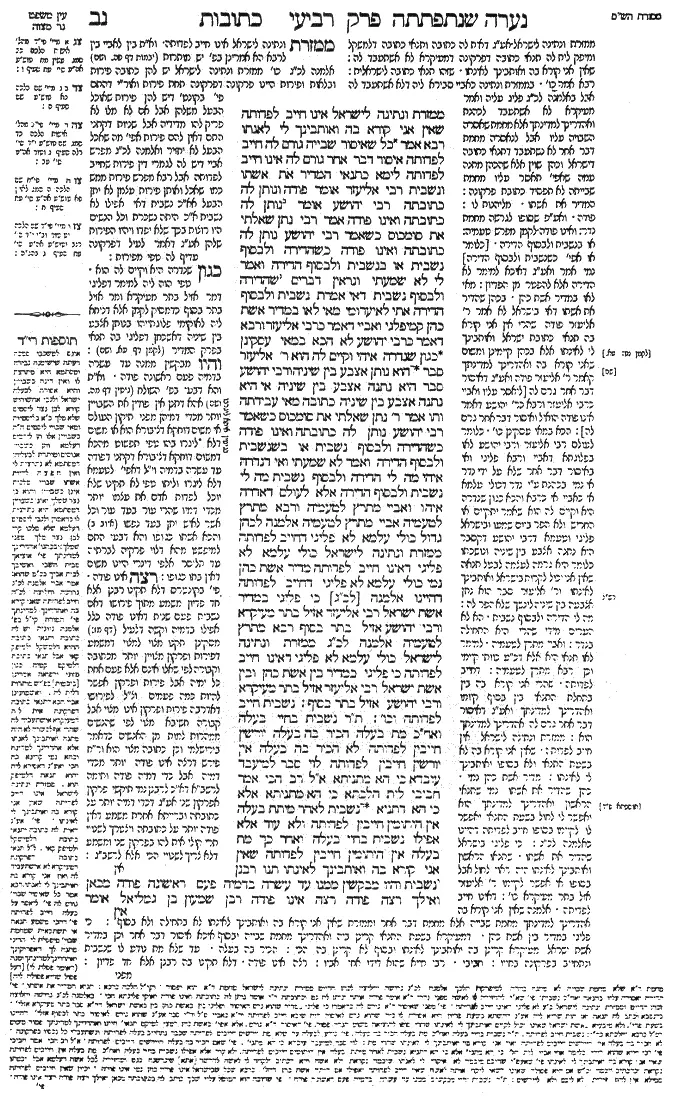
Ketubot 52a - Guemara
ממזרת ונתינה לישראל אינו חייב לפדותה שאין אני קורא בה ואותבינך לי לאנתו רבא אמר כל שאיסור שבייה גורם לה חייב לפדותה איסור דבר אחר גורם לה אינו חייב לפדותה לימא כתנאי המדיר את אשתו ונשבית רבי אליעזר אומר פודה ונותן לה כתובתה רבי יהושע אומר נותן לה כתובתה ואינו פודה אמר רבי נתן שאלתי את סומכוס כשאמר רבי יהושע נותן לה כתובתה ואינו פודה כשהדירה ולבסוף נשבית או בנשבית ולבסוף הדירה ואמר לי לא שמעתי ונראין דברים שהדירה ולבסוף נשבית דאי אמרת נשבית ולבסוף הדירה אתי לאיערומי מאי לאו במדיר אשת כהן קמיפלגי ואביי דאמר כרבי אליעזר ורבא דאמר כרבי יהושע לא הכא במאי עסקינן כגון שנדרה איהי וקיים לה הוא ר' אליעזר סבר הוא נותן אצבע בין שיניה ורבי יהושע סבר היא נתנה אצבע בין שיניה אי היא נתנה אצבע בין שיניה כתובה מאי עבידתה ותו אמר ר' נתן שאלתי את סומכוס כשאמר רבי יהושע נותן לה כתובתה ואינו פודה כשהדירה ולבסוף נשבית או בשנשבית ולבסוף הדירה ואמר לא שמעתי ואי דנדרה איהי מה לי הדירה ולבסוף נשבית מה לי נשבית ולבסוף הדירה אלא לעולם דאדרה איהו ואביי מתרץ לטעמיה ורבא מתרץ לטעמיה אביי מתרץ לטעמיה אלמנה לכהן גדול כולי עלמא לא פליגי דחייב לפדותה ממזרת ונתינה לישראל כולי עלמא לא פליגי דאינו חייב לפדותה מדיר אשת כהן נמי כולי עלמא לא פליגי דחייב לפדותה דהיינו אלמנה [לכ"ג] כי פליגי במדיר אשת ישראל רבי אליעזר אזיל בתר מעיקרא ורבי יהושע אזיל בתר בסוף רבא מתרץ לטעמיה אלמנה לכ"ג ממזרת ונתינה לישראל כולי עלמא לא פליגי דאינו חייב לפדותה כי פליגי במדיר בין אשת כהן ובין אשת ישראל רבי אליעזר אזיל בתר מעיקרא ורבי יהושע אזיל בתר בסוף:
נשבית חייב לפדותה וכו':
ת"ר נשבית בחיי בעלה ואח"כ מת בעלה הכיר בה בעלה יורשין חייבין לפדותה לא הכיר בה בעלה אין יורשין חייבין לפדותה לוי סבר למיעבד עובדא כי הא מתניתא א"ל רב הכי אמר חביבי לית הלכתא כי הא מתניתא אלא כי הא דתניא נשבית לאחר מיתת בעלה אין היתומין חייבין לפדותה ולא עוד אלא אפילו נשבית בחיי בעלה ואחר כך מת בעלה אין היתומין חייבין לפדותה שאין אני קורא בה ואותבינך לאינתו תנו רבנן נשבית והיו מבקשין ממנו עד עשרה בדמיה פעם ראשונה פודה מכאן ואילך רצה פודה רצה אינו פודה רבן שמעון בן גמליאל אומר
Comments from Rashi on Masechet Ketubot Page 52a
ממזרת ונתינה לישראל . אע"ג דאית לה כתובה ותנאי כתובה דלמשקל ומיפק לית לה תנאי כתובה דפרקונה דמעיקרא לא אשתעבד לה: שאין אני קורא בה ואותבינך לאינתו . שזהו תנאי כתובה לישראלית: רבא אמר כו' . בממזרת ונתינה כאביי סבירא ליה דלא אשתעבד לה אבל באלמנה לכ"ג פליג עליה ואמר מעיקרא לא אשתעבד לכהנת ואהדרינך למדינתך אלא מחמת שאסרה השבויה עליו אבל לנאסרה מחמת דבר אחר לא נשתעבד דתנאי כתובה דישראל וכהן שוין אלא שהכהן מתנה עמה שאפי' תאסר עליו מחמת שבייתה לא תפסיד כתובת פרקונה: המדיר את אשתו . מליהנות לו: פודה . ואע"פ שסופו לגרשה מחמת נדר: ואינו פודה . לקמן מפרש טעמיה: או בנשבית ולבסוף הדירה . [כלומר או אפי' כשנשבית ולבסוף הדירה] נמי אמר ואע"ג דאיכא למימר לא הדירה אלא להפטר מן הפדיון: פודה . ואע"פ שסופו לגרשה מחמת נדר: מאי לאו במדיר אשת כהן . בכהן שהדיר את אשתו דאי בישראל לא אמר ר' אליעזר פודה שהרי אין אני קורא בה תנאי כתובת ישראל ואותבינך לי לאינתו אלא בכהן קיימינן ומשום שאני קורא בה ואהדרינך למדינתך קאמר ר' אליעזר פודה ואע"ג דאיסור דבר אחר גרם לה [ליאסר עליו ואביי כרבי אליעזר ורבא כר' יהושע דאמר אינו פודה הואיל ואיסור דבר אחר גרם לה]: הכא במאי עסקינן כו' . כלומר לעולם רבי אליעזר ורבי יהושע לאו בפלוגתא דאביי ורבא פליגי ואי באיסור דבר אחר שלא על ידי נדר אי נמי בכהנת ע"י נדר דכולי עלמא אי כאביי אי כרבא והכא כגון שנדרה היא וקיים לה הוא שאמר יתקיים או החריש ולא הפר ביום שמעו ובישראל פליגי וטעמא דרבי יהושע דקסבר היא נתנה אצבע בין שיניה ונושכתו כלומר היא גרמה לעצמה לבטל תנאה שאין אני יכול לקרות בישראל ואותבינך לאינתו ור' אליעזר סבר הוא נתן אצבעה בין שיניה לינשך שלא הפר לה: מה לי הדירה ולבסוף נשבית . הא לא הערים מידי שהרי היא התחילה בנדר: ואביי מתרץ לטעמיה . למימר לאו תנאי היא אלא דכ"ע כוותי קיימי וכן רבא מתרץ לטעמיה: דחייב לפדותה . שהרי אני קורא בה בין בתחלת התנאי בין בסוף קיומו ואהדרינך למדינתך ואע"ג דאיסור דבר אחר גרם לה אהדרינך למדינתך הוא: ממזרת ונתינה לישראל אין חייב לפדותה . שאין אני קורא בה לא בשעת התנאי ולא בסופו ואותבינך לי לאינתו: מדיר אשת כהן נמי . כהן שהדיר את אשתו נמי שתנאי הראשון ואהדרינך למדינתך הוא ואפשר לו לחול בשעת התנאי ואפשר לו לקיימו בסופו חייב לפדותה דהיינו כאלמנה לכ"ג: דאינו חייב לפדותה . אלמנה שאין אני קורא בה אהדרינך למדינתך מחמת שבייה אלא מחמת דבר אחר וממזרת שאין אני קורא בה ואותבינך לאינתו לא בתחילה ולא בסוף: כי פליגי בישראל שהדיר את אשתו . שתנאו הראשון ואותבינך לאינתו היה ראוי לחול אבל בסופו אי אפשר לקיימו ר' אליעזר אזל בתר מעיקרא כו': דאינו חייב לפדותה . אלמנה שאין אני קורא בה אהדרינך למדינתך מחמת שבייה אלא מחמת דבר אחר וממזרת שאין אני קורא בה ואותבינך לאינתו לא בתחילה ולא בסוף: כי פליגי במדיר בין אשת כהן . דמעיקרא בשעת התנאי קרינן ביה ואהדרינך מחמת שבייה ובסוף איכא איסור דבר אחר וכן במדיר אשת ישראל מעיקרא קרינן בה ואותבינך לאינתו ובסוף לא קרינן בה הכי: הכיר בה בעלה . עד שלא מת נודע לו שנשבית ונתחייב בפרקונה בחייו: חביבי . רבי חייא שהוא דודו אחי אביו: רצה אינו פודה . דלא תקינו בה רבנן אלא חד פדיון:
Comments from Tosafot - Ketubot 52a
ממזרת ונתינה לישראל אינו חייב לפדותה . וא"ת בין לאביי בין לרבא הא אמרינן בפ' יש מותרות (יבמות דף פה. ושם) אלמנה לכ"ג כו' ממזרת ונתינה לישראל יש להן כתובה פירות ובלאות ופירות היינו פרקונה דפרקונה תחת פירות ואור"י דהתם פי' בקונט' דיש להן פירות שאוכל הבעל משלהן אבל אם לא מלו לא פריק להו מדידיה אבל שניות דקתני התם דאין להם פירות אפי' מה שאכל הבעל לא יחזיר ואלמנה לכ"ג מפרש אביי דיש לה לגמרי דין פירות שחייב לפדותה אבל רבא מפרש פירות ממש כמו שאכל ואותן פירות עצמן לא יתן הבעל אא"כ נשבית דאי אפילו לא נשבית א"כ היתה נשכרת וכל הנשים היו רוצות בכך שלא יפדו ויהיו הפירות שלהן אע"ג דאמר לעיל דפרקונה עדיף לה טפי מפירות: כגון שנדרה היא וקיים לה הוא . טפי הוה ליה למימר דפליגי דמר אזיל בתר מעיקרא ומר אזיל בתר בסוף כדמסיק לקמן אלא דניחא ליה לאוקומי פלוגתייהו בנותן אצבע בין שיניה דאשכחן דפליגי בה תנאי בפרק המדיר (לקמן כתובות דף עא. ושם): והיו מבקשין ממנה עד עשרה בדמיה פעם ראשונה פודה . וא"ת והא דבעי בפ' השולח (גיטין דף מה. ושם) אהא דתנן אין פודין את השבויין יותר מכדי דמיהן מפני תיקון העולם אי משום דוחקא דציבורא הוא או משום דלא ליגרו בהו טפי תפשוט מהכא דמשום דוחקא דציבורא דקתני דפודה עד עשרה בדמיה וי"ל דאפי' לטעמא דלא ליגרו וליתו טפי לא תקינו שלא יוכל לפדות אדם את עצמו יותר מכדי דמיו שהרי עור בעד עור וכל אשר לאיש יתן בעד נפשו (איוב ב) והכא אשתו כגופו והא דבעי התם למיפשט מהא דלוי פרקיה לברתיה עד תליסר אלפי דינרי היינו משום דאין בתו כגופו: רצה אינו פודה . פי' בקונטרס דלא תקינו רבנן אלא חד פדיון משמע מתוך פירושו דאם נשבית פעם שנית דאינו פודה כלל אפילו בדמיה וקשה דלעיל (כתובות דף מז:) מסקינן תקנו מצוי למצוי דמשמע דפירות ופרקון מצויין יותר מכתובה וקבורה לפי שאלו אינם אלא פעם אחת כל ימיה אבל פירות ופרקון אפשר להיות כמה פעמים וצ"ל לפירושו דאדרבה פירות ופרקון אינו מצוי אבל קבורה חשיבא מצוי לפי שהנשים ממהרות למות מן האנשים כדאמר בירושלמי וכן כתובה מצוי הוא ור"ח פירש דרצה אינו פודה יותר מכדי דמיה אבל כדי דמיה פודה ותימה לרשב"א דא"כ לרבנן נמי תיקשי פרקון אפרקון שני אע"ג דכדי דמיה יותר על כתובתה וברייתא אחרת משמע דאין פודה יותר על כתובתה ויצטרך לשנויי תרי קולי אית להו בפרקון שני ומשמע דלא צריך לשנויי הכי אלא לרשב"ג:
Ketubot 52a - Mishnah translated into english
In the case of a mamzeret or a Gibeonite woman married to an Israelite, who are entitled to a marriage contract despite the fact that the relationship is forbidden and they must get divorced, he is not obligated to redeem her, as I do not apply to her the clause: And I will restore you to me as a wife, as she is forbidden to him. Rava said: In any case where the prohibition of her captivity, i.e., the fact that she was taken captive, causes her to be forbidden to her husband, as in the case of a priest’s wife who was taken captive, he is obligated to redeem her. However, if another prohibition causes her to be forbidden to her husband, e.g., the case of a widow who is married to a High Priest, he is not obligated to redeem her.
The Gemara suggests: Let us say that this is parallel to a dispute between tanna’im. As it is taught in a baraita: In the case of one who vows that his wife may not derive benefit from him, in which case he must divorce her, and she is then taken captive, Rabbi Eliezer says: He redeems her and gives her the payment for her marriage contract. Rabbi Yehoshua says: He gives her the payment for her marriage contract but he does not have to redeem her, as he may not take her back as his wife, due to his vow.
Rabbi Natan said: I asked Sumakhos: When Rabbi Yehoshua said that he gives her the payment for her marriage contract but he does not have to redeem her, was he referring to a case where he vowed that she may not derive benefit from him and she was subsequently taken captive, or was he speaking of one who was taken captive and he subsequently vowed that she may not derive benefit from him?
And he said to me: I have not heard a tradition on this matter, but it would appear that Rabbi Yehoshua does not obligate the husband to redeem her in a situation where he vowed that she may not derive benefit from him and she was subsequently taken captive. As, if you say that the same halakha applies in a case where she was taken captive and he subsequently vowed that she may not derive benefit from him, the husband might come to engage in trickery. If he wants to release himself from the duty to ransom his wife after she is captured, he can simply vow that she may not derive benefit from him, in which case he would be obligated to pay her only the marriage contract.
The Gemara now analyzes the suggested comparison between the opinions cited in this baraita and the dispute between Abaye and Rava. What, is it not the case that the tanna’im disagree about a priest who vows that his wife, i.e., the wife of a priest, may not derive benefit from him? And Abaye spoke in accordance with the opinion of Rabbi Eliezer when he said that the husband must redeem his wife even if she is forbidden to him due to something other than the fact that she was taken captive, and Rava spoke in accordance with the opinion of Rabbi Yehoshua.
The Gemara refutes this suggestion: No; with what are we dealing here? With a case where she vowed not to derive benefit from him, and her husband upheld it for her by neglecting to nullify her vow when he heard it. The Gemara explains: Rabbi Eliezer maintains that he is putting his finger between her teeth, i.e., he causes the vow to be in effect, and therefore he must redeem her and return her to her native province. And Rabbi Yehoshua maintains that she put her finger between her own teeth, i.e., she is responsible for the vow, because she is the one who initially pronounced it.
The Gemara asks: If Rabbi Yehoshua maintains that she put her finger between her own teeth, what is the payment of the marriage contract doing here? Why must he pay her marriage contract if it is her fault that they cannot remain married?
And furthermore, it was stated above that Rabbi Natan said: I asked Sumakhos: When Rabbi Yehoshua said that he gives her the payment for her marriage contract but he does not have to redeem her, was he referring to a case where he vowed that she may not derive benefit from him and she was subsequently taken captive, or was he speaking of one who was taken captive and he subsequently vowed that she may not derive benefit from him? And he said to me: I have not heard a tradition on this matter, but it is reasonable to assume that the case is where he took the vow and she was subsequently taken captive, as otherwise there is a concern that the husband will engage in trickery.
But if this is referring to a case where she was the one who vowed not to derive benefit from him, what is the difference to me whether he upheld her vow and she was subsequently taken captive, and what is the difference to me whether she was taken captive and he subsequently upheld her vow? Either way there is no reason to be concerned that he might engage in trickery, since she was the one who took the vow.
Rather, this is actually referring to a case where he was the one who initially vowed that she may not derive benefit from him. And Abaye explains the baraita according to his line of reasoning, and Rava explains the baraita according to his line of reasoning. Abaye explains the baraita according to his line of reasoning as follows: With regard to a widow who is married to a High Priest, everyone agrees that he is obligated to redeem her. If she was a mamzeret or a Gibeonite woman married to an Israelite, everyone agrees that he is not obligated to redeem her. In the case of a priest who takes a vow prohibiting his wife, i.e., the wife of a priest, from deriving benefit from him, likewise everyone agrees that he is obligated to redeem her, as this is the same as the case of a widow who is married to a High Priest, as he can fulfill the requirement to restore her to her native province.
When they disagree it is in the case of an Israelite who vows that his wife, i.e., the wife of an Israelite, may not derive benefit from him. Rabbi Eliezer follows the status of the woman at the outset, i.e., when the marriage contract was written. Since at that time he could restore her to be his wife, the obligation he took upon himself to redeem her from captivity remains in effect, despite the fact that he can no longer do so due to the vow. And Rabbi Yehoshua follows the status of the woman at the end, and holds that since, in practice, the husband cannot take her back as a wife because of the vow, he is no longer obligated to ransom her.
Similarly, Rava explains the baraita according to his line of reasoning: In the case of a widow married to a High Priest, and a mamzeret or a Gibeonite woman married to an Israelite, everyone agrees that he is not obligated to redeem her, as the prohibition against her remaining married to him results from a cause other than her captivity. When they disagree it is with regard to one who vows that his wife may not derive benefit from him, whether she is the wife of a priest or the wife of an Israelite.
Rabbi Eliezer follows her status at the outset and holds that since he obligated himself to ransom her when he wrote the marriage contract he must act accordingly. And Rabbi Yehoshua follows her status at the end, and holds that since he cannot fulfill his obligation to restore her as his wife due to a factor other than her captivity, he is entirely exempt from redeeming her.
§ The mishna taught that if she was taken captive, her husband is obligated to redeem her. The Sages taught in a baraita: In the case of a wife who was taken captive in her husband’s lifetime and afterward her husband died before he could redeem her, if her husband was aware of her captivity, the heirs are obligated to redeem her, but if her husband was not aware of her captivity, his heirs are not obligated to redeem her.
The Gemara relates: Levi thought to act in accordance with this baraita. Rav said to him: My uncle [ḥavivi], Rabbi Ḥiyya, said as follows: The halakha is not in accordance with this baraita. Rather, it is in accordance with that which is taught in a different baraita: If she was taken captive after the death of her husband, the orphans are not obligated to redeem her. And moreover, even if she was taken captive in her husband’s lifetime and he heard about it, and afterward her husband died, the orphans are not obligated to redeem her, as I cannot apply to her the clause in the marriage contract: And I will restore you to me as a wife. Since this stipulation cannot be fulfilled, the obligation to redeem her does not apply.
§ The Sages taught: If she was taken captive and they were seeking ransom from her husband of up to ten times her value, i.e., far more than the usual ransom for a captive of this kind, on the first occasion she is taken captive he must redeem her. From this point forward, i.e., if she was taken captive a second time, if he wants to, he redeems her, but if he does not want to redeem her, he does not have to redeem her, as the Sages obligated him to redeem her only once. Rabban Shimon ben Gamliel says:
Traduction : The William Davidson digital edition of the Koren Noé Talmud, with commentary by Rabbi Adin Even-Israel Steinsaltz.