 Talmud Bavli
Ketubot 48a : Youtube
Daf TubeYoutube
1 video class :
Ketubot Page 48a
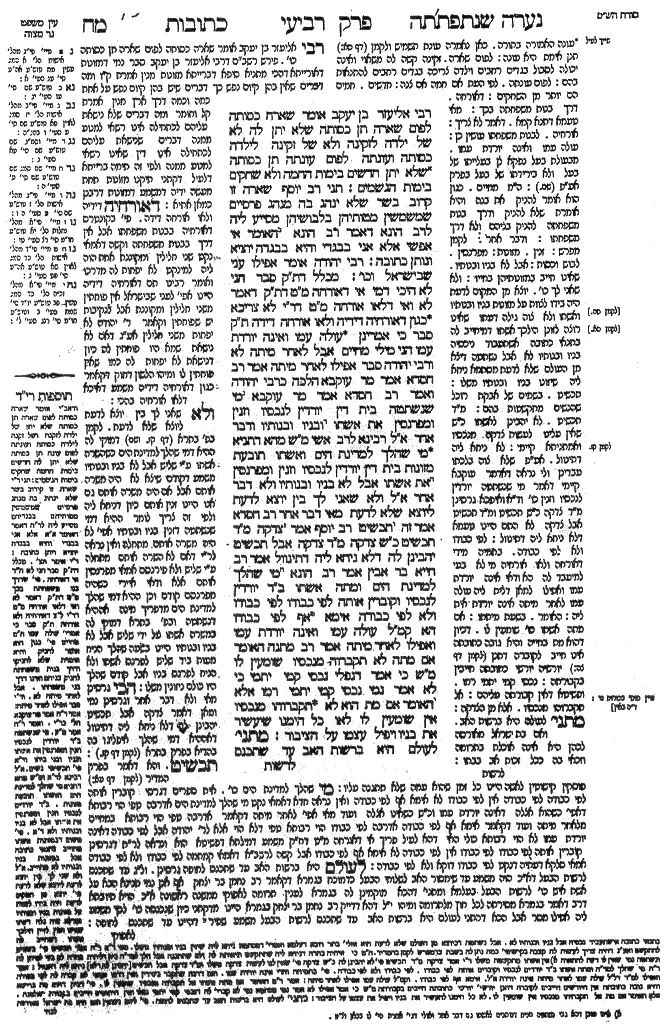
Ketubot 48a - Guemara
רבי אליעזר בן יעקב אומר שארה כסותה לפום שארה תן כסותה שלא יתן לה לא של ילדה לזקינה ולא של זקינה לילדה כסותה ועונתה לפום עונתה תן כסותה שלא יתן חדשים בימות החמה ולא שחקים בימות הגשמים:
תני רב יוסף שארה זו קרוב בשר שלא ינהג בה מנהג פרסיים שמשמשין מטותיהן בלבושיהן מסייע ליה לרב הונא דאמר רב הונא האומר אי אפשי אלא אני בבגדי והיא בבגדה יוציא ונותן כתובה:
רבי יהודה אומר אפילו עני שבישראל וכו':
מכלל דת"ק סבר הני לא היכי דמי אי דאורחה מ"ט דת"ק דאמר לא ואי דלאו אורחה מ"ט דר"י לא צריכא כגון דאורחיה דידיה ולאו אורחה דידה ת"ק סבר כי אמרינן עולה עמו ואינה יורדת עמו הני מילי מחיים אבל לאחר מיתה לא ורבי יהודה סבר אפילו לאחר מיתה אמר רב חסדא אמר מר עוקבא הלכה כרבי יהודה ואמר רב חסדא אמר מר עוקבא מי שנשתטה בית דין יורדין לנכסיו וזנין ומפרנסין את אשתו ובניו ובנותיו ודבר אחר א"ל רבינא לרב אשי מ"ש מהא דתניא מי שהלך למדינת הים ואשתו תובעת מזונות בית דין יורדין לנכסיו וזנין ומפרנסין את אשתו אבל לא בניו ובנותיו ולא דבר אחר א"ל ולא שאני לך בין יוצא לדעת ליוצא שלא לדעת מאי דבר אחר רב חסדא אמר זה תכשיט רב יוסף אמר צדקה מ"ד תכשיט כ"ש צדקה מ"ד צדקה אבל תכשיט יהבינן לה דלא ניחא ליה דתינוול אמר רב חייא בר אבין אמר רב הונא מי שהלך למדינת הים ומתה אשתו ב"ד יורדין לנכסיו וקוברין אותה לפי כבודו לפי כבודו ולא לפי כבודה אימא אף לפי כבודו הא קמ"ל עולה עמו ואינה יורדת עמו ואפילו לאחר מיתה אמר רב מתנה האומר אם מתה לא תקברוה מנכסיו שומעין לו מ"ש כי אמר דנפלי נכסי קמי יתמי כי לא אמר נמי נכסי קמי יתמי רמו אלא האומר אם מת הוא לא תקברוהו מנכסיו אין שומעין לו לאו כל הימנו שיעשיר את בניו ויפיל עצמו על הציבור:
מתני׳ לעולם היא ברשות האב עד שתכנס
Comments from Rashi on Masechet Ketubot Page 48a
לפום שארה . זקינה קשה לה משאוי ואינה יכולה לסבול בגדים רחבים וילדה צריכה בגדים רחבים להתנאות בהם: לפום עונתה . לפי העת אם חמה אם צנה: חדשים . חמים הם יותר מן השחקים: דאורחה . דרך בנות משפחתה בכך: מאי טעמא דתנא קמא . דאמר לא צריך: אורחיה . לבנות משפחתו עושין כן: עולה עמו ואינה יורדת עמו . מבעולת בעל נפקא לן בעלייתו של בעל ולא בירידתו של בעל בפרק אע"פ (שם.): ה"מ מחיים . כגון הוא אומר להניק את בנה והיא אומרת שלא להניק ודרך בנות משפחתה להניק בניהם ולא דרך משפחתו: זנין . מזונות: מפרנסין . לבוש וכסות: ודבר אחר . לקמן מפרש: אבל לא בניו ובנותיו . שאינו חייב במזונותיהן בחייו: ולא שאני לך כו' . יוצא מן המקום לדעת היה בידו לצוות על מזונות בניו ובנותיו ואשתו ולא צוה גילה דעתו שאינו רוצה לזונן הילכך אשתו דמיחייב לה בתנאי כתובה אשתעבוד ניכסיה בניו ובנותיו לא אבל נשתטה דיצא מן העולם שלא לדעת מסתמא ניחא ליה שיזונו בניו ובנותיו משלו: תכשיט . בשמים של אבקת רוכל שהנשים מתקשטות בהם: מ"ד תכשיט . לא יהבינן לאשתו כ"ש שאין עלינו לעשות צדקה מנכסיו ואמתניתא קיימי: לא ניחא ליה דתינוול . אע"פ שלא צוה בלכתו עבדינן ולא נראה דאדמר עוקבא קיימי דאמר מי שנשתטה יורדין לנכסיו וזנין כו' וד"א ואיפכא גרסינן מ"ד צדקה כ"ש תכשיט ומ"ד תכשיט אבל צדקה לא התם היינו טעמא דלא ניחא ליה דתינוול: לפי כבודו ולא לפי כבודה . בתמיה מידי דאורחה ולאו אורחיה מי לא בעי למיעבד לה הא ודאי אינה יורדת עמו ואפילו למאן דלית ליה עולה עמו לאחר מיתה אינה יורדת אית ליה: האומר . בשעת מיתתו: אם מתה אשתו כו' שומעין לו . דכיון דהוא מת בחייה והיא גובה כתובתה אינו חייב לקוברה דתנן (לקמן כתובות דף צה:) יורשיה יורשי כתובתה חייבין בקבורתה: נכסי קמי יתמי רמו . ופשיטא דאין קבורתה עליהם: אל תקברוהו מנכסיו . אלא מן הצדקה: מתני' לעולם היא ברשות האב . ואם בת ישראל מאורסה לכהן היא אינה אוכלת בתרומה וזכאי בה ככל זכות אב בבתו:
Comments from Tosafot - Ketubot 48a
רבי אליעזר בן יעקב אומר שארה כסותה לפום שארה תן כסותה כו' . פירש רשב"ם דרבי אליעזר בן יעקב סבר נמי דמזונות דאורייתא דהכי מתניא סיפא דברייתא מזונות מנין אמרת ק"ו ומה דברים שאין בהן קיום נפש כך דברים שיש בהן קיום נפש על אחת כמה וכמה דרך ארץ מנין אמרת קל וחומר ומה דברים שלא נישאת עליהם לכתחילה אינו רשאי למנוע ממנה דברים שנישאת עליהם לכתחילה אינו דין שאינו רשאי למנוע ממנה ולפי זה תימה ברייתא דלעיל דקתני תיקנו מזונות תחת מעשה ידיה דמשמע דמזונות דרבנן כמאן אתיא: דאורחיה דידיה ולאו אורחה דידה . פי' בקונטרס דאורחיה בבנות משפחתו אבל אין דרך בבנות משפחתה וקשה דאמאי נקט שני חלילין ומקוננת אחת הוה ליה למינקט לא יפחות לה מדרכו ואומר רבינו תם דאורחיה דידיה היינו אפי' לעני שבישראל אין פוחתין משני חלילין ומקוננת אבל לנקיבות יש שפוחתין וקאמר ר' יהודה לא יפחות משני חלילין אע"ג דאם לא נישאת שמא היו פוחתין לה כיון דנישאת לא יפחות לה כמו שאין פוחתין לו ומיהו הלשון דחוק דקאמר כגון דאורחיה דידיה משמע דאיכא דלאו אורחיה בהכי: ולא שאני לך בין יוצא לדעת ליוצא שלא לדעת . לקמן בפ' בתרא (כתובות דף קז. ושם) דמוקי לה ההיא דמי שהלך למדינת הים כשהשרה אשתו ע"י שליש אבל לא בניו ובנותיו משמע דקודם שיצא לא היה משרה אותם אבל אם היה משרה אותם גם אנו היינו זנין אותם כיון דניחא ליה ולפי זה צריך לומר ההיא דמי שנשתטה דזנין בניו ובנותיו אפי' לא היה משרה אותם מתחלה ואין נראה לר"י דאם לא השרה אותם מתחלה ע"י שליש ולא פירנסם אמאי מפרנסין אותם אלא ודאי איירי כשהיה מפרנסם קודם וכן ההיא דמי שהלך למדינת הים מדפריך מינה אההיא דנשתטה ובפ' בתרא דמוקי לה במשרה אשתו על ידי שליש אבל לא בניו ובנותיו היינו בשעה שהלך הניח מעות ביד שליש לפרנס אשתו ולא הניח לפרנס בניו אבל קודם שהלך היו כולם ניזונין משלו: הכי גרסינן מאי ולא דבר אחר וגרסינן נמי ומאן דאמר צדקה אבל תכשיט יהבינן לה דלא ניחא ליה דתינוול דאההיא דמי שהלך איפליגו בה בהדיא בפרק בתרא (לקמן כתובות דף קז.): תכשיט . והא דאמר בפרק המדיר (לקמן כתובות דף עא:) פוסקין קישוטין לאשה היינו כל זמן שהוא עמה שלא תתגנה עליו: מי שהלך למדינת הים כו' . אית ספרים דגרסי קוברין אותה לפי כבודה לפי כבודה אין לפי כבודו לא אימא אף לפי כבודה ואין נראה חדא דאמאי נקט מי שהלך למדינת הים אדרבה טפי הוי רבותא דאפי' כשהוא אצלה דאינה יורדת עמו וכ"ש כשאינו אצלה ועוד מאי אפי' לאחר מיתה דקאמר אדרבה טפי הוי רבותא במחיים מלאחר מיתה ועוד דקאמר אימא אף לפי כבודה אדרבה לפי כבודו הוי רבותא טפי דלא הוי אלא לר' יהודה אבל לפי כבודה דאינה יורדת עמו לא הוי רבותא כולי האי דהא לעיל פריך אי דאורחה מ"ט דת"ק משמע דמילתא דפשיטא הוא ונראה לר"ת דגרסינן קוברין אותה לפי כבודו לפי כבודו אין לפי כבודה לא אימא אף לפי כבודו אבל קשה לרשב"א דאמאי קמתמה לפי כבודו ולא לפי כבודה אמאי סלקא דעתיה דנקט לפי כבודו דוקא ולא לפי כבודה: לעולם היא ברשות האב עד שתכנס לחופה גרסינן . ול"ג עד שתכנס לרשות הבעל דא"כ הוה משמע עד שימסור האב לשלוחי הבעל כדמוכח בגמרא דקאמר רב נחמן בר יצחק אף אנן נמי תנינא הבא על אשת איש כו' לרשות הבעל בעלמא ומתני' דהכא מוקמינן לה בגמרא לענין תרומה לאפוקי ממשנה ראשונה א"כ הויא תיובתא דרב דאמר בגמרא מסירתה לכל חוץ מלתרומה ומיהו י"ל דהא דדייק רב נחמן בר יצחק בגמרא היינו מדקתני כיון שנכנסה כו' לכך משמע ליה אפילו מסר אבל הכא דקתני לעולם היא ברשות האב עד שתכנס לרשות הבעל משמע שפיר דהיינו עד שתכנס לחופה:
Ketubot 48a - Mishnah translated into english
Rabbi Eliezer ben Ya’akov says that she’era and kesuta should be interpreted as follows: In accordance with her flesh [she’era], i.e., her age, give her clothing [kesuta]. This means that he should not give the garments of a young girl to an elderly woman, nor those of an elderly woman to a young girl. Similarly, kesuta and onata are linked: In accordance with the time of year [onata], give her clothing [kesuta], meaning that he should not give new, heavy clothes in the summer, nor worn-out garments in the rainy season, i.e., the winter, when she requires heavier, warmer clothes. The entire phrase, therefore, refers only to a husband’s obligation to provide clothing for his wife.
Rav Yosef taught the following baraita: “She’era,” this is referring to closeness of flesh during intercourse, which teaches that he should not treat her in the manner of Persians, who have conjugal relations in their clothes. The Gemara comments: This baraita supports the opinion of Rav Huna, as Rav Huna said: With regard to one who says: I do not want to have intercourse with my wife unless I am in my clothes and she is in her clothes, he must divorce his wife and give her the payment for her marriage contract. This is in keeping with the opinion of the tanna of the baraita that the Torah mandates the intimacy of flesh during sexual relations.
§ The mishna teaches that Rabbi Yehuda says: Even the poorest man of the Jewish people may not provide fewer than two flutes and a lamenting woman for his wife’s funeral. The Gemara infers: This proves by inference that the first, anonymous tanna cited in the mishna holds that these are not part of a husband’s obligations. The Gemara asks: What are the circumstances? If this is the common custom in her family at funerals, what is the reason for the opinion of the first tanna who said that he does not have to do so? If he neglected to provide these items he would be treating her with disrespect. And if this is not the common custom in her family, what is the reason for the opinion of Rabbi Yehuda?
The Gemara answers: No, it is necessary to state their dispute in a case where it is the common custom for his family according to its social status, but it is not common for her family according to its social status. The first tanna holds: When we say that a woman who marries a man ascends with him, i.e., she must be treated as equal in status to her husband if his social status is higher than hers, and does not descend with him if he is from a lower social status, this applies only when they are alive, but after death the Sages did not enforce this rule.
And Rabbi Yehuda maintains: Even after death she must be treated in accordance with his status, which means that if those in his family are mourned with flutes and lamenting women, he must provide the same for her funeral. Rav Ḥisda said that Mar Ukva said: The halakha is in accordance with the opinion of Rabbi Yehuda.
Apropos this ruling, the Gemara cites another statement that Rav Ḥisda said that Mar Ukva said: With regard to one who became insane, the court enters his property and feeds and provides a livelihood for his wife, his sons, and his daughters, and it also gives something else, as will be explained. Ravina said to Rav Ashi: In what way is this case different from that which is taught in a baraita: In the case of one who went overseas and his wife claims sustenance, the court descends to his property and feeds and provides a livelihood for his wife, but not for his sons and daughters and does not give something else. If a father is not obligated to sustain his children in his absence, what is different about a situation where he is mad?
Rav Ashi said to Ravina: Is there no difference for you between a man who leaves his responsibilities knowingly and one who leaves them unknowingly? A father who lost his sanity did not do so by his own choice, and therefore it can be assumed that he would want to provide for his children from his possessions, despite the fact that he is not obligated to do so. By contrast, if he went overseas he freely decided to depart, and one would think that he would leave enough for his sons and daughters. If he failed to do so, he has demonstrated that he does not want to provide for them.
The Gemara asks: What is this something else mentioned in the baraita? Rav Ḥisda said: This is a wife’s ornaments, to which she is entitled in addition to her sustenance. Rav Yosef said: It is money for charity. The Gemara comments: According to the one who says that the court does not pay for a woman’s ornaments from her husband’s property if he has gone overseas, all the more so he maintains that the husband’s property is not taken for charity. Conversely, the one who says that the court does not give money for charity holds that this applies only to charity, but it does give her ornaments, as it is assumed that it is not satisfactory for him that his wife be demeaned by a lack of jewelry.
Rav Ḥiyya bar Avin said that Rav Huna said: In the case of one who went overseas and his wife died, the court enters his property and buries her in accordance with his dignity. The Gemara asks: Does the court act in accordance with his dignity and not in accordance with her dignity? What if she came from a more dignified family than her husband?
The Gemara answers: Say that Rav Ḥiyya bar Avin meant: Even in accordance with his dignity, i.e., if his family was more distinguished than hers, he must bury her in accordance with the dignity of his family. The Gemara adds: This comes to teach us that she ascends with him to his social status and does not descend with him, and this principle applies even after her death, in accordance with Rabbi Yehuda’s opinion in the mishna.
Rav Mattana said: In the case of one who says that if his wife dies, they should not bury her using funds from his property, the court listens to him. The Gemara asks: What is different about the case when he says this command that induces the court to comply with his wishes? It is due to the fact that the property has come before the orphans as an inheritance, while the obligation to bury her is not incumbent upon them but is a duty of the inheritors of her marriage contract. However, even if he did not state the above preference, the property is cast before the orphans and it belongs to them. What does it matter whether or not the husband issued a command to this effect?
Rather, the Gemara amends Rav Mattana’s statement: With regard to one who says that if he himself dies, they should not bury him using funds from his property, one does not listen to him, but the court spends his money without resorting to charity. The reason for this is that it is not in his power to enrich his sons by saving them this expense and to cast himself as a burden on the community.
MISHNA: Even after she is betrothed, a daughter is always under her father’s authority until she enters
Traduction : The William Davidson digital edition of the Koren Noé Talmud, with commentary by Rabbi Adin Even-Israel Steinsaltz.