 Talmud Bavli
The learning on the whole site is dedicated : L'ilui Nishmat Avraham Ben Simha
The learning on the whole site is dedicated : L'ilui Nishmat Yaakov ben Myriam
The learning on the whole site is dedicated : L'ilui Nishmat Reuven ben Rivka SEBBAG
Ketubot 82a : Youtube
Daf TubeYoutube
1 video class :
Ketubot Page 82a
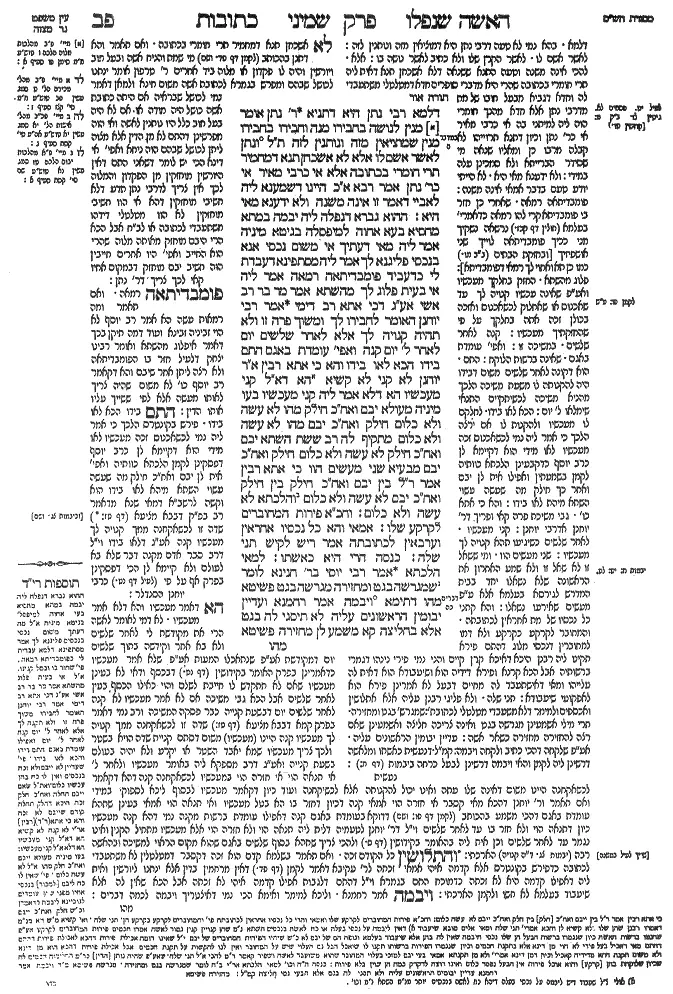
Ketubot 82a - Guemara
דלמא רבי נתן היא דתניא ר' נתן אומר מנין לנושה בחבירו מנה וחבירו בחבירו מנין שמוציאין מזה ונותנין לזה ת"ל (במדבר ה, ז) ונתן לאשר אשם לו אלא לא אשכחן תנא דמחמיר תרי חומרי בכתובה אלא אי כרבי מאיר אי כר' נתן אמר רבא א"כ היינו דשמענא ליה לאביי דאמר זו אינה משנה ולא ידענא מאי היא:
ההוא גברא דנפלה ליה יבמה במתא מחסיא בעא אחוה למיפסלה בגיטא מיניה אמר ליה מאי דעתיך אי משום נכסי אנא בנכסי פליגנא לך אמר ליה מסתפינא דעבדת לי כדעביד פומבדיתאה רמאה אמר ליה אי בעית פלוג לך מהשתא אמר מר בר רב אשי אע"ג דכי אתא רב דימי אמר רבי יוחנן האומר לחבירו לך ומשוך פרה זו ולא תהיה קנויה לך אלא לאחר שלשים יום לאחר ל' יום קנה ואפי' עומדת באגם התם בידו הכא לאו בידו והא כי אתא רבין א"ר יוחנן לא קני לא קשיא הא דא"ל קני מעכשיו הא דלא אמר ליה קני מעכשיו בעו מיניה מעולא יבם ואח"כ חילק מהו לא עשה ולא כלום חילק ואח"כ יבם מהו לא עשה ולא כלום מתקיף לה רב ששת השתא יבם ואח"כ חילק לא עשה ולא כלום חילק ואח"כ יבם מבעיא שני מעשים הוו כי אתא רבין אמר ר"ל בין יבם ואח"כ חילק בין חילק ואח"כ יבם לא עשה ולא כלום והלכתא לא עשה ולא כלום:
וחכ"א פירות המחוברים לקרקע שלו:
אמאי והא כל נכסיו אחראין וערבאין לכתובתה אמר ריש לקיש תני שלה:
כנסה הרי היא כאשתו:
למאי הלכתא אמר רבי יוסי בר' חנינא לומר שמגרשה בגט ומחזירה מגרשה בגט פשיטא מהו דתימא (דברים כה, ה) ויבמה אמר רחמנא ועדיין יבומין הראשונים עליה לא תיסגי לה בגט אלא בחליצה קא משמע לן מחזירה פשיטא
Comments from Rashi on Masechet Ketubot Page 82a
דלמא . בהא נמי לא טעה דרבי נתן היא דמוציאין מזה ונותנין לזה: לאשר אשם לו . לאשר הקרן שלו ולא כתיב לאשר נושה בו: אלא . להכי אינה משנה וטעה התנא ששנאה דלא אשכחן תנא דאית ליה תרי חומרי בכתובה שהרי היא מדברי סופרים חדא דמטלטלי משתעבדי לה וחדא דגביא מבעל חובו של מת מדרבי נתן אלא חדא מהנך חומרי הוה ליה למיתני בה אי כרבי מאיר אי כר' נתן וכיון דתנא תרוייהו לא קבלה מרבו כן ומאליו שנאה מי שסידר הברייתא ולא סמכינן עלה במידי: ולא ידענא מאי היא . לא הייתי יודע טעם בדבר אמאי אינה משנה: פומבדיתאה רמאה . שאחרי כן חזר בו פומבדיתא קרי להו רמאה כדאמרי' בעלמא (חולין דף קכז.) נרשאה נשקיך מני ככיך פומבדיתאה לוייך שני אושפיזיך [ובחזקת הבתים (ב"ב מו.) כמו כן תא ואחוי לך רמאי דפומבדיתא]: פלוג מהשתא . החזק בחלקך מעכשיו ואע"פ שאינה עכשיו קנויה לך עד שאכנוס או שאחלוק לכשאכנוס ואזכה בכולן זכה אתה בחלקך על פי שהחזקתיך מעכשיו: קנה לאחר שלשים . במשיכה זו: ואפי' עומדת באגם . שאינה ברשות הלוקח: התם . הוא דקונה לאחר שלשים משום דבידו היה להקנותה לו משעת משיכה הלכך מהניא משיכה לכשיתקיים התנאי שימלאו ל' יום: הכא לאו בידו . לחלקם לו מעכשיו ולהקנות לו אם ירצה הלכך אי אמר ליה נמי לכשאכנוס זכה מעכשיו לאו מידי הוא דקיימא לן כרב יוסף כדקבעינן הלכתא כוותיה לקמן בשמעתין ואפילו אית לן יבם ואחר כך חילק מה שעשה עשוי השתא מיהת לאו בידו: והא כי אתא כו' . גבי משיכת פרה קאי ופריך דר' יוחנן אדרבי יוחנן: קני מעכשיו . לאחר שלשים כשיגיעו תהא קנויה לך מעכשיו: שני מעשים הוו . ומי ששאל זו לא שאל זו ולא שמע האחרון את הראשונה שלא נשאלו יחד בבית המדרש לגירסא בעלמא אלא ע"פ מעשים שאירעו נשאלו: והא קתני כל נכסיו של מת אחראין לכתובתה . והמחובר לקרקע כקרקע ולא דמו למחוברין דנכסי מלוג דהתם פירא תקינו ליה רבנן היכא דאיכא קרן קיים והני נמי פירי נינהו דגמרי ברשותיה אבל הכא קרנא ופירא דידיה הוא ושיעבודא הוא דאית לה עלייהו ומאי דאישתעבד לה מחיים דבעל לא אמרינן פירא הוא לאפקועי שיעבודא: תני שלה . ולא פליגי רבנן עליה אלא אתלושין ואכספים ולמימר דלא משעבדי מטלטלי לכתובת': שמגרש' בגט ומחזירה . תרי מילי אשמעינן מגרשה בגט ואינה צריכה חליצה ואשמעינן שאם רצה להחזירה מחזירה כשאר אשה: עדיין יבומין הראשונים עליה . אע"פ שלקחה דהכי כתיב ולקחה ויבמה: קמ"ל . דנעשית כאשתו ומלאשה דרשינן ליה לקמן והאי ויבמה דרשינן לבעל כרחה ביבמות (דף ח:):
Comments from Tosafot - Ketubot 82a
לא אשכחן תנא דמחמיר תרי חומרי בכתובה . ואם תאמר והא דתנן בהכותב (לקמן כתובות דף פד. ושם) מי שמת והניח אשה ובעל חוב ויורשין והיה לו פקדון או מלוה ביד אחרים ר' טרפון אומר ינתנו לכושל שבהם ומפרש בגמרא לכתובת אשה משום חינא ולמאן דאמר נמי לכושל שבראיה אם היתה כתובת אשה כושל היה מודה או אם לא היה בעל חוב כלל היו נותנין לאשה ואי הוה מפרשינן דהתם לא מן הדין אלא מצוה ליתן לכושל שבהם הוה ניחא ואפי' אי דינא הכי יש לומר דשאני התם דאין היורשין מוחזקין מן הפקדון והמלוה לכך אין צריך לדרבי נתן תדע דלא חשיבי מוחזקין דהא אי הוו חשיבי מוחזקין לא הוו מטלטלי דידהו משתעבדי לכתובה או לב"ח אבל הכא הרי היבם מוחזק מאותה מלוה שהרי הוא החייב ואפי' היו אחרים חייבין הוה חשיב יבם מוחזק דבמקום אחיו קאי לכך צריך דר' נתן: פומבדיתאה רמאה . ואם תאמר ומה רמאות עשה הא אמר רב יוסף לא הוי זביניה זבינא ועוד דמה תיקן בכך דאמר איפלוג מהשתא ואומר רבינו יצחק דלעיל חזר בו הפומבדיתאה ולא רצה ליתן אחר שיבם והא דקאמר רב יוסף כו' לא משום שהיה צריך לאותו מעשה אלא לפי ששייך עליו אותו הדין: התם בידו הכא לאו בידו . פירש בקונטרס הלכך כי אמר ליה נמי לכשאכנוס זכה מעכשיו לאו מידי הוא דקיימא לן כרב יוסף דפסקינן לקמן הלכתא כוותיה ואפי' אית לן יבם ואח"כ חילק מה שעשה עשוי השתא מיהא לאו בידו הוא וקשה לרשב"א דמאי שנא מדאמר רב בפ"ק דבבא מציעא (דף טז:) שדה זו לכשאקחנה ממך קנויה לך מעכשיו קנה אע"ג דלאו בידו וי"ל דרב סבר אדם מקנה דבר שלא בא לעולם ולא קיימא לן הכי דפסקינן בפרק אף על פי (לעיל כתובות דף נט.) כרבי יוחנן הסנדלר: הא דאמר מעכשיו והא דלא אמר מעכשיו . לא דמי לאומר לאשה הרי את מקודשת לי לאחר שלשים ולא בא אחר וקידשה בתוך שלשים יום דמקודשת אע"פ שנתאכלו המעות אע"פ שלא אמר מעכשיו כדאמרינן בפרק האומר בקידושין (דף נט.) דבכסף ודאי לא בעינן מעכשיו שאם לא תתקדש לו חייבת לשלם והוי כאילו הכסף בעין לאחר שלשים אבל הכא גבי משיכה אם לא אמר מעכשיו לא קנה לאחר שלשים יום דבשעת קנייה כבר פסקה המשיכה ורב נמי דאמר בפרק קמא דבבא מציעא (דף טז:) שדה זו לכשאקחנה ממך קנויה לך מעכשיו קנה היינו (מעכשיו) משום דסתם קניית שדה הויא בשטר ולכך צריך מעכשיו שמא יאבד השטר או יקרע ולא יהיה בעולם בשעת קנייה ואע"ג דרב מספקא ליה באומר מעכשיו ולאחר ל' אי תנאה הוי אי חזרה הוי במעכשיו לכשאקחנה קנה דהא דקאמר לכשאקחנה היינו משום דאינה שלו עתה ואינו יכול להקנותה אלא לכשיקחנה ועוד כיון דקאמר מעכשיו לבסוף ליכא לספוקי במידי ואם תאמר ור' יוחנן דהכא מאי קסבר אי חזרה הוי אמאי קנה דכיון דחזר בו הא בטל מעכשיו ואי תנאה הוי אמאי בעינן שתהא עומדת באגם דהכי משמע בהכותב (לקמן כתובות דף פו: ושם) דדוקא בעומדת באגם קנה דאפילו עומדת ברשות מקנה נמי דהא קנה מעכשיו כיון דתנאה הוי ולא חזר בו עד לאחר שלשים וי"ל דר' יוחנן לטעמיה דלית ליה תנאה הוי ולא חזרה הוי אלא מעכשיו מתחיל הקנין ואינו נגמר עד לאחר שלשים וכן אית ליה בהאומר בקידושין (דף ס.) ולהכי צריך שתהא בסוף שלשים באגם שהוא מקום הראוי למשיכה ובהאשה רבה (יבמות צג. ד"ה קנויה) הארכתי: ויבמה אמר רחמנא . וליכא למימר ואימא הכי נמי דאיצטריך ויבמה לכמה דברים:
Ketubot 82a - Mishnah translated into english
However, this still does not prove conclusively that the baraita is corrupt, as perhaps it is the opinion of Rabbi Natan. As it is taught in a baraita that Rabbi Natan says: From where is it derived that in the case of one who claims one hundred dinars of another, and the other claims money of another, that one appropriates the money from this one, the last borrower, and gives it to this one, the first lender, without each party claiming the money from the one with whom he did business? The verse states: “And he shall give it to him in respect of whom he has been guilty” (Numbers 5:7). The words “whom he has been guilty” are expounded to mean that the borrower pays the one who is owed by his creditor, since the borrower is a party to this case despite the fact that he never incurred direct liability to him. It is possible to explain the baraita cited by Rav Yosef based on this reasoning as well.
Rather, a different justification exists for rejecting the baraita: We have not found a tanna who is stringent with these two stringencies with regard to a marriage contract. Rather, one rules either in accordance with the opinion of Rabbi Meir that movable property is mortgaged for a marriage contract, or in accordance with the opinion of Rabbi Natan. No one accepts both of these stringencies, and yet this baraita can be explained only by a combination of the two opinions. It must therefore be rejected as non-authoritative.
Rava said: If so, that is the meaning of that which I heard from Abaye, who said: This is not a mishna, and I did not know what it is. Rava initially did not understand why the teaching should be dismissed, but he subsequently realized what Abaye was saying.
The Gemara relates a similar incident: There was a certain man who had a yevama happen before him for levirate marriage in the town of Mata Meḥasya, and his brother wanted to disqualify her from him by means of a bill of divorce. The man said to his brother: What is your opinion? Why are you doing this? If you are doing this due to the property of the dead brother, I will divide the property with you. The brother said to him: I am scared that you will do to me like the swindler from Pumbedita did, in the above story, when the man from Pumbedita promised he would share the inheritance and later retracted. The man said to him: If you wish, divide it for yourself from now. I am prepared for you to take the property already, although the acquisition will take effect only after I marry the yevama.
Mar bar Rav Ashi said that although when Rav Dimi came from Eretz Yisrael he said that Rabbi Yoḥanan said: In the case of one who says to another: Go and pull this cow and it will be acquired for you only after thirty days, after thirty days he has acquired it through the act of pulling, and this is the halakha even if at the end of the thirty days the cow was standing in a meadow, i.e., a distant place that does not belong to the one acquiring the cow. This indicates that the present act of pulling is effective for later. Despite this halakha, Mar bar Rav Ashi claims that a difference exists between that case and the one currently under discussion.
Mar bar Rav Ashi elaborates: There, with regard to the cow, it is in the seller’s power to transfer ownership at the present time, when the instruction to pull the cow is given, and therefore he can delay the acquisition. Here, however, it is not in his power to divide up the property, as he has yet to perform levirate marriage and the brother’s property does not belong to him. Consequently, he cannot transfer its ownership at the present time.
The Gemara asks: But when Ravin came from Eretz Yisrael he said that Rabbi Yoḥanan said: If one is instructed to pull a cow, but the acquisition will take effect only after thirty days, he has not acquired it. This contradicts Rabbi Yoḥanan’s own ruling. The Gemara answers: This is not difficult, as this case, when one acquires it, is referring to a situation when he says to him: Acquire it from now, so that once thirty days have passed it should belong to him retroactively, but that case, when one does not acquire it, is when he did not say to him: Acquire it from now. If the acquisition does not take effect now, it cannot take effect later.
They inquired of Ulla: If the yavam performed levirate marriage with the woman and afterward divided the property he promised to share with his brother, what is the halakha? He replied: He has done nothing. They further asked: If he divided the property and afterward performed levirate marriage, what is the halakha? He once again responded: He has done nothing.
Rav Sheshet objects to this version of the discussion: Now if, when he performed levirate marriage and afterward divided the property when it was in his possession, Ulla answered that he has done nothing, then in a case where he divided it and afterward performed levirate marriage, is it necessary to inquire as to the halakha? It is obvious that such an action is of no consequence. The Gemara answers: Ulla was not asked these two questions on the same occasion. Rather, there were two incidents in which people raised these issues before Ulla, and he answered each inquiry separately.
When Ravin came from Eretz Yisrael he said that Reish Lakish said: Whether he performed levirate marriage and afterward divided the property, or whether he divided the property and afterward performed levirate marriage, he has done nothing. The Gemara concludes: And the practical halakha is that he has done nothing.
§ The mishna states: And the Rabbis say: Produce that is attached to the ground is his. The Gemara asks: Why is this so? Doesn’t all of his property serve as a guarantee and security for her marriage contract? Reish Lakish said: Emend the text and teach: Produce that is attached to the ground is hers.
The mishna further stated that if he married her, she is like his regular wife. The Gemara asks: With regard to what halakha was this stated? Rabbi Yosei, son of Rabbi Ḥanina, said: The mishna means to say that he divorces her with a bill of divorce and that he may remarry her afterward without violating a prohibition. The Gemara asks: The halakha that he divorces her with a bill of divorce is obvious; how else can he divorce her?
The Gemara explains: It is necessary to state this lest you say that since the Merciful One states in the Torah: “And he will take her to him to be his wife and consummate the levirate marriage” (Deuteronomy 25:5), and here the status of the first levirate marriage is still upon her, this would mean that it should not suffice for her to leave by a bill of divorce, but rather she can leave him only by performing ḥalitza as well. The tanna therefore teaches us that ḥalitza is not required, as once he has married her she is like any other woman, who can be divorced by a bill of divorce alone.
The Gemara asks with regard to the second part of the interpretation of Rabbi Yosei, son of Rabbi Ḥanina, that he may remarry her: It is obvious that he may remarry her if the couple chooses to do so.
Traduction : The William Davidson digital edition of the Koren Noé Talmud, with commentary by Rabbi Adin Even-Israel Steinsaltz.