 Talmud Bavli
Ketubot 77a : Youtube
Daf TubeYoutube
1 video class :
Ketubot Page 77a
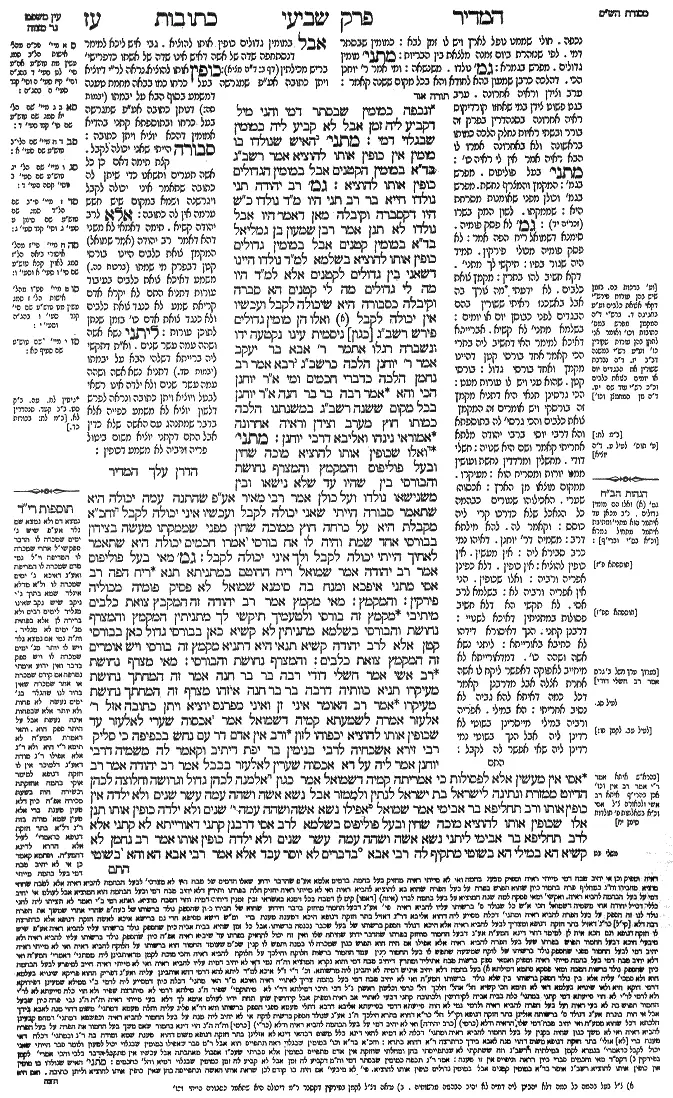
Ketubot 77a - Guemara
ונכפה כמומין שבסתר דמי והני מילי דקביע ליה זמן אבל לא קביע ליה כמומין שבגלוי דמי:
מתני׳ האיש שנולדו בו מומין אין כופין אותו להוציא אמר רשב"ג בד"א במומין הקטנים אבל במומין הגדולים כופין אותו להוציא:
גמ׳ רב יהודה תני נולדו חייא בר רב תני היו מ"ד נולדו כ"ש היו דקסברה וקיבלה מאן דאמר היו אבל נולדו לא תנן אמר רבן שמעון בן גמליאל בד"א במומין קטנים אבל במומין גדולים כופין אותו להוציא בשלמא למ"ד נולדו היינו דשאני בין גדולים לקטנים אלא למ"ד היו מה לי גדולים מה לי קטנים הא סברה וקיבלה כסבורה היא שיכולה לקבל ועכשיו אין יכולה לקבל ואלו הן מומין גדולים פירש רשב"ג [כגון] ניסמית עינו נקטעה ידו ונשברה רגלו אתמר ר' אבא בר יעקב אמר ר' יוחנן הלכה כרשב"ג רבא אמר רב נחמן הלכה כדברי חכמים ומי א"ר יוחנן הכי והא אמר רבה בר בר חנה א"ר יוחנן בכל מקום ששנה רשב"ג במשנתנו הלכה כמותו חוץ מערב וצידן וראיה אחרונה אמוראי נינהו ואליבא דרבי יוחנן:
מתני׳ ואלו שכופין אותו להוציא מוכה שחין ובעל פוליפוס והמקמץ והמצרף נחושת והבורסי בין שהיו עד שלא נישאו ובין משנישאו נולדו ועל כולן אמר רבי מאיר אע"פ שהתנה עמה יכולה היא שתאמר סבורה הייתי שאני יכולה לקבל ועכשיו איני יכולה לקבל וחכ"א מקבלת היא על כרחה חוץ ממוכה שחין מפני שממקתו מעשה בצידון בבורסי אחד שמת והיה לו אח בורסי אמרו חכמים יכולה היא שתאמר לאחיך הייתי יכולה לקבל ולך איני יכולה לקבל:
גמ׳ מאי בעל פוליפוס אמר רב יהודה אמר שמואל ריח החוטם במתניתא תנא ריח הפה רב אסי מתני איפכא ומנח בה סימנא שמואל לא פסיק פומיה מכוליה פירקין:
והמקמץ:
מאי מקמץ אמר רב יהודה זה המקבץ צואת כלבים מיתיבי מקמץ זה בורסי ולטעמיך תיקשי לך מתניתין המקמץ והמצרף נחושת והבורסי בשלמא מתניתין לא קשיא כאן בבורסי גדול כאן בבורסי קטן אלא לרב יהודה קשיא תנאי היא דתניא מקמץ זה בורסי ויש אומרים זה המקמץ צואת כלבים:
והמצרף נחושת והבורסי:
מאי מצרף נחושת רב אשי אמר חשלי דודי רבה בר בר חנה אמר זה המחתך נחושת מעיקרו תניא כוותיה דרבה בר בר חנה איזהו מצרף זה המחתך נחושת מעיקרו אמר רב האומר איני זן ואיני מפרנס יוציא ויתן כתובה אזל ר' אלעזר אמרה לשמעתא קמיה דשמואל אמר אכסוה שערי לאלעזר עד שכופין אותו להוציא יכפוהו לזון ורב אין אדם דר עם נחש בכפיפה כי סליק רבי זירא אשכחיה לרבי בנימין בר יפת דיתיב וקאמר לה משמיה דרבי יוחנן אמר ליה על דא אכסוה שערין לאלעזר בבבל אמר רב יהודה אמר רב אסי אין מעשין אלא לפסולות כי אמריתה קמיה דשמואל אמר כגון אלמנה לכהן גדול וגרושה וחלוצה לכהן הדיוט ממזרת ונתינה לישראל בת ישראל לנתין ולממזר אבל נשא אשה ושהה עמה עשר שנים ולא ילדה אין כופין אותו ורב תחליפא בר אבימי אמר שמואל אפילו נשא אשה ושהה עמה י' שנים ולא ילדה כופין אותו תנן אלו שכופין אותו להוציא מוכה שחין ובעל פוליפוס בשלמא לרב אסי דרבנן קתני דאורייתא לא קתני אלא לרב תחליפא בר אבימי ליתני נשא אשה ושהה עמה עשר שנים ולא ילדה כופין אותו אמר רב נחמן לא קשיא הא במילי הא בשוטי מתקיף לה רבי אבא (משלי כט, יט) בדברים לא יוסר עבד אלא אמר רבי אבא הא והא בשוטי
Comments from Rashi on Masechet Ketubot Page 77a
נכפה . חולי שממנו נופל לארץ ויש לו זמן לבא: כמומין שבסתר דמי . לפי שנזהרת ביום זמנה מלצאת בין הבריות: מתני' מומין גדולים . מפרש בגמרא: מתני' מומין גדולים . מפרש בגמרא: גמ' נולדו . משנשאה: ומי אמר ר' יוחנן הכי . דהלכה כרבן שמעון בהא לחודא והא בכל מקום ששנה קאמר: ערב וצידן וראיה אחרונה . ערב בגט פשוט צידן במי שאחזו קורדיקוס ראיה אחרונה בסנהדרין בפרק זה בורר ובשתי ראיות נחלק הלכה כמותו בראשונה ולא באחרונה אמרו לו הבא ראיה אמר אין לי ראיה כו': מתני' בעל פוליפוס . מפרש בגמ': המקמץ והמצרף נחשת . מפרש בגמ' וכולן מפני שאומנות מסרחת היא: שממקתו . לשון המק בשרו (זכריה יד): גמ' פסק פומיה . סימנא דשמואל ריח הפה אמר: לא פסק פומיה מכולי פירקין . תמיד היה שגור בפיו: תיקשי לך מתני' . דקא חשיב להו בתרין: מקמץ צואת כלבים . לא ידעתי מה צורך בה אבל באשכנז ראיתי ששורין בהם הבגדים לפני כבוסן יום או יומים: בשלמא מתני' לא קשיא . אברייתא דאיכא למימר האי דחשיב ליה בתרי הכי קאמר אחד בורסי קטן דהיינו מקמץ ואחד בורסי גדול: בורסי קטן . שהוא עני ויש לו עורות מעט: הכי גרסינן תנאי היא דתניא מקמץ זה בורסקי ויש אומרים זה המקמץ צואת כלבים והכי גרסי' לה בתוספתא והא דרבי יוסי ברבי יהודה מלתא אחריתי קאמר ושם היא שנויה: מקמץ צואת כלבים . לא ידעתי מה צורך בה אבל באשכנז ראיתי ששורין בהם הבגדים לפני כבוסן יום או יומים: חשלי דודי . מחשלין ומרדדין נחשת ועושין ממנו יורות ומסריח הוא: מעיקרו . ממקום מוצאו מן הארץ: אכסוהו שערי . האכילוהו שעורים כבהמה כל הנאכל שלא כדרכו קרי ליה כוסס: וקאמר לה . להא מילתא דרב: משמיה דר' יוחנן . דאיהו נמי כרב סבירא ליה: אין מעשין . אין כופין להוציא: אין כופין . דלא כפינן אפריה ורביה: ואלו שכופין . הני אין אפריה ורביה לא: ואלו שכופין . הני אין אפריה ורביה לא: בשלמא לרב אסי . לא תקשי הא דלא חשיב פסולות במתניתין דאיכא לשנויי: דרבנן קתני . הנך דאיסורא דידהו לא כתיבא באורייתא: ליתני נשא אשה ושהה כו' . דמדאורייתא לא מיחייב לאפוקה דאפשר ליקח לו אשה אחרת אצלה אבל מדרבנן קאמר דכל כמה דאיתא להא גביה לא נסיב אחריתי: הא במילי . אפריה ורביה במילי מייסרינן בשוטי לא רדינן ליה אבל הנך בשוטי נמי רדינן ליה שאי אפשר לה לקבל:
Comments from Tosafot - Ketubot 77a
אבל במומין גדולים כופין אותו להוציא. גבי איש ליכא למימר דנסתחפה שדה של אשה דאיש אינו שדה של אשתו כדפרישי' בריש מכילתין (דף ב: ד"ה מציא): אבל במומין גדולים כופין אותו להוציא . גבי איש ליכא למימר דנסתחפה שדה של אשה דאיש אינו שדה של אשתו כדפרישי' בריש מכילתין (דף ב: ד"ה מציא): כופין אותו להוציא . נראה לר"י דיוציא ויתן כתובה אע"פ שמגרשה בעל כרחו כמו בבאה מחמת טענה דמשמע בסוף הבא על יבמתו (יבמות סה:) דנותן כתובה אע"פ שמגרשה בעל כרחו ובתוספתא קתני בהדיא אמומין דהכא יוציא ויתן כתובה: סבורה הייתי שאני יכולה לקבל . קצת תימה דאם כן כל אשה תערים ותשאנו כדי שיתן לה כתובה שתאמר איני יכולה לקבל ויגרשנה ושמא במקום שיש חשש ערמה אין לה כתובה: אלא לרב יהודה קשיא . תימה דאמאי לא משני דהא דאמר רב יהודה (אמר שמואל) המקמץ צואת כלבים היינו בורסי קטן דבפרק מי שמתו (ברכות כה.) משמע דאיכא צואת כלבים בעיבוד עורות דתניא התם לא יקרא אדם קריאת שמע לא כנגד צואת כלבים ולא כנגד צואת אדם כו' בזמן שנתן לתוכן עורות: ליתני נשא אשה ושהה עמה עשר שנים . וא"ת דתקשי ליה ברייתא דשלהי הבא על יבמתו (יבמות סד.) דתניא נשא אשה ושהה עמה עשר שנים ולא ילדה אינו רשאי לבטל ויוציא ויתן כתובה ונראה לפרש דלשון יוציא לא משמע כפייה אלא בדבר שמתנהג עם האשה שלא כדין אבל התם דקתני יוציא משום ביטול פריה ורביה לא משמע דכופין: הדרן עלך המדיר
Ketubot 77a - Mishnah translated into english
And an epileptic is considered like a hidden blemish, for it is possible that nobody is aware of her ailment. The Gemara comments: And this applies only if the sickness comes at regular intervals, as the woman and her family can conceal her illness. But if the attacks do not appear at regular intervals and can occur at any time, this is considered like a visible blemish, as it is impossible that her condition is unknown to others.
MISHNA: In the case of a man who developed blemishes after marriage, the court does not force him to divorce his wife. Rabban Shimon ben Gamliel said: In what case is this statement said? It is said with regard to minor blemishes. However, with regard to major blemishes, which will be defined later in the Gemara, the court does force him to divorce her.
GEMARA: Rav Yehuda teaches the mishna in accordance with the version quoted above: The man developed blemishes after marrying his wife. Conversely, Ḥiyya bar Rav teaches: The man had blemishes prior to the marriage. The Gemara clarifies the difference between the two opinions: The one who says that the man who developed blemishes after marriage does not have to divorce his wife says that the same halakha applies all the more so to one who had blemishes beforehand, as she was aware of them and accepted them. However, the one who says that the mishna is referring to one who had blemishes prior to his marriage would say that only in that case he is not compelled to divorce her, but if they developed after the marriage this is not the halakha, as she did not marry him under such conditions.
We learned in the mishna: Rabban Shimon ben Gamliel said: In what case is this statement said? This is said with regard to minor blemishes, but with regard to major blemishes the court forces him to divorce her. The Gemara poses a question: Granted, according to the one who says that the correct version is: Developed blemishes, this is the reason that there is a difference between major and minor blemishes, as only major blemishes are grounds for divorce. But according to the one who says that the correct version is: Had blemishes, what difference is it to me whether they were major blemishes, and what difference is it to me whether they were minor ones? Either way, she was aware of them and accepted them.
The Gemara answers: In the case of major blemishes she can claim that she initially thought that she could accept a husband with such blemishes, but now that she is married she realizes that she cannot accept such an arrangement. The Gemara inquires: And what are these major blemishes of a husband that Rabban Shimon ben Gamliel considers grounds for divorce? Rabban Shimon ben Gamliel explained: For example, if his eye was blinded, or his hand cut off, or his leg broken.
It was stated: Rabbi Abba bar Yaakov said that Rabbi Yoḥanan said: The halakha is in accordance with the opinion of Rabban Shimon ben Gamliel. Rava said that Rav Naḥman said: The halakha is in accordance with the statement of the Rabbis that there is no difference between minor and major blemishes.
The Gemara poses a question: And did Rabbi Yoḥanan actually say so, that the halakha follows Rabban Shimon ben Gamliel? But Rabba bar bar Ḥanna said that Rabbi Yoḥanan said: Wherever Rabban Shimon ben Gamliel taught in our Mishna, the halakha is in accordance with him, apart from three cases: The halakha of a guarantor (Bava Batra 173b); the halakha he stated with regard to the divorce case in Sidon (Gittin 74a); and the latter of his disputes with the Rabbis with regard to the halakhot of evidence (Sanhedrin 31a). Since Rabbi Yoḥanan issued a statement that the halakha is in accordance with Rabban Shimon ben Gamliel in all but three exceptional cases, why would it be necessary for him to issue a special ruling in the present discussion? The Gemara answers: They are amora’im, and they disagree with regard to the opinion of Rabbi Yoḥanan. Rabbi Abba bar Yaakov maintains that Rabbi Yoḥanan did not issue a general directive, but rather provided a separate ruling for each case.
MISHNA: And these are the defects for which the court forces him to divorce her: One afflicted with boils; or one who has a polyp; or one who works as a gatherer, or one who works as a melder of copper, or one who works as a tanner of hides, all of whose work involves handling foul-smelling materials. Whether he had these defects before they got married, or whether they developed after they got married, the court forces them to divorce. And with regard to all of these, Rabbi Meir said: Even though he stipulated with her ahead of time that he suffers from this particular ailment or this is his line of work, she can nevertheless demand a divorce and say: I thought I could accept this issue but now I realize I cannot accept it.
And the Rabbis say: If she initially agreed she must accept it against her will, apart from a situation in which her husband is afflicted with boils. In that case the Rabbis concede that he must divorce her, because the disease consumes his flesh when they engage in marital relations. The mishna relates an additional account: An incident occurred in Sidon involving a certain tanner who died childless, and he had a brother who was also a tanner. This brother was required to enter into levirate marriage with the widow. The Sages said: She can say: I could accept living with a tanner for your brother but I cannot accept it for you, and therefore he must perform ḥalitza with her.
GEMARA: The Gemara inquires about several unclear terms which appear in the mishna: What is one who has a polyp? Rav Yehuda said that Shmuel said: This is one who has a foul odor of the nose. It was taught in a baraita: A polyp is a foul odor of the mouth. Rav Asi teaches the reverse, that Shmuel is the one who said a polyp is odor of the mouth. And he provided a mnemonic device for his opinion: Shmuel did not close his mouth from our entire chapter, meaning that he studied it and commented on it extensively. This statement was formulated in a way that contains a hint that Shmuel’s opinion involves the mouth.
The mishna taught, in the list of defects for which the husband is forced to divorce his wife: Or one who works as a gatherer. The Gemara asks: What is the meaning of a gatherer? Rav Yehuda said: This is referring to one who gathers dog excrement for use in tanning. The Gemara raises an objection from a baraita: A gatherer, this is a tanner. The Gemara responds: And according to your reasoning, the mishna itself should present a difficulty for you, as it states: One who works as a gatherer, or one who works as a melder of copper, or one who works as a tanner of hides, which indicates that the mishna holds that the gatherer and the tanner are not the same.
The Gemara explains: Granted, the mishna is not difficult, as one can say that here, where the tanner is listed separately from the one who gathers, it is referring to a large-scale tanner, and there, when the baraita states that a gatherer is a tanner, it is speaking of a small-scale tanner. But according to Rav Yehuda it is difficult. The Gemara answers: It is a dispute between tanna’im, as it is taught in a baraita: A gatherer, this is a tanner, and some say: This is one who gathers dog excrement. Rav Yehuda follows this latter opinion.
The mishna teaches: And a coppersmith and a tanner. The Gemara poses a question: What is the meaning of a coppersmith? Rav Ashi said: A kettle smith, that is, one who beats copper in order to make kettles; his handling of copper leaves him with a bad odor. Rabba bar bar Ḥanna said: This is one who hews copper from its source in the ground. The Gemara comments: It is taught in a baraita in accordance with the opinion of Rabba bar bar Ḥanna: Who is a coppersmith? This is one who hews copper from its source.
§ As the mishna discusses situations in which the court forces the husband to divorce his wife, the Gemara mentions a similar case. Rav said: A husband who says: I will not sustain my wife and I will not provide a livelihood for her, must divorce her and give her the payment of her marriage contract. Rabbi Elazar went and recited this halakha before Shmuel. Shmuel said: Feed [akhsuha] barley, animal fodder, to Elazar. In other words, he has spoken nonsense, as rather than forcing him to divorce her, it would be better for them to force him to sustain his wife.
The Gemara asks: And how does Rav respond to this argument? He bases his ruling on the principle that a person does not reside in a basket, i.e., in close quarters, with a snake. In other words, a woman cannot share her life with a man who provides for her needs only when compelled to do so by the court. The Gemara relates: When Rabbi Zeira ascended to Eretz Yisrael, he found Rabbi Binyamin bar Yefet sitting and reciting this halakha of Rav’s in the name of Rabbi Yoḥanan. He said to him: On account of this matter they fed Elazar with barley in Babylonia.
§ The Gemara continues to discuss cases in which a husband is compelled to divorce his wife. Rav Yehuda said that Rav Asi said: The court forces men to divorce their wives only if they were married to women unfit to marry them. When I recited this halakha before Shmuel, he said: This applies to cases such as, for example, a widow married to a High Priest, a divorcée or a yevama who underwent ḥalitza [ḥalutza] married to a common priest, a daughter born from an incestuous or adulterous relationship [mamzeret], or a Gibeonite woman married to an Israelite, or a daughter of an Israelite married to a Gibeonite or to a mamzer. In all of these cases the marriage is prohibited by Torah law. But if someone married a woman and stayed with her for ten years and she did not give birth, although he is guilty of neglecting the mitzva to be fruitful and multiply, the court does not force him to divorce her.
And Rav Taḥalifa bar Avimi said that Shmuel said: Even in the case of someone who married a woman and stayed with her for ten years and she did not give birth, the court forces him to divorce her, as he is in violation of a positive mitzva. The Gemara poses a question: We learned in the mishna: And these are the defects for which the court forces him to divorce his wife: One afflicted with boils or one who has a polyp. Granted, according to Rav Asi, only cases in which the court compels a divorce by rabbinic law are taught in the mishna, but those that are by Torah law, such as a widow married to a High Priest, are not taught. However, according to Rav Taḥalifa bar Avimi, let the mishna also teach that if he married a woman and stayed with her for ten years and she did not give birth, the court forces him to divorce her, as this is also a rabbinic enactment.
Rav Naḥman said: This is not difficult, as in this case the mishna discusses someone who is forced to divorce his wife by verbal means alone, but in that case it is referring to compelling him by beating him with rods. Although the court does compel a man to divorce his wife if she has not had children, the court does so only by speaking with him. Rabbi Abba strongly objects to this: Can there be a halakha of coercion by verbal means alone? But the verse states: “A servant will not be corrected by words” (Proverbs 29:19). Rather, Rabbi Abba said: Both this and that are referring to coercion by beating him with rods,
Traduction : The William Davidson digital edition of the Koren Noé Talmud, with commentary by Rabbi Adin Even-Israel Steinsaltz.