 Talmud Bavli
Ketubot 10a : Youtube
Daf TubeYoutube
1 video class :
Ketubot Page 10a
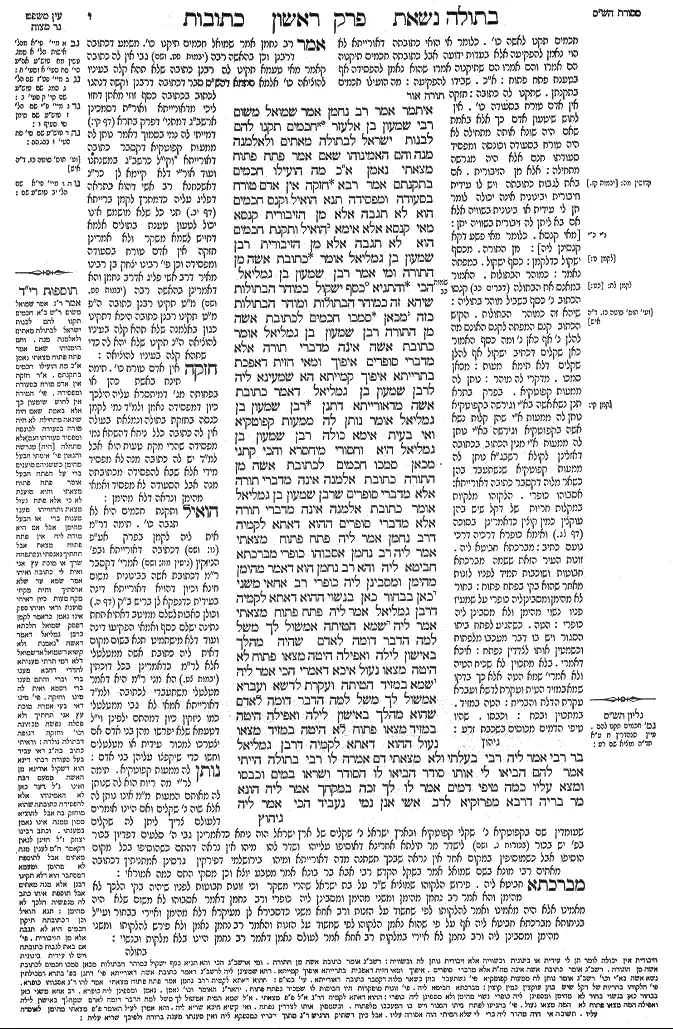
Ketubot 10a - Guemara
איתמר אמר רב נחמן אמר שמואל משום רבי שמעון בן אלעזר חכמים תקנו להם לבנות ישראל לבתולה מאתים ולאלמנה מנה והם האמינוהו שאם אמר פתח פתוח מצאתי נאמן א"כ מה הועילו חכמים בתקנתם אמר רבא חזקה אין אדם טורח בסעודה ומפסידה תנא הואיל וקנס חכמים הוא לא תגבה אלא מן הזיבורית קנסא מאי קנסא אלא אימא הואיל ותקנת חכמים הוא לא תגבה אלא מן הזיבורית רבן שמעון בן גמליאל אומר כתובת אשה מן התורה ומי אמר רבן שמעון בן גמליאל הכי והתניא (שמות כב, טז) כסף ישקול כמוהר הבתולות שיהא זה כמוהר הבתולות ומוהר הבתולות כזה מכאן סמכו חכמים לכתובת אשה מן התורה רבן שמעון בן גמליאל אומר כתובת אשה אינה מדברי תורה אלא מדברי סופרים איפוך ומאי חזית דאפכת בתרייתא איפוך קמייתא הא שמעינא ליה לרבן שמעון בן גמליאל דאמר כתובת אשה מדאורייתא דתנן רבן שמעון בן גמליאל אומר נותן לה ממעות קפוטקיא ואי בעית אימא כולה רבן שמעון בן גמליאל היא וחסורי מיחסרא והכי קתני מכאן סמכו חכמים לכתובת אשה מן התורה כתובת אלמנה אינה מדברי תורה אלא מדברי סופרים שרבן שמעון בן גמליאל אומר כתובת אלמנה אינה מדברי תורה אלא מדברי סופרים ההוא דאתא לקמיה דרב נחמן אמר ליה פתח פתוח מצאתי אמר ליה רב נחמן אסבוהו כופרי מברכתא חביטא ליה והא רב נחמן הוא דאמר מהימן מהימן ומסבינן ליה כופרי רב אחאי משני כאן בבחור כאן בנשוי ההוא דאתא לקמיה דרבן גמליאל אמר ליה פתח פתוח מצאתי אמר ליה שמא הטיתה אמשול לך משל למה הדבר דומה לאדם שהיה מהלך באישון לילה ואפילה היטה מצאו פתוח לא היטה מצאו נעול איכא דאמרי הכי אמר ליה שמא במזיד הטיתה ועקרת לדשא ועברא אמשול לך משל למה הדבר דומה לאדם שהוא מהלך באישון לילה ואפילה היטה במזיד מצאו פתוח לא היטה במזיד מצאו נעול ההוא דאתא לקמיה דרבן גמליאל בר רבי אמר ליה רבי בעלתי ולא מצאתי דם אמרה לו רבי בתולה הייתי אמר להם הביאו לי אותו סודר הביאו לו הסודר ושראו במים וכבסו ומצא עליו כמה טיפי דמים אמר לו לך זכה במקחך אמר ליה הונא מר בריה דרבא מפרזקיא לרב אשי אנן נמי נעביד הכי אמר ליה
Comments from Rashi on Masechet Ketubot Page 10a
חכמים תקנו לאשה כו' . כלומר אי הואי כתובתה דאורייתא לא הוי נאמן להפקיעה אלא בעדות ידועה אבל כתובתה חכמים תיקנוה הם אמרו והם אמרו הם שתיקנוה אמרו שהוא נאמן להפסידה אף בטענת פתח פתוח: א"כ . שבידו להפקיעה: מה הועילו חכמים בתקנתן . שתקנו לה כתובה: חזקה אין אדם טורח בסעודה כו' . אין לחוש שיטעון אדם כך אלא באמת שאם היה שונא אותה מתחילה לא היה טורח בסעודה וכונסה ומפסיד סעודתו חנם אלא היה מגרשה מתחילה: אלא מן הזיבורית . אם באת לגבות כתובתה ויש לו עידית וזיבורית ובינונית אינה יכולה לומר תן לי עידית או בינונית בשוויה אלא אם בא ליתן לה זיבורית בשוויה יתן: [מאי קנסא . כלומר מאי פשע דקא קנסינן ליה]: מן התורה . מכסף ישקול כדלקמן: כסף ישקול . במפתה נאמר: כמוהר הבתולות . האמור במאנס את הבתולה (דברים כב) קנסו הכתוב נ' כסף בשביל מוהר בתוליה: שיהא זה כמוהר הבתולות . הקיש הכתוב קנס המפתה לקנס האונס מה להלן נ' אף כאן נ' ומה כסף האמור כאן שקלים דכתיב ישקול אף להלן שקלים דלא תימא מעות: מכאן סמכו . מדקרי לה מוהר: נותן לה ממעות קפוטקיא . בפרק בתרא תנן נשא אשה בא"י וגירשה בקפוטקיא נותן לה ממעות א"י שהן קלות נשא אשה בקפוטקיא וגירשה בא"י נותן לה ממעות א"י מנין הכתוב בכתובה דאזלינן לקולא רשבג"א נותן לה ממעות קפוטקיא שנשתעבד בהן כשאר מלוה דקסבר כתובה דאורייתא: אסבוהו כופרי . הלקוהו מלקיות במקלות חריות של דקל שיש בהן עוקצין כמין קוצין כדאמרינן בסוכה (דף לג.) ואימא כופרא דרכיה דרכי נועם כתיב: מברכתא חביטא ליה . זונות העיר הזאת ששמה מברכתא חבוטות ושוכבות תמיד לפניו לזנות מאחר שהוא בקי בפתח פתוח: בחור לא מהימן ומסבינן ליה כופרי על שמעיז פניו נשוי מהימן ולא מסבינן ליה כופרי: הטה . כשהגיע לפתח ביתו הסגור ויש בו דבר מעכבו מלפתוח וכשמטין אותו לצדדין נפתח: איכא דאמרי . בלא מתכוין לא שכיח הטיה ולא אמרי' שמא הטה אלא כך בדקו שמא במזיד הטית ועקרת לדשא ועברא עקרת הדלת והבריח: הטה במזיד . במתכוין ובכח: וכבסו . שהיו טיפי הדמים מכוסים בשכבת זרע:
Comments from Tosafot - Ketubot 10a
אמר רב נחמן אמר שמואל חכמים תיקנו כו' . משמע דכתובה דרבנן וכן בהאשה רבה (יבמות פט. ושם) גבי אין לה כתובה קאמר מאי טעמא תקינו לה רבנן כתובה שלא תהא קלה בעיניו להוציאה כו' אלמא סתמא דהש"ס סבר דכתובה דרבנן וקשה דנהגו לכתוב בכתובה כסף זוזי מאתן דחזו ליכי מדאורייתא ואור"ת דסמכינן ארשב"ג דמתני' דפרק בתרא (דף קי:) דמייתי לה נמי בסמוך דאמר נותן לה ממעות קפוטקיא דקסבר כתובה דאורייתא וקי"ל כרשב"ג במשנתנו ועוד אור"י דלא קיימא לן כר"נ דאשכחנא רב אשי דהוא בתראה דפליג עליה כדמתרץ לקמן ברייתא (כתובות דף יב.) תני כל שלא מושמש אינו יכול לטעון טענת בתולים אלמא דחייש לשמא משקר ולא אמרינן חזקה אין אדם טורח בסעודה ומפסידה וכן פי' רבינו יצחק בן רבינו מאיר דרב אשי פליג אדרב נחמן והא דאמרינן בהאשה רבה (יבמות פט. ושם) מ"ט תקינו רבנן כתובה ה"פ מ"ט תקינו רבנן כתובה היכא דתקינו כגון באלמנה שלא תהא קלה בעיניו להוציאה ה"נ תקינו שלא יהא לה כדי שתהא קלה בעיניו להוציאה: חזקה אין אדם טורח כו' . תימה תינח באשת כהן או בפחותה מג' דמיתסרא עליה הילכך כיון דמפסידה נאמן ולמ"ד נמי לקמן כנסה בחזקת בתולה ונמצאת בעולה אין לה כתובה כלל ניחא דהשתא נמי מפסידה שהרי מקח טעות הוא אבל למ"ד יש לה כתובה מנה לא מפסיד מידי אלא שבא להפסידה מכתובתה מנה אבל הסעודה לא מפסיד ואמאי מהימן ונראה דלא מהימן: הואיל ותקנת חכמים היא לא תגבה כו' . תימה דר"מ אית ליה לקמן בפרק אע"פ (כתובות נו: ושם) דכתובה דאורייתא ובפ' הניזקין (גיטין מח: ושם) אמרי' דקסבר ר"מ דכתובת אשה בבינונית משום חינא וכיון דהויא דאורייתא דינה בעידית כדנפקא לן בריש ב"ק (דף ה.) וכולן כאבות לשלם ממיטב דאתיא תחת נתינה ישלם כסף ואמאי הפקיעו דינה ועוד דלא מישתמיט תנא בשום מקום דאית ליה כתובת אשה ממטלטלי אלא לר"מ כדאמרינן בכל דוכתין (יבמות צט.) הא מני ר"מ היא דאמר מטלטלי משתעבדי לכתובה ולמ"ד דאורייתא אמאי לא גבי ממטלטלי כמו ניזקין כיון דמהתם ילפינן וי"ל דטעמא שלא יפרשו מהן בני אדם אם יצטרכו למכור עידית או מטלטלים וחשו כדי שיקפצו עליהן בני אדם: נותן לה ממעות קפוטקיא . תימה לר"י מה ריוח הוא לה שנותן לה מאותם המעות מ"מ אינו נותן לה אלא שוה נ' שקלים ואם היינו אומרים דלעולם צריך ליתן לה שקלים שעומדין שם בקפוטקיא נ' שקלי קפוטקיא ובארץ ישראל נ' שקלים של ארץ ישראל הוה ניחא כדאמרינן גבי ה' סלעים דפדיון בכור בפ' יש בכור (בכורות נ. ושם) לישדר מר תילתא אחרינא דאוסיפו עלייהו ושדר להו מיהו אין נראה דהתם כשהוסיפו בכל מקום הוסיפו אבל כשמוסיפין במקום אחד אין נראה שבכך תשתנה מדה דאורייתא ומיהו בירושלמי דפירקין גרסינן אמתניתין דכתובה מאתים רבי מונא בשם שמואל אמר בשקל הקדש רבי אבא בר בונא אמר מטבע יוצא וכן מסקי התם כמה אמוראי: מברכתא חביטא ליה . פירוש הלקוהו שמוציא ש"ר על בת ישראל שהרי משקר וכי זונות חבוטות לפניו שיהיה בקי הלכך לא מהימן והא אמר רב נחמן מהימן ומשני מהימן ומסבינן ליה כופרי ורב נחמן דאמר אסבוהו לא משום שלא היה מאמינו אלא היה מאמינו ואמר להלקותו לפי שחשוד על הזנות ורב אחא משני כדסבירא לן מעיקרא דלא מהימן ואיירי בבחור ועי"ל בניחותא מברכתא חביטא ליה אף על פי שהוא נאמן הלקוהו לפי שחשוד על הזנות והאמר רב נחמן נאמן ולא פירש להלקותו ומשני מהימן ומסבינן ליה ורב נחמן לא איירי במלקות רב אחא אמר לעולם נאמן דאמר רב נחמן היינו בלא מלקות ובנשוי:
Ketubot 10a - Mishnah translated into english
§ It was stated: Rav Naḥman said that Shmuel said in the name of Rabbi Shimon ben Elazar: The Sages instituted the marriage contract for Jewish women: For a virgin two hundred dinars and for a widow one hundred dinars. And they deemed the groom credible in that if he says with regard to his virgin bride: I encountered an unobstructed orifice and she is not a virgin, he is deemed credible, causing her to lose her marriage contract. The Gemara asks: If so, and the Sages deemed him credible, what did the Sages accomplish in their ordinance that the marriage contract of a virgin is two hundred dinars, if his claim that she is not a virgin is effective?
Rava said: The ordinance is effective due to the presumption that a person does not exert himself to prepare a wedding feast and then cause it to be lost. Investing in the wedding preparations clearly indicates that the groom’s intention is to marry the bride and rejoice with her. If, nevertheless, he claims that she is not a virgin, apparently he is telling the truth.
§ A Sage taught in a baraita: Since payment of the marriage contract is a penalty instituted by the Sages, she may collect only from the husband’s land of the most inferior quality. The Gemara asks: A penalty? What penalty is there in a marriage contract? Rather, emend the baraita and say: Since it is a rabbinic ordinance and not a Torah obligation, she may collect only from the husband’s land of the most inferior quality. Rabban Shimon ben Gamliel says: The marriage contract of a woman is an obligation by Torah law.
The Gemara asks: And did Rabban Shimon ben Gamliel say that? But isn’t it taught in a baraita that it is written with regard to a seducer: “He shall pay money according to the dowry of virgins” (Exodus 22:16)? The Torah establishes that this fine will be like the dowry of a virgin, and that the dowry of a virgin will be like this fine, i.e., fifty silver sela, or two hundred dinars. From here the Sages based their determination that a woman’s marriage contract is an obligation by Torah law. Rabban Shimon ben Gamliel says: The marriage contract of a woman is not an obligation by Torah law, but is by rabbinic law.
The Gemara resolves the contradiction between the statements of Rabban Shimon ben Gamliel: Reverse the attribution of opinions in this baraita. The Gemara asks: And what did you see that led you to reverse the attribution of opinions in the latter baraita? Reverse the attribution of opinions in the former, in the baraita, and say that Rabban Shimon ben Gamliel is the one who holds that the marriage contract is a rabbinic ordinance.
The Gemara answers: The reason is that we learned that it is Rabban Shimon ben Gamliel who said elsewhere that the marriage contract of a woman is an obligation by Torah law, as we learned in a mishna (110b) that Rabban Shimon ben Gamliel says that if a man marries a woman in Cappadocia, where the currency is more valuable, and he divorces her in Eretz Yisrael, he gives her payment for the marriage contract from the money of Cappadocia. From the fact that he is obligated to pay the marriage contract in the currency of the place where he undertook the obligation, apparently the marriage contract of a woman is an obligation by Torah law.
And if you wish, say instead that the entire latter baraita is in accordance with the opinion of Rabban Shimon ben Gamliel, but the baraita is incomplete and it is teaching the following: From here, the Sages based their determination that a woman’s marriage contract in the case of a virgin is an obligation by Torah law. However, the marriage contract of a widow is not an obligation by Torah law but is an ordinance by rabbinic law, as Rabban Shimon ben Gamliel says: The marriage contract of a widow is not an obligation by Torah law but is an ordinance by rabbinic law.
§ The Gemara relates: A certain man who had never been married came before Rav Naḥman and said to him: I encountered an unobstructed orifice when I consummated the marriage. Rav Naḥman said in his regard: Flog him with palm branches [kufrei]; prostitutes [mevarakhta] are common around him. As he was never previously married, how was he able to determine whether or not the orifice was unobstructed, if he did not gain experience with prostitutes?
The Gemara asks: But isn’t Rav Naḥman he who said that he is deemed credible when he claims that he encountered an unobstructed orifice? The Gemara answers: Yes, he is deemed credible, and nevertheless, we flog him with palm branches. Rav Aḥai answered: Here, in the case where he is flogged, it is with regard to a bachelor, who is not accorded credibility, because he lacks experience. There, in the case where he is accorded credibility, it is with regard to one who has been married.
The Gemara relates a similar incident from an earlier era: A certain man who came before Rabban Gamliel said to him: I encountered an unobstructed orifice. Rabban Gamliel said to him: Perhaps you diverted your approach and therefore, you encountered no obstruction? I will tell you a parable to which this is similar. It is similar to a man who was walking in the blackness of night and darkness and he arrived at the entrance to the house; if he diverts the object preventing the door from opening, he finds it open; if he does not divert it, he finds it locked. Perhaps you too diverted your approach and entered from a different angle and that is why you did not encounter an obstruction.
Some say this is what Rabban Gamliel said to him: Maybe you diverted your approach intentionally and you displaced the door and the bolt. I will tell you a parable to which this is similar. It is similar to a man who is walking in the blackness of night and darkness and he arrives at his entrance. If he diverts intentionally, he finds it open; if he does not divert intentionally, he finds it locked.
The Gemara relates: A certain man who came before Rabban Gamliel bar Rabbi Yehuda HaNasi said to him: My teacher, I engaged in intercourse and did not find blood. The bride said to him: My teacher, I was a virgin. Rabban Gamliel bar Rabbi Yehuda HaNasi said to them: Bring me that cloth [sudar] on which you consummated the marriage. They brought him the cloth, and he soaked it in water and laundered it and found upon it several drops of blood from the rupture of the hymen. Rabban Gamliel bar Rabbi Yehuda HaNasi said to the groom: Go take possession of your acquisition, as she was a virgin and there is no need for concern.
Huna Mar, son of Rava, from Parzakya, said to Rav Ashi: Let us do so as well in similar cases and examine whether there is blood that is obscured by semen or another substance. Rav Ashi said to him:
Traduction : The William Davidson digital edition of the Koren Noé Talmud, with commentary by Rabbi Adin Even-Israel Steinsaltz.