 Talmud Bavli
The learning on the whole site is dedicated : L'ilui Nishmat Avraham Ben Simha
The learning on the whole site is dedicated : L'ilui Nishmat אליעזר בן רחל
The learning on the whole site is dedicated : For the success of Elyahou ben H'anna & family
Ketubot 62a : Youtube
Daf TubeYoutube
1 video class :
Ketubot Page 62a
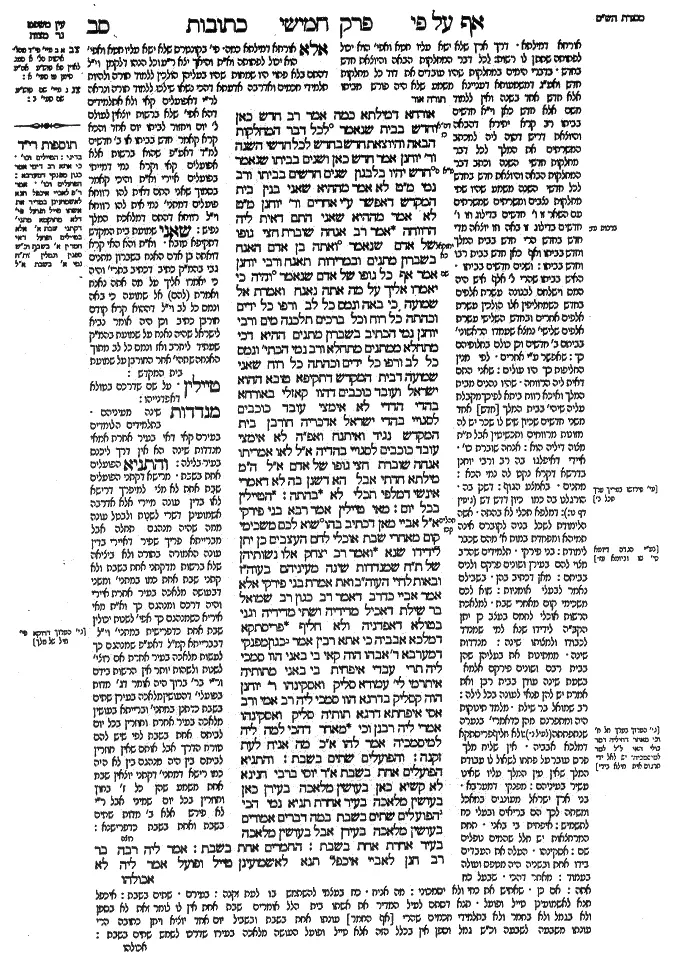
Ketubot 62a - Guemara
אורחא דמילתא כמה אמר רב חדש כאן וחדש בבית שנאמר (דברי הימים א כז, א) לכל דבר המחלקות הבאה והיוצאת חדש בחדש לכל חדשי השנה ור' יוחנן אמר חדש כאן ושנים בביתו שנאמר (מלכים א ה, כח) חדש יהיו בלבנון שנים חדשים בביתו ורב נמי מ"ט לא אמר מההיא שאני בנין בית המקדש דאפשר ע"י אחרים ור' יוחנן מ"ט לא אמר מההיא שאני התם דאית ליה הרווחה אמר רב אנחה שוברת חצי גופו של אדם שנאמר (יחזקאל כא, יא) ואתה בן אדם האנח בשברון מתנים ובמרירות תאנח ורבי יוחנן אמר אף כל גופו של אדם שנאמר (יחזקאל כא, יב) והיה כי יאמרו אליך על מה אתה נאנח ואמרת אל שמועה כי באה ונמס כל לב ורפו כל ידים וכהתה כל רוח וכל ברכים תלכנה מים ורבי יוחנן נמי הכתיב בשברון מתנים ההיא דכי מתחלא ממתנים מתחלא ורב נמי הכתי' ונמס כל לב ורפו כל ידים וכהתה כל רוח שאני שמועה דבית המקדש דתקיפא טובא ההוא ישראל ועובד כוכבים דהוו קאזלי באורחא בהדי הדדי לא אימצי עובד כוכבים לסגויי בהדי ישראל אדכריה חורבן בית המקדש נגיד ואיתנח ואפ"ה לא אימצי עובד כוכבים לסגויי בהדיה א"ל לאו אמריתו אנחה שוברת חצי גופו של אדם א"ל ה"מ מילתא חדתי אבל הא דשנן בה לא דאמרי אינשי דמלפי תכלי לא בהתה:
הטיילין בכל יום:
מאי טיילין אמר רבא בני פירקי א"ל אביי מאן דכתיב בהו (תהלים קכז, ב) שוא לכם משכימי קום מאחרי שבת אוכלי לחם העצבים כן יתן לידידו שנא ואמר רב יצחק אלו נשותיהן של ת"ח שמנדדות שינה מעיניהם בעוה"ז ובאות לחיי העוה"ב ואת אמרת בני פירקי אלא אמר אביי כדרב דאמר רב כגון רב שמואל בר שילת דאכיל מדידיה ושתי מדידיה וגני בטולא דאפדניה ולא חליף פריסתקא דמלכא אבביה כי אתא רבין אמר כגון מפנקי דמערבא ר' אבהו הוה קאי בי באני הוו סמכי ליה תרי עבדי איפחית בי באני מתותיה איתרמי לי' עמודא סליק ואסקינהו ר' יוחנן הוה קסליק בדרגא הוו סמכי ליה רב אמי ורב אסי איפחתא דרגא תותיה סליק ואסקינהו אמרי ליה רבנן וכי מאחר דהכי למה ליה למיסמכיה אמר להו א"כ מה אניח לעת זקנה:
והפועלים שתים בשבת:
והתניא הפועלים אחת בשבת א"ר יוסי ברבי חנינא לא קשיא כאן בעושין מלאכה בעירן כאן בעושין מלאכה בעיר אחרת תניא נמי הכי הפועלים שתים בשבת במה דברים אמורים בעושין מלאכה בעירן אבל בעושין מלאכה בעיר אחרת אחת בשבת:
החמרים אחת בשבת:
אמר ליה רבה בר רב חנן לאביי איכפל תנא לאשמועינן טייל ופועל אמר ליה לא
Comments from Rashi on Masechet Ketubot Page 62a
אורחא דמילתא . דרך ארץ שלא ישא עליו חטא ואפי' הוא יכול לפתותה שתתן לו רשות: לכל דבר המחלקות הבאה והיוצאת חדש בחדש . בדברי הימים במחלקות שהיו עובדים את דוד כל מחלקות חדש ואע"ג דמשמעותא דעניינא משמע שלא היה פורש מביתו אלא חדש אחד בשנה ואין ללמוד משם אלא חדש כאן וי"א חדשים בביתו רב קרא יתירא דהבאה והיוצאת דריש דהוה ליה למכתב המשרתים את המלך לכל דבר מחלקות חדשי השנה וכתב דבר המחלקות הבאה והיוצאת חדש בחדש לכל חדשי השנה משמע שהיו שתי מחלקות נצבים ומשרתים שמשרתים עם השאר זו ו' חדשים בדילוג וזו ו' חדשים בדילוג זו באה וזו יוצאה מדי חדש בחדש הרי חדש בבית המלך וחדש בביתו ואף כאן חדש בבית רבו וחדש בביתו: ושנים חדשים בביתו . האיש בביתו שהרי ל' אלף איש היה המס וישלחם לבנונה עשרת אלפים בחדש כשמחליפין אלו הולכין עשרת אלפים אחרים ובחדש השלישי עשרת אלפים שלישי' נמצא שעמדו הראשוני' בביתם ב' חדשים וכן כולם בחלופיהם כך: שאפשר ע"י אחרים . לפי מנין החליפות כך היו עולים: שאני התם דאית ליה הרווחה . שהיו נהנים מבית המלך ואיכא רווח ביתא לפיכך מקבלת עליה שיהי' בבית המלך [חדש] אחד משני חדשים שכיון שיש לו שכר יש לה מזונות מרווחים ותכשיטין אבל ת"ת מצוה דיליה הוא: אנחה שוברת כו' . איידי דאיפלגו בה רב ורבי יוחנן בדרשא דקרא נקט לה נמי הכא: מתנים . באמצע הגוף: דשנן בה . הורגלנו בה כמו כיון דדש דש (גיטין דף נו:): דמלפא תכלי לא בהתה . אשה הלימודת לשכל בניה לקוברם אינה תמיהא ומפחדת במות א' מהם שכבר לימודת: בני פירקי . תלמידים שהרב מצוי להם בעירן ושונים פרקם ולנים בביתם: מאן דכתיב בהן . בשבילם נאמר לבעלי אומניות: שוא לכם משכימי קום מאחרי שבת . למלאכת הרשות אוכלי לחמם בעצב כן יתן הקב"ה לידידו שנא למי שמנדד לכבודו ולמצותו שינה: מנדדות שינה . ממתינות את בעליהן שהן בבית רבם ושונים פירקס אלמא בשעת שינה עודן בבית רבן ואת אמרת יש להן פנאי לעונה בכל לילה: רב שמואל בר שילת . מלמד תינוקות היה ומתפרנס מהן כדאמרי' בנערה שנתפתתה (לעיל כתובות נ.): ולא חליף פריסתקא דמלכא אבביה . אין שליח מלך פרס עובר על פתחו לשאול לו עבודת המלך שאין עין המלך עליו שאינו עשיר בעיניהם: מפנקי דמערבא . בני ארץ ישראל מעונגים במאכל ומשתה לכך הם בריאים ובעלי כח לתשמיש: איפחית בי באני . תחת המרחצאות יש חלל שהמים נופלים שם: אסקינהו . העלה את העבדים בידו אחת ובשניה היה מטפס ועולה בעמוד: מאחר דהכי . שבעל כח אתה: אם כן . שאתיש את כחי ולא יסמכוני: מה אניח . כח בעצמי להשתמש בו לעת זקנה: בעירם . שתים בשבת: איכפל תנא לאשמועינן טייל ופועל . תנא דסתם לעיל המדיר את אשתו בית הלל אומרים שבת אחת אין לו לומר זאת לא בספן ולא בגמל ולא בחמר ולא בתלמידי חכמים שהרי [אף החמר] עונתו אחת בשבת ובשביל יום אחד יוציא ויתן כתובה הרי עונתו משבעה לשבעה וכ"ש גמל וספן אין בכלל הזה אלא טייל ופועל העושה מלאכה בעירו שדרכו לשמש שתים בשבת:
Comments from Tosafot - Ketubot 62a
אלא אורחא דמילתא כמה . פי' בקונטרס שלא ישא עליו חטא ואפי' הוא יכול לפתותה וא"ת והיאך יצא ר"ע וכל הנהו דלקמן וי"ל דהתם בלא פתוי היו שמחות שהיו בעליהן הולכין ללמוד תורה ולהיות תלמידי חכמים ואדרבה אדעתא דהכי נשאו שילכו ללמוד תורה ונראה לר"י דאפועלים קאי ולא אתלמידים דהא אפי' שלא ברשות יוצאין לעולם ל' יום ויחזור לביתו יום אחד והכא קרא קאמר חדש בביתו או ב' חדשים למ"ד דאע"פ שהוא ברשות אלא אפועלים קאי וקרא נמי דמייתי בפועלים איירי וא"ת והיכי קאמר בסמוך שאני התם דאית להו רווחא פועלים דמתני' נמי אית להו רווחא וי"ל רווחא דהתם דמלאכת המלך נפיש: שאני שמועת בית המקדש דתקיפא טובא . וא"ת והא האי קרא דואתה בן אדם האנח בשברון מתנים גבי בהמ"ק כתיב דכתיב בתרי' והיה כי יאמרו אליך על מה אתה נאנח ואמרת (להם) אל שמועה כי באה ונמס כל לב וי"ל דההוא קרא קודם חורבן כתיב וכן היה אומר נביא לישראל שהיה נאנח על שמועת בהמ"ק שעתיד ליחרב ואז ונמס כל לב מתוך האנחה שתהי' אחר החורבן על שמועת בית המקדש: טיילין . על שם שדרכם בטולא דאפדנייהו: מנדדות שינה מעיניהם . בתלמידים הלומדים בעירם קאי דאי בעיר אחרת אמאי מנדדות שינה הא אין דרך ליכנס בעיר בלילה: והתניא הפועלים אחת בשבת . מרישא דקתני הפועלים שבת אחת לא מצי למיפרך דרישא לאו בדין עונה מיירי אלא אדרבה אשמועינן דשרי לשנות ולבטל עונה ממה שהיה מנהגם תחלה אבל מברייתא פריך שפיר דאיירי בדין עונה האמורה בתורה ולא ביציאה שלא ברשות מדקתני אחת בשבת ולא קתני שבת אחת כמו במתני' ומשני דבעושה מלאכה בעיר אחרת איירי והיה דרכם ומנהגם כך וא"ת מאי איריא כשמנהגם כך אפי' לשנות יכולין שבת אחת כדפרישית במתני' וי"ל דבברייתא קמ"ל דאע"פ שמנהגם כך לעשות מלאכה בעיר אחרת אם רוצי' לשנות ולשהות יותר אין הרשות בידם ור"י בר' ברוך היה אומר דג' מדות בפועלי' דהעושין מלאכה בעירן שתים בשבת כדתנן במתני' וברייתא בעושין מלאכה בעיר אחרת וחוזרין בכל יום לביתם אחת בשבת לפי שיש להם טורח הדרך אבל אותם שאין חוזרין לביתם בין היה מנהגם בין לא היה כמו רישא דמתני' דקתני יוצאין שבת אחת משמע שהן כל ז' בחוץ וחוזרין בכל יום שמיני אבל ר"י לא פירש אלא ב' מדות שתים בשבת ואחת בשבת כדפרישנא:
Ketubot 62a - Mishnah translated into english
The Gemara explains its query: Although a man can legally make any agreement with his wife to limit her conjugal rights, how much is an acceptable manner for this matter? Rav said: The husband may spend a month here, in the study hall, and then must spend a month at home. The allusion to this is as it is stated with regard to reserve units serving in King David’s army: “In any matter of the courses, which came in and went out month by month throughout all the months of the year” (I Chronicles 27:1). And Rabbi Yoḥanan said: He may spend one month here, in the study hall, and then two months in his home, as it is stated with regard to workers who worked in the construction of the Temple: “A month they were in Lebanon, and two months at home” (I Kings 5:28).
The Gemara asks: And what is the reason that Rav did not also say a proof from that source that Rabbi Yoḥanan quoted? The Gemara answers: The construction of the Temple is different, since it is possible for this work to be performed by others, as there were many people involved in it, but with regard to Torah study, which cannot be performed by others, he is given permission to spend a month here and a month there. The Gemara further questions: And what is the reason that Rabbi Yoḥanan did not say a proof from that source that Rav quoted? The Gemara answers: There, with regard to King David, it is different, since he gains profit from working for the king; since there is profit involved, his wife might be willing to forgo his staying with her. However, in general a woman wants her husband to spend most of his time at home, so with regard to Torah study, where there is no monetary profit, she will not waive her right for as long.
§ Apropos a dispute between Rav and Rabbi Yoḥanan with regard to the construction of the Temple, the Gemara cites another dispute between them. Rav said: Groaning breaks half of a person’s body, as it is stated: “Groan, therefore, you son of man, with the breaking of your loins, groan so bitterly” (Ezekiel 21:11), which indicates that groaning breaks half of one’s body, down to his loins. And Rabbi Yoḥanan said that groaning breaks even a person’s entire body, as it is stated: “And it shall be, when they say to you: Why are you groaning? That you shall say: Due to the tiding, for it comes, and every heart shall melt, and all hands shall be slack, and every spirit shall be faint, and all knees shall drip with water” (Ezekiel 21:12).
The Gemara asks: And why doesn’t Rabbi Yoḥanan also say that it breaks half of one’s body? Isn’t it written: “With the breaking of your loins,” implying that it does not break the entire body? The Gemara answers: This does not mean that the breakage only reaches the loins, but rather that when the sigh begins to affect a person, it begins from his loins. The Gemara asks: And why doesn’t Rav also say that it breaks the entire body? Isn’t it written: “And every heart shall melt, and all hands shall be slack, and every spirit shall be faint,” which indicates that groaning causes the entire body to break? The Gemara answers: The news with regard to the destruction of the Temple is different, as it is extremely crushing and causes great anguish, but in general a sigh causes only half of the body to break.
It is related that a certain Jew and a gentile were walking along the road together. The gentile could not keep up with the Jew, who was walking faster, and he therefore reminded him of the destruction of the Temple in order to make the Jew feel sorrowful and slow down. The Jew sighed and groaned, but even so the gentile could not keep up with him, as the Jew was still walking faster. The gentile said to him: Don’t you say that groaning breaks half of a person’s body? Why didn’t it affect you? He said to him: This applies only with regard to a new sorrowful affair, but this, from which we have suffered repeatedly and to which we have become accustomed, does not affect us as much, as people say: One who is used to being bereaved of her children does not panic [bahata] when one of them dies, and similarly, one who is used to a tragedy is not as devastated when being reminded of it.
§ The mishna said that men of leisure must engage in marital relations with their wives every day. The Gemara asks: What is meant by the term men of leisure? Rava said: These are students of Torah who go daily to review their lectures at a local study hall and return home each evening. Abaye said to him: Wives of Torah scholars are those about whom it is written: “It is vain for you to rise early and sit up late, you that eat the bread of toil, so He gives to His beloved in sleep” (Psalms 127:2), and Rabbi Yitzḥak said in explanation of this verse: These are the wives of Torah scholars who deprive their eyes of sleep in this world and reach the life of the World-to-Come. This indicates that Torah scholars exert themselves greatly in their studies and are not home in the evenings, and you say that the students reviewing their lectures are men of leisure, whose wives have conjugal rights for every night?
Rather, Abaye said: The mishna should be explained in accordance with the opinion of Rav, as Rav said: This is referring to a man such as Rabbi Shmuel bar Sheilat, who ate his own food, drank his own drinks, slept in the shade of his own house, and the king’s tax collector [peristaka] did not pass by his door, as they did not know that he was a man of means. A man like this, who has a steady income and no worries, is called a man of leisure. When Ravin came from Eretz Yisrael he said: For example, the wealthy, pampered men in the West, Eretz Yisrael, are called men of leisure. Due to the time they have available and the richness of their diet, they have the ability to satisfy their wives every night.
To illustrate this point, the Gemara relates two incidents demonstrating the health and strength of the inhabitants of Eretz Yisrael: Rabbi Abbahu was once standing in the bathhouse and two slaves were supporting his walking. The bathhouse collapsed under him and was destroyed. He found a pillar, stood on it and got out, and pulled them both up with him. Similarly, Rabbi Yoḥanan was once going up stairs, and Rav Ami and Rav Asi were supporting him. The stair collapsed under him, but he went up and pulled them both up with him. The Sages said to him: Since it is clear that you are so strong, why do you need people to support you? He said to them: If so, if I were to expend all my strength now, what will I leave for myself in my old age?
§ The mishna said: The set interval for laborers to fulfill their conjugal obligations to their wives is twice a week. The Gemara asks: Isn’t it taught in a baraita: For laborers, once a week? Rabbi Yosei, son of Rabbi Ḥanina, said: This is not difficult: Here, the case is where they work in their own city. There, the case is where they work in another city. This is also taught in the Tosefta (5:6): For laborers, twice a week. In what case is this statement said? It is when they work in their own city, but when they work in another city, the set interval for their conjugal obligations is once a week.
§ The mishna said: The set interval for donkey drivers is once a week, and for other professions it is even less frequent. Rabba bar Rav Ḥanan said to Abaye: Did the tanna go to all that trouble just to teach us the halakha for a man of leisure and for a laborer? According to the set intervals given for conjugal obligations, it seems that the halakha that one who vowed to prohibit his wife from conjugal relations for longer than a week must divorce her is referring only to a man of leisure or a laborer, whose set interval for conjugal relations is less than that period. However, for other people, whose set interval is once a month or even less frequent, there should be no need to divorce the wife, since the vow does not deprive her of conjugal rights for longer than she would have been deprived anyway. He said to him: No,
Traduction : The William Davidson digital edition of the Koren Noé Talmud, with commentary by Rabbi Adin Even-Israel Steinsaltz.