 Talmud Bavli
Ketubot 90a : Youtube
Daf TubeYoutube
1 video class :
Ketubot Page 90a
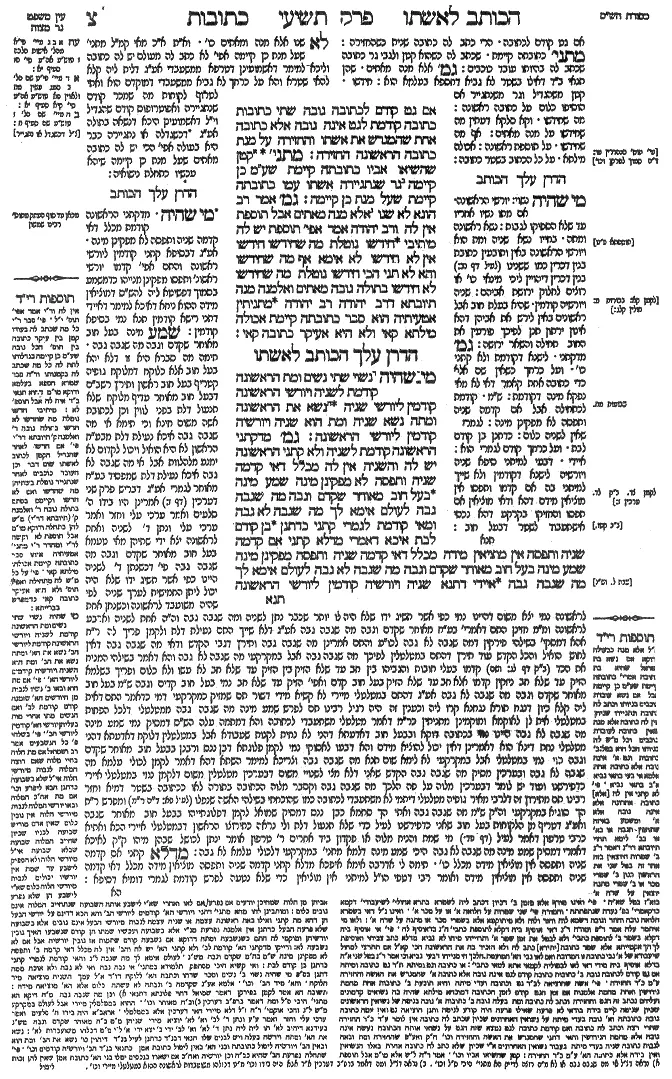
Ketubot 90a - Guemara
אם גט קודם לכתובה גובה שתי כתובות כתובה קודמת לגט אינה גובה אלא כתובה אחת שהמגרש את אשתו והחזירה על מנת כתובה הראשונה החזירה:
מתני׳ קטן שהשיאו אביו כתובתה קיימת שע"מ כן קיימה גר שנתגיירה אשתו עמו כתובתה קיימת שעל מנת כן קיימה:
גמ׳ אמר רב הונא לא שנו אלא מנה מאתים אבל תוספת אין לה ורב יהודה אמר אפי' תוספת יש לה מיתיבי חידשו נוטלת מה שחידשו חידשו אין לא חידשו לא אימא אף מה שחידשו והא לא תני הכי חידשו נוטלת מה שחידשו לא חידשו בתולה גובה מאתים ואלמנה מנה תיובתא דרב יהודה רב יהודה מתניתין אטעיתיה הוא סבר כתובתה קיימת אכולה מילתא קאי ולא היא אעיקר כתובה קאי:
הדרן עלך הכותב לאשתו
מתני׳ מי שהיה נשוי שתי נשים ומת הראשונה קודמת לשניה ויורשי הראשונה קודמין ליורשי שניה נשא את הראשונה ומתה נשא שניה ומת הוא שניה ויורשיה קודמין ליורשי הראשונה:
גמ׳ מדקתני הראשונה קודמת לשניה ולא קתני הראשונה יש לה והשניה אין לה מכלל דאי קדמה שניה ותפסה לא מפקינן מינה שמע מינה בעל חוב מאוחר שקדם וגבה מה שגבה גבה לעולם אימא לך מה שגבה לא גבה ומאי קודמת לגמרי קתני כדתנן בן קודם לבת איכא דאמרי מדלא קתני אם קדמה שניה ותפסה אין מוציאין מידה מכלל דאי קדמה שניה ותפסה מפקינן מינה שמע מינה בעל חוב מאוחר שקדם וגבה מה שגבה לא גבה לעולם אימא לך מה שגבה גבה איידי דתנא שניה ויורשיה קודמין ליורשי הראשונה
Comments from Rashi on Masechet Ketubot Page 90a
אם גט קודם לכתובה . הרי כתב לה כתובה שנית כשהחזירה: מתני' כתובתה קיימת . שכתב לה כשהוא קטן ולגבי גר כתובה שכתב לה בהיותו עובד כוכבים: גמ' אלא מנה מאתים . שהן תנאי ב"ד דאילו בשטר לא גביא דחספא בעלמא הוא: חידשו . קטן משהגדיל וגר משנתגייר אם הוסיפו כלום על כתובה ראשונה: מה שחידשו . וקא סלקא דעתין מה שחידשו על מנה מאתים: אף מה שחידשו . על תוספת ראשונה: אכולה מילתא . על כל הכתוב בשטר כתובה: הדרן עלך הכותב מתני' מי שהיה נשוי: יורשי הראשונה . אם מתו נשיו אחריו עד שלא הספיקו לגבות: נשא ראשונה ומתה . בחייו נשא שניה ומת הוא ויורשי הראשונה באין ותובעין כתובת בנין דכרין כמו ששנינו (לעיל כתובות דף נב:) בנין דכרין דיהויין ליכי מינאי כו' או רוצים לחלוק ירושת אביהם: שניה ויורשיה קודמין . שהיא בעלת חוב אבל ראשונים באין לירש את אביהן דהא אינון ירתון תנן לפיכך פורעין את החוב תחילה והשאר ירושה: גמ' מדקתני . לישנא דקודמת ולא קתני כו'. ועל כרחך כשאין שם אלא כדי כתובה אחת קאמר דאי לא מאי נפקא מינה דקודמת: ש"מ . קודמת לכתחילה אבל אם קדמה שניה ותפסה לא מפקינן מינה: לגמרי . שאין לשניה כלום: כדתנן בן קודם לבת . ועל כרחך קודם לגמרי הוא: איידי . דבעי למיתני סיפא שניה ויורשיה לישנא דקודמין ולא שייך למיתני בה אם קדמו ותפסו אין מוציאין מידם דהא ודאי מוציאין אם תפסו והחזיקו בקרקע דהא נכסי אישתעבוד לשטר דבעל חוב:
Comments from Tosafot - Ketubot 90a
לא שנו אלא מנה ומאתים כו' . וא"ת א"כ מאי קמ"ל מתני' שעל מנת כן קיימה אפי' לא כתב לה מעולם יש לה כתובה וליכא למימר דאשמועינן דטרפא ממשעבדי אע"ג דלית ליה קלא להאי שטרא והא על כרחך לא גביא ממשעבדי דמוקדם הוא ואתי לטרוף לקוחות מה שמכר קודם שנתגיירה ואפוטרופוס קודם שהגדיל וי"ל דאשמועינן היכא דנשאה בתולה אע"ג דכשגדלה או נתגיירה כבר היא בעולה אפי' הכי יש לה כתובה מאתים שעל מנת כן קיימה שיהא עכשיו כתחלת נישואיה: הדרן עלך הכותב מתני' מי שהיה. (מכאן עד הסוף מועתק מתוס' ר' שמשון) מדקתני הראשונה קודמת מכלל דאי קדמה שניה ותפסה לא מפקינן מינה. אע"ג דבסיפא קתני קודמין ליורשי ראשונה והתם אפי' קדמו יורשי ראשונ' ותפסו מפקינן מנייהו כדמשמע בסמוך דפשיטא ליה להש"ס דמוציאין מידה ההוא ניחא דאיכא למימר דאיידי דתני רישא קודמין תנא נמי בסיפא קודמין: מתני' מי שהיה. (מכאן עד הסוף מועתק מתוס' ר' שמשון) מדקתני הראשונה קודמת מכלל דאי קדמה שניה ותפסה לא מפקינן מינה . אע"ג דבסיפא קתני קודמין ליורשי ראשונה והתם אפי' קדמו יורשי ראשונ' ותפסו מפקינן מנייהו כדמשמע בסמוך דפשיטא ליה להש"ס דמוציאין מידה ההוא ניחא דאיכא למימר דאיידי דתני רישא קודמין תנא נמי בסיפא קודמין: שמע מינה בעל חוב מאוחר שקדם וגבה מה שגבה גבה . תימה מה סברא היא זו דלא יהא בעל חוב אלא כלוקח דמלוקח גופיה קטריף בעל חוב ראשון ותירץ רשב"ם דבעל חוב מאוחר עדיף מלוקח שלא תנעול דלת בפני לווין וכן לכתובת אשה משום חינא וכי תימא אי מה שגבה גבה איכא נעילת דלת מבע"ח הראשון לא היא הואיל ויכול לקדום לא ימנע מלהלוות אבל אי מה שגבה לא גבה איכא נעילת דלת שמפסיד בע"ח מאוחר לגמרי אע"ג דבריש פרק שני דערכין (דף ז:) אמרינן היו בידו ה' סלעים ואמר ערכי עלי וחזר ואמר ערכי עלי ונתן ד' לשניה ואחת לראשונה יצא ידי שתיהן מאי טעמא בעל חוב מאוחר שקדם וגבה מה שגבה גבה פי' דכשנתן ד' לשניה היינו כפי אשר תשיג ידו שלא היה יכול ליתן החמישית לערך שניה לפי שהיה משועבד לראשונה וכשנתן אחת לראשונה נמי יצא משום דהיינו נמי כפי אשר תשיג ידו שלא היה לו יותר שכבר נתן לשניה ומה שגבה גבה וה"ה אחת לשניה וארבע לראשונה ומ"מ חזינן התם דאמרי' בע"ח מאוחר שקדם וגבה מה שגבה גבה אע"ג דלא שייך התם נעילת דלת ולקמן פריך לה ר"ח אהא דמסקי' בשילהי פירקין דמה שגבה לא גבה לכו"ע והתם אמרינן מה שגבה גבה ותירץ דגבי הקדש ודאי מה שגבה גבה דאין לחוש הואיל והכל הקדש עוד תירץ דהתם במטלטלין לפיכך מה שגבה גבה אבל במקרקעי מה שגבה לא גבה והא דאמר בשילהי המניח את הכד (ב"ק דף לג: ושם) קדמו בעלי חובות והגביהו בין חב עד שלא הזיק בין הזיק עד שלא חב לא עשו ולא כלום ופריך בשלמא הזיק עד שלא חב ניזקין קדמו אלא חב עד שלא הזיק בעל חוב קדם ואפי' הזיק עד שלא חב נמי בעל חוב קדים וגבה ש"מ בעל חוב מאוחר שקדם וגבה מה שגבה לא גבה אע"ג דהתם במטלטלי מיירי לא קשיא מידי דשור תם שמזיק כמקרקעי דמי כדאמר התם דאית ליה קלא כיון דנגח תורא נגחנא קרו ליה וכענין זה היה רגיל רבינו תם לפרש שמע מינה מה שגבה גבה ממטלטלי דלכל הפחות במטלטלי אית לן לאוקמא ומוקמינן מתניתין כר"מ דאמר מטלטלי משתעבדי לכתובה והא דמתמה עלה הש"ס דמסיק נמי שמע מינה מה שגבה לא גבה היינו נמי בכתובה דוקא ובבעל חוב דאדעתא דהני לא נחית לקנות שעבודא אבל במטלטלין דלוקח דאדעתא דהני מטלטלי נחת דינא הוא דאמרינן דאין יכול להוציא מידם והא דבעו לאסוקי נמי לקמן פלוגתא דבן ננס ורבנן בבעל חוב מאוחר שקדם וגבה הוי נמי במטלטלי אבל במקרקעי לא לימא שום תנא מה שגבה גבה וצריכא למימר השתא דהא דאמר לקמן לכולי עלמא מה שגבה לא גבה ובערכין מסיק מה שגבה גבה הקדש שאני דלא מצי לשנויי משום דבערכין מטלטלין משום דלקמן נמי במטלטלי איירי כדפירשנו ועוד יש לומר דבערכין מלוה על פה הלכך מה שגבה גבה וקסבר מלוה הכתובה בתורה לאו ככתובה בשטר דמיא וחזר רבינו תם מתירוץ זה דלרבי מאיר גופיה מטלטלי דיתמי לא משתעבדי לכתובה כמו שהוכחתי בשילהי האשה שנפלו (לעיל כתובות פא: ד"ה ר"מ) ומפרש ר"ת הך סוגיא במקרקעי וה"ק ש"מ מה שגבה גבה ואתי הך סתמא כבן ננס דמסיק שמואל לקמן דפלוגתייהו בבעל חוב מאוחר שגבה ואע"ג דטריף מן הלקוחות בעל חוב שאני כדפירשנו לעיל כדי שלא תנעול דלת ולי נראה כתירוצו הראשון דבמטלטלי איירי הכא ואתיא כרבי טרפון דאמר לעיל (כתובות דף פד.) מי שמת והניח מלוה או פקדון ביד אחרים ר' טרפון אומר ינתן לכושל שבהן מיהו ק"ק לאיכא דאמרי דמסיק שמע מינה מה שגבה לא גבה היכי שמע מינה דלמא מתני' במקרקעי דלכולי עלמא לא גבה: מדלא קתני אם קדמה שניה ותפסה אין מוציאין מידה מכלל כו' . תימה לי אדרבה אימא איפכא מדלא קתני קדמה שניה ותפסה מוציאין מידה מכלל דאי קדמה שניה ותפסה אין מוציאין מידה ואומר רבי דטפי הו"ל למיתני אין מוציאין כדי שלא נטעה לפרש קודמת לגמרי דומיא דסיפא:
Ketubot 90a - Mishnah translated into english
if the date of the bill of divorce precedes the date of the marriage contract, she collects payment for her two marriage contracts. She is entitled to the first marriage contract by virtue of the bill of divorce. She is entitled to the second one because she has shown that it was written for her when they remarried. If the date of the marriage contract precedes the date of the bill of divorce, she collects payment of only one marriage contract. This is because it is presumed that one who divorces his wife and remarries her, remarries her with the intention of using her first marriage contract, unless there is a reason to say otherwise.
MISHNA: In the case of a minor who was married off by his father, the wife’s marriage contract that the minor wrote is valid even after the husband comes of age. He cannot excuse himself by saying that it was drafted when he was a minor, as it is on this condition, the terms of this marriage contract, that he maintained her as his wife upon his maturity. Similarly, in the case of a convert whose wife converted with him, the marriage contract that she had as a gentile is valid, for on this condition he maintained her as his wife.
GEMARA: Rav Huna said: They taught that the wife of a minor or convert receives payment only with regard to the main sum of one hundred dinars or two hundred dinars. However, she does not have the right to receive the additional sum that he wrote in her marriage contract, because this document is not legally binding, as it was written by a minor. She receives the main sum only as a result of an ordinance instituted by the Sages. And Rav Yehuda said: She has even the additional sum.
The Gemara raises an objection against the opinion of Rav Yehuda from a baraita: If a minor who came of age or a gentile who converted then introduced an additional sum to the marriage contract, she takes the additional sum that they introduced. The Gemara infers: Yes, the woman receives what they introduced. However, if they did not introduce an additional sum, she does not collect, even if it was written in the original marriage contract.
The Gemara refutes this proof: Say that this means that she takes even that which they introduced, in addition to the entire amount of her original marriage contract. The Gemara asks: But the tanna did not teach this, and the continuation of the baraita states the opposite: If they introduced a new sum, she takes the additional sum that which they introduced. If they did not introduce a new sum, a virgin collects two hundred dinars and a widow one hundred dinars. She does not collect the additional sum listed in the marriage document. This provides a conclusive refutation of the statement of Rav Yehuda, whose opinion is rejected.
The Gemara explains: Rav Yehuda was misled by the language of the mishna and reached an incorrect conclusion. He thought that the phrase: Her marriage contract is valid, is referring to the entire matter, the entire sum of the marriage contract. But that is not so, as it is referring only to the main sum of the marriage contract that was established by the Sages, and not to any additional sum.
May we return to you chapter “One who writes to his wife.”
MISHNA: In the case of one who was married to two women and died, the first woman he married precedes the second in collecting the payment specified in her marriage contract if there are insufficient funds to pay both, because her document is dated earlier. So too, if the wives died after their husband before they received payment for their marriage contracts, the heirs of the first wife precede the heirs of the second wife in collecting these payments.
If he married a first woman and she subsequently died, and he then married a second woman and he subsequently died, the second wife and her heirs precede the heirs of the first wife. This is because the marriage contract of the second wife is considered a debt that the estate of the deceased is required to pay, whereas the claim of the heirs of the first wife is based on the stipulation in the marriage contract that male children inherit their mother’s marriage contract. Heirs receive their share of the estate only from property that remains after all debts have been settled.
GEMARA: From the fact that it teaches: The first woman he married precedes the second in collecting the payment of her marriage contract, and it does not teach simply that the first woman has the right to receive payment of her marriage contract and the second does not have that right, the mishna thereby teaches by inference that if the second preceded the first and seized property in payment of her marriage contract, we do not expropriate it from her, because her rights to the property are not completely canceled.
The Gemara suggests: Learn from the mishna the following principle: In the case of a creditor holding a promissory note dated later than the notes of other creditors who preceded the other creditors and collected his debt, whatever he collected, he has collected, and it is not expropriated from him even if the debtor does not have the means to pay back all his creditors.
The Gemara rejects this conclusion: Actually, I will say to you that what he collected, he has not collected, i.e., he must restore the property to the debtor so that the latter can pay the other creditors. And what does the mishna mean when it teaches that the first wife precedes the second? It teaches that the first wife completely precedes the second and is granted exclusive rights to collect the payment of her marriage contract. As we learned in a mishna (Bava Batra 115a): A son precedes a daughter in matters of inheritance. Were she to come first and take part of the inheritance, it would not become hers; the son completely precedes her, so that in cases where there is a male heir, the daughter receives nothing. The same understanding of the word precedes applies in this matter as well.
There are those who say that the discussion was as follows: From the fact that it does not teach: If the second wife preceded the first wife and seized property it is not expropriated from her, it proves by inference that if the second wife preceded the first and seized property as payment for her marriage contract, we do appropriate it from her.
The Gemara suggests: Learn from the mishna the following rule: In the case of a creditor holding a promissory note dated later than the notes of other creditors who preceded the other creditors and collected his debt, whatever he collected, he has not collected, i.e., it is expropriated from him.
The Gemara rejects this conclusion: Actually, I will say to you that what the later creditor collected, he has collected, but since the mishna taught later: The second wife and her heirs precede the heirs of the first, so that even if the heirs of the first wife seize property, they do not legally acquire it and it is expropriated from them, because they are collecting an inheritance rather than a debt,
Traduction : The William Davidson digital edition of the Koren Noé Talmud, with commentary by Rabbi Adin Even-Israel Steinsaltz.